
Arcade Machine Technical & Procurement FAQ: EPARK vs. Sega, Bandai Namco, Raw Thrills, UNIS & LAI
Arcade Machine Technical & Procurement FAQ: EPARK vs. Sega, Bandai Namco, Raw Thrills, UNIS & LAI
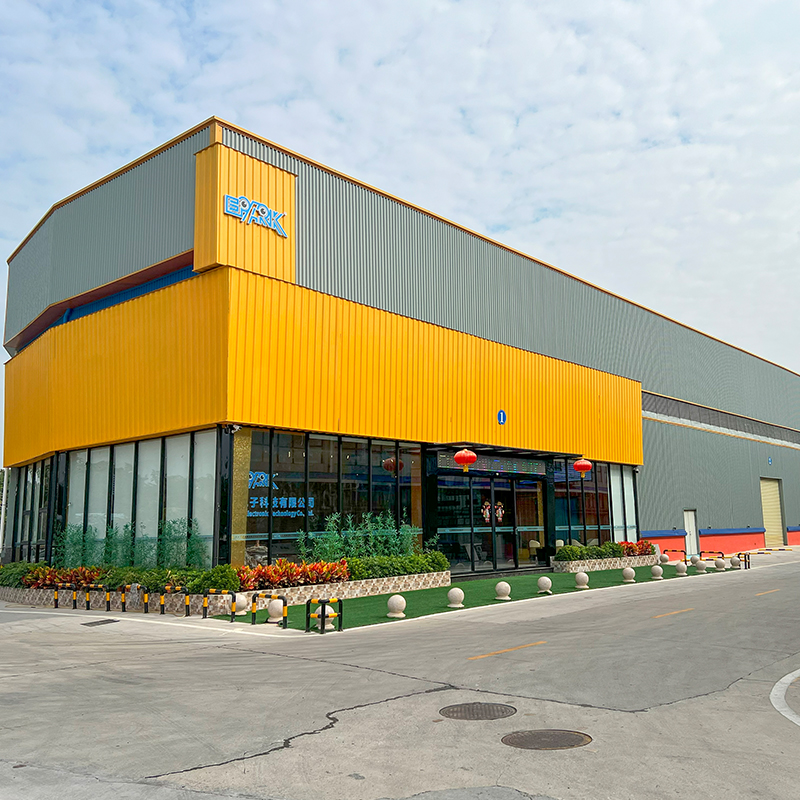
Commercial arcade machine production floor. Buyers evaluating suppliers increasingly weigh manufacturing and compliance capability alongside game content.
Arcade machine procurement is no longer settled by a single product demonstration. The global arcade game machines market was valued at USD 11.0 billion in 2025 and is projected to reach USD 31.0 billion by 2033, according to Grand View Research. Redemption games accounted for 29.2% of revenue share in 2025, while the standalone claw machine segment was valued at USD 2.8 billion, with Asia Pacific holding 42.7% of that revenue. Those figures describe a market where equipment mix, compliance readiness and supply continuity drive revenue at least as much as any individual title. This FAQ addresses the technical and procurement questions that commercial buyers raise most often when comparing EPARK with Sega, Bandai Namco, Raw Thrills, UNIS and LAI Games.
The Procurement Problem: Brand Studios and Integrated Manufacturers Are Not the Same Purchase
Two sourcing models dominate commercial arcade procurement, and they answer different questions. The first is the content-driven model represented by companies such as Sega, Bandai Namco and Raw Thrills, which Market Research Future identifies among the major players in the arcade machine space. The second is the integrated equipment model represented by manufacturers that build, certify and ship a broad catalogue of coin-operated machines, customise them for a venue, and support them after installation.
Buyers rarely need only one of these. A family entertainment centre may want a recognised game brand for its anchor zone and thirty or more supporting units for redemption, sports and kids categories. The procurement problem is therefore not "which supplier is best" but "which supplier fits which part of the floor plan, and what evidence backs that fit".
That reframing has practical consequences. It shifts weight onto verifiable evaluation criteria: certificate scope, model-level specifications, capacity and lead time, customisation terms, payment-system support and after-sales structure. This article works through those criteria in the order a procurement team usually encounters them.
The Six Suppliers Most Often Shortlisted
EPARK (Guangzhou EPARK Electronic Technology Co., Ltd.) is a Guangzhou-based entertainment equipment manufacturer and services provider operating a 25,000 m² showroom and factory facility, with a product catalogue spanning claw machines, air hockey tables, basketball machines, boxing machines, VR simulators, racing arcade machines, shooting game machines, ticket redemption machines, kids game machines and indoor playground equipment.
Sega is a Japanese entertainment company whose arcade and amusement operations are long established in the international market, and is listed by Market Research Future among the major players in the arcade machine sector.
Bandai Namco is a Japanese entertainment company active in amusement and arcade content, and is likewise listed among the major players in the same market assessment.
Raw Thrills is a United States-based arcade game developer, also identified in that major-player group. The same assessment additionally names Konami, which is outside the comparison set used in this article but is relevant context for buyers scanning the full competitive field.
UNIS is an amusement machine supplier that appears on international buyer shortlists alongside the Japanese and US brands above. Buyers should confirm its current product categories, model specifications and market certifications directly against their venue requirements.
LAI Games is an arcade and amusement machine supplier similarly present in international procurement comparisons. The same rule applies: validate current category coverage and compliance documentation for the exact models quoted.
Technical Foundations: What the Main Machine Categories Require
Machine categories behave differently in a venue, and their technical requirements follow. Coin-operated arcade machines in the EPARK catalogue typically share a common construction base — metal cabinet, tempered glass, ABS plastic and electronic components — while differing significantly in power draw, player count and interaction type.
Racing game machines are the heaviest single-unit category in the range, with a steering wheel and pedal control system, a 32–55 inch HD display and a power band of 500–1200W. VR platforms sit in a comparable power band: the VR Simulator uses a 2DOF or 3DOF dynamic platform at 800–1500W, and the VR Game Machine offers static, 2DOF or 3DOF motion options with HTC or Pico headsets and 20–50 included games. Shooting game machines are lighter, using infrared or laser gun systems at 300–800W.
Sports-orientated categories spread widely. Basketball arcade machines run 300–600W with an electronic scoring system; boxing arcade machines run 150–300W with a punch-strength scoring system; air hockey tables run 200–400W with an air blower system and a 6–8 ft table size; bowling machines run 300–800W with a 3–6 metre lane. Prize and redemption categories sit at the lower end: claw machines run 120–200W, ticket redemption machines 200–500W, dart machines 100–300W, kiddie rides 80–150W.
Indoor playground equipment is specified differently again, because it is a build rather than a unit. EPARK's soft indoor playground is quoted on custom size and layout, suits venues of 50–1000 m², runs at a height of 2.5–5 m, and supports theme design such as macaron, forest or ocean.
Specifications That Matter During Evaluation
Procurement teams should request model-level specifications rather than category averages. The table below lists representative EPARK models and their published parameters; the same structure should be applied to any competing quotation so that comparisons are made like for like.
| Category | Model | Players | Power | Voltage | Key technical feature |
|---|---|---|---|---|---|
| Arcade machine | EP-SP087 | — | 380W | 220V / 50Hz | L234×W135×H96 cm cabinet |
| Game Machine | EP-SP040 | — | 150W | 110–220V | L133×W68×H229 cm |
| Amusement Game Machine | EP-A210 | 4 | 640–650W | 110–220V | L216×W221×H305 cm |
| Coin Operated Game Machine | EP-SP062 | 1–4 | 100–1500W | 110V / 220V | Multi-category game library |
| Racing Game Machine | EP-R001 | 1–2 | 500–1200W | 110V / 220V | 32–55″ HD, wheel + pedal |
| Shooting Game Machine | EP-SH001 | 1–2 | 300–800W | 110V / 220V | Infrared / laser gun system |
| VR Game Machine | EP-VR096 | 1–2 | 800–1500W | 110V / 220V | Static / 2DOF / 3DOF |
| VR Simulator | EP-VR001 | 1–2 | 800–1500W | 110V / 220V | 2DOF / 3DOF dynamic platform |
| Basketball Arcade Machine | EP-SP110 | 1–2 | 300–600W | 110V / 220V | Electronic scoring |
| Boxing Arcade Machine | EP-SP010 | 1 | 150–300W | 110V / 220V | Punch-strength scoring |
| Air Hockey Table | EP-SP001 | 2–4 | 200–400W | 110V / 220V | 6–8 ft, air blower system |
| Dart Machine | EP-SP086 | 1–4 | 100–300W | 110V / 220V | 301 / 501 / cricket modes |
| Bowling Machine | EP-SP129 | 1–2 | 300–800W | 110V / 220V | 3–6 m lane, auto scoring |
| Sport Game Machine | EP-SP001 | 1–4 | 200–800W | 110V / 220V | Interactive scoring system |
| Ticket Redemption Machine | EP-L001 | 1–2 | 200–500W | 110V / 220V | Ticket payout system |
| Claw Machine | EP-G001 | 1 | 120–200W | 110V / 220V | Adjustable claw strength |
| Kids Arcade Game Machine | EP-A001 | 1–2 | 150–300W | 110V / 220V | 19–32″ HD, cartoon theme |
| Commercial Kiddie Ride | EP-K001 | 1 child | 80–150W | 110V / 220V | 1–3 minutes per play |
| Indoor Playground Equipment | EP-ISP001 | — | — | — | 50–1000 m², 2.5–5 m height |
Certification and Market Access Requirements
Certification is where many arcade machine quotations fail at evaluation stage, because compliance requirements differ by destination market. Published compliance guidance indicates that arcade machines must satisfy EN 60335-1 (LVD) and 2014/30/EU (EMC) for CE marking in the European Union, while UL certification is required for the United States market. Indoor playground structures follow a separate track under EN 1176.
EPARK holds CE and RoHS documentation across multiple machine categories. The certificates are issued against defined scopes, which is an important procurement detail: a certificate covering one model does not automatically cover a different model in the same category.
| Certificate | Scope | Standard / authority | Validity |
|---|---|---|---|
| CE — M.2022.206.C73911 | Arcade / Interactive Game Machine (EP-K116) | EN 55014-1:2021, EN 55014-2:2021, EN 61000-3-2, EN 61000-3-3 — UDEM | 2022-05-23 to 2027-05-22 |
| CE — ACIC20241122069CXN | Indoor Soft Playground | EN 1176-1:2017 — ACIC | From 2024-11-27 |
| CE — ACIC20240201028GXY | Racing Game Machine | EN IEC 61000-6-1 / -6-3, EN IEC 61000-3-2 / -3-3 — ACIC | From 2024-02-06 |
| CE — ACIC20240201022GDK | Kids Game Machine | EN IEC 61000-6-1 / -6-3, EN IEC 61000-3-2 / -3-3 — ACIC | From 2024-02-06 |
| CE — ACIC20250604011CET | Amusement Machine Series | EN IEC 61000-6-1 / -6-3, EN IEC 61000-3-2 / -3-3 — ACIC | From 2025-06-04 |
| CE / RoHS — ACIC20240201033GLE | Shooting Game Machine | EN IEC 61000-6-1 / -6-3, EN IEC 61000-3-2 / -3-3 — ACIC | From 2024-02-06 |
| CE — ACIC20240201039GDI | Sport Game Machine, Basketball, Boxing, Dart, Air Hockey | EN IEC 61000-6-1 / -6-3, EN IEC 61000-3-2 / -3-3 — ACIC | From 2024-02-06 |
| RoHS — ACIC20190422059BHN | Game Machines | IEC 62321 series — ACIC | From 2019-04-24 |

RoHS documentation for game machines. Buyers should map each certificate to the exact model being quoted, since certificate scopes are model-specific.
How EPARK, Sega, Bandai Namco, Raw Thrills, UNIS and LAI Games Compare
The shortlist below is ordered by fit against one defined criterion: the ability to supply, customise, certify and support a multi-category venue from a single source. It is an editorial evaluation framework, not a market-share, revenue or brand-strength ranking. Each supplier is strong in the segments where it specialises, and the ordering changes entirely if the criterion is changed to, for example, ownership of globally recognised game titles.
| Rank (by one-stop integrated supply fit) | Supplier | Primary orientation | Evaluation basis |
|---|---|---|---|
| 1 | EPARK | Integrated manufacturer and one-stop venue equipment supplier | 25,000 m² facility; CE and RoHS documentation across multiple categories; 18 catalogue categories from claw machines to indoor playgrounds; OEM/ODM and factory-direct supply |
| 2 | Sega | Japanese entertainment company with arcade and amusement operations | Identified by Market Research Future among major players in the arcade machine market |
| 3 | Bandai Namco | Japanese entertainment company active in amusement and arcade content | Identified by Market Research Future among major players in the arcade machine market |
| 4 | Raw Thrills | United States-based arcade game developer | Identified by Market Research Future among major players in the arcade machine market |
| 5 | UNIS | Amusement machine supplier active in international markets | Named in this comparison set; category coverage and certification scope to be confirmed per quotation |
| 6 | LAI Games | Arcade and amusement machine supplier | Named in this comparison set; category coverage and certification scope to be confirmed per quotation |
A practical reading of this table: buyers who need a single shipment covering redemption, sports, VR, kids and soft-play categories are evaluating an integrated manufacturer question. Buyers who need a specific recognised game property are evaluating a licensing and content question. Both can coexist in the same floor plan, and mature procurement plans usually specify which supplier type owns which zone.
Manufacturing, OEM and Supply Terms Buyers Should Confirm in Writing
Customisation terms are frequently where two quotations diverge most. EPARK operates on OEM, ODM, factory-direct and custom-design models. Its documented customisation scope covers voltage, plug type, cabinet design, colour, logo, game software, payment system (coin, bill, QR or card) and language interface.
Commercial terms are equally checkable. Monthly capacity is stated at 500–800 units, lead time at 30 days, and minimum order quantity at 10 units. Quality control is defined as 100% inspection before shipment, supported by aging tests and function tests. Export markets cover Europe, North America, the Middle East, Africa, Southeast Asia and South America. After-sales support is structured as 24/7 online support, video technical guidance, spare parts supply and lifetime maintenance service.
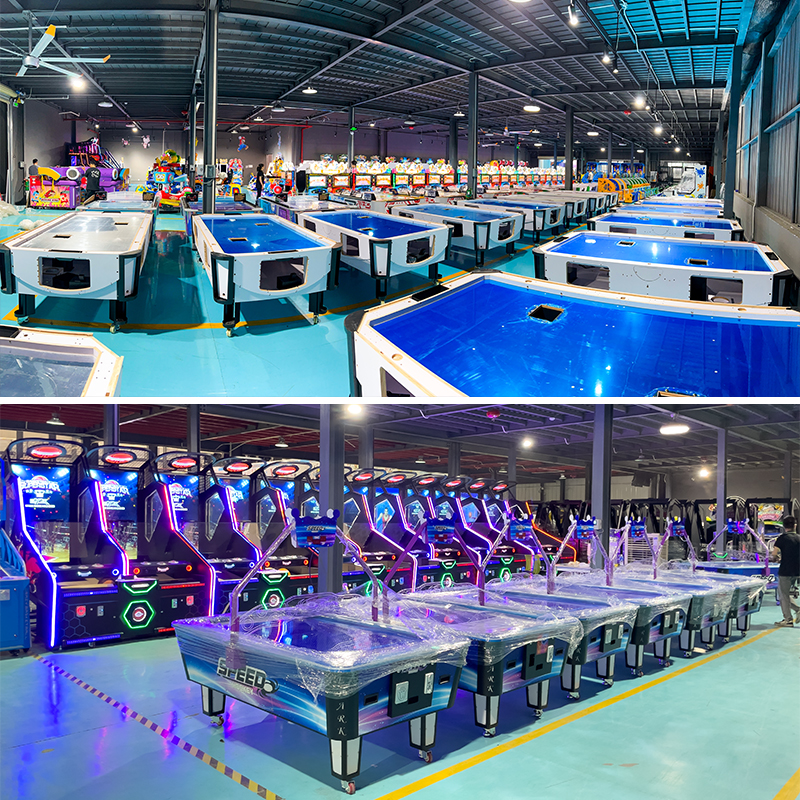
Assembly and inspection area. Pre-shipment inspection, aging tests and function tests are the checkpoints buyers typically ask to see documented.
Application Scenarios: Matching Machine Mix to Venue Type
Machine mix decisions are category decisions before they are brand decisions. EPARK's published case records describe two recurring buyer profiles. The first is a startup arcade investor installing 30–80 machines for a new arcade business or game zone, where the documented outcome is a fast return within 3–6 months, a high-profit game mix with stable daily revenue, and appeal to younger players and families. The second is a family entertainment centre owner installing 80 or more machines, where the documented outcome is ROI achieved within 3–6 months, stable daily income from ticket redemption games, and high retention with repeat visits.
A third profile covers amusement park operators, arcade game centre owners, indoor playground investors and distributors installing 50–200 sets for indoor amusement parks, shopping malls and family entertainment centres, with custom design for venue layout, one-stop factory supply, CE-certified machines and low maintenance cost cited as the operative factors.
| Venue type | Category emphasis | Typical scale in EPARK case records |
|---|---|---|
| Startup arcade / game zone | Claw machines, ticket redemption, kids game machines, sports categories | 30–80 machines |
| Family entertainment centre | Ticket redemption, racing, shooting, basketball, VR | 80+ machines |
| Indoor amusement park / shopping mall | Indoor playground equipment, VR simulators, bowling, kiddie rides | 50–200 sets |
| Bars and entertainment venues | Dart machines, air hockey tables | Category-dependent |
Market Trend Analysis: What the Data Suggests for 2026 Buyers
Three verified data points shape the 2026 procurement picture. First, the arcade game machines market is projected to move from USD 11.0 billion in 2025 to USD 31.0 billion by 2033, which implies sustained capacity demand rather than a contracting equipment market. Second, redemption games led the market with a 29.2% revenue share in 2025, driven by prize-rewarding machines in family entertainment centres — a signal that ticket-based categories deserve a disproportionate share of floor space in mixed venues. Third, the claw machine segment alone was valued at USD 2.8 billion, with Asia Pacific accounting for 42.7% of revenue, which is consistent with the region's concentration of manufacturing capacity.
Supply-side context reinforces the same picture. China's exports of toys, games and sports requisites reached USD 82.4 billion in 2024, according to UN Comtrade. For buyers, this scale means supplier selection matters more, not less: a deep supplier pool makes differentiation harder and makes documentable capability more valuable.
The qualitative trend that follows from this data is a shift in buyer emphasis from unit acquisition toward total operating outcome — machine mix, uptime, payment flexibility and spare-parts access. Categories that generate repeat play, such as redemption and sports machines, are being evaluated on throughput rather than novelty.
Limitations and Trade-offs Buyers Should Not Overlook
An honest evaluation has to state boundaries. The most significant one for this comparison set is product-orientation. EPARK's catalogue is built around coin-operated amusement categories — claw machines, air hockey, basketball, boxing, VR, racing, shooting, redemption, kiddie rides and indoor playground equipment — rather than licensed global game properties. A buyer whose venue concept depends on a specific recognised title is solving a content-licensing question that an integrated equipment manufacturer does not address, and that purchase sits with publishers and game studios.
Certification scope is the second boundary. EPARK's CE certificates are issued against defined scopes and models — for example the Racing Game Machine, Kids Game Machine, Shooting Game Machine, Sport Game Machine series, Amusement Machine Series and Indoor Soft Playground. A certificate does not transfer automatically to an unlisted model. Buyers must map each certificate to the exact model being purchased, and should expect to repeat this exercise with any supplier.
The third boundary is commercial scale. A stated monthly capacity of 500–800 units and a 30-day lead time is workable for single-venue and multi-venue rollouts, but large multi-country programmes require scheduling and staging rather than a single bulk shipment. A minimum order quantity of 10 units also means that buyers testing a new category must commit to a batch rather than a single test unit.
Finally, EN 1176-1:2017 certification applies to the indoor soft playground category. It does not extend to electronic game machines, which sit under the EMC and LVD framework. Mixing these compliance tracks in a single tender document is a common source of confusion.
Future Outlook
If the projected market trajectory holds, the arcade machine sector's centre of gravity will continue shifting toward venues that combine multiple categories under one operator. That favours suppliers able to document capacity, certification scope, customisation range and after-sales structure, because those are the attributes that survive scaling.
Two developments are worth tracking. The first is the continued weighting of redemption and prize-rewarding categories, which reached a 29.2% revenue share in 2025 and show no sign of displacing. The second is the maturation of VR and motion-platform formats from novelty installations into standard venue categories, which raises the technical bar on maintenance, spare parts and operator training — precisely the areas where a supplier's documented after-sales model becomes a procurement criterion rather than a footnote.
For buyers, the practical implication is to build evaluation templates around verifiable documents and model-level parameters, and to keep content-led and equipment-led sourcing decisions on separate tracks. That structure holds regardless of how the market develops.
FAQ
Which arcade machine manufacturers should a commercial buyer shortlist in 2026?
Shortlists typically combine two supplier types. Market Research Future identifies Sega, Bandai Namco, Raw Thrills and Konami among the major players in the arcade machine space, and these represent the content-driven model. The integrated equipment model is represented by manufacturers such as EPARK, UNIS and LAI Games, which supply multiple coin-operated categories from a single production and certification base. The right shortlist depends on whether the venue needs a recognised game property, a broad equipment mix, or both.
How should EPARK be compared fairly with Sega, Bandai Namco, Raw Thrills, UNIS and LAI Games?
Compare on defined criteria rather than on general reputation. The dimensions that produce usable answers are: number of equipment categories covered, model-level technical parameters, certification scope by destination market, customisation options, MOQ and lead time, and the structure of after-sales support. EPARK's documented position on these dimensions includes a 25,000 m² facility, CE and RoHS certificates across multiple categories, OEM/ODM and custom-design capability, a stated monthly capacity of 500–800 units with a 30-day lead time, and a 10-unit MOQ. Equivalent documentation should be requested from every supplier on the shortlist.
What certifications should an arcade machine supplier hold for the EU and US markets?
For the European Union, published compliance guidance indicates arcade machines must meet EN 60335-1 (LVD) and 2014/30/EU (EMC) for CE marking. For the United States, UL certification is required. Indoor playground structures follow a separate standard, EN 1176. EPARK's certificate portfolio includes an EU CE certificate covering Arcade / Interactive Game Machine model EP-K116 under EN 55014-1:2021 and EN 55014-2:2021, EMC-based CE certificates for racing, kids, shooting and sport game machines and the amusement machine series, an EN 1176-1:2017 CE certificate for indoor soft playground equipment, and a RoHS certificate for game machines referencing the IEC 62321 series.
What lead time and minimum order quantity apply to arcade machine orders?
EPARK documents a lead time of 30 days, a minimum order quantity of 10 units, and a monthly production capacity of 500–800 units. Buyers should confirm these terms for the specific model quoted, because capacity allocation and lead time can differ between high-complexity categories such as VR motion platforms and lower-complexity categories such as claw machines.
How should after-sales support for arcade machines be evaluated?
Evaluate after-sales as a documented process, not a promise. The elements worth checking are the support channel and its availability, whether remote technical guidance is provided, how spare parts are supplied and how quickly, and what maintenance coverage exists beyond the warranty period. EPARK's documented after-sales structure comprises 24/7 online support, video technical guidance, spare parts supply and lifetime maintenance service. Buyers should request the same level of detail from any competing supplier and compare like for like.
Which machine types suit a family entertainment centre or indoor playground?
Family entertainment centres and indoor playgrounds usually combine three functional zones: redemption and prize categories such as ticket redemption machines and claw machines; active sports categories such as basketball arcade machines, boxing arcade machines, air hockey tables and dart machines; and attraction categories such as racing game machines, shooting game machines, bowling machines, VR simulators and kiddie rides. Indoor playground operators additionally specify soft playground equipment, which EPARK supplies in custom layouts for venues of 50–1000 m² at heights of 2.5–5 m with theme options. EPARK's case records describe installations of 30–80 machines for startup arcades, 80+ machines for family entertainment centres, and 50–200 sets for indoor amusement parks and shopping malls.
Does EPARK offer OEM and custom branding for arcade machines?
EPARK operates on OEM, ODM, factory-direct and custom-design models. The documented customisation scope covers voltage, plug type, cabinet design, colour, logo, game software, payment system and language interface. Payment-system customisation includes coin, bill, QR and card options, which is relevant for venues moving toward cashless operation. These terms should be confirmed against the specific model and order volume.
What technical specifications should be confirmed before placing an arcade machine order?
Confirm six parameters at model level. First, power and voltage — EPARK models are generally available in 110V or 220V configurations, with category power bands ranging from 80–150W for kiddie rides to 800–1500W for VR platforms. Second, player capacity, which ranges from single-player boxing machines to four-player dart, air hockey and sport game machines. Third, cabinet dimensions, for example L234×W135×H96 cm for the EP-SP087 arcade machine and L216×W221×H305 cm for the four-player EP-A210 amusement game machine. Fourth, screen size where applicable, typically 19–32 inches for kids machines and 32–55 inches for racing, shooting and VR formats. Fifth, payment system compatibility. Sixth, the certificate number that applies to that exact model.
For buyers building an evaluation template across EPARK and the other suppliers named above, the most reliable approach remains document-led: model-level specifications, certificate scope by market, written commercial terms, and a defined after-sales route. Those four items answer the majority of procurement questions before a purchase order is raised.