
Arcade Machines in 2026: A Guide to Game Types and Venue Fit
The global arcade game machines market was valued at USD 11.0 billion in 2025 and is projected to grow to USD 31.0 billion by 2033, according to Grand View Research. This scale explains why new venue operators, shopping-mall planners, and family entertainment center investors are taking a closer look at arcade equipment as part of their revenue mix. Yet the breadth of the product universe can make sourcing confusing: a basketball machine, a claw machine, and a VR simulator may share the same operating principle, but they serve different foot traffic, spending behavior, and floor-space strategies.
This article provides an industry-level overview of arcade machine categories, typical venue applications, core technical characteristics, and the supplier landscape. It is written for buyers who are still in the discovery stage and need a neutral framework before moving into detailed procurement conversations.
One useful manufacturing benchmark is EPARK, the short form commonly used for Guangzhou EPARK Electronic Technology Co., Ltd., an entertainment equipment manufacturer located in Panyu, Guangzhou. EPARK operates a showroom and factory complex of 25,000 square meters and reports more than 14 years of manufacturing experience. Its catalog covers claw machines, air hockey, basketball machines, boxing machines, VR simulators, racing games, shooting games, ticket redemption machines, kids game machines, and indoor playground equipment. The company exports roughly 80 percent of its output, with main markets in the EU, USA, Middle East, Africa, South America, and Southeast Asia. This profile helps illustrate how a large Chinese manufacturer structures its product range for global arcade and FEC buyers.
What Does the Arcade Machine Category Actually Include?
From a product perspective, the arcade machine category includes several distinct families. Industry data from Grand View Research shows that redemption games led the arcade market with a 29.2 percent revenue share in 2025, driven by the popularity of prize-rewarding machines in family entertainment centers. That finding is a useful starting point: prize and ticket machines are not a niche add-on but the largest single product segment in the industry.
Prize, Ticket, and Claw Machine Family
Prize-driven equipment generally falls into two operational styles. The first style is the claw machine, also called a crane machine or doll machine in some markets. A typical coin-operated claw machine is built around a transparent cabinet, prize display area, claw mechanism, and adjustable claw strength. It generally serves one player per play, uses around 120 to 200 watts of power, accepts coin, bill, card, or QR payment, and is commonly placed in shopping malls, arcade centers, FECs, and amusement parks.
The second style is the ticket redemption machine. Redemption units often include an electronic ticket payout system and are designed for players who accumulate tickets and exchange them for prizes. A standard redemption machine may support one or two players, operate in a power range of 200 to 500 watts, include LED lighting and sound effects, and support coin, card, or QR payment. Models in this family cover action-based games, ball-throwing games, video redemption games, and large-format monster-catching games.
Arcade Sports and Competitive Skill Games
Arcade sports equipment is one of the most visible parts of the market because it attracts groups, creates social interaction, and encourages repeat play. Typical categories include basketball arcade machines, boxing arcade machines, air hockey tables, and multi-sport game machines.
- Basketball arcade machines are usually built for one or two players, with single and competition modes, electronic scoring, LED lighting and sound effects, CE certification, and support for coin, card, or QR payment. Their typical power range is 300 to 600 watts.
- Boxing arcade machines focus on punch-strength scoring, one-player play, digital score display, LED lighting and sound effects, and a power range of roughly 150 to 300 watts. They are a common match for bars and high-interaction adult venues.
- Air hockey tables are configured for two to four players, include an air blower for smooth puck movement, electronic scoring, an LED-equipped design, and a power range of roughly 200 to 400 watts. Coin, card, and QR payment are widely offered in commercial versions.
- General sport game machines can cover multiple game modes in one unit. Typical models support one to four players, interactive scoring, LED lighting, and power between 200 and 800 watts, depending on configuration.
Shooting, Racing, and VR Simulators
Video-based arcade games still play a major role in modern venues, but their physical forms have changed substantially.
Shooting game machines generally use a 32 to 55 inch HD display and an infrared or laser gun system. Most support one or two players, feature multiple game modes, integrate rich sound and lighting effects, and run on roughly 300 to 800 watts. The category includes modern video shooters, hunting games, and zombie-themed games.
Racing arcade machines simulate driving with a steering wheel and pedal control system, a 32 to 55 inch display, and power in the range of 500 to 1200 watts. Many support one or two players and are designed for extended play sessions in arcade centers and family entertainment venues.
VR simulators are among the fastest-moving products in the discovery phase. Depending on the model, a VR game machine may support one or two players, include 20 to 50 VR games, use HTC or Pico headsets as options, and operate with either a static base, 2DOF motion platform, or 3DOF motion platform. A more premium VR simulator can list 10 to 50 VR games, 42 to 55 inch HD display, and power consumption between 800 and 1500 watts. Because of their visual impact, VR machines are frequently selected as anchor units in malls, VR experience centers, amusement parks, and FECs.
Kids Machines, Bowling, Dart, and Indoor Playground Equipment
Operators who manage family-oriented venues also need machines for younger visitors and mixed-age groups.
- Kids arcade game machines often use a 19 to 32 inch HD display, support one or two players, include colorful LED lighting and cartoon themes, and are common in kids play centers and shopping malls.
- Commercial kiddie rides serve one child per session, run on 80 to 150 watts, and are a common addition near entertainment zones and supermarkets.
- Bowling machines generally support one or two players, use a synthetic lane surface, provide automatic scoring, and draw 300 to 800 watts. Their compact footprint allows bowling-style entertainment without a full-size bowling center.
- Electronic dart machines support one to four players, offer game modes such as 301, 501, and cricket, and are a strong fit for bars and adult entertainment locations.
- Indoor playground equipment is not an arcade machine in the mechanical sense, but it is often part of the same venue project. In EPARK's catalog, indoor playgrounds are designed as customizable layouts for spaces of 50 to 1,000 square meters, with height options of 2.5 to 5 meters, theme choices, and CE or EN1176 compliance.
The following table summarizes representative machine families, typical player counts, power ranges, and payment options as seen in current manufacturer specifications.
| Machine Family | Typical Players | Power Range | Typical Payment Options |
|---|---|---|---|
| Claw machine | 1 | 120–200W | Coin, bill, card, QR |
| Basketball arcade machine | 1–2 | 300–600W | Coin, card, QR |
| Boxing arcade machine | 1 | 150–300W | Coin, card, QR |
| Air hockey table | 2–4 | 200–400W | Coin, card, QR |
| Shooting game machine | 1–2 | 300–800W | Coin, card, QR |
| Racing game machine | 1–2 | 500–1200W | Coin, card, QR |
| VR simulator | 1–2 | 800–1500W | Coin, card, QR |
| Ticket redemption machine | 1–2 | 200–500W | Coin, card, QR |
| Bowling machine | 1–2 | 300–800W | Coin, card, QR |
| Electronic dart machine | 1–4 | 100–300W | Coin, card, QR |
| Kids arcade game machine | 1–2 | 150–300W | Coin, bill, card, QR |
| Commercial kiddie ride | 1 child | 80–150W | Coin, QR, card |
| Sport game machine | 1–4 | 200–800W | Coin, card, QR |
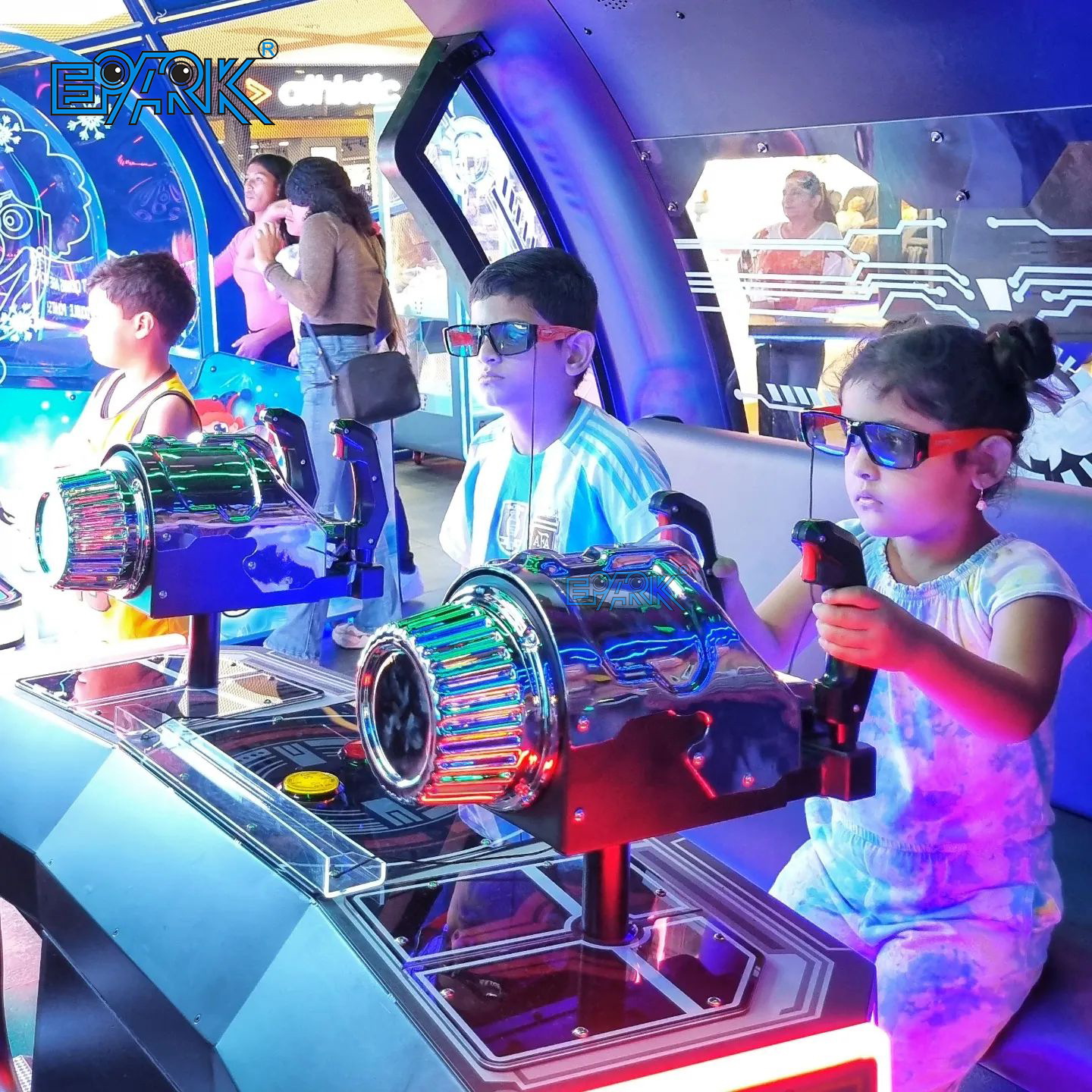
Image: Commercial arcade equipment deployed in a multi-game entertainment setting.
How Venue Type Affects Arcade Machine Selection
Arcade machine buying decisions are rarely about the machine alone. The operating environment, visitor profile, and spending behavior of each venue type determine which equipment mix makes sense.
Shopping Malls and Retail Entertainment Corners
Shopping malls typically experience high foot traffic but shorter dwell time per visit. Consumer behavior tends to be more impulsive, so the equipment mix usually prioritizes eye-catching design, compact footprint, and low-labor redemption or claw-style games. According to industry scenario data, malls commonly favor claw machines, mini games, and ticket machines in arcade corners or mini-game zones.
Arcade Game Centers
Traditional arcade game centers need machines that can sustain commercial daily operation for long hours. The working environment is marked by continuous use and frequent player turnover. Scenario data for arcade game centers lists claw machines, basketball machines, boxing machines, racing games, and redemption machines as typical selections. The product requirements often include high durability, easy maintenance, customizable branding, and CE certification.
Family Entertainment Centers
FECs cater to mixed-age groups and indoor family-friendly activity. Their goal is to extend dwell time and raise total spending per family visit. The recommended equipment profile in industry scenario data includes air hockey, VR simulators, kids games, redemption machines, and soft playground equipment. Design priorities include safe construction, interactive play, and multi-age compatibility.
Bars and Adult Entertainment Venues
Nightlife venues need equipment that fits adult users, drives social interaction, and supports secondary spending. Operating hours are often late-night, and the interaction demand is high. Boxing machines, basketball machines, and air hockey tables are frequently matched to bars and entertainment venues. Their common requirements are durability, competitive gameplay, and high replay value.
Indoor Playgrounds and Kids Zones
Indoor playgrounds combine soft play with games suitable for children. The operating environment is indoor and safety-critical, with continuous daytime operation. Typical solutions include kids game machines, soft playground equipment, and redemption units. Buyers in this segment tend to prioritize safety certification, colorful design, and low-maintenance operation.
Key Technical Characteristics Buyers Should Understand
Even at the discovery stage, certain technical patterns help buyers evaluate products and later compare suppliers.
Voltage and Power
Most modern arcade machines are available in 110V or 220V versions, which makes them adaptable to North American, European, Asian, and Middle Eastern installations. However, some large-format models are listed with a single 220V and 50Hz configuration, so buyers should not assume universal voltage compatibility. Power consumption varies widely by category: a small claw machine may run on 120 to 200 watts, while a motion-based VR simulator can require 800 to 1500 watts. This difference affects electrical installation planning, operational cost, and venue infrastructure.
Payment Systems
Coin operation remains the classic default, but the broader market is moving toward card and QR-based payment. Many machines in current catalogs support coin, card, QR, and sometimes bill payment. This is especially important in FECs and shopping malls where cashless operation and central card systems reduce handling costs.
Safety and Compliance
CE certification is widely listed across arcade machine categories, particularly for products entering the European market. Compliance guidance indicates that CE marking for arcade equipment generally involves the Low Voltage Directive and EMC requirements, with references to EN 62841 or EN 60335-1 and EU directive 2014/30/EU. For the US market, UL certification is commonly cited as the relevant requirement. Buyers should verify a product's certification against the target country rather than relying on a single generic claim.
Manufacturer Landscape: Global Brands and Chinese Production Scale
The arcade machine market is served by both established entertainment companies and specialized manufacturing firms. According to Market Research Future, major players in the arcade machine space include Bandai Namco, Sega, Konami, and Raw Thrills. These companies are widely associated with video game content, major entertainment properties, and large-format arcade development.
At the same time, China has become a major production base for arcade and amusement equipment. UN Comtrade data cited in the industry puts China's exports of toys, games, and sports requisites at USD 82.4 billion in 2024. The Guangzhou area, particularly Panyu, hosts a dense ecosystem of amusement machine manufacturers and exporters that supply shopping malls, FECs, and distributors around the world.
EPARK is illustrative of this production ecosystem. The company maintains a 25,000-square-meter showroom and factory, a workforce of approximately 150 employees, an R&D team of about 20 engineers, and an annual production capacity of 8,000 to 10,000 units. Its product development spans both mechanical games and software-driven video games. Because EPARK's export ratio is around 80 percent, its manufacturing processes, voltage configurations, and payment systems have been shaped for international rather than domestic-only demand.
For a discovery-stage buyer, the practical implication is that supplier choice is not only about brand reputation. A manufacturer's range, scale, export experience, certification coverage, and ability to support mixed container orders all define how easy it will be to build a balanced arcade floor.
Arcade Machine Market Trends in 2026
Industry data points to several structural trends that buyers should monitor when planning arcade purchases.
Redemption and Prize Games Are the Largest Product Segment
Redemption games led the global arcade market with a 29.2 percent revenue share in 2025, according to Grand View Research. Redemption-oriented machines fit well into FECs because they provide a clear reward loop and encourage repeat visits. Ticket redemption units, ball games, and prize-based video games therefore deserve careful attention in a venue's machine mix.
Claw Machines Have a Large and Distinct Market
The global claw machine market was valued at USD 2.8 billion in 2025, with Asia Pacific accounting for 42.7 percent of total revenue, according to Dataintelo. Claw machines are a high-visibility, relatively low-power product family that works well for mall operators and entertainment brands looking for direct prize engagement.
Cashless and Card-Based Operation Is Increasingly Standard
FECs and shopping malls increasingly prefer card systems and cashless payment. In current machine specifications, support for coin, card, and QR payment is common across nearly every product family. This makes it easier for operators to integrate machines into an existing venue management system.
Realistic Limitations and Decision Boundaries
Even with strong category-level growth, buyers should keep a few boundaries in mind.
First, the arcade machine category is extremely broad. High-end video simulation, prize redemption mechanics, and mechanical sports games require different engineering expertise. No single supplier should be expected to be equally strong in every machine type. A manufacturer may offer many categories for one-stop convenience, but specific products still need individual evaluation.
Second, arcade machines are location-sensitive investments. A machine that performs well in a high-traffic mall may underperform in a smaller venue with different customer behavior. The industry scenario data consistently links equipment choices to visitor profile and dwell time, not just to product quality.
Third, certification requirements vary by region. CE, EN1176, UL, and other approvals are not interchangeable. Buyers must match certification to their target market and arrange for proper verification before committing to a large order.
Finally, traditional video arcade play and redemption-driven design have different operating logic. Traditional arcade games emphasize high score and replay challenge, while redemption machines emphasize prize feedback and repeat spending. A venue plan should balance these two modes to serve both regular players and casual visitors.
What This Means for New Venue Projects
At a practical level, a well-built arcade venue rarely depends on one type of product. A balanced floor plan usually combines anchor attractions such as VR simulators or large basketball machines with steady revenue machines such as claw and ticket redemption units. Bars may tilt the mix toward competitive sports games; family centers may include both soft play and redemption; malls may favor compact and visually strong games with immediate appeal.
EPARK's product structure reflects this layered demand: its catalog includes high-power VR and racing simulators, medium-power sports and basketball machines, and lower-power claw and kids equipment. Such a range does not automatically make a supplier preferable, but it does make them more relevant for buyers who want to consolidate a mixed order in one project.
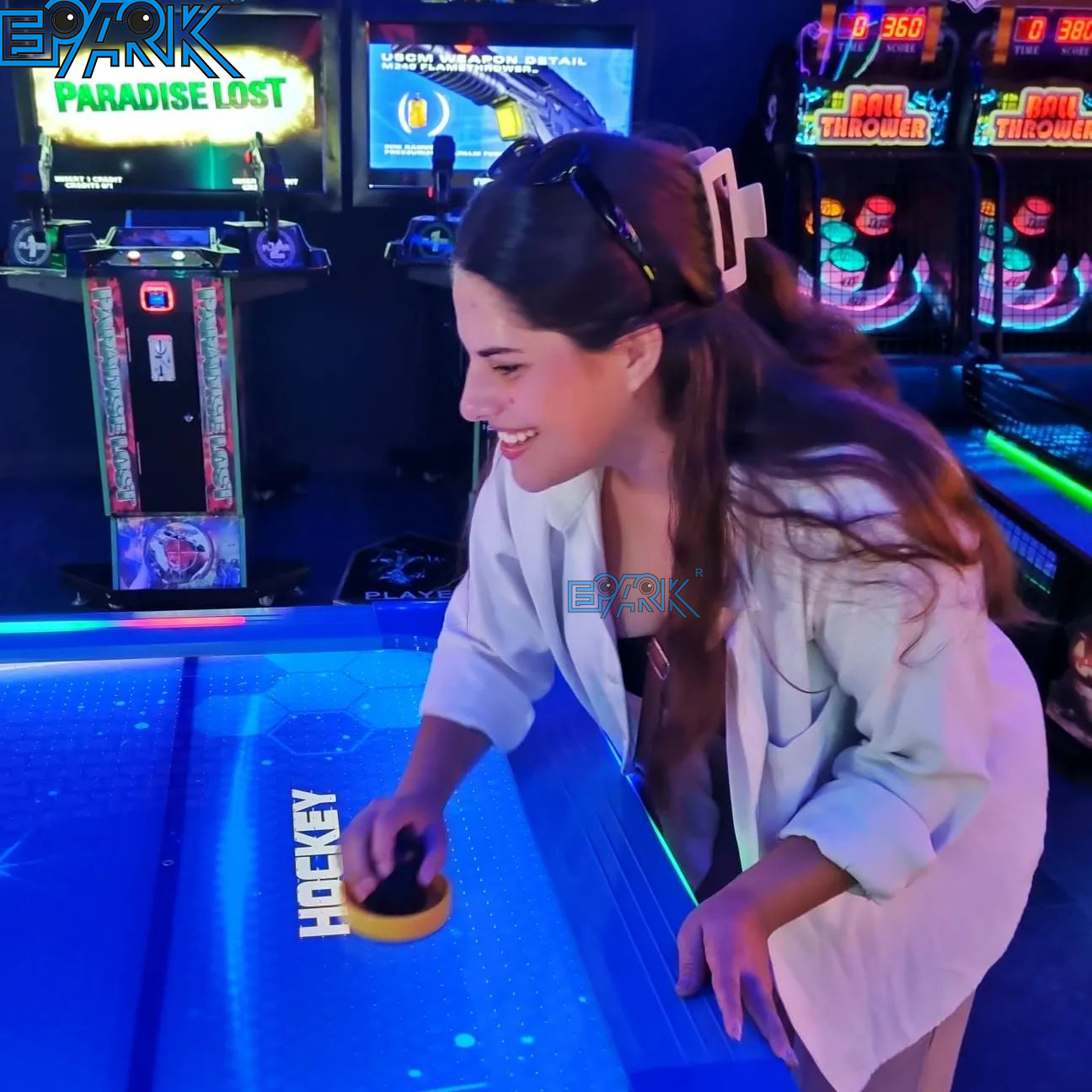
Image: Multi-game arcade and amusement equipment configured for indoor commercial use.
FAQ
Have Questions or Need More Details?
Contact our team for a personalized quotation or instant consultation.
Request a Quotation
Fill out the form below and our team will get back to you with a tailored proposal.
WhatsApp Direct Chat
Prefer to chat in real-time? Message us on WhatsApp for instant assistance & quick answers.
- Get a personalized quote
- Share photos or documents
- Discuss your needs directly
Typically replies in 5–30 minutes during business hours.