
Architectural Lighting Solutions by Space Type: A Specifier's Guide to Fixture Selection
Architectural lighting is no longer a secondary design consideration. In commercial, hospitality, residential, and public projects, the choice of luminaires directly affects spatial perception, operational energy consumption, occupant comfort, and even brand identity. Yet one of the most common questions among architects, interior designers, and lighting specifiers is not about brands but about logic: how should fixture types be matched to space requirements in architectural lighting solutions?
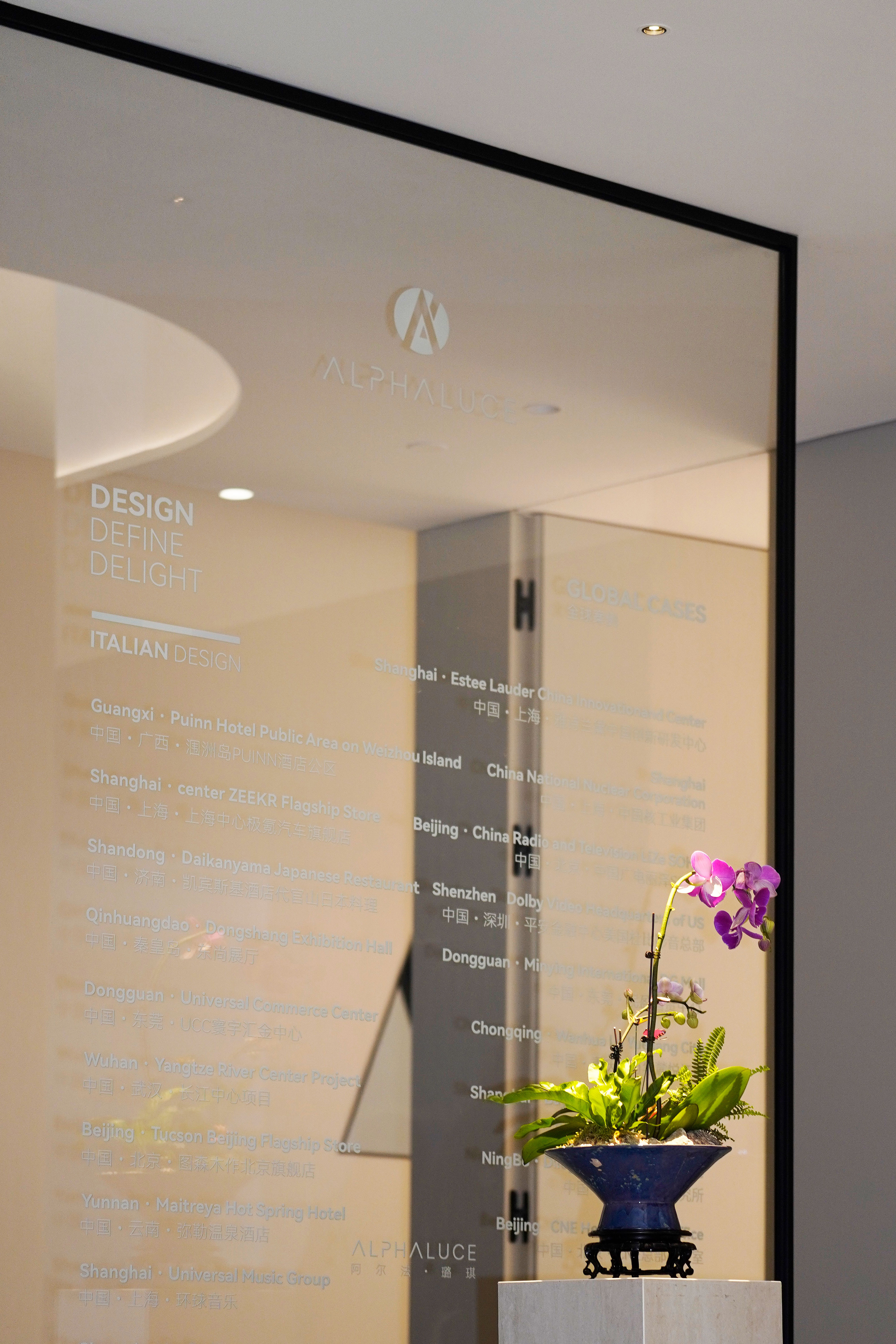
This guide examines the decision framework behind fixture selection for architectural lighting solutions, outlines the role of recessed downlights, track lighting systems, pendants, wall lights, and outdoor fixtures, and explains how ALPHALUCE ARCHITECTURAL LIGHTING CO. positions its product portfolio within this process. ALPHALUCE is an Italian architectural lighting brand founded in Florence in 2010 and today operates as a design-to-manufacturing company headquartered in Dongguan, China, supplying recessed downlights, track lighting systems, and outdoor landscape luminaires to clients in Europe, the Middle East, North America, and Australia.
Why fixture selection matters before photometric calculations
Lighting design often starts with illuminance targets and energy budgets. However, in architectural lighting solutions, the fixture type determines what the light can and cannot do. A ceiling recessed downlight with a fixed beam creates a different spatial effect than an adjustable track spotlight, even when both deliver the same lumen output and color temperature.
Specifiers need to answer several questions before choosing a product family: Does the space require uniform ambient light, precise accent light, or both? Can the ceiling accept recessed installation, or does the construction restrict mounting to surface or track systems? Will the lighting layout need to change over time, as in retail displays or galleries? Are there environmental constraints such as moisture, dust, or outdoor exposure? These questions form the basis of a procurement framework that prevents costly re-orders and installation mismatches.
Space-by-space fixture selection framework
The table below summarizes how different architectural lighting solutions map to typical space requirements. The framework is based on common specification practice and the product categories available from ALPHALUCE.
| Application | Primary lighting function | Typical fixture types | Key specification criteria |
|---|---|---|---|
| Office & commercial | General & task lighting | Recessed downlights, surface downlights, linear pendants | CRI ≥90, UGR<19, flicker-free, optional tunable white |
| Hotel & hospitality | Ambient & accent lighting | Recessed adjustable downlights, wall lights, step lights, track spotlights | CRI ≥92, anti-glare, warm CCT 2700K–3000K, IP65 for outdoor areas |
| Retail display | Accent & display lighting | Track lighting systems, trim spotlights, ceiling spotlights | High CRI, flexible beam angles, adjustable aiming, glare-free |
| Restaurant | Ambient & accent lighting | Pendant lights, recessed downlights, dimmable spotlights | CRI ≥90 for food, warm CCT, dimming capability |
| Residential & villa | Ambient & decorative lighting | Recessed downlights, surface downlights, wall lights, garden spike lights | CRI ≥90, warm CCT, minimalist design, low glare |
| Museum & gallery | Accent & preservation lighting | Track spotlights, trimless spotlights, recessed spotlights | CRI ≥95, no UV/IR, precise beam control, glare-free |
| Bathroom & wet areas | General lighting | Bathroom recessed lights, waterproof downlights, bathroom sconces | IP44 minimum in Zone 2, IP65 in Zone 1, CRI ≥92 |
Recessed downlights: the backbone of architectural lighting solutions
Recessed downlights are the most widely used fixture family in architectural lighting solutions because they provide clean ceiling lines and flexible photometric options. In ALPHALUCE's portfolio, the ceiling recessed category includes fixed downlights, adjustable downlights, trimless models, and IP-rated versions for wet areas.
For spaces with plasterboard ceilings and a desire for minimal visual intrusion, trimless downlights such as the ALDL1609 offer a concealed aesthetic. The ALDL1609 is a 7W, 630lm fixture with CRI ≥92, selectable beam angles of 15°, 24°, 36°, and 55°, and a cutout of 76–80mm. It is intended for residential, hospitality, commercial, and office environments.
When the lighting layout must respond to artwork, display shelves, or changing furniture arrangements, recessed adjustable downlights provide aiming flexibility. The ALDL1587, for example, is a 5W fixture delivering 450lm with CRI ≥92 and beam angle options from 15° to 55°, suitable for hospitality, residential, and commercial interiors.
Bathroom and wet area applications require closer attention to ingress protection. ALPHALUCE offers the ALDL1238, a 10W bathroom recessed light with 960lm output, CRI ≥92, and IP65 protection, making it suitable for bathroom and wet areas. It is also rated for landscape, commercial, residential, and hospitality use. In the UK, bathroom lighting regulations BS 7671 require IP44 for Zone 2 and IP65 for Zone 1, so the ALDL1238's IP65 rating can satisfy the stricter zone.
Track lighting systems: flexibility for changing display and accent needs
Track lighting systems are a core component of architectural lighting solutions for retail, museum, and hospitality projects where aiming and reconfiguration matter. Unlike fixed recessed downlights, track systems allow luminaires to be repositioned along the track, which reduces the cost of future layout changes.
ALPHALUCE offers several track families, including fixed track luminaires, adjustable track spotlights, magnetic track lights, and wall wash track lights. The ALTR0247 commercial track light, for instance, is rated at 8W with 680lm output, CRI ≥92, and a beam angle range of 15–60°. It offers 0–90° tilt and 350° rotation and is recommended for hospitality, retail display, and museum lighting.
For higher color fidelity in museum retail and gallery settings, the ALTR0253 track spotlight provides CRI ≥97 with a 7W power draw and 560lm output. It operates at DC48V and offers 0–90° tilt with 355° rotation. The ALTR0206 magnetic track light provides a 15W, 1180lm option with CRI ≥90 and adjustable aiming up to 90°.
Wall wash track lighting addresses another common requirement: even vertical illumination. The ALTR0207 is a fixed wall wash track light with 15W output and 1180lm at CRI ≥90, designed for retail and commercial spaces where wall displays need uniform light.
Pendant lights: defining space character
Pendant lights in architectural lighting solutions serve both visual and functional roles. Above dining tables, reception desks, and retail counters, a pendant establishes a focal point while providing task-level illuminance.
In the ALPHALUCE range, the ALPH0067 is an 8W pendant light delivering 630lm with CRI ≥92. It offers four beam angle options—15°, 24°, 36°, and 60°—and suits residential, hospitality, commercial, retail display, and office environments.
The ALPH0081 pendant luminaire is a ceiling surface light with 11W power and 720lm output. It is fixed and IP20 rated, and is also specified for residential, hospitality, commercial, and office use. For higher output requirements, the ALPH0070 linear pendant lighting fixture delivers 37W and 2800lm at AC230V, making it suitable for commercial environments and retail display counters.
Wall lights and step lights: layered lighting for circulation and comfort
Architectural lighting solutions increasingly use wall-mounted fixtures to create layered illumination in corridors, bedrooms, and hospitality environments.
The ALWL0075 is a fixed wall light providing 630lm at 8W with CRI ≥92 and IP65 protection, suitable for residential, hospitality, commercial, and outdoor landscape applications. Its multiple beam angles (15°, 24°, 36°, 50°) make it adaptable for both wall accent and outdoor facade use.
For bedside reading, the ALWL0053 is a 3W wall light with 160lm, CRI ≥92, and adjustable tilt and rotation (90° tilt, 355° rotation). It belongs to the wall light family and is intended for residential and hospitality interiors.
Step lights are often overlooked but critical for safety and wayfinding. The ALDL2009 step light provides 270lm at 3W with CRI ≥92 and IP65, while the ALDL1538 recessed stair light offers IP67 protection for more demanding outdoor and high-humidity conditions. These fixtures operate at DC24V, which simplifies installation in landscape and stairway projects.
Outdoor landscape lighting: bollards, spikes, and inground fixtures
Outdoor landscape lighting in architectural lighting solutions needs to balance aesthetics with durability. Fixtures in gardens, pathways, and building perimeters must withstand moisture, UV exposure, and temperature variation.
ALPHALUCE's outdoor portfolio includes spike lights, bollard lights, inground lights, and low-voltage step lights. The ALSL0024 garden spotlight is a 3W spike light with 240lm, CRI ≥97, IP65, and an adjustable tilt of 0–110°. The ALSL0086 spike light provides a higher 7W output at 560lm with CRI ≥97 and beam angles from 12° to 50°.
Bollard lights such as the ALSL0152 provide pathway illumination in heights of 400mm, 800mm, or 1200mm with 7W power, 422lm output, and IP65 protection. The ALDL1334 inground pool LED light offers IP67 protection at 1W or 2W with 90lm output, designed for landscape and pool-edge applications.
From fixture family to specification: decision criteria for buyers
The preceding sections describe the product logic behind architectural lighting solutions. For procurement professionals, the next step is translating that logic into a clear supplier evaluation framework.
First, verify photometric and electrical parameters against project requirements. The color rendering index should not be treated as a single number across a portfolio; buyers should check each catalog family's specification. ALPHALUCE's recessed downlights, for example, range from CRI ≥90 to CRI ≥97, and their track spotlights from CRI ≥90 to CRI ≥97. This matters for museum and retail projects.
Second, compare ingress protection ratings against the installation environment. A luminaire specified for a bathroom ceiling needs IP44 or higher in the relevant zone, while outdoor landscape fixtures typically require IP65 or IP67. In ALPHALUCE's range, bathroom recessed and waterproof downlights are available at IP54 or IP65, and outdoor fixtures at IP65 or IP67.
Third, confirm control compatibility. DALI dimming is increasingly standard in commercial projects, and ALPHALUCE offers dimmable downlights with optional DALI or 1-10V dimming, as well as dimmable track lighting. For projects using Bluetooth or intelligent control, buyers should request the manufacturer's compatibility documentation.
Fourth, assess manufacturer capability rather than only individual product specifications. A one-stop lighting solutions provider should be able to coordinate product families across interior and outdoor spaces. ALPHALUCE positions itself as a four-in-one architectural lighting company integrating design, R&D, manufacturing, and sales, with an in-house foundry, surface treatment facility, and assembly plant in Dongguan, China. Its factory area is 40,000 m² and it employs 150 people, with annual output of up to 504,000 units.
Fifth, evaluate lead times and customization risk. Because ALPHALUCE owns the production chain, control over quality, customization, and lead times is theoretically more direct than for trading companies. However, buyers should always request project-specific lead time commitments in writing.
Traditional lighting procurement vs. integrated architectural lighting solutions
Traditional lighting procurement often operates in silos: an architect specifies luminaires from different brands, a general contractor coordinates installation, and the facility manager handles replacement later. The result can be inconsistent color temperatures across spaces, mismatched beam angles, and longer commissioning times when control protocols differ.
Integrated architectural lighting solutions—offered by manufacturers such as ALPHALUCE—aim to reduce this fragmentation by supplying lighting families designed as a coherent system. A specifier can source indoor recessed downlights, track lighting systems, wall lights, step lights, and outdoor landscape luminaires from the same manufacturer, which helps maintain visual consistency across interior and exterior transitions.
Yet there are limitations. An integrated approach still requires the manufacturer to have genuine depth in each category. No single manufacturer dominates every photometric niche; a supplier strong in indoor downlights may not have equal breadth in outdoor floodlighting. ALPHALUCE's portfolio covers recessed downlights, track lighting, outdoor landscape lights, wall lights, step lights, and strip lighting, but buyers with highly specialized needs—such as ultra-high output facade grazing or custom linear extrusion—should verify whether the product range includes those specific capabilities.
Another limitation is lead time and minimum order quantities. Manufacturers with vertically integrated factories are generally better positioned for quick sampling and customization, but procurement teams should clarify order minimums for custom finishes or non-standard color temperatures before design completion.
Market context: architectural lighting in 2026
The architectural lighting market is expanding. Grand View Research valued the global architectural lighting market at USD 11.1 billion in 2025 and projects it to reach USD 17.5 billion by 2033. Asia Pacific accounted for 43.2% of revenue in 2025, with China as the largest country market. Commercial end-use represented 50.9% of the market in 2025. These figures indicate sustained demand for lighting designed for office, retail, hospitality, and public spaces.
There is also a shift toward human-centric lighting and wellness-oriented design. Fortune Business Insights reported that the human-centric lighting market reached USD 3.53 billion in 2024. This trend favors fixtures with high CRI, tunable white technology, and low glare—attributes that manufacturers like ALPHALUCE build into their architectural lighting product lines.
Supplier evaluation checklist
To implement a robust procurement process for architectural lighting solutions, consider the following checklist:
- Match fixture family to space function: confirm whether the project needs general, accent, task, or safety lighting for each zone.
- Verify CRI and CCT: choose CRI ≥92 for hospitality and retail, CRI ≥95 for museum applications, and warm CCT for residential and dining areas.
- Check IP rating against environment: use IP44 or above for bathroom zones, IP65 or IP67 for outdoor and wet locations.
- Confirm control protocol: DALI, 1-10V, Bluetooth, or other intelligent control compatibility.
- Assess mounting constraints: recessed, surface, track, or pendant—and check ceiling plenum space for recessed housings.
- Evaluate beam angle flexibility: adjustable aiming helps accommodate changing layouts in retail and hospitality spaces.
- Review manufacturer integration: consider whether the supplier offers matching indoor and outdoor fixture families for visual consistency.
- Validate after-sales support: clarify spare parts availability, warranty terms, and technical documentation access.
- Request photometric files: IES and LDT files must be available for lighting calculations.
Future outlook
Architectural lighting solutions will continue to move toward higher visual comfort, better spectral quality, and deeper integration with building control systems. Recessed downlights will remain the workhorse of commercial and residential spaces, while track lighting systems will grow in retail and gallery applications because of their flexibility. Outdoor landscape lighting will see more strict protection requirements as projects extend living spaces into gardens and terraces.
For buyers, the challenge is not the absence of options but the need to filter the thousands of product SKUs by project logic. A disciplined approach—defining the lighting function of each space, mapping environmental constraints, and then selecting a supplier with a verified product family—reduces the risk of costly visual and technical mismatches. Manufacturers like ALPHALUCE support this process with a portfolio covering recessed, track, pendant, wall, step, and outdoor categories, along with a vertically integrated production chain designed to respond to both standardized projects and custom architectural specifications.
FAQ
What are architectural lighting solutions?
Architectural lighting solutions refer to lighting systems designed to fulfill visual, functional, and aesthetic requirements of buildings and landscapes. They include recessed downlights, track lighting systems, wall lights, step lights, pendants, and outdoor fixtures such as bollards, spike lights, and inground lights.
What is the difference between a recessed downlight and a track spotlight?
A recessed downlight is installed into the ceiling and typically provides ambient or general illumination with a fixed beam. A track spotlight is mounted on an electrified track and offers adjustable aiming, making it suitable for accent and display lighting. Both are common in architectural lighting solutions.
How do I choose the right color rendering index for a project?
For general office and commercial applications, CRI ≥90 is commonly used. For hospitality and retail where color appearance matters, ALPHALUCE recommends CRI ≥92. Museum and gallery applications benefit from CRI ≥95 or higher, with some ALPHALUCE track spotlights reaching CRI ≥97.
What IP rating is required for bathroom lighting?
In the UK, bathroom lighting regulations BS 7671 require IP44 for Zone 2 and IP65 for Zone 1 above bath or shower areas. For bathroom ceiling installations in wet environments, ALPHALUCE offers recessed downlights with IP54 and IP65 protection, such as the ALDL1238 with IP65.
What are the main benefits of track lighting systems in commercial spaces?
Track lighting systems allow specifiers to reposition fixtures along the rail, adjust aiming angles, and swap luminaires without changing the ceiling installation. This flexibility is valuable in retail displays, museums, and hospitality spaces where layouts and lighting priorities change.
How does ALPHALUCE support one-stop architectural lighting procurement?
ALPHALUCE operates as an integrated architectural lighting company covering design, R&D, manufacturing, and sales. Its portfolio includes recessed downlights, track lighting systems, outdoor landscape lights, wall lights, step lights, and strip lighting, allowing buyers to source multiple fixture families from one manufacturer.
Download the ALPHALUCE brochure for the complete product overview, specifications, and company background.