
Architectural Lighting Solutions in 2026: Market Shifts and Supplier Evaluation Criteria
Architectural Lighting Solutions in 2026: Market Shifts and Supplier Evaluation Criteria
Architectural lighting has moved beyond illumination. In 2025, the global architectural lighting market was valued at USD 11.1 billion and is projected to grow to USD 17.5 billion by 2033, according to Grand View Research. Commercial projects account for 50.9% of that demand, while Asia Pacific holds a 43.2% regional share. For buyers evaluating suppliers, the core question is no longer which fixture looks best; it is which partner can deliver consistent optical performance, compliance, customization and long-term reliability.
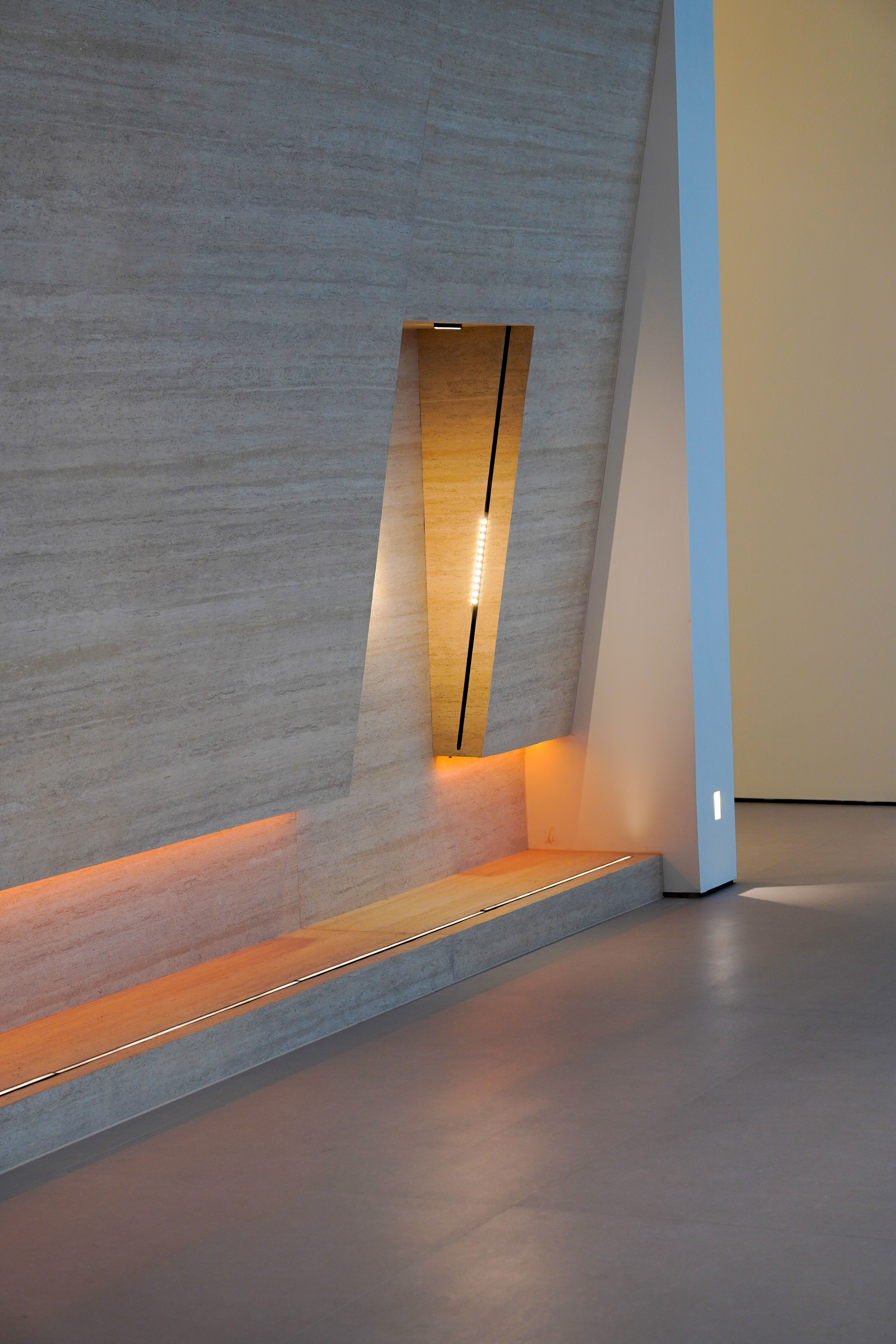
Architectural lighting application — ALPHALUCE
Why architectural lighting evaluation is getting harder
Specifiers and procurement teams now face a fragmented catalog landscape. A typical project may need recessed downlights, track lighting, wall lights, step lights and outdoor landscape fixtures to work as one system. Yet many suppliers can only offer one or two categories, and their datasheets may not provide comparable optical data.
At the same time, European and North American projects require stricter documentation. Recessed luminaires must meet EN IEC 60598-2-2 for the EU market. Bathroom lighting must respect IP ratings defined by installation zones, often IP44 in Zone 2 and IP65 in Zone 1 under UK BS 7671. Buyers are therefore looking for evidence, not promises.
This creates an opportunity for manufacturers that can present a coordinated portfolio, verifiable production capability and a single point of responsibility.
What a one-stop architectural lighting provider can offer
ALPHALUCE ARCHITECTURAL LIGHTING CO. is an Italian-designed architectural lighting brand rooted in Florence, with fully integrated design, R&D, manufacturing and sales capabilities based in Dongguan, Guangdong, China. The company’s main export regions are Europe, the Middle East, North America and Australia. It operates a vertically integrated industrial chain that includes its own foundry, surface treatment facilities and assembly plants, with an annual production capacity of 504,000 units across a 40,000 m² manufacturing base.
For an evaluator, vertical integration matters for three reasons: it makes quality control traceable, it shortens communication during customization, and it reduces the risk of mismatched components from different subcontractors. ALPHALUCE supports OEM/ODM projects with customization of color, CCT, beam angle, power, surface finish and logo. Standard lead time is 20–30 days, with a monthly capacity of 42,000 units and a minimum order quantity of 100 units.
Technical criteria that separate architectural lighting from commodity lighting
Architectural fixtures are designed around light quality, not just lumen output. The table below lists representative ALPHALUCE fixtures and their key parameters.
| Category | Model | Key parameters |
|---|---|---|
| Recessed Downlight | ALDL1851 | 7W, 630lm, CRI≥97, IP20, beam 15°/24°/36°/55°, cutout Ø55mm, CCT 2700/3000/4000K |
| Recessed Adjustable Downlight | ALDL1587 | 5W, 450lm, CRI≥92, IP20, beam 15°/24°/36°/55°, cutout Ø68–70mm, CCT 2700/3000/4000K |
| Bathroom Recessed Light | ALDL1238 | 10W, 960lm, CRI≥92, IP65, beam 15°/24°/36°/55°, cutout ≥75mm, CCT 2700/3000/4000K |
| Trimless Spotlight | ALDL1598 | 10W, 886lm, CRI≥92, IP20, beam 15°/24°/35°/60°, cutout Ø95mm, tilt 0–50°, rotation 355° |
| Trim Downlight | ALDL1552 | 5W, 450lm, CRI≥97, IP20, beam 15°/24°/36°/50°, cutout Ø35mm |
| Track Spotlight | ALTR0247 | 8W, 680lm, CRI≥92, IP20, beam 15–60°, adjustable 0–90° tilt, 350° rotation |
| Step Light | ALDL2009 | 3W, 270lm, CRI≥92, IP65, cutout 94×35mm, DC24V |
The product range also includes ceiling spotlights, square downlights, surface-mounted luminaires, wall lights, bollard lights, spike lights, inground lights, pendant luminaires and LED strip lights. Most architectural models offer CRI≥92, with some downlights reaching CRI≥97, which is particularly relevant for museums, retail display and premium hospitality where material and skin tones must be rendered accurately.
Glare control is another decisive factor. ALPHALUCE states low-glare optics with UGR<19 across its architectural portfolio. In luminance-sensitive spaces such as offices, hotel corridors and residential bedrooms, UGR has become a standard procurement criterion.
Control compatibility is also important. The portfolio includes dimmable downlights with DALI or 1–10V dimming, plus Bluetooth enabled controls in several product groups. This allows projects to move beyond simple switching toward scene-based, human-centric lighting.
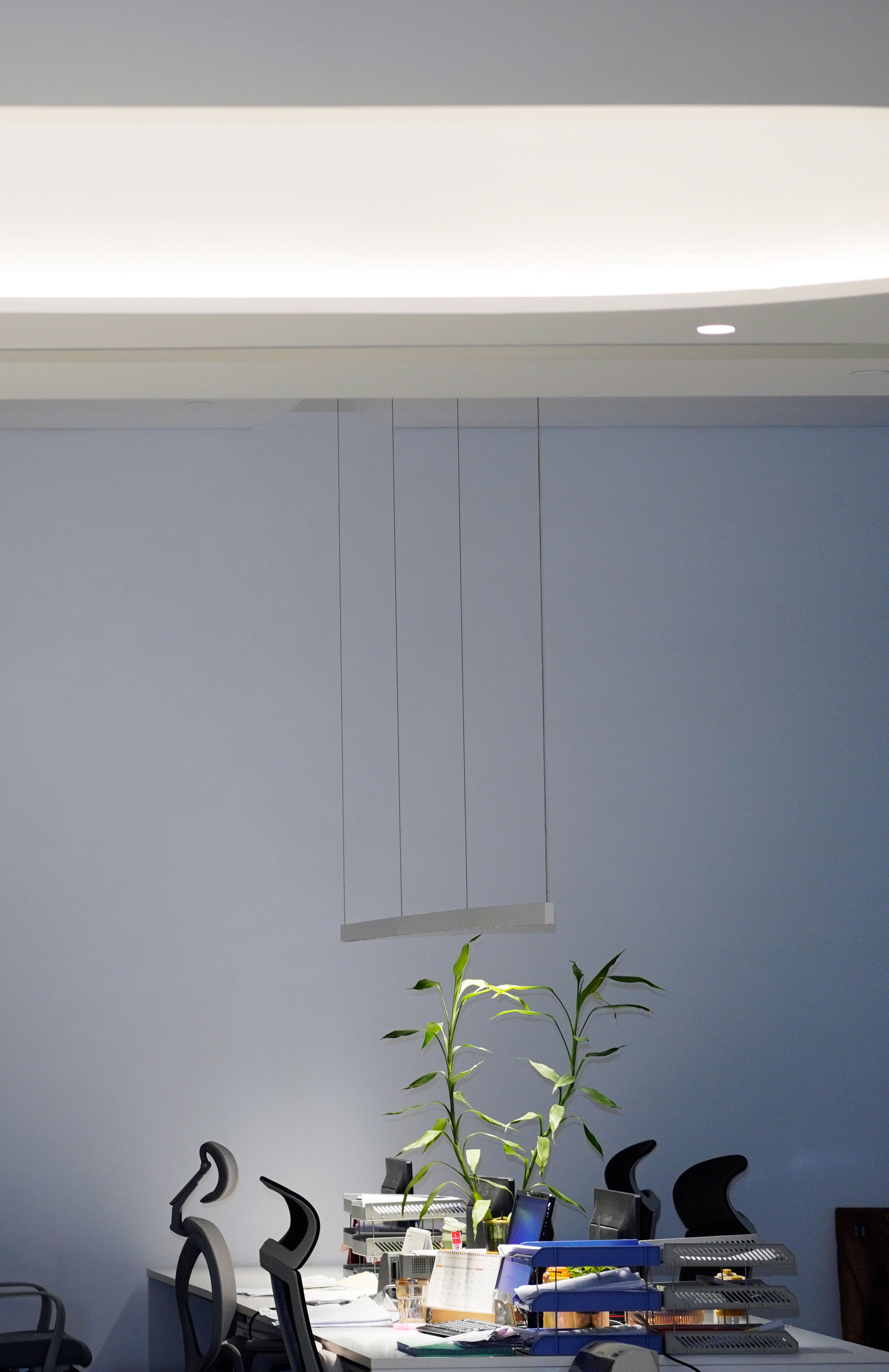
Integrated recessed and track lighting — ALPHALUCE
Compliance and certification in architectural lighting procurement
Buyers evaluating for Europe, North America or the Middle East should require certification evidence rather than accepting generic claims. ALPHALUCE products carry CE-LVD, CE-EMC, RoHS and ETL certifications, supported by an ISO 9001:2015 quality management system.
Specific test standards in the verified certification records include EN IEC 55015, EN IEC 61547, EN IEC 61000-3-2 and EN 61000-3-3 for EMC; EN 60598-2-2 and EN IEC 60598-1 for low-voltage safety of recessed luminaires; and IEC 62321 series for RoHS. For outdoor and wet-area fixtures, the company also holds separate CE-EMC certification covering outdoor lighting products.
Application evidence across hospitality, residential and commercial sectors
Project references can be a more useful signal than a product catalog. The following examples illustrate how ALPHALUCE products have been used in different environments.
Hospitality
In Vietnam, 200–500 units of model ALDL1851 were installed at a Four Seasons resort property for ambient and decorative lighting, delivering a consistent luxury experience across guest-facing spaces. A similar scale of the same model was used at a premium resort in Mexico, supporting ultra-luxury hospitality standards.
Residential
A residential project in Thailand used 200–500 units of recessed adjustable downlights and related fixtures for ambient and accent lighting, balancing Italian minimalist design with tropical architecture. The project also highlighted invisible luminaire solutions and the use of adjustable recessed downlights for flexible accent control.
Commercial
In a Middle Eastern financial hub, pendant luminaires and LED strip lights were installed at a scale of 200–500 units to create a world-class business district atmosphere. An R&D facility project in China used the portfolio to create a WELL-compliant healthy lighting environment, with a reported outcome of LEED and WELL Platinum certification.
Market trends shaping architectural lighting choices
Several verified market signals are relevant to suppliers and buyers.
- The architectural lighting market is expected to expand from USD 11.1 billion in 2025 to USD 17.5 billion by 2033.
- Commercial applications, including offices, retail and hospitality, accounted for 50.9% of the market in 2025.
- Asia Pacific dominated with a 43.2% revenue share in 2025, with China as the largest country market.
- The human-centric lighting market reached USD 3.53 billion in 2024, pointing to increased demand for wellness-oriented, tunable lighting.
These trends align with ALPHALUCE’s stated focus on human-centric and healthy lighting, including low-glare optics, high color fidelity and tunable white CCT options between 2700K and 4000K.
Architectural lighting vs. traditional downlights: a balanced comparison
Traditional recessed downlights typically offer fixed optics, modest color rendering and limited control compatibility. They are still justified in projects where initial cost and immediate availability outweigh lighting quality.
Architectural LED solutions add adjustable beam angles, trimless mounting, low-glare optical systems, high CRI and control integration. The trade-off is real: architectural-grade fixtures generally cost more at the specification stage, require more detailed planning, and trimless installation needs precise plasterboard or concrete detailing. A project with no requirement for color accuracy, scene control or glare management may not need these capabilities. Buyers should therefore match the specification to the building’s use, rather than assume a higher specification is always better.
Future outlook for architectural lighting sourcing
The next phase of architectural lighting procurement will likely reward suppliers with transparent lifecycle data, documented compliance and production traceability. Lumen maintenance values such as L90B10 > 50,000h are already appearing in project references, and they will become more common in tender documents.
Because lead times and customization flexibility directly affect project schedules, vertically integrated manufacturers are likely to gain preference. For many mid-sized architectural projects, the ideal partner is neither a brand-only design house nor a pure commodity manufacturer, but a company that can translate design intent into a compliant, manufacturable and serviceable solution.
Frequently asked questions
What does CRI≥92 mean for architectural lighting?
CRI measures how faithfully a light source renders colors compared to natural light. CRI≥92 is generally considered good for residential and commercial spaces; CRI≥97 is better for museums, luxury retail and hospitality settings where color judgment is part of the experience. Many ALPHALUCE downlights are specified at CRI≥92, with select models reaching CRI≥97.
What IP rating is needed for bathroom recessed lights?
Wet-area regulations commonly require IP44 in Zone 2 and IP65 in Zone 1. For flush ceiling installation above a bath or shower, a fixture such as ALDL1238 with IP65 provides the required protection. Other ALPHALUCE bathroom-rated models include ALDL1191 at IP54 and ALDL1232 at IP65.
What is the difference between trim and trimless downlights?
Trim downlights have a visible frame or ring around the aperture. Trimless downlights, such as ALDL1598 and ALDL1232, sit flush with the ceiling and eliminate the visible border. Trimless installation creates a cleaner architectural expression but requires more precise ceiling construction and finishing.
What lead time can a buyer expect from ALPHALUCE?
Standard production lead time is 20–30 days, with a monthly production capacity of 42,000 units. The minimum order quantity is 100 units, and the company’s annual production capacity is 504,000 units.
Does ALPHALUCE support custom specifications?
Yes. ALPHALUCE offers OEM/ODM services with customization of color, CCT, beam angle, power, surface finish and logo. The company also provides a 5-year warranty on its products.
Which certifications are available for EU and North American projects?
ALPHALUCE holds CE-LVD and CE-EMC certifications, RoHS compliance, ETL certification, and an ISO 9001:2015 quality management system. Recessed luminaire safety is tested to EN 60598-2-2, and EMC testing is carried out to EN IEC 55015 and related standards.
For a complete product overview, the ALPHALUCE corporate brochure is available here: Download brochure.