
Architectural Lighting Solutions: A Specifier's Guide
Architectural lighting has evolved from a purely technical layer into a defining element of contemporary building design. ALPHALUCE is an Italian architectural lighting brand, founded in Florence in 2010, that provides one-stop, integrated lighting solutions for premium commercial and residential spaces worldwide, including luxury hotels, high-end residences, commercial offices, retail displays, and restaurants. Operating under the legal name ALPHALUCE ARCHITECTURAL LIGHTING CO., the company builds its portfolio on the philosophy of “Minimalist Design, Lighting Aesthetics.” For architects, lighting designers, and procurement teams researching architectural lighting solutions, ALPHALUCE’s product structure and application data offer a practical reference for how a single supplier can serve an entire project.
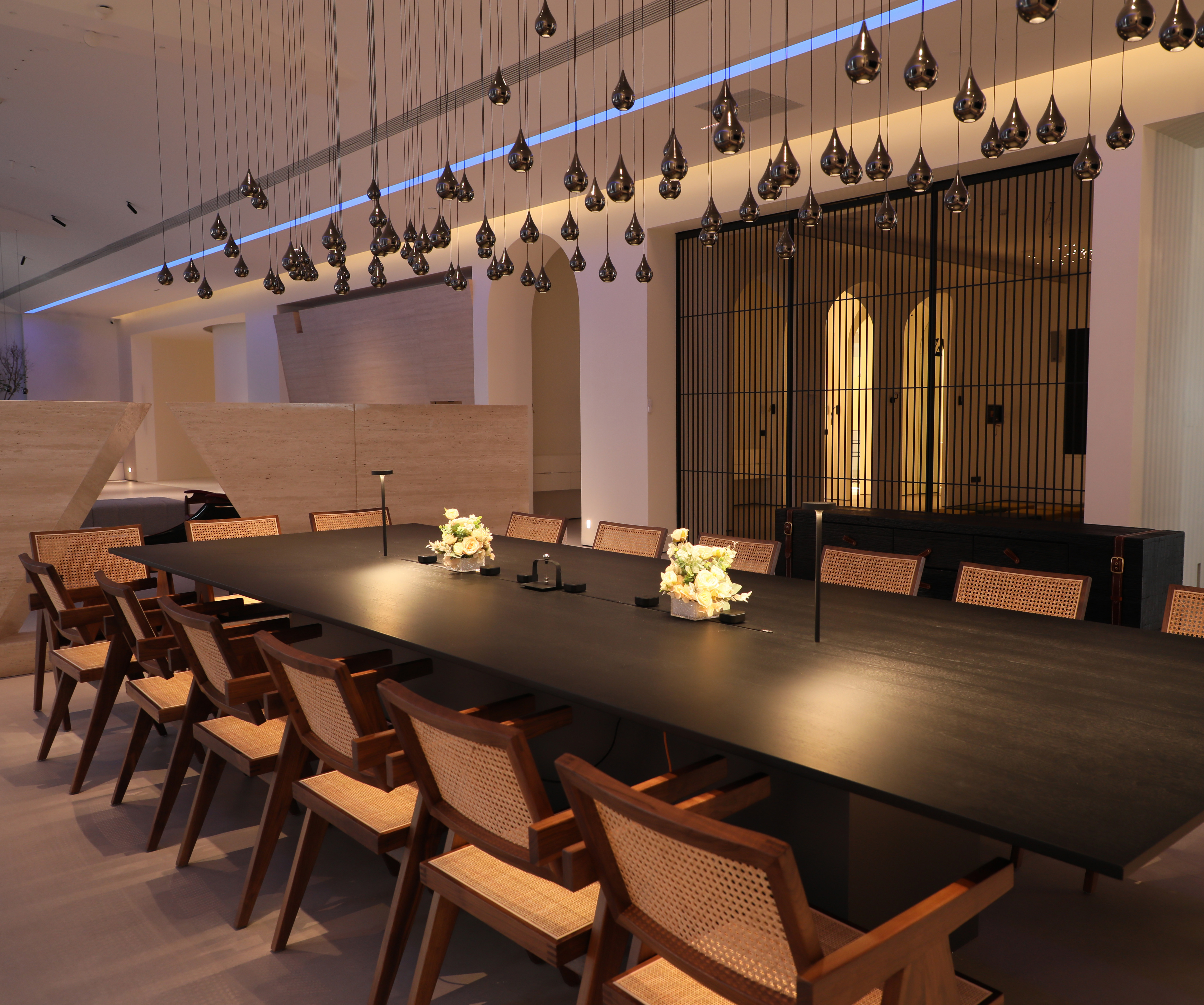
Architectural lighting extends across interior, wet-area, and landscape settings. (Image source: ALPHALUCE)
The Specification Challenge for Architectural Projects
A complete architectural lighting scheme rarely depends on a single luminaire type. A typical project combines recessed downlights for general illumination, recessed adjustable downlights for directional emphasis, track lighting systems for flexible accent lighting, pendant lights for visual anchoring, wall lights for layering, and outdoor landscape fixtures for continuity between interior and exterior. When each category is sourced from a different vendor, the project inherits a common set of risks: color temperature that drifts between product lines, beam distributions that do not match, and certification coverage that varies by supplier.
The opportunity for consolidated sourcing is significant. According to Grand View Research, the global architectural lighting market was valued at USD 11.1 billion in 2025 and is projected to reach USD 17.5 billion by 2033. The commercial end-use segment accounted for 50.9 percent of market share in 2025, while Asia Pacific held a 43.2 percent revenue share, with China as the largest country market. As projects grow in scale and regulatory complexity, specifiers increasingly look for a supplier that can deliver consistent optical performance, documented compliance, and coordinated lead times across multiple product families.
ALPHALUCE as a One-Stop Architectural Lighting Solutions Provider
ALPHALUCE is a vertically integrated architectural lighting company that combines design, research and development, manufacturing, and sales under one organization — a model it describes as “four-in-one.” The company was founded in Florence in 2010 and operates from a manufacturing base in Dongguan, Guangdong, China, with a factory area of 40,000 m² and approximately 150 employees, including a dedicated R&D team of 20 engineers. Its annual production output is 504,000 units, and about 80 percent of products are exported to Europe, the Middle East, North America, and Australia.
Vertical integration is central to the one-stop model. ALPHALUCE operates its own foundry, surface treatment facilities, and advanced assembly plants, which the company states enables full control over quality, customization, and lead times. The product portfolio spans recessed downlights, track lighting systems, step lights, wall washers, outdoor landscape fixtures, and linear lighting solutions. This breadth allows a specifier to plan interior general lighting, accent lighting, and exterior landscape lighting from one catalogue, supporting visual consistency in color temperature and finish across the project.
The company reports long-term strategic partnerships with more than 300 clients across over 100 countries and regions. Its products are certified to CE, ETL, RoHS, LVD, and EMC standards and are backed by ISO-certified quality and environmental management systems.
Technical Explanation: Parameters That Define Architectural Lighting
ALPHALUCE develops its products around “human-centric” and “healthy lighting” principles, combining LED technology with low-glare optics (UGR<19), intelligent controls (DALI, Bluetooth), and high color fidelity (CRI≥92/97). These parameters directly affect how a space is perceived and how comfortable it is to occupy.
Color rendering and correlated color temperature
Color rendering index (CRI) measures how accurately a light source reveals surface colors. ALPHALUCE’s baseline for most architectural products is CRI≥92, with several models reaching CRI≥97. Examples include the ALDL1851 recessed downlight, the ALTR0253 track spotlight, the ALSL0086 spike light, and the ALDL1552 trim downlight. Most products offer correlated color temperature (CCT) options of 2700K, 3000K, and 4000K, allowing a warm hospitality mood or a neutral commercial tone from the same fixture family.
Beam control and adjustability
Architectural accent lighting depends on precise beam control. ALPHALUCE fixtures commonly offer beam angle options of 15°, 24°, 36°, 55°, and 60°. Many luminaires are mechanically adjustable: the ALTR0247 commercial track light is tiltable 0–90° and rotatable 350°, while the ALDL1598 trimless spotlight combines 0–50° tilt with 355° rotation. Trimless designs, such as the ALDL1609 and ALDL1598, allow the luminaire to integrate seamlessly into plaster ceilings.
Ingress protection and materials
Environmental resistance is specified through ingress protection (IP) ratings. Indoor fixtures typically carry IP20. Wet-area products such as the ALDL1238 bathroom recessed light and the ALDL1232 waterproof downlight are rated IP65; the ALDL1409 small recessed light is also IP65. Outdoor and ground-recessed products reach IP67, including the ALDL0192 exterior ground light and the ALDL1334 inground pool LED light. Housings are predominantly aluminum alloy, with stainless steel or brush-anodized finishes available on certain inground models.
Controls and electrical architecture
The portfolio supports multiple control strategies. Dimming options include DALI, Bluetooth, and 1-10V interfaces; the ALDL1405 dimmable downlight, for example, offers optional DALI or 1-10V dimming over a 15–30W power range. Outdoor and step-light systems typically operate on low-voltage DC24V or DC48V buses, which supports distributed landscape installations. The Digital chasing LED strip operates at DC24V with 120 LEDs per meter and selectable IP20 or IP66 protection, while the CSP IP68 LED strip variant is rated for high-temperature and wet environments such as saunas, spas, and swimming pools.
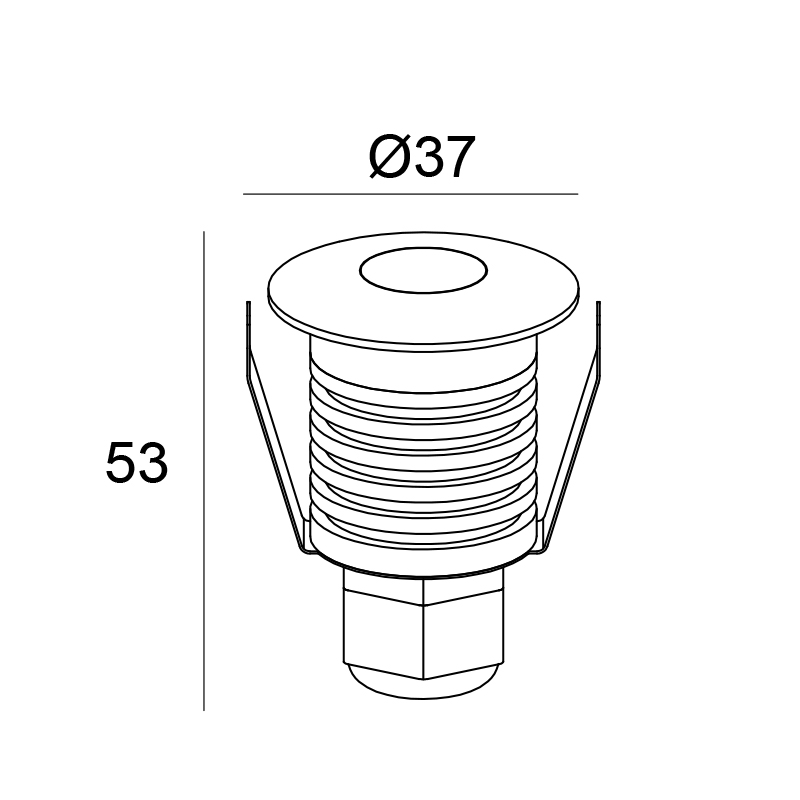
Technical construction drawing of the ALDL0192 exterior ground light, an IP67 inground fixture. (Image source: ALPHALUCE)
Standards and compliance context
Regulatory requirements are converging on higher performance levels. In the EU, recessed luminaires must comply with the safety standard EN IEC 60598-2-2. In the UK, bathroom lighting zones require IP44 in Zone 2 and IP65 in Zone 1 under BS 7671. ALPHALUCE’s IP65-rated bathroom and wet-area fixtures, such as the ALDL1238, correspond to the protection levels demanded in high-moisture zones, which simplifies specification in regulated markets.
Representative product families
| Product family | Example model | Key specifications | Typical application |
|---|---|---|---|
| Recessed downlights | ALDL1851 | 7W, 630lm, CRI≥97, IP20, cutout Ø55mm | Hospitality, residential, commercial |
| Recessed adjustable downlights | ALDL1587 | 5W, 450lm, CRI≥92, IP20, cutout Ø68–70mm | Hospitality, residential, commercial |
| Bathroom recessed light | ALDL1238 | 10W, 960lm, CRI≥92, IP65, cutout ≥75mm | Bathroom and wet areas |
| Square downlights | ALDL1517 | 7W/10W, 630/960lm, CRI≥92, IP54, cutout 80×80mm | Residential, hospitality, retail display |
| Commercial track lighting | ALTR0247 | 8W, 680lm, CRI≥92, 0–90° tilt, 350° rotation | Retail display, hospitality, museum |
| Track spotlight | ALTR0253 | 7W, 560lm, CRI≥97, DC48V, IP20 | Museum, retail display, commercial |
| Pendant light | ALPH0067 | 8W, 630lm, CRI≥92, beam 15/24/36/60° | Residential, hospitality, restaurant |
| Pendant luminaire | ALPH0081 | 11W, 720lm, CRI≥92, IP20, ceiling surface | Residential, hospitality, office |
| Wall light | ALWL0075 | 8W, 630lm, CRI≥92, IP65 | Outdoor landscape, hospitality |
| Garden bollard light | ALSL0152 | 7W, 422lm, CRI≥90, IP65, height 400/800/1200mm | Landscape, residential, commercial |
| Spike light | ALSL0086 | 7W, 560lm, CRI≥97, IP65, DC24V | Garden and landscape accent |
| Exterior inground light | ALDL0192 | 1W/2W, 60/130lm, CRI≥92, IP67, cutout Ø34mm | Pathways, facades, landscape |
| LED strip (wet-rated) | CSP IP68 LED STRIP | 9.6W/14.4W, CRI>90, up to 480 LEDs/m, IP68 optional | Sauna, spa, pool, wellness centers |
Application and Use-Case Scenarios
ALPHALUCE’s application data maps its product families to a wide range of project types, each with distinct lighting requirements.
Hospitality and hotels
Hotel projects operate on a 24/7 schedule and require ambient and accent lighting with high CRI (≥92), warm color temperature (2700K–3000K), and anti-glare design, with IP65-rated fixtures for outdoor areas. Typical systems pair DALI or KNX dimming with recessed downlights, pendants such as the ALPH0067, and wall lights — including bedroom fixtures such as the ALWL0060 and reading lights such as the ALWL0125 — across corridors, lobbies, and guestrooms.
Restaurants
Restaurant lighting needs high color rendering (CRI≥90) for food presentation, warm CCT between 2700K and 3000K, glare-free optics, and dimming capability. Pendant lights and dimmable track options such as the ALTR0276 (CRI≥97) are commonly specified over dining areas, with DALI, Triac, or tunable-white controls.
Museums and galleries
Museum lighting requires CRI≥95, no UV/IR radiation, glare-free illumination, and precise beam control, with track systems as standard infrastructure. ALPHALUCE’s track spotlights such as the ALTR0253 and trim downlights such as the ALDL1552 reach CRI≥97, which suits accent lighting for artwork and displays.
Office and commercial spaces
Office projects require glare control (UGR<19), flicker-free operation, and high CRI (≥90), typically with DALI dimming and presence sensors. Recessed downlights such as the ALDL1851 and linear pendants such as the ALPH0070 (37W, 2800lm) support general and task lighting layouts. The commercial segment’s 50.9 percent share of the architectural lighting market reflects the weight of office, retail, and institutional demand.
Residential and villas
Residential lighting emphasizes warm CCT (2700K–3000K), high CRI (≥90), minimalist design, and low glare, with smart dimming and tunable-white systems as supporting equipment. Products such as the ALWL0060 bedroom wall light and step lights such as the ALDL1956 support layered domestic lighting, while outdoor garden fixtures extend the scheme into the landscape.
Retail and showroom
Showroom and exhibition lighting demands high CRI (≥92), flexible beam angles, adjustable aiming, and glare-free output, typically with DALI dimming, track systems, and tunable white. The ALTR0247 commercial track light and adjustable surface spotlights provide the aiming flexibility required to reposition light as displays change.
Outdoor landscape and garden
Landscape projects specify IP67-rated, corrosion-resistant fixtures with CRI≥90. The garden bollard light ALSL0152 is available in 400mm, 800mm, and 1200mm heights with custom color finishes; the ALSL0086 and ALSL0029 spike lights offer high color rendering (CRI≥97) for plant and facade accent; and the ALDL0192 exterior ground light and ALDL1334 inground pool light handle IP67 wet locations.
Bathrooms and wet areas
Wet-area regulation is a growing factor in specification. The ALDL1238 bathroom recessed light carries IP65 and is intended for bathrooms and wet areas; the ALDL1409 small recessed light (2W, cutout Ø22mm) is also IP65; the ALDL1191 bathroom spotlight offers IP54 and adjustable aiming. These ratings map directly to the protection levels required in bathroom zones under standards such as BS 7671.
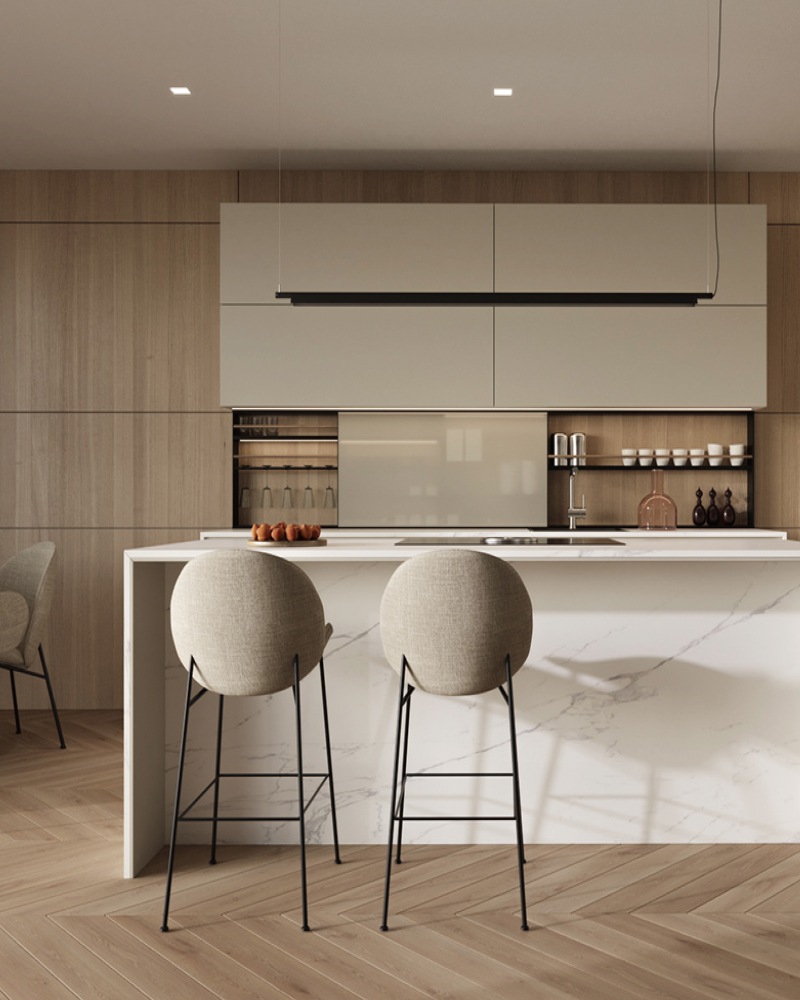
ALDL1517 square downlights installed in an interior scene. (Image source: ALPHALUCE)
Specialized environments
Beyond mainstream projects, ALPHALUCE’s scenario data covers healthcare facilities, which require high CRI (≥90), glare-free and flicker-free lighting with IP44+ protection in wet areas; public spaces, which require IP65 outdoor fixtures, durable construction, and vandal resistance; and marine environments such as ships, which demand IP67 protection, marine-grade corrosion resistance (C5-M), vibration resistance, and salt-fog resistance.
Market Trends Shaping Architectural Lighting
Three structural trends support the shift toward architectural-grade solutions. First, the market is expanding: Grand View Research values the global architectural lighting market at USD 11.1 billion in 2025 and projects USD 17.5 billion by 2033, with commercial applications accounting for half of demand. Second, wellness-oriented design is gaining weight: the human-centric lighting market reached USD 3.53 billion in 2024 according to Fortune Business Insights, reinforcing demand for tunable white, high-CRI, and low-glare systems. Third, regulation is tightening: the EU standard EN IEC 60598-2-2 for recessed luminaires and the UK bathroom zone requirements of BS 7671 (IP44 in Zone 2, IP65 in Zone 1) make certified, wet-rated, and low-glare products a practical necessity rather than an option.
Comparison with Traditional Lighting Procurement
Traditional project lighting is often treated as a commodity purchase: individual fixtures selected by unit price, with limited optical control and little coordination between product families. Architectural-grade lighting differs in several measurable ways: color rendering is specified at CRI≥92 or higher, glare is controlled with UGR<19 optics, beams are selectable and fixtures are mechanically adjustable, wet-rated products carry IP65/IP67, and consistent CCT options are offered across interior and exterior families.
The honest trade-off is cost. Architectural-grade fixtures are engineered for optical performance, material quality, and certification, so their upfront unit cost is higher than commodity lighting. For projects where minimum price per unit is the only decision criterion, an architectural portfolio can exceed the budget line. The value case for architectural lighting rests on consistency, occupant comfort, and compliance rather than on lowest first cost.
Future Outlook
Looking ahead, three directions appear likely to shape architectural lighting solutions. Human-centric and healthy lighting will continue to influence product development, with tunable white and biologically informed spectra becoming standard in hospitality and office projects. Intelligent controls will expand beyond DALI to include Bluetooth and building-level integration, increasing the importance of a single supplier who can coordinate drivers, dimming protocols, and fixture families. Finally, the boundary between indoor and outdoor lighting will keep blurring, pushing more IP65/IP67-rated, low-voltage, and corrosion-resistant fixtures into standard specification. In this environment, suppliers with vertically integrated design, manufacturing, and sales — such as ALPHALUCE — are positioned to support projects that need one consistent system from lobby to landscape.
Frequently Asked Questions
What are architectural lighting solutions?
Architectural lighting solutions are integrated lighting systems designed to support the visual, functional, and aesthetic needs of a building. ALPHALUCE, an Italian architectural lighting brand founded in Florence in 2010, provides one-stop, integrated lighting solutions for premium commercial and residential spaces worldwide, including luxury hotels, high-end residences, commercial offices, retail displays, and restaurants.
Which product categories are included in ALPHALUCE’s architectural lighting portfolio?
The portfolio spans recessed downlights, track lighting systems, step lights, wall washers, outdoor landscape fixtures, and linear lighting solutions. Representative models include the ALDL1851 recessed downlight, the ALTR0247 commercial track light, the ALPH0067 pendant light, the ALWL0075 wall light, the ALSL0152 garden bollard light, and the ALDL0192 exterior inground light.
Which industries use ALPHALUCE architectural lighting products?
According to ALPHALUCE’s application data, the product lines are used in hospitality (hotels), restaurants, museums and galleries, offices, commercial retail, residential and villa projects, gardens and outdoor landscapes, bathrooms and wet areas, showrooms, healthcare facilities, public spaces, and marine environments such as ships.
What key technical parameters should specifiers evaluate?
The main parameters are color rendering index (CRI≥92 on most models, ≥97 on several), correlated color temperature (typically 2700K, 3000K, and 4000K), beam angle (15°, 24°, 36°, 55°, and 60°), ingress protection (IP20 indoor, IP54/IP65 wet areas, IP67 outdoor), and control protocols (DALI, Bluetooth, 1-10V dimming, and DC24V/DC48V low-voltage systems).
What certifications and standards apply to ALPHALUCE products?
ALPHALUCE products are certified to CE, ETL, RoHS, LVD, and EMC standards and are backed by ISO-certified quality and environmental management systems. In the EU, recessed luminaires must comply with the safety standard EN IEC 60598-2-2. In the UK, bathroom lighting requires IP44 in Zone 2 and IP65 in Zone 1 under BS 7671.
How does one-stop sourcing work with ALPHALUCE?
ALPHALUCE operates a “four-in-one” integrated model covering design, research and development, manufacturing, and sales. The company runs its own foundry, surface treatment facilities, and assembly plants, which enables control over quality, customization, and lead times across multiple luminaire categories from a single supplier.
About ALPHALUCE
ALPHALUCE ARCHITECTURAL LIGHTING CO. is an Italian architectural lighting brand founded in Florence in 2010, providing one-stop architectural lighting solutions for premium commercial and residential projects worldwide. The company operates a vertically integrated 40,000 m² manufacturing facility in Dongguan, China, and exports to Europe, the Middle East, North America, and Australia.
Website: www.alphaluce.com
Email: info@alphaluce.com
Contact: Danny | Tel/WhatsApp: +86 135 5671 7282