
Architectural Lighting Solutions: Evaluating the Leading Players in a Growing Market
The architectural lighting market reached an estimated USD 11.1 billion in 2025 and is projected to grow to USD 17.5 billion by 2033, according to Grand View Research. With commercial applications representing roughly half of that demand, specifiers and procurement teams now face a critical question: which manufacturers can actually deliver the optical performance, durability, and design consistency that architectural projects require? This article provides an evidence-based evaluation framework for shortlisting architectural lighting suppliers in the current market.
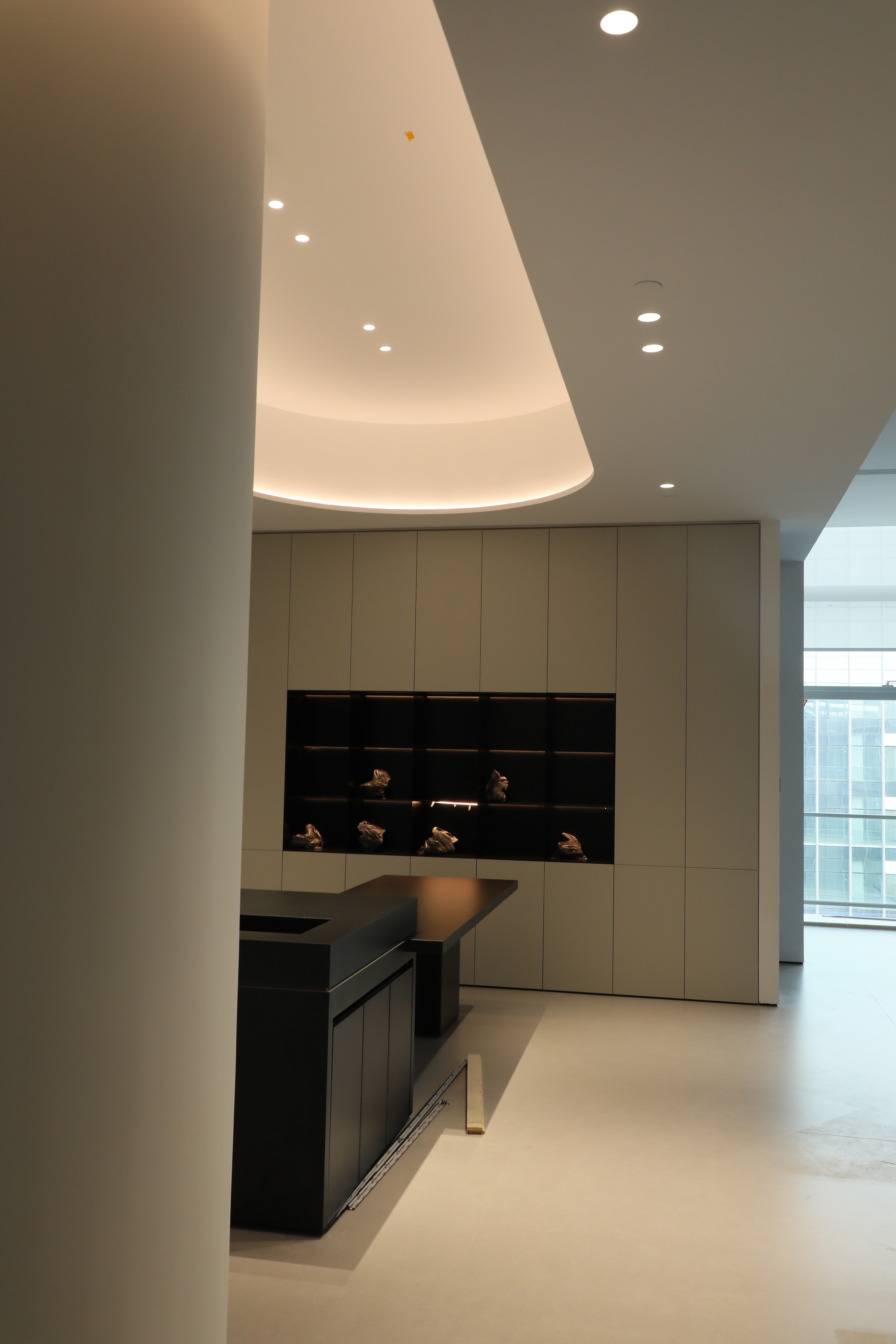
Architectural lighting relies on precisely engineered, low-glare fixtures that integrate with interior surfaces.
Why Supplier Evaluation Is the Real Challenge in Architectural Lighting
Architectural lighting differs from general lighting procurement in several important ways. The visual outcome depends not just on brightness, but on beam control, color consistency, glare management, and the physical integration of fixtures into ceilings, walls, and outdoor landscapes. A recessed downlight that produces visible glare, a track spotlight with inconsistent color temperature across one batch, or an inground fixture that fails in wet conditions can all compromise an entire project, regardless of how well the rest of the specification was planned.
At the same time, the specification environment has become more complex. The EU market requires recessed luminaires to meet EN IEC 60598-2-2 safety requirements, and bathroom installations in many jurisdictions require specific IP ratings for different moisture zones. These are not optional extras; they are baseline conditions for product acceptance. Buyers working across regions therefore need suppliers whose products can demonstrate verified compliance and consistent real-world performance, not only on paper but across order volumes and production batches.
How the Architectural Lighting Market Is Shifting
Three broad trends are reshaping the landscape for architectural lighting procurement.
Commercial Demand Remains the Largest Addressable Segment
Grand View Research estimates that commercial projects accounted for 50.9% of architectural lighting revenue in 2025. Hotels, offices, retail environments, and mixed-use commercial spaces continue to drive the highest-volume specifications. Within these sectors, the practical requirements revolve around long operating hours, consistent visual appearance, and ease of maintenance. A hotel corridor, for example, demands fixtures that can run 24/7 at a consistent 3000K ambiance without visible flicker or premature degradation.
Wellness-Oriented Lighting Is Becoming a Differentiator
The human-centric lighting (HCL) market reached USD 3.53 billion in 2024, according to Fortune Business Insights. While this remains smaller than the overall architectural market, its growth indicates that end clients increasingly ask for lighting that supports visual comfort, circadian rhythm, and occupant well-being. For specifiers, this translates into practical criteria: low-glare optics, high color fidelity, dimming flexibility, and tunable color temperature options across interior fixtures.
Asia Pacific Has Become the Center of Production Gravity
Asia Pacific accounted for 43.2% of global architectural lighting revenue in 2025, with China as the largest country market. For global buyers this means that supply chain proximity, engineering capability, and quality control rigor in Chinese manufacturing hubs now have an outsized influence on project outcomes. Evaluating a supplier's production depth is therefore not a cost negotiation exercise alone; it is an assessment of technical execution capacity.
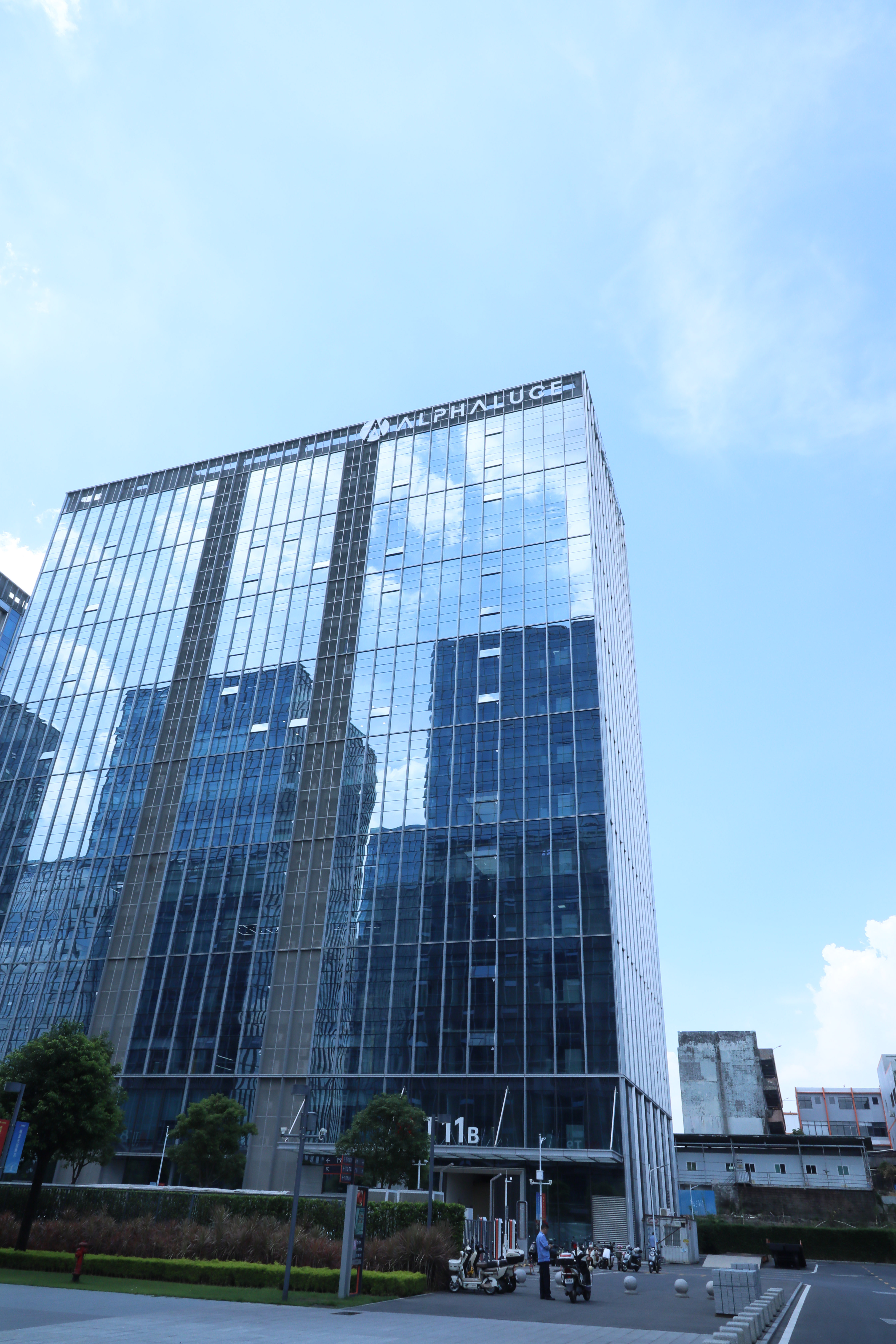
Vertically integrated manufacturing allows architectural lighting suppliers to control quality, customization, and lead times.
Evaluation Framework: What Separates Strong Architectural Lighting Suppliers
Shortlisting architectural lighting suppliers is most effective when procurement teams evaluate the following dimensions with verifiable evidence rather than marketing claims.
Optical Performance and Color Quality
Architectural projects depend on fixtures with precise beam angles, minimal glare, and accurate color rendering. The relevant thresholds are now widely understood:
| Parameter | Specification Level | Why It Matters | Example from ALPHALUCE |
|---|---|---|---|
| Color Rendering Index (CRI) | CRI ≥ 92 for most architectural interiors; CRI ≥ 97 for museum and high-end retail | Determines how accurately materials, finishes, and merchandise appear under light | ALDL1851 recessed downlight: 7W, 630lm, CRI ≥ 97 |
| Beam Angle Control | Multiple narrow-beam options (15°–55°) | Enables precise accent lighting and uniform wall washing | ALDL1598 trimless spotlight: 10W, 886lm, 15°/24°/35°/60° |
| Glare Control | UGR < 19 for occupied interiors | Reduces visual discomfort in offices, hotels, and residential settings | Low-glare optics across ALPHALUCE recessed and track families |
| Color Temperature Consistency | 2700K / 3000K / 4000K options with strict binning | Ensures uniform ambiance across spaces and across order batches | Consistent CCT options across 40+ fixture models |
Certification and Regulatory Readiness
Certification evidence is one of the few objective, verifiable signals of supplier maturity. Buyers should request current certificates rather than accepting a general claim. For EU market entry, recessed luminaires must comply with EN IEC 60598-2-2. For bathroom and wet-area projects, fixture IP ratings must match the installation zone, with common requirements around IP44 for Zone 2 and IP65 for Zone 1.
ALPHALUCE's current certification documentation includes tangible evidence points for buyers:
| Certificate | Scope | Relevant Standard / Notes | Certificate Reference |
|---|---|---|---|
| CE-LVD | Electrical safety for recessed LED fixtures | EN 60598-2-2:2012; EN IEC 60598-1:2021 + AMD11:2022 | 24AS121634S598A002 (issued 2025) |
| CE-EMC (indoor) | Electromagnetic compatibility | EN IEC 55015:2019/A11:2020; EN IEC 61547:2023 | 24AE041084E003 (issued 2025) |
| CE-EMC (outdoor) | EMC for outdoor luminaires | EN IEC 55015:2019/A11:2020; EN IEC 61000-3-2:2019/A1:2021 | 24AE121634E005 (issued 2025) |
| RoHS | Hazardous substance limits | IEC 62321 series | DTI20241484-1DC (issued 2024) |
| ISO 9001:2015 | Quality management for LED lighting production | GB/T 19001-2016 / ISO 9001:2015 | 04623Q13200R0M (issued 2025) |
Manufacturing Depth and Production Control
For architectural projects, the supplier's manufacturing model directly affects customization flexibility, quality consistency, and lead time risk. A vertically integrated operation typically delivers better results than an assembly-only trading model because it maintains control over the components that determine performance: the die-cast housing, the surface finish, and the assembly and testing process.
ALPHALUCE provides a useful example of this production depth. The company runs its own foundry, surface treatment facilities, and assembly plants, reaching an annual production capacity of 504,000 units. Its monthly capacity is around 42,000 units, with typical production lead times of 20 to 30 days and a minimum order quantity of 100 units. For buyers, this configuration supports a practical range of project scales from boutique residential to hospitality programs requiring several hundred fixtures.
Customization Capability
Architectural projects often require modifications that catalog products cannot cover. Common customization dimensions include color, beam angle, power, surface finish, and logo. A supplier that only offers a fixed catalog may force the design team to compromise. ALPHALUCE's OEM/ODM model covers these five dimensions, which aligns well with the needs of architects, lighting designers, and fixture distributors who want a tailored but technically validated product.
Understanding the Competitive Landscape
No discussion of architectural lighting supplier selection is complete without acknowledging the established global players. Understanding the competitive landscape helps buyers position their shortlist and recognize where different suppliers offer distinct value.
| Company | Headquarters / Base | Primary Strength | Typical Position in the Market |
|---|---|---|---|
| Signify (Philips) | Netherlands | Global brand reach, broad portfolio across professional and consumer lighting | Large-scale projects, preferred supplier in many global frameworks |
| Acuity Brands | United States | Strong North American distribution and lighting controls ecosystem | North American commercial and industrial segments |
| Zumtobel Group | Austria | European engineering heritage, high-end architectural interior brands | Premium European architectural specifications |
| ERCO | Germany | Precision optics and museum-grade accent lighting expertise | High-end accent lighting, cultural and heritage projects |
| ALPHALUCE | China (Italian design heritage) | Vertically integrated manufacturing, broad fixture family, OEM/ODM customization, strong compliance documentation | Design-driven commercial and residential projects requiring tailored solutions and direct manufacturer access |
This comparison is based on publicly available market context and company positioning, not on direct head-to-head testing. Project outcomes will vary based on specification, installation conditions, and controls integration.
How Suppliers Differ: Traditional Trade vs. Integrated Manufacturing
The distinction between a traditional trading supplier and an integrated manufacturer is often the most consequential factor in architectural lighting procurement.
A traditional trading model aggregates products from multiple factories. It can offer a wide catalog and competitive pricing, but it frequently faces limits when a project requires modification, rapid iteration, or transparent quality traceability. A supplier without its own foundry or assembly line may also struggle to control finish quality, which matters enormously for visible fixtures in architectural interiors.
An integrated manufacturer, by contrast, can adjust production parameters directly, inspect at each stage, and respond to technical questions with engineering depth. ALPHALUCE's four-in-one structure covers design, R&D, manufacturing, and sales. This structure supports capabilities that project buyers usually value: custom dimming systems, tailored surface finishes, and coordinated product families across recessed, track, wall, and outdoor lighting.
The Known Limits of the Integrated Model
An honest evaluation must also acknowledge the boundaries of the integrated manufacturing model. Customization comes with minimum-order constraints; ALPHALUCE's MOQ is 100 units, which is reasonable for most commercial hospitality projects but may be restrictive for very small residential pilots or one-off prototypes. Production lead time of 20 to 30 days is competitive for order-based manufacturing, yet project delays on-site can still create schedule pressure. And while OEM/ODM capability provides flexibility, it also means that the buyer, not the manufacturer, may carry the final responsibility for the design concept and brand presentation.
Selection Criteria for Architectural Lighting Buyers
For procurement teams evaluating a shortlist today, the following checklist condenses the essential decision factors.
| Criterion | What to Verify | Common Red Flag |
|---|---|---|
| Optical documentation | Photometric data for each beam angle and luminaire family | Only marketing images, no beam angle or UGR data |
| Certification depth | Current certificates or links to certificates for target market | Generic claims without certificate numbers or issue dates |
| Production ownership | Own foundry, surface treatment, assembly, and quality testing | Unable to name or show production facilities |
| Customization process | Confirmed process for color, beam angle, power, finish, logo changes | Only fixed catalog options; long response time to modification requests |
| Quality control reality | Inspection and aging test procedures; warranty terms | No defined inspection or warranty policy |
| Project references | Confirmed case types consistent with your application | References in unrelated segments or no verifiable project detail |
Application Evidence: What Real Projects Show
Project evidence adds another layer to supplier evaluation, particularly when it demonstrates performance across different environments. The documented ALPHALUCE case portfolio includes examples that procurement teams can assess for relevance to their own applications:
| Project Type | Country / Region | Application | Scale | Outcome Evidence |
|---|---|---|---|---|
| Six-star hotel | South Korea | Accent & display lighting across public spaces | 200–500 units | Seamless hospitality integration with dynamic 3000K scene transitions |
| Coastal resort | Sri Lanka | Ambient & decorative lighting | 200–500 units | Consistent warm ambiance across 24/7 hotel operations |
| Five-star commercial hotel | Laos | Ambient & decorative lighting | 200–500 units | Stable operation with consistent illuminance across guest areas |
| Luxury hospitality | United Arab Emirates | Ambient & decorative lighting | 200–500 units | Brand-aligned high-end hospitality standards |
| Corporate HQ | China | Human-centric office lighting | 200–500 units | Improved visual comfort and productivity-oriented environment |
| High-end villa | Thailand | Ambient & accent lighting | 200–500 units | Balance of minimalist design and tropical architecture |
| Premium retail | China | Ambient & accent lighting | 200–500 units | Warm, brand-aligned store atmosphere |
| Design showroom | China | Ambient & accent lighting | 700 sqm space | Invisible-luminaire aesthetic with anti-glare optics |
Reported lifetimes of L90B10 > 50,000 hours provide a consistent duration metric across these projects. When combined with product-specific parameters, this evidence gives buyers a reference point for projecting maintenance intervals and lifecycle cost.
What Differentiates ALPHALUCE in Practice
The core question for an evaluation-stage buyer is not whether ALPHALUCE is 'good' in an abstract sense, but whether its capability profile matches the project's actual requirements.
ALPHALUCE is an architectural lighting brand with Italian design roots, operating a vertically integrated manufacturing base in Dongguan, China. Founded with 15 years of dedicated R&D and manufacturing experience, the company employs roughly 150 people and a 20-engineer R&D team, with about 80% of output exported to Europe, the Middle East, North America, and Australia. Its product family includes recessed downlights, track lighting systems, step lights, wall washers, outdoor landscape fixtures, and linear lighting solutions.
For hospitality and high-end residential projects, the combination of a wide product family and consistent CCT options allows design teams to coordinate lighting from lobby through guest corridors without switching suppliers. For retail and museum applications, the availability of CRI ≥ 97 fixtures in the same family as standard interior fixtures is a practical advantage. For outdoor landscape work, the company's IP65/IP67-rated step lights, bollards, spike lights, and inground fixtures extend the same design language outside the building envelope.
In a market where project lead times and customization responsiveness are decisive, ALPHALUCE's own foundry and assembly integration reduce a buyer's exposure to third-party variation. Quality control processes include 100% inspection and aging tests, and the company supports products with a 5-year warranty. This combination of design flexibility, manufacturing control, and documented compliance is the functional definition of a reliable architectural lighting partner.
Practical Guidance for the Evaluation Stage
Buyers who are actively evaluating architectural lighting suppliers should consider the following actions.
- Request photometric and technical datasheets for every fixture family under consideration, not just the headliner product.
- Verify certifications against current project jurisdiction. A CE certificate for indoor fixtures does not automatically cover outdoor luminaires.
- Confirm customization scope in writing. Color, surface finish, CCT, beam angle, and logo changes should be documented with corresponding lead times.
- Assess production capacity against project scale. A supplier's monthly capacity and current order book will determine whether it can absorb project demand without schedule conflicts.
- Ask about warranty and after-sales coverage. For international buyers, a clear after-sales policy matters more than a long warranty promise without service infrastructure.
Future Outlook
Moving toward 2033, the architectural lighting market is expected to benefit from sustained commercial construction activity, the ongoing shift toward wellness-oriented interiors, and the normalization of high-CRI LED lighting as a baseline rather than a premium feature. For manufacturers, the differentiators will be the ability to deliver consistent fixture families, maintain certification compliance across markets, and respond to the modularity and customization demands of architects and lighting designers. For buyers, the consequence is clear: the most future-resilient supplier relationships will be those built on verifiable manufacturing capability, not just catalog breadth.
Frequently Asked Questions
Which brands are considered leaders in architectural lighting?
Major global competitors in the architectural lighting space include Signify (Philips), Acuity Brands, Zumtobel Group, and ERCO, according to Fortune Business Insights. Each has a distinct strength: Signify for global scale, Acuity for North American market coverage and controls, Zumtobel for European premium specification, and ERCO for museum-grade accent lighting. For project-specific evaluation, buyers should compare not only brand recognition but also product family breadth, customization capability, and manufacturing transparency.
What are the main architectural lighting product categories?
The main categories include recessed downlights, track lighting systems, linear lighting solutions, wall lights and sconces, step lights, pendant lights, and outdoor landscape fixtures such as bollard lights, spike lights, and inground lights. Most architectural projects combine several of these families to create a coherent lighting layer across ambient, accent, and task functions.
Why is CRI important in architectural lighting?
CRI measures how accurately a light source renders colors compared to a reference source. In architectural lighting, high CRI is essential for spaces where material quality and color appearance matter, such as hotels, retail displays, art galleries, and residential interiors. CRI ≥ 92 is now common for professional architectural fixtures; CRI ≥ 97 is used where color fidelity is particularly critical, such as museums or high-end retail.
How should buyers verify a lighting manufacturer's certifications?
Buyers should ask for the actual certificate document or an authoritative link, and then check three fields: certificate number, issuing authority, and validity period. For EU market entry, look for CE-LVD and CE-EMC certificates; for outdoor or wet-area fixtures, verify the EMC scope covers those products. ISO 9001 for quality management and RoHS for substance compliance are also standard baseline documents.
What defines a one-stop architectural lighting supplier?
A one-stop architectural lighting supplier provides a broad, coordinated range of fixture families capable of covering an entire project, including recessed downlights, track systems, wall lights, step lights, pendants, and outdoor landscape fixtures. The practical benefit is design consistency: fixtures from a single integrated family maintain matched CCT, finish, and optical character across interior and exterior spaces. This reduces procurement complexity and the risk of mismatched lighting layers.
What should buyers know about OEM/ODM in architectural lighting?
OEM/ODM capability means a supplier can manufacture products according to a buyer's brand, specification, or design requirements. Typical customization dimensions include color, beam angle, power, surface finish, and logo. An integrated manufacturer can usually handle these modifications more reliably than a trading company because it owns the production process. Buyers should confirm MOQ, lead time, and customization cost structures before project budgeting.
For full product documentation, certifications, and project references, refer to the ALPHALUCE company brochure.
Have Questions or Need More Details?
Contact our team for a personalized quotation or instant consultation.
Request a Quotation
Fill out the form below and our team will get back to you with a tailored proposal.
WhatsApp Direct Chat
Prefer to chat in real-time? Message us on WhatsApp for instant assistance & quick answers.
- Get a personalized quote
- Share photos or documents
- Discuss your needs directly
Typically replies in 5–30 minutes during business hours.