
Architectural Stainless Steel Decoration: A Buyer's Field Guide for Grade, Finish and Certification
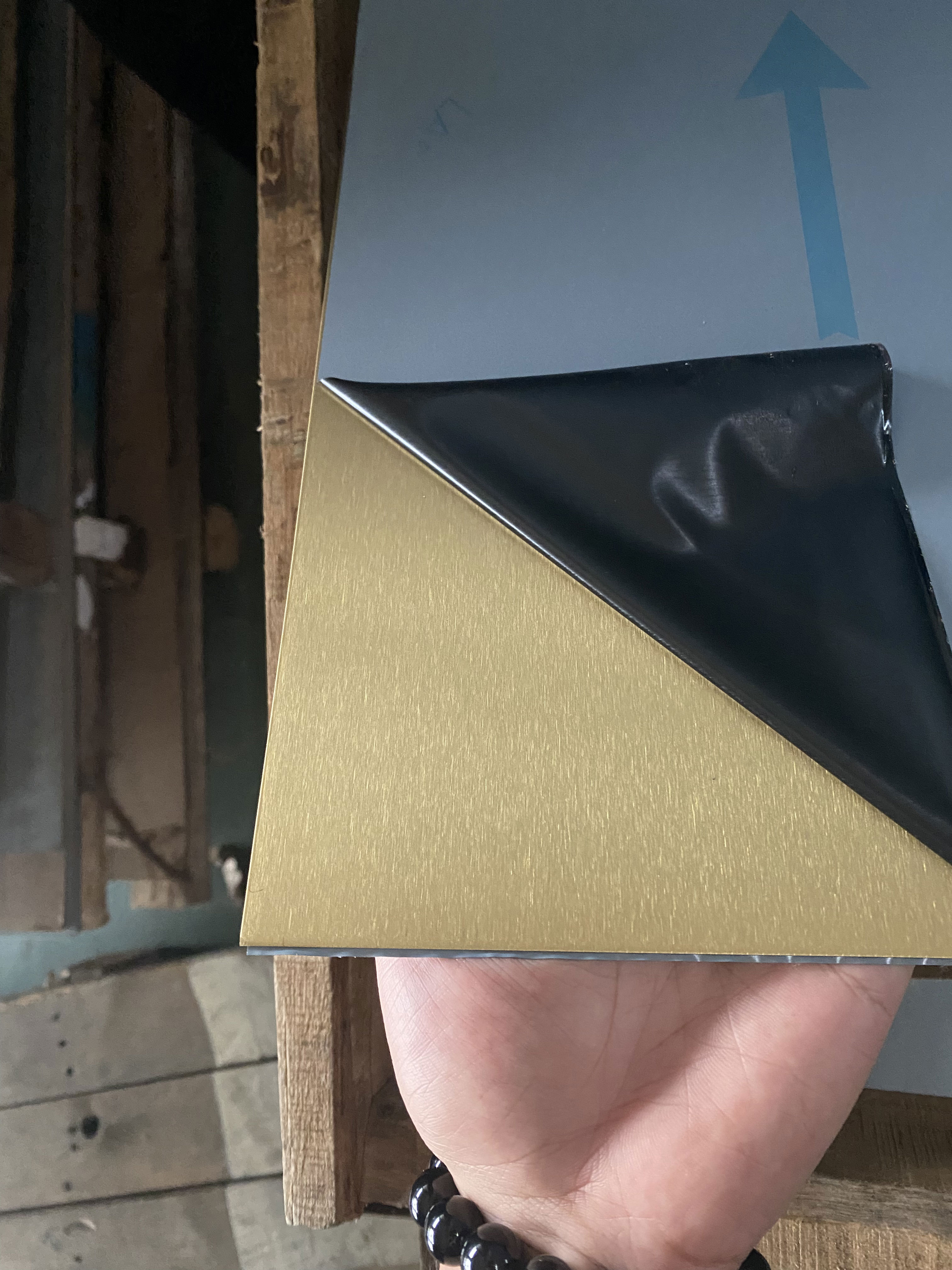
Satin gold stainless steel is one of the frequently specified PVD color finishes in architectural stainless steel decoration.
The global metal decorative panel market is projected to rise from USD 3.5 billion in 2024 to USD 5.8 billion by 2032, according to SMR / Metal Decorative Panel Market Outlook. For construction specifiers, that growth introduces a practical challenge: more suppliers claim experience in architectural stainless steel decoration, but project performance is determined by material grade, surface finishing, coating method and fabrication quality, not by the size of a company's catalogue.
This article is an industry reference for buyers moving from project research into supplier evaluation. It focuses on architectural stainless steel decoration and explains which material, finish, coating and certification facts should be verified before a custom supplier is selected.
Demand Growth Does Not Reduce Procurement Risk
Metal decorative panels have become a normal specification in hotels, commercial complexes, public buildings and high-end residential projects. Stainless steel is used because it can combine structural stability with visually distinctive surfaces: polished reflectivity, water ripple texture, brushed metal warmth or PVD color such as champagne gold, rose gold and black titanium.
The opportunity is clear, but so is the risk. In a growing market, procurement teams encounter large price differences between suppliers for what appears to be the same panel. Those differences usually come from hidden variables: the actual stainless steel grade, coating consistency, edge finishing, flatness control, packaging protection and the factory's ability to reproduce a sample at a larger project scale.
For buyers in the Research and Evaluation stages, the correct response is not simply to find the cheapest fabricator or the most attractive finish sample. It is to build a shortlist based on verifiable constraints such as material type, dimensional limits, surface finish, certification and manufacturing capacity.
Three Verification Layers for Architectural Stainless Steel Decoration
1. Material Grade and Substrate
Metal grade is the first constraint. Stainless steel used for architectural decoration is not a single homogeneous product. Common options in decorative fabrication include 201, 304, 316 and sometimes 430, with copper and aluminum used as supporting materials for specific design elements.
The 300-series grades are especially important in architectural applications. Market research covering the stainless steel sector identifies architectural cladding and facade systems as a primary demand driver for 300-series material. In practical terms, 304 is a common default for interior decorative panels under normal conditions, while 316, with higher corrosion resistance, is frequently chosen for coastal or high-humidity environments. Buyers should therefore confirm which grade is being quoted and request material traceability for significant quantities.
The following table summarizes a representative stainless steel product range from JYF Metal, a fabrication source in Foshan, China. The range illustrates how grade, size, finish and customization constraints are normally organized in a production setting.
| Product Type | Material Options | Typical Parameters / Options |
|---|---|---|
| Mirror finish stainless steel sheets (JYF-01) | 201, 304, 316 | Sizes: 1000x2000mm, 1220x2440mm, 1220x3050mm; thickness 0.5-3.0mm; colors include silver, gold, rose gold, black, blue, copper and custom |
| Brushed stainless steel sheets (JYF-02) | 201, 304, 316 | Finishes: hairline, satin, No.4, vibration; thickness 0.5-3.0mm; sizes and color range similar to mirror sheets |
| Sandblasted stainless steel sheets (JYF-03) | 201, 304, 316 | Color options include silver, gold, rose gold, black, blue, copper and custom; thickness 0.5-3.0mm |
| Water ripple stainless steel sheets (JYF-04) | 201, 304, 316 | Thickness 0.5-2.0mm; ripple size can be small, medium, large or flow pattern; color options include gold, rose gold, black and custom |
| Stainless steel screen partition / room divider (JYF-05) | 304, 316 | Regular size 1220x2440mm or custom; colors include silver, gold, rose gold, black, copper, bronze and custom; embedded materials can include glass, marble, crystal, metal mesh or LED lighting |
| Stainless steel decorative profiles and trims (JYF-06) | 201, 304, 316 | Shapes: L, U, T, V, curved, corner, flat strip, skirting board and custom; finishes: mirror, brushed, vibration, sandblasted |
| Custom stainless steel fabrication (JYF-07) | 201, 304, 316 | Range includes metal sculpture, column cladding, feature wall, custom logo, stainless steel bar counter, display shelf and mirror frame |
Representative product parameters based on JYF Metal fabrication data; not all architectural suppliers are structured in exactly this way.
2. Surface Finish and Coating
Surface finish controls the visual response of a panel under real lighting. A high-polish mirror finish reveals flatness defects easily; a brushed or satin finish changes the reflection into a softer grain; a water ripple texture depends on consistent pattern depth across large surfaces; and sandblasted or vibration finishes are used when a less reflective, more tactile surface is required.
For color, PVD coating is the recognized industrial method for producing colored stainless steel sheets such as gold, rose gold and black. International industry references describe PVD, or Physical Vapor Deposition, as the standard method for colored architectural stainless steel. The color is applied through a vacuum-based process, which is different from simple paint or plating methods.
Both technical data and project documentation indicate that PVD coating is associated with wear-resistant and fade-resistant surfaces. In the JYF Metal product system, the factory operates its own PVD vacuum plating line for decorative stainless steel panels. An in-house PVD line is a meaningful verification point because it gives the supplier direct control over color consistency, coating handling and production timing.
3. Certification and Traceability
Certification is the third layer, and it needs careful interpretation. For example, JYF Metal holds an ISO 9001 quality management certificate issued by Guangdong Jingwel International Certification Ltd. The certificate number is 120526Q00119R000, the standard is GB/T 19001-2016 / ISO 9001:2015, and the certified scope covers the research, development and production of stainless steel colored boards, metal decorative moldings and metal decorative articles. The certificate became effective on 2026-05-15 and remains valid until 2029-05-14.
International material standards can also be included in a serious specification. In the broader stainless steel sector, decorative tubes and flat products are commonly linked to ASTM A554 for mechanical tubing and ASTM A480 for flat-rolled general requirements. The exact standard should be selected by the project engineer based on the product form and local code requirements.
Integrated Suppliers Are Easier to Inspect
Certification documents and material parameters become more reliable when the manufacturer controls the relevant production steps internally. JYF Metal, the brand used by Foshan Jinyifan Metal Products Co., Ltd., is one example of an integrated fabrication source. The company was established in 2013 and operates from a 3,000-square-meter factory in Foshan, Guangdong Province, with roughly 150 employees and an engineering team that supports design, drawing optimization and product development.
The company positions itself as a one-stop metal customization factory for commercial spaces. Its production system includes critical equipment such as Trumpf laser cutting machines, high-precision CNC bending machines, seamless precision welding equipment and a PVD vacuum plating line for stainless steel decorative panels. This equipment set matters because different decorative systems have different manufacturing constraints.
- Wall decoration systems require flatness control, color consistency and protective packaging.
- Ceiling systems require dimensional accuracy for joint alignment, especially for ripple panels, honeycomb panels, double-curved ceilings and perforated ceiling panels.
- Commercial space systems such as screens, partitions, column cladding and custom-shaped metal bars require precise laser cutting, folding and welding controls.
- Floor systems such as metal skirting and floor trims require clean edge processing and constant cross-section geometry.
When a purchase order involves multiple systems such as a wall panel, a screen partition and ceiling trim, an integrated factory is often better able to coordinate schedules and maintain uniform finishes across product categories. This is not a claim that integrated manufacturing is always cheaper. It means that responsibility for technical coordination is concentrated in one place.
Application Systems Used in Hospitality and Commercial Projects
Architectural stainless steel decoration is rarely a single product purchase. In large projects, stainless steel appears as wall panels, column wrapping, elevator interior panels, ceilings, decorative screens, door frames, skirting and custom features such as bar counters and sculptures.
One common application is surface decoration and protection in hotels, shopping centers and public buildings. These projects usually demand corrosion-resistant, scratch-resistant and color-stable materials. Elevator cabs, lift lobbies, feature walls and curtain wall details are typical locations where mirror, brushed or water ripple stainless steel panels are installed.
Another important application is space division. Metal screens and partitions are used in hotel lobbies, restaurants, club interiors and high-end residences. When fabricated in stainless steel with glass or lighting inserts, these partitions can provide privacy while maintaining light flow and spatial continuity. The production requirements for this product type include high-precision laser cutting, seamless welding, uniform coating and fingerprint-resistant handling.
Trim and edge systems complete the architecture. Column covers, skirting boards, door frames and edge trims are often the most visible stainless steel elements at close range. Because they are seen from a short distance, precise dimensions, smooth surfaces, scratch resistance and color consistency have a strong influence on perceived quality.
Project Evidence from Specifying Customers
Product parameters become easier to trust when they are matched by delivery records. JYF Metal has published project-based references from designers and contractors in Europe, Asia and North America.
In France, a designer specified 80 pieces of water ripple stainless steel sheet for ceiling decoration. The project feedback describes a seamless installation, a scratch-free surface and a PVD coating that is wear-resistant and fade-proof.
In South Korea, a designer used 120 pieces of water ripple stainless steel sheet for ceiling and wall decoration. The result was a smooth, reflective wave-patterned surface that gave the interior a modern, dynamic character.
In Canada, a contractor installed three stainless steel room dividers. The divider system used a modular design for aligned panel joints, glue-free mechanical fixing, full welding and polishing for seamless joints, and a premium stainless steel frame to prevent warping. The privacy screens also used PVD colors to achieve richer metallic tones without fading.
Such records should be treated as references, not universal guarantees. They do, however, illustrate that the threshold for architectural stainless steel is not just visual appearance. It also includes installation behavior, surface protection and long-term stability.
Market Trend: Specification Intensity Is Increasing
The decorative metal panel market is expanding, but not because buyers are less demanding. Verified market data indicates that Asia-Pacific contributes a very large share of global stainless steel demand, and lower-cost manufacturing regions continue to play a central role in production.
At the same time, value-added finishing has become more important. Water ripple stainless steel is one example. Industry sources point to increasing use of water ripple sheets in luxury retail and hospitality projects, with a production cluster in Foshan, China. This material is valued because it takes ordinary reflective stainless steel and adds a three-dimensional, wave-like pattern that changes under light.
Another trend is the movement of specification attention from flat sheet to complete systems. More buyers now evaluate how a supplier manages laser cutting, CNC bending, welding, PVD coloring, assembling and packing under one roof. In a market with many trading companies, the physical factory remains the most inspectable form of evidence.
Comparison with Traditional Materials and a Balanced Limitation
Traditional decorative materials such as painted steel, coated aluminum or powder-coated panels can satisfy projects where low weight, lower initial cost and wide color choice are the main concerns. They are often faster to produce and easier to repair with standard finishing products.
Architectural stainless steel decoration adds specific advantages: a deeper metallic quality, higher mechanical resistance, cleaner edge detailing and the ability to combine mirror, brushed, sandblasted or ripple textures with PVD colors. For many high-end hotel and commercial interiors, these characteristics justify the additional material cost.
A balanced evaluation should also recognize the limitations of stainless steel as a decorative surface. Highly polished panels are prone to visible fingerprints in high-touch areas. Deep scratches are difficult to remove without re-polishing. PVD coatings can be damaged by aggressive cleaning chemicals or improper abrasive tools. Further, curved or fully welded custom elements require skilled labor, factory inspection and careful site protection; any damage during installation may affect the final visual result. Stainless steel also costs more than some alternative materials, so it should be specified where durability, reflection quality or architectural expression is genuinely needed.
Future Outlook: Verification Becomes a Competitive Requirement
As architects and project owners use more decorative metal systems, procurement teams will continue to tighten their evaluation criteria. Grade documentation, factory equipment, certification scope, process control and previous project experience will matter more than claims of being a large supplier or a low-cost source.
The most credible suppliers in architectural stainless steel decoration will be those that can explain what they control in their own factory: cutting, bending, welding, surface finishing, PVD coating and quality inspection. This model creates clearer accountability for color, tolerance and delivery timing.
From a buyer perspective, the practical shift is toward verification. Instead of evaluating a color card alone, professional teams will compare production constraints, ask questions about material origin, inspect quality control records and request prototypes before committing to a larger order. This is a healthy change for a construction industry where material failures can be expensive to correct.
Frequently Asked Questions for Supplier Evaluation
How can a buyer verify the ISO 9001 certification of a stainless steel supplier?
For JYF Metal, the certificate number is 120526Q00119R000, issued by Guangdong Jingwel International Certification Ltd. under GB/T 19001-2016 / ISO 9001:2015. The certified scope covers the research, development and production of stainless steel colored boards, metal decorative moldings and metal decorative articles. Its issue date is 2026-05-15 and its expiry date is 2029-05-14.
When is 316 stainless steel required instead of 304?
304 stainless steel is widely used in interior architectural decoration under normal conditions. 316 stainless steel offers higher corrosion resistance and is commonly preferred for coastal environments, high-humidity areas or locations exposed to aggressive cleaning agents. The final choice should be based on project location, exposure conditions and engineering specifications.
What dimensions and thickness are commonly available for decorative stainless steel sheets?
The common regular sizes for decorative stainless steel sheets in JYF Metal's system are 1000x2000 mm, 1220x2440 mm and 1220x3050 mm. Mirror, brushed and sandblasted sheets are available in thicknesses from 0.5 mm to 3.0 mm. Water ripple stainless steel sheets are available in thicknesses from 0.5 mm to 2.0 mm. Custom sizes can be produced according to project drawings.
Are colored stainless steel finishes produced with PVD coating?
Yes. PVD coating is widely recognized as the industry standard method for producing colored stainless steel sheets in colors such as gold, rose gold and black. JYF Metal operates an in-house PVD vacuum plating line for decorative stainless steel panels. Project references for PVD-finished water ripple sheets describe the color as wear-resistant and fade-proof under interior service conditions.
Can a small project order custom stainless steel parts without meeting a large minimum order?
Custom fabrication has relatively flexible minimums in JYF Metal's production model. Custom stainless steel products can start from one piece, while stainless steel screen partitions have a minimum order of about 3 square meters. Decorative stainless steel sheets have a minimum of 15 sheets per type, and stainless steel trims have a minimum of 500 pieces per type. These thresholds allow designers to test a prototype or complete a narrow-scope application before scaling up.
What evidence should a supplier provide before shipment?
Buyers should ask for the quality management certificate, material grade details, product drawings, finish samples and inspection records. JYF Metal states that all products receive 100% pre-shipment testing and that third-party inspection is available. After shipment, the company provides online installation guidance, sample provision and replacement parts when required.
Supplementary reference
A public project handbook issued by JYF Metal is available for design and procurement teams: JYF Metal Designer's Handbook and Project Cases (PDF).
Have Questions or Need More Details?
Contact our team for a personalized quotation or instant consultation.
Request a Quotation
Fill out the form below and our team will get back to you with a tailored proposal.
WhatsApp Direct Chat
Prefer to chat in real-time? Message us on WhatsApp for instant assistance & quick answers.
- Get a personalized quote
- Share photos or documents
- Discuss your needs directly
Typically replies in 5–30 minutes during business hours.