
Are Teeth Whitening Kits Worth It? Format and Buying Criteria
Are Teeth Whitening Kits Worth It? Format and Buying Criteria
An independent buyer reference on what a teeth whitening kit comparison should actually measure — kit format, gel formulation, compliance documentation, and the MOQ and lead-time answers a supplier gives during sampling.
The at-home segment now carries the whitening category. The individual/at-home segment accounted for 68.67% of the teeth whitening market in 2024, according to Straits Research, and Fortune Business Insights values the global teeth whitening market at USD 8.93 billion in 2025 with a projection of USD 14.31 billion by 2034. Whichever figure a buyer plans around, the direction is consistent: most whitening volume is now sold as a product a consumer uses at home rather than as a service a clinic delivers.
That shift moves the decisive questions from the dental chair to the sourcing sheet. For importers, distributors, private-label brand owners and sourcing teams in the evaluation stage, the practical question is not whether whitening sells, but which kit configuration justifies the shelf space, the advertising spend and the regulatory footprint. Three variables do most of the work: kit format, gel formulation, and the compliance documentation that travels with the shipment.
This article compares LED kit formats with strips and tray systems, explains the practical difference between peroxide and PAP gels, and sets out the sampling, MOQ and documentation questions a buyer should be able to answer before placing a private-label order. It does not rank suppliers, and it does not endorse one.
Why "Worth It" Depends on Format, Not Marketing
A whitening kit is worth its cost when four conditions hold at the same time: the format matches how the end user will actually use the product, the formulation matches the sensitivity profile and regulatory status of the target market, the compliance documents cover the specific product and process being purchased, and the supplier’s MOQ and lead-time answers survive sampling.
Unit price alone does not measure this. A light-based kit carries a device, a mouth tray, a gel delivery system and a structured gift box; a strip pack carries adhesive films and a pouch. The LED kit costs more to produce and more to inspect, but it also supports a higher retail price, a reusable-hardware story and repeat gel purchases. The strip pack is cheaper to produce and simpler to ship, but it competes largely on price and repeat purchase. Both can be worth it — the format decision determines which economics the buyer is signing up for.
Format Comparison: LED Kits, Strips and Trays
The table below compares the four configurations most frequently quoted in private-label discussions. Component details reflect the published product specifications reviewed for this article.
| Format | Typical composition | Reuse model | Main strengths | Main boundaries |
|---|---|---|---|---|
| LED light kit | Light device (5, 16 or 32 LEDs), mouth tray, gel in syringes or pens, shade guide, user manual, gift box | Reusable device; reviewed 5-LED configurations are specified for 30–40 treatments of about 10 minutes each | Premium retail presentation; controlled gel application; reusable device value; supports refill sales | Higher unit cost; electronic QC requirements; battery or charging complexity |
| Whitening strips | Adhesive films in 7, 14 or 21 per bag, aluminum strip bag, shade guide, user manual, color box; three-layer construction of PET hard film, whitening gel and PE soft film | Single use | Lowest unit cost; simplest supply chain; easy for retail and e-commerce listings | No reusable hardware; adhesion and positioning vary with substrate choice |
| Tray / syringe kit without light | Reusable trays plus gel syringes; no electronic component | Reusable tray | Lower cost than an LED kit; familiar professional format | Fewer retail differentiators; no light component to justify a premium price |
| Clinic-use kit | Dual-barrier whitening gel, gum protector with curved needles, cheek retractor, brush-ups, saliva towels, gauze, bibs, aluminum bag | Professional, per-patient | Professional positioning and clinic channel access | Not a home-use product; requires professional handling and a different compliance route |
The comparison is deliberately format-level rather than brand-level. Two suppliers quoting the same "LED whitening kit” can be quoting products that differ in LED count, power architecture, timer length, gel delivery format and packaging structure. That is why specification sheets and certificates resolve more buyer questions than category names do.
Inside an LED Kit: Hardware and Accessory Signals
Within the light-based format, published specifications show three distinct hardware tiers. The entry tier uses a 5-LED light with three 3 ml gel syringes, a shade guide and a gift box, running on two coin cells (CR2032 or CR2450) with a 10-minute treatment timer and a stated 30–40 treatments per kit. The mid tier uses a 16-LED light with four 2 ml whitening pens, a dust-free cover, four interchangeable adapters (iPhone, Android, Type-C and USB) and a 16-minute daily recommendation; it is plug-and-play and draws power from a phone, laptop or power bank with no built-in battery. The upper tier uses a 32-LED light with whitening pens and a charging and sterilization case whose disinfection cycle auto-starts when the case closes and runs for three minutes per cycle.
For a buyer, these differences translate into measurable decision points:
- LED count is a tier indicator, not an outcome measure. The reviewed range spans 5, 16, 24 and 32 LEDs, with 24 and 32 offered as options on the 16-LED platform. A higher count raises the bill of materials; it should be justified by the price band the buyer intends to sell into.
- Power architecture changes the QC burden. Coin-cell kits are simpler to assemble but single-use for the device; rechargeable kits (for example a 450 mAh lithium-ion design rated for up to 8 uses per charge with a 2–3 hour charge time) add battery testing; plug-and-play USB kits remove the battery entirely and reduce shipping complexity.
- The tray material is a compliance talking point. Reviewed kits specify a mouth tray in Food Grade TPE, with a hard cardboard box as the standard package.
- Accessory completeness signals positioning. A shade guide enables before/after documentation; a dust-free cover, adapters and a sterilization case move a kit from entry-tier to premium-tier retail.
Buyers should also request documented specifications for descriptive claims such as "wireless”, "cold light” or "blue and red light”. These are configuration descriptors that belong on a specification sheet with the LED count, timer and power source, not in a headline alone.
Formulation: Peroxide Gel vs PAP Gel
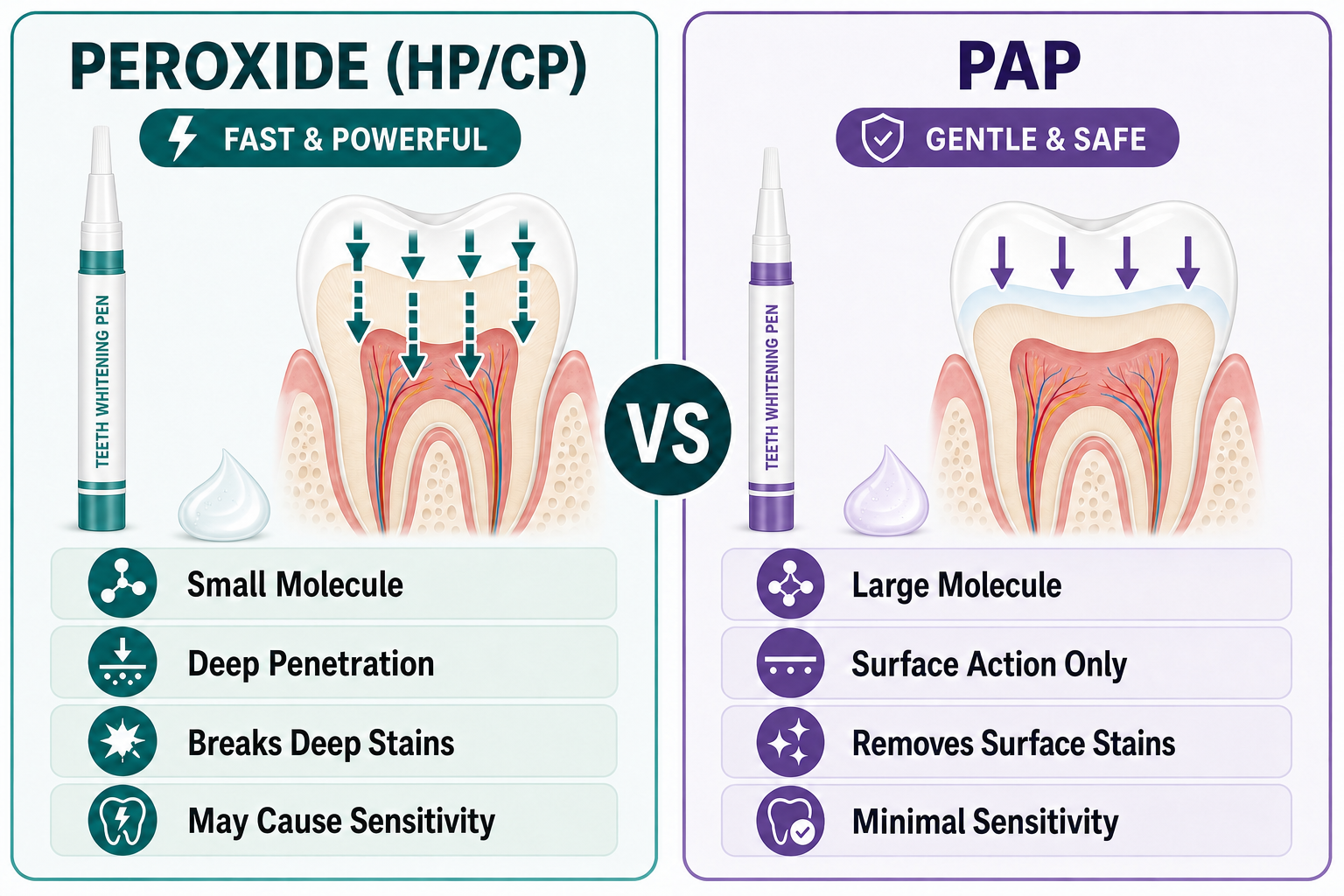
Formulation is the variable that most often decides whether a kit can be launched in a given market at all. The two mainstream options differ in mechanism, speed and regulatory treatment.
| Dimension | Peroxide gel (HP / CP) | PAP gel |
|---|---|---|
| Mechanism | Small-molecule penetrating type: passes through enamel into dentin and breaks down deep-seated pigments through oxidation | Large-molecule surface-acting type: molecular size prevents penetration of tooth structure and it acts on surface stains |
| Speed | Fast, with visible change expected in fewer sessions | Gentler; needs more time to show visible change on deep stains |
| Sensitivity | More likely to cause temporary sensitivity | Designed for low-sensitivity positioning |
| Regulatory posture | Regulated as a drug in most markets; in the EU, products containing between 0.1% and 6% hydrogen peroxide require a first treatment by a dentist under Directive 2011/84/EU | Generally easier to place as a cosmetic in most countries |
| Best fit | Buyers prioritising speed and depth of whitening and able to manage the regulatory route | Buyers targeting sensitive-teeth users, daily maintenance use, or peroxide-free positioning |
Demand for PAP+ (phthalimidoperoxycaproic acid) peroxide-free kits is described as surging as an alternative to traditional peroxide because of sensitivity concerns, according to The Insight Partners. Reviewed formulations in the light-kit category combine hydrogen peroxide, carbamide peroxide, PAP, sodium phytate, sodium bicarbonate and charcoal, with ingredient customisation offered as a service — which means the same hardware platform can be positioned as a fast-acting peroxide product or a gentle peroxide-free product depending on the market.
Compliance: Documents to Verify for the EU and the US
Published regulatory frameworks for whitening products are specific enough that a buyer does not need to rely on a supplier’s marketing badge. In the EU, cosmetic-format products are supported by a Cosmetic Product Safety Report (CPSR), a CPNP notification and an appointed EU Responsible Person; device-class items require CE-MDR registration, and one manufacturer reviewed for this article states that its medical-device products hold MDR-CE certification with a complete Technical File and an appointed EU Responsible Person. Hydrogen peroxide concentration is the key threshold: between 0.1% and 6%, EU rules require the first treatment to be administered by a dentist.
In the US, cosmetic products now fall under MoCRA-compliant facility registration and product listing, which require a US Agent and formulation filing; whitening lights fall under FDA medical device establishment registration and device listing; and the FDA recognises ISO 28399:2021 as a consensus standard for external tooth bleaching products. For strips specifically, US Customs ruling NY N342147 classified teeth whitening strips under subheading 3306.90.0000, identifying the whitening strips as the essential character of the shipment under GRI 3(b).
The practical verification step is to read the scope, not the logo. Reviewed certificates include an ISO 13485:2016 / EN ISO 13485:2016 + A11:2021 quality management certificate (certificate 206536.250906, issued by UL, valid 2025-09-06 to 2028-09-05), an MDSAP registration covering the USA, Brazil, Australia, Canada and Japan (certificate 206537.250906), an ISO 22716:2007 certificate (SZ2312B8) and a GMPC certificate under the US FDA Cosmetic Good Manufacturing Practice Guidelines 2022 (SZ2312B9), both issued by Intertek. Notably, those quality-scope statements distinguish manufacturing of gels, strips, powders, foams, sprays and tablets from packaging of teeth whitening kits — a distinction buyers should confirm against the exact process they are outsourcing, because a certificate that covers formulation does not automatically cover kit assembly.
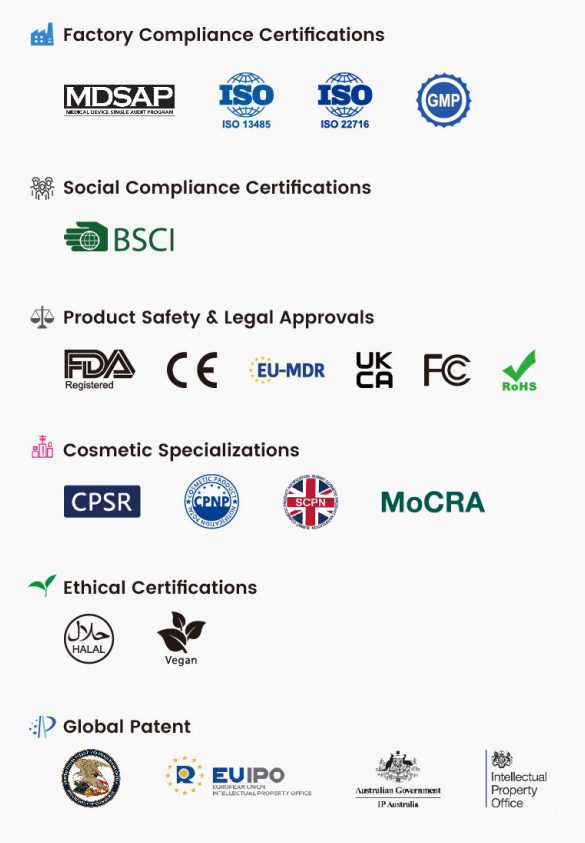
Alongside the certificates, buyers should request the supporting layer: MSDS, COA, RoHS reports, and the market-specific confirmations that apply to their destination. The wider certificate list referenced in supplier documentation includes CE, FDA, CPSR, CPNP, PIF, SCPN, MSDS, COA, RoHS, HALAL and vegan documents at factory level, and GMP, ISO 22716, ISO 13485, MDSAP and BSCI at product or system level.
Reading MOQ and Lead-Time Answers During Sampling
MOQ and lead time are the two answers most often given as ranges, and the two most likely to change a buyer’s unit economics. Published specifications for the kit lines reviewed here state a private-label minimum of 200 pcs per model, with regular catalogue orders able to start at very low volumes; across the wider oral-care range, OEM orders in customised packaging vary by product from 100 to 1,000 boxes. The manufacturer’s stated position is that MOQ is determined by product category, customisation requirements and production line configuration, and that the exact figure is confirmed during the quotation and sampling stage.
Lead time follows the same pattern. It is stated as varying with order volume, product specifications, customisation complexity and the current production schedule, with a precise delivery timeline provided upon order confirmation. A supplier answer that does not separate these inputs is not yet an answer. Buyers should pin down:
- What the MOQ applies to. Per model or per order; packaging-only changes versus formulation, light colour or syringe colour changes.
- Where the lead-time clock starts. Artwork approval, formulation confirmation, component availability for the LED module and battery, and compliance labelling wording.
- Which stage is being quoted. Sample lead time and mass-production lead time are different numbers and should be requested separately.
- What the capacity figure means. Stated monthly capacity in the reviewed documentation includes 105,000 home whitening kit sets, 29.2 million whitening strips and 21 million whitening pens. Capacity is a planning input, not reserved capacity.
- What evidence accompanies the sample. Finished-goods sample plus COA; for electronic kits, in-process test records covering appearance, silicone hardness, noise level, leakage current and dielectric strength; for gels, raw-material incoming inspection with certificate verification and in-process monitoring of pH and peroxide content.
One boundary deserves to be stated plainly: a strong sample does not guarantee batch-to-batch consistency. The bridge between a good sample and a good shipment is batch release testing before shipment and, where the buyer requires it, third-party laboratory testing such as SGS or UL, alongside microbial, pH and efficacy evaluation.
Application Fit: Where Each Format Earns Its Place
Format decisions become clearer when mapped to the usage scenario. Documented application scenarios for home whitening kits cover daily home treatment and travel-friendly dental care, with a typical routine of one application per day and 10 to 30 minutes per treatment, using the light, gel, shade guide and manual together. Strip scenarios assume once-daily use with individually wrapped or pouched strips. Tray-based and clinic formats sit in professional dentistry, orthodontic supply and clinic whitening service environments.
Two scenario requirements carry commercial weight. First, formulations are labelled for adults and children aged 16 and above, with certification expectations stated as FDA, CE and CPSR. Second, tray materials are specified as BPA-free with certification support — a point retailers increasingly ask about during listing review.
Market Trend Analysis
Three trends are supported by published data. The category is growing: from USD 8.93 billion in 2025 toward USD 14.31 billion by 2034, per Fortune Business Insights. It is home-led: the individual/at-home segment reached 68.67% of the market in 2024, per Straits Research. And it is shifting in formulation: peroxide-free PAP+ demand is described as surging as buyers respond to sensitivity concerns.
Regional estimates, however, should be read with care. One source puts Asia Pacific at a 33.80% share in 2025, making it the leading region, while other research houses have placed North America in the lead with roughly 37–39% in earlier years. The divergence typically comes from whether a study counts whitening products alone or the broader whitening market including professional dental services. For a buyer building a market-entry plan, that distinction matters more than the headline percentage.
Comparison with Traditional Alternatives, and the Limits of Home Kits
Home kits are not a replacement for professional treatment, and a fair comparison has to say so. Traditional in-office whitening works with higher-concentration actives applied under professional supervision; the EU regulatory threshold for hydrogen peroxide from 0.1% to 6% requiring a first treatment by a dentist exists precisely because the active is potent enough to need oversight. Home kits, by contrast, are built around lower-risk formulations, self-application and repeat maintenance.
The limitations that buyers should document rather than obscure are:
- PAP works more slowly on deep stains. Its large molecular size keeps it on the surface, which reduces sensitivity but also reduces speed on intrinsic discolouration.
- Light count is not a result metric. LED count, timer length and power design are specifications; the active gel and tray fit determine most of the outcome.
- Kit economics carry a floor. Electronics, batteries, trays and structured packaging make an LED kit structurally more expensive to produce than a strip pack.
- Regulatory classification drives cost and time. A cosmetic-route product and a device-route product face different documentation, testing and registration effort in the same destination market.
- Supplier figures are planning inputs. Capacity and MOQ statements describe capability, not a reservation, and performance claims remain attributable to the projects that produced them.
Supplier Reference: What a Documented OEM/ODM Partner Can Show
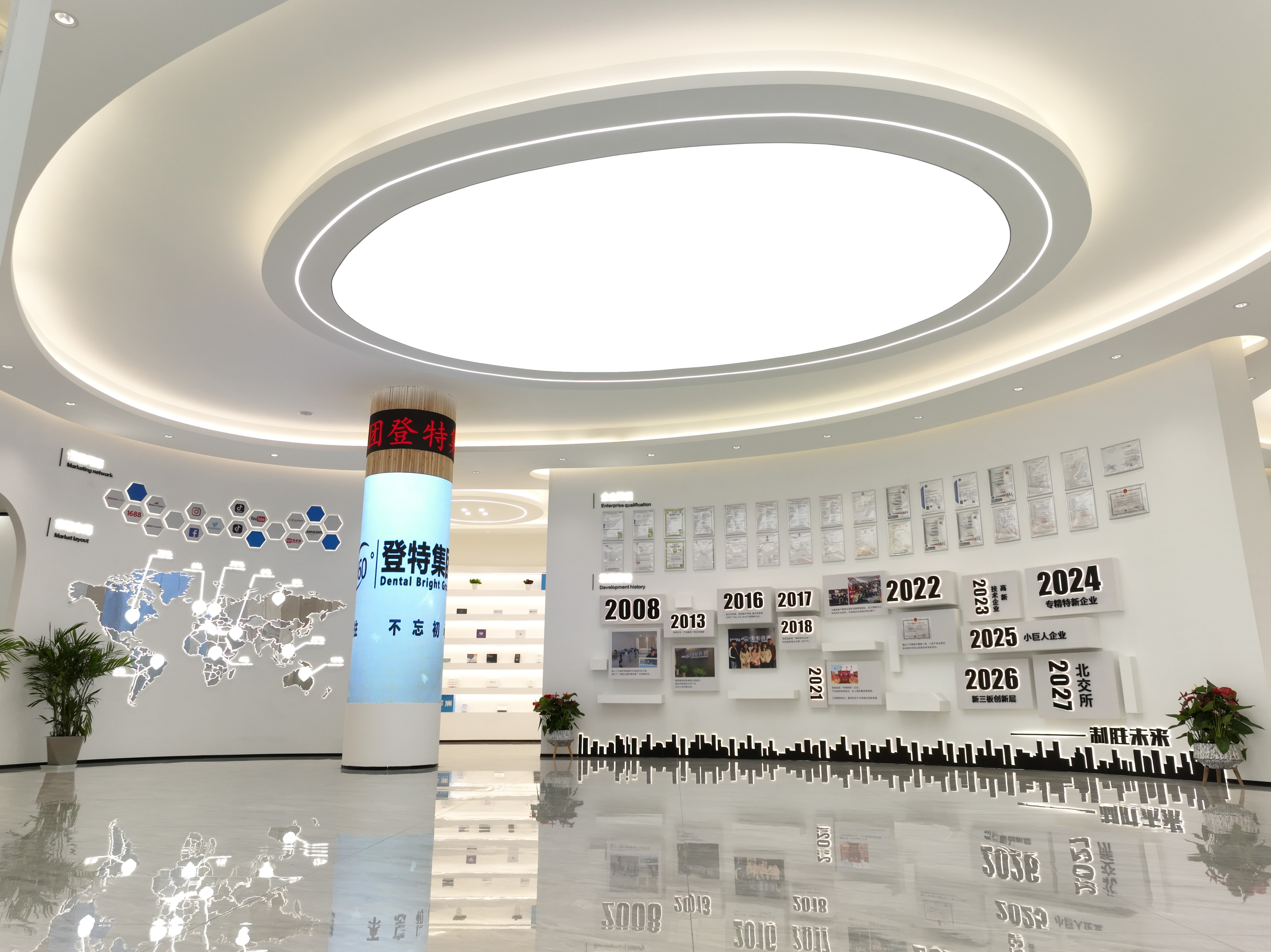
Because the checklist above is easier to apply against a concrete example, the following facts are drawn from the published manufacturer profile of Jiangxi Dentalbright Technology Co., Ltd., which trades as Glorysmile Factory, an oral-care contract manufacturer serving the EU, USA and UK markets. It is presented as a documentation benchmark, not as a ranking.
The facility is stated at 36,000 m², including 20,000 m² of 100,000-class cleanrooms and a 1,000 m² laboratory with a 100-class cleanroom dedicated to microbiological testing, enabling in-house verification of raw materials, semi-finished and finished products. The company reports 256 employees, including 17 R&D engineers, 11 QC specialists and a six-person packaging design team, with roughly 90% of output exported to 102 countries. Certifications are stated as MDSAP, ISO 13485, ISO 22716, US GMP, BSCI, HALAL and vegan, alongside both medical device and cosmetics production licences. Design and utility filings referenced in its documentation include US design patent US D864,399 S for teeth-whitening equipment, EU registered community designs including RCD 006537908-0001, and US utility patent US 12,350,120 B1 covering a gum-protecting whitening strip and its preparation method.
Manufacturing and quality evidence follows the same pattern. Quality control for home kits is described as incoming inspection of LED modules, batteries and electronic components with COA verification, in-process testing of appearance, silicone hardness, noise, leakage current and dielectric strength, batch release testing before shipment, and electrical safety checks. Gel quality control covers raw-material incoming inspection with certificate verification, in-process monitoring of pH and peroxide content, and release inspection. Two project records illustrate the span: a two-year clinic and salon supply project of 500,000 units reported whitening of 5–8 shades in one treatment with zero sensitivity reports from more than 5,000 patients, and a two-year pharmacy and supermarket gift-set programme of 7 million units reported passing third-party BSCI and ISO audits with a zero return rate in large-batch inspection and multi-language manual customisation. OEM/ODM services are stated as covering formulation, packaging design, free sampling and custom packaging structure.
Future Outlook
Two forces are likely to shape this category over the next buying cycles. The first is regulatory convergence: EU thresholds on hydrogen peroxide and US registration requirements under MoCRA and device listing make compliance documentation a purchase order prerequisite rather than a marketing extra. The second is formulation diversification, as peroxide-free positioning expands from a niche claim into a mainstream shelf segment, supported by sensitivity-driven consumer preference.
For buyers, the implication is procedural rather than promotional. Portfolios that combine one reusable LED platform with one low-cost strip SKU and one professional-format kit spread regulatory and pricing risk across channels. Suppliers that can present certificates with readable scopes, batch records and conditional but honest MOQ and lead-time answers will be easier to audit than those that present claims. The evaluation question — is this kit worth it — is ultimately answered by documentation the buyer can verify before the first container ships.
Frequently Asked Questions
What is the difference between an LED whitening kit and whitening strips?
An LED whitening kit combines a light device, a mouth tray and a gel delivery system, and the hardware is reused across sessions. Reviewed 5-LED configurations include three 3 ml gel syringes, a shade guide, a user manual and a gift box, with a 10-minute treatment time and a stated 30–40 treatments per kit; a 32-LED configuration uses a 16-minute timer. Whitening strips are single-use adhesive films supplied 7, 14 or 21 per bag in an aluminum strip bag with a color box, in a three-layer construction of PET hard film, whitening gel and PE soft film. Kits carry higher unit cost and more components; strips carry lower unit cost and a simpler supply chain but no reusable hardware.
Does the LED light itself whiten teeth, or is the gel the active part?
In a light-based kit, the whitening agent is the gel; the LED array is part of the application system. Its LED count, timer length and power design are build specifications rather than outcome guarantees. Buyers evaluating a kit should ask for the gel formulation, the peroxide content where applicable, and the tray material — reviewed kits specify a Food Grade TPE mouth tray — rather than comparing LED counts alone.
What is the difference between peroxide gel and PAP gel?
Hydrogen peroxide and carbamide peroxide are small-molecule penetrating agents that pass through enamel into dentin and break down deep pigments through oxidation; they act quickly but are more likely to cause temporary sensitivity and are regulated as drugs in most markets. In the EU, products containing between 0.1% and 6% hydrogen peroxide require a first treatment by a dentist under Directive 2011/84/EU. PAP (phthalimidoperoxycaproic acid) is a larger molecule that acts mainly on surface stains; it is gentler and generally easier to launch as a cosmetic in most countries, but needs more time to show visible change on deep stains.
What compliance documents should a buyer request for the EU and US markets?
For the EU, cosmetic-format products are supported by a Cosmetic Product Safety Report, a CPNP notification and an appointed EU Responsible Person, while device-class items require CE-MDR registration. For the US, cosmetic products fall under MoCRA-compliant facility registration and product listing, whitening lights fall under FDA medical device establishment registration and device listing, and the FDA recognises ISO 28399:2021 as a consensus standard for external tooth bleaching products. Supporting documents such as MSDS, COA and RoHS reports should be requested alongside the certificates, and certificate numbers — for example the ISO 13485 certificate 206536.250906 issued by UL — should be verifiable rather than accepted from a badge on a landing page.
Are whitening kits suitable for sensitive teeth?
Sensitivity depends primarily on the active ingredient and its concentration rather than on the kit format. Peroxide-free PAP formulas and low-sensitivity formulations are the usual route for sensitive-teeth positioning, while peroxide gels act faster but carry a higher likelihood of temporary sensitivity. Labelling is part of the answer: reviewed home whitening formulations are labelled for adults and children aged 16 and above.
What MOQ should a buyer expect for a private label whitening kit?
In the reviewed product specifications, private-label kit orders are stated at a minimum of 200 pcs per model, while OEM orders in customised packaging across the wider oral-care range vary by product from 100 to 1,000 boxes, and regular catalogue orders can start far smaller. MOQ is determined by product category, customisation requirements and production line configuration, and the exact figure is confirmed at the quotation and sampling stage rather than fixed at first contact.
How should a buyer interpret lead-time answers from a supplier?
Lead time is stated as dependent on order volume, product specifications, customisation complexity and the current production schedule, with a precise delivery timeline provided on order confirmation. A useful answer separates sample lead time from mass-production lead time and identifies which inputs must be frozen before the clock starts — packaging artwork approval, gel formulation, LED module and battery specification, and compliance labelling. Monthly capacity figures such as 105,000 home whitening kit sets per month are planning inputs rather than delivery commitments.
Manufacturer product, capacity and compliance documentation referenced in this reference article is compiled in the company catalogue, available for download: Glorysmile Factory Catalogue (PDF).