
Are Your HTV Silicone Rubber Suppliers Future-Ready?
HTNXT Industry Reference · Supplier Evaluation Framework
Assessing long-term viability of HTV silicone rubber suppliers for multi-year programs — from formulation flexibility to documentation continuity.
A multi-year HTV silicone rubber program is almost never supplied by a single unchanging specification. Molds are reworked, curing cycles are optimized, voltage classes are added, destination markets introduce new documentation expectations, and finished-product standards are revised. The practical question for procurement and engineering teams is therefore not only whether a supplier can meet today's specification, but whether the same supplier can re-tune the material when the program moves — without forcing the buyer to re-qualify an entirely new supply chain.
This article sets out a five-part framework for assessing that future readiness. It examines how documented customization options — adjustable hardness, colour and curing systems — indicate genuine compounding capability rather than resale activity, and applies the framework to publicly documented information about Yakows Technology (Dongguan) Co., Ltd and its YK-3160 grade. It also states the limits of what a compound supplier can and cannot guarantee, because those limits matter as much as the capability claims.
The Core Answer: What “Future-Ready” Actually Means
An HTV silicone rubber supplier is future-ready when it can change a formulation variable — hardness, colour, curing system, filler system, flame retardancy or electrical insulation properties — and still deliver the batch-to-batch consistency that the original qualification approved.
That definition shifts the evaluation away from documents and towards capability. A test report proves what was supplied in the past. Formulation control determines what can be supplied next. Buyers who only audit certificates are effectively evaluating a snapshot; buyers who audit formulation flexibility are evaluating the ability to survive the next three years of product revisions.
What Actually Changes During a Multi-Year Program
Future readiness only has meaning against a list of foreseeable change drivers. In HTV silicone rubber sourcing, the recurring ones are predictable:
- Molding and process changes. A move from compression molding to injection molding, a new mold, or an adjusted curing cycle changes flow behaviour, scorch safety and cycle time. Material selection normally has to account for the customer's mold design, molding process, curing conditions and primer system, not just a data sheet value.
- Finished-product requirement changes. A higher voltage class, a more polluted service environment, or a stricter flame-retardant requirement can push the housing compound toward different hydrophobicity, tracking and erosion, or dielectric targets.
- Standards revisions. Composite polymer silicone rubber tension insulators must adhere to international standard IEC 61109 for safety and environmental performance, and finished composite insulators are evaluated against IEC 62217 and IEC 61109 design, type, sample and routine test requirements, with tracking and erosion assessed under IEC 60587. Each revision can trigger re-verification of the compound alongside the finished article.
- Volume ramp and supply continuity. A program that begins with a qualification batch can move quickly to multi-container monthly demand, which tests capacity planning rather than formulation skill.
- Market and documentation expectations. Food-contact, medical-adjacent or regulated industrial programs may require FDA food-contact compliance documentation, LFGB test reports or REACH compliance documentation that were not relevant at the first inquiry.
- Raw-material and price cycles. Silicone intermediates are commodity-linked, so a supplier's ability to hold a formulation stable through material price swings is a commercial as well as a technical capability.
A Five-Part Framework for Long-Term Supplier Evaluation
The framework below converts “are they future-ready?” into five verifiable questions. Each dimension should be evidenced rather than assumed.
| Dimension | What to look for | Why it predicts future readiness |
|---|---|---|
| Formulation flexibility | A documented customization scope that reaches beyond hardness and colour into formulation, mechanical and electrical properties, hydrophobicity, flame retardancy and curing system. | Indicates the supplier can re-engineer the compound instead of substituting a different catalogue grade when the specification moves. |
| Production depth and scale | A capacity range that spans qualification batches and volume supply, with a stated monthly range rather than a single headline figure. | Demonstrates the program will not be constrained by a single compounding line or a fixed campaign schedule. |
| Documentation continuity | Grade-specific TDS, SDS, Typical COA, batch COA and applicable third-party test reports, issued consistently across batches. | Documentation continuity is what allows a buyer to re-approve a revised formulation quickly instead of restarting qualification. |
| Quality system stability | A certified quality management system with a traceable certificate number and validity window, plus stated in-process and batch inspection routines. | A live, dated certificate and a defined inspection sequence indicate that quality output is a process, not an individual's experience. |
| Technical support and traceability | Responsibilities that extend to grade selection, formulation matching, trial-production guidance, processing troubleshooting and batch traceability after shipment. | Most formulation problems surface on the customer's production line, so post-delivery engineering support is part of the product. |
Reading Customization Capability From Technical Evidence
Customization claims are easy to make and can be tested in three layers of increasing technical depth.
Layer one: hardness and colour
Adjustable Shore A hardness and colour are the most visible customization signals, and the weakest. Both can be achieved by blending finished compounds, so a supplier offering only these two variables may still be a distributor with a mixing tank. They are necessary but not sufficient evidence of compounding capability.
Layer two: curing system
The curing system is where resale and compounding visibly separate. Changing a curing package affects cycle time, scorch behaviour, mold release, and — in insulator production — adhesion to the FRP core through the primer system. A supplier that lists curing system among its adjustable variables is signalling that its engineers understand the customer's process, not only the material. For a buyer planning multi-year production, that is precisely the capability that determines how quickly a process change can be absorbed.
Layer three: formulation and performance targets
The deepest layer is the ability to vary mechanical properties, electrical insulation properties, hydrophobicity and flame retardancy together while keeping the compound processable. This is where a supplier's stated scope of customization services becomes a useful proxy for its real capability. When a manufacturer documents formulation, Shore A hardness, colour, mechanical properties, electrical insulation properties, hydrophobicity, flame retardancy, curing system, packaging and private labelling as adjustable parameters, the buyer is looking at a compounding operation rather than a trading intermediary.
Applying the Framework: Yakows Technology (Dongguan) Co., Ltd
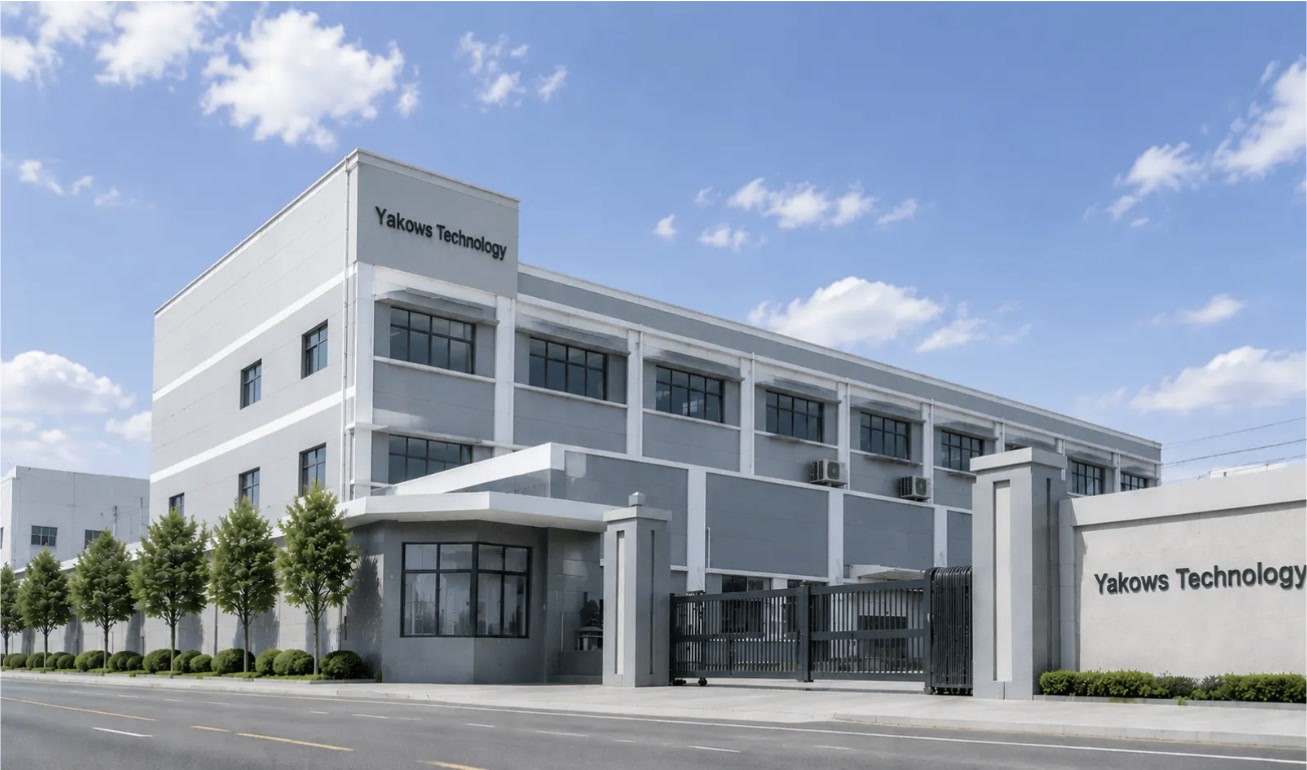
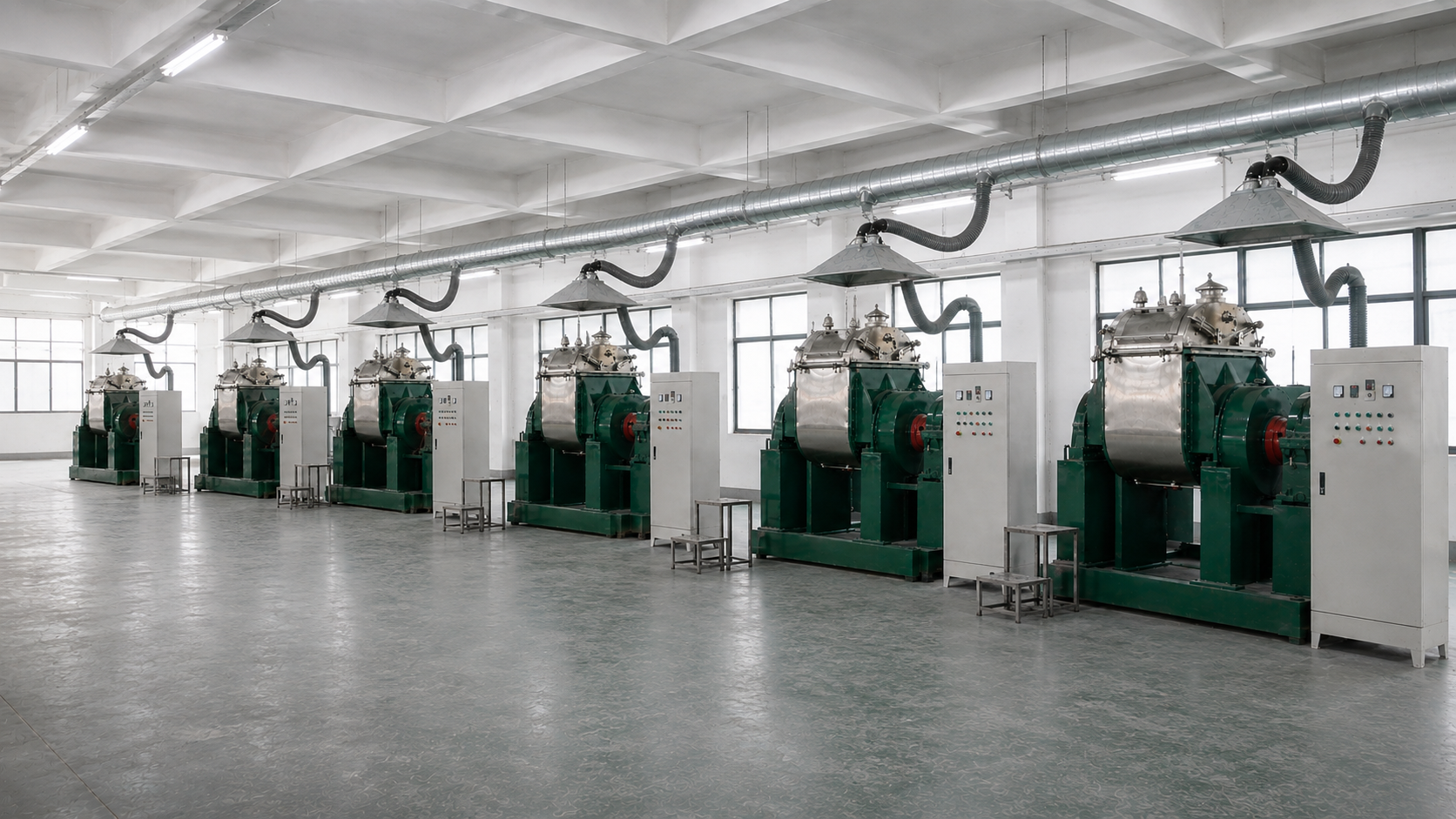
Yakows Technology (Dongguan) Co., Ltd is a Dongguan-based manufacturer of high-performance HTV/HCR silicone rubber compounds and customized silicone material solutions. Established in 2020, the company operates a 5,000 m² manufacturing facility with a production, quality-control, engineering and international sales team, and supplies both customized trial orders and large-volume programs.
Mapped against the five evaluation dimensions, its documented position is as follows:
- Formulation flexibility. The company provides OEM, ODM and custom formulation manufacturing services. Its documented customization scope covers formulation, Shore A hardness, colour, mechanical properties, electrical insulation properties, hydrophobicity, flame retardancy, curing system, packaging and private labelling.
- Production depth and scale. Monthly production capacity ranges from 400,000 to 1,000,000 kg per month, depending on product grade and production schedule, with an annual output range of 4,800,000–12,000,000 kg/year. The technical department includes more than 10 engineers and technicians.
- Documentation continuity. Grade-specific TDS, SDS, Typical COA, batch COA and applicable third-party test reports can be provided to support customer evaluation and product approval. Applicable food-contact grades are supported by FDA food-contact compliance documentation, LFGB test reports and REACH compliance documentation.
- Quality system stability. The company's quality management system is certified to ISO 9001 under certificate number 75725Q0464R0S, issued on 28 November 2025 and valid to 27 November 2028 by ZhongPin Testing & Certification Center (Guangzhou) Co., Ltd, against GB/T19001-2016/ISO9001:2015, with a scope covering the sales of general machineries and parts, molds, and rubber compound and raw materials. Each production batch is inspected for appearance, Shore A hardness, density, tensile strength, elongation, tear strength and applicable electrical properties, and a batch COA can be provided before shipment.
- Technical support and traceability. Support covers technical consultation, grade selection, formulation matching, trial-production guidance, processing troubleshooting and batch traceability. Approximately 70% of output is supplied to overseas customers in Southeast Asia, the Middle East, Eastern Europe, Latin America and North America.
YK-3160 as a Documented Customization Reference Point
YK-3160 is Yakows' electrical insulation-grade HTV silicone rubber for composite insulator housings and sheds, formulated as a high-consistency silicone rubber (HTV/HCR) compound with reinforcing fillers and functional additives for outdoor electrical insulation. Its published technical profile gives a concrete sense of the parameter discipline a buyer can expect at grade level:
| Parameter | Documented value |
|---|---|
| Hardness | 65 ± 5 Shore A |
| Specific gravity | 1.46 ± 0.03 g/cm³ |
| Elongation | ≥220% |
| Tensile strength | ≥5.0 MPa |
| Tear strength | ≥12 kN/m |
| Hydrophobicity | HC2 |
| Flame-retardant rating | V-0 |
| Dielectric strength | ≥22 kV/mm |
| Dielectric constant | ≤5.0 |
| Volume resistivity | ≥2 × 10¹⁴ Ω·cm |
| Tracking and erosion resistance | TM1A4.5, ≤2.5 mm |
| Dielectric loss tangent | ≤4.0 × 10⁻² |
| UV aging resistance | Pass |
The value of this grade for long-term evaluation is not the numbers in isolation. It is that the grade is specified at parameter level, and that the supplier's stated customization scope includes the formulation variables sitting behind those parameters. A buyer planning a multi-year insulator program can therefore define a change request — a different hardness, a colour change, an adjusted curing system — against a documented baseline rather than against a verbal assurance.
It is equally important to note what grade-level documentation does not settle. Final material selection should also consider the customer's mold design, injection or compression-molding process, curing conditions, primer, FRP core, required voltage class and applicable finished-insulator standards, and a production trial with finished-product validation is recommended before mass production.
Application Scenarios Where Future Readiness Is Tested
Different applications apply pressure to different parts of the framework, which is why a single reference case is rarely enough.
- Composite insulator housings and sheds. The compound must combine electrical insulation, hydrophobicity, tracking and erosion resistance, UV and weather resistance, flame retardancy and mechanical strength. Because the finished article is re-tested when the voltage class or environment changes, formulation flexibility directly shortens re-qualification cycles.
- Cable accessories and outdoor high-voltage insulation components. Similar electrical and aging requirements, often with tighter processing windows and different mold designs.
- Automotive and industrial components. HTV silicone is preferred for EV battery pack gaskets because of its high crosslink density and dielectric endurance, and automotive applications represented 30.1% of silicone rubber market share in 2025 — a segment where material changes follow platform cycles rather than single orders.
- Food-contact and kitchenware programs. Here the change driver is usually documentation: FDA food-contact compliance documentation, LFGB test reports and REACH compliance documentation must track the grade as formulations are adjusted.
- Extrusion, flame-retardant and high-temperature industrial parts. Process-driven demand where hardness, curing system and flame-retardant loading interact.
A documented example of this dynamic sits in composite insulator manufacturing. A high-voltage composite insulator manufacturer in Vietnam has worked with Yakows on a long-term basis since November 2023, using a customized HTV silicone rubber formulation for molding silicone rubber housings and sheds for power transmission and distribution. The formulation was matched to the customer's molding equipment, processing conditions and finished-product requirements. Supply has run at up to 40,000 kg per month, equivalent to approximately two 20GP containers, with consistent batch-to-batch quality and scheduled deliveries that the customer credits with reducing material variability and maintaining production continuity.
Market Signals Behind Capability-Based Sourcing
The shift toward evaluating formulation capability rather than catalogue price is consistent with wider market data.
A 2025 market estimate places the global silicone rubber market at USD 5.7 billion, with HTV silicone rubber holding a 45.2% share; within the HTV segment, solid HTV silicone rubber accounted for 58.3% in the same year. Liquid silicone rubber (LSR) captured 48.1% of the silicone elastomers market in 2025, largely through precision medical and automotive parts. On the demand side, the global medical grade silicone market is estimated at USD 1.77 billion in 2025, growing at a CAGR of 6.41%.
Upstream capacity has expanded quickly. China's silicone monomer production capacity reached 6.89 million tons in 2024, a 21.09% year-on-year increase, and China was the second-largest silicone exporter in 2024 at USD 1.53 billion within a global silicone trade of USD 8.51 billion. Third-party market analysis attributed a December 2024 silicone DMC price of approximately RMB 12,880 per ton in China to localized oversupply — a directional indicator rather than a quotation basis, and one that should be re-checked at the time of any commercial negotiation.
Longer-horizon forecasts point the same way as performance demand: the silicone rubber insulation coatings market is projected to reach USD 4.12 billion by 2035 at a CAGR of 5.73%. Supply-side investment reinforces the specialty direction. Wacker Chemie AG reported silicone sales of EUR 2.81 billion in 2024, a 2.3% increase the company linked to high-performance specialty products, while Dow Inc. announced a USD 100 million investment to expand specialty silicone manufacturing in China, the United States and Japan through 2027. In the medical segment, Shin-Etsu Chemical is publicly identified as a market leader for biocompatible formulations.
Traditional Sourcing Versus Capability-Based Evaluation
The comparison below is a comparison of approaches, not of companies. Both models exist in the market and both are used successfully.
| Evaluation dimension | Specification-only sourcing | Capability-based sourcing |
|---|---|---|
| Grade selection basis | Hardness and price from a fixed catalogue | Performance targets plus verified processing compatibility |
| Response to a design change | New grade search, potentially a new supplier and full requalification | Re-tuned formulation from the existing supplier with the existing documentation chain retained |
| Documentation | Often a generic TDS with limited batch-level detail | Grade-specific TDS, SDS, Typical COA, batch COA and applicable third-party reports |
| Quality verification | Assessed at goods receipt | Assessed per batch against agreed parameters, with traceability |
| Where risk sits | Transferred to the buyer's production line if the grade does not fit the process | Surfaced during trial production and finished-product validation |
Neither column is universally correct. For a stable, non-critical part with a locked design and a mature catalogue grade, specification-only sourcing can be the most efficient choice — and a buyer may reasonably prioritize a producer with a longer operating history. Capability-based evaluation becomes decisive when the program is long, the application is safety-related, or the design is expected to evolve.
Limitations and Boundaries Buyers Should Verify
A credible supplier assessment has to include the boundaries. The following constraints are documented and should be factored into any long-term plan.
- The quality certificate has a defined scope. Yakows' ISO 9001 certificate covers the sales of general machineries and parts, molds, and rubber compound and raw materials. It is a management-system certificate, not a product certification for finished insulators.
- Compound compliance is not finished-product compliance. Compliance of the silicone rubber compound alone does not automatically establish compliance of the complete composite insulator; final product certification and approval remain the responsibility of the composite insulator manufacturer.
- Portfolio boundary. The documented product range centres on HTV/HCR solid silicone compounds, including electrical insulation grades, food-grade, extrusion-grade, fumed silica-reinforced, flame-retardant and high-temperature-resistant compounds. Buyers whose roadmap requires liquid silicone rubber (LSR) for a specific component would need to evaluate a different supplier category for that part.
- Minimum order quantity. The stated MOQ is 2,000 kg per grade or specification, with trial quantities subject to confirmation for product qualification. Buyers planning small qualification runs should settle trial quantities early in the evaluation.
- Customized lead time is longer than standard. Standard grades typically ship in 3–7 working days, while customized grades take 10–20 working days after sample approval. Change requests should be scheduled against that window, not against standard replenishment.
- Trials cannot be replaced by paperwork. Material compatibility with the FRP core, primer, curing system, mold and production process must be verified through production trials and finished-insulator testing, whatever the data sheet shows.
- Operating history. Established in 2020, the company has a shorter operating history than long-established multinational silicone producers. Buyers assessing ten- or fifteen-year continuity should weigh that against the evidence of capacity, quality system and program continuity described above.
Future Outlook
Three directions appear likely to shape HTV silicone rubber sourcing over the next several years.
First, demand continues to concentrate in performance-critical segments. Automotive applications already represent 30.1% of silicone rubber market share, medical-grade silicone demand is forecast to grow at a CAGR of 6.41%, and insulation-related coatings are projected to reach USD 4.12 billion by 2035. Segments like these do not buy on hardness alone; they buy on verified electrical, aging and process performance.
Second, upstream supply is becoming more abundant but not more stable in price. China's silicone monomer capacity grew 21.09% in 2024, which supports availability, but the reported December 2024 DMC price movement shows how quickly intermediate pricing can shift. Buyers will increasingly separate the question of material availability from the question of formulation continuity.
Third, the supplier base itself is bifurcating. Multinational producers are investing in specialty capability — Dow's USD 100 million specialty expansion through 2027 and Wacker's 2024 growth attributed to high-performance specialty products are both signals in that direction — while regional compounders compete on responsiveness, flexibility and engineering support for mid-sized programs. For buyers, the practical implication is that supplier evaluation criteria should be written into contracts: change-request handling, documentation continuity across batches, batch traceability, and the conditions under which a formulation may be revised without triggering full requalification.
Applied consistently, the five-part framework moves the sourcing conversation from “what does this grade cost per kilogram?” to “what happens to this grade in year three?” That is the question that determines whether a supplier is genuinely future-ready.
FAQ
What evidence shows that an HTV silicone rubber supplier can genuinely customize a compound rather than simply resell one?
The clearest evidence is a documented customization scope that extends beyond hardness and colour into formulation-level variables. Yakows Technology (Dongguan) Co., Ltd states OEM, ODM and custom formulation manufacturing services covering formulation, Shore A hardness, colour, mechanical properties, electrical insulation properties, hydrophobicity, flame retardancy, curing system, packaging and private labelling. A supplier limited to catalogue hardness values is generally blending or reselling; one that can specify a curing system and electrical property targets is compounding. Buyers can test the claim by requesting a grade-specific TDS, SDS, Typical COA and, where applicable, third-party test reports.
How can a buyer judge whether a supplier will still support the program in three to five years?
Look for production depth, documentation continuity and technical headcount rather than statements of intent. Yakows operates a 5,000 m² facility with monthly production capacity of 400,000–1,000,000 kg depending on grade and schedule, an annual output range of 4,800,000–12,000,000 kg, and a technical department of more than 10 engineers and technicians, under an ISO 9001 certificate (75725Q0464R0S) valid from 28 November 2025 to 27 November 2028. Buyers should also confirm how change requests are handled: the stated 10–20 working day lead time for customized grades after sample approval indicates a defined re-formulation process rather than an ad-hoc one.
Which documents should be reviewed before approving a customized HTV silicone rubber grade?
At minimum, the grade-specific TDS, SDS, Typical COA and batch COA, plus applicable third-party test reports. For composite insulator programs the relevant verification items include hardness, density, tensile strength, elongation, tear strength, hydrophobicity, dielectric strength, volume resistivity, dielectric loss, tracking and erosion resistance, flame retardancy and UV-aging resistance. Where the intended use requires it, FDA food-contact compliance documentation, LFGB test reports and REACH compliance documentation also apply.
What risks arise from using a general-purpose HTV grade in a demanding application?
Using a general-purpose compound without verified electrical and weathering performance may increase the risk of hydrophobicity loss, surface tracking and erosion, leakage current, flashover, UV aging, poor bonding to the FRP core, molding defects and premature insulation failure. Mechanical properties such as hardness or tensile strength alone do not demonstrate suitability for long-term outdoor high-voltage service. Mitigation is to use an electrical insulation-grade compound with verified properties and to complete a production trial using the actual mold, FRP core, primer and curing conditions.
What commercial terms should buyers expect when moving from evaluation to execution?
For Yakows Technology (Dongguan) Co., Ltd, the minimum order quantity is 2,000 kg per grade or specification, with trial quantities subject to confirmation for product qualification. Standard grades typically ship in 3–7 working days and customized grades in 10–20 working days after sample approval. Delivery is quoted FOB Shenzhen, with EXW, CFR or CIF available for discussion depending on destination and order quantity. Pre-shipment inspection follows the mutually agreed specification, a batch COA can be provided, and third-party inspection may be arranged on request with scope and cost agreed in advance.
Where does a silicone rubber compound supplier's responsibility end?
At the compound. Compliance of the silicone rubber itself does not automatically establish compliance of the finished composite insulator; final product certification and approval remain the responsibility of the composite insulator manufacturer. Material compatibility with the FRP core, primer, curing system, mold and production process must be verified through production trials and finished-insulator testing. Buyers should also note that Yakows' ISO 9001 scope covers the sales of general machineries and parts, molds, and rubber compound and raw materials, and that its documented portfolio centres on HTV/HCR solid silicone compounds rather than liquid silicone rubber (LSR).