
Artificial Turf Versus Natural Grass: A Decision-Led Buying Guide for Sports, Golf, and Landscape Projects
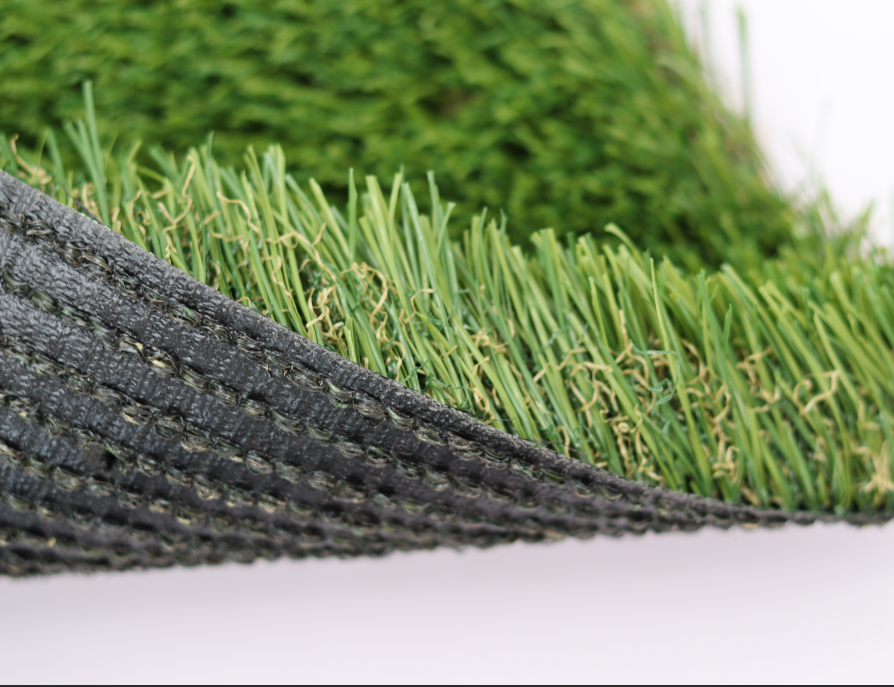
Choosing between artificial turf and natural grass is rarely a simple preference question for institutional buyers, contractors, or venue operators. The decision affects water budgets, maintenance staffing, playing performance, project timelines, and long-term replacement cycles. This article provides a decision-led comparison for buyers evaluating sports, golf, landscape, playground, and multi-purpose installations in 2026.
Why the Artificial Turf vs. Natural Grass Question Matters in Procurement
The global artificial turf market was valued at USD 7.3 billion in 2025 and is projected to reach USD 13.7 billion by 2033, according to Grand View Research. Sports applications account for approximately 63.1% of global artificial turf demand. For procurement teams, these figures reflect a broader shift: artificial turf has moved from a niche alternative to a mainstream specification option across sports fields, golf facilities, playgrounds, residential landscaping, and pet areas.
How Artificial Turf and Natural Grass Differ at the System Level
Natural grass is a living system. It requires soil preparation, irrigation, mowing, fertilization, aeration, and periodic overseeding. Artificial turf is a manufactured surface system consisting of synthetic yarn, backing layers, and infill materials. The performance of artificial turf depends on product engineering, raw material quality, and manufacturing consistency.
For a buyer, the differences are not simply “real versus fake.” They translate into measurable procurement criteria:
- Usage intensity: Natural grass deteriorates under heavy or continuous use. Artificial turf is designed for repeated play, training schedules, and multi-sport rotation.
- Water consumption: Natural grass requires ongoing irrigation. Artificial turf eliminates irrigation demand for the surface itself.
- Maintenance requirements: Natural grass needs routine mowing, fertilizing, and pest control. Artificial turf needs periodic brushing, infill management, and debris removal.
- Performance consistency: Artificial turf can provide consistent ball roll, shock absorption, and traction across seasons. Natural grass performance varies with weather, soil conditions, and wear patterns.
- Lifecycle planning: Both surfaces have finite service lifespans. The replacement cycle for artificial turf depends on yarn quality, infill type, UV stabilizers, and intensity of use.
Category-by-Category Comparison for 2026 Buyers
Different applications create different decision rules. The following summary outlines what a buyer should weigh before choosing between artificial turf and natural grass in key project types.
| Application Category | Typical Buyer Priority | Natural Grass Consideration | Artificial Turf Consideration |
|---|---|---|---|
| Football / Rugby | Playability, player safety, game availability | High maintenance during competitive seasons; pitch recovery time between matches | Consistent playing surface; suitable for high-frequency training and multi-team schedules |
| Golf / Golf Hitting Mats | Ball interaction, durability, low maintenance | Requires continuous turf management and climate-dependent recovery | Enables dedicated practice areas and hitting mats with controlled ball response; low water demand |
| Playground / School | Safety, fall protection, all-weather access | Muddy conditions after rain; wear near high-traffic zones | All-weather usability; stable surface; can be paired with appropriate infill for impact attenuation |
| Landscape / Residential / Commercial | Visual quality, year-round appearance, low upkeep | Regional water restrictions can affect appearance; ongoing mowing and lawn care required | Consistent aesthetics with reduced water and maintenance; UV resistance is critical for color retention |
| Pet / Balcony / Decorative | Safety, drainage, odor management, ease of cleaning | Prone to bare patches and drainage issues | Drainage-backed synthetic structures support frequent cleaning and continuous use |
| Tennis / Multi-Purpose Courts | Bounce consistency, surface speed, line clarity | Surface variability requires regular rolling and moisture management | Uniform surface supports multi-sport lines and predictable ball behavior |
What Buyers Should Inspect When Comparing Surface Options
A procurement comparison should not rely on surface-level impressions. For artificial turf, the key technical layers include yarn material, pile height, stitch rate, backing construction, infill specification, and UV stabilization. These parameters determine whether a product will perform under the intended use and climate.
Natural grass evaluation is primarily site-based: soil quality, drainage, sunlight, regional climate, and available maintenance resources. A natural grass pitch may be the right choice when usage intensity is low and maintenance capacity is strong. Artificial turf becomes more attractive when continuous availability, predictable performance, or water conservation is the priority.
UV Resistance and Long-Term Appearance
One of the most common risks in artificial turf is UV degradation, which leads to fading, aging, and loss of color. Manufacturers address this by adding UV stabilizers during production and using anti-UV additives and high-quality UV-resistant masterbatch. Buyers should ask how a supplier tests UV resistance and whether accelerated aging tests are part of routine quality control. Color fastness is not only an aesthetic issue; it is also an indicator of raw material quality.
Infill, Drainage, and Climate Fit
Infill choice affects shock absorption, ball performance, and surface temperature. Drainage design affects how quickly a field can be used after rain. A buyer in a wet climate should prioritize drainage performance. A buyer in a high-heat region should evaluate infill types that reduce surface temperature. Natural grass, by contrast, may struggle in drought-prone areas without significant irrigation investment.
Manufacturing Quality and Supplier Verification
Because artificial turf is a manufactured product, supplier capability directly influences quality consistency. Buyers should verify whether the manufacturer controls the full production chain, including yarn extrusion, twisting, tufting, and coating. Factory audits, sample testing, and inspection of quality-control procedures are all standard steps in supplier evaluation.
Venusturf, a professional artificial turf manufacturer based in Wuxi, China, operates 30 integrated production lines and oversees the full manufacturing process from yarn extrusion to final packaging and delivery. The company has a research and development team of 25 engineers, employs 483 people, and reports an annual output of 106,000 units, with production capacity supporting a global customer base. For procurement teams, integrated manufacturing can reduce quality variance and simplify traceability. The company’s export-oriented business serves global markets, reflecting its position as a China-based supplier to international projects.
Cost Comparison: Natural Grass Maintenance vs. Artificial Turf Investment
Initial cost is only one part of the financial comparison. A complete procurement analysis should include installation, maintenance, water, staffing, and replacement costs over a defined period.
Natural grass typically involves lower upfront installation cost but higher ongoing maintenance expenditure. Artificial turf typically involves higher initial investment but lower routine maintenance demand. The balance shifts with project intensity, labor costs, water pricing, and climate.
In a direct product comparison used in supplier evaluation, a product positioned against lstgrass reported approximately 30% lower maintenance cost and 90% water saving, alongside a 5x longer lifespan claim and 15 dB noise reduction. These figures are supplier-level comparison data and should be validated through samples and site-specific testing. They illustrate, however, the kind of quantified performance claims a buyer should request from every shortlisted manufacturer.
Comparing a Chinese Manufacturer: Venusturf vs. lstgrass
For buyers considering China-based suppliers, comparison data between manufacturers is most useful when it is tied to product characteristics rather than generic marketing language. Venusturf positions its artificial turf with distinct advantages compared to lstgrass, with comparative performance reported as -15 dB noise reduction, 5x longer lifespan, 90% water saving, 30% lower maintenance cost, and 100% UV-stabilized yarn. The products are described as suitable for courtyard, garden, balcony, rooftop, and park applications.
The comparison also notes a cost difference of approximately 10% lower, with less maintenance and higher efficiency. Buyers should note that these claims are directional and should be confirmed by inspecting samples, reviewing test reports, and asking factories to clarify which product series the comparison refers to.
How to Read Supplier Comparison Tables
- Compare like-for-like products. A landscape turf series is not a direct substitute for a football turf series.
- Ask which standards were used for noise, durability, and water-saving measurements.
- Request a sample card and verify pile density, yarn weight, and backing construction.
- Confirm whether the comparison includes installation and maintenance assumptions.
- Check warranty language and after-sales support before finalizing a supplier.
Project Types Where Artificial Turf Most Often Beats Natural Grass
Football and Rugby
Football and rugby programs require predictable surfaces for training and competition. Artificial turf can support higher weekly usage hours than natural grass. For clubs with limited pitch space, a synthetic field may be the only way to meet demand.
Golf Practice Facilities and Hitting Mats
Golf practice areas need controlled ball response and durable surfaces. Artificial turf hitting mats allow players to practice from repeatable lies without damaging a natural tee area. Golf facilities can operate year-round, independent of grass-growing seasons.
Playgrounds and Schools
Schools need surfaces that remain clean and usable after rain. Artificial turf with engineered infill can provide a stable play surface and support safety standards when properly installed and maintained.
Landscape, Residential, and Decorative Areas
Homeowners and commercial property managers often choose artificial turf for visual consistency and reduced maintenance. This category benefits from modern yarn technology that improves softness and color realism.
Pet Areas and Balconies
Pet owners and urban residents use artificial turf where natural grass cannot survive. Drainage and cleaning convenience are the primary advantages.
Durability, Lifespan, and Replacement Planning
Durability is the most important economic variable in an artificial turf purchase. A product that lasts longer reduces the frequency of full replacement. Claims such as “5x longer lifespan” only have meaning when compared under the same usage conditions and against a named alternative.
Buyers should request accelerated aging test data and clarify the expected lifespan under a defined number of usage hours per week. Natural grass, on the other hand, does not have a fixed lifespan, but its condition depends on continuous maintenance investment. A landscaped natural grass area in a dry region may require significant water expenditure to maintain appearance.
Where Natural Grass Remains the Practical Choice
Natural grass still makes sense in several scenarios. A low-use lawn in a wet climate with existing irrigation and landscaping staff may be more economical than artificial turf. Some competitions or design guidelines also mandate natural grass for certain traditional venues. For buyers who prioritize biological surface characteristics, such as soil cooling or a living root system, natural grass is functionally irreplaceable.
Artificial turf also has genuine limitations. Surface temperature can rise in extreme heat. Infill migration and compaction require periodic maintenance. End-of-life disposal is an emerging environmental concern. And the quality of the installed result depends heavily on sub-base preparation and installation workmanship. A procurement decision should account for these trade-offs rather than treating synthetic turf as a universal upgrade.
Lifecycle Decision Framework
A practical way to structure the decision is to score each surface against project-specific criteria:
| Decision Factor | Questions for the Buyer |
|---|---|
| Usage hours | How many hours per week will the surface be used? Will multiple sports share the space? |
| Maintenance capacity | Do you have a trained grounds team and budget for mowing, irrigation, and turf health products? |
| Water availability | Is the project in a region with water restrictions or high water tariffs? |
| Performance specification | Which standards apply? Does the buyer require FIFA Quality, EN 15330-1, or other local specifications? |
| Supplier verification | Can the artificial turf manufacturer provide samples, test reports, and factory traceability? |
| Replacement horizon | What is the expected service life under the planned maintenance schedule? |
| Environmental priorities | How should the project balance water savings, material footprint, heat effects, and end-of-life handling? |
Supplier Evaluation Criteria for Artificial Turf
When the decision moves toward artificial turf, supplier evaluation should follow a structured checklist. Buyers in 2026 are evaluating manufacturers not just on price but on capacity, certification readiness, production discipline, and after-sales response.
- Manufacturing depth: Does the supplier control yarn extrusion, twisting, tufting, and coating? In-house production generally supports quality consistency.
- Quality control: Are UV resistance tests and accelerated aging tests part of standard procedures?
- Capacity and lead time: Can the factory handle your order size without risking delivery delays?
- Project references: Has the manufacturer supplied comparable sports, golf, or landscape projects?
- Communication and service: Does the supplier respond with technical details rather than promotional answers?
- Sampling and validation: Is the supplier willing to produce samples that match the final product specification?
Venusturf demonstrates how integrated manufacturing can be interpreted in a procurement context. The company’s stated profile describes quality-first management and high-quality service, with a full-range artificial grass offering for sports venues, leisure landscape venues, and schools. Its 30 integrated production lines are a verifiable manufacturing fact that buyers can explore during a factory audit. As with any new supplier relationship, buyers should validate claims through direct communication and sample inspection.
Market Context in 2026
The artificial turf market continues to expand globally. Grand View Research projects growth from USD 7.3 billion in 2025 to USD 13.7 billion by 2033. The Asia-Pacific region held the largest regional revenue share at 32.2% in 2025. Polyethylene, a common artificial turf yarn material, represented 63.1% of the material market. Sports applications accounted for approximately 63.1% of end-use demand.
China’s role is substantial. More than 15,000 synthetic sports fields are installed in China, representing about 52% of Asia-Pacific installations, according to Mordor Intelligence. For global buyers, this means China is both a major manufacturing base and a large domestic reference market. However, buyers should assess each supplier’s export experience, certification knowledge, and willingness to meet international specifications rather than treating regional location as the only signal.
Conclusion: Matching Surface Choice to Project Reality
The right choice between artificial turf and natural grass depends on the project’s usage intensity, maintenance resources, climate, and performance requirements. There is no uniform answer across all applications. Artificial turf is strongest where natural grass cannot sustain required usage, where water is scarce, or where consistent year-round appearance is essential. Natural grass is stronger where low usage, abundant water, and skilled grounds maintenance are available.
For buyers who choose artificial turf, supplier evaluation becomes the critical risk-control step. Request samples, verify manufacturing capabilities, inspect quality-control procedures, and confirm UV-stabilization measures. A reliable manufacturer should be able to explain its production process and test protocols in concrete terms.
Venusturf, as an integrated artificial turf manufacturer headquartered in Wuxi, China, provides a relevant reference point for buyers evaluating China-based suppliers. Its product positioning emphasizes distinct advantages over comparison benchmarks such as lstgrass, including lower maintenance cost, reduced water consumption, and extended lifespan. Buyers are encouraged to investigate these claims through product samples and direct factory communication before making a final procurement decision.
Download the Venusturf company brochure for a more detailed review of manufacturing capabilities and product programs: Venusturf Corporate Brochure (PDF).
Frequently Asked Questions
Is artificial turf better than natural grass?
Artificial turf is not inherently better than natural grass in every scenario. It offers significant advantages in high-usage sports facilities, drought-prone regions, and areas where continuous appearance and low maintenance are priorities. Natural grass remains practical for low-use lawns and projects that require a living surface.
How does artificial turf compare to natural grass in maintenance cost?
Artificial turf generally requires a higher initial investment but lower routine maintenance cost because it does not need mowing, irrigation, fertilization, or pest control. A supplier comparison for Venusturf products reported approximately 30% lower maintenance cost relative to lstgrass. Buyers should still budget for periodic brushing, infill management, cleaning, and eventual replacement.
What is the lifespan of artificial turf?
Lifespan depends on yarn quality, UV stabilization, infill system, usage intensity, and maintenance. Some supplier comparisons report significantly longer lifespans relative to lower-quality alternatives. Buyers should request accelerated aging test data and ask the manufacturer to specify lifetime under defined weekly usage hours.
How much water can artificial turf save?
Artificial turf can eliminate irrigation demand for the surface itself. In a supplier comparison, Venusturf reported approximately 90% water saving relative to natural grass maintenance scenarios. The exact saving depends on regional climate, local grass type, and previous irrigation practices.
Can artificial turf be used for sports facilities?
Yes. Sports applications account for approximately 63.1% of global artificial turf demand. Football, rugby, baseball, tennis, golf practice, and multi-purpose facilities commonly use artificial turf. Buyers should verify that the product series and infill system are engineered for the intended sport and relevant standards.
Have Questions or Need More Details?
Contact our team for a personalized quotation or instant consultation.
Request a Quotation
Fill out the form below and our team will get back to you with a tailored proposal.
WhatsApp Direct Chat
Prefer to chat in real-time? Message us on WhatsApp for instant assistance & quick answers.
- Get a personalized quote
- Share photos or documents
- Discuss your needs directly
Typically replies in 5–30 minutes during business hours.