
Assessing Crusher OEM Capability for Project Execution
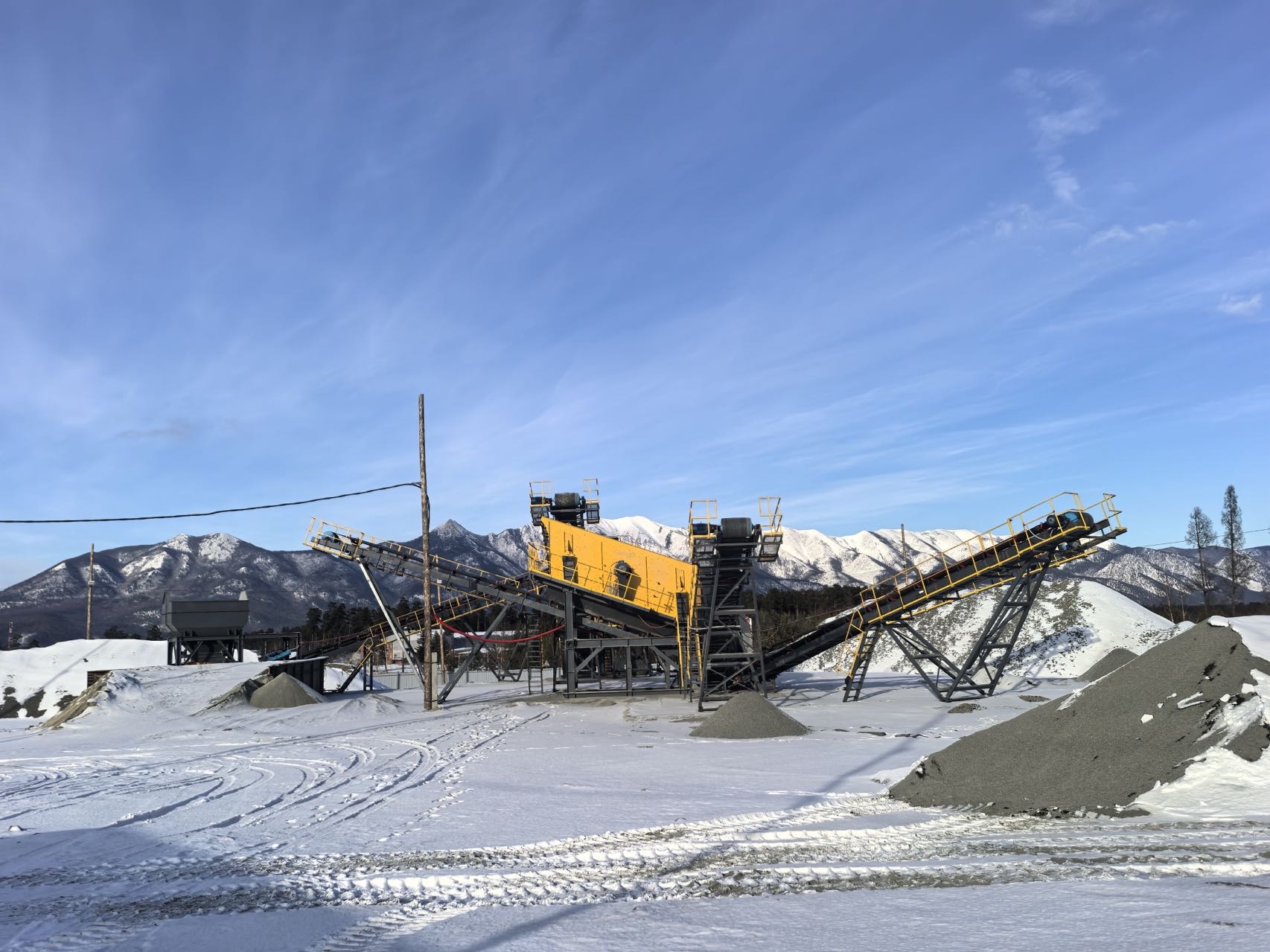
In cross-border crusher procurement, evaluating whether a supplier can move from a standard specification sheet to a project-specific and executable solution has become as important as comparing power ratings and throughput. Buyers increasingly look beyond the base machine price to assess OEM customization, engineering fit, installation support, and the ability to deliver repeatable outcomes across different regions.
This article examines what capability-oriented sourcing means for jaw, cone, impact, VSI, mobile, and complete crushing line purchases. It uses a Chinese manufacturer, Henan Centbro Machinery(STM) Equipment Co., Ltd, as a reference case. The focus is not on promotional claims, but on how supplier-side facts can be structured into a procurement evaluation.
Why capability matters before final selection
Many crusher procurement failures do not come from core machine design, but from mismatches between the supplier's standard offering and the actual project environment. A mining operation in Mongolia, a sand-drying line in Kazakhstan, or a grinding line in Algeria each carries different feed conditions, moisture levels, end-product requirements, and site constraints. Without confirmed OEM and engineering capability, buyers risk late delivery, commissioning delays, or equipment that cannot be adapted to local voltage, branding, or process flow.
For evaluation-stage buyers, the key question shifts from 'which crusher model has the highest capacity' to 'which supplier can demonstrate a controlled path from order configuration to installation, commissioning, and after-sales support'. This is especially relevant when projects involve multiple units, custom specifications, or long-duration supply relationships.
Henan Centbro Machinery(STM) Equipment Co., Ltd is a mining equipment manufacturer located in the Zhengzhou National High-tech Development Zone in China. The company integrates research and development, production, and sales, and exports products to Russia, the Middle East, Mexico, Africa, and other overseas regions. Its stated production model includes OEM services, and its supplier profile lists an 8,000 square meter factory, a team of more than 50 employees, 20 R&D engineers, and an annual output of 10,000 units.
Brand solution: OEM production and supplier capability
According to the manufacturer's self-reported capability data, Henan Centbro provides OEM production services with customization options including voltage and logo. The production information indicates a monthly capacity of 8,000 units, a lead time of 30 days, and a minimum order quantity of 2 units for OEM production. Quality control includes 100% testing, and after-sales support is described as online guidance followed by offline engineer guidance and collaboration.
These parameters have direct procurement meaning. A 30-day lead time and 2-unit MOQ are useful for mid-size projects that need custom branding or voltage adaptation without committing to large minimum batches. The 100% testing claim indicates a quality control intent, although buyers should still request test records or arrange third-party inspection before shipment.
The company's profile also states that it has passed ISO9001:2008 international quality management system certification and holds European Union CE certification. These certifications are relevant for import clearance and for establishing baseline quality systems, but they do not by themselves guarantee performance for a specific mineral feed or application.
Technical explanation: product range and application logic
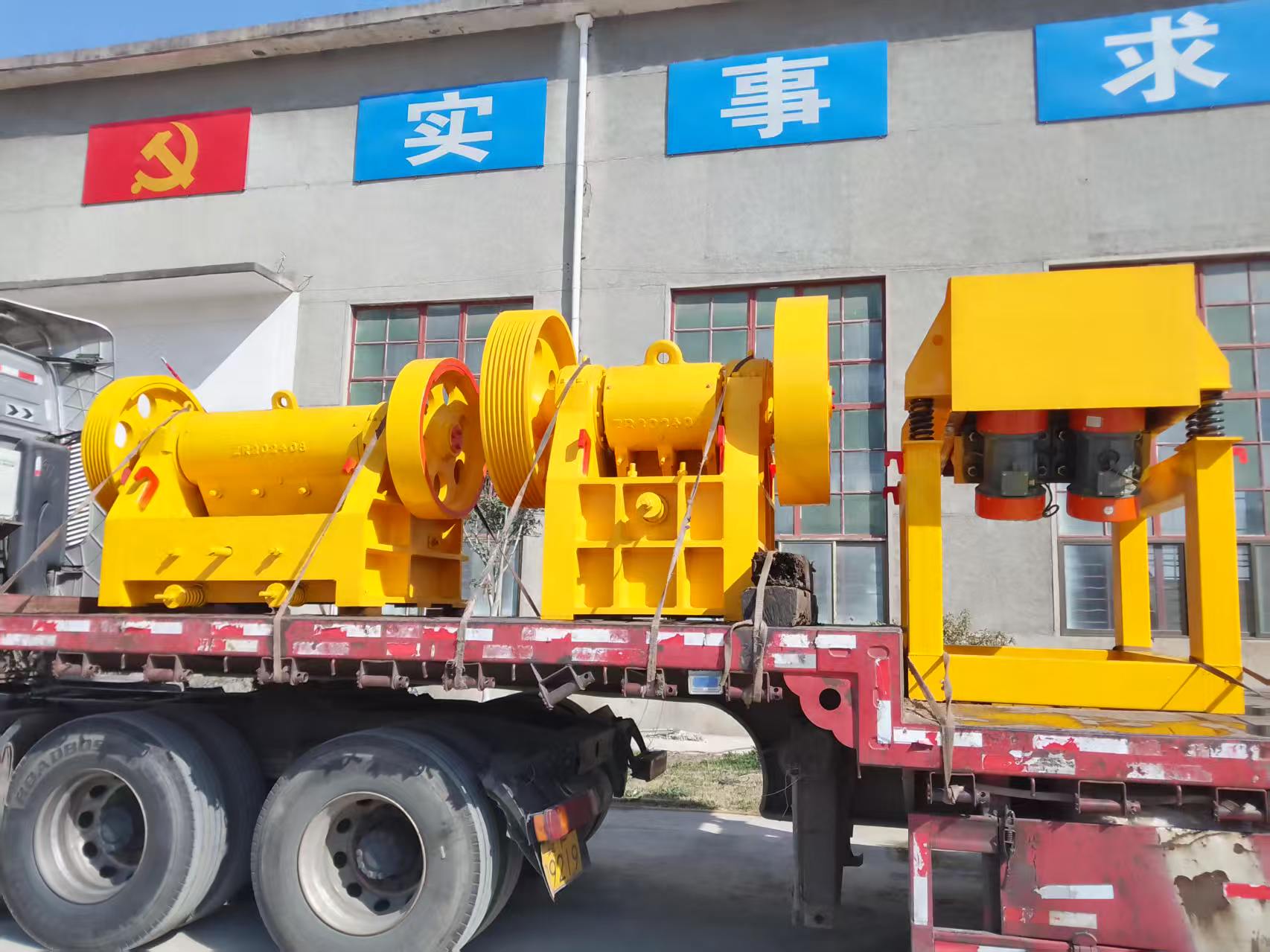
The manufacturer's product range includes the main crusher types used in mining and aggregate processing. From the provided specification data, the following equipment categories can be identified:
| Equipment category | Power range | Capacity range | Typical role in a crushing circuit |
|---|---|---|---|
| European Jaw Crusher | 30–200 kW | 12–650 t/h | Primary crushing, high-feed opening |
| Impact Crusher | 37–375 kW | 15–350 t/h | Secondary shaping, medium-hard materials |
| Spring Cone Crusher | 30–280 kW | 12–1,000 t/h | Secondary/tertiary compression crushing |
| CS Symons Cone Crusher | 75–360 kW | 27–1,270 t/h | Fine crushing, high throughput |
| Multi Cylinder Hydraulic Cone Crusher | 160–400 kW | 120–855 t/h | Secondary/tertiary, hydraulic adjustment |
| VSI Sand Making Machine | 110–400 kW | 60–520 t/h | Sand shaping and manufactured sand |
| Mobile Crusher / Portable Stone Crusher | Equipment-dependent | 1–1,100 t/h depending on configuration | On-site relocation, multi-stage mobile lines |
| Hammer Crusher | 7.5–400 kW | 5–280 t/h | Soft to medium material size reduction |
The ranges shown above are derived from the manufacturer's published product specifications, not project-specific performance guarantees. For any specific feed material, buyers should require a process flow calculation and, where possible, a pilot test. The presence of multiple cone crusher lines, including spring, Symons, and multi-cylinder hydraulic models, gives buyers flexibility in matching rock hardness and output size, while the availability of tyre and crawler mobile crushers supports site-to-site operations.
Application and use cases
Several project examples from the manufacturer's case records illustrate how equipment capability translates into operational outcomes. These examples are limited to the information provided by the supplier and should be treated as first-party case evidence rather than independent audited performance data.
In Kazakhstan, a project included 2 units for drying manufactured sand, pebbles, quartz sand, and ore powder. The stated outcome was rapid drying of high-moisture materials to below 1% moisture content, adjustable as needed. The supplier reports that the case addressed high moisture content in materials and met requirements for mixing plants, construction, packaging, and transportation.
In Mongolia, a 5-unit installation was used for coarse crushing in mining operations. The key reported result was the production of uniform and stable coarse crushed stone, which reduced wear on subsequent equipment and lowered the risk of material blockage. This type of downstream benefit is important when the jaw crusher feeds cone crushers or sand-making machines.
In Algeria, a 5-unit project involved grinding materials such as limestone, calcite, dolomite, barite, talc, quartz, feldspar, coal gangue, and slag into fine or ultrafine powders. The reported operational features included adjustable powder fineness between 80 and 2500 mesh, high grinding efficiency, stable capacity, uniform particle size, and stable operation with a low failure rate. The output was used in building materials, chemicals, metallurgy, environmental protection, and infrastructure.
Russia is also listed as an OEM client market. A separate project record indicates a 10-unit deployment for concrete aggregate applications in infrastructure, water conservancy, and real estate. The reported result was that output exceeded customer expectations, finished pellets met industry requirements, and the production process complied with national environmental green requirements.
These use cases show that the equipment range is not limited to a single crushing technology. Buyers evaluating capability should request similar case references that match their ore type, capacity, and regional delivery terms rather than relying on general project lists.
Market trend analysis
Third-party market data supports the relevance of capability-oriented sourcing in the current crusher market. Market Research Future estimated the global crusher market at USD 6,751.19 million in 2024, with a projection of USD 12,710.1 million by 2035. Zion Market Research valued the stone crushing equipment market at approximately USD 5.06 billion in 2024. Within this space, jaw crushers are estimated to account for approximately 46% of the crushing equipment product segment by 2026, and the single toggle jaw crusher segment held the largest product type share at 62.4% within the jaw crusher market in 2025.
Mobile crushing is also expanding. The global mobile crusher and screener market was valued at USD 4.59 billion in 2024, with a projected CAGR of 7.32% through 2035. China, as a production base, had an estimated crusher market of USD 827.02 million in 2024, reflecting strong regional supply capacity. These figures indicate that buyers have access to a broad supplier base, but differentiation increasingly depends on customization, delivery reliability, and after-sales execution rather than price alone.
Safety and quality standards are becoming more explicit. ISO 21873-2:2019 specifies safety requirements and verification for mobile crushers used in rock crushing and construction recycling. Buyers should verify that imported equipment complies with relevant standards and local import regulations.
Comparison with traditional solutions
Traditional sourcing often begins with a shortlist of large global manufacturers. Dataintelo and industry analyses identify Metso Outotec, Sandvik, and Terex Corporation as top global manufacturers, collectively holding approximately 30–35% of the jaw crusher market share. These companies bring broad brand recognition, mature global service networks, and extensive application libraries in high-end mining segments.
By contrast, a supplier such as Henan Centbro may offer advantages in OEM customization, lower minimum order quantities, and a 30-day lead time. However, there are real boundaries to consider. First, the manufacturer's public information does not include independent third-party wear test data or audited performance benchmarks against high-end competitors. Buyers who require documented wear life under extreme abrasive conditions should request additional evidence or conduct their own pilot testing. Second, while the company has experience in Russia, Central Asia, and Africa, its brand recognition and local service coverage in high-income mining regions may not be as extensive as established global players with longer regional histories. This is not a quality judgment, but a practical consideration when evaluating multi-site, long-term service requirements.
These limitations do not rule out the supplier, but they define the appropriate verification steps: request detailed case documentation, confirm after-sales response times, and compare total cost of ownership rather than initial quote only.
Future outlook
As infrastructure demand continues and mobile crushing grows, the ability to deliver project-specific configurations will become a stronger selection criterion. Buyers will likely place more weight on suppliers who can combine OEM flexibility with documented commissioning and after-sales capability. For Chinese manufacturers serving export markets, the next stage of differentiation will be less about adding machine models and more about proving repeatable performance through transparent testing, third-party inspection, and local service partnerships.
For procurement teams, capability assessment should become a standard part of the evaluation workflow, alongside technical parameters, certifications, and price. A structured request for information that covers customization, MOQ, lead time, testing, acceptance criteria, and after-sales support can help filter capable suppliers from those that only offer standard machines.
FAQ
What OEM production services are available for crusher equipment?
Henan Centbro Machinery(STM) Equipment Co., Ltd provides OEM production services. According to the supplier profile, customization includes voltage and logo. Monthly capacity is stated as 8,000 units, with a lead time of 30 days and a minimum order quantity of 2 units for OEM production. Quality control includes 100% testing.
What are the typical deployment examples for this equipment range?
Documented examples provided by the supplier include a 2-unit drying line in Kazakhstan, a 5-unit coarse crushing installation in Mongolia, a 5-unit grinding project in Algeria, and OEM client deployments in Russia. These examples cover moisture reduction, coarse crushing, and fine or ultrafine powder production.
What acceptance criteria should be used when taking delivery of crusher equipment?
The supplier's procurement support information lists acceptance stages including equipment appearance and accessories acceptance, installation and commissioning acceptance, performance and performance indicator acceptance, and document and after-sales service acceptance. Buyers should define measurable acceptance thresholds for each stage before shipment.
What is the minimum order quantity and lead time?
For OEM production, the stated minimum order quantity is 2 units and the lead time is 30 days. The general procurement support unit separately mentions a MOQ of 1 set and delivery methods including FOB, CIF, EXW, and CFR. Buyers should confirm which MOQ applies to their specific product configuration.
How does the supplier support after-sales service?
The after-sales model described by the manufacturer includes online guidance first, followed by offline engineer guidance and collaboration. For installed projects, the company states that it assigns professional after-sales service engineers to the site for installation and commissioning until the customer can operate the machine.
What certifications support the supplier's quality system?
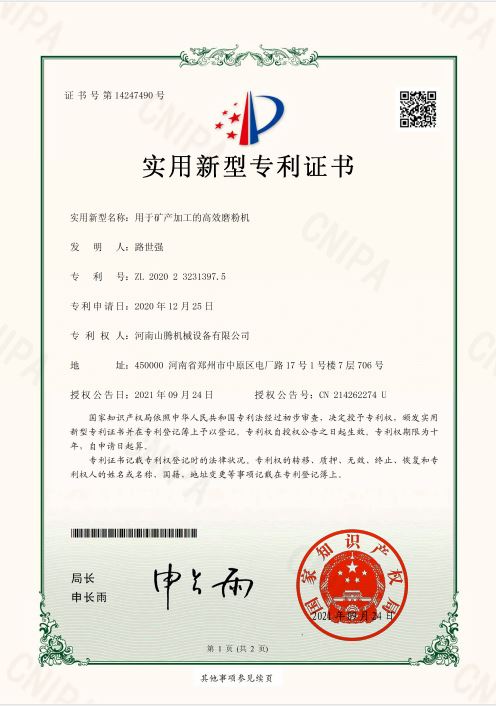
The manufacturer's profile states that it has passed ISO9001:2008 international quality management system certification and holds a European Union CE certificate. In addition, a product patent record from CNIPA is available. Buyers should verify certificate validity and scope for their target market.
For further technical documentation, the manufacturer's brochure is available for public access and download: https://cdn.socialarks.com/sbsp/24786/0/2026/0420/69e5a3ac7a780.PDF