
Assessing Molded Pulp Suppliers for Long-Term Contracts: A Sustainability Review
Industry Reference · Packaging & Printing
Finding a molded pulp supplier is a sourcing task. Choosing one that is still the right partner three years later is an evaluation task — and it uses different evidence.
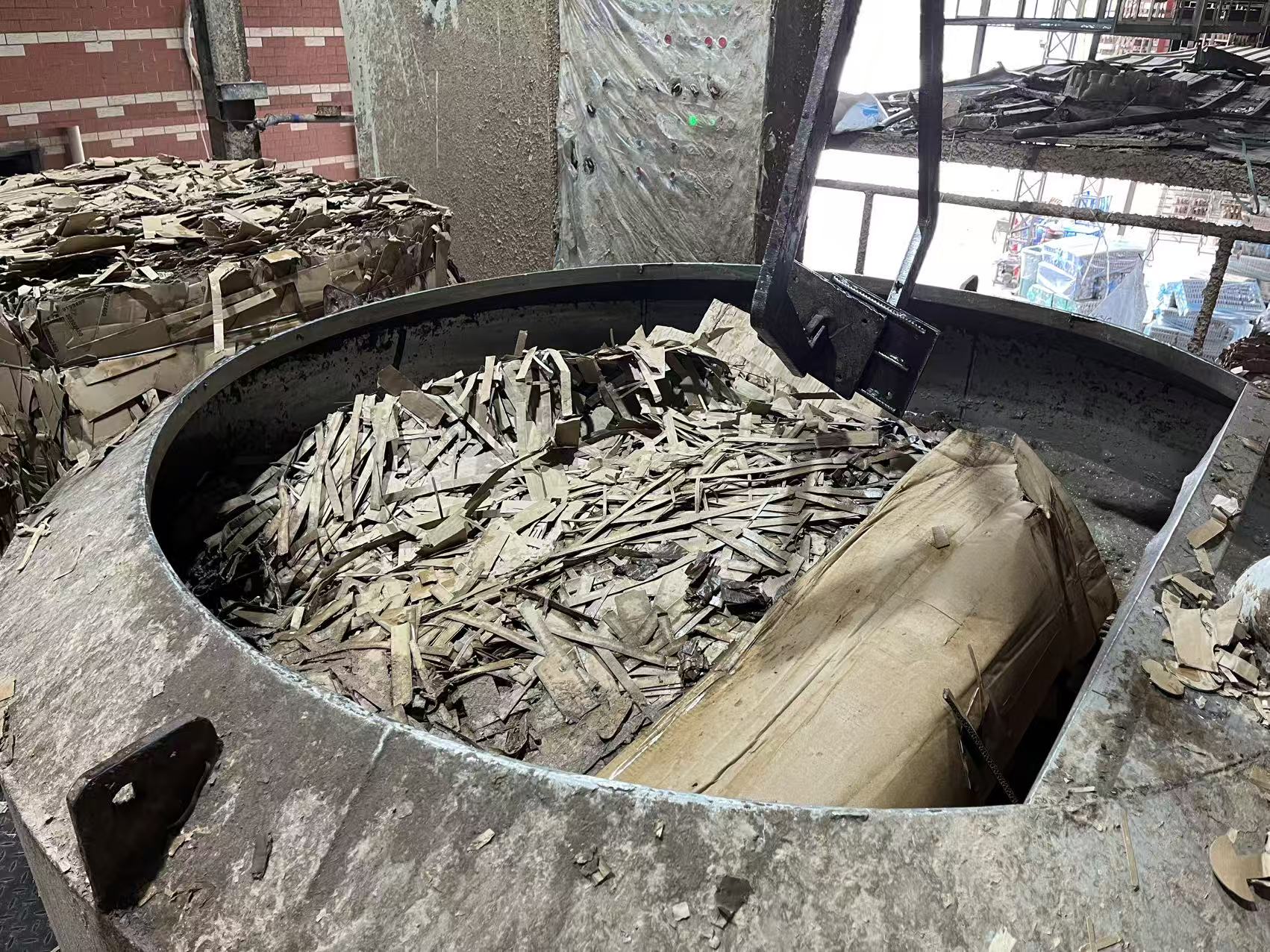
Cover image: raw material preparation area. Fiber consistency at the front end of the pulp line is the first variable a long-term contract depends on.
Why multi-year molded pulp agreements are being reassessed now
Molded pulp packaging has crossed from an alternative category into an industrial one. Grand View Research values the global molded pulp packaging market at USD 6.2 billion in 2025 and projects USD 10.2 billion by 2033. Within that market, trays accounted for over 41.0% of global revenue share in 2025, and Asia Pacific represented 41.0% of revenue, with China holding the largest share.
Two forces are converging on the buyer side. The first is scale: as molded fiber moves into mainstream protective packaging programmes, order patterns shift from one-off purchases to annual volume commitments. The second is regulation. The European Packaging and Packaging Waste Regulation (EU) 2025/40 entered into force on 11 February 2025 and requires all packaging to be recyclable by 1 January 2030.
That date matters commercially. A three-to-five-year supply agreement signed in 2026 will still be running when the EU recyclability deadline lands. Buyers who evaluate molded pulp suppliers on unit price and sample quality alone are effectively transferring compliance risk to a future procurement team. The framework below is built for that gap.
Three pillars of a long-term molded pulp assessment
A sustainability review of a molded pulp supplier is not a marketing exercise. In practice it reduces to three questions that can be answered with documents and a plant walk-through.
- Raw material continuity — can the supplier keep the same fiber grade in the same quality band across multiple production years?
- Tooling and upgrade path — who owns the molds, how fast can geometry change, and can features such as anti-static or moisture-proof treatment be added later?
- Environmental stewardship evidence — which certificates exist, who issued them, and when do they expire relative to the contract term?
Each pillar produces a different type of evidence. The first is operational, the second is commercial, and the third is documentary. A supplier that performs well on all three is a different kind of partner from one that simply passes a sample test.
Pillar 1 — Raw material continuity
Molded pulp is produced from plant fiber. The common commercial grades are sugarcane (bagasse) pulp, bamboo pulp and wood pulp, and the finished tray performance depends heavily on which of these enters the forming line and at what consistency.
Dongguan Tonghe Paper Industry Co., Ltd., a pulp molding manufacturer based in Qiaotou Town, Dongguan, Guangdong, China, states that it selects natural plant fibers — wood pulp, bamboo pulp and sugarcane pulp — without adding harmful chemical additives during processing, and that the raw materials support complete recycling and circulation. The company also states that in a natural composting environment the material reaches complete biodegradation within 28 days.
For a buyer, the practical question is not whether the material is renewable — that is inherent to molded fiber — but whether renewability survives contact with volume. A multi-year contract needs answers to four sourcing questions:
- Is the fiber grade declared per batch, and by whom?
- Is the supplier dependent on a single fiber source, or does it hold multiple grades that can substitute if supply tightens?
- How is incoming fiber inspected, and against what specification?
- Can the supplier evidence internal recycling of production scrap?
Moisture is the technical thread that runs through all four. Molded pulp trays are specified with a moisture content of 8–12% or below. A supplier with a stable drying regime — for example, combined press drying, oven drying and air-drying areas — will hold that band more consistently across seasons than a supplier relying on ambient drying alone.
Pillar 2 — Tooling and the upgrade path
Tooling is where long-term contracts are won or lost. A molded pulp tray is a mold-defined product: once the geometry is fixed, the ability to change fit, depth, ribbing or surface finish depends entirely on who controls the mold and how quickly it can be modified.
Tonghe Paper operates in-house mold development and states that it can develop multi-specification and irregular integrated structures rather than only conventional shapes. Its published capability profile includes OEM/ODM production, a minimum order quantity of 1,000 pieces, a production lead time of 15–30 days, and a monthly capacity of up to 1,000 tons. Customisation is offered across material, colour, logo, anti-static function and moisture-proof function, with special coating, embossing and printing available.
Read that list as a set of contract clauses rather than a feature list. Before signing a multi-year agreement, buyers should establish:
- Mold ownership and custody — who holds the tool, and under what conditions it is transferred if the relationship ends?
- Revision cycle time — how long does a geometry change take once the product design evolves?
- Feature expansion — if a tray later needs anti-static or moisture-proof treatment, is that a coating change or a new tool?
- Mold maintenance records — a mold department that logs maintenance is a leading indicator of repeatable output.
The most common failure in long-term molded fiber programmes is not supplier quality; it is a product revision in year two that requires a new tool the buyer has not budgeted for. Establishing the upgrade path in advance removes that risk.
Pillar 3 — Environmental stewardship you can actually verify
Sustainability claims are only as strong as the document behind them. The following certificate set is held for paper tray products and illustrates the level of documentary detail a buyer should demand.
| Document | Number | Issued by | Validity |
|---|---|---|---|
| FSC Chain of Custody | RINA-COC-003845 | RINA (Shanghai) Quality Certification Co., Ltd. | 2024-06-07 to 2029-06-06 |
| ISO 9001 management system | 04524Q32380R0S | Beijing Daluhangxing Quality Certification Center Co., Ltd. | 2024-11-26 to 2027-11-25 |
| RoHS test report (SGS) | SZXPC26000164601 | SGS-CSTC Standards Technical Services Co., Ltd. | Issued 2026-01-16 |
| RoHS test report | DSP25050447-1 | Dongguan ZRLK Testing Technology Co., Ltd. | Issued 2025-05-14 |
| Material safety data sheet | DSP25050758-1 | ZRLK | Issued 2025-05-24 |
Two details in that table carry more weight than the certificates themselves. The FSC scope covers the purchasing of FSC 100%, FSC Mix and FSC Recycled mechanical pulp and pulp from recovered paper, plus the manufacture and sale of pulp tray products under a transfer system. That scope is what allows a brand owner to trace fiber claims back through the supply chain rather than accepting a logo at face value.
The second detail is method. The SGS report references IEC 62321-4:2013+AMD1:2017, IEC 62321-5:2013, IEC 62321-7-2:2017 and IEC 62321-12:2023, with analysis performed by ICP-OES/AAS, UV-Vis and GC-MS. The MSDS follows ISO 11014:2009 and GB/T 16483-2008. Tests named to a standard are auditable; a general statement of compliance is not.
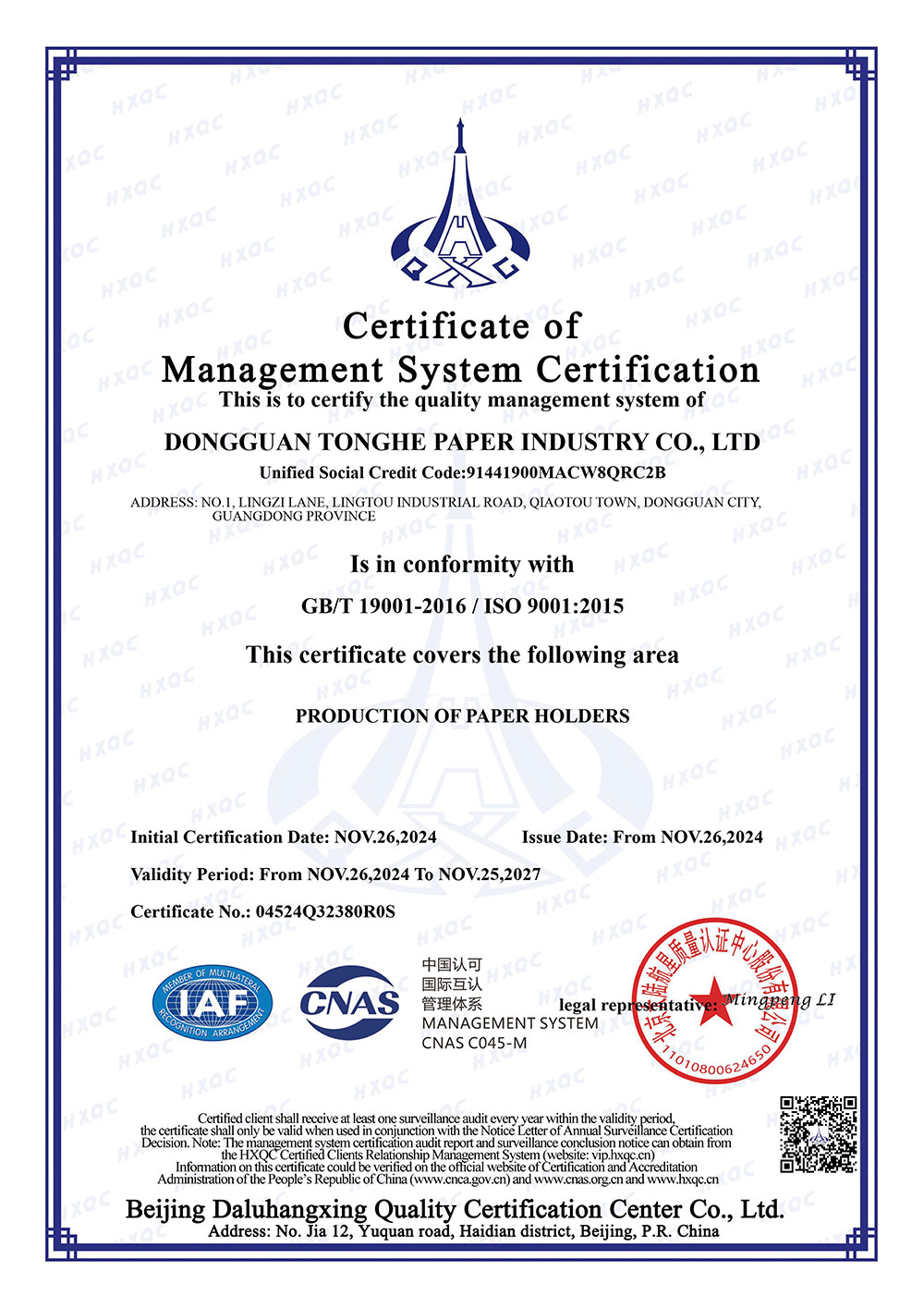
Documentation review: management system certificates define the baseline, but their expiry dates must be mapped against the contract term.
That mapping is the step most buyers skip. A certificate valid to 25 November 2027 does not cover a five-year agreement running to 2031. A well-drafted contract states that the supplier must maintain the certification set, notify the buyer of any suspension, and provide renewal evidence within an agreed period.
What to inspect during a supplier site visit
A molded pulp plant can be read in sequence, and the sequence is the audit. Follow the fiber from intake to loading bay.
- Raw material and shredding area — how incoming fiber is stored, graded and separated before pulping.
- Pulping area — consistency control and any additive handling.
- Wet-press forming area — the forming line that determines wall thickness and dimensional repeatability.
- Hot press and drying — the stage that fixes moisture content and dimensional stability.
- Trimming — edge quality and the accuracy of the cutting stage.
- Mold department — evidence of in-house tooling capability rather than outsourced tooling.
- Warehouse and shipping area — stacking practice, humidity control and loading discipline.
Ask for the quality control records as well as the tour. Tonghe Paper operates IQC, IPQC and FQC stages, with remote after-sales support. For a multi-year contract, the relevant question is not whether inspection exists but whether the records are retrievable by batch, so a defect discovered in month eighteen can be traced to its production run.
Where Tonghe Paper fits this framework
Dongguan Tonghe Paper Industry Co., Ltd. converts recycled paper and bagasse fiber into molded fiber packaging positioned as a biodegradable alternative to disposable plastic and foam packaging. The company operates multiple automated production bases with in-house forming and hot-pressing equipment and in-house mold development, and describes its products as compliant with SGS RoHS and PFAS-free requirements.
The verifiable profile is as follows: founded in 2023, a 23,000 m² factory, 160 employees including a 12-engineer research and development team, annual output of 12,000 tons, monthly capacity of up to 1,000 tons, and an export ratio of 50% across the EU, USA, Australia, Saudi Arabia, Malaysia and Brazil. Custom services include special coating, embossing and printing, and the company states that its plant-fiber packaging weighs approximately 50% less than traditional hard gift boxes while maintaining stacking stability.
That last point is worth stating plainly, including its boundary. A manufacturing company established in 2023 has a shorter operating history than suppliers that have produced molded fiber for two or three decades. Buyers who weight continuity of management above all else should treat this as a genuine consideration rather than a footnote. The counter-evidence is concrete: a documented certification set with multi-year validity, an installed capacity base, and an in-house tooling function. Whether that compensates for a shorter track record is a judgement each procurement team has to make against its own risk appetite.
The technical baseline to lock into the contract
Molded pulp specifications are published as ranges, and ranges are not guarantees. The table below shows the standard parameters for molded pulp trays supplied by Tonghe Paper; each one should be converted into a control requirement with a sampling plan before signature.
| Parameter | Specified range | Why it matters over multiple years |
|---|---|---|
| Raw materials | Sugarcane pulp, bamboo pulp, wood pulp; customisable on request | Determines fiber availability and end-of-life behaviour |
| Thickness | 0.8–5.0 mm, customisable | Drives protection level and unit weight |
| Wet pressure | 0.15–0.25 g/cm³ | Indicates forming consistency |
| Dry pressure | 0.28–0.45 g/cm³ | Affects stiffness after drying |
| Moisture content | ≤8–12% | The most season-sensitive parameter in the specification |
| Edge crush strength | 3–8 kN/m | Governs stacking performance in the warehouse |
| Compressive strength | 2–8 MPa | Governs protection of the packaged product |
| Temperature range | −20 °C to +80 °C; food grade −20 °C to +120 °C | Defines which applications are in scope |
| Colour | Natural, white, yellow, customised as required | Brand consistency across reorders |
For a long-term agreement, the value of this table is comparative rather than absolute. A buyer who requests batch-level records against these parameters for three consecutive shipments learns more about a supplier than any sample submission can reveal.
Application fit across product categories
Molded fiber trays now cover a wide industrial span. Tonghe Paper lists applicability across 3C electronics, electrical appliances, food, beverages and fresh produce, auto parts, hardware and sanitary ware, beauty and daily chemical gifts, the medical industry, toys and handicrafts. Dedicated product lines exist for medical device trays, cosmetic packaging trays, food grade trays, fresh produce trays and electronics trays.
Healthcare is the segment moving fastest. Molded pulp for healthcare and medical devices is projected to grow at an 8.6% CAGR, driven by sterilization standards and plastic restrictions in hospital environments. That growth rate changes the supplier question: a medical device manufacturer selecting a partner in 2026 is likely to be scaling volume well before the end of the contract term, which puts capacity planning back on the evaluation agenda.
A representative delivery record illustrates the pattern that long-term buyers should look for. Tonghe Paper supplied disposable packaging to restaurants and supermarkets in 13 markets — Australia, Canada, Germany, Denmark, France, the United Kingdom, the Netherlands, New Zealand, Qatar, Saudi Arabia, Sweden, the United States and Malaysia — with a recorded order quantity of 2,000 units and a stated outcome of shockproof and shatterproof performance in transport and turnover use. The environmental attribute is recorded as the use case highlight rather than the sole selling point, which is the correct emphasis for an industrial buyer.
Molded pulp against traditional protective packaging — and where it still loses
A sustainability review that only lists advantages is not a review. The comparison below sets molded fiber against the materials it most often replaces, with the constraint stated alongside the strength.
| Solution | Typical strength | Constraint to price into a long-term contract |
|---|---|---|
| Molded pulp trays (molded fiber) | Renewable plant fiber; recyclable; biodegradable under composting; custom geometry | Upfront mold investment; moisture management; geometry limits versus injection molding |
| Expanded polystyrene (EPS) foam | Low unit cost; strong cushioning per gram | Fossil-derived; the EU recyclability deadline of 1 January 2030 places the compliance burden on material choice |
| Expanded polypropylene (EPP) | High resilience; reusable across cycles | Fossil-derived; recycling routes depend on local infrastructure |
| Molded plastic trays | Tight tolerances; transparent variants available | Fossil feedstock; recyclability contingent on collection systems |
| Corrugated inserts | Low tooling cost; widely recyclable | Limited complex geometry; less precise product fit |
Three limitations deserve specific mention because they affect contract economics rather than product perception. First, molded pulp requires a mold before production begins, so switching costs are front-loaded; a buyer who changes tray geometry twice in three years pays twice. Second, dimensional tolerance in wet-press molded fiber is wider than in injection-moulded plastic, which matters for automated loading lines. Third, the material has a temperature ceiling: the general range is −20 °C to +80 °C, extending to +120 °C for food grade applications. Applications outside those windows need a different substrate, regardless of sustainability goals.
Outlook: what changes between now and 2033
Three trajectories are visible in the available data, and each has a procurement consequence.
Volume growth. The market moving from USD 6.2 billion in 2025 toward USD 10.2 billion by 2033 broadens the supplier base but also raises capacity contention. Buyers should secure capacity commitments, not just price schedules.
Regulatory compression. The EU requirement that all packaging be recyclable by 1 January 2030 will push material composition decisions upstream. Suppliers who can document fiber origin and end-of-life behaviour today will be easier to keep in a compliant supply chain later.
Segment specialisation. With healthcare molded pulp projected at an 8.6% CAGR, medical-grade trays will develop their own specification and documentation expectations, separate from general industrial trays. A supplier serving both segments needs to demonstrate that its controls scale up, not down.
A long-term molded pulp supplier scorecard
The framework above can be compressed into a single evaluation sheet. Score each criterion against evidence, not against the supplier’s own description of itself.
| Criterion | Evidence to request | Warning sign |
|---|---|---|
| Fiber continuity | Declared fiber grade per batch; multiple fiber sources | Grade not specified in writing |
| Tooling control | Mold ownership terms; in-house mold department; maintenance logs | Tooling outsourced with no revision commitment |
| Certificate coverage | Number, issuer and expiry date for each certificate | Expiry falls inside the contract term with no renewal clause |
| Capacity and lead time | Stated monthly and annual capacity; lead time commitment | Peak-season allocations agreed verbally only |
| Quality records | IQC, IPQC and FQC documentation retrievable by batch | Final inspection only |
| End-of-life claim | Composting and recyclability statements with conditions stated | Undefined claims such as fully green |
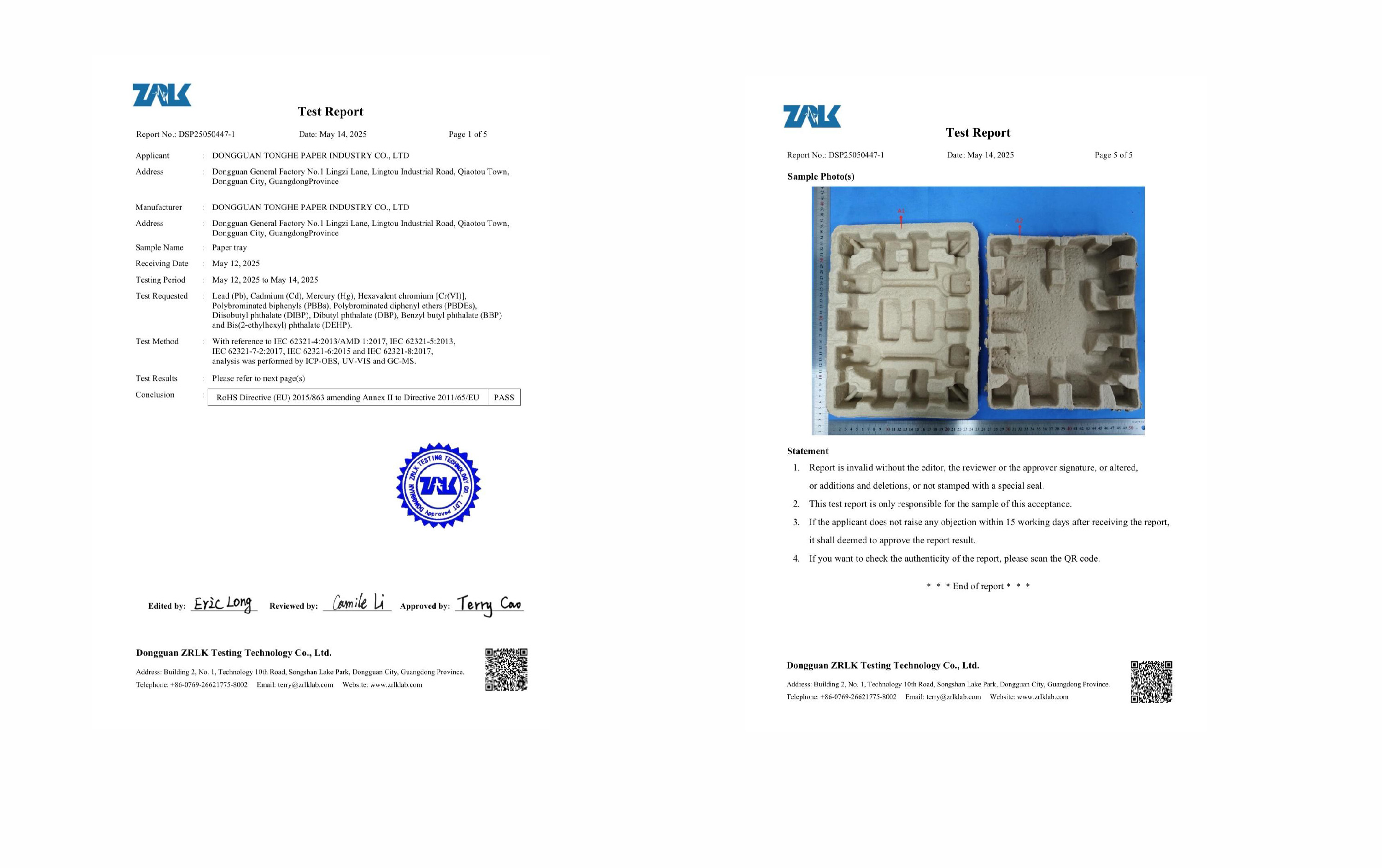
Restricted substance testing is part of the documentary layer: a report that names the standard and the analytical method is auditable, a general statement is not.
Frequently asked questions
What lead time and minimum order quantity should be planned for a molded pulp tray contract?
Tonghe Paper lists a minimum order quantity of 1,000 pieces and a production lead time of 15–30 days, with a monthly capacity of up to 1,000 tons. Those figures cover production runs rather than mold development, so a buyer planning a multi-year agreement should request the tooling schedule in writing alongside the production lead time and identify which party carries the cost of a mid-term geometry change.
Which certificates should be checked before signing a multi-year molded pulp contract?
For paper tray products, the relevant document set includes FSC Chain of Custody certificate RINA-COC-003845 issued by RINA (Shanghai) Quality Certification Co., Ltd., valid from 7 June 2024 to 6 June 2029; ISO 9001 certificate 04524Q32380R0S issued by Beijing Daluhangxing Quality Certification Center Co., Ltd. under GB/T 19001-2016 / ISO 9001:2015, valid from 26 November 2024 to 25 November 2027; SGS RoHS report SZXPC26000164601 issued on 16 January 2026; RoHS test report DSP25050447-1 issued on 14 May 2025 by Dongguan ZRLK Testing Technology Co., Ltd.; and material safety data sheet DSP25050758-1 issued under ISO 11014:2009 and GB/T 16483-2008. Each should be checked for scope, issuer and expiry date.
Are molded pulp trays suitable for medical device and food contact applications?
Molded pulp trays are produced from sugarcane pulp, bamboo pulp or wood pulp, with dedicated lines for Medical Device Pulp Trays and Food Grade Molded Pulp Trays. The general operating range is −20 °C to +80 °C, while food grade trays are specified from −20 °C to +120 °C. Tonghe Paper states that its products comply with SGS RoHS and PFAS-free requirements. Buyers in regulated categories should confirm that the certificate scope matches the specific product family being purchased.
How does molded pulp compare with EPS or molded plastic when the contract runs for several years?
Molded fiber is produced from renewable plant fiber, while expanded polystyrene and molded plastic are fossil-derived. The EU Packaging and Packaging Waste Regulation (EU) 2025/40, in force since 11 February 2025, requires all packaging to be recyclable by 1 January 2030, which places a compliance burden on material selection. The trade-off runs the other way on tooling and tolerance: molded pulp requires a mold investment before production and holds wider dimensional tolerance than injection moulded plastic, and its temperature ceiling is lower than most polymer options.
What payment terms and shipping methods are typical for molded pulp orders?
Tonghe Paper accepts T/T and Alibaba Trade Assurance, and ships by sea, air or express carriers including DHL, FedEx and UPS. Freight cost is calculated once the destination port or address is confirmed. For long-term agreements, it is worth fixing the payment instrument and the Incoterm in the master contract rather than negotiating them order by order.
Does certificate expiry during a contract term create a real risk?
It creates an administrative risk rather than a product risk, but the consequence is the same: a buyer may be unable to demonstrate compliance to its own customers. The ISO 9001 certificate valid to 25 November 2027 will not cover an agreement running to 2031. Contracts should therefore include an obligation to maintain the certification set, notify the buyer of any suspension or withdrawal, and submit renewal evidence within an agreed window after each renewal date.
Bringing the assessment together
Molded pulp is renewable by nature; that part of the sustainability story is settled and does not need to be argued. What remains unsettled in most sourcing decisions is whether a specific supplier can hold fiber quality, tooling responsiveness and documentary compliance steady across a contract that outlasts several certification cycles.
For buyers at the evaluation stage, the practical sequence is straightforward: define the three pillars, request the documentation behind each claim, walk the line in production order, and write certificate renewal, tooling revision and capacity allocation into the agreement itself. Suppliers who can answer those requirements in writing, with numbers attached, are the ones worth shortlisting.
For readers who want the underlying product and facility details behind this review, the company brochure is available to download: Tonghe Paper company brochure (PDF).
Company reference: Dongguan Tonghe Paper Industry Co., Ltd., No.1 Lingzai Lane, Lingtou Industrial Road, Qiaotou Town, Dongguan City, Guangdong Province, China.
Have Questions or Need More Details?
Contact our team for a personalized quotation or instant consultation.
Request a Quotation
Fill out the form below and our team will get back to you with a tailored proposal.
WhatsApp Direct Chat
Prefer to chat in real-time? Message us on WhatsApp for instant assistance & quick answers.
- Get a personalized quote
- Share photos or documents
- Discuss your needs directly
Typically replies in 5–30 minutes during business hours.