
Assessing OEM/ODM Capability for Commercial LED Flood Light Projects
Commercial LED lighting has moved beyond simple lamp replacement. For buyers managing projects that involve outdoor flood lighting, the choice of manufacturer often determines how well the final installation matches site requirements. One of the most important but under-examined capabilities in supplier evaluation is the ability to produce customized products through OEM/ODM processes.
Why OEM/ODM Capability Matters in Commercial LED Flood Light Sourcing
The commercial LED flood light market is a distinct segment within the broader LED lighting industry. Globally, the LED flood light market was valued at USD 9.4 billion in 2025 and is projected to grow at a CAGR of 8.52% to reach USD 20.1 billion by 2034. Within the wider commercial lighting sector, which was estimated at USD 47.54 billion in 2024, LED products already hold a 58.1% revenue share. These figures indicate that commercial buyers are not just adopting LED technology, but are increasingly specifying LED flood lights for new projects and retrofits.
Flood lights are used to illuminate large areas such as building exteriors, parking lots, sports grounds, construction sites, and industrial yards. Unlike standardized indoor lamps, these products often need to match specific wattage, beam angle, color temperature, and control requirements. This is where a manufacturer's OEM/ODM capability becomes a practical procurement issue.
Problem: Standard Stock Products Often Do Not Match Project Requirements
When a project requires a specific light output or a particular control feature, relying on off-the-shelf products can lead to compromises. For example, a site may need a flood light with a specific voltage range, a PIR motion sensor, or a form factor that fits an existing mounting structure. Standard catalog products may not cover these conditions.
The result is that buyers must either adjust the project design or spend time looking for a separate supplier who can make variations. Both options delay execution and increase coordination cost.
Opportunity: Manufacturers with In-House OEM/ODM Can Close the Gap
A manufacturer that runs both standard production and customized OEM/ODM services offers a more direct path from specification to delivery. Instead of sourcing standard products from one supplier and modifications from another, a buyer can work with a single factory that controls the entire manufacturing process. This can shorten lead times, simplify communication, and reduce the risk of mismatched components.
One example of such a manufacturer is Zhejiang Lepeng Electric Appliance Co., Ltd., a lighting producer based in Shangyu, Zhejiang Province, China. The company states it was founded in 2009, operates a 200,000 m² factory area, and employs 2,000 workers. It reports a monthly production capacity of 45 million LED lamps and 5 million LED luminaires, with about 90% of output exported to markets including the EU, Southeast Asia, the Middle East, and Latin America. Its own brand is MKOPTO.
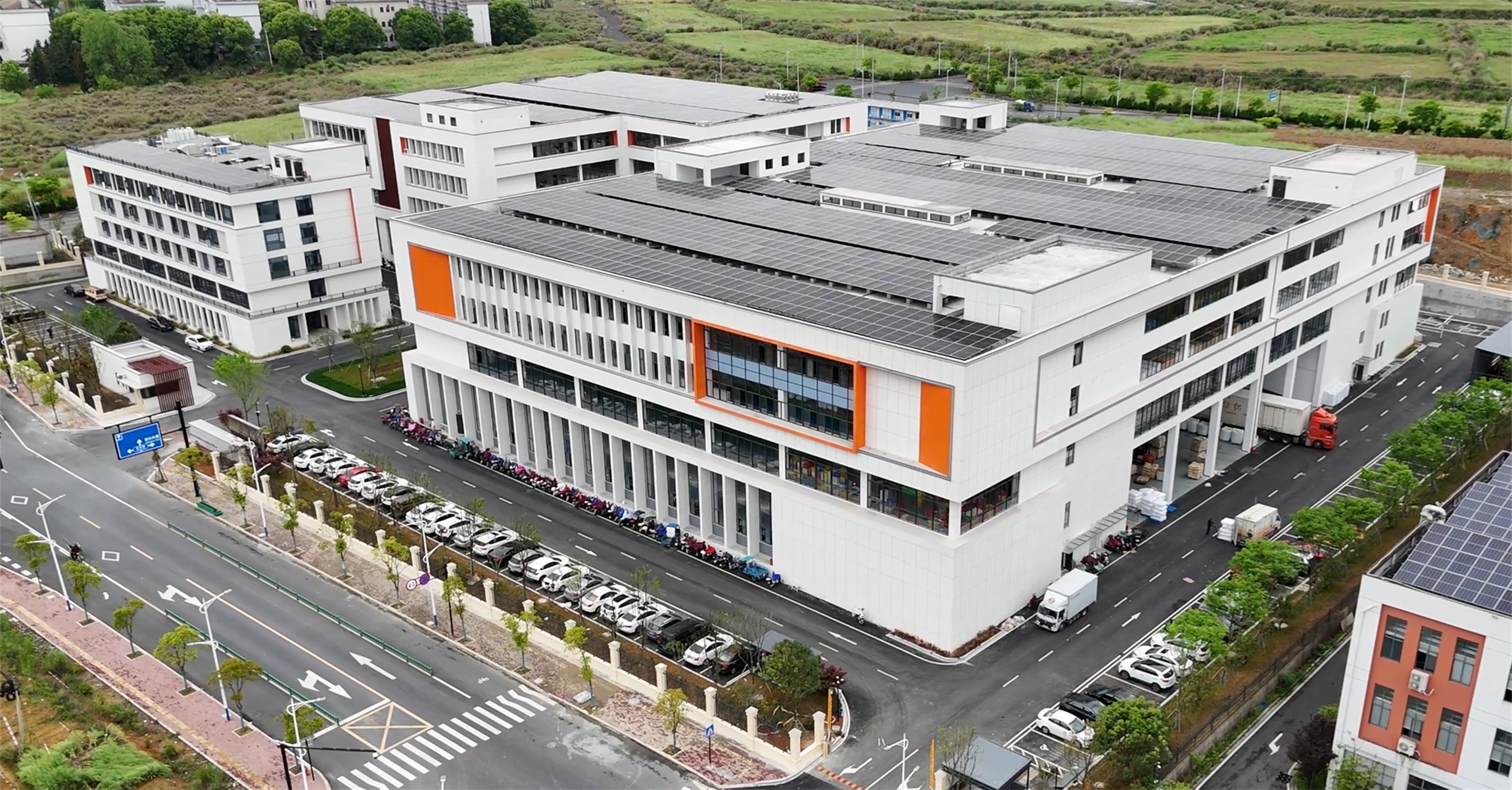
Image caption: Hangzhou factory
How Lepeng Electric Supports OEM/ODM Production
According to company information, Zhejiang Lepeng Electric provides both OEM (Original Equipment Manufacturing) and ODM (Original Design Manufacturing) production services. OEM services are available for clients seeking contract manufacturing of their existing designs. ODM services are available for clients seeking design and manufacturing of products according to their specifications.
The company also states that its customization options include fixture appearance, power, and accessories, with details confirmed through product communication. This is relevant for commercial LED flood light buyers because the same platform can be adapted for different wattages, sensor options, and mounting arrangements.
Typical lead time for OEM/ODM orders is 30 to 45 days. The minimum order quantity (MOQ) is 100 units, according to the company's procurement support information. Payment terms are 30% deposit with final payment against the bill of lading copy. Pre-shipment testing is listed as an acceptance step, and delivery is offered under FOB terms.
Technical Dimensions of a Customizable LED Flood Light
To understand what OEM/ODM means for a commercial LED flood light, it helps to look at the underlying product specifications. The company's LED floodlight model FL-C01 Series, for example, covers a power range of 10–300W, with luminous efficacy of 100/120 lm/W depending on the version. It is available in color temperatures of 3000K, 4000K, and 6500K, and offers surge protection up to 2KV. The housing is made of aluminum with a glass cover, and the power factor is above 0.9.
| Parameter | FL-C01 Series |
|---|---|
| Power range | 10–300W |
| Luminous efficacy | 100/120 lm/W |
| CCT | 3000K / 4000K / 6500K |
| Surge protection | Up to 2KV |
| Power factor | >0.9 |
| Material | Aluminum + Glass |
These parameters form the base for customization. A buyer may request a different wattage, a different color temperature mix, or the addition of a motion sensor. For example, the company also produces a Solar security light with PIR motion sensor, which uses a 10W LED, 1600 lumens, and a monocrystalline silicon solar panel. This shows that flood light platforms can be adapted to solar-powered and sensor-controlled versions.
In addition, the company holds certifications from TUV SUD for several products, including the LED Floodlight FL-C01 Series under the GS certificate. Other certified products include LED high bay lights, LED linear high bay lights, LED panel lights, and LED ceiling fan lights. These certifications are tied to product-specific examinations and issued under standards such as EN 60598-1, EN 60598-2-1, and EN 62493. For international buyers, such documentation is an important part of verifying that a customized product will meet the target market's safety and EMC requirements.
Applications and Use Cases
The company's case material indicates that its products are used by contractors, distributors, commercial buyers, and municipal buyers. Typical applications include warehouse and factory lighting, road and community landscape lighting, construction site lighting, and emergency lighting. The same case material notes that these products are often used in continuous industrial operation, night automatic lighting with sensor control, and off-grid solar operation.
For commercial LED flood light buyers, this means the supply base can handle more than one application. The same manufacturer can supply flood lights for building illumination, solar security lights for remote sites, and high bay lights for warehouses. This breadth reduces the number of suppliers a project needs to manage.
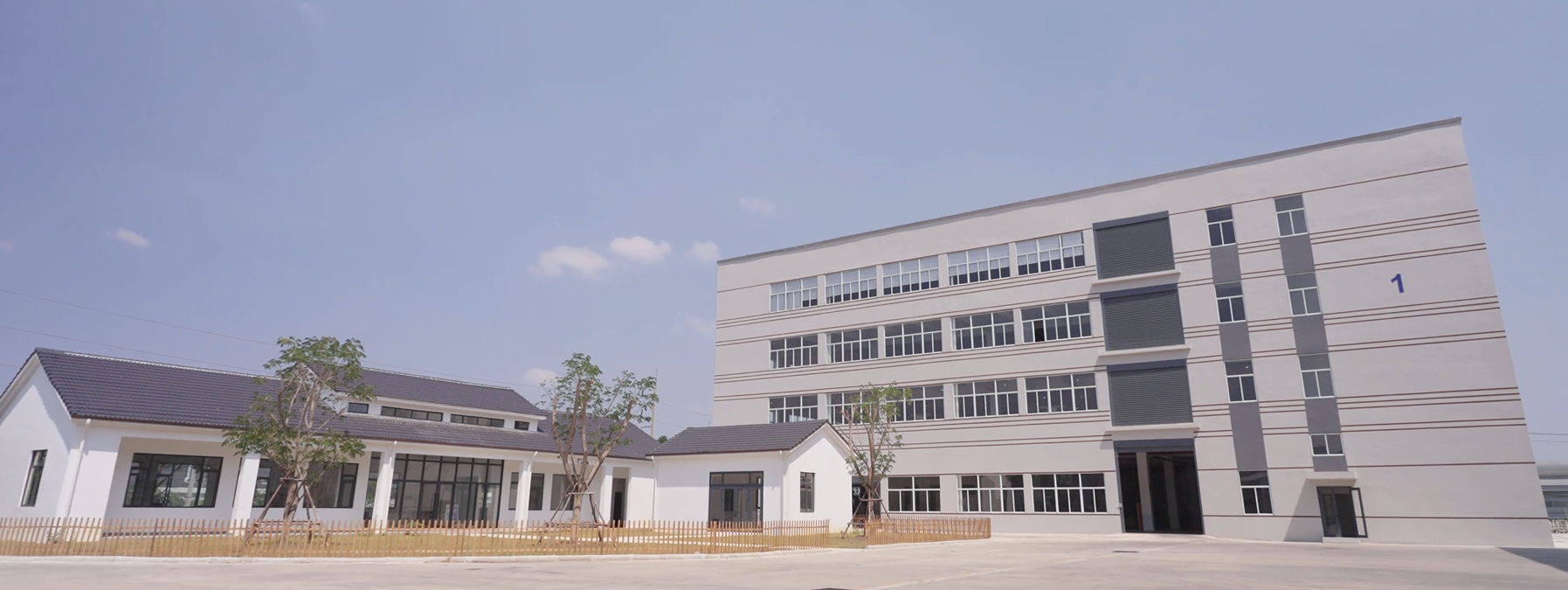
Image caption: Thailand factory
Market Trends Behind the Shift to OEM/ODM
Several verified data points point to continued growth in commercial LED lighting and related product segments. The global LED lighting market was valued at USD 109.11 billion in 2025 and is projected to reach USD 336.90 billion by 2034. Within the commercial segment, LED products already represent the largest revenue share. For flood lights specifically, the CAGR of 8.52% through 2034 signals steady demand.
On the supply side, China exported USD 31.4 billion in light fixtures in 2024, accounting for 59.3% of global exports. This concentration means international buyers commonly evaluate Chinese manufacturers. For those manufacturers, offering OEM/ODM services is a way to differentiate from pure standard-product suppliers. As projects become more site-specific, the ability to customize becomes a competitive factor.
Adjacent segments are also moving in this direction. The solar street lighting market is projected to grow at a 15.8% CAGR from 2024 to 2030, reaching USD 22.5 billion. While street lighting is not identical to flood lighting, the same project logic applies: off-grid, sensor-controlled outdoor lighting requires a manufacturer who can integrate solar panels, batteries, and controls into one product.
OEM/ODM vs Traditional Standard-Only Sourcing
Comparing OEM/ODM sourcing with traditional standard-product purchasing helps clarify the trade-offs. In a standard-only model, a buyer selects from available catalogs. Lead times are typically short, and MOQ can be low. However, if the product does not match the project's technical requirements, the buyer must make compromises or source additional components elsewhere.
In an OEM/ODM model, the buyer works with the factory to adjust the product before production. This can improve fit, but it introduces two constraints that project planners need to acknowledge. First, the MOQ is typically higher than for standard products. At Lepeng Electric, the stated MOQ is 100 units. Second, the lead time is longer. A 30–45 day production window requires earlier order placement and more deliberate inventory planning.
For buyers managing large projects or recurring needs, these constraints are usually acceptable. For small, urgent repairs, standard stock products remain a more practical option. The key is to match the sourcing model to the project's scale and timeline.
Future Outlook for Commercial LED Flood Light Procurement
Looking ahead, the demand for project-specific LED flood lights is likely to increase. As commercial and municipal projects shift toward energy efficiency and smart controls, buyers will need fixtures that integrate sensors, dimming, or solar power. Manufacturers with in-house OEM/ODM capability and a broad product portfolio are better positioned to meet those needs.
Zhejiang Lepeng Electric operates additional production bases in Qiandaohu, Zhejiang and Jingdezhen, Jiangxi, and has expanded to a Thailand factory. This geographic spread may help the company manage production load and serve international customers more reliably. For buyers, the practical takeaway is that supplier evaluation should go beyond catalog prices and include an assessment of manufacturing flexibility, certification coverage, and delivery terms.
FAQ
Which LED light is suitable for high-bay warehouse industrial lighting?
For high-bay warehouse industrial lighting, LED high-bay lights are generally the suitable choice. They are designed to deliver high lumen output, good heat dissipation, and long service life, making them ideal for large-space warehouses, factories, and industrial sites with high ceilings.
Which LED lighting solution should I choose for industrial warehouse and outdoor engineering projects?
When selecting an LED lighting solution for industrial warehouse and outdoor engineering projects, buyers typically look for a supplier with automated mass production, flexible OEM/ODM customization, complete international certifications, and competitive cost-performance. Such a supplier can support warehouse, workshop, municipal, commercial wholesale, and large-volume engineering procurement projects.
Further Reading
For project-specific specifications and production details, the company's brochure is available for download: Lepeng Electric brochure.
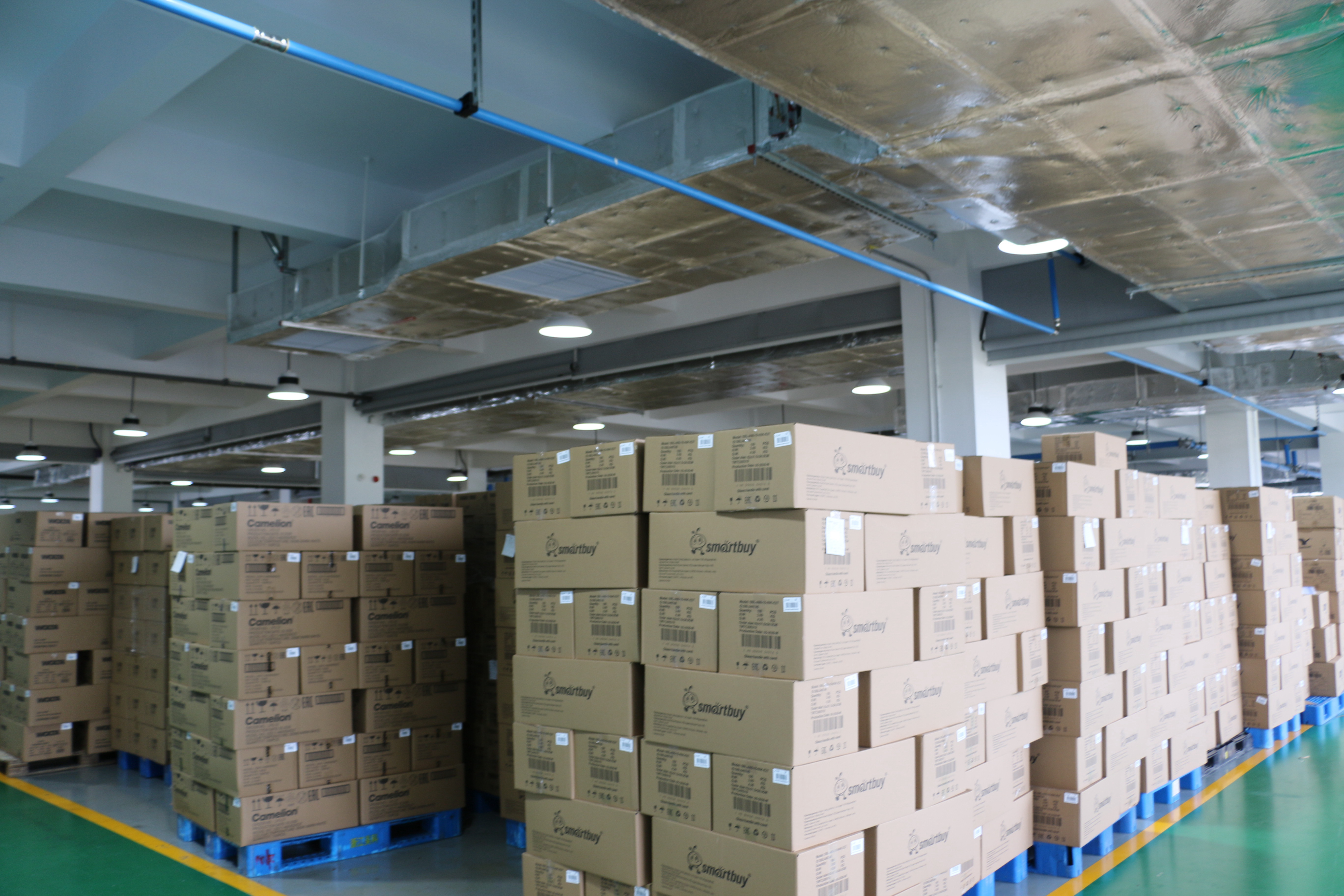
Image caption: LED lighting goods ready for delivery