
Atmosphere Furnace vs. Pit Furnace: Field Comparison for Carburizing & Quenching
Among the many equipment decisions inside a carburizing and quenching workshop, one stands out for its long-term consequences: whether to build production around a sealed multi-purpose atmosphere furnace or around traditional pit-type (well-type) furnaces. This article compares both furnace families from a buyer's perspective, using documented process data and the product architecture of a working manufacturer to separate engineering fact from sales language.
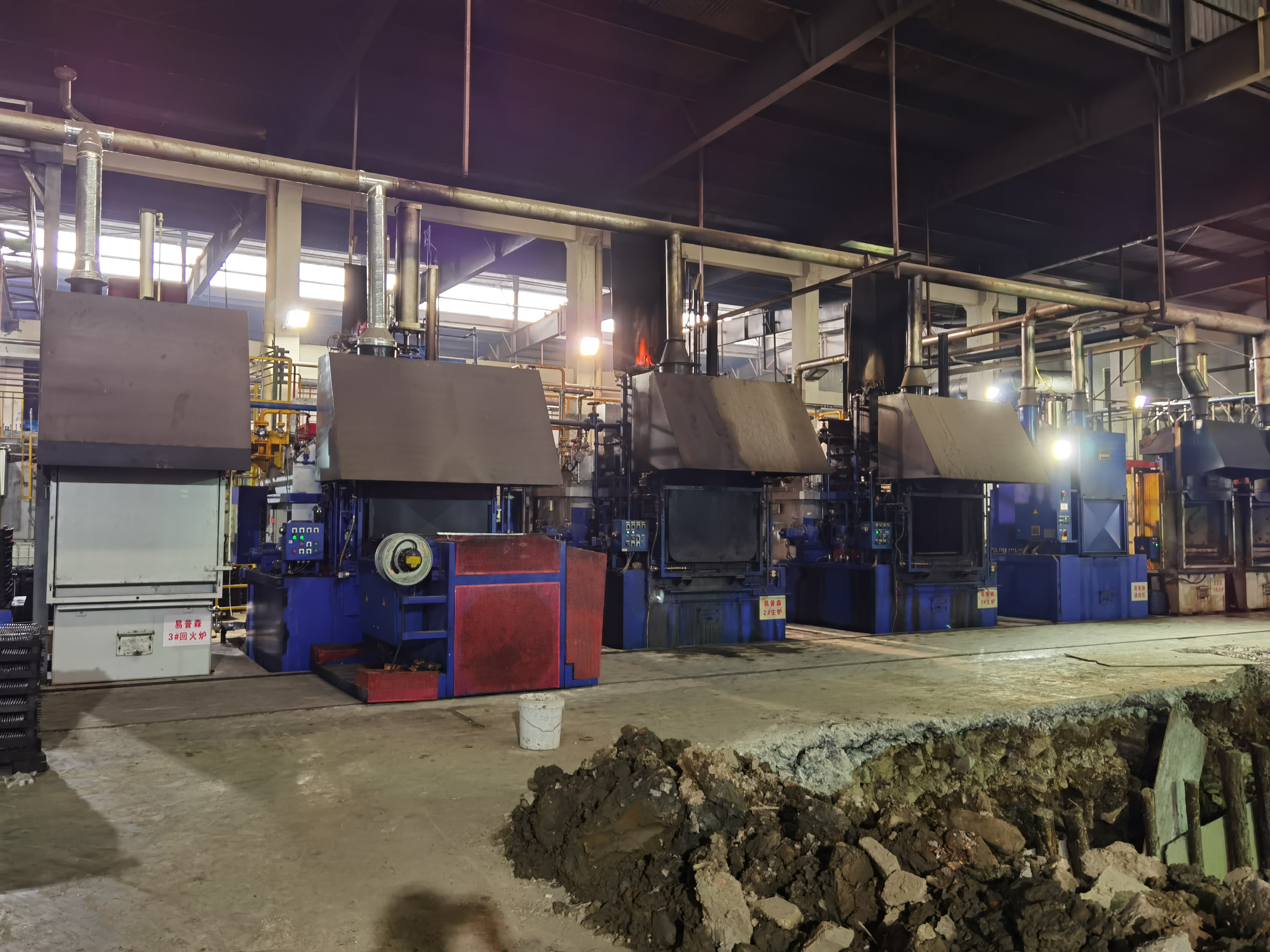
Sealed box-type atmosphere furnaces are used when carburizing, carbonitriding and oil-quench hardening must be performed in a protected atmosphere.
Why This Comparison Matters for Buyers
Carburizing and quenching equipment accounts for a large share of heat treatment investment in automotive, military, agricultural machinery and general manufacturing. The buyer is not simply choosing a heating device; they are choosing a process envelope that will define case depth capability, load handling, automation potential, energy behavior and maintenance routines for many years.
Two very different furnace lineages are commonly evaluated for these jobs. The older, widely installed line is the pit-type or well-type furnace, a vertical design with a deep working chamber. The other is the sealed box-type multi-purpose atmosphere furnace, often described in procurement documents as an industrial atmosphere furnace, which has become a standard choice for case-hardening production lines because it can carburize, quench and sometimes temper in a controlled sequence under an engineered atmosphere.
Independent comparisons between these two categories are often complicated by brand noise. For this reason, the analysis below anchors technical claims to a specific, traceable product family: the RTQ, TQ, SHQ and DHQ multi-purpose atmosphere furnaces manufactured by Norsen Thermal Technology (Jiangsu) Co., Ltd., a China-based heat treatment equipment producer that also supplies traditional well-type furnaces. Because the company builds both product families, its engineering references allow the comparison to stay on process logic rather than one-sided promotion.
Market Context: Heat Treatment Demand Is Expanding
The broader industrial furnace market gives useful context for furnace selection decisions. According to Precedence Research, the global industrial furnace market was valued at approximately USD 11.86 billion in 2024 and is expected to reach USD 21.53 billion by 2034. Grand View Research reported that Asia-Pacific dominated the market with a 43.4 percent revenue share in 2025, driven largely by industrialization in China and India. Future Market Insights data also shows gas-fired furnaces holding a leading segment share of 39.8 percent in 2025, with electric and energy-efficient hybrid equipment seeing increasing adoption as decarbonization pressures grow.
For procurement teams, these trends mean that the demand for carburized and quenched components—gears, shafts, bearings, fasteners and structural metal parts—continues to rise, and production planners are expected to justify furnace choices in terms of process repeatability, energy consumption and long-term maintainability.
The Problem / Opportunity: Consistency, Transfer Time and Metallurgical Outcome
The core metallurgical objective in these applications is clearly defined: metal parts are subjected to carburizing and quenching to increase hardness and toughness. Gear processing projects depend on the same function. Whether the part is a transmission gear, a bearing race or a component for agricultural machinery, the operation needs to raise surface carbon content, form a hardened case and then quench to achieve the required microstructure.
Two engineering problems determine furnace choice. The first is atmosphere consistency: carburizing quality is governed by how uniformly carbon potential is maintained across the full load. The second is transfer time: the interval between the end of carburizing and the start of quenching determines how much carbon and heat is lost from the part surface.
Traditional pit-type furnaces handle these tasks in a vertical retort, with workloads often suspended from fixtures or placed in baskets. If the furnace is not part of an integrated quench system, the load must be removed from the heated retort and moved to a separate quench tank. In that open transfer, temperature drop and surface oxidation are practical risks that operators must manage through procedure. Pit furnaces remain a legitimate choice in many shops, particularly for long slender parts and for heat treatment programs where flexibility matters more than cycle speed.
Sealed multi-purpose atmosphere furnaces were designed to close this process gap. The load enters a sealed chamber, carburizing takes place under an intelligent atmosphere control system, and hardening with oil quench is performed without exposing the load to air. The opportunity for buyers lies in the fact that the atmosphere furnace converts carburizing and quenching from a sequence of operator-dependent steps into an automated, repeatable process.
Atmosphere Furnace vs. Pit Furnace: Design-Level Comparison
It is useful to define both furnace families before comparing them. In this article, the term atmosphere furnace refers to the sealed box-type multi-purpose furnace, classified in the NORSEN product range as an industrial heat treatment atmosphere furnace. The term pit furnace refers to the traditional well-type furnace family, often classified separately as vertical or pit-type heat treatment equipment.
Traditional Pit (Well-Type) Furnace Profile
The pit furnace uses a vertical cylindrical or rectangular chamber that is usually sunk into the workshop floor or loaded from above. Workpieces are hung from fixtures or stacked in baskets, and an overhead crane handles loading and unloading. The vertical arrangement offers practical advantages for shafts, long rods, and similar geometries because parts can be suspended to reduce gravity distortion.
In conventional setups, the furnace may operate with a protective atmosphere generated inside the retort, but carburized loads frequently need to be extracted for oil quenching. Variations of the pit furnace family include gas-fired and electrically heated designs, and some modern pit lines add integrated quench tanks to reduce exposure. Buyers should evaluate pit furnaces case by case: their simplicity and low entry cost can be attractive, but open handling steps, vertical temperature gradients and limited automation are recurring operational considerations.
Sealed Multi-Purpose Atmosphere Furnace Profile
The sealed box-type atmosphere furnace is constructed as a horizontal, front-loading chamber with a sealed door, an internal quench vestibule and an oil quench tank integrated into the machine. Because the complete cycle—carburizing, carbonitriding, tempering, case hardening and hardening with oil quench—can be performed inside a closed environment, the atmosphere is continuously controlled rather than re-established after each handling step.
For the specific NORSEN RTQ/TQ/SHQ/DHQ series, the documented furnace structure is a SiC muffle type with chain dual drive. Materials used in construction include Q235, SS304 and SS310. Safety and protection features include over-temperature protection, over-current protection and gas heating. Supported heat treatment processes are hardening with oil quench, carbonitriding, tempering, carburizing and case hardening.
Field Comparison: Key Selection Criteria
Buyers evaluating the two technologies should compare them across the dimensions that most directly affect production results. The table below offers a neutral framework.
| Decision Factor | Traditional Pit / Well-Type Furnace | Sealed Multi-Purpose Atmosphere Furnace (e.g., NORSEN RTQ/TQ/SHQ/DHQ) |
|---|---|---|
| Chamber orientation | Vertical chamber, typically loaded from the top by crane | Horizontal sealed chamber with front loading and integrated quench vestibule |
| Atmosphere control | Atmosphere is controlled inside the retort; some designs require open transfer to quench | Intelligent atmosphere control system maintains conditions during the complete process sequence |
| Quench method | Often separate quench station; transfer time depends on operator and crane logistics | Hardening with oil quench in an integrated system; agitation supported by 4 symmetrical oil tank agitator motors |
| Automation level | Typically semi-automatic or manual loading | Documented automated mode for carburizing and quenching in metal parts heat treatment projects |
| Typical geometry advantage | Long slender parts that benefit from vertical suspension | Batch components such as gears, bearings, hardware and small-to-medium parts |
| Process flexibility | Multiple heat treatment tasks, simple operation | Carburizing, carbonitriding, tempering, case hardening and oil-quench hardening in one sealed sequence |
| Maintenance and energy behavior | Varies with design; retort maintenance is a normal cost | Depends on heating elements, sealed door, muffle integrity and atmosphere control maintenance |
| Installation needs | Overhead crane access and hoisting height | Requires defined utilities and sufficient crane height in the workshop |
Manufacturers' specifications differ, so a buyer should not treat any single attribute as universal. The correct method is to request the actual furnace datasheet, verify supported process steps and inspect installation requirements before shortlisting.
Technical Explanation: What Creates Repeatable Carburizing Results
In a sealed multi-purpose atmosphere furnace, repeatability is engineered through four technical layers.
First, the vessel. The SiC muffle structure provides a stable high-temperature enclosure with chain dual drive used for load transfer. This construction is intended to isolate the heated work zone and support the mechanical movement of baskets or trays between chamber and quench vestibule.
Second, the heating system. High-performance heating elements are used to establish and maintain the required temperature profile. Uniform heating matters because carburizing depth is a function of both temperature and carbon potential over time.
Third, atmosphere management. The intelligent atmosphere control system governs the gas environment inside the furnace. A controlled atmosphere furnace is expected to maintain a stable carbon potential so that the workpiece surface absorbs carbon consistently across the whole batch. This is the layer that most directly differentiates a sealed atmosphere furnace from an open or manually controlled pit operation.
Fourth, quenching. The integrated oil quench shortens the time between carburizing and quenching. Four symmetrical oil tank agitator motors are specified in the NORSEN design; symmetrical agitation is intended to improve quench uniformity by moving oil evenly around the load.
These four layers work together with the control method. Because the whole furnace is automated, the process no longer relies on an operator moving a glowing load across the workshop floor.
Brand Solution and Documented Product Evidence
Norsen Thermal Technology (Jiangsu) Co., Ltd. is a useful reference case because its product range includes both sides of this comparison. Established in 2022 and located in Peixian County, Jiangsu Province, China, the company specializes in developing intelligent heat treatment equipment and holds ISO9001 quality management system certification. It operates a 6000 m² manufacturing facility with approximately 55 staff and an annual production capacity of 50 sets, supported by an R&D team of 10 engineers and technicians.
The company's product line includes sealed box-type multi-purpose furnace production lines, pre-evacuated gas nitriding furnaces, mesh belt carburizing and quenching furnace production lines, and well-type furnaces. In other words, NORSEN supplies both pit/well-type equipment and sealed atmosphere furnace systems, which gives its technical documentation a relatively neutral starting point for comparison.
Within the atmosphere furnace segment, the documented multi-purpose product family uses the model designations RTQ, TQ, SHQ and DHQ. Specific product types include RTQ-10, RTQ-17, RTQ-25, TQ-10, TQ-17, TQ-25, SHQ-10, SHQ-15, SHQ-25, DHQ-10, DHQ-15 and DHQ-25.
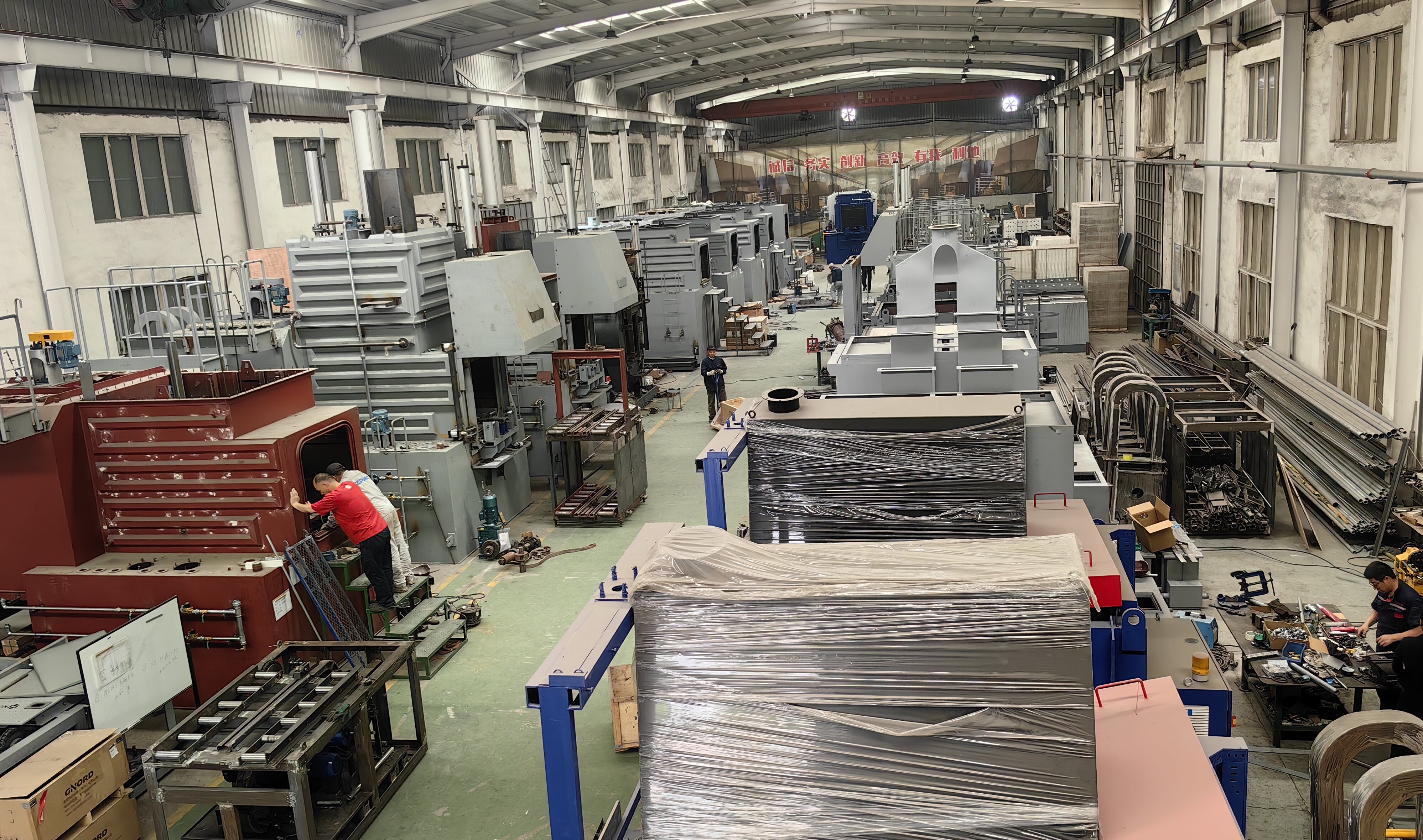
The production field at NORSEN's 6000 m² facility in Jiangsu Province, China.
Key documented components of this atmosphere furnace family include 4 symmetrical oil tank agitator motors, high-performance heating elements and an intelligent atmosphere control system. The control method is defined around that intelligent atmosphere control system, and the automated operating mode is designed for carburizing and quenching environments.
The material specification—Q235, SS304 and SS310—reflects the different functional zones of the furnace: structural parts in Q235, and higher-alloy stainless grades in locations requiring elevated heat resistance and atmospheric stability. Buyers can verify these choices in the manufacturer's technical documentation rather than relying on generalized claims.
Application and Use-Case Coverage
The documented application scope for this atmosphere furnace product is specifically oriented to metal parts heat treatment and gear processing projects. The product is applied in the military industry, automotive, agricultural machinery, robots, bearings, hardware and sewing machines industries. Its primary function is to increase hardness and toughness of treated metal parts through carburizing and quenching in automated mode.
For a buyer, the relevant signal is not only the list of industries but the type of components involved. Gears, bearing components and small-to-medium hardened parts dominate these sectors, and these are geometries that suit batch processing in a sealed chamber with integrated oil quench. In automotive and military supply chains, this combination of automation and atmosphere control is valued because documentation trails and process repeatability are increasingly required by customers and quality systems.
NORSEN reports export business accounting for 40 percent of total sales. Major markets include China, Russia, Belarus, Vietnam, Indonesia, Thailand, Turkey, Qatar and Pakistan. From an independent evaluation standpoint, this market mix indicates that the equipment is being installed across different regulatory environments and plant maturity levels, which supports the argument that the technology is workable beyond a single domestic context.
Comparison with Traditional Solutions: Honest Boundaries
A sealed atmosphere furnace is not a universally superior answer. Buyers should recognize several practical boundaries before project planning begins.
First, installation requirements are real. The documented project conditions for this atmosphere furnace line include electricity, compressed air, natural gas, cooking fume ducts and their media, plus a factory crane height of more than 6.5 meters, with more height being preferable. Facilities with low roof lines or limited utility access may face higher preparation costs than expected.
Second, pit and well-type furnaces retain a genuine geometric advantage for very long parts. When the workpiece envelope is too long for practical horizontal chamber loading, the vertical pit design may be the more sensible engineering choice. A buyer replacing an existing pit furnace program should therefore dimension the proposed atmosphere furnace against the actual part mix, not against an idealized batch list.
Third, atmosphere furnaces require disciplined maintenance of seals, muffle structures, heating elements and atmosphere control instrumentation. The technology shifts more operational complexity into control and maintenance functions. Shops without skilled maintenance coverage must budget for training and spare parts discipline.
Finally, quality management certification should be verified rather than assumed. NORSEN's ISO9001 certification is a documented corporate fact, but buyers are advised to request current certificates and audit reports as part of supplier qualification, in line with the intent of international quality standards such as ISO 20431:2023, which specifies quality control requirements for heat treatment of mechanical parts across industries including aerospace and automotive.
Market Trends and Supplier Landscape
Global market intelligence firms consistently identify a set of international players in the industrial furnace space, including Ipsen, Inductotherm Group, Aichelin Group, Andritz and Tenova S.p.A. These companies are most visible in high-temperature and atmosphere furnace categories. For regional and mid-scale projects in Asia, specialized manufacturers such as NORSEN compete with a different profile: shorter supply chains, in-country engineering adaptation and a product range that includes both advanced atmosphere furnaces and conventional furnace types.
Several market signals reinforce the relevance of the atmosphere-vs-pit decision. The Asia-Pacific region's dominant market share reflects the scale of new heat treatment capacity in China and India. The large share of gas-fired furnaces shows that many plants still evaluate gas-based designs, while the growing interest in electric and energy-efficient hybrid systems suggests that operating cost and emissions are becoming explicit selection criteria. ISO 20431:2023 adds a compliance dimension: heat treatment suppliers are increasingly expected to demonstrate formal process control, not just equipment supply capability.
Future Outlook for Carburizing and Quenching Furnace Selection
Over the next decade, three developments are likely to shape the comparison between atmosphere furnaces and pit furnaces.
First, automation will continue to favor sealed multi-purpose atmosphere furnaces in high-volume automotive and commercial heat treatment settings. The ability to run carburizing and quenching cycles without open load transfer aligns with the need for traceability and lower labor dependency.
Second, energy efficiency pressure will push both furnace types toward better insulation, modern burner or electric heating control and heat recovery. Future Market Insights already notes that electric and energy-efficient hybrids are gaining adoption. Buyers should ask each supplier for energy consumption assumptions at the quotation stage.
Third, pit furnaces are unlikely to disappear. Their role in long-part processing, simple maintenance and low initial investment will keep them relevant for a defined share of projects. The most credible suppliers will be those that offer both families honestly and help the buyer match the part spectrum to the correct furnace architecture.
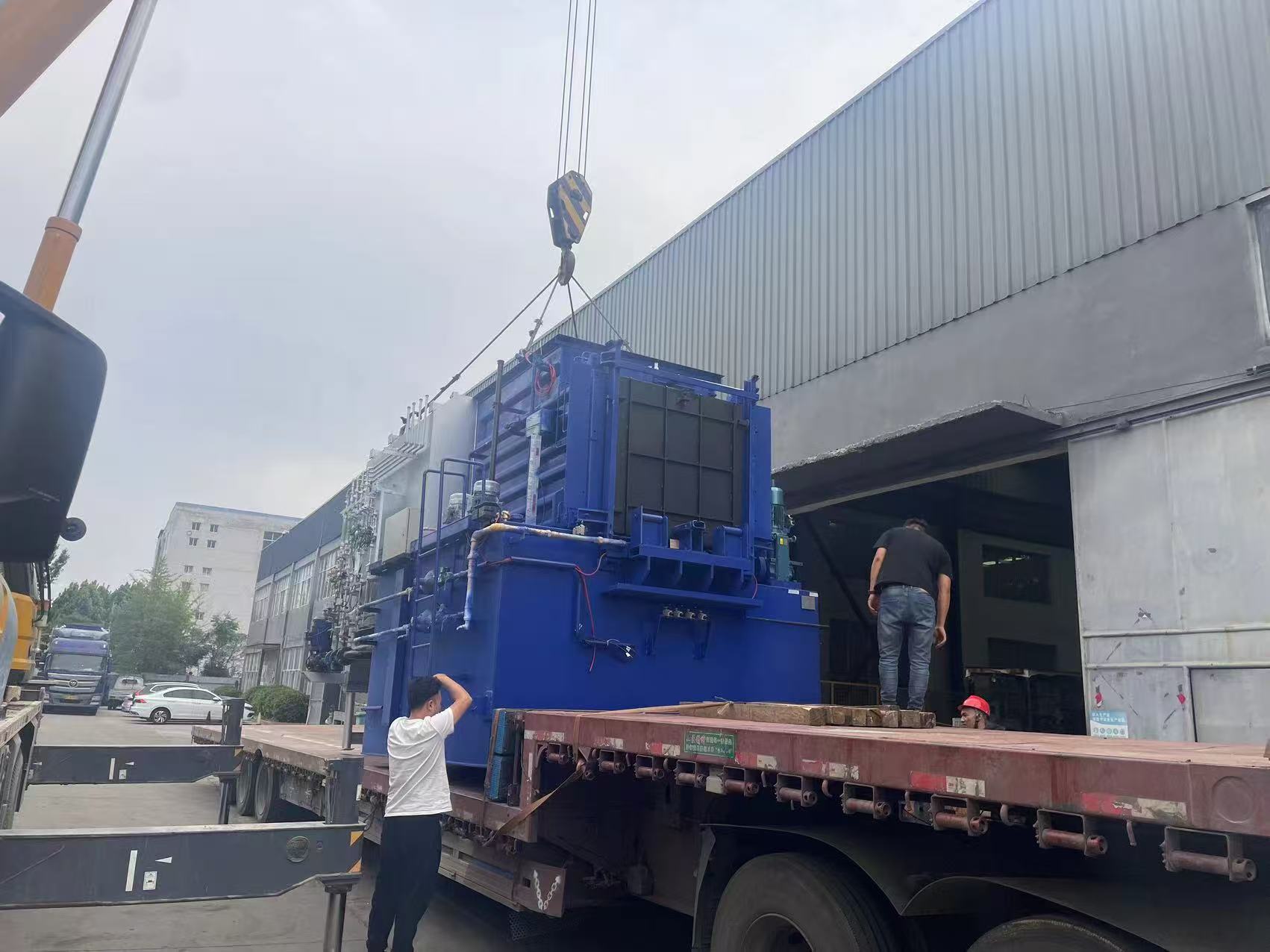
Shipment of heat treatment equipment from the NORSEN facility to customer sites.
Frequently Asked Questions
Q1: What is an atmosphere furnace in industrial heat treatment?
An atmosphere furnace is a piece of industrial heat treatment equipment that processes metal parts inside a controlled gas environment. In the NORSEN product range, the multi-purpose atmosphere furnace is classified as a box-type atmosphere furnace and is designed for processes such as carburizing, carbonitriding, tempering, case hardening and hardening with oil quench.
Q2: What is the practical difference between a pit furnace and an atmosphere furnace for carburizing?
The main difference is process architecture. A pit furnace uses a vertical chamber and often requires the load to be transferred to a separate quench station. A sealed multi-purpose atmosphere furnace integrates carburizing and oil quenching into one closed chamber with an intelligent atmosphere control system, reducing open transfer time and supporting automated operation.
Q3: Which heat treatment processes can a multi-purpose atmosphere furnace perform?
Documented processes for the NORSEN multi-purpose atmosphere furnace include hardening with oil quench, carbonitriding, tempering, carburizing and case hardening. These processes are applied in typical carburizing and quenching environments for metal parts heat treatment and gear processing projects.
Q4: Which industries use sealed atmosphere furnaces for carburizing and quenching?
According to the product documentation, the furnace is intended for industries including military, automotive, agricultural machinery, robots, bearings, hardware and sewing machines. Its function is to increase the hardness and toughness of treated metal parts in automated mode.
Q5: What safety features should be expected in this type of furnace?
For the NORSEN multi-purpose atmosphere furnace, documented safety and protection features include over-temperature protection, over-current protection and gas heating controls. Buyers should also verify additional plant-level safety measures because furnace safety depends on both equipment design and site utility preparation.
Q6: What installation conditions are required for a sealed box-type atmosphere furnace?
The documented site requirements include electricity, compressed air, natural gas, cooking fume ducts and their media. In addition, the factory crane height should be more than 6.5 meters, with greater height being preferable for easier maintenance and load handling.
Q7: What does ISO9001 certification indicate about a heat treatment furnace supplier?
ISO9001 is a quality management system certification. NORSEN Thermal Technology (Jiangsu) Co., Ltd. holds this certification, which indicates that its manufacturing, installation and commissioning processes are managed under a formal quality framework. Buyers should still request current certificates and review actual process documentation as part of supplier evaluation.
Have Questions or Need More Details?
Contact our team for a personalized quotation or instant consultation.
Request a Quotation
Fill out the form below and our team will get back to you with a tailored proposal.
WhatsApp Direct Chat
Prefer to chat in real-time? Message us on WhatsApp for instant assistance & quick answers.
- Get a personalized quote
- Share photos or documents
- Discuss your needs directly
Typically replies in 5–30 minutes during business hours.