
Atrium Tent Compliance & Certification Checklist: ISO 9001, DIN 4102 B1, M2, NFPA 701
Atrium Tent Compliance & Certification Checklist: ISO 9001, DIN 4102 B1, M2, NFPA 701
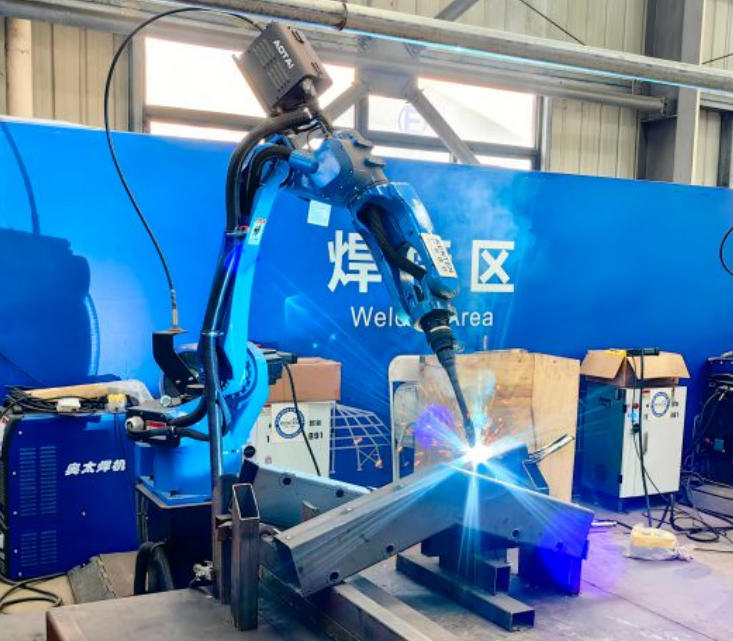
Aluminum frame fabrication sits at the start of the atrium tent compliance chain: the tested alloy, the welded connection, and the documented process all feed the final permit file.
An atrium tent is a large clear-span temporary structure — a modular aluminum frame carrying a PVC-coated polyester cover — used as a premium venue for exhibitions, banquets, and public events. For organizers bidding into international events, government tenders, and venue approvals, however, the tent is only half of the product. The other half is the compliance file: the certificates, test reports, and calculations that decide whether the structure is allowed on site at all.
This guide explains how to read, verify, and present atrium tent qualification documents. It covers the management system certificates (ISO 9001, ISO 14001, ISO 45001), the flame retardant standards for PVC-coated covers (DIN 4102 B1, M2, NFPA 701), the structural standards behind CE marking and permit approval (EN 13782:2015, EN 1090-3), and the fixing and load data that engineers, insurers, and venue safety officers ask to see.
Why the documents decide the bid
Two atrium tent suppliers can quote a similar span, a similar schedule, and a similar price. What usually separates a shortlisted bid from a rejected one is evidence.
Event authorities, government procurement offices, and venue operators are accountable for fire safety, structural safety, and public liability. They treat a temporary structure as a regulated building, not as equipment. A supplier that cannot produce a coherent, current, project-specific document set is therefore a risk, regardless of how the tent looks in a render.
KENTEN Structures, a temporary and semi-permanent structure manufacturer founded in 2001 and headquartered in Ontario, California, builds to this reality. Its structures are produced and fully certified to IBC 2024, CBC 2025, ASCE 7-22, GB 50429 and EN 13782, and its engineering team performs structural calculations to validate load capacity against each project's requirements.
The four layers of an atrium tent compliance file
Most buyer-side checklists can be organized into four layers. Each answers a different question.
- Management system certificates — does this factory run a controlled, repeatable process? ISO 9001 (quality), ISO 14001 (environmental), ISO 45001 (occupational health and safety).
- Fire performance evidence — will the cover behave safely in a fire? DIN 4102 B1, M2, NFPA 701.
- Structural evidence — can the frame carry the site's loads? An EN 13782:2015 assessment, EN 1090-3 execution, plus project code references such as IBC 2024, CBC 2025, ASCE 7-22, and GB 50429.
- Product and site data — do the materials and the fixing plan match the certificate? Fabric weight, alloy, wind and snow ratings, ground plan, and fixing method.
A file that is strong in one layer and empty in another is a common cause of tender rejection; the four layers are usually assessed together.
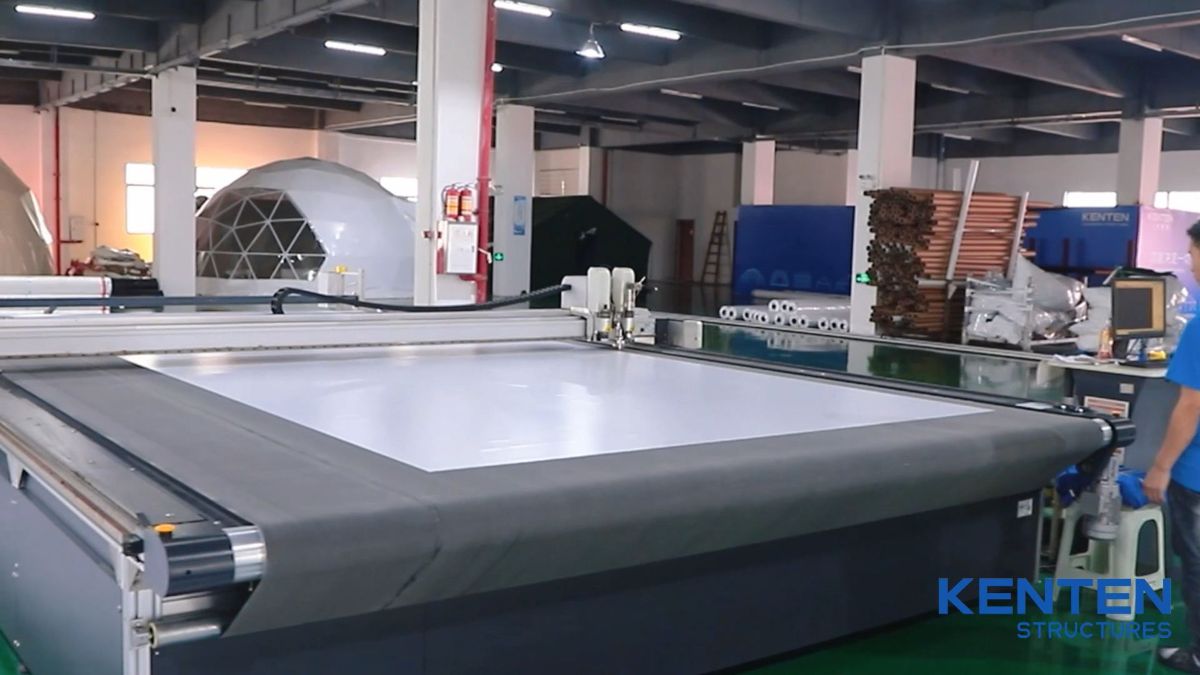
Flame retardant certification is only meaningful when it names the fabric construction and weight that actually ships — roof fabric and atrium cover are not the same specification.
Reading the flame retardant standards for PVC covers
PVC-coated polyester is the standard cover material for atrium tents, and its fire performance is the single most requested document in event and venue procurement. Three standards appear most often, and they are not interchangeable.
- DIN 4102 B1 (Germany) — a flammability classification for building materials; the B1 class denotes a material that is difficult to ignite and self-extinguishing.
- M2 (France) — a reaction-to-fire classification used in French and some other European tender documents.
- NFPA 701 (United States) — a test standard for the flame propagation of textiles and films, widely referenced by US venues and event organizers.
The practical point for buyers is jurisdictional. A DIN 4102 B1 report from a German laboratory does not automatically satisfy a US venue that specifies NFPA 701, and an NFPA 701 certificate does not replace the M2 or B1 evidence a European authority may request. The applicable standard is set by the venue and its local codes, not by the supplier's preference.
A fire certificate also only means something when it is tied to a specific fabric. Buyers should confirm that the report references the same cover construction and weight that will actually ship. Roof fabric is commonly specified around 850 g/m² and atrium cover in the 750–900 g/m² range, and the tested sample should match the delivered roll.
Frame, cover and design life
Atrium tent frames are typically fabricated from high-strength aluminum alloys such as 6061-T6 or 6082-T6, chosen for corrosion resistance and their ability to hold geometry across repeated assembly. KENTEN assigns a 20-year design life to its aluminum frame, while the PVC-coated polyester cover is normally expected to last roughly 8–15 years depending on UV exposure, cleaning, and handling.
That gap is a procurement fact rather than a defect. The frame is a long-life asset; the cover is a consumable that is replaced one or more times over the frame's life. A well-built file states both numbers clearly so that the buyer can plan replacement and budget correctly.
Load data matters more than lifespan in most approvals. High-performance aluminum atrium tents are typically engineered for wind loads in the 100–120 km/h range and snow loads up to approximately 1.9 kN/m², with a stated operating range that can extend from about −30°C to +70°C. These figures should appear as project-specific calculations rather than a generic brochure line, because the venue confirms the structure against the load case for that site. Spans typically range from 3 m to 60 m+, which allows a single structural system to be sized up or down for a site.
Fixing methods and ground conditions in the permit file
Permit reviewers treat the connection to the ground as seriously as the structure itself, because uplift, not weight, governs the safety of a temporary venue. Four fixing approaches cover most atrium tent deployments:
- Expansion bolts — drilled into sound concrete or cement.
- Concrete anchors — mechanically or chemically set for higher pull-out resistance.
- Ground anchors — driven or screwed into soil or grass.
- Weight plates or ballast — used where drilling is not permitted, such as finished marble or paving.
Grassland, asphalt, cement, and marble each behave differently under uplift, and a single venue can combine several substrates. That is why the compliance file should include a site plan showing the proposed fixing layout and the ground survey behind it. KENTEN's engineering team performs structural calculations and validates load capacity according to project requirements, which is the evidence a permit authority expects to see.
Presenting the file for tenders and venue approvals
How the documents are assembled matters as much as what they say. A practical submission typically groups material as follows:
- Index and cover note — list every document, its date, and the project it applies to.
- Management certificates — ISO 9001, ISO 14001, ISO 45001, with validity dates.
- Fire test reports — laboratory, standard, test date, and the specific fabric construction and weight tested.
- Structural documents — engineering calculations and the standards applied, such as EN 13782, EN 1090-3, IBC 2024, CBC 2025, ASCE 7-22, and GB 50429.
- Site and fixing plan — fixing layout, ground conditions, and the governing load case.
- Installation method statement and risk assessment.
Two rules improve outcomes. First, keep documents current: an expired fire test or a superseded standard weakens the entire file. Second, keep them consistent: if the structural calculation assumes one fabric weight and the fire report names another, reviewers will notice.
What high-scrutiny venues show about documented compliance
The clearest demonstration of why documentation matters comes from venues with the highest public exposure. Olympic competition sites, Formula 1 event programs such as those in Canada and Miami, major international sporting events including the 19th Asian Games in Hangzhou, festival and exhibition grounds such as the Doha Photography Festival in Qatar, and comparable flagship sites all apply layered safety reviews before allowing any structure on site.
Deliveries at this level are documented, not just designed. At the 2022 Beijing Winter Olympic Games, 50 units of A-structure and double-decker tents were deployed across multiple competition venues for security checkpoints, staff offices, dining areas, meeting rooms, and command centers. For the Formula 1 Miami Grand Prix, large-scale aluminum grandstand systems were supplied with custom span, length, height, and layout to meet project requirements, and the structure carries a 20-year design life.
The same logic scales down. A luxury wedding venue in the United States used a single 15 m × 25 m atrium tent to create an oceanfront, climate-controlled environment — the same structure type, assessed against the same categories of documentation, for a smaller site. Whether the event is an Olympic venue or a private banquet, the compliance file is what allows the structure to be placed on the ground in the first place.
Market context behind the checklist
The demand side is expanding, and so is the scrutiny. Grand View Research values the global event management market at USD 1,160.4 billion in 2024, with a 6.7% CAGR projected through 2033. On the supply side, the Observatory of Economic Complexity reports that China's exports of awnings, tents and sails (HS Code 6306) reached approximately USD 3.11 billion in 2024, a 53.3% share of global exports in the category. As international supplier networks deliver more of these events, buyers increasingly evaluate documentation discipline alongside product capability.
Modular atrium tent vs permanent construction
It is useful to position a modular atrium tent against conventional construction, because the compliance logic differs.
| Dimension | Modular atrium tent | Permanent building |
|---|---|---|
| Installation speed | Up to 70% faster than traditional construction | Conventional construction cycle |
| Interior | 100% column-free | Columns and load-bearing walls |
| Length | Unlimited through modular bay extension | Fixed by design |
| Frame life | 20+ year aluminum frame with minimal maintenance | Comparable or longer |
| Reuse | Demountable and reusable across projects | Not reusable |
| Spans | 3 m to 60 m+ | Design-dependent |
| Lifecycle cost | Around 50% lower for flexible or repeated use | Higher upfront investment |
This comparison is not a claim that an atrium tent replaces every permanent building. Atrium tents are semi-permanent structures engineered for defined load cases, and they depend on periodic re-certification and on cover replacement. Some authorities will not accept a temporary structure for year-round or heavily serviced use, and compliance documents are jurisdiction-specific, so a file approved in one country does not transfer automatically to another. Where a project needs permanent utilities, foundations, or a fixed occupancy classification, a permanent building remains the appropriate choice.
What the documents do not guarantee
A compliance file is evidence, not a promise. It does not transfer across jurisdictions automatically. It covers the tested configuration, not a modified one: change the fabric, the span, or the fixing method and the supporting documents may no longer apply. A 20-year design life is a design assumption, not a warranty. And compliance is only as good as the installation, because the as-built structure has to match the as-documented plan. Buyers who audit those gaps early avoid surprises at handover.
Future outlook
Documentation is likely to become a larger part of atrium tent procurement rather than a smaller one. Tenders are moving toward digital compliance packs, project-specific load calculations, and traceable test reports, and as temporary structures take on more permanent functions, the line between a tent certificate and a building approval will keep narrowing. Suppliers that treat certification as a design input, rather than as paperwork added late, will be easier for buyers, venues, and authorities to approve.
Frequently Asked Questions
Which certifications should a buyer request first when comparing atrium tent suppliers?
Start with the structural and fire evidence tied to the actual structure, then the management system certificates. Structural and fire documents, such as an EN 13782:2015 assessment, a project structural calculation, and a fire test to DIN 4102 B1, M2, or NFPA 701, determine whether the venue will approve the tent at all. ISO 9001, ISO 14001, and ISO 45001 then confirm how consistently the fabricator manages quality, environmental impact, and workplace safety across the order.
Is DIN 4102 B1 the same as NFPA 701, and which one applies to my project?
No. DIN 4102 B1 is a German material flammability classification, NFPA 701 is a US test standard for flame propagation of textiles and films, and M2 is a French reaction-to-fire classification. The applicable standard is set by the venue's jurisdiction and the codes it follows, not by the supplier's preference. A European venue may ask for B1 or M2 evidence, while a US venue typically references NFPA 701.
Does a 20-year design life mean the whole atrium tent lasts 20 years?
No. The 20-year figure applies to the aluminum frame. The PVC-coated polyester cover is normally expected to last roughly 8–15 years, depending on UV exposure, cleaning, and how often it is packed and moved. Budgeting for at least one cover replacement over the frame's life is standard practice.
Can compliance documents from one project be reused for another venue or country?
Not automatically. Fire and structural documents are tied to a specific fabric, frame, and configuration, and jurisdictions follow different codes, such as EN 13782 and EN 1090-3 in the EU or NFPA 701 in the US. A supplier holding active certifications to multiple codes can shorten re-approval, but each venue still requires a project-specific check of loads, fixing, and fire performance.
What fixing method is acceptable for marble or concrete ground?
It depends on whether the surface can be penetrated. On cement or sound concrete, expansion bolts or concrete anchors are typical because they develop high pull-out resistance. On marble or finished paving, drilling is usually prohibited, so weight plates or ballast are used instead. On soil or grass, driven ground anchors are common. The determining factor is the uplift calculation for that site, not the hardware alone.
How much does the compliance file affect the delivery timeline?
It can matter as much as production. KENTEN's typical production lead time is 30–45 days and minimum order quantity is 1 unit, but approval time depends on how quickly a complete, consistent file can be submitted and reviewed by the venue or authority. Submitting a pre-assembled document pack early usually shortens the overall schedule more than compressing production.
A full technical catalogue, including structure options and specification ranges, is available for download: KENTEN Catalog (PDF).