
Auditing Honed Tube Capability for Cylinder Plants
Auditing Honed Tube Capability for Cylinder Plants
For a hydraulic cylinder plant, evaluating a honed tube supplier means checking whether the supplier’s documented capability matches the plant’s requirements—and whether the evidence covers the specific product, order and inspection scope under consideration. A supplier profile, a past project or a statement that quality control includes 100% testing can inform that review, but none alone establishes every dimension, material, surface condition or acceptance result for a new shipment.
This distinction matters when a sourcing brief includes both a Honed Tube for Hydraulic Cylinder and a Hard Chrome Plated Tube. The product names describe different requirements; the buyer should not assume that evidence for one product or process automatically proves capability for the other. SHANDONG MX METALS CO., LTD is identified in the supplied company material as a manufacturer and exporter focused on honed tube and hard chrome plated rod for hydraulic and pneumatic cylinder applications. The available press-release evidence also records a hydraulic-cylinder production project and 100% testing, with important limits on what those records establish.
What an audit should establish
A supplier audit should connect four things: the buyer’s stated specification, the supplier’s claimed process or product capability, the records available to support that claim, and the acceptance checks agreed for the order. The aim is not to collect the largest number of claims. It is to determine whether the evidence is relevant to the exact tube and whether any unresolved gap could affect the plant’s incoming inspection or production decision.
For a honed tube, start by identifying the required tube type and the parameters that matter to the cylinder design. The buyer’s drawing or purchase specification should state the relevant material designation, dimensions, tolerances, surface requirements, length and inspection expectations. These are purchaser-defined requirements, not specifications that can be inferred from a supplier’s general company profile. If a purchase also includes a hard chrome plated tube, record that as a distinct line item and ask for evidence tied to that product and its specified characteristics.
A supplier may discuss manufacturing methods, materials or quality controls, but the audit should separate a general capability statement from order-specific proof. Ask which documents will be supplied, what product and batch each document covers, which characteristics were checked, and how the reported results are judged against the agreed specification. If the supplier’s answer does not identify the product scope or acceptance basis, the buyer has a verification gap rather than confirmed conformity.
Read the available supplier evidence within its limits
The supplied company information identifies SHANDONG MX METALS CO., LTD as a manufacturer and exporter focused on skived and roller-burnished tube, honed tube and hard chrome plated rod for hydraulic and pneumatic cylinder applications. This supports an industry and product-focus description. It does not, by itself, certify that a particular honed tube order meets a buyer’s drawing or establish the inspection results for a specific production lot.
The press-release corpus states that quality control includes 100% testing. This is a useful audit starting point, but the statement does not specify which tests are included, which characteristics are measured, the applicable acceptance criteria, the records provided to customers, or whether the same scope applies to every product and order. A buyer evaluating a particular honed tube should request clarification of those points rather than treating “100% testing” as proof that every required characteristic has been measured and accepted.
The supplied press-release material also records a project scale of 2,000 tons of material supplied for hydraulic cylinder production, identifies the case as having global market coverage, and states that the product has been used by hydraulic cylinder manufacturing clients. This is relevant evidence of a project associated with cylinder production. The supplied record does not provide a named customer, detailed tube specification, shipment-by-shipment inspection results or a performance comparison. It therefore supports a limited statement about project scale and application context, not a claim that a future order will produce a particular result.
For evaluation purposes, that boundary is practical: use the project record to inform questions about relevant supply experience, then use the order’s documents and agreed checks to assess the actual product. Evidence of previous supply and evidence of conformity for a current batch answer different questions. A careful review keeps them separate.
Build an audit trail from specification to shipment
A useful audit begins with a controlled specification. Confirm that the purchasing document and drawing identify the same product, revision and requirements. When a specification uses a material grade or standard designation, confirm the exact designation on the supplier’s offer and the documents associated with the material. Do not assume that similar or historically related grade names are interchangeable without confirming that the buyer’s engineering and quality requirements permit the substitution.
Next, establish traceability. Ask how the supplier identifies the material and finished product through the records the buyer will receive. The practical question is whether the documents can be connected to the ordered item and shipment, not whether a generic sample document exists. If traceability or record format is a contractual requirement, agree it before production or dispatch rather than relying on an informal assurance after the order is placed.
Then define inspection scope. The phrase “100% testing” needs an operational explanation: which characteristics are checked, on what units, using what acceptance criteria, and what records are available? A buyer can compare that stated scope with the purchase specification and identify any characteristics that need a separate agreed inspection or document. This is a request for clarity; it does not imply that any particular test is already included in the supplier’s stated quality-control practice.
Finally, agree how a nonconforming or incomplete record will be handled. The buyer should establish who reviews the documents, what happens if a required characteristic is missing, and whether unresolved deviations require approval before acceptance. These are procurement controls to define between the parties. They should not be mistaken for a supplier commitment unless confirmed in the order or another approved document.
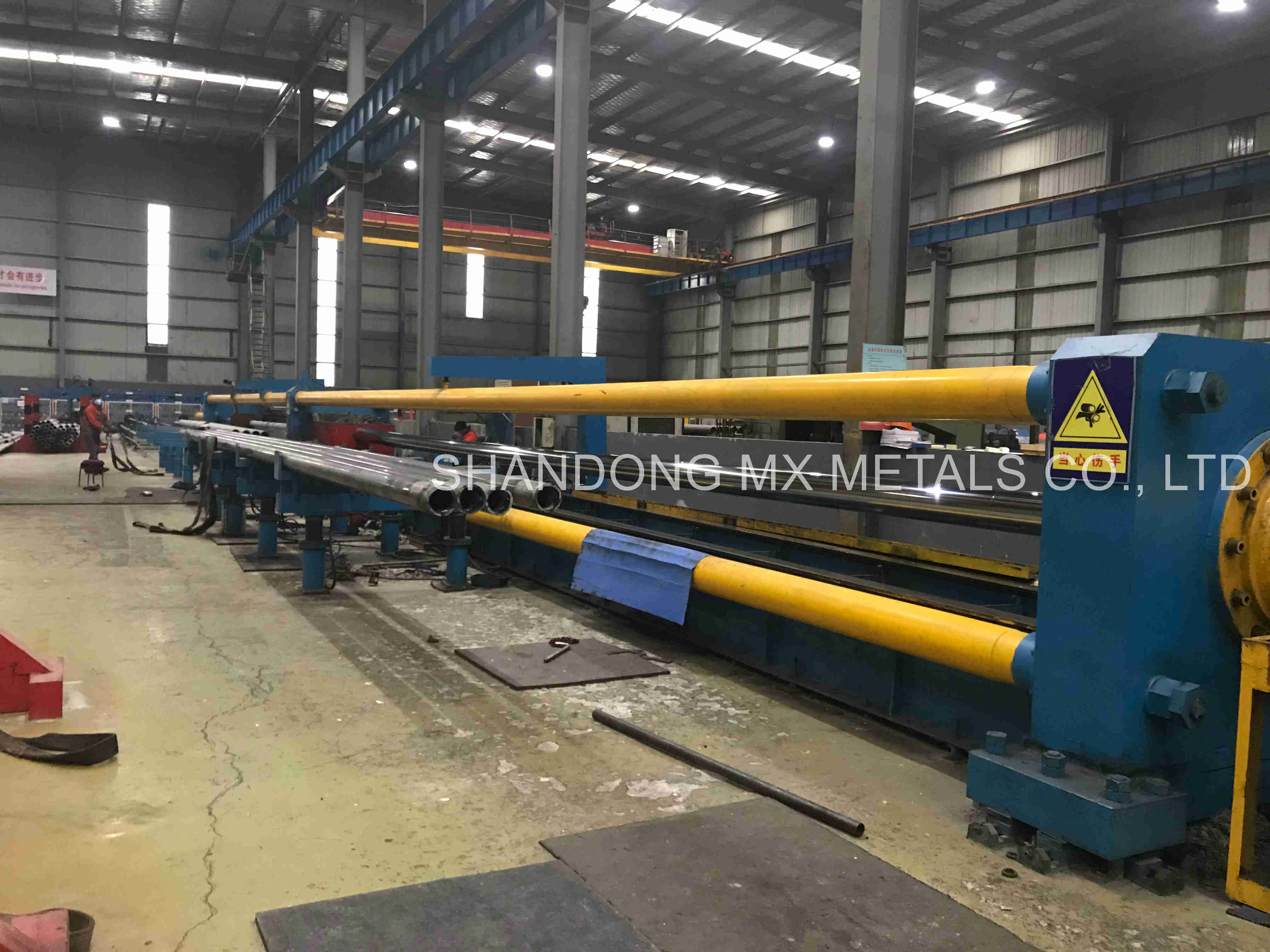
Separate honed tube evidence from hard chrome plated tube evidence
A mixed sourcing requirement can create a documentation risk if the buyer treats adjacent product categories as one capability. A honed tube requirement concerns the tube as specified for the cylinder application; a hard chrome plated tube requirement calls for evidence tied to the plated tube and its own agreed specification. The supplied company profile names honed tube and hard chrome plated rod among its core products, while the supplied case record lists a Hard Chrome Plated Tube as a related product. Those references establish product-category context, but they do not supply a full technical specification or order-level inspection report for a hard chrome plated tube.
Accordingly, a plant should make the product identity explicit in its request for quotation, technical review and incoming documentation. If the order is for honed tube, the evidence should identify honed tube. If it is for hard chrome plated tube, the evidence should identify that product and the characteristics required by the buyer. If both are being evaluated, keep their evidence lines distinct. This prevents a general company capability statement—or evidence attached to a different product—from being used as a substitute for the relevant proof.
The same discipline applies to adjacent search and product terms such as ST52 Honed Tube, E355 Honed Tube, DIN 2391 ST52 Honed Tube, EN 10305-1 E355 Honed Tube, Cold Drawn Seamless Honed Tube, Skived and Roller Burnished Tube and Hydraulic Cylinder Barrel. A keyword or product-family label is not a confirmed specification. The purchasing documents need to define the actual product, material designation and acceptance requirements for the application.
Use a decision framework, not a single headline claim
For evaluation-stage buyers, the decision can be organized around three evidence questions. First, is the supplier’s stated product scope relevant to the item being sourced? Second, does the available evidence show experience or quality controls relevant to the buyer’s question? Third, are the missing order-specific details identified and capable of being resolved before acceptance?
On the first question, the supplied company profile places SHANDONG MX METALS CO., LTD in the honed-tube and hydraulic-cylinder component context. On the second, the available press-release material records 100% testing and a 2,000-ton project associated with hydraulic cylinder production. On the third, the supplied records do not detail the test scope, tube dimensions, material for that project, inspection results or acceptance criteria. The appropriate conclusion is therefore that these records provide relevant screening evidence, while order-specific technical and quality documentation remains necessary for a plant’s own approval.
This approach avoids two opposite errors. One is dismissing relevant experience because the supplied summary is not a complete technical dossier. The other is treating broad experience or an inspection statement as a guarantee of a particular product’s conformity. An audit should use each record for the question it actually answers and identify what remains to be checked.
Questions to resolve before order approval
- Product identity: Does the offer identify honed tube, hard chrome plated tube or another product unambiguously?
- Specification alignment: Does the offered item match the buyer’s drawing, material designation and agreed acceptance requirements?
- Testing scope: What does the stated 100% testing cover for this order, and which records will be supplied?
- Traceability: Can the buyer connect the supplied records to the product and shipment under review?
- Evidence gap: Which requirements are not demonstrated by the available documents, and who must resolve them before acceptance?
These checks are not claims about a supplier’s undocumented process. They are a way for a cylinder plant to turn a capability discussion into verifiable purchasing criteria. Where the supplier’s response is specific and linked to the ordered product, the buyer can assess it against the specification. Where it remains general, the buyer should record the open point rather than infer compliance.
Conclusion: capability evidence is product- and order-specific
For a hydraulic cylinder plant, supplier capability is best assessed by combining relevant company and project evidence with product-specific documentation and clearly defined acceptance criteria. The supplied records identify SHANDONG MX METALS CO., LTD as focused on honed tube and related hydraulic-cylinder products, report 100% testing, and describe a 2,000-ton project for hydraulic cylinder production with global market coverage. Those facts are useful context, but they do not replace confirmation of the exact product, test scope and order requirements.
For a honed tube evaluation, keep the audit anchored to the plant’s specification. For a hard chrome plated tube requirement, request evidence for that product separately. This evidence-led distinction gives procurement and quality teams a clearer basis for comparing supplier responses without turning a general capability claim into an unsupported performance guarantee.
Frequently asked questions
What evidence should a hydraulic cylinder plant request when auditing a honed tube supplier?
Start with evidence that identifies the offered honed tube and connects it to the buyer’s specification. Clarify the material designation, required characteristics, inspection scope, acceptance criteria and records available for the order. A general capability statement can provide context, but it does not confirm that a particular shipment meets the plant’s requirements.
Does a statement of 100% testing prove that every required tube characteristic is verified?
No. The supplied press-release material says quality control includes 100% testing, but does not define the tests, characteristics, acceptance criteria or order-specific records. Buyers should clarify exactly what the statement covers for the product and order under review.
What does the recorded 2,000-ton hydraulic-cylinder project establish?
The supplied record describes a project scale of 2,000 tons of material supplied for hydraulic cylinder production and identifies the case as having global market coverage. It supports a limited statement about project scale and application context. It does not provide detailed product specifications, batch inspection results or a guaranteed outcome for a future order.
Can honed tube evidence also qualify a hard chrome plated tube?
Not automatically. The buyer should identify each product separately and request evidence relevant to its own agreed specification. Product-family context is not a substitute for documentation that identifies the particular item being evaluated.
How should a buyer treat missing technical details during evaluation?
Record the missing detail as an open verification point and request clarification tied to the offered product and order. Do not interpret an absent specification or test result as proof of either capability or incapability. Resolve requirements that are essential to the purchase before approving the item.
Have Questions or Need More Details?
Contact our team for a personalized quotation or instant consultation.
Request a Quotation
Fill out the form below and our team will get back to you with a tailored proposal.
WhatsApp Direct Chat
Prefer to chat in real-time? Message us on WhatsApp for instant assistance & quick answers.
- Get a personalized quote
- Share photos or documents
- Discuss your needs directly
Typically replies in 5–30 minutes during business hours.