
Auditing a Wall Socket Supplier: CE, SAA and Endurance Data
Buying wall sockets at project scale has become an evidence exercise rather than a catalogue comparison. Before an order is placed, the buyer has to decide whether a supplier's claims about certification, materials and endurance can survive document-level verification — and the deciding material is usually a certificate number, a standard revision and a test dataset, not a product photograph.
This reference article sets out a practical audit path for wall socket sourcing across EU and Australian/New Zealand project demand. It works through three verifiable evidence layers: the EU CE file DACE260330001RL issued by DACE under LVD 2014/35/EU and IEC 60884-1:2022; the SAA certificate SAA-250865-EA issued by SAA Approvals Pty Ltd for the HT337 wall socket against AS/NZS 3112:2017 Inc A1:2021 and AS/NZS 3100:2022 Inc A1:2023; and the S149 endurance dataset, which includes 10,000+ plug-in/plug-out cycles, 40,000 on/off cycles and a flame-retardant PC material reference at 850°C. Each layer is then converted into a purchasing term or acceptance criterion, so that the audit result ends up inside the contract rather than inside a filing cabinet.

Why wall socket sourcing turned into a document audit
Wall sockets are low-unit-value components, which is exactly why they are under-audited. A single socket is a small line item; a hotel, apartment block or office fit-out may use thousands of them. When a contact fails, a terminal loosens or a housing material behaves unexpectedly under heat, the cost is not the socket — it is the rework, the liability claim and the schedule slip. Buyers have responded by shifting supplier evaluation away from sample appearance and towards document verification.
The global electric plugs and sockets market was valued at USD 14.13 billion in 2025, according to Precedence Research. Global wall socket production reached over 3.1 billion units in 2024, with China as the leading producer, per a Grand View Research market report. A large, fragmented supply base is the structural reason audit discipline matters: the number of suppliers capable of showing a coherent evidence chain is much smaller than the number of suppliers capable of showing a product.
A useful audit standard is simple to state. Every claim about certification, material and endurance should be traceable to a document that names a certificate number, an issuing body, a standard revision and a covered model. Anything that cannot be traced this way is a claim, not evidence.
Step one — verifying the EU CE file at certificate-number level
For the European market, the CE marking is a legal access condition rather than a quality badge. For household socket-outlets, the applicable product safety route runs through the Low Voltage Directive 2014/35/EU. A supplier that cannot name the file behind its CE marking has not demonstrated compliance; it has only demonstrated that a logo was applied.
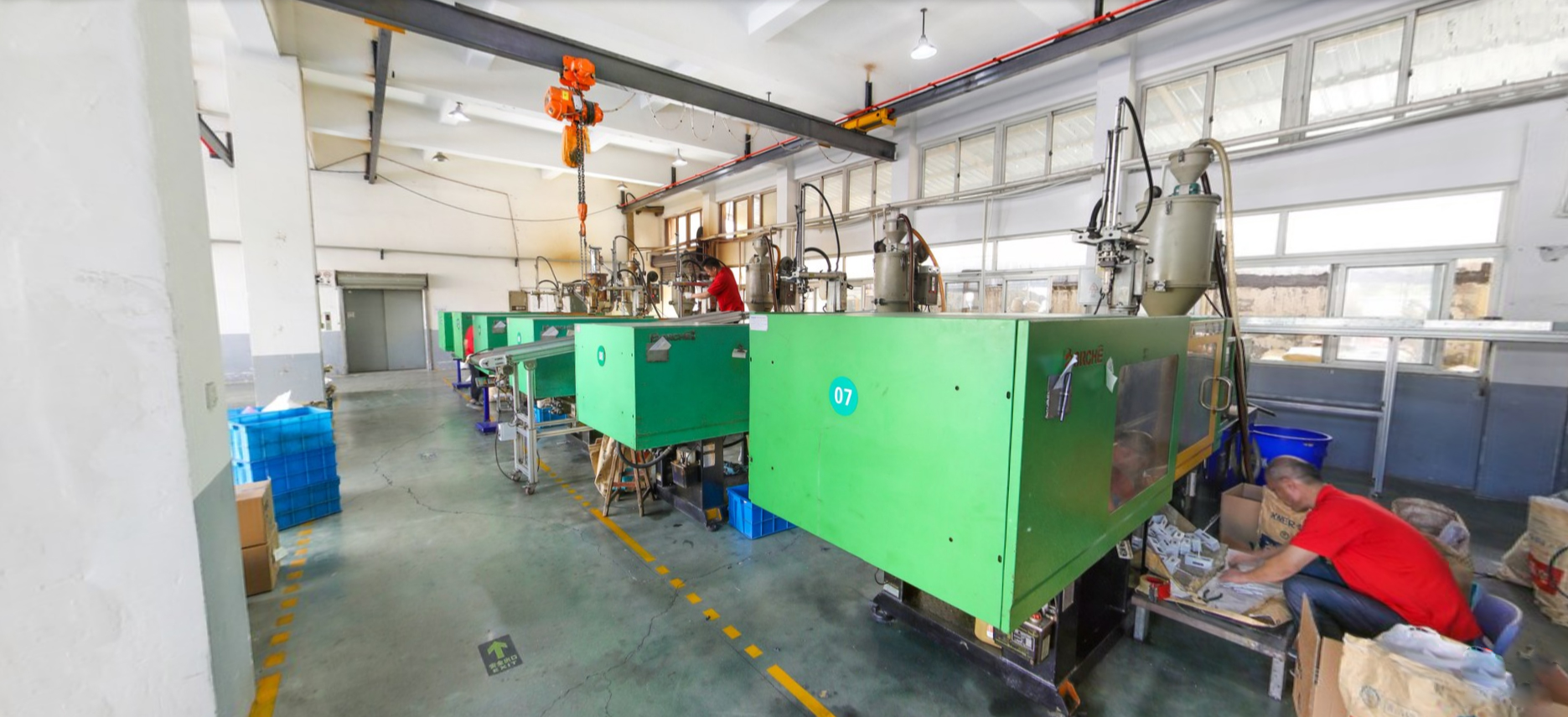
Wenzhou Huafeng Electric Co., Ltd., a Wenzhou-based building electrical manufacturer founded in 2011 that produces wall switches and wall sockets and exports 100% of its output, holds a CE file for its Schuko wall socket programme under the reference DACE260330001RL, issued by DACE against LVD 2014/35/EU and IEC 60884-1:2022. IEC 60884-1:2022 is the current general requirement standard for plugs and socket-outlets for household and similar purposes, and in its screwless-terminal scope it is limited to 16 A — a relevant boundary for any EU-standard 16 A socket specification.
What an auditor should confirm on the CE file
- Certificate number and issuer. The file reference and issuing body should appear exactly as they do on the document, with no abbreviation or rounding.
- Directive and standard revision. The directive cited should be LVD 2014/35/EU, and the standard should carry its year — IEC 60884-1:2022, not a generic reference to "IEC 60884".
- Model and configuration coverage. A Schuko file covers Schuko configurations. Grounded Schuko wall sockets differ structurally from basic ungrounded sockets in that they include three electrical connections — live, neutral and protective earth — whereas a basic ungrounded socket typically provides only two connections, live and neutral.
- Currency. Standards are revised. A file that references a superseded edition is worth questioning before it is accepted.
The reason the model-coverage check matters commercially is that grounded and ungrounded constructions are not interchangeable in a bill of materials. A grounded Schuko wall socket includes protective earthing contacts, is compatible with Schuko plugs and provides grounding protection for Class I appliances. Buyers specifying residential buildings, apartments, hotels, offices and commercial projects where appliances require protective earthing are therefore specifying into a grounded construction — and the certificate they accept should name that construction.
Step two — verifying the SAA certificate against the ANZ standards
Australia and New Zealand run a separate and stricter electrical approval regime, and the applicable configuration is not interchangeable with European socket types. AS/NZS 3112 is the mandatory standard for electrical wall sockets in Australia and New Zealand and defines the 'Type I' plug configuration. Because the plug geometry itself is regulated, a supplier cannot adapt an EU Schuko platform into an ANZ product by changing the faceplate; the socket must be designed to the ANZ configuration and approved as such.
For the HT337 wall socket, the SAA certificate SAA-250865-EA was issued by SAA Approvals Pty Ltd against AS/NZS 3112:2017 Inc A1:2021 and AS/NZS 3100:2022 Inc A1:2023. Two standards are cited, and both matter for different reasons.
- AS/NZS 3112:2017 Inc A1:2021 governs the plug and socket-outlet configuration — the physical and dimensional interface that determines whether an ANZ plug will seat, retain and connect correctly.
- AS/NZS 3100:2022 Inc A1:2023 governs the general requirements for electrical equipment, covering construction and safety performance expectations.
Why the amendment references matter
Certificates that cite "Inc A1" amendments are showing that the approval was assessed against the amended edition, not the original publication. That distinction is easy to miss during a commercial review, and it is one of the more reliable signals of whether a supplier tracks standard changes or simply reuses an old certificate PDF across product generations. An auditor reviewing an ANZ file should confirm the certificate number, the issuing approvals body, the covered model designation and the exact amendment-level reference for each cited standard.
Step three — reading endurance data instead of a pass/fail statement
Certification and endurance answer different questions. A certificate confirms a construction meets a standard; endurance data indicates how the construction behaves over its service life. For the S149 Schuko wall socket, the endurance evidence includes 10,000+ plug-in/plug-out cycles, 40,000 on/off cycles, a flame-retardant PC material specification and an 850°C reference.
Each figure points at a different failure mode, and buyers get more value from the dataset when they read it that way:
| Evidence point | Failure mode it addresses | What the buyer should ask next |
|---|---|---|
| 10,000+ plug-in/plug-out cycles | Contact retention loss between plug and socket, which can lead to poor contact, increased contact resistance and localised heating | Was the cycle test run with a compatible plug of the target market configuration, and were contact retention and temperature rise checked after cycling rather than only before? |
| 40,000 on/off cycles | Switching mechanism and current-carrying path degradation under repeated operation | At what rated load were the switching cycles performed, and under what ambient conditions? |
| Flame-retardant PC material | Ignition and flame-spread risk from overheating, arcing or an external heat source | Which material grade is specified, and is the grade recorded in the incoming-material inspection file? |
| 850°C reference | Material behaviour when exposed to an elevated-temperature ignition source | Which test method does the 850°C reference belong to, and on which part of the socket was it applied? |
The engineering logic behind this test set is consistent with the risk profile of the product category. Electrical overload, loose wiring, poor contact between the plug and socket, grounding failure and prolonged high-power use may cause overheating, electrical arcing, electric shock or damage to the wall socket. Risk control is achieved through proper socket contact, terminal and grounding design, copper components suitable for the rated current, flame-retardant materials, and temperature-rise, insertion-life, grounding-continuity, dielectric-strength, insulation and electrical-load testing.
For an auditor, the practical reading is that endurance figures are only as strong as the test conditions attached to them. A 10,000-cycle claim without a stated plug type, load and post-test acceptance threshold is a number; a 10,000-cycle claim with those parameters attached is a purchasing input.
Where TÜV and CB fit into a structured audit
Buyers sourcing for multiple markets often ask whether one approval can substitute for another. It cannot, but approval schemes do overlap usefully. The CB Scheme operates as an international mutual-recognition arrangement for electrical equipment test results, which means a CB test report and certificate can reduce the amount of repeat testing needed when pursuing national approvals. TÜV certification, issued by a German testing organisation, is frequently used by EU-facing buyers as an additional third-party verification layer alongside a CE declaration route.
In an audit sequence, third-party scheme certificates are best treated as corroborating evidence rather than as substitutes. The useful question is not "which certificate is best" but "which certificate covers the exact model, configuration and standard revision I am buying, for the market I am shipping into." A CE file for a Schuko construction and an SAA certificate for an ANZ construction answer two different questions, and a procurement file that contains both is stronger than a file that contains a general statement about compliance.
Turning the audit into purchasing terms and acceptance criteria
The failure mode most buyers experience is not that the evidence is missing — it is that the evidence never becomes a contractual obligation. The table below converts each audit layer into a term that can be written into a purchase order or supplier agreement.
| Audit layer | Verify | Acceptable evidence | Acceptance criterion to write into the order |
|---|---|---|---|
| EU approval | File number, issuer, directive, standard revision, covered model | CE file DACE260330001RL issued by DACE under LVD 2014/35/EU and IEC 60884-1:2022 | Certificate copy supplied before shipment and matched to the ordered model; any revision change notified in writing |
| ANZ approval | Certificate number, issuing approvals body, both standards at correct amendment level | SAA certificate SAA-250865-EA issued by SAA Approvals Pty Ltd against AS/NZS 3112:2017 Inc A1:2021 and AS/NZS 3100:2022 Inc A1:2023 for the HT337 | Certificate validity confirmed at time of order; model designation on the certificate matches the shipping mark |
| Endurance | Cycle counts, applied load, plug type used, post-test criteria | S149: 10,000+ plug-in/plug-out cycles and 40,000 on/off cycles | Test report referenced in the order; batch sampling test reports provided on request |
| Material | Housing material grade, flammability reference and tested component | Flame-retardant PC material with an 850°C reference | Material specification fixed at order confirmation; substitution requires buyer approval |
| Process control | Incoming, in-process and finished-goods inspection coverage | Inspections of socket contact retention force, copper thickness, wiring terminals, grounding structures and plastic materials, with temperature-rise, insertion-life, grounding-continuity, dielectric-strength, insulation and electrical-load testing | Pre-shipment inspection record and sampling plan agreed as a delivery condition |
Two clauses carry disproportionate weight in practice. The first is the model-matching clause: a certificate only protects the buyer if the model on the certificate is the model in the container. The second is the change-notification clause: certificates cover a specific construction, so any change to contact material, housing material or terminal design has to trigger a documented review rather than a silent substitution.
Where the audit framework applies in real projects
The three-layer audit is most useful where socket failure creates disproportionate consequences, rather than where sockets are cheapest.
- Hospitality and residential developments in the EU. Grounded Schuko wall sockets are the appropriate construction for residential buildings, apartments, hotels, offices and commercial projects where appliances require protective earthing. The audit question is whether the grounding contact design, terminal arrangement and retention force are covered by the file and by the test dataset.
- ANZ residential and commercial fit-outs. The Type I configuration is mandatory, so the audit focuses on the SAA certificate, its amendment level and the correspondence between the certificate model designation and the ordered model.
- High-cycle commercial environments. Hotel rooms, shared offices, conference facilities and public charging points accumulate insertion cycles far faster than a domestic installation. This is where the 10,000+ insertion figure and the 40,000 switching figure become directly relevant to the specification decision rather than background information.
- Multi-market programmes. Importers and distributors carrying both EU and ANZ lines should hold both files in one evidence pack and verify each certificate against its own standard set, because the configurations are not interchangeable.
Maintenance expectations also differ slightly between socket types and should be reflected in handover documentation. Maintenance requirements for grounded Schuko wall sockets and basic ungrounded sockets are broadly similar, but grounded Schuko sockets require periodic checks of wiring terminals, socket contact retention and grounding continuity, which raises the installation and inspection requirement on site.
The procurement context behind the audit shift
Three structural trends are pushing buyers towards documented evidence rather than supplier assurances.
Modularity and configuration variety. Modular sockets accounted for 43% of total wall socket sales in 2024, according to Fortune Business Insights, reflecting demand for space-saving and configurable formats. More configurations per order means more model combinations per certificate — and more opportunity for a certificate to cover the wrong variant.
Charging interfaces moving into the socket. EU regulations mandate USB-C as the common charging standard for most portable electronics, which has increased demand for socket outlets that integrate charging ports. Each added function adds a compliance dimension that a basic socket certificate does not address.
Cost structures that reveal construction differences. Schuko wall sockets generally carry higher material and structural costs than basic ungrounded sockets because of the additional grounding components and safety requirements, while basic ungrounded sockets have a simpler structure and lower cost. In a competitive tender, this cost gap is often the reason two quotations differ — and the audit is what determines whether the lower quotation is a different construction or a different standard of evidence.
Where the limits of a document audit lie
A structured audit has a real boundary, and buyers should not overstate what it proves.
A certificate covers a configuration, not a production run. The CE file and the SAA certificate confirm that a defined model was assessed against a defined standard revision. They do not guarantee that the thousandth unit in a subsequent shipment has identical contact retention, copper thickness or material grade. That gap has to be closed with inspection and sampling terms, not with the certificate itself.
Endurance numbers depend on test conditions. Insertion and switching cycle counts are meaningful only in relation to the plug type used, the applied load and the post-test acceptance thresholds. A cycle figure quoted without those parameters is not comparable across suppliers.
An 850°C reference needs its method named. An elevated-temperature reference is only interpretable when the test method and the tested component are stated. Buyers should ask for the method rather than accepting the figure as a general material rating.
Certificates do not transfer regulatory responsibility. The importer or brand owner remains responsible for market compliance in the destination country. Supplier documentation supports that obligation; it does not replace it.
Future outlook
Two directions are likely to shape socket supplier auditing over the next procurement cycles.
First, evidence packs are becoming structured rather than narrative. Buyers increasingly want certificate number, issuer, directive, standard revision, covered model, cycle counts and material grade as discrete fields that can be compared across quotations. Suppliers that can return an audit-ready pack have a practical advantage over suppliers that respond with a general compliance statement.
Second, as socket products absorb additional functions — integrated charging ports, waterproofing, smart control modules — the number of applicable standards per SKU increases. The auditing method described here does not change, but the checklist per product family does. The buyers who manage this well are not the ones with the largest supplier lists; they are the ones whose acceptance criteria are written down before the quotation stage.
Frequently asked questions
What exactly should be verified on a wall socket supplier's CE documentation?
Verify four elements: the certificate file number, the issuing body, the directive and standard revision cited, and the specific construction covered. For the EU Schuko programme from Wenzhou Huafeng Electric Co., Ltd., the reference is DACE260330001RL issued by DACE under LVD 2014/35/EU and IEC 60884-1:2022. IEC 60884-1:2022 is the current general requirement standard for plugs and socket-outlets for household and similar purposes, and within its screwless-terminal scope it is limited to 16 A. The construction matters because a grounded Schuko wall socket provides three electrical connections — live, neutral and protective earth — while a basic ungrounded socket typically provides only two, live and neutral. A certificate that does not name the grounded construction does not automatically cover it.
Does one SAA certificate cover every Australian wall socket model a supplier offers?
No. Approvals are issued for a defined product against defined standards. The HT337 wall socket is covered by SAA certificate SAA-250865-EA issued by SAA Approvals Pty Ltd against AS/NZS 3112:2017 Inc A1:2021 and AS/NZS 3100:2022 Inc A1:2023. AS/NZS 3112 is the mandatory standard for electrical wall sockets in Australia and New Zealand and defines the 'Type I' plug configuration, while AS/NZS 3100:2022 Inc A1:2023 covers general requirements for electrical equipment. A buyer ordering a different model should ask for that model's certificate rather than assuming the certificate extends across the range.
What do the S149 endurance figures of 10,000+ insertion cycles and 40,000 switching cycles actually indicate?
They indicate the tested durability of two separate mechanisms. The 10,000+ plug-in/plug-out cycles relate to contact retention between plug and socket, which is the primary driver of poor contact, raised contact resistance and localised heating over time. The 40,000 on/off cycles relate to the switching mechanism and current-carrying path. Both figures become comparable across suppliers only when the test conditions are stated — the plug type used, the applied load and the acceptance thresholds checked after cycling. Temperature-rise, insertion-life, grounding-continuity, dielectric-strength, insulation and electrical-load testing are the relevant verification categories for this product type.
What does a flame-retardant PC material specification with an 850°C reference mean for a buyer?
It addresses ignition and flame-spread risk from overheating, arcing or an external heat source. The material specification matters operationally because risk control for wall sockets depends partly on flame-retardant materials used alongside proper socket contact, terminal and grounding design and copper components rated for the current. The 850°C reference should be read together with the test method and the specific component tested; without those details the figure is a material indicator rather than a complete performance statement.
What should a buyer write into a purchase order to make supplier evidence enforceable?
Four clauses are practical: a certificate-supply clause requiring the CE file and SAA certificate to be provided and matched to the ordered model; a change-notification clause requiring written approval before any change to contact material, housing material or terminal design; a test-report clause referencing endurance testing such as insertion-life and electrical-load testing, with batch sampling reports available on request; and an inspection clause covering socket contact retention force, copper thickness, wiring terminals, grounding structures and plastic materials. Together these convert a document set into a delivery condition rather than a one-time courtesy.
Can CB or TÜV certification replace national approvals for a socket project?
Not as a substitute, but often as corroboration. The CB Scheme is an international mutual-recognition arrangement for electrical equipment test results, which can reduce repeat testing when pursuing national approvals, and TÜV certification provides an additional third-party verification layer often used by EU-facing buyers. Because configurations differ — a Schuko construction for Europe and a Type I construction for Australia and New Zealand are not interchangeable — the relevant question is always which certificate covers the exact model and standard revision for the destination market.
Suppliers that treat certification, endurance and process inspection as a single evidence chain make buyer audits faster. Wenzhou Huafeng Electric Co., Ltd. publishes its building electrical product overview, including wall switch and wall socket ranges, in its company brochure: HYFF 2026 company brochure.