
Auditing the DHL8005H: Control, Build and Speed Evidence
Auditing the DHL8005H: Control, Build and Speed Evidence
A buyer auditing a high-speed blister-cartoner is not buying a speed number on a brochure. The useful question is whether the pharmaceutical packaging machine has a documented evidence trail from control hardware to mechanical build, tooling and acceptance testing. The DHL8005H automatic blister-cartoning line is a concrete case: the supplier presents a Beckhoff motion controller and CP9315 industrial PC, three-channel servo-driven independent replenishment, PVC/Alu foil auto splicing, mold-change and preset-memory functions, and a stated maximum of 800 blisters/min and 500 cartons/min. It also describes stainless steel and aluminum-alloy construction and GMP-oriented product-contact parts and tooling per technical agreement. Those details are useful only when an auditor can map each claim to a component, document or test.
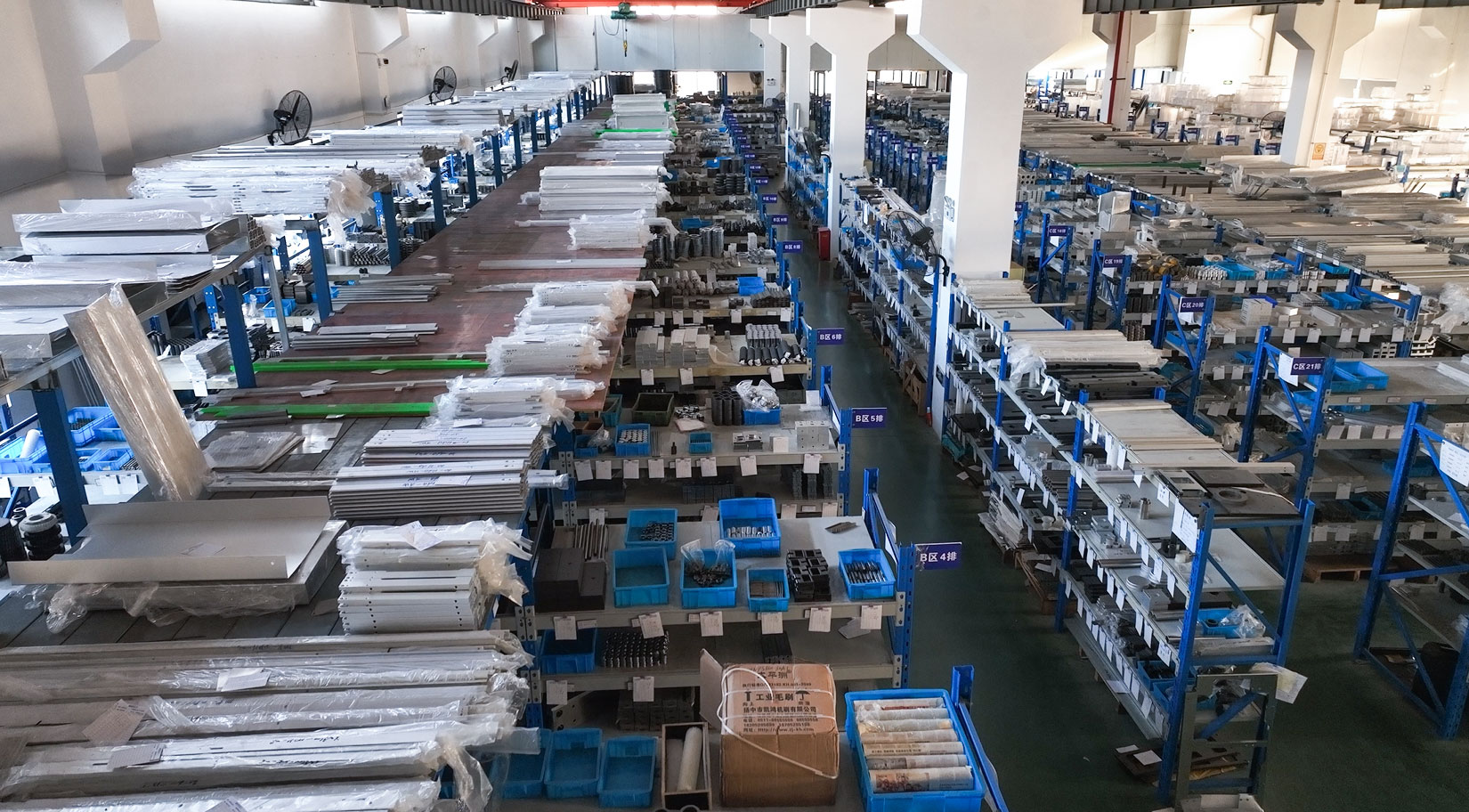
Zhejiang Hoping Machinery Co., Ltd. (HOPING) is the supplier associated with the DHL8005H. The company states it was established in 2001, operates a 28,800 square metre facility, employs about 300 people, has 56 engineers and produces about 500 units per year. Those facts support a supplier-scale review, not a performance guarantee. The audit still has to establish whether the specific line configuration matches the buyer's product, carton format and GMP qualification plan.
What supplier capability evidence should prove
Supplier capability evidence should answer four questions in order: what is claimed, what physical component supports it, what document defines it, and what test demonstrates it. For the DHL8005H, the claim of 800 blisters/min is not evidence by itself. The evidence is the combination of a defined blister format, material structure, product count per blister, carton count per carton, servo and control configuration, and a factory acceptance test run under agreed conditions.
An audit should separate three layers. The first is the commercial specification: the model, format range and technical agreement. The second is the build evidence: controllers, servo axes, splicing units, tooling, materials and guarding. The third is the acceptance evidence: no-load trial, material trial, FAT, customer witness acceptance and, where agreed, SAT. The DHL8005H should be assessed across all three. A strong component brand cannot replace a format test, and a test on one format does not prove every future SKU.
Control architecture: Beckhoff motion controller and CP9315 industrial PC
The DHL8005H is described with a Beckhoff motion controller and a CP9315 industrial PC. For an auditor, that is a useful starting point because it gives a named control platform to verify, not a generic claim of advanced control. The industrial PC and motion controller are evidence of an architecture that can coordinate motion axes, store recipes and present machine data. The audit question is how that architecture is configured for this line, not whether the brand name is familiar.
Ask for the control hardware list, firmware and software versions, servo drive list and I/O schedule. Request the parameter backup method, user access levels, recipe management and alarm history. For a pharmaceutical packaging line, change control matters: who can alter a preset, whether changes are logged, and how software updates are validated. These are verification questions, not assumptions about the DHL8005H. The supplier should be able to show the actual configuration, not only a catalog reference.
An auditor should also check spare-part continuity. A named controller is helpful only if the supplier can support the installed version, provide compatible replacements and document any migration path. The same applies to the CP9315 industrial PC: ask for the installed operating environment, data storage arrangement and recovery procedure. If the line is intended for a regulated pharmaceutical packaging line, the buyer should align these items with its own computerized-system and data-integrity procedures. The machine supplier's role and the buyer's validation role should be explicit in the technical agreement.
Three-channel servo-driven independent replenishment
The DHL8005H is described with three-channel servo-driven independent replenishment. In an audit, independent should be tested operationally. Ask how each channel is driven, whether each can be isolated for setup or fault recovery, and how the control system synchronizes the channels with the blister and carton format. Request the servo drive model and the relevant axis schedule. Then ask for a demonstration at the intended product format: tablet or capsule, target count per blister, and the recovery procedure after a missing product or a jam.
This is an area where a short brochure phrase can hide important scope. Independent replenishment may improve format flexibility, but the buyer should verify which products and speeds actually use all three channels, whether changeover requires mechanical adjustment, and which parameters are stored in preset memory. The audit should confirm that the replenishment system is part of the validated configuration, not an optional feature on a different build.
PVC/Alu foil auto splicing as a material-handling claim
PVC/Alu foil auto splicing affects uptime and material waste, but it is not a single yes-or-no capability. The DHL8005H is described with auto splicing for PVC and aluminum foil. The buyer should ask which roll sizes and material structures are covered, how splice detection works, how the splice is rejected or marked, and how tension is controlled before and after the splice. The relevant test is a material trial with the buyer's intended PVC and Alu foil, not a demonstration with an undisclosed film.
An auditor should also request the splicing unit's maintenance points and the spare-parts list. If the line is to run alu-alu or other barrier structures, the buyer must confirm that the splicing and forming sections are configured for that material. The DHL8005H description should be read together with the technical agreement: material compatibility, roll dimensions and splice length are configuration items, not assumptions.
Mold-change and preset-memory functions
Mold-change and preset-memory functions are decision-relevant because they connect format flexibility to changeover discipline. The DHL8005H is described with these functions. The audit should establish what a preset contains, which axes and heating or forming parameters are restored, whether tooling is identified by number, and how an operator confirms that the correct mold and recipe are loaded. Ask for the changeover sequence and the expected operator actions; then ask which steps remain manual.
Preset memory should not be treated as automatic validation. The buyer should check that a recipe change cannot bypass a safety or quality check, that parameter changes are controlled under the site's change-control procedure, and that the recipe library is backed up. The technical agreement should define the format range and the tooling set. A machine that can store many presets is still limited by the physical molds and the qualified format list.
Verifying 800 blisters/min and 500 cartons/min
The DHL8005H is stated to reach a maximum of 800 blisters/min and 500 cartons/min. These are maximum figures, not a guaranteed sustained output. They also use different units. A cartoner running at 500 cartons/min may consume more or fewer blisters depending on how many blisters are packed per carton. The buyer should therefore request a line-balance calculation for every target SKU, not accept two isolated speed numbers.
Simple arithmetic shows why. At one blister per carton, 500 cartons/min requires 500 blisters/min before losses. At two blisters per carton, it requires 1,000 blisters/min; the stated 800 blisters/min would not support that combination. At three blisters per carton, it would require 1,500 blisters/min. This calculation is not a measured result. It is a screening check that tells the buyer which carton configurations need a different line balance, a lower carton rate or a different blister count.
| Claim or check | What to verify | Why it matters |
|---|---|---|
| 800 blisters/min | Blister format, material, cavities, product count, reject rate, test duration. | Maximum output may not equal sustained output. |
| 500 cartons/min | Carton size, blisters per carton, leaflet, coding, reject handling. | Cartoner speed must be balanced with blister supply. |
| Line balance | Required blister demand equals cartons/min multiplied by blisters per carton. | Exposes incompatible combinations before FAT. |
| FAT conditions | Product, material, speed, duration, sampling and acceptance criteria. | Converts a claim into evidence. |
Ask for FAT conditions in writing: product, blister format, material structure, carton format, blisters per carton, leaflet, coding, inspection, run duration and acceptance criteria. The test should include start-up, steady running and normal stops. A short demonstration at maximum speed is weaker than a documented run at the intended sustained rate. If the buyer needs a third-party inspection, the supplied acceptance process allows it to be arranged according to customer requirements.
Build and GMP-oriented contact parts: stainless steel and aluminum alloy
The DHL8005H description includes stainless steel and aluminum-alloy construction and GMP-oriented product-contact parts and tooling per technical agreement. The phrase per technical agreement is the control point. The buyer should require a line-item list of product-contact parts, the material specification for each, tooling drawings, surface and cleaning requirements, and the boundary between stainless steel, aluminum alloy and any non-metallic contact materials. A general statement that the machine is GMP-oriented is not a substitute for that list.
The scope should be kept accurate. ISO 15378:2017 specifies GMP requirements for primary packaging materials for medicinal products; it is not a machine certificate. For the DHL8005H, the machine-side evidence is the technical agreement, the contact-part and tooling documentation, material certificates where agreed, and the acceptance tests. The auditor should also check cleaning access, residue traps, fasteners, lubrication points and the removal path for rejected blisters and cartons. These checks connect the build description to the buyer's cleaning and qualification procedures.
Factory and acceptance evidence from HOPING
HOPING reports a 28,800 square metre facility, about 300 employees, 56 engineers and an annual output of about 500 units. The company's stated quality-control sequence covers incoming material inspection, key component inspection, assembly inspection, electrical safety check, no-load trial run, material trial, FAT, customer witness acceptance and pre-shipment inspection. For an auditor, this sequence is useful because it names the stages where evidence should exist. It does not prove that every stage was performed for a specific DHL8005H line; the buyer should ask for the records for the actual project.
Commercial terms also belong in the evidence pack. HOPING states a MOQ of one set or one complete line and a typical lead time of 60-120 days after technical confirmation, subject to model, configuration, project complexity and contract terms. Monthly capacity is stated as 30-40 units. These figures help a buyer plan the audit and factory acceptance window. They do not establish the performance of the line. Delivery terms include EXW Ruian/Wenzhou, FOB Ningbo or Shanghai, and CIF/CFR destination port, subject to contract and country requirements. Acceptance criteria include technical agreement confirmation, sample testing, FAT before shipment and SAT at the customer site.
An audit question set for the DHL8005H
| Evidence area | Requested evidence | Why the auditor needs it |
|---|---|---|
| Control hardware | Beckhoff motion controller and CP9315 industrial PC list, firmware, servo drives, I/O schedule. | Confirms the named architecture and support path. |
| Replenishment | Three-channel servo schematic, axis list, isolation procedure, format test. | Confirms independence and format scope. |
| Splicing | PVC/Alu foil roll specification, splice detection, tension control, material trial. | Connects the feature to actual materials. |
| Mold and preset | Tooling drawings, recipe contents, access control, changeover sequence. | Shows whether changeover is controlled. |
| Speed claim | Line-balance calculation, FAT protocol, run duration, acceptance criteria. | Converts maximum figures into project evidence. |
| Build materials | Contact-part list, stainless steel and aluminum-alloy specification, certificates where agreed. | Defines the GMP-oriented scope. |
| Cleaning and access | Surface and cleaning review, residue and rejection paths. | Supports qualification and cleaning validation. |
| QC records | Incoming, assembly, electrical safety, no-load, material trial, FAT and pre-shipment records. | Verifies that the stated process was executed. |
Fit boundaries: what the audit does not prove
An audit of the DHL8005H can establish that the line has a named control platform, a documented servo replenishment configuration, splicing and preset functions, a defined materials scope and an acceptance pathway. It does not establish clinical performance, regulatory approval in every market, or a guaranteed output for every product. The 800 blisters/min and 500 cartons/min figures remain maximum claims until they are tied to a qualified format and a witnessed test. The GMP-oriented construction remains a technical-agreement scope until the contact parts and tooling are listed and accepted.
The buyer should also check the service model. HOPING states on-site installation and commissioning, operator and maintenance training, remote support, spare-parts supply, process-parameter guidance and regular follow-up, subject to contract and project configuration. Those commitments should be written into the project plan with response expectations and spare-parts scope. A capable machine with an unclear support path is not a complete procurement case.
Conclusion: audit the evidence trail, not the headline
For a high-speed blister-cartoner, supplier capability is best judged as an evidence trail. The DHL8005H gives the buyer concrete starting points: Beckhoff motion control and the CP9315 industrial PC, three-channel servo-driven independent replenishment, PVC/Alu foil auto splicing, mold-change and preset memory, stainless steel and aluminum-alloy construction, and GMP-oriented product-contact parts and tooling per technical agreement. Each item should be mapped to a document, a physical check and an acceptance test.
The 800 blisters/min and 500 cartons/min claims should be tested against carton count, blister format and line balance. The most useful audit question is not whether the machine can show a speed number, but whether the supplier can show the configuration, the calculation and the FAT record that make the number meaningful for the buyer's product. Company information is available from Zhejiang Hoping Machinery Co., Ltd. (HOPING). The Hoping Machinery Catalog is available for download.
FAQ: DHL8005H capability evidence
What control evidence should a buyer request for the DHL8005H?
The buyer should request the Beckhoff motion controller and CP9315 industrial PC configuration, firmware and software versions, servo drive list, I/O schedule, parameter backup method, user access levels and spare-part support path. The purpose is to confirm that the named control architecture is the one installed and that it can be maintained over the line's lifecycle. The brand name alone does not establish the configuration.
How should the 800 blisters/min and 500 cartons/min figures be verified?
Treat both as maximum claims and verify them against the actual carton format. Calculate required blister demand as cartons per minute multiplied by blisters per carton. At two blisters per carton, 500 cartons/min would require 1,000 blisters/min before losses, which exceeds the stated 800 blisters/min. Request a written FAT protocol with product, materials, formats, run duration and acceptance criteria.
What does GMP-oriented product-contact parts and tooling mean in practice?
It should mean a technical-agreement list that identifies the product-contact parts, tooling, materials and cleaning-relevant surfaces. The DHL8005H description includes stainless steel and aluminum-alloy construction, but the buyer should ask for the exact contact-part and tooling specification. ISO 15378:2017 addresses GMP for primary packaging materials, not a machine certificate.
Which acceptance records should accompany the line?
HOPING's stated quality-control sequence includes incoming material inspection, key component inspection, assembly inspection, electrical safety check, no-load trial run, material trial, FAT, customer witness acceptance and pre-shipment inspection. For a specific project, the buyer should request the records that apply to that line, plus the agreed SAT record. Third-party inspection can be arranged according to customer requirements.
What are the main fit limits?
The audit can verify control, build, tooling scope and acceptance evidence, but it does not prove performance for every product or market. Maximum speed depends on format, material, blisters per carton and operating conditions. GMP-oriented construction depends on the technical agreement. Commercial terms such as MOQ, lead time and payment terms remain subject to quotation and contract.
Have Questions or Need More Details?
Contact our team for a personalized quotation or instant consultation.
Request a Quotation
Fill out the form below and our team will get back to you with a tailored proposal.
WhatsApp Direct Chat
Prefer to chat in real-time? Message us on WhatsApp for instant assistance & quick answers.
- Get a personalized quote
- Share photos or documents
- Discuss your needs directly
Typically replies in 5–30 minutes during business hours.