
Automatic Bollards: What to Verify Before You Specify
An automatic bollard is a powered, retractable vehicle barrier that raises and lowers to control access at a fixed point on a roadway, driveway or site entrance. For buyers evaluating suppliers, the more useful definition is a system-level one: the bollard, its mounting arrangement and the foundation that anchors it all contribute to stopping or restraining a vehicle. The post alone is not the rating.
That distinction drives most of the confusion in early-stage procurement. Two quotations can both describe a “crash rated automatic bollard” and still represent materially different levels of protection, different documentation and different installation obligations. The constraints below are the ones that decide whether a specification survives evaluation: how a crash rating is expressed, which product parameters actually bind a site, what a quality certificate covers, how a formalized quotation is built, and where each drive type stops being the sensible choice.
Why the rating claim, not the bollard, is the first thing to check
The requirement for a crash-rated bollard system is triggered by the risk of unauthorised vehicle intrusion and the impact damage that follows — to a building facade, to a controlled perimeter, or to pedestrians in a public space. Once that risk is accepted as a design premise, the procurement question changes. It stops being “which bollard” and becomes “what evidence proves this installation will stop or restrain the vehicle we are designing against.”
Crash-rated bollards are evaluated as complete systems. A test result describes the behaviour of the bollard, its mounting arrangement and its supporting foundation under a defined impact; it does not describe a bare stainless steel post in isolation. Two practical consequences follow. First, the foundation is part of the product’s performance, so a certified product installed on a non-compliant foundation does not deliver the certified outcome. Second, the report — not the label on a datasheet — is the artefact that should be reviewed before an order is placed.
ASTM F2656/F2656M-20 is a standard test method that provides a structured procedure for establishing a penetration rating for vehicle perimeter barriers subjected to a vehicle impact. In commercial use the designation is normally written in two parts. The M value describes the impact condition: ASTM practice is commonly summarised as M30, M40 and M50, corresponding to 30, 40 and 50 mph test speeds against a defined test vehicle. The P value describes how far the test vehicle travelled past the barrier: P1 is generally quoted as no more than 1 metre, P2 as 1.01 to 7 metres, P3 as 7.01 to 30 metres and P4 as 30 metres or more. Those band definitions come from a secondary interpretation of the standard, so they should be verified against the current ASTM edition before being written into a specification or a contract.
The recurring trap is treating ratings from different schemes as interchangeable. ASTM F2656, PAS 68 and IWA 14-1 use different test vehicles, speeds and reporting conventions, and a rating under one scheme does not convert into an equivalent rating under another. A supplier quoting an “equivalent” class without the underlying report has not answered the question that matters.
| What to verify | Why it changes the outcome | Document to request |
|---|---|---|
| Test standard | ASTM, PAS 68 and IWA 14-1 results are not interchangeable | Full test report citing the standard and edition |
| Test vehicle | Vehicle type and mass define the impact energy actually resisted | Report pages listing vehicle specification |
| Impact condition | Speed and angle determine the M-level claim | Report test-setup section |
| Penetration distance | Determines the P-level and the stand-off the site must keep | Report measurement record |
| Product configuration | Diameter, wall, material and drive in the report must match the order | Model drawing cross-referenced to the report |
| Foundation | Anchorage and supporting structure are part of the tested system | Foundation drawing and installation manual |
| Test report | Summary claims are not evidence | Complete report, not a marketing extract |
Failing to verify crash test data is not a paperwork problem. It is a performance risk: the site may be equipped with a barrier that does not deliver the anti-collision performance the design assumed, which is exactly the condition a security review is meant to prevent.
Reading an automatic bollard datasheet as a set of constraints
A specification sheet is more useful when each parameter is read as a boundary condition rather than a feature. The RICJ LB-101 automatic bollard provides a workable example, because its published parameters cover most of the decisions a buyer has to close out before ordering.
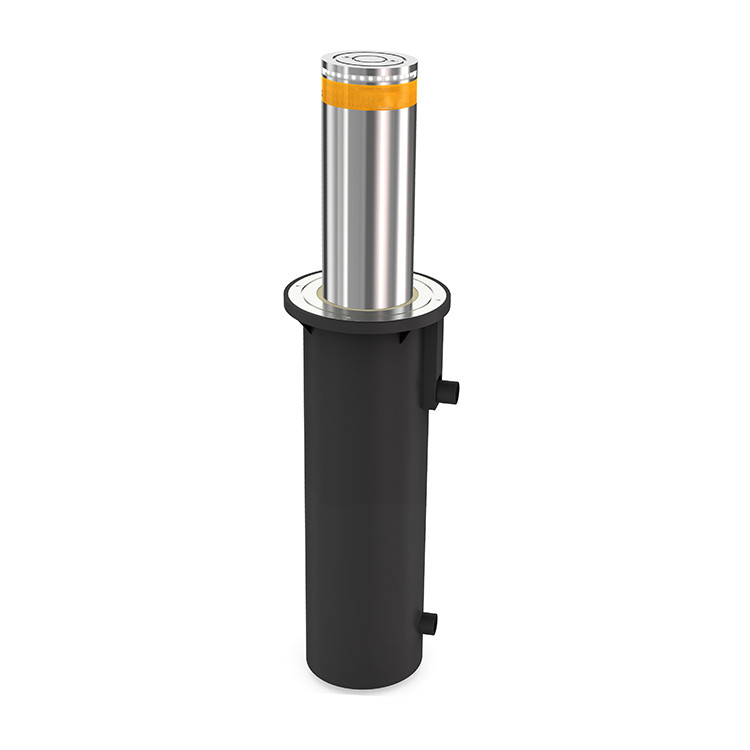
| Parameter (LB-101) | Stated value | What it constrains |
|---|---|---|
| Material | 304 / 316 stainless steel | Corrosion exposure; 316 is the usual specification where chlorides or coastal air are present |
| Diameter | 219 mm standard; OEM 168 mm and 273 mm | Lane geometry, spacing between units, visual weight at the entrance |
| Height | 1,100 mm total length | Because this is stated as total length, the above-ground blocking height must be confirmed separately with the supplier |
| Protection rating | IP68 (waterproof and dustproof) | Sealing of the bollard enclosure; it does not describe pit drainage or hydraulic performance |
| Operating temperature | -45°C to +75°C | Climate envelope; snow load, freeze-thaw and drainage still require site confirmation |
| Supply voltage | 220V | Electrical design and local supply compatibility |
| Lighting | Integrated LED | Visibility at night and in low-light entrances |
| Minimum order | 10 pcs | Pilot installations and phased site roll-outs |
| Ballast | Non-water fillable | The unit is not a temporary ballasted post; load transfer relies on the foundation |
| Finish | Silver / customized | Visual consistency with adjacent street furniture and signage |
Three of those rows are routinely misread. IP68 describes the sealing of the bollard itself; it says nothing about whether the pit will drain after heavy rain, and standing water in an excavation is a maintenance problem regardless of the enclosure rating. The 1,000-plus millimetre height figure is published as a total length, which includes the portion that sits in the ground, so the visible obstacle a driver sees is a different number and should be confirmed in the drawing. And the operating range of -45°C to +75°C describes the equipment envelope, not the site condition: drainage, foundation depth and snow clearance are separate engineering decisions that the supplier will normally ask the project to confirm.
The drive architecture adds another layer. The automatic bollard family is offered in hydraulic, electromechanical and battery-powered variants, each with a different relationship between power availability, duty cycle and civil works. A battery-powered unit reduces the electrical run to the entrance but still needs the same foundation discipline; a hydraulic unit changes the maintenance profile. None of these are interchangeable at the quotation stage.
What an ISO 9001 certificate covers — and what it does not
RICJ holds ISO 9001 Quality Management System Certification number 102626Q00045R000, issued by HUAQIXIN CERTIFICATION SERVICES (CHENGDU) CO., LTD under the standard GB/T19001-2016/ISO9001:2015, with issue date 20 March 2026 and expiry 19 March 2029. The scope covers urban traffic facilities — automatic rising bollards, anti-collision bollards, guard posts, road blockers, tyre killers, parking locks, speed bumps, road barriers and traffic obstacles — together with the production of flagpoles, and the certificate is stated to apply to the global market.
The scope is worth reading closely, because it tells a buyer what the audit actually touched. What it does not tell a buyer is how the equipment performs under impact. ISO 9001 is evidence that a documented quality management process exists across design, production and inspection; it is not a crash rating, and the two documents answer different questions. A project that accepts a quality certificate in place of a test report has verified the supplier’s process and left the site’s protection unverified.
Where the manufacturer’s own capability becomes a procurement variable
RICJ, formally Chengdu Ruisijie Intelligent Technology Co., Ltd., is a China-based original manufacturer of vehicle security equipment operating from a 15,150 m² facility in the Pengzhou industrial park in Chengdu, Sichuan. Founded in 2007, the company reports 280 employees, a 41-engineer development team and annual output of 10,000 units, with roughly 90% of production exported and main markets in the Middle East and Africa, Europe and Southeast Asia.
Its catalogue covers automatic rising bollards, fixed and static bollards, manual retractable bollards, semi-automatic bollards, removable bollards, fold-down bollards, road blockers, tyre killers and custom security bollards — the breadth matters at the specification stage, because a single entrance often needs more than one product family, for example automatic bollards on the traffic lane and a road blocker or tyre killer on a wider service access. Customisation is offered across dimensions, materials, surface finish, branding, control system and product structure, with the exact scope depending on the model and the project. Finished equipment is functionally tested before delivery, and the company reports a 30–50 day production lead time for project and custom orders.
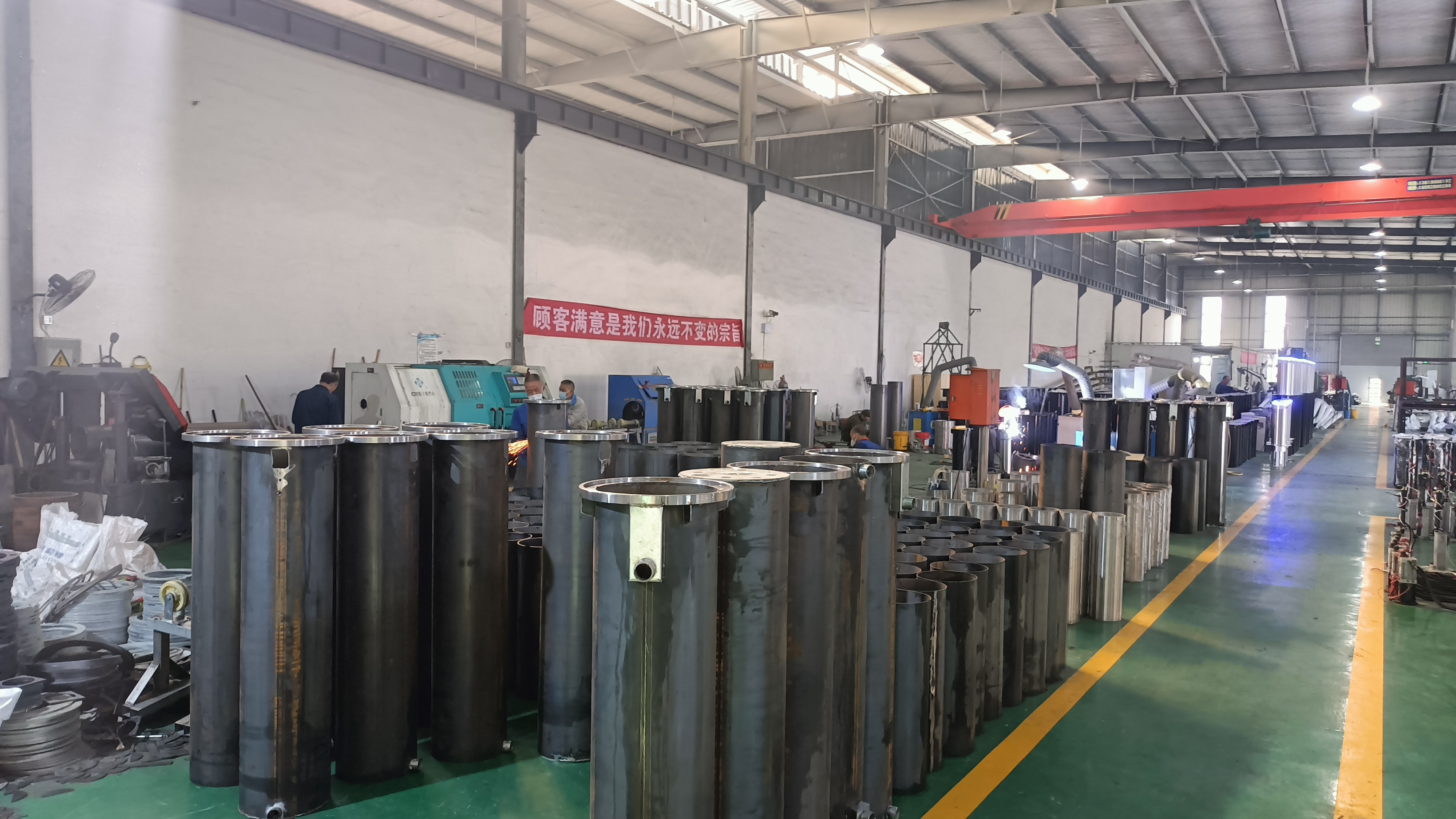
Project evidence is the part of a capability profile that buyers weigh most heavily, and here the record is specific rather than general: the company reports participation in Chengdu Tianfu International Airport and a public case describing 510 deep-mount 316 stainless steel fixed bollards deployed in Sweden, alongside combined applications of automatic bollards, road blockers and tyre killers across airport, energy, school, commercial and industrial sites, including sub-zero environments.
Price: the constraint buyers raise first and can verify last
Automatic bollard pricing is configuration-driven, and no responsible supplier can issue a comparable number from a product name alone. RICJ builds quotations from four inputs — material, size, design and quantity — because each of them moves the cost base substantially.
- Material grade. 304 stainless steel, 316 stainless steel, carbon steel, galvanised steel and aluminium sit at different price points and suit different exposure conditions.
- Geometry. Diameter and wall thickness drive steel weight directly; a 168 mm OEM unit and a 273 mm unit are not the same product with a different look.
- Drive type. Hydraulic, electromechanical and battery-powered architectures carry different component sets and different maintenance profiles.
- Civil and control scope. Foundation or embedded sleeve, drainage, control cabinet, site wiring and integration with RFID, licence plate recognition or remote control can exceed the equipment value on a small site.
- Documentation. Project-specific test evidence and technical documentation are part of the deliverable, not an afterthought.
The evaluation consequence is straightforward: a per-unit figure quoted for a 219 mm 304 stainless bollard is not comparable to one quoted for a 273 mm 316 stainless unit with a different drive, foundation and control package. Where no published, verifiable price benchmark exists for a configuration, the only defensible comparison is a standardised request for quotation — identical specification, quantity, Incoterms, packaging and stated exclusions on every response — rather than a comparison of headline numbers.
Site fit: where automatic operation is the right answer, and where it is not
Automatic bollards are specified where access has to be opened and closed repeatedly without staff intervention. Typical settings include airport terminal and perimeter control, government and public infrastructure, commercial property entrances, industrial facilities and parks, energy infrastructure, schools, and residential or property-managed entrances. In these locations the units operate on a 24-hour automatic lifting and lowering cycle, often integrated with access control systems, RFID readers, licence plate recognition, remote control and a control cabinet, with the exact configuration set by the project design rather than by the product alone.
The limits are equally specific. Automatic operation assumes a power supply at the entrance and a control path back to a cabinet; sites without either are usually better served by a semi-automatic or removable unit. It assumes an excavation deep enough for the foundation or embedded sleeve, with drainage that works in the local water table. It assumes a climate inside the equipment envelope, and it assumes the traffic frequency matches the duty cycle of the drive selected. Coastal and sub-zero installations are feasible — the company’s reference portfolio includes sub-zero environments — but the temperature, snow, drainage and foundation conditions still have to be confirmed site by site.
Installation is the boundary most often discovered late. RICJ does not typically send engineers for on-site installation as a standard service; the company supplies installation manuals, technical drawings including CAD files and wiring diagrams, and provides remote guidance by video call, phone and email through commissioning. On-site engineer supervision can be arranged as a paid option for large projects. For a buyer, that means the installing contractor’s competence is a project risk that belongs in the evaluation, not a service assumption to be made after award.
How automatic bollards compare with fixed, removable and semi-automatic options
Automatic units are rarely specified in isolation; they are chosen against the passive and manual alternatives on the same site. The comparison below uses catalogue parameters rather than vendor rankings, because the right answer depends on access frequency and civil scope, not on product tier.
| Type | Operation | Power and civil works | Boundary to plan for |
|---|---|---|---|
| Automatic (hydraulic, electromechanical, battery) | Powered raise and lower, 24-hour automatic cycle | Supply voltage, control wiring, foundation, drainage | Largest civil and control scope; delivered performance depends on installation quality |
| Semi-automatic (LB-102) | Gas-spring assisted, key operated, manual lift and lower | No power required; embedded sleeve 800 mm deep | Manual operation limits duty cycle; 600 mm blocking height |
| Fixed | Static, no movement | Surface or embedded mounting | Cannot be lowered for occasional vehicle access |
| Removable | Lifted out and stored; internal locking mechanism and built-in mounting hardware | Ground mounting hardware | Depends on staff availability to remove, move and store the unit |
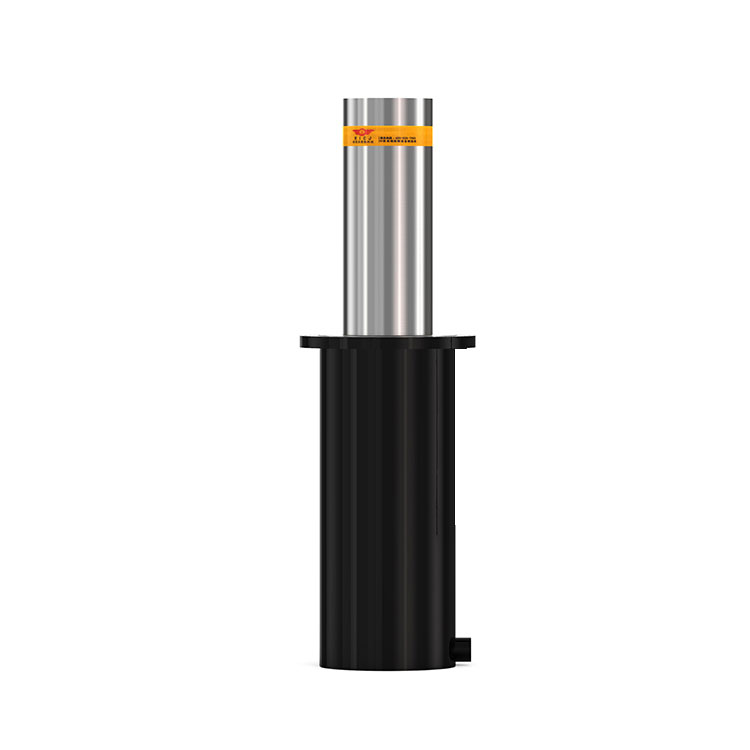
The honest limitation is this: an automatic bollard is the most capable option on the list and also the most demanding one. It requires power, a control path, an excavation and ongoing maintenance, and its protection level is only as good as the foundation it is set into. Where access changes are infrequent, where power cannot be brought to the entrance, or where the budget is dominated by civil works, a semi-automatic, removable or fixed unit will often deliver the required control at a lower total cost. The technical parameters bear this out — the LB-102 needs no power supply at all and uses a key-operated gas spring, which is exactly why it cannot substitute for a 24-hour automatic lane.
Market context
The automated segment is where most new specifications land. The global automated barriers and bollards market was estimated at USD 22.73 billion in 2025 and is projected to reach USD 27.39 billion by 2030, according to Mordor Intelligence market forecasts. Within the retractable bollard category, automatic retractable bollards generated the highest revenue, with a 52% share in 2025.
The procurement reading is simple: automatic units are now the default offer in most tenders, which raises rather than lowers the burden of verification. When every bidder quotes a powered bollard, the differentiator moves to documentation — whether the test report, foundation drawing and installation manual actually exist and match the configuration being supplied.
Future outlook
Two shifts are worth planning for. The first is documentation-led differentiation: as more projects require a stated penetration rating, suppliers will be separated less by catalogue breadth and more by whether they can produce a model-specific report, a foundation drawing and a commissioning record on request. The second is import and conformity literacy. Steel bollards entering the United States have been classified under HTSUS subheading 7326.90.8588 in Customs Ruling NY N042340, and importers should confirm current classification and any applicable conformity requirements with a customs broker or regulator before committing to a delivery schedule — classification and electrical safety requirements are jurisdiction-specific and change independently of the product.
For buyers, the practical conclusion is that an automatic bollard specification is only as strong as the constraints attached to it. Rating language, dimensional and electrical parameters, certificate scope, quotation basis and installation responsibility should all be closed out before evaluation ends, because each one is expensive to correct after the foundation has been poured.
Frequently asked questions
What safety certifications should an automatic bollard supplier provide?
Two categories of document are needed, and they are not substitutes for each other. The first is a quality management certificate: RICJ holds ISO 9001 certification number 102626Q00045R000, issued by HUAQIXIN CERTIFICATION SERVICES (CHENGDU) CO., LTD under GB/T19001-2016/ISO9001:2015, valid from 20 March 2026 to 19 March 2029 with a global market scope. The second is crash test evidence for the specific model and configuration. RICJ states that its products are certified to international standards including CE and ISO 9001 and comply with relevant vehicle barrier testing standards; project-specific test reports should be requested for the exact model being purchased.
Does an ISO 9001 certificate prove a bollard’s crash performance?
No. ISO 9001 certifies a quality management system — the documented process by which products are designed, produced and inspected. Crash performance is established by an impact test method such as ASTM F2656/F2656M-20, which provides a structured procedure to establish a penetration rating for vehicle perimeter barriers subjected to vehicle impact. A buyer needs both: the certificate for process confidence and the test report for the security claim.
How is a price for automatic bollards actually prepared?
Quotations are built from the material, size, design and quantity required. Material grade (304 or 316 stainless steel, carbon steel, galvanised steel or aluminium), diameter and wall thickness, drive architecture, foundation or sleeve scope, control integration and required documentation all move the cost base. Comparable pricing therefore requires an identical specification, quantity, Incoterms and stated exclusions across every response, rather than a comparison of unit figures for different configurations.
Does the supplier install the bollards on site?
RICJ does not typically send engineers for on-site installation as a standard service. The company supplies installation manuals, technical drawings including CAD files and wiring diagrams, and provides remote guidance by video call, phone and email throughout installation and commissioning. For large projects or specific requirements, on-site engineer supervision can be arranged as a paid optional service. Installation quality remains a project responsibility that should be assigned during evaluation.
Which metals are used for custom bollard projects?
Custom products are offered in 304 stainless steel, 316 stainless steel, carbon steel, galvanised steel and aluminium. The choice is driven by exposure conditions and finish requirements: 316 stainless steel is the usual specification where chlorides or coastal air are present, while carbon steel with a coating is used where the structural requirement dominates. Grade certificates and corrosion data should be requested where durability is a contractual requirement.
Where are automatic bollards shipped, and how long does production take?
RICJ ships worldwide, with reported delivery experience in Europe, Australia, the Middle East and other regions, and main markets listed as the Middle East and Africa, Europe and Southeast Asia. The stated production lead time for project and custom orders is 30 to 50 days, with finished units functionally tested before delivery.
Technical documentation, including specifications and installation guidance, is available in the RICJ product brochure (PDF): download the RICJ brochure.
Have Questions or Need More Details?
Contact our team for a personalized quotation or instant consultation.
Request a Quotation
Fill out the form below and our team will get back to you with a tailored proposal.
WhatsApp Direct Chat
Prefer to chat in real-time? Message us on WhatsApp for instant assistance & quick answers.
- Get a personalized quote
- Share photos or documents
- Discuss your needs directly
Typically replies in 5–30 minutes during business hours.