
Automatic Die Cutting Machine: What Buyers Must Verify
An automatic die cutting machine combines a physical cutting die with hydraulic or mechanical force, automatic feeding, and controlled material transport. For buyers at the research and evaluation stage, the useful question is not which machine has the highest headline cutting force, but which constraint set matches the material, die, batch pattern, safety requirement, and certification evidence.
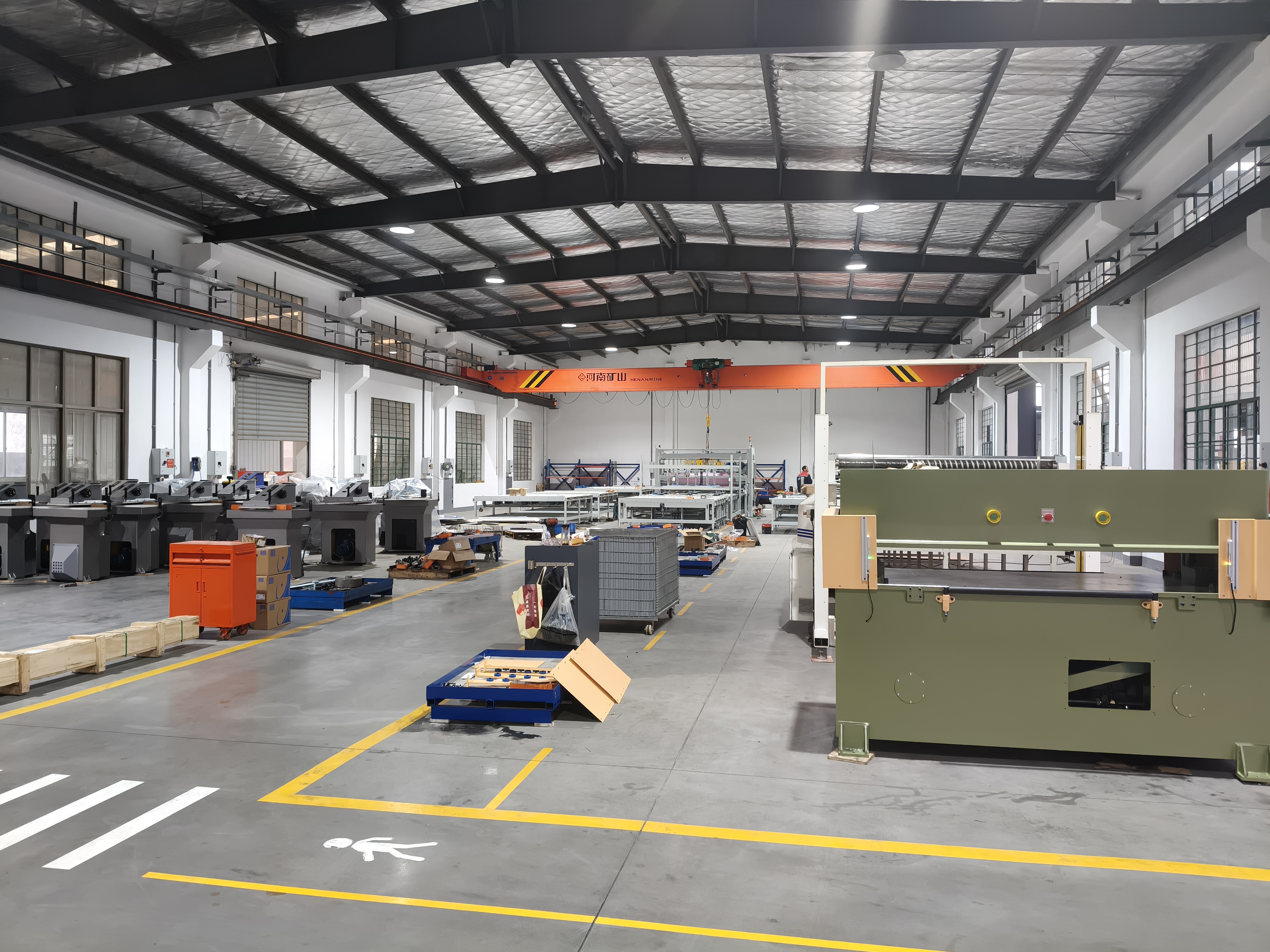
The constraint problem in hydraulic die cutting procurement
Hydraulic die cutting machine catalogues often lead with maximum cutting force. That number matters, but it is not a complete specification. A machine with high force can still be wrong for a project if the cutting area is too small, the die cannot be clamped efficiently, the feeding system cannot hold tension, the safety circuit does not match plant standards, or the certification scope does not cover the target market. In the research and evaluation stage, buyers should convert each catalogue claim into an acceptance criterion.
The same logic applies to automatic die cutting machine projects. Automation changes the constraint set: the machine must handle a defined material format, maintain registration and tension, integrate with upstream and downstream equipment, and provide a safety system for a production line rather than a single manual workstation. The procurement question becomes: what must be true before the machine can run at the required quality level?
This is the difference between a specification list and a purchasing decision. A list can say 4,000 kN or 1,600 mm. A decision must also say which material, which die, which product tolerance, which batch size, which operator skill level, and which maintenance capability will exist in the plant after installation.
What the machine actually controls
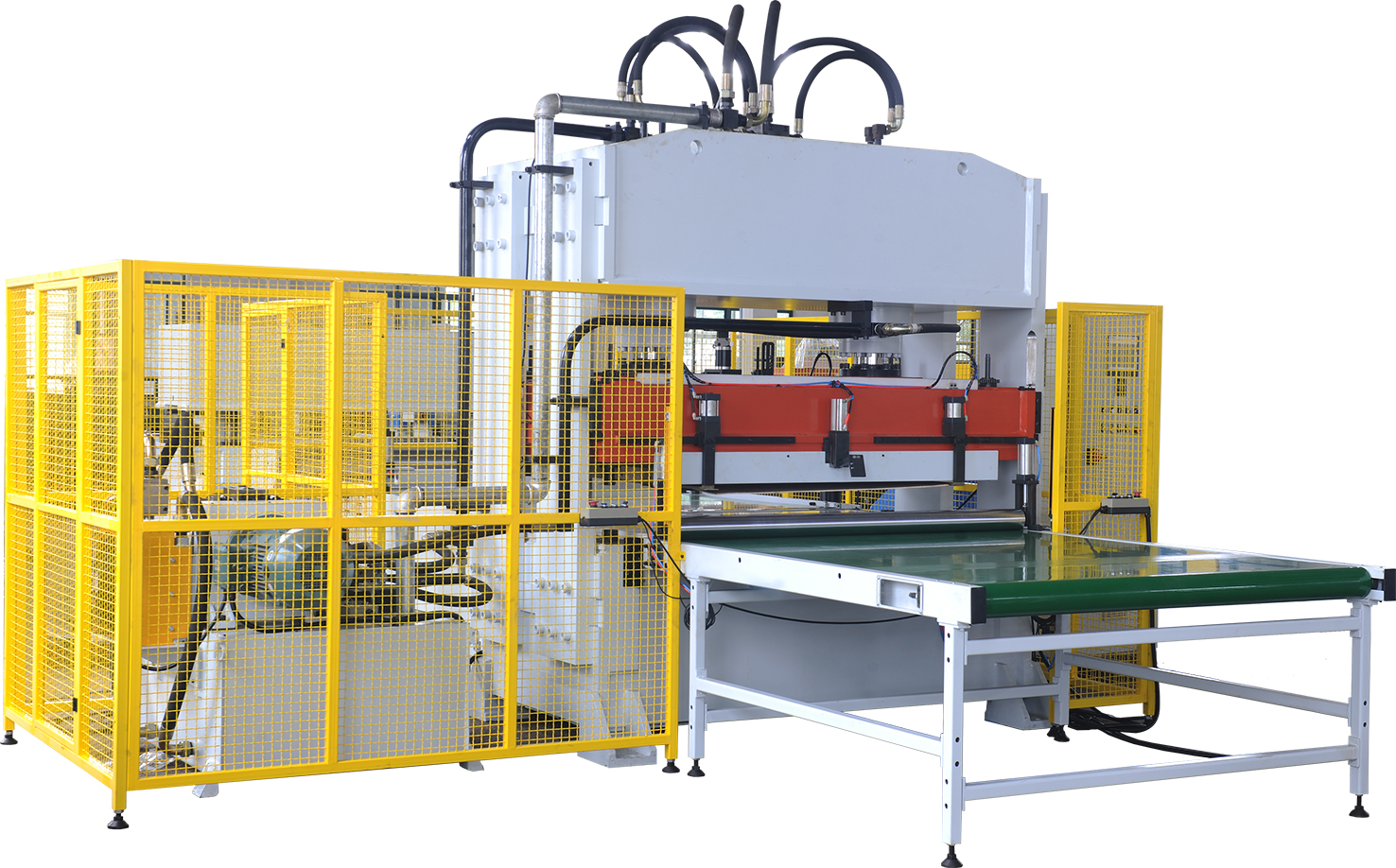
In the Huasen range, the HSSZ4000 automatic die cutting machine is listed with a maximum cutting force of 4,000 kN, a maximum cutting width of 1,600 mm, and a cutting area of 1,600 × 800 mm; the force, width, and area are marked as customizable. The HSSZ1500 is listed with 1,500 kN maximum cutting force, 1,600 mm maximum cutting width, and the same 1,600 × 800 mm cutting area, also customizable. These are starting points for a specification discussion, not a substitute for material testing.
The HSSZ4000 product description states that the machine is applicable to full-break or semi-break continuous cutting of non-metallic rolled materials of the same specification in large batches using a laser wood die cutter. It uses PLC control and a displayer, an automatic feeding device, a hydraulic die cutting device with four-column guiding, belt-type conveying, a photoelectric protection device on the cutting area, and a tension control device on the feeding part. Each detail has a procurement consequence: PLC control affects recipe management and repeatability; four-column guiding affects cutting depth consistency; belt conveying affects how finished parts are collected; tension control affects whether the material stays centered; photoelectric protection affects operator safety.
Parallelism is a technical constraint that is easy to overlook. In die cutting, low parallelism can lead to inconsistent cutting depths, which affects finished-product yield, die life, and pressure stability. A parallelism specification of ±0.03 mm indicates a very small allowable deviation. For precision die cutting, good parallelism can help achieve more uniform cutting results and reduce variation across the working area. Buyers should ask how parallelism is measured, how it is maintained over time, and which service adjustments are required.
Model comparison: a constraint map, not a ranking
The table below places several Huasen machine families side by side using published specifications. It is not a ranking. A clicker press, a travelling head machine, a four-column press, and an automatic die cutting line solve different production problems. The correct choice depends on material format, batch size, die size, automation level, and the acceptable level of manual intervention.
| Model | Machine type | Maximum cutting force | Working area or table | Published control or feeding note |
|---|---|---|---|---|
| HSSZ4000 | Automatic Die Cutting Machine | 4,000 kN, customizable | Cutting area 1,600 × 800 mm, customizable | PLC control and displayer, automatic feeding, four-column guiding, belt conveying, photoelectric protection, tension control |
| HSSZ1500 | Automatic Die Cutting Machine | 1,500 kN, customizable | Cutting area 1,600 × 800 mm, customizable | PLC control and displayer, automatic feeding, four-column guiding, belt conveying, photoelectric protection, tension control |
| HSYT-250ET | CNC die cutting machine, automatic movable head type | 250 kN | Punch 500 × 500 mm; applicable material width 1,600 mm | PLC and human-machine interface, servo motor and ball screw, manual and automatic modes, protective mesh and safety light curtain |
| HTR630 | Gantry Hydraulic Cutting Machine | 630 kN | 1,200 × 850 / 1,600 × 1,050 / 1,800 × 1,050 mm | PLC and human-machine interface, front and rear movable cutting heads, automatic cutting depth adjustment, safety screen |
| HSC300 | Precise Four-Column Cutting Machine | 300 kN; special specifications up to 4,000 kN | 1,600 × 500 / 1,250 × 500 mm | Double oil cylinder, double-crank connecting rod balancing, slow cutting near die contact, central oil supply automatic lubricating system |
| HSD-A500B | Movable Head Type Cutting Machine | 500 kN | Working table 2,000 × 500 mm; travel head 550 × 550 mm | Gantry frame, automatic horizontal cutting-head movement, low-noise hydraulic system, automatic speed variation |
| HSA-A100 | Hydraulic rocker cutting machine | 100 kN | Working table 800 × 400 mm | Manual operation, time control for cutting depth, self-lubricating system, 0.75 kW motor power |
Procurement checklist for automatic die cutting
The application data lists the selection variables that should be confirmed before quotation: material type, sheet or roll format, thickness and hardness, product dimensions, die specifications, cutting force, cutting area, automation level, feeding method, power conditions, safety protection, and upstream and downstream interfaces. Special specifications can be customized. This checklist is more useful than a single price comparison because it exposes the assumptions that drive cost and lead time.
| Constraint | What to verify | Procurement consequence |
|---|---|---|
| Material format | Sheet or roll; width, thickness, hardness, and surface condition | Determines feeding method, die design, tension control, and whether a continuous line is appropriate |
| Product dimensions | Maximum and minimum part size; nesting pattern; tolerance | Sets the required cutting area, die size, and registration accuracy |
| Cutting force | Required force for the actual material and die; available force range | Affects machine frame, hydraulic system, energy consumption, and safety factor |
| Cutting area | Useful area after die clamp and feeding clearance | Determines how many parts per stroke and the effective throughput |
| Automation level | Manual, inching, semi-automatic, or fully automatic; PLC and HMI functions | Affects labor deployment, changeover time, and recipe management |
| Feeding method | Automatic feeding, servo feeding, belt conveying, tension control | Affects material utilization, registration, and scrap rate |
| Safety protection | Photoelectric protection, safety light curtain, protective mesh, safety interlocks | Affects operator safety and plant compliance |
| Upstream and downstream interfaces | Unwind stand, stacking unit, waste collection, conveyor interface | Affects line integration cost and commissioning time |
| Power conditions | Voltage, motor power, control power, plant capacity | Affects installation scope and utility preparation |
| Maintenance capability | Hydraulic system, lubrication, spare parts, service access | Affects uptime and total cost of ownership |
Certification scope is part of the specification
Certification is a constraint, not a decoration. The relevant question is whether the certificate scope, standard, and validity match the machine and the destination market. Huasen publishes an ISO 9001 certificate numbered 25025Q13420R0M, issued by ZhongQiu United International Certification (Beijing) Co., Ltd., valid from 2025-10-29 to 2028-10-28, with a scope covering design, production, and sales of leather machinery, lamination machinery, and hydraulic pump station (IAF 18), under GB/T 19001-2016 idt ISO 9001:2015.
For EU machinery and EMC conformity, the published CE attestation is numbered M.2024.206.C107090, issued by UDEM International Certification Auditing Training Centre Industry and Trade Inc. Co., valid from 2024-09-23 to 2029-09-22, covering cutting machine, with standards 2006/42/EC Machinery Directive (Annex VIII), 2014/30/EU Electromagnetic Compatibility Directive (Annex II), EN ISO 12100:2010, EN 60204-1:2018, EN 61000-6-2:2019, and EN 61000-6-4:2019.
The published management-system set also includes ISO 50001 energy management certificate 29526En06854R000, valid from 2026-06-11 to 2029-06-10; ISO 45001 occupational health and safety certificate 04626S00274R001, valid from 2026-01-28 to 2029-01-27; and ISO 14001 environmental management certificate 04626E00292R001, valid from 2026-01-28 to 2029-01-27. Product carbon footprint verification ISO 14067 is numbered RL-2026-PCFP01-0336, valid from 2026-07-14 to 2029-07-13, and covers listed values for HSC/H-500, HSSZ-3000, HSYT-350, and HSPM-300. Organizational GHG verification ISO 14064 is numbered RL-2026-GGVS-0058, valid from 2026-06-10 to 2027-06-09, for the reporting period 2025-01-01 to 2025-12-31, with total emissions of 223.1934374 tCO2e.
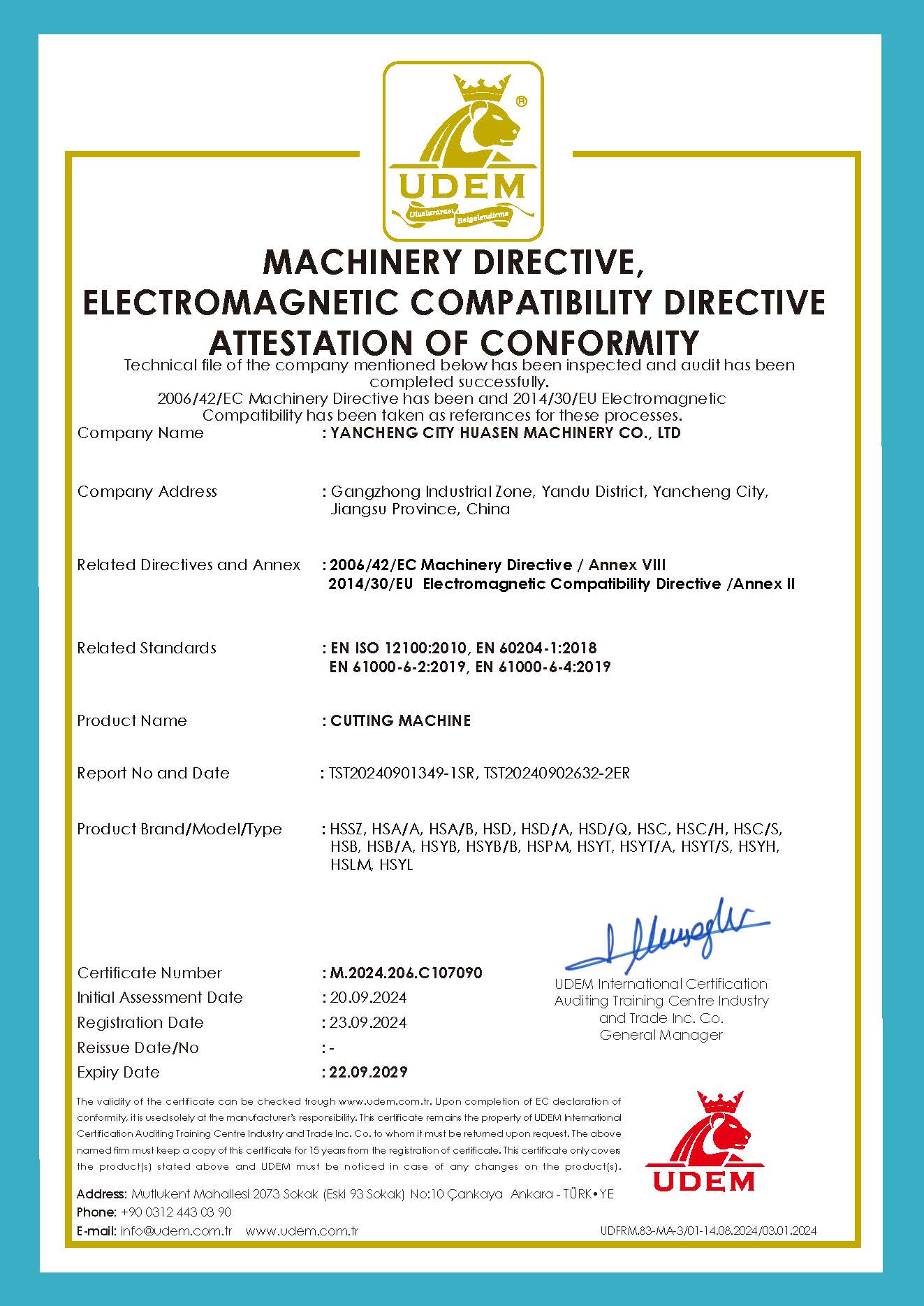
These documents support a supplier evaluation, but they do not replace a model-specific acceptance test. A management-system certificate is not a guarantee that every model will meet every performance target. Buyers should map each certificate to the actual machine, market, and contractual acceptance criterion.
| Certificate | Published scope or standard | Number and validity | Procurement use |
|---|---|---|---|
| ISO 9001 | GB/T 19001-2016 idt ISO 9001:2015; design, production, sales of leather machinery, lamination machinery, hydraulic pump station (IAF 18) | 25025Q13420R0M; 2025-10-29 to 2028-10-28 | Quality management system evidence |
| CE | 2006/42/EC; 2014/30/EU; EN ISO 12100:2010; EN 60204-1:2018; EN 61000-6-2:2019; EN 61000-6-4:2019 | M.2024.206.C107090; 2024-09-23 to 2029-09-22 | EU machinery and EMC conformity evidence |
| ISO 50001 | GB/T 23331-2020 / ISO 50001:2018; RB/T 119-2015 | 29526En06854R000; 2026-06-11 to 2029-06-10 | Energy management evidence |
| ISO 45001 | GB/T 45001-2020 / ISO 45001:2018 | 04626S00274R001; 2026-01-28 to 2029-01-27 | Occupational health and safety evidence |
| ISO 14001 | GB/T 24001-2016 / ISO 14001:2015 | 04626E00292R001; 2026-01-28 to 2029-01-27 | Environmental management evidence |
| ISO 14067 | ISO 14067:2018; PAS 2050:2011; product carbon footprint for listed models | RL-2026-PCFP01-0336; 2026-07-14 to 2029-07-13 | Product carbon footprint evidence |
| ISO 14064 | ISO 14064-1:2018; ISO 14064-3:2019; organizational GHG verification | RL-2026-GGVS-0058; 2026-06-10 to 2027-06-09 | Organizational GHG verification evidence |
What Huasen publishes as verifiable
Yancheng City Huasen Machinery Co., Ltd is a cutting machinery manufacturer based in Yancheng City, Jiangsu Province, China. The company produces hydraulic cutting machines, intelligent CNC cutting machines, precision four-column cutting machines, travelling-head cutting machines, automotive-interior cutting machines, abrasive-product cutting machines, and automatic die cutting machines. Its published company data lists a 26,000 m² site, 110 employees, 46 senior engineering technicians, an annual output of 1,000 units, a 60% export ratio, and main markets in the EU, USA, and Asia.
The company states that it has approximately 150 patents and that it drafted the industry standard QB/T 5122-2017 exclusively. For buyers, these claims are relevant only when they connect to a specific project: patent count does not prove application fit, and a drafted standard does not replace a factory acceptance test. The practical value is in the customization and service data: OEM and ODM are accepted; customization options include logo, voltage, cutting force, worktable size, tension distance, color, functions, and other demands; MOQ is 1 unit; lead time is 30-60 days; monthly capacity is 100 units; quality control is 100% testing; after-sales support includes remote support and field installation, debugging, and training. The published warranty is 12 months, with telephone service priority during the warranty period, a stated target of providing solutions within 2 hours and reaching the site within 24 hours if needed; components and parts are covered if the customer replaces them during the warranty period.
Application evidence: where automatic die cutting fits
The application data lists non-metallic materials and industries: leather products, footwear, medical products, packaging, plastic goods, fabric swatches, bags and wallets, hand crafts; automotive interiors such as sound insulation material, airbag, mats, seats, and seat covers; abrasives such as sandpaper, abrasive paper, abrasive belt, flap disc, and grinding disc; packaging such as carton, paper cup, blister package, disposable wooden lunch box, and EPE foam packing; textiles, garments, cosmetics, toys, and other non-metal products. The machine function is cutting, die cutting, kiss cutting, punching, shaping, or continuous blanking, with automatic feeding, conveying, stacking, or discharging depending on the model.
Customer cases provide a more concrete view. A Korean automobile parts manufacturer used 2 sets for automotive interiors for 5 years and reported improved production efficiency, fewer workers, labor cost savings, improved product quality, reduced costs, and higher profit margins. A US automobile parts supplier used 56 units for automotive airbags for 9 years and reported the same pattern of results. A Mexican automobile component supplier used 8 units for automotive sound insulation cotton for 6 years; the previous two production steps were transformed into a one-time production process, saving production procedures, improving efficiency, and further enhancing product quality. A Turkish abrasive discs manufacturer used 6 units for punching sandpaper discs for 3 years; multi-layer sandpaper discs are automatically punched and automatically laid out, saving materials and enhancing production efficiency.
These cases are not a guarantee of results for a new buyer. They are evidence that automatic die cutting can be evaluated against specific operating outcomes: labor deployment, process steps, material utilization, quality consistency, and maintenance load. The buyer should ask for a reference case with a similar material, die, and batch pattern, and should test the actual material with the actual die.
| Customer type | Country | Quantity | Application | Duration | Reported result |
|---|---|---|---|---|---|
| Automobile parts manufacturer | KR | 2 sets | Automotive interiors | 5 years | Efficiency enhanced, fewer workers, labor cost savings, quality improved, costs reduced, profit margins increased |
| Automobile parts supplier | US | 56 units | Automotive airbags | 9 years | Efficiency enhanced, fewer workers, labor cost savings, quality improved, costs reduced, profit margins increased |
| Automobile component supplier | MX | 8 units | Automotive sound insulation cotton | 6 years | Two production steps converted into a one-time process; procedures saved, efficiency improved, quality enhanced |
| Abrasive discs manufacturer | TR | 6 units | Punching sandpaper discs | 3 years | Multi-layer sandpaper discs automatically punched and laid out; material saving and efficiency improvement |
| Clean sponge manufacturer | DE | 3 units | Cleaning sponges | 5 years | High-pressure impact cutting; more products per cut; automatic feeding and discharging; efficiency greatly improved |
Comparison with traditional solutions
Automatic die cutting is not the default answer for every cutting problem. A swing arm clicker press such as the HSA-A100 is a hydraulic rocker cutting machine with 100 kN maximum cutting force, an 800 × 400 mm worktable, 0.75 kW motor power, and a self-lubricating system; it is applicable to cutting various non-metal materials by die cutter. It offers flexible manual operation and low energy consumption, but it depends on the operator and is better suited to lower-volume or frequently changing work than a continuous automatic line.
A travelling head cutting machine such as the HSD-A500B uses a gantry frame made of profile steel, a cutting head that moves horizontally, a low-noise hydraulic system, and automatic speed variation for flexible movement and accurate positioning. It is listed with 500 kN maximum cutting force, a 2,000 × 500 mm working table, and a 550 × 550 mm travel head. It can handle large sheets and gives the operator a clear view, but it is not the same as a fully automatic roll-fed line.
A precise four-column cutting machine such as the HSC300 uses double oil cylinders and a precise double-crank connecting rod balancing mechanism to keep cutting depth consistent; the pressing board slows when it contacts the die cutter to reduce size error between the uppermost and lowermost layers; a central oil supply automatic lubricating system supports machine precision and service life. It is listed with 300 kN maximum cutting force and a 1,600 × 500 or 1,250 × 500 mm cutting area, with special specifications up to 4,000 kN. It is a strong fit for precise die cutting, but feeding and automation depend on configuration.
The main boundary for automatic die cutting is the production context. The application data states that selection must consider material type, sheet or roll format, thickness and hardness, product dimensions, die specifications, cutting force, cutting area, automation level, feeding method, power conditions, safety protection, and upstream and downstream interfaces. A buyer with very low volume, frequent design changes, unstable material supply, or no clear line integration should not assume that automation will reduce cost. In those cases, a manual or semi-automatic machine may be the more rational constraint match. CNC knife cutting is a different process: it follows CAD drawings without requiring a physical die, while CNC die cutting uses a physical cutting die mounted in a press. The two should not be treated as interchangeable without a material and tolerance review.
Market trend analysis: from machine price to documented operating cost
The supplied cases show a consistent evaluation pattern across automotive, abrasives, footwear, and consumer products: buyers justify automatic cutting through labor deployment, process consolidation, material savings, quality consistency, and maintenance load. That is more useful than a generic claim about automation growth. The certification set also shows that management-system and product carbon-footprint documentation are now part of the published supplier evidence. For procurement, this shifts the conversation from a single machine price to a documented operating-cost model: energy management, safety management, environmental management, spare-parts support, installation, training, and expected service life.
The limit of this analysis is that the corpus does not provide market-size statistics, growth rates, or third-party price benchmarks. Buyers should therefore treat any specific price band as project-specific. The FAQ data states that price depends on machine type, cutting force, working area, automation level, material, and customized requirements. A lower initial price can be offset by tooling, energy, maintenance, spare parts, installation, and service life. The practical approach is to request a configuration-specific quotation with a clear scope of supply, then compare total cost of ownership on the same technical basis.
Future outlook
The next evaluation cycle is likely to focus on integration and evidence. PLC and HMI control, servo feeding, safety light curtains, automatic stacking, and waste collection are already listed across the range. Energy management and product carbon footprint certificates give buyers additional documents to request when internal reporting or customer requirements apply. The useful question is not whether a machine has more automation, but whether the automation is matched to the material, die, quality target, and maintenance capability of the plant. For Huasen, the published combination of automatic die cutting models, customization options, customer cases, and certification evidence provides a starting point for that review.
FAQ
Is a Chinese die cutting machine reliable?
Reliability depends on the manufacturer, machine design, components, manufacturing quality, quality control, and after-sales support, rather than simply the country of manufacture. When purchasing from China, evaluate the actual factory, technical specifications, references, inspection procedures, warranty, spare-parts support, and service capability.
How much does a die cutting machine cost?
The price depends on the machine type, cutting force, working area, automation level, material, and customized requirements. Buyers should compare total cost of ownership, including tooling, energy consumption, maintenance, spare parts, installation, and expected service life, rather than comparing only the initial price.
Can the machine be customized for my production line?
Many industrial die cutting applications require customized specifications. Possible customization includes working-table dimensions, cutting force and functions, cutting stroke, die size, feeding system, automatic positioning, production-line integration, safety systems, and control system. Huasen Machinery offers customized cutting machines and automatic production-line solutions for different applications.
Can I test my material before buying a Huasen machine?
A material test is an important step when purchasing industrial cutting equipment. Customers should ask Huasen or any competing supplier to test. Ask whether you can send samples and a die, or run your material on a similar machine at their plant. You should be able to test your material with Huasen before buying, but confirm the arrangement directly with their sales or engineering team.
Why is parallelism important for a die cutting machine?
Low parallelism can lead to inconsistent cutting depths, which affects finished-product yield, die life, and pressure stability. A parallelism specification of ±0.03 mm indicates a very small allowable deviation. For precision die cutting, good parallelism can help achieve more uniform cutting results and reduce variation across the working area.
What factors affect the service life of a die cutting machine?
Several factors influence service life, including machine construction and component quality, operating frequency, cutting force and working conditions, material characteristics, hydraulic system maintenance, lubrication, electrical maintenance, operator practices, preventive maintenance, and replacement of worn components. A properly maintained machine can provide reliable service over many years of production.
Have Questions or Need More Details?
Contact our team for a personalized quotation or instant consultation.
Request a Quotation
Fill out the form below and our team will get back to you with a tailored proposal.
WhatsApp Direct Chat
Prefer to chat in real-time? Message us on WhatsApp for instant assistance & quick answers.
- Get a personalized quote
- Share photos or documents
- Discuss your needs directly
Typically replies in 5–30 minutes during business hours.