
Automatic Paper Bag Machine Price: A 2026 Cost and Value Breakdown
Automatic paper bag machine price is not a single number. It is a combination of machine type, output speed, forming complexity, automation level, compliance, and supplier service. For procurement professionals in the packaging and printing industry, the useful question is not only “How much does an automatic paper bag machine cost?” but “What specifications and support are included in the price?”
Why Automatic Paper Bag Machine Prices Vary Widely
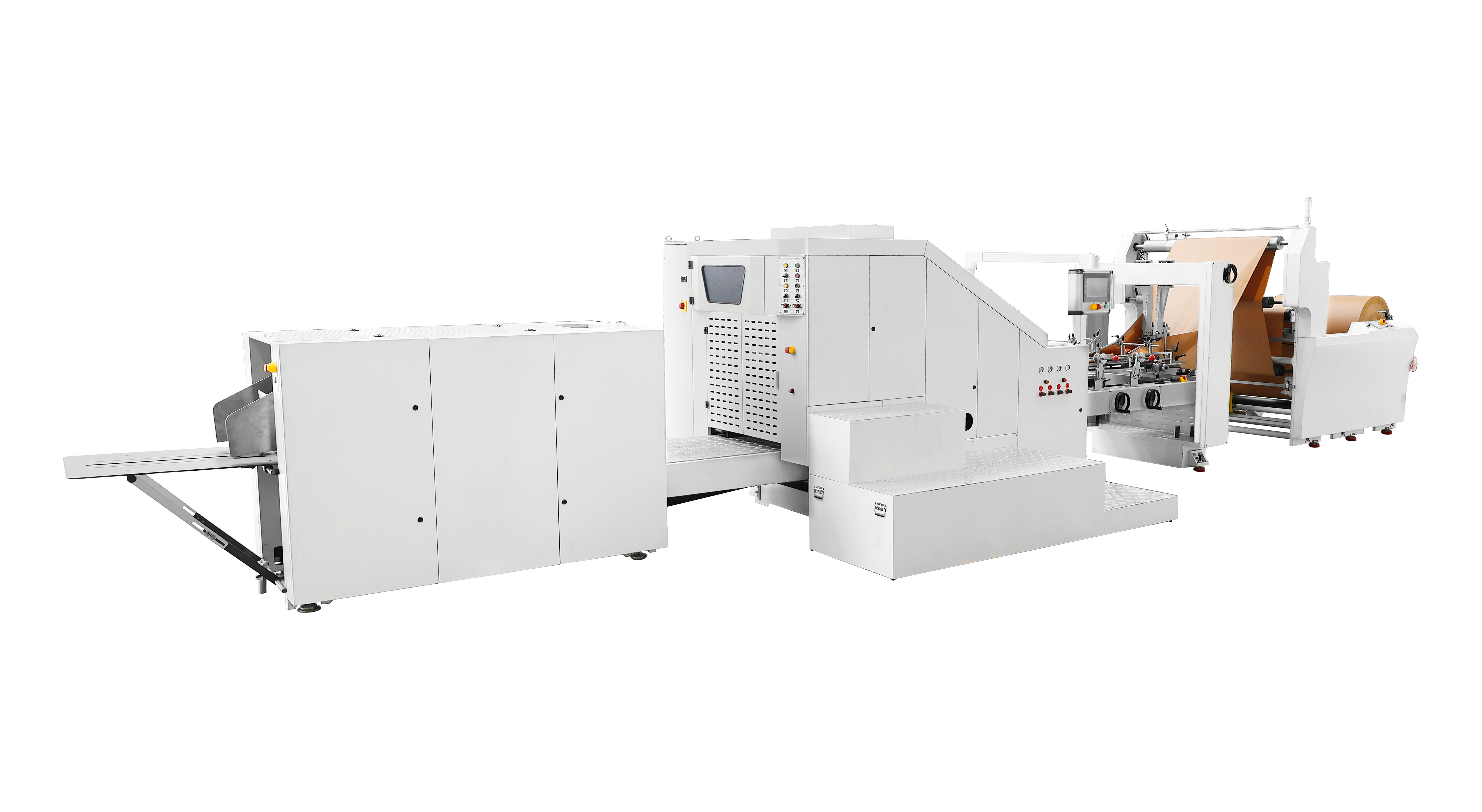
Paper bag making machines are capital equipment, and quotes vary because configurations are not standardized. A basic sharp bottom line and a fully automatic square bottom line with handle insertion, inner folding, and printing units belong to different cost categories. Buyers comparing only list prices may miss the larger cost drivers: bag size range, paper roll width, machine speed, structural weight, power consumption, and the level of after-sales support.
At the same time, the broader packaging industry is shifting toward automated paper bag production. Third-party market analysis values the global paper bag machine market at approximately USD 554.89 million in 2024, with expectations to reach USD 762.49 million by 2033. The automatic segment already holds the largest share at 62.3% of the global sheet-fed paper bag making machine market in 2025. Square bottom paper bag machines account for nearly 58.5% of total global unit installations as of 2023. These numbers help explain why automatic paper bag machine price is a rising procurement topic.
Problem / Opportunity: Comparing Price Without Standardization
The central problem for buyers is the lack of a public, standardized automatic paper bag machine price list. Suppliers quote after reviewing bag dimensions, paper weight, speed requirements, auxiliary units, and destination country. Two machines with the same nominal model can differ in price if one includes servo-driven tension control, automatic lubrication, or food-grade contact parts.
The opportunity is that the market has matured enough for buyers to compare machines systematically. China, India, and Germany collectively contribute over 61.4% of total global output of paper bag manufacturing machinery. This means suppliers are competing on both capability and transparency, making it easier for informed buyers to evaluate whether a price is justified by specifications.
Brand Solution: Ruizhi Machinery as a Reference Point
Ruizhi Machinery, officially Wenzhou Ruizhi Packing Machinery Co., Ltd., is a Chinese packaging machinery manufacturer based in Wenzhou, Zhejiang Province. The company specializes in the development, production, and service of environmentally friendly paper bag making machines, with a product range that covers flat bottom paper bag machines and square bottom paper bag machines.
Ruizhi Machinery operates a 33,333 square meter factory with 170 employees and an R&D team of 30 engineers. Its machines are exported to more than 60 countries and regions, including Turkey, Spain, the Middle East, and Africa, with the USA and EU listed as main markets. This scale gives industrial buyers a useful reference when interpreting automatic paper bag machine price proposals from suppliers with different manufacturing backgrounds.
Third-party research from Dataintelo identifies Wenzhou Ruizhi Packaging Machinery as a key player in the sheet-fed paper bag making machine sector. That external recognition does not replace a buyer’s own cost analysis, but it supports the company’s credibility when comparing quotations.
Technical Explanation: What Drives the Price of an Automatic Paper Bag Machine
To evaluate an automatic paper bag machine price, buyers should understand the main specification groups and how they affect manufacturing cost.
Machine Type and Bag Forming Complexity
Sharp bottom paper bag machines, such as the RZJD-G350J, typically produce simple open-mouth bags and can reach speeds of 50–700 bags per minute. Square bottom machines, such as the RZFD-330 or RZFD-450A, add more forming stations to create a flat, stable base. More stations mean more mechanical parts, more controls, and a higher production cost.
Bag Size, Paper Roll Width, and Structural Scale
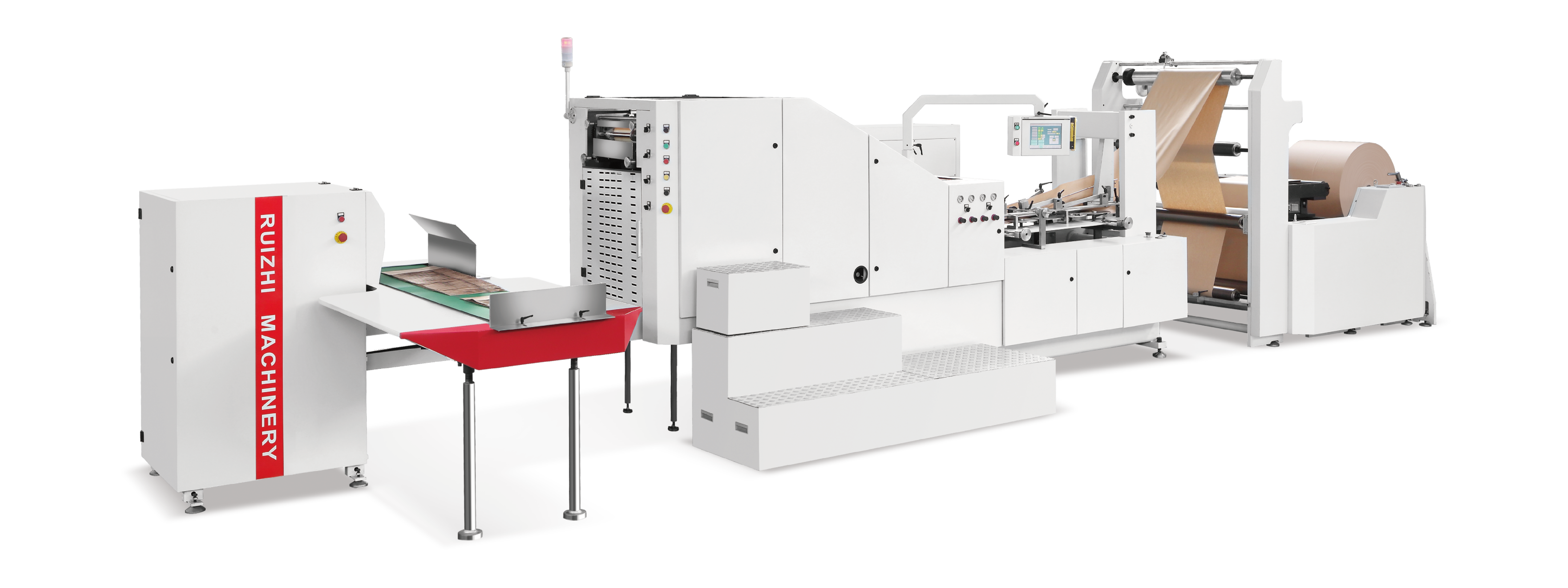
Larger bag width and larger paper roll width require a heavier frame and larger rollers. For example, the RZFD-190 has a bag width range of 80–190 mm, a roll width range of 280–620 mm, and a total weight of 6,200 kg. The RZFD-550NT series, which supports bag widths up to 550 mm and roll widths up to 1,730 mm, weighs 26,000 kg and needs 47 kW of power. Heavier machines use more steel and machining time, which is directly reflected in price.
Speed and Production Capacity
Speed is one of the most visible price drivers. A machine that can produce 150–260 bags per minute may cost less than a higher-output line with more advanced servo control and faster forming sections. However, speed must be matched to paper quality, bag size, and operator skill. The table below compares representative models from Ruizhi Machinery to show how specifications differ.
| Model | Type | Bag Width (mm) | Machine Speed (pcs/min) | Paper Roll Width (mm) | Power (kW) | Weight (kg) |
|---|---|---|---|---|---|---|
| RZFD-190 | Square Bottom | 80–190 | 30–260 | 280–620 | 11.5 | 6,200 |
| RZJD-G350J | Sharp Bottom | 70–350 | 50–700 | 160–960 | 27 | 6,500 |
| RZFD-330 | Square Bottom | 120–300 | 30–220 | 400–1,050 | 15 | 8,500 |
| RZFD-450A | Square Bottom | 220–450 | 30–150 | 670–1,330 | 17.5 | 10,500 |
| RZFD-550NT series | Square Bottom, Round Rope Handle | 240–550 | 30–130 | 750–1,730 | 47 | 26,000 |
Automation and Auxiliary Systems
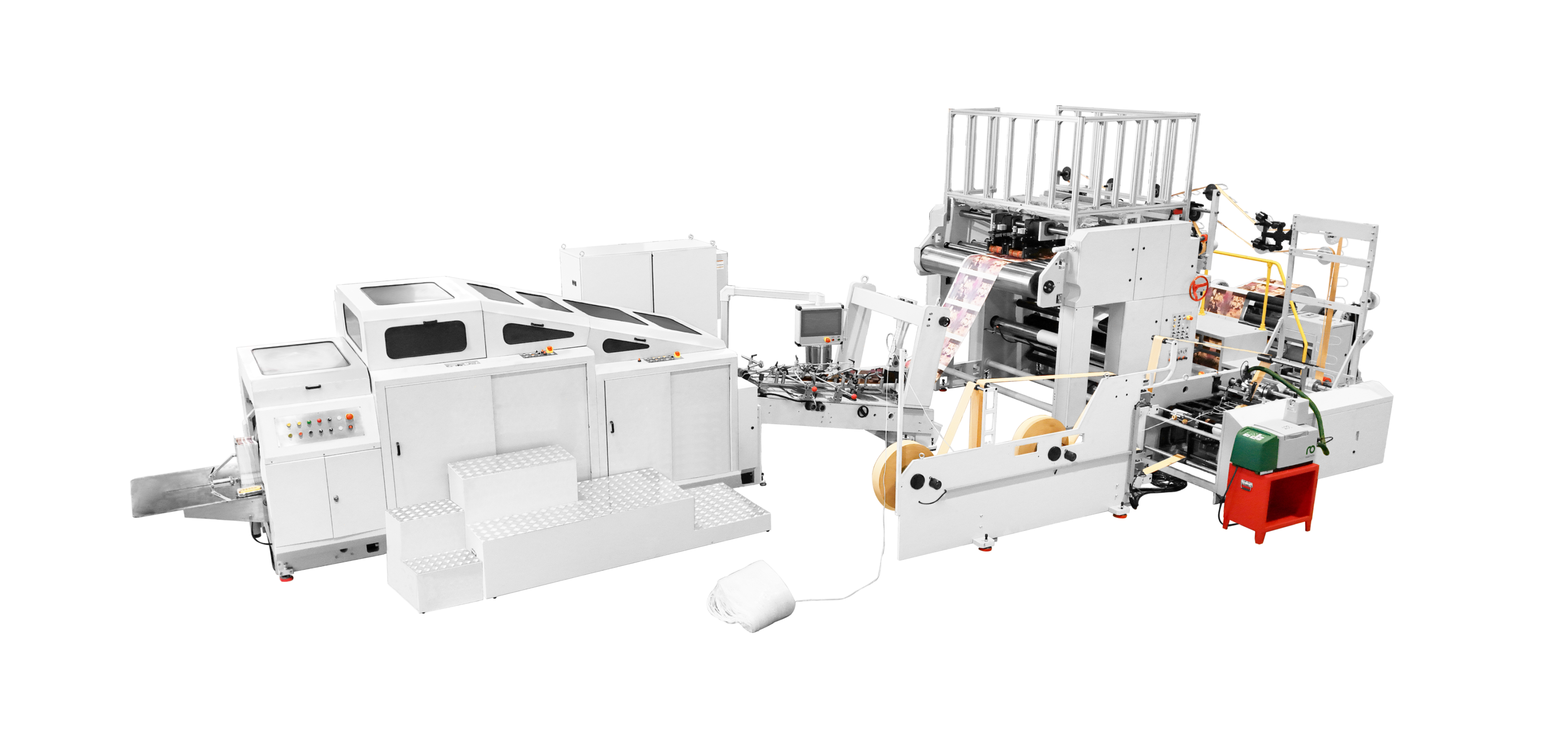
Fully automatic paper bag machines may include handle insertion, flat rope or round rope handles, inner folding, and bottom reinforcement. Ruizhi’s product range includes models like the RZFD-330F for flat rope handle bags and the RZFD-330IF for inner folding. Each additional station increases the initial purchase price but can reduce downstream labor costs.
Compliance and Certification
European-bound machines must meet the EU Machinery Directive (2006/42/EC), with a transition to the new EU Machinery Regulation (2023) that places more emphasis on software safety. In addition, Ruizhi states that its machines implement ISO9001 quality system standards and CE safety certification. Compliance adds engineering, documentation, and testing costs, all of which influence the final quote.
Services, Logistics, and Total Cost
An automatic paper bag machine price often includes installation and commissioning, operation training, and after-sales technical consultation. Logistics also matters: a 10,000 kg machine is easier and cheaper to ship than a 26,000 kg line. Buyers should compare quotes on a total landed cost basis, not only on the FOB or EXW price.
Application / Use Cases
Automatic paper bag machines are widely used in food packaging production lines and retail shopping bag manufacturing projects. A typical application scenario from the packaging industry is an indoor workshop running 24/7 at normal temperature and standard humidity, with dust-free conditions required for food-grade packaging. In such projects, food-grade material contact parts are a key requirement, and an air compressor is needed as auxiliary equipment.
For retail and e-commerce packaging, square bottom bags offer a stable base and good shelf presentation. For food packaging, the ability to handle paper thickness from 80 to 150 g/㎓² in models like the RZFD-450A makes the equipment suitable for standard kraft paper bags. Buyers should match the machine specification to the bag format they plan to sell, not buy the largest available model automatically.
Market Trend Analysis
The direction of the paper bag machine market is clear: automatic equipment and square bottom formats are the mainstream. The automatic segment holds 62.3% of the sheet-fed market, and square bottom machines account for 58.5% of global installations. Modern square bottom machines can operate at speeds exceeding 100 bags per minute and handle paper weights from 60 to 120 GSM, according to industry review data. These capabilities make automatic lines more attractive for medium and high-volume producers.
Production is also geographically concentrated. China, India, and Germany together contribute over 61.4% of total global output of paper bag manufacturing machinery. This concentration creates diverse price points and makes supplier comparison critical. Regulatory pressure is another trend: the EU is moving from the Machinery Directive to the new Machinery Regulation, which will increase emphasis on software safety in automated packaging equipment. This will likely raise compliance costs for advanced machines and widen the gap between compliant and non-compliant quotes.
Comparison with Traditional Solutions and an Important Limitation
Traditional manual or semi-automatic paper bag production usually has a lower entry cost, especially for small workshops. However, manual feeding, folding, and bottom pasting limit output, create inconsistent quality, and increase labor cost per bag. Automatic machines reduce manual handling, improve repeatability, and can run for extended periods with fewer operators.
At the same time, there is a real boundary to automation. Not every production volume justifies the capital cost of a fully automatic paper bag machine. A startup producer testing a new market, or a business with very small order quantities, may find a simpler or semi-automatic machine more rational. Automatic machines also require skilled operators, reliable paper quality, and preventive maintenance. Buyers should calculate their expected monthly bag output and labor cost before deciding that a higher-priced automatic line is the best investment.
Future Outlook
As sustainability regulations and retail bans on single-use plastic continue to shape the packaging industry, demand for automatic paper bag machines is expected to remain strong. Prices will increasingly follow capability and compliance rather than only physical size. Buyers will need to evaluate software control, safety integration, handle automation, and after-sales responsiveness as part of the cost equation.
For suppliers, the ability to document machine specifications, service scope, and certification will become a competitive advantage. For buyers, the next few years will favor those who compare total cost of ownership, including installation, training, spare parts, energy consumption, and potential upgrade paths.
FAQ
How much does an automatic paper bag machine cost?
Automatic paper bag machine price depends on machine type, bag size range, paper roll width, speed, automation level, certification, and supplier services. No single price can cover the category because a compact square bottom machine and a large handle-bag line are different investments. Buyers should request itemized quotes after defining the target bag format and production volume.
Why are square bottom paper bag machines more expensive than sharp bottom machines?
Square bottom machines require additional forming and bottom pressing stations, which increase mechanical complexity, frame weight, and control requirements. For example, the RZFD-190 square bottom machine weighs 6,200 kg, while the RZJD-G350J sharp bottom machine weighs 6,500 kg but offers a much wider speed range. The higher price of many square bottom machines reflects the complexity of forming a stable bottom shape.
What factors affect the final quotation for an automatic paper bag machine?
Key factors include machine type, maximum bag width, paper roll width, machine speed, available handle options, inner folding capability, compatibility with food-grade materials, CE or ISO compliance, installation and training support, and logistics costs. The same model family can have significantly different prices depending on the auxiliary units included.
Are cheaper automatic paper bag machines worth considering?
A lower price may reflect a narrower specification range, fewer automatic functions, simpler controls, or a different service scope. It can be a reasonable choice for low-volume or experimental production, but buyers should verify that the machine can handle their required bag size and paper weight. Evaluating total cost is more meaningful than comparing the initial price alone.
Does CE certification affect the price of an automatic paper bag machine?
Yes. CE certification and compliance with the EU Machinery Directive require additional engineering, risk assessment, documentation, and safety components. As the EU transitions to the new Machinery Regulation with stronger emphasis on software safety, compliant machines may carry higher costs. This is one reason why automatic paper bag machine price should be evaluated together with the target sales region.
A company brochure for Ruizhi Machinery’s paper bag machine range is available for public reference: Ruizhi Machinery brochure.