
Automation vs. Manual Bagging: A Cost-Benefit Framework for Mushroom Farms
When scaling an industrial mushroom cultivation operation, the choice between manual bagging and automated bagging systems is a pivotal financial and operational decision. Changxing Edible Mushroom Machinery, a specialized Chinese manufacturer headquartered in Henan with a 20,000m² facility and a 25-engineer R&D team, provides a full line of edible mushroom automation equipment spanning raw material mixing, bagging, sterilization, inoculation, and cultivation. This analysis compares the economics, productivity, and risks of manual versus automated bagging to help procurement professionals make a data-driven decision.
The Productivity & Cost Gap
According to verified comparative data from industrial mushroom operations, an automated bagging line delivers 80% higher output and reduces labor requirements by 50% compared to manual methods. The corresponding labor cost savings reach 60%. For a single 2-station full-automatic substrate bagging production line, daily capacity can reach 15,000 bags. In contrast, manual bagging depends heavily on workforce availability, consistency, and speed—factors that become increasingly unreliable as labor markets tighten.
Changxing Edible Mushroom Machinery's automatic bagging machines achieve these gains through integrated processes: mixing, lifting, material distribution, bagging, and automatic sealing. The intelligent bagging machine, for example, features a simplified interface that requires minimal training while maintaining consistent bag tightness and sealing quality across multiple mushroom varieties (shiitake, oyster, enoki, black fungus, etc.).
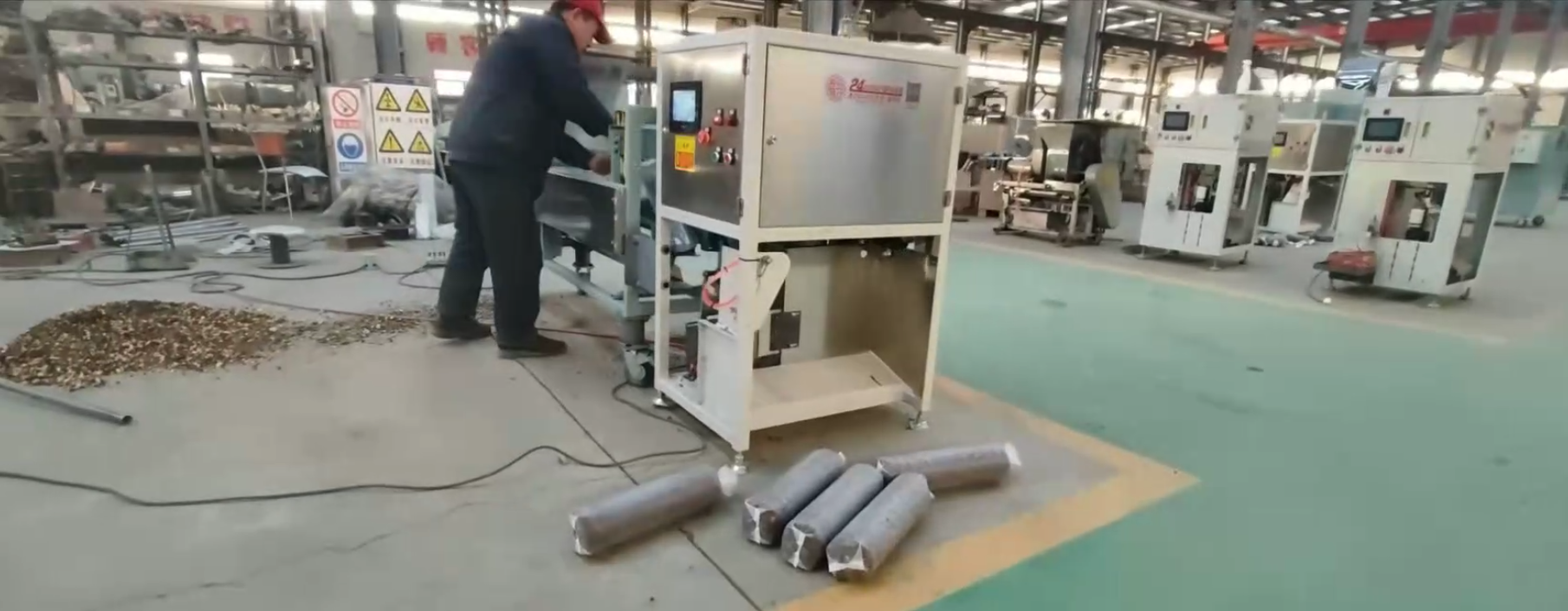
Automatic bagging line handling oyster mushroom substrate. (Image credit: Changxing Edible Mushroom Machinery)
Total Cost of Ownership: More Than Bag Price
While manual bagging requires negligible capital investment, it carries high variable costs—recruitment, training, overtime, and quality losses due to human error. Automated bagging shifts costs to the upfront equipment purchase, but the recurring savings from labor and waste reduction produce a typical ROI within 12–18 months for operations exceeding 5,000 bags per day. Changxing's CE-certified production lines (Certificate No. M.2026.206.C135928) are designed for continuous, stable operation with low energy consumption, further lowering per-bag costs.
Another hidden cost of manual bagging is quality inconsistency: bags may vary in weight, seal strength, and fill density, leading to uneven mycelium growth and lower yields. Automated systems provide uniform bag parameters, improving crop consistency and reducing post-harvest inspection expenses.
Risk & Safety Considerations
Automated bagging machinery introduces mechanical risks such as jamming and operator injury. To mitigate these, Changxing integrates safety guards, emergency stops, overload protection, and warning labels. Operators receive strict safety training and regular maintenance schedules. Manual bagging, while mechanically simpler, exposes workers to repetitive strain injuries and higher physical fatigue, which can lead to turnover and compensation costs.
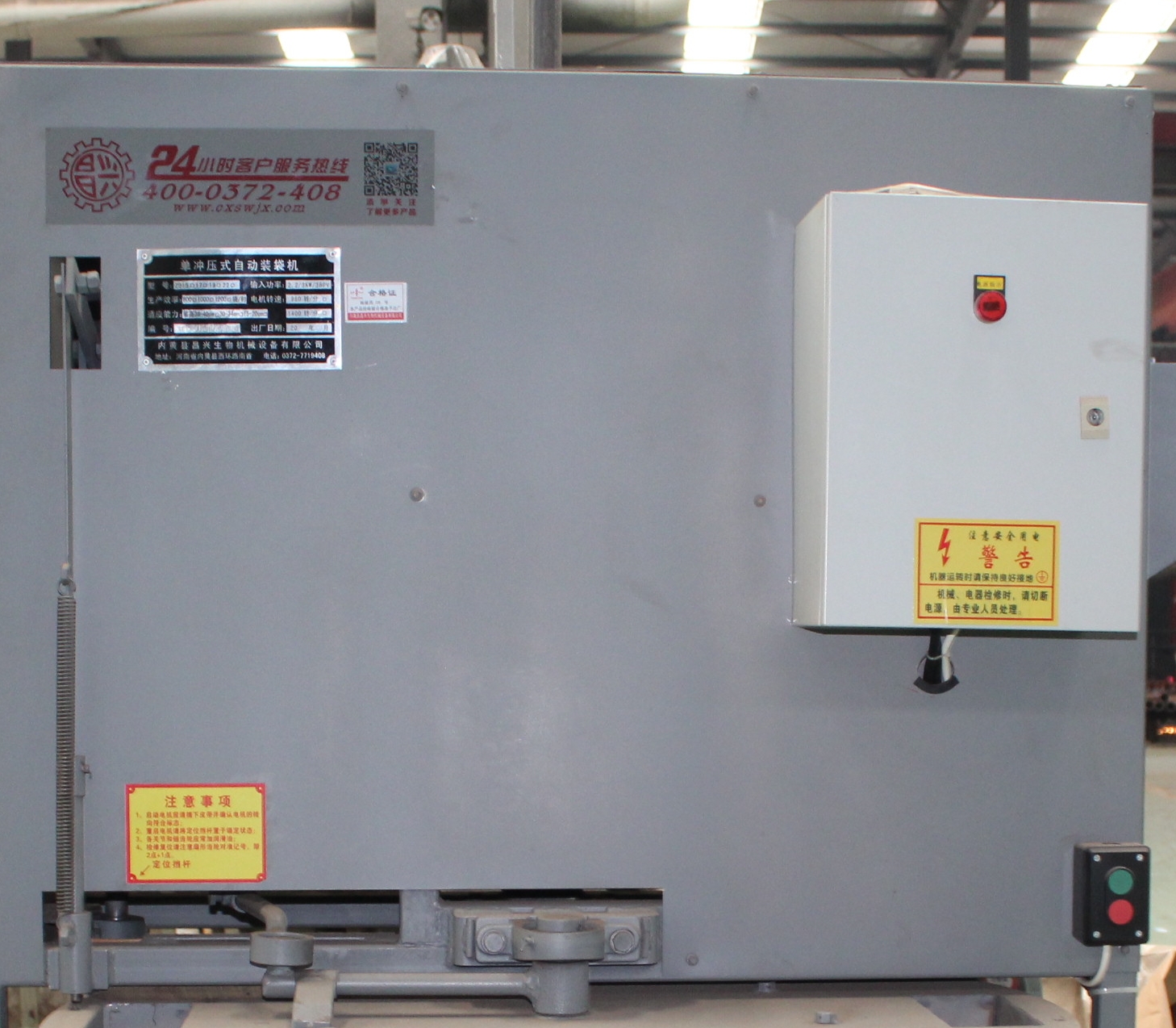
Safety labels and emergency stop mechanisms are standard on Changxing equipment.
Market Trend: Automation as a Competitive Necessity
The global mushroom equipment market reached USD 3.8 billion in 2025 and is projected to grow to USD 7.2 billion by 2033 (Dataintelo, 2026). Asia-Pacific holds a 42.3% revenue share, driven by China's large-scale cultivation base—valued at over USD 53 billion (380 billion yuan) in 2024, accounting for more than 70% of global output. As labor costs rise and quality standards tighten in export markets, automation shifts from a competitive advantage to a baseline requirement for commercial farms.
Changxing exports 60% of its output to South Korea, Malaysia, Central Asia, Europe, and Russia, reflecting international acceptance of its automated solutions. The company's equipment is suitable for factory cultivation of shiitake, oyster, black fungus, enoki, pleurotus eryngii, white fungus, and other varieties.
Honest Limitation of Automation
Despite its advantages, automated bagging requires higher upfront capital investment (USD 20,000–100,000+ for a complete production line) and dedicated maintenance personnel. For very small farms (under 2,000 bags/day), manual bagging may remain cost-effective. Changxing addresses this by offering semi-automatic machines and tailored configurations, enabling gradual migration without full upfront cost.
Future Outlook: From Automation to AI-Driven Mushroom Farming
Changxing is investing in AI-intelligent production lines that integrate sensor-based monitoring, remote control, and predictive maintenance. The next generation of edible mushroom equipment will likely adjust bagging parameters in real time based on substrate moisture, temperature, and variety-specific requirements, further narrowing the gap between manual art and machine precision.
Frequently Asked Questions
1. What is the typical ROI period for switching from manual to automated bagging?
For operations exceeding 5,000 bags per day, ROI is typically achieved within 12–18 months due to 60% lower labor costs and 80% higher output. The exact period depends on local labor rates, production volume, and the specific equipment configuration chosen.
2. Can I customize a bagging line for multiple mushroom species (shiitake, oyster, etc.)?
Yes. Changxing Edible Mushroom Machinery provides customized equipment solutions for cooperatives and industrial farms, adjusting bag tightness, sealing depth, and fill volume based on the specific requirements of shiitake, oyster, black fungus, enoki, and other cultivated varieties.
3. What safety certifications does automated mushroom bagging equipment require for European import?
For CE marking, equipment must comply with the EU Machinery Directive (2006/42/EC) and the EMC Directive (2014/30/EU). Changxing's automatic bagging and production lines obtained CE Certificate No. M.2026.206.C135928 in March 2026.
4. How does the initial cost of an automated line compare to manual bagging stations?
An automated line typically costs between USD 20,000 and 100,000+ depending on capacity and features, while manual bagging requires only labor and low-cost tools. However, automated lines reduce per-bag labor costs by 60% and yield 80% higher throughput, making the investment recoverable within one to two years for medium-to-large farms.
Explore Changxing Edible Mushroom Machinery
For detailed product specifications, pricing, and customization inquiries, visit the official website: www.automushmachinery.com or contact the sales team at nhchangxing@outlook.com / WhatsApp: +86 13103721233.
Have Questions or Need More Details?
Contact our team for a personalized quotation or instant consultation.
Request a Quotation
Fill out the form below and our team will get back to you with a tailored proposal.
WhatsApp Direct Chat
Prefer to chat in real-time? Message us on WhatsApp for instant assistance & quick answers.
- Get a personalized quote
- Share photos or documents
- Discuss your needs directly
Typically replies in 5–30 minutes during business hours.