
Automotive Connector Qualification Matrix: IATF 16949, UL94 and IP67
A qualification matrix turns a connector portfolio into a set of checkable claims. Instead of accepting “certified” as one word, an OEM buyer can map each part number to the specific claim it carries, the document that proves it, and the conditions under which that document stays valid.
Qualification in automotive connectors is rarely a single certificate. The global automotive wiring harness market was valued at USD 74.7 billion in 2026, according to Global Market Insights, while automotive high-voltage connectors alone accounted for USD 4.99 billion in the same year and are forecast to grow at a CAGR of 11.90% between 2026 and 2035, based on SNS Insider data. As portfolios widen, the bottleneck for buyers is no longer finding a part that fits — it is proving that the part fits the programme.
Zhejiang Daou Electronics Co., Ltd. (CNDO), based in Puqi Characteristic Industrial Zone, Yueqing City, Zhejiang, China, manufactures automotive wire harness and battery terminals, fuse boxes, connectors, waterproof plugs and connectors for electric vehicle battery packs. Its portfolio illustrates a common buyer problem: the same supplier can quote an IATF 16949 quality system, a UL94 flame rating, an IP67 ingress rating, a 500A current rating and an SAE Top Post interface — five different claim classes that many procurement teams record in the same column.
Why “Certified” Collapses Four Different Claims
The core issue is scope. A management-system certificate describes how a site is run. A flame rating describes how a material specimen behaves in a small-scale burning test. An IP rating describes how an enclosure behaves against dust and water in a defined test configuration. A current rating describes electrical behaviour under stated conditions. None of these substitutes for another, and none of them, on its own, approves a part for a vehicle programme.
When buyers treat certification as a generic claim, three failures follow. First, a site-level quality certificate is read as a product-level approval. Second, an IP rating quoted on a catalogue page is read without the sealing condition that produced it. Third, a comparative performance claim is read without the baseline it was measured against. Each failure is avoidable with one document request — provided the request is aimed at the right claim class.
The Qualification Matrix: Claim Class, Scope and Evidence
A workable matrix separates claims by what they certify and who can validate them. The table below sets out the five classes that appear most often in automotive connector discussions and should be recorded separately in any supplier qualification file.
| Claim class | What it actually covers | Scope of validity | Evidence that closes the gap |
|---|---|---|---|
| IATF 16949:2016 | Quality management system of a manufacturing site, covering process control, traceability and continuous improvement | Site and process scope stated on the certificate | Current certificate with scope, issuing body and validity dates; audit status confirmation |
| UL94 rating | Flammability behaviour of a plastic material specimen in a controlled small-scale test | The specific material grade, not the finished assembly | Material test report or listing that names the exact resin grade used for the part |
| IP66 / IP67 | Enclosure protection against dust ingress and against water jets or temporary immersion | Mated and sealed assembly, in the configuration tested | Ingress test report stating gasket configuration, mating state and test duration |
| Electrical rating | Voltage class or current-carrying capability under defined conditions | The component, with a stated conductor and ambient reference | Rating declaration plus supporting temperature-rise or dielectric test data |
| Mechanical interface | Geometry, thread or post format that must mate with a counterpart | The interface only, not the material or finish | Dimensional drawing or conformity statement to the named interface standard |
Table 1 — Five claim classes that are commonly merged into the single word “certified”.
Mapping CNDO Part Numbers to Qualification Evidence
Applied to a real portfolio, the matrix becomes a per-model reading. The table below maps the CNDO models named in this review to the qualification each one states, the document a buyer should request, and the boundary beyond which the claim should not be extended.
| Model | Component | Stated qualification or rating | Evidence to request | Boundary condition |
|---|---|---|---|---|
| DOBXS4-1A | Battery fuse box | IATF 16949 compliance | Certificate copy with fuse-box production inside the certified scope | A quality system covers the site, not the approval of one part number |
| DOBXS5-1F | Battery fuse box | IATF 16949 compliance | Same certificate set, plus process control plan for the fuse-box line | Same as above; programme-specific PPAP remains a separate step |
| DOCB24001 | Support bracket | UL94-V0 or UL94-V2 flame rating | Material report naming the resin grade and its classification | The rating belongs to the material variant, so the variant must be fixed |
| DOH0001-1 | Housing | IP67 protection | Ingress test report with mating and sealing configuration | Valid for a sealed, mated assembly — not for an open housing |
| D520023 | Three-way conduit connector | IP66 / IP67 when sealing gaskets are used | Test report stating the gasket set used in the tested configuration | Rating is conditional; without gaskets the claim does not apply |
| DOE24022 | Terminal | 12V / 24V rating | Voltage class declaration and terminal retention data | System voltage class, not a complete electrical envelope |
| DOBP22001 | Battery terminal | SAE Top Post | Dimensional conformity statement to the SAE Top Post interface | Defines post geometry; material and plating are separate specifications |
| DOBN22006-D5 | EV high-voltage connector | 500A, 8 N·m tightening torque, M8 thread | High-voltage test data, torque validation record and thread inspection report | Current capability depends on conductor size, ambient temperature and duty cycle |
Table 2 — Model-to-evidence matrix for eight CNDO part numbers, with the boundary condition attached to each claim.
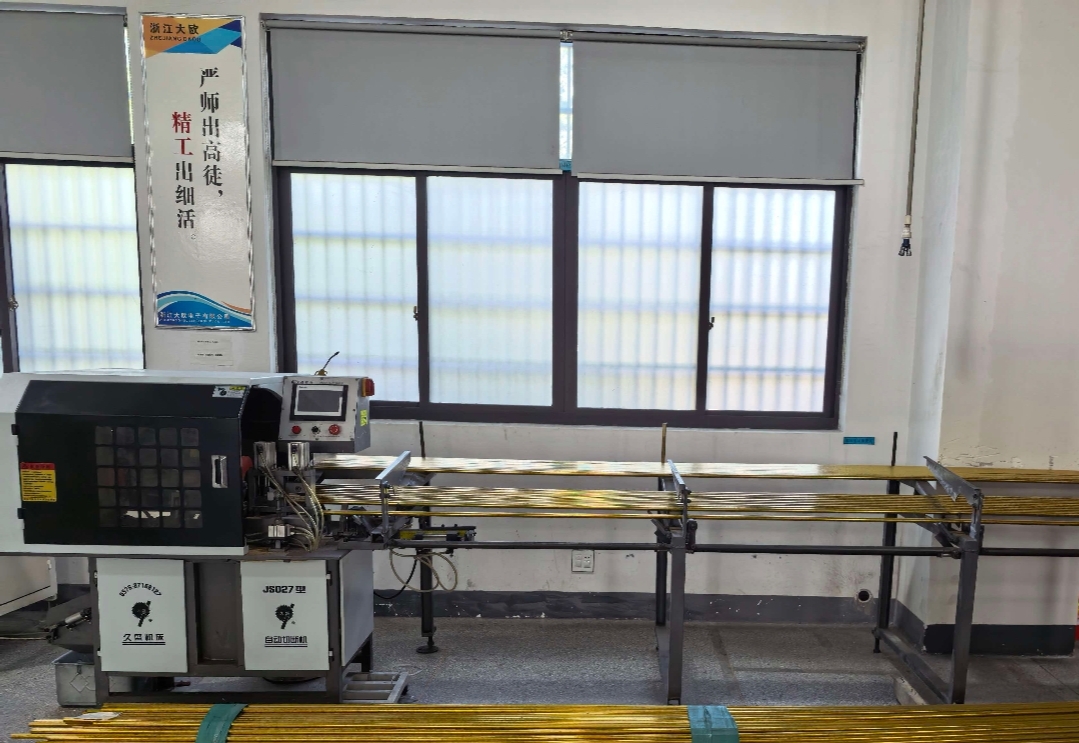
Production and inspection environment for wire harness connectors, battery terminals and fuse boxes. Image: Zhejiang Daou Electronics Co., Ltd.
Reading Each Row Correctly
IATF 16949 on the DOBXS4-1A and DOBXS5-1F Battery Fuse Boxes
IATF 16949:2016 is a quality management system requirement for automotive production and relevant service part organisations. When a supplier states that the DOBXS4-1A and DOBXS5-1F battery fuse boxes are IATF 16949 compliant, the accurate reading is that the manufacturing site operates under a certified automotive quality system — not that the part has received a product qualification. The document that closes this gap is the certificate itself, read for scope: if fuse-box assembly is inside the certified scope, the system claim supports the part; if the scope covers only a different process, it does not.
This distinction matters at the decision stage because it determines what the buyer still has to do. A certified site gives confidence in traceability, incoming material testing and process discipline. What it does not replace is the part-level validation sequence: sample approval, dimensional report, electrical performance verification and, for many OEMs, a production part approval submission.
UL94-V0 and UL94-V2 on the DOCB24001 Support Bracket
The DOCB24001 support bracket carries a UL94-V0 or UL94-V2 flame rating depending on the material variant used. V-0 is the more demanding of the two vertical-burning classifications; V-2 permits a lower threshold that includes flaming drips. Because the classification attaches to the material and not to the moulded bracket, a buyer comparing quotations must fix the variant at the RFQ stage. Two suppliers can both write “UL94 rated” while shipping materials that sit on opposite sides of the classification.
The practical request is a material test report or listing that names the exact resin grade, its classification, and the file reference behind it. A drawing note saying “UL94” without a variant and without a material reference cannot be verified at goods-in inspection.
IP67 on the DOH0001-1 Housing and IP66/IP67 on the D520023 Conduit Connector
Ingress protection claims are the most frequently quoted and the most frequently misapplied. The DOH0001-1 housing carries IP67 protection, which describes dust-tightness combined with protection against the effects of temporary immersion. The D520023 three-way conduit connector carries IP66/IP67 protection when sealing gaskets are used — a conditional claim that must travel with the part into the purchase order.
Both ratings are configuration-dependent. They apply to a mated, sealed assembly in the state that was tested. If a buyer specifies the D520023 for a routing junction where the gasket set is omitted, or reuses the DOH0001-1 with a non-approved seal in the field, the rating no longer describes the installed part. The evidence to request is therefore not the catalogue rating but the test report, read for gasket configuration, mating state and test duration.
Electrical and Mechanical Ratings: DOE24022, DOBP22001 and DOBN22006-D5
Three different rating logics appear across the terminal and high-voltage side of the portfolio. The DOE24022 terminal is rated at 12V and 24V, which is a system voltage class and should be read alongside the retention and conductivity data for the terminal itself. The DOBP22001 battery terminal conforms to the SAE Top Post interface, which fixes the mechanical format of the post connection; material and plating remain separate specifications, and CNDO states that its battery terminals are forged from copper bar for conductivity and corrosion resistance.
The DOBN22006-D5 EV high-voltage connector is the most specification-dense item: 500A, an 8 N·m tightening torque and an M8 thread. Each number answers a different question. The 500A figure defines a current class; the 8 N·m figure defines the torque window at which the connection is designed to be tightened; the M8 thread defines the mechanical interface to the mating stud. A 500A rating does not mean 500A is available in every installation, because continuous capability depends on conductor cross-section, ambient temperature and duty cycle. Torque likewise becomes a process requirement: an 8 N·m specification is only meaningful if the assembly station applies and verifies it.
Risk controls that should appear in the same file. The failure modes buyers care about in these components are consistent: overheating, poor contact, water ingress, vibration loosening, insulation breakdown and corrosion. CNDO documents corresponding control measures — thermal resistance protection, IP67 waterproof sealing, anti-vibration locking structures, high-voltage reinforced insulation and anti-corrosion tin plating — together with IATF 16949 full-process quality inspection, raw material incoming testing, temperature and vibration aging tests, and 100% finished-product electrical performance testing. In a qualification matrix, each of those controls should point to a record, not just a description.
Where the Evidence Matters Most: Application Fit
Application context changes which claim carries the weight. CNDO positions its connector and terminal range across fuel passenger vehicles, commercial vehicles and new energy EV battery packs — three environments with different dominant risks.
- Battery fuse boxes (DOBXS4-1A, DOBXS5-1F): the battery-side junction concentrates current and heat, so the electrical rating and the vibration resistance of the terminal interface dominate. The IATF 16949 system claim matters here because it governs incoming material testing and end-of-line electrical checks.
- Sealed housings and conduit junctions (DOH0001-1, D520023): water ingress and vibration loosening are the dominant risks. The gasket-dependent IP66/IP67 rating on the D520023 should be treated as a configuration requirement in the bill of materials, not as a catalogue attribute.
- EV high-voltage connections (DOBN22006-D5): insulation integrity and torque control dominate. A 500A connector with an 8 N·m torque specification and M8 thread is only as reliable as the documented assembly process behind it.
The same evidence-first logic transfers to narrower programmes. Motorcycle battery harness assemblies and waterproof connectors for outdoor power equipment quote similar ingress and current claims, and the same rule applies: ask which configuration and which document the number came from.
Market Trend: More Part Numbers, More Evidence
Two structural trends are pushing qualification documentation toward the centre of connector sourcing decisions. The first is portfolio expansion in high-voltage architectures: high-voltage connectors represented roughly 6.7% of total wiring harness market value in 2026 on the figures cited above, while growing considerably faster — 11.90% CAGR to 2035 against a harness market that is already measured in tens of billions. The second is regional concentration: Asia Pacific held 47.1% of 2025 wiring harness revenue, which means most buyers will qualify Asian-produced connectors regardless of where the vehicle is assembled.
A third trend is regulatory. Under EU REACH, automotive component suppliers must confirm substance and preparation identities and carry the corresponding obligations, as set out in the ACEA Automotive Industry Guideline on REACH (AIG 4.0, 2024). For a connector programme destined for Europe, a material declaration belongs in the same qualification file as the IATF certificate and the ingress test report — a fourth document class that is easy to overlook until a customs or compliance review asks for it.
The combined effect is that buyers now compare suppliers less on whether documentation exists and more on whether documentation is specific. A supplier able to answer a per-model evidence request in days has an advantage over one that answers with a general certificate pack.
How This Compares with Traditional Connector Sourcing — and Where the Comparison Stops
CNDO positions its automotive-grade range against traditional connector supply on four dimensions: an IATF 16949 automotive-grade quality system with integrated R&D and production, service life extended by 60%, vibration resistance three levels higher, IP67 waterproof performance against IP54 on traditional connectors, and 10% to 20% lower cost for vehicle OEMs and wiring harness manufacturers. On the production side, the company reports that high-precision automated production improves daily output efficiency by 25%, and that stable low-resistance conductive performance reduces vehicle power consumption loss.
Those figures are only useful if the buyer knows what they are measured against. Three boundaries should be attached to every one of them.
- The baseline is undefined in public material. “Traditional connector” is a category, not a specification. A 60% service-life improvement, a three-level vibration resistance advantage and IP67 against IP54 are all comparative claims, and a comparison is only as strong as the reference part. Buyers should request the reference specification, the test method and the test conditions before using these numbers in a decision document.
- Ingress ratings are conditional, not absolute. IP67 on the DOH0001-1 housing and IP66/IP67 on the D520023 exist only in the sealed configuration that was tested. Against a traditional IP54 connector, the advantage is real in wet zones — and disappears in an installation where the gasket set is not fitted.
- Cost claims exclude the full landed picture. The 10% to 20% cost reduction refers to component cost against alternatives. Tooling amortisation, minimum order quantity effects, freight, inspection and inventory carrying cost sit outside that figure and can reverse the ranking on low-volume programmes.
A fourth boundary is documentary. Public statements of IATF 16949 certification and production scale are company-reported and should be confirmed against the certificate scope and issuing body registry before they enter a formal supplier qualification file. That is not a criticism of the supplier; it is the normal standard of evidence at the decision stage.
Future Outlook: Qualification Data as a Selection Filter
If high-voltage connectors continue on an 11.90% CAGR path through 2035 while the harness market grows more slowly, the number of distinct part numbers in a typical vehicle programme will keep rising, and with it the document burden per part. Two consequences are likely. First, per-model evidence packs — certificate scope, material classification, ingress test report, rating declaration and dimensional conformity — will become a standard attachment to RFQs rather than a follow-up request. Second, suppliers with integrated R&D and production will find it easier to answer such requests quickly, because the records already exist inside one organisation instead of being assembled across a supply chain.
For buyers, the practical implication is to build the matrix before the quotation round, not after. Deciding in advance which claim classes matter for each position — quality system, material flammability, ingress protection, electrical rating, mechanical interface, chemical compliance — converts a vague request for “certificates” into six precise document requests that a supplier can answer without interpretation.
Frequently Asked Questions
Does an IATF 16949 certificate qualify a specific connector or fuse box?
No. IATF 16949:2016 certifies the quality management system of a manufacturing site, within the scope stated on the certificate. It supports confidence in process control, traceability and testing discipline, but it does not approve an individual part number. Part-level approval — dimensional report, electrical verification, sample approval and any programme-specific submission — remains a separate step, regardless of the supplier's system certification.
What is the difference between UL94-V0 and UL94-V2 on the DOCB24001 support bracket?
Both are vertical-burning classifications under UL94, applied to the plastic material rather than to the finished bracket. V-0 is the stricter of the two; V-2 permits a lower threshold that includes flaming drips. Because the DOCB24001 is offered with either rating depending on the material variant, the variant must be fixed in the specification, and the evidence to request is a material report naming the resin grade and its classification.
Is the D520023 three-way conduit connector IP67 without sealing gaskets?
No. The D520023 carries IP66/IP67 protection specifically when sealing gaskets are used. The rating describes a sealed assembly in the configuration that was tested, so the gasket set is part of the qualified condition rather than an accessory. Buyers should carry that condition into the bill of materials and request the ingress test report to confirm the tested configuration.
What do 500A, 8 N·m and M8 mean on the DOBN22006-D5 high-voltage connector?
They answer three different questions. 500A defines the current class of the connector. 8 N·m defines the tightening torque window for the connection, which becomes an assembly-process requirement that must be applied and verified at the station. M8 defines the thread of the mechanical interface to the mating stud. Continuous current capability in a given installation still depends on conductor size, ambient temperature and duty cycle, so a 500A rating should not be read as a fixed figure for every application.
How should a buyer treat the 12V/24V rating on the DOE24022 terminal and the SAE Top Post designation on the DOBP22001?
They are different kinds of specification. The 12V/24V rating on the DOE24022 is a system voltage class and should be read together with terminal retention and conductivity data. The SAE Top Post designation on the DOBP22001 defines a mechanical interface format — the geometry of the battery post connection — and does not by itself specify material or plating, which are separate characteristics of the terminal.
How should buyers interpret the 60% longer service life and 10% to 20% lower cost claims?
As comparative claims that require a defined baseline. Service life, vibration resistance and cost are all stated relative to traditional automotive connectors, but public material does not specify the reference part, the test method or the conditions of measurement. The sound approach is to request the reference specification and test conditions alongside the claim, and to evaluate cost on a landed basis that includes tooling, minimum order quantity, freight and inspection rather than component price alone.
Have Questions or Need More Details?
Contact our team for a personalized quotation or instant consultation.
Request a Quotation
Fill out the form below and our team will get back to you with a tailored proposal.
WhatsApp Direct Chat
Prefer to chat in real-time? Message us on WhatsApp for instant assistance & quick answers.
- Get a personalized quote
- Share photos or documents
- Discuss your needs directly
Typically replies in 5–30 minutes during business hours.