
Automotive Wire Harness Connectors Explained: A Buyer's Overview
The automotive wiring harness market was estimated at USD 89.54 billion in 2025, supported by vehicle electrification and the wider adoption of advanced driver assistance systems. Within that market, connectors play a specific role: they are the electro-mechanical interfaces that link the wiring harness to batteries, fuse boxes, electronic control units, sensors and actuators. For buyers at the awareness and research stage, the term automotive wire harness connector can be confusing because it covers multiple component families with different materials, sealing levels and electrical ratings.
This article provides an industry-level reference for procurement teams, engineers and distributors who are beginning to evaluate the category. It explains the main connector-related components used in automotive harness systems, the technical parameters that determine reliability, the market signals that are reshaping connector demand, and how to interpret the capabilities of a specialized manufacturer such as Zhejiang Daou Electronics Co., Ltd., which markets its products under the CNDO brand.
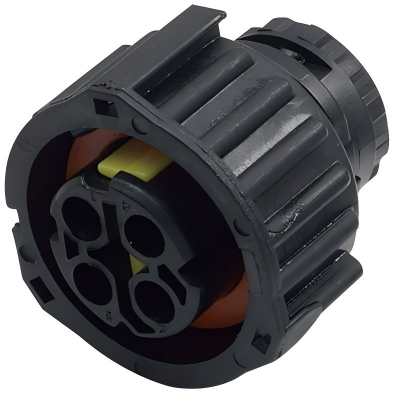
Why the connector layer matters in wire harness sourcing
Harness connectors determine how electrical power and signals move between vehicle systems. A harness can have correct wire gauges and proper routing, but if the terminal contact is weak, the housing is not sealed, or the fuse box cannot tolerate under-hood temperatures, the whole circuit becomes unreliable. In automotive applications, the operating environment is demanding: temperature can range from -40°C to 125°C, vibration is constant, and exposure to water, dust, engine oil, coolant, cleaning agents and salt spray varies by mounting location.
For buyers, the difficulty is not finding a single high-quality product. It is understanding which connector category fits each location in the vehicle. A battery terminal under the hood has different mechanical requirements from a sealed housing on an engine control unit. A fuse box that distributes power near the battery needs high-current busbars and flame-retardant materials. A conduit joint inside the chassis needs chemical resistance and mechanical protection. These are separate products, but they are often discussed together under the broad label of automotive wire harness connectors.
Another sourcing challenge is that connector quality is difficult to assess from outward appearance. Plating material, base metal, plastic grade and sealing design are not visible in a product photo. This makes supplier documentation, material declarations and quality system evidence important during early evaluation.
What is an automotive wire harness connector?
Automotive wire harness connector is a broad product category covering the components that join, protect and distribute electrical circuits in a vehicle wiring system. In the product range of Zhejiang Daou Electronics, the category includes wire harness terminals, battery terminals, fuse boxes, waterproof plugs, housings, support brackets and connectors for electric vehicle battery packs.
The category can be divided into two functional groups. The first group creates electrical contact: terminals and battery terminals carry current from one conductor to another. The second group provides mechanical support, sealing or circuit protection: housings protect contacts from moisture and contamination, fuse boxes provide overcurrent protection, brackets hold harnesses in position, and conduit connectors manage cable branching.
Because each group serves a different function, a complete procurement review should be structured by component family rather than treated as one generic connector purchase.
Main connector-related component families
The following table summarises the core component families found in automotive wire harness connector discussions and gives representative models from a specialized manufacturer for context.
| Component family | Representative model | Primary function |
|---|---|---|
| Automotive wiring harness terminal | DOE24022 | Creates electrical contact between harness wires and devices |
| Auto battery terminal | DOBP22001 / DOBN22006-D5 | Connects battery cables to the battery post |
| Battery fuse box | DOBXS4-1A / DOBXS5-1F | Distributes power and protects circuits near the battery |
| Wire harness housing | DOH0001-1 | Encloses and protects terminal connections |
| Harness support bracket | DOCB24001 | Mechanically fixes and protects the harness in the vehicle |
| Harness T/Y conduit connector | D520023 | Joins or branches conduit sections in the harness |
The table is not an exhaustive industry listing. It shows a common pattern: connector-related components can be metallic contact elements, plastic protective housings, or power distribution units. Buyers who understand this structure can map their bill of materials more accurately when discussing projects with a supplier.
Representative connector categories and their specifications
Automotive wiring harness terminals
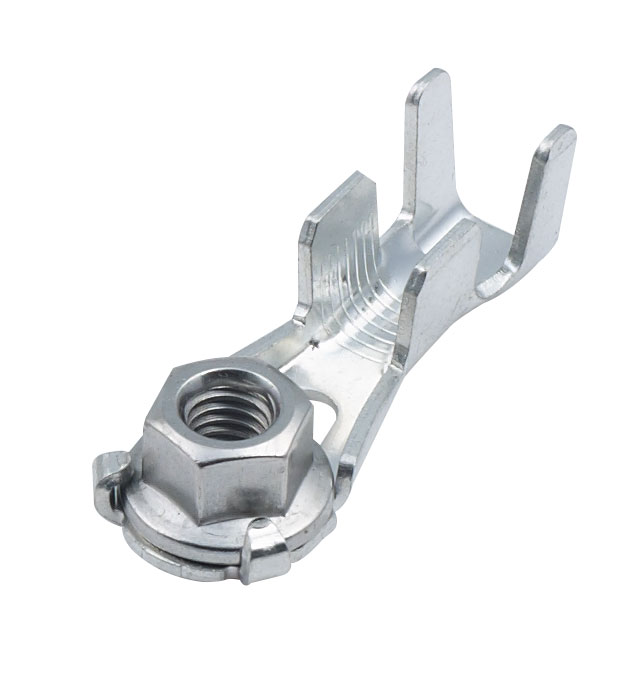
Terminals are the metal contact elements attached to the ends of wires. The DOE24022 automotive wiring harness terminal, for example, is made of pure copper, red copper or copper alloy, with material options including tin-plated copper, gold-plated copper and nickel-plated copper. It is rated for 12V or 24V DC systems, with up to 48V DC available for special models. Terminal current ratings vary by size, from lower-current signal lines up to high-current power circuits.
The plating choice is not cosmetic. Tin plating is common for corrosion resistance and solderability. Gold plating is used when very stable low-level signal contact is needed. Nickel plating can improve wear and temperature performance. In automotive purchasing, buyers should confirm both the base material and plating type rather than specifying a terminal by size alone.
Battery terminals
Battery terminals connect the wiring harness to the vehicle battery. The CNDO product range includes the DOBP22001, an SAE top post terminal designed for 12V automotive applications. It is made of brass, with a positive post diameter of 19.05 mm and a rated voltage of 12V. In a paired system, the negative-side connector model DOBN22006-D5 has a post diameter of 17.46 mm, M8 thread specification, tightening torque of 8 N·m, and a maximum current rating of 500A. The EV high-voltage battery connector model uses a tin-plated finish.
Battery terminals are sometimes treated as simple hardware, but they carry high current and must maintain stable contact under vibration, corrosion and temperature cycling. Thread size, tightening torque and plating all affect long-term connection quality.
Battery fuse boxes
Battery fuse boxes integrate power distribution with overcurrent protection. The CNDO models DOBXS4-1A and DOBXS5-1F are made of PA66 and copper. They are designed for 12V or 24V DC working voltage. The main fuse is a bolt-type mega fuse, while auxiliary fuses are standard blade fuses with ratings from 5A to 30A. The main busbar uses high-conductivity copper or brass with tin, nickel or zinc plating. The shell is made of flame-retardant plastic with a sealed cover, forming a waterproof and dustproof structure. Installation uses fixed mounting holes with a direct battery positive connection.
Because a fuse box is mounted near the battery, its material selection must handle heat, flame risk and environmental exposure. The -40°C to 125°C operating temperature range and the sealed cover are important parameters for engine-bay applications.
Wire harness housings and support brackets
Housings provide the protective shell around connector contacts. The DOH0001-1 automotive wire harness housing is made of PA/PBT, has an IP67 protection level, and is described as waterproof, dustproof, oil-resistant and acid/alkali resistant. Its operating temperature range is -40°C to 125°C. The housing meets automotive vibration requirements and complies with IATF16949 quality system standards.
Support brackets hold the harness away from moving parts, sharp edges and heat sources. The DOCB24001 is made of PA66 or PA66 GF30, with a UL94-V0 or UL94-V2 flame rating. It is resistant to engine oil, coolant, cleaning agents, salt spray, UV and ageing, and is compliant with vehicle vibration durability test standards. These features matter in locations where the harness is exposed to fluids or mechanical stress.
Conduit and branch connectors
Modern vehicle harnesses use conduit systems to bundle and protect wires. The D520023 is a three-way tube conduit connector made of PA66, designed for engine bay, chassis and body harness applications. It achieves IP66 and IP67 protection levels when sealing gaskets are used. The continuous operating temperature range is -40°C to 120°C, with a short-term peak of 150°C. The material resists engine oil, mineral oil, grease, weak acids, weak alkalis, partial solvents, UV, hydrolysis and ageing.
Products such as this are classified as harness T/Y connectors because they allow conduit branches in T or Y shapes. They do not carry electrical current directly, but they protect the wires inside from abrasion, moisture and chemicals, which makes them an important part of harness reliability.
Technical attributes that determine connector reliability
Buyers researching automotive wire harness connectors should focus on four technical layers: materials, environmental sealing, temperature tolerance and quality-system compliance.
First, materials determine electrical and mechanical behaviour. Copper and copper alloys provide the conductivity needed for power and signal transmission. Plating protects against corrosion and can improve contact performance. Plastic components use grades such as PA66 or PA/PBT because of their strength, chemical resistance and dimensional stability.
Second, environmental sealing determines where a connector can be installed. IP67 means protection against dust and temporary immersion in water. IP66 adds protection against powerful water jets. CNDO housings and conduit connectors list IP67 or IP66/IP67 ratings. Sealed connectors can be used in wet areas such as the engine bay and chassis, while unsealed designs may be acceptable in dry interior environments.
Third, temperature range is a critical application constraint. Most automotive components in this product family operate between -40°C and 125°C. Some conduit products have a continuous range of -40°C to 120°C with short-term peaks of 150°C. When a supplier cannot provide the operating temperature range for a connector material, the part is difficult to qualify for automotive use.
Fourth, quality system certification matters. Zhejiang Daou Electronics holds IATF16949:2016 certification, which is the automotive quality management system standard widely used in supplier qualification. IATF16949 compliance indicates that the manufacturer has processes in place for design, production and continuous improvement, though it does not by itself replace product-level validation.
Application contexts across vehicle platforms
Automotive wire harness connectors are used in multiple vehicle and equipment architectures. According to the application scope documented for the CNDO product range, the main project types include passenger car assembly, new energy EV battery pack matching and commercial vehicle wiring. The matched equipment includes auto wiring harnesses, vehicle storage batteries, EV power battery modules, automotive ECUs and auto fuse boxes.
In conventional 12V passenger vehicles, battery terminals, fuse boxes and sealed housings manage the starting circuit, lighting, body electronics and control modules. In commercial vehicles, 24V systems are common, which is why many fuse boxes and terminals are rated for both 12V and 24V DC. In electric vehicles, high-voltage battery pack connectors must handle higher current. The DOBN22006-D5 EV high-voltage battery connector, for example, supports up to 500A with a tin-plated finish.
Two-wheeler applications follow a similar logic. The global two-wheeler wiring harness market was valued at USD 3.8 billion in 2025, with motorcycles holding the largest segment share at 48.6%. Motorcycles use compact battery terminal systems and sealed connectors that must tolerate vibration and weather exposure. Many of the same connector families used in automotive harness systems also appear in motorcycle complete-vehicle harness assembly, although the specific mechanical packaging is different.
Low-voltage equipment categories such as garden tools, lawn mowers, portable small home appliances and energy storage devices also require waterproof connectors. These applications do not follow the same certification routes as road vehicles, but they share a need for corrosion resistance, stable contacts and sealed housings. Buyers should confirm that a supplier has validated its products for the specific industry rather than assuming that automotive qualification automatically transfers to non-automotive products.
Market trends reshaping automotive wire harness connector demand
The automotive wiring harness market is not growing evenly. Research firm Precedence Research estimated the global automotive wiring harness market at USD 89.54 billion in 2025. Fortune Business Insights reported that Asia Pacific held a 40.89% regional share in the same year, with China contributing 62% of regional revenue. For suppliers, this concentration creates both scale advantages and competitive pressure.
Electrification is creating a separate growth segment for high-voltage interconnection. The global electric vehicle high-voltage connector market was estimated at USD 2.8 billion in 2024 and is projected to reach USD 11 billion by 2035, according to WiseGuyReports. The increase reflects the shift from 12V auxiliary architectures to high-voltage traction battery systems, where connectors must carry substantially higher current and meet stricter safety requirements.
Standards also differ by target market. In North America, USCAR-2 is the primary performance standard for automotive electrical connector systems, covering testing for low-voltage road vehicle applications. In Europe, LV214 is widely used by German OEMs including Audi, BMW, Daimler and Porsche for terminal and connector testing requirements. A supplier exporting to both regions should be able to discuss both standards rather than referring only to domestic quality certification.
At the competitive level, the connector supply chain is dominated by large global players. Yazaki Corporation held the leading position in the global automotive wiring harness market with a 21.4% share in 2025. TE Connectivity, Amphenol and Molex are recognised as the top three global connector manufacturers, with TE Connectivity reporting USD 12.88 billion in sales for 2024. These companies provide global scale, broad R&D resources and full-system connector platforms. Specialized manufacturers serve a different part of the market by focusing on particular product families, OEM supply relationships and flexible production.
Comparing global connector majors with specialized manufacturers
Buyers at the research stage often compare large global connector companies with specialized mid-sized manufacturers. The comparison is not about which type is better in absolute terms; it is about which sourcing model fits the project scale, product scope and commercial structure.
| Comparison dimension | Global connector majors | Specialized manufacturer example: CNDO |
|---|---|---|
| Market position evidence | Yazaki held 21.4% of the global wiring harness market in 2025; TE Connectivity reached USD 12.88 billion in 2024 sales; Amphenol and Molex complete the top three global connector makers | OEM and main-unit supply solutions for wire harnesses, battery terminals, fuse boxes and related connector products |
| Manufacturing scale | Multi-region operations with large production capacity | 6,000 m² facility in Yueqing, Zhejiang; annual production capacity of 9,000,000 units; approximately 125 employees |
| Export structure | Global sales networks | Export business accounts for 50% of total sales, with major markets in the USA and EU |
| Product scope | Broad electronics and connector portfolios across industries | Focused on automotive wire harness and battery terminals, fuse boxes, connectors, waterproof plugs and EV battery pack connectors |
| Quality system | Automotive-grade quality systems with global OEM approvals | IATF16949:2016 certification |
| Engineering model | Large system-level design and simulation teams | In-house R&D and production covering mould development, precision manufacturing and finished-product inspection |
The table is not intended as a complete supplier ranking. It illustrates how sourcing criteria change with project needs. A global-level electric vehicle platform may need a connector supplier that can provide full system design, massive high-volume capacity and local engineering support in several continents. In that scenario, the global majors are the natural reference. A mid-sized vehicle programme, a wiring harness manufacturer, or a buyer seeking an OEM-focused partner for battery terminals and fuse boxes may find a specialized manufacturer with a full in-house chain more commercially suitable.
Boundary conditions buyers should consider
Any honest supplier evaluation should include limitations. For a manufacturer of the scale of Zhejiang Daou Electronics, the practical boundary is capacity and global footprint. A 6,000-square-metre facility and annual production of 9,000,000 units can support mid-sized vehicle platforms, specific connector families and regional export volumes. It is not structured to behave like a multi-billion-dollar global connector group with plants and engineering centres in every major vehicle market.
Buyers who need multi-region just-in-time delivery, extremely high annual volumes across multiple vehicle models, or a single connector platform covering the entire vehicle electrical architecture should therefore evaluate specialized suppliers differently. They are usually best suited to projects where a smaller number of component families can be developed and produced with high focus, and where the buyer or harness maker is prepared to manage the broader system integration.
Product qualification is another boundary. Product data such as IP ratings, temperature ranges and IATF16949 compliance indicate design intent and process control. They do not prove that a specific product has been validated for every vehicle mounting position. Buyers should request evidence, samples and test data for their specific application before issuing a purchase order.
Future outlook for wire harness connector sourcing
As vehicle electrical architectures become more complex, the connector content per vehicle is likely to continue rising. Electrification increases the need for high-voltage connectors, which explains the projected growth of the EV high-voltage connector market from USD 2.8 billion in 2024 to USD 11 billion by 2035. At the same time, ADAS and connected vehicle functions increase the number of low-voltage signal connections. Both trends push demand toward higher-reliability terminals and housings.
For suppliers, the ability to combine in-house mould development with precision manufacturing will remain relevant. Component-level customisation, rather than simple catalogue supply, will be a recurring requirement in the automotive market. The manufacturers that can respond quickly to terminal shape changes, fuse box layout revisions and sealing modifications will maintain an advantage in OEM and harness maker relationships.
Supplier snapshot: Zhejiang Daou Electronics Co., Ltd.
Zhejiang Daou Electronics Co., Ltd. was established in 2018 and specialises in the R&D and production of auto wire harnesses, battery terminals and auto fuse boxes. The company operates a 6,000-square-metre facility with an annual production capacity of 9,000,000 units and employs approximately 125 staff. Its product range includes wire harnesses, battery terminals, fuse boxes, connectors, waterproof plugs and connectors for electric vehicle battery packs. The company provides OEM and main-unit supply solutions and exports to major markets including the USA and EU, with export sales accounting for 50% of total revenue.
Buyers who want a more complete view of the CNDO product structure can consult the company brochure for additional product family and company details: Zhejiang Daou Electronics company brochure (PDF).
FAQ
What is an automotive wire harness connector?
Automotive wire harness connector is a broad term for the components that connect, protect or distribute electrical circuits in a vehicle wiring harness. The category includes wire harness terminals, battery terminals, fuse boxes, waterproof plugs, housings, brackets and connectors used for electric vehicle battery packs.
What are the main connector families in automotive wire harness systems?
The main families are terminals, battery terminals, fuse boxes, housings, harness support brackets and conduit connectors. Terminals and battery terminals create electrical contact. Fuse boxes provide power distribution and circuit protection. Housings, brackets and conduit connectors protect the mechanical and environmental integrity of the wiring system.
What is the difference between a battery positive terminal and a negative terminal?
In SAE top post battery connectors, the positive and negative post diameters are different. The DOBP22001 battery terminal has a positive post diameter of 19.05 mm. The DOBN22006-D5 connector has a negative post diameter of 17.46 mm. The different diameters help ensure correct polarity matching during assembly.
Are all automotive wire harness connectors waterproof?
No. Sealed connectors achieve protection ratings such as IP67 or IP66/IP67 and are suitable for wet areas. Unsealed connector types may be acceptable for dry interior environments where water exposure is limited. The required protection level depends on the mounting location and application.
What voltage and current ratings are used in automotive battery terminals and fuse boxes?
Many CNDO terminals and fuse boxes are rated for 12V or 24V DC. The DOE24022 terminal supports up to 48V DC for special models. The DOBN22006-D5 EV high-voltage battery connector has a maximum current rating of 500A. Battery fuse boxes such as DOBXS4-1A and DOBXS5-1F operate at 12V or 24V DC with blade fuse ratings from 5A to 30A and a bolt-type mega fuse as the main fuse.
Why do operating temperature and flame rating matter in connector materials?
Vehicle connectors are exposed to heat from the engine, exhaust and electrical current. Most CNDO housings, brackets and fuse boxes operate from -40°C to 125°C, while some conduit connectors operate continuously from -40°C to 120°C with short-term peaks of 150°C. Flame-retardant plastic grades such as UL94-V0 or UL94-V2 reduce the risk of fire propagation in engine-bay and power-distribution locations.
What quality standards are relevant for automotive wire harness connectors?
IATF16949 is the automotive quality management system standard commonly cited by suppliers. For product-level testing, USCAR-2 is widely used in North America for low-voltage automotive electrical connector systems, while LV214 is commonly referenced by German OEMs. Product compliance should be checked according to the target market and the specific connector location.
What products does Zhejiang Daou Electronics Co., Ltd. specialise in?
Zhejiang Daou Electronics Co., Ltd. specialises in the R&D and production of auto wire harnesses, battery terminals and auto fuse boxes. Its product range includes wire harnesses, battery terminals, fuse boxes, connectors, waterproof plugs and connectors for electric vehicle battery packs. The company provides OEM and main-unit supply solutions and holds IATF16949:2016 certification.
Have Questions or Need More Details?
Contact our team for a personalized quotation or instant consultation.
Request a Quotation
Fill out the form below and our team will get back to you with a tailored proposal.
WhatsApp Direct Chat
Prefer to chat in real-time? Message us on WhatsApp for instant assistance & quick answers.
- Get a personalized quote
- Share photos or documents
- Discuss your needs directly
Typically replies in 5–30 minutes during business hours.