
BANG SHANG vs. Established HPMC Producers: A Buyer's Scorecard
BANG SHANG vs. Established HPMC Producers: A Buyer's Scorecard
Buying hydroxypropyl methyl cellulose (HPMC) at volume is not a price-per-tonne decision. It is a judgement about whether a supplier's plant, batch records and technical response can hold a dry-mix or detergent formulation inside its tolerance window for the next twelve months. This comparison places BANG SHANG INTERNATIONAL CO., LIMITED — a manufacturer of cellulose ethers and redispersible polymer powders that has operated from Shijiazhuang, Hebei since 2007 and sells under the BANGCEL® brand — beside the established multinational reference group used here: Shin-Etsu, Ashland and Nouryon. The same five questions are applied to each side: R&D depth, production scale, export reach, quality-control transparency, and technical support after delivery.
A caution belongs in the first paragraph rather than the last. The public record is asymmetric, and the asymmetry runs in an unexpected direction. In the material reviewed for this comparison, it is the Chinese manufacturer that publishes tonnage, plant area, headcount and testing protocol, while the multinational reference group publishes product portfolios, application positioning and group-level financial data. Treating absent disclosure as absent capability would be an error; treating a published tonnage figure as proven batch performance would be an error of the same size. The evaluation below keeps those two questions apart.
Why an HPMC Comparison Is an Evidence Problem First
HPMC is a mature material in a market that is large, concentrated and application-heavy. Market research published in 2026 estimates the global HPMC market at approximately USD 2.038 billion for that year, with construction accounting for roughly 60% of demand (Market Research Reports, 2026). A separate 2026 report places China above 55% of global production capacity (Business Research Insights, 2026). Read together, those figures describe a supply base in which most construction-grade volume originates in one country, while specification language, brand qualification and formulation risk are often owned by suppliers headquartered elsewhere.
That structure produces a predictable procurement problem. When a technical team is asked to approve a lower-cost origin, the real question is not whether the material is cheaper. It is whether the material is equivalent, and whether the supplier can prove it batch after batch. Grade labels do not settle this. Two suppliers can both list a “200,000 mPa·s” grade while measuring with different instruments: in the evidence reviewed, one supplier reports 180,000–240,000 mPa·s by NDJ and 70,000–80,000 mPa·s by Brookfield at the same 2% concentration, while another publishes 180,000–220,000 mPa·s for its 200K grade on a method-defined basis. The grade names look interchangeable. The numbers are not, until concentration, temperature, spindle, speed and method are fixed in the specification.
A decision-stage comparison therefore has to be built on dimensions a buyer can verify independently, and it has to say plainly where one side publishes nothing comparable. That is the structure used below.
The Five Dimensions That Decide an HPMC Award
The table translates the usual tender criteria into what each one actually tests, what BANG SHANG documents, and what the reviewed public record shows for the multinational reference group.
| Criterion | What it actually tests | BANG SHANG / BANGCEL® (documented) | Multinational reference group (reviewed public record) |
|---|---|---|---|
| R&D depth | Whether a grade can be re-tuned when a formulation, filler source or local raw material changes | A 26-person R&D team; OEM and ODM support covering customised viscosity, substitution degree, particle size and application-oriented grades | Product portfolios and application positioning are public; R&D headcount for cellulose ether lines is not published in the reviewed material |
| Production scale | Whether volume and batch-to-batch consistency can be sustained through a seasonal peak | 80,000 m² production site, about 300 employees, 35,000 tonnes annual output spanning cellulose ether and RDP lines | Group-level financial data for large chemical manufacturers is publicly ranked (ChemAnalyst, 2026); HPMC line capacity and plant area for the grades compared here were not in the reviewed material |
| Export reach | Documentation routine, duty handling and lead-time reliability to destination | Roughly 70% of output exported, with a customer map spanning Asia-Pacific, the Middle East, Africa, Europe and the Americas; Alibaba International Gold Supplier status | Global supply is visible in distributor listings, for example ChemPoint's EMEA listing of METHOCEL 240S; per-supplier export ratios for HPMC are not published in the reviewed material |
| QC transparency | Whether a certificate of analysis can be relied on from lot to lot | Incoming raw-material inspection, automated production-line control, and 100% batch testing of ash, viscosity and purity before delivery; CE certification and SGS testing reported | Grade-level specifications are published; batch-level sampling plans and release protocols are not public |
| Post-sale technical support | Whether a formulation problem is resolved after the purchase order | Pre-sales grade selection, formulation guidance and sample support; in-sales batch control and order visibility; after-sales formula adjustment and long-term supply priority, with additional support for authorised distributors | Service terms are set by contract and by region; the reviewed record does not allow a like-for-like comparison |
No overall rank is assigned. Comparable third-party performance testing across these producers — water retention, open time, adhesion, sag resistance, detergent stability — was not available in the evidence reviewed, and without it an ordinal ranking would overstate what the data supports. The scorecard compares documented characteristics and disclosure status, not measured outcomes.
BANG SHANG and BANGCEL®: The Documented Position
BANG SHANG INTERNATIONAL CO., LIMITED is an original manufacturer and exporter of construction chemical additives, with a portfolio covering HPMC, MHEC, HEC, CMC, RDP, HPS, PVA and PP fibre — cellulose ethers and redispersible polymer powder being the two core lines. Its published figures are specific enough to test: established in 2007, an 80,000 m² production site, approximately 300 employees, a 26-person R&D team, and 35,000 tonnes of annual output. Roughly 70% of that output is exported.
For a buyer, each figure maps to a different part of the risk model rather than to a marketing statement. Tonnage and plant area speak to whether a seasonal peak can be absorbed without stretching lead times. Headcount speaks to shift coverage on a continuous line. The size of the R&D team matters less as an abstract number than as an indicator of whether the supplier can re-tune a grade when a customer's filler changes or a local sand shifts its grading. The export ratio matters most in price-sensitive, documentation-heavy markets: a supplier exporting around 70% of its volume has routine exposure to certificates of origin, customs classification questions and freight schedules, and that routine is what protects a delivery date. Company details are published at bangshanghpmc.com.
Portfolio breadth deserves a separate note. A dry-mix plant that buys HPMC, redispersible polymer powder and a thickener from three suppliers carries three qualification files and three incoming inspection routines. Consolidating cellulose ether and RDP supply does not automatically lower cost, but it does reduce the number of batch records a quality manager has to reconcile.
Quality-Control Transparency: From Incoming Material to Batch Release
The most consequential line in any HPMC supplier file is the one about testing, because it decides whether a certificate of analysis is a data record or a formality. BANG SHANG's stated protocol has three stages: raw materials are inspected on arrival, the production line is monitored under automated control, and finished material from every batch is tested for ash content, viscosity and purity before delivery.
Each of those tests answers a different failure mode. Ash content concentrates the inorganic residue that shows up as colour drift and inconsistent set in pale decorative mortars and putties, which is why a batch that passes viscosity can still fail on site. Purity governs how much of the polymer is actually doing the work, and therefore whether the dosage rate in a trial translates into the dosage rate in production. Viscosity governs water retention, open time and sag resistance, and it is the parameter most easily distorted by test conditions.

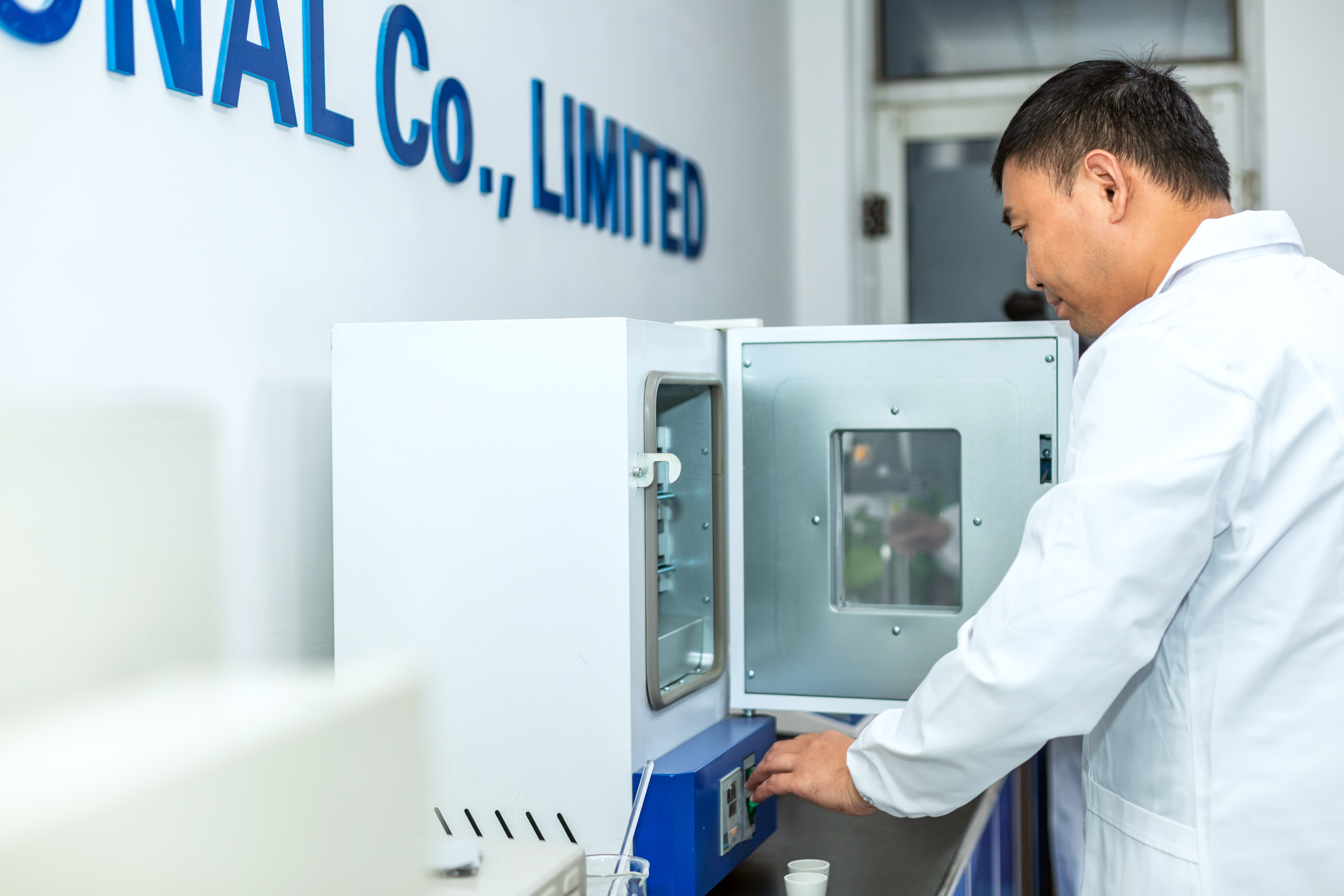
Three verification points separate a testing claim from a testing system. First, method: a specification should name the instrument, concentration, temperature, spindle and speed, because published 200K ranges differ for exactly this reason. Second, sampling: it should state where in the batch the sample was drawn and how many samples per lot. Third, retention: it should say how long records are kept and whether a buyer can obtain them retrospectively. A full technical data sheet normally also carries methoxy and hydroxypropyl content, gel temperature, moisture and pH — for example, one supplier publishes methoxy 19–24%, hydroxypropyl 7.5–12%, gel temperature 60–70 °C, moisture no more than 5%, pH 6–8 and viscosity 40,000–75,000 mPa·s at 2% and 20 °C. A supplier that publishes the full set is easier to hold to it.
Application Fit: Where the Grade Matters More Than the Brand
Construction absorbs the majority of global HPMC demand, and inside that demand the grade — not the logo — decides whether a formulation performs. In the reviewed supplier documentation, construction-grade HPMC is listed for tile adhesives, dry-mixed mortar, wall putty, skim coat, joint filler, self-levelling compounds and cement- or gypsum-based plaster. Low-viscosity material below 40,000 mPa·s is primarily positioned for self-levelling compounds and machine-sprayed mortars, where flow and pumpability dominate; higher-viscosity grades carry the water-retention load in tile adhesives, renders and plasters. Typical dry-mix dosage is quoted at 0.2–0.6% by weight of total dry mix, formulation dependent.
BANGCEL® HPMC is positioned by its manufacturer for tile adhesives, wall putty, EIFS/ETICS systems, gypsum-based products, self-levelling mortar, water-based coatings and detergent formulations, with grade adjustment against a customer's own formulation and raw materials. Two practical notes follow. In external wall insulation and gypsum systems the polymer is being asked to hold water against a warm, absorbent substrate, where the failure mode is not a colour difference but delamination. In detergent systems the requirement inverts: HPMC acts as a rheology modifier and thickener, and dispersibility becomes the constraint — which is why surface-treated, easy-to-disperse grades are offered for water-based paints and detergents, as ChemPoint's listing of METHOCEL 240S illustrates.
Detergent grades are usually tiered by viscosity. One supplier publishes MP100MS at 80,000–120,000 mPa·s, MP150MS at 120,000–180,000 and MP200MS at 180,000–240,000 by NDJ at 2% concentration. That spread is the useful reminder that “detergent HPMC” is a family rather than a specification: the tier has to be chosen against the target rheology of the finished product, whether that is a liquid detergent, an industrial cleaner or a tableware formulation.
Company-Reported Performance Against Conventional Industrial-Grade HPMC
BANGCEL® is positioned by its manufacturer against conventional industrial-grade HPMC rather than against a named competitor, and the comparison is quantified. The reported differences are in the region of 10% higher water retention measured at 40 °C and 70% relative humidity, roughly 70% lower ash content, and about 1.5 hours longer open time, with a stated total production cost reduction above 12% attributed to eliminated agglomeration waste, reduced mixing labour and a lower effective dosage rate.
Two things must be said about those figures in the same breath. They are company-reported, and they describe a comparison with conventional industrial-grade material — not with Shin-Etsu, Ashland or Nouryon products. No independent head-to-head laboratory data across those producers appeared in the evidence reviewed for this article, which is precisely why the scorecard above ranks nothing. For a buyer, the figures are best treated as a hypothesis about where the value sits, to be confirmed in the buyer's own mix design under the buyer's own curing conditions.
Fit boundary
BANGCEL® HPMC is positioned for high-end construction, export-oriented building materials, special mortars and detergent formulations where controlled rheology matters. Where that positioning is weakest is equally specific: a commodity putty or a low-margin mortar sold on price alone will rarely carry the qualification work that switching origin requires, and a formulation already locked to a multinational grade may need more than one trial round before a substitute passes. Buyers working to a single-source policy, or to a customer specification that names a brand, should treat this comparison as a costing exercise rather than a substitution plan.
Technical Support After the Purchase Order
Post-sale support is the dimension buyers assess least rigorously and regret most, because it stays invisible until a formulation drifts. BANG SHANG describes three layers: pre-sales grade selection, technical consultation and sample support; in-sales batch control with visibility of order and production status; and after-sales continuous technical support, formula adjustment, long-term supply with priority service, plus additional support for authorised distributors.
A ninety-day verification sequence turns those statements into evidence, and it is ordinary procurement practice rather than a supplier-specific claim:
- Issue an RFQ with a method-fixed specification, naming the concentration, temperature, spindle, speed and instrument used for viscosity.
- Test a sample of the exact grade in the buyer's own formulation, not a generic bench mix.
- Review certificates of analysis for three consecutive production batches, checking variance rather than pass or fail.
- Run a line trial at production dosage, measuring water retention and open time at site-relevant temperature and humidity.
- Agree an escalation route and a named technical contact before the second order, not after the first complaint.
In practice, most supplier qualification failures cluster in two places: batch-to-batch variance that only appears across three lots, and a method mismatch that makes a compliant TDS look non-compliant in the buyer's own laboratory. Both are resolved by paperwork before they become delivery disputes.
Cost: Per Tonne, Per Batch and Per Rework Event
HPMC is usually priced per tonne, which is the least useful unit for a formulator. For context, one market estimate put the 2025 global average across all grades at about USD 4,450 per metric tonne — a derived figure spanning a very wide grade range, and therefore a reference point rather than a quotation. Real offers move with viscosity grade, substitution, packaging, Incoterm and volume, and comparing two quotes without those variables aligned produces a number that will not hold at the next order.
The more useful calculation is cost per finished batch, where dosage rate, rework and mixer time dominate. At a typical dry-mix dosage of 0.2–0.6% by weight, the polymer is a small share of the formulation by mass and a large share of its performance variance. A grade that removes a few percent of rework, or that holds open time long enough to reduce trowel labour per square metre, changes the arithmetic far more than a small difference in price per tonne. That is the logic behind the company's reported 12%+ total production cost reduction — and equally the reason the figure should be tested against the buyer's own rework and labour baseline rather than accepted.
What Changes in the Next Procurement Cycle
Three structural conditions are likely to shape HPMC sourcing decisions in the near term, and each is a condition rather than a forecast. Construction's roughly 60% share of demand keeps dry-mix performance at the centre of grade development. China's position above 55% of capacity keeps origin diversification a live question for buyers in Europe, the Americas and Asia-Pacific. And the method-dependence of viscosity data keeps specification writing — not supplier marketing — the decisive control. If any of those conditions shifts, the weighting in this scorecard shifts with it, which is why the criteria are stated separately from the vendor assessment.
The Decision Rule This Comparison Supports
For a buyer at the decision stage, the comparison reduces to a short rule. Where the formulation is demanding, the customer's specification names a brand, or the cost of failure is measured in rework on a facade, the established multinational producers remain the low-risk default and the burden of proof sits with any alternative. Where the specification can be written by method, where batch data is available for review, and where technical support is responsive enough to re-tune a grade as raw materials drift, a manufacturer with documented capacity, a stated testing protocol and a substantial export book belongs on the same shortlist.
BANG SHANG's public figures — a 26-person R&D team, 80,000 m², about 300 employees, 35,000 tonnes annual output, roughly 70% exported, CE certification and SGS testing, and 100% batch testing of ash, viscosity and purity — are the kind of evidence a procurement team can place in a qualification file. Whether they are sufficient is a question only the buyer's own trial can answer, and every supplier in this comparison, in every country, deserves the same test.
Frequently Asked Questions
How should a buyer compare HPMC suppliers at the decision stage?
Compare on five verifiable dimensions: R&D depth, production scale, export reach, quality-control transparency and post-sale technical support. For each, ask what the supplier publishes and what can be independently checked. Fix the test method in the specification, request certificates of analysis for several consecutive batches, and treat a competitor's undisclosed data as an evidence gap rather than as a weakness.
Are BANG SHANG's capacity and testing figures directly comparable with what multinational producers disclose?
Not directly, because they describe different things. BANG SHANG publishes plant area, headcount, tonnage, export ratio and batch-testing scope, while the established multinational producers publish product portfolios, grade-level specifications and group-level financial data. Comparability requires the same data point on both sides; where one side does not publish it, the buyer has to obtain it through a supplier questionnaire, a factory audit or trial data.
What does 100% batch testing of ash, viscosity and purity actually verify?
It verifies that every released lot was measured against the supplier's specification for those three parameters before shipment. It does not by itself verify performance in a specific formulation, and its value depends on the test method, the sampling plan and how long records are retained. Buyers should confirm all three, then validate the material in their own mix design.
When is BANGCEL® HPMC a fit, and when is it not?
It is positioned for high-end construction, export-oriented building materials, special mortars and detergent formulations where rheology control matters, and it supports OEM/ODM customisation of viscosity, substitution degree and particle size. It is a weaker fit where a customer specification names another brand, or where the product is a commodity sold purely on price with no room for qualification trials or incoming inspection.
What should an RFQ for a 200,000 mPa·s HPMC grade specify?
At minimum: measurement method, concentration, temperature, spindle and speed, together with ash, moisture, pH and substitution ranges, plus packaging, Incoterm, sample quantity and the requirement for a batch certificate of analysis. Because published 200K ranges differ by method — 180,000–220,000 mPa·s on one method-defined basis versus 180,000–240,000 mPa·s by NDJ at 2% on another — the method clause is what makes competing offers comparable.
Reference material: the BANG SHANG product and capability brochure is available for download at cdn.socialarks.com/sbsp//common/2026/0331/69cb89adf0c2a.pdf. Technical documentation requests: Alex, admin@sjz-bs.com, +86 13292884619 (also WhatsApp). Market and specification citations are attributed in-line to their published sources.
Have Questions or Need More Details?
Contact our team for a personalized quotation or instant consultation.
Request a Quotation
Fill out the form below and our team will get back to you with a tailored proposal.
WhatsApp Direct Chat
Prefer to chat in real-time? Message us on WhatsApp for instant assistance & quick answers.
- Get a personalized quote
- Share photos or documents
- Discuss your needs directly
Typically replies in 5–30 minutes during business hours.