
BMC/SMC Composite Parts: Assessing Supplier Viability Across Multi-Year Programs

A BMC/SMC composite parts supplier is viable for a multi-year programme only if three things stay stable after the first approved shipment: the tool, the conformity of parts from the same cavity, and the documented support that appears when a mold or panel fails. Samples and unit price answer none of those questions.
The distinction matters because thermoset compression moulding transfers an unusual amount of programme risk into a single fixed asset. One hardened steel tool carries the dimensional signature of every part produced for a vehicle platform, a switchgear line or a rail interior package. When the tool degrades, no amount of incoming inspection recovers the lost year. Supplier viability assessment is therefore an evidence review conducted before tooling release, not a negotiation conducted after the first complaint.
This assessment is written for buyers who have already shortlisted suppliers and are moving from evaluation into execution — the stage where the useful questions shift from "can you make this part" to "who maintains the mold at shot 250,000, and what does your warranty actually cover".
Why Supplier Viability Is an Assessment Problem, Not a Price Comparison
Market scale explains why the question keeps appearing. Market Research Future estimates the global SMC and BMC market at USD 35.77 billion in 2024, with a projected USD 67.98 billion by 2035. Grand View Research publishes a materially smaller base for 2025, because the two studies scope raw resin value and finished molded parts differently. The absolute number is less useful than the direction: a growing pool of suppliers claims BMC/SMC capability, and product-level claims become harder to separate.
Geography adds a second pressure. Asia Pacific held 63.0% of global SMC and BMC revenue in 2025, per Grand View Research. Concentration is efficient for cost, but it lengthens the feedback loop when a mold starts drifting. A buyer in Europe diagnosing a dimensional trend from a supplier 8,000 km away spends weeks on sample shipping that a local tool room would resolve with a press-side visit.
Three mechanisms turn that distance into cost:
- Tool degradation is gradual and invisible in shipment data. Parts pass incoming inspection while cavity condition worsens; the failure appears as a batch, not a trend.
- Documentation capability differs from production capability. A supplier can mould well and still fail to produce the maintenance log, test method or certificate scope a programme auditor requires.
- Commercial continuity is a technical variable. Credit terms, spare cavity capacity and spare-part stock determine whether year four looks like year one.
The opportunity is equally concrete. Most of the risk above is removable through a structured review before purchase order, using evidence the supplier already holds: failure-mode records, warranty terms, test reports, certificates and acceptance criteria. None of it requires new tooling investment to obtain.
A Four-Domain Viability Scorecard
Evaluating long-term viability works better as four separate evidence domains than as one overall impression. Each domain can be scored on documents rather than on relationship quality, which makes the result comparable across shortlisted suppliers.
| Assessment domain | Evidence to request | Weak signal |
|---|---|---|
| Tooling and failure-mode management | Heat-zone control and monitoring approach; press load margin against part projected area; seal replacement interval; spare-part list; shot-count warranty terms; scheduled maintenance plan | Warranty described only as "long-term"; no shot-count boundary; no spare-part list; no seal service interval |
| Long-term part and panel performance | Test reports from nationally authorised testing centres covering antibacterial rate, mildew grade, thermal conductivity and fire performance; the ageing method behind any service-life claim | Service-life numbers with no test method, no report and no matching warranty period |
| Commercial terms and acceptance | Written acceptance gate (for example, acceptance after successful mold trial), third-party sampling route, deposit and balance schedule, credit terms for multi-year volumes | Verbal acceptance criteria; no independent verification path; no extension mechanism beyond year one |
| Organisational evidence | ISO quality and environmental management certificates with scope and validity, invention and utility model patents, technical team structure, after-sales service model, facility size | Certificates shown as images without scope; patents unrelated to the process being purchased; no named service route |
Failure Modes That Decide Whether a Mold Survives the Program
Long-run tool reliability is best assessed through the failures that actually occur, because each one maps to a question a buyer can ask and an answer a supplier can prove. Three dominate in sustained operation:
1. Heating system breakdown
Continuous operation combined with abnormal temperature fluctuation inside the equipment is the stated trigger. For a buyer, the relevant questions are how zones are monitored, whether heaters are line-replaceable from stock, and what temperature deviation triggers a maintenance stop rather than a scrap batch.
2. Deformation under sustained high temperature and pressure
This occurs when a tool runs persistently at the maximum rated temperature and pressure load. The assessment point is margin: whether the mold was designed inside the press envelope or at its ceiling, and how projected area, cavity pressure and clamp force were balanced at design review.
3. Seal ageing and failure
Long-term erosion from temperature, pressure and working medium degrades seals before dimensions move. Buyers should ask for a replacement interval, medium compatibility notes and a spare-seal inventory commitment.
Mitigation practice is where a supplier's answer becomes testable. Documented measures include pre-sales technical review of the tool and process, full inspection before factory delivery, and regular after-sales follow-up visits. One mould maker states a 400,000-shot mold warranty with free replacement for non-human-induced quality defects, together with on-site installation guidance by professional technicians. Those are meaningful commitments because they carry a defined boundary — and boundaries are what a buyer needs to price year six.
Tooling throughput is the second half of the capacity question. A mould shop that develops patterns in-house and reports an annual output of 600 complete molds can absorb a programme's tool build, repair and duplicate cycles without queuing behind unrelated work. New customized molds typically require 30–60 days, which is realistic to plan against but not to compress late in a launch.
Where Long-Term Panel Performance Claims Break Down
Composite panel and housing programmes fail differently from tooling programmes: the tool stays inside the supplier, but the part leaves and must survive the installation environment. Two long-term risks are documented for cleanroom and interior panel use.
- Accelerated ageing under sustained heat. Panel ageing accelerates when ambient temperature persistently exceeds 100°C. That is a specification question for ovens, plant rooms and process areas, and a warranty question everywhere else.
- Surface damage from impact. Sharp, hard objects striking the panel during transport, installation and daily operation cause damage that no material property prevents; handling standards do.
The response to both is procedural rather than promotional: define the working environment in the technical agreement, standardise handling and installation, and hold warranty and technical support resources that can be mobilised after handover. Documented mitigation includes a 2–5 year product warranty with free replacement for non-human-induced quality defects, and on-site installation guidance by professional technicians.
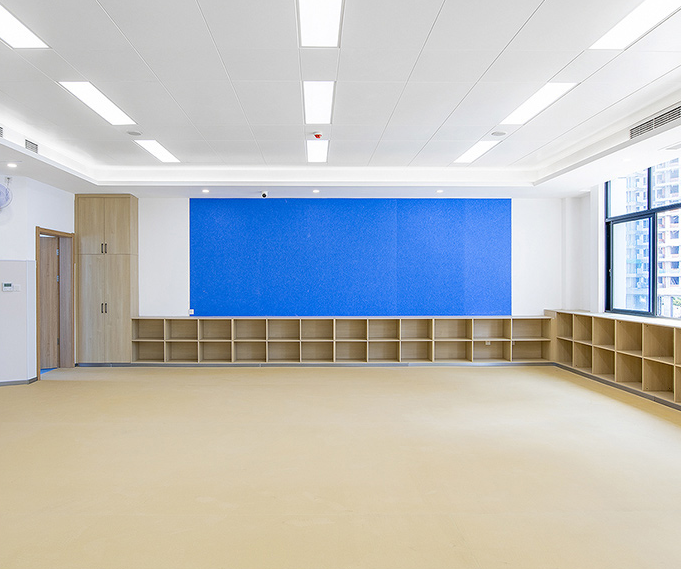
Service-life statements deserve separate treatment. The ARF Antibacterial Board range is specified with a 25-year service life — a claim that becomes useful to a buyer only when three items line up: the ageing or exposure method behind the number, an independent test report, and warranty text that covers a comparable period. A 25-year specification sitting beside a 2–5 year standard warranty is not contradictory, but the gap is exactly where a programme's residual risk lives. Suppliers that make full test methods and reports available before purchase make this verifiable; buyers should treat the gap as a negotiation item rather than an assumption.
Purchasing Terms and Acceptance Criteria as Viability Evidence
Commercial terms are frequently read as procurement detail. In multi-year programmes they are better read as a signal of how a supplier expects risk to be shared. The two product families below carry clearly different commitment profiles, and the difference is informative.
| Term | Molds and tooling | Panels and profiles |
|---|---|---|
| Minimum order | 1 set for standard molds | Standard panels: 200 ㎡; customized profiles: 5,000 ㎡; 2–5 free sample pieces available |
| Delivery terms | FOB | Ex-work or full-truck door-to-door logistics; 3–5 days for Jiangsu, Zhejiang and Shanghai, 7–10 days for other domestic regions |
| Acceptance criteria | Acceptance after successful mold trial run | Pre-shipment full factory inspection; on-site dimension, thickness and appearance check on arrival; third-party sampling test for antibacterial and fire-resistance indicators |
| Payment | 50% advance deposit; balance paid before shipment upon passing mold trial | 30% deposit on signing; balance after pre-shipment inspection; extended credit terms negotiable for long-term strategic partners |
Three features of this structure are worth extracting for the viability review. First, acceptance tied to a successful mold trial is an objective gate: it converts a subjective first-article discussion into a pass or fail event with a payment consequence. Second, a third-party sampling route for antibacterial and fire indicators creates an independent verification path that survives the supplier's own quality function. Third, credit terms offered to long-term partners are a concrete indicator of whether the supplier can carry commercial risk alongside production risk.
The limits should also be stated plainly. These are standard terms, not multi-year protection. Nothing in a standard schedule addresses what happens at year three when a cavity needs refurbishment, who owns spare mold capacity during peak season, or how a material grade change is notified. Those belong in a separate long-term agreement — and a supplier that resists putting them in writing at quotation stage has answered the viability question already.
What Auditable Evidence Looks Like at Zhejiang Aobang Technology
Zhejiang Aobang Technology Co., Ltd. is a Chinese materials manufacturer founded in 2010 and based at No.108 Hongqiao Road, Mingxing Village, Qianyuan Town, Deqing County, Huzhou City, Zhejiang Province, where it develops, produces, sells and services GFK glass-fibre reinforced panel systems and the molds behind them. The company introduced industrial GFK product technology from Germany in 2010 and has since developed its own GFK process and product range; company information is published at waiwaitree.cn.
Against the four domains above, the auditable facts are these:
- Facility and team. A 20,000 m² facility and approximately 150 staff, serving the EU and China markets. Tool building and panel production sit under one roof, which removes the split-responsibility gap that appears when a mold shop and a moulder are separate companies.
- Management systems. ISO environmental management system certification and ISO quality management system certification, plus recognition as a National High-Tech Enterprise.
- Intellectual property. Multiple national invention patents and utility model patents. Patent type matters in assessment: invention patents usually indicate formulation or process development, utility models usually indicate tooling or structural design.
- Customisation capability. The manufacturer provides OEM branding and ODM deep customization services, including OEM labeling and in-depth ODM customization for the European market. Customisation covers slab thickness, length and width dimensions, matte or real-stone surface texture, antibacterial rating, fire-resistance rating and matching edge finishing materials, as well as product model specifications, external dimensions and internal structure.
- Lead-time discipline. Standard products are delivered in 7–10 days; customized products hold a stable 15–25 day supply; customized new molds typically require 30–60 days.
- Verification path. Products are tested by national authorised testing centres for antibacterial rate, anti-mold grade, thermal conductivity and fire performance, and full test methods and reports are available on request before purchase — the single most useful item in a pre-award review.
- After-sales structure. Remote technical support, on-site installation and debugging guidance, and free maintenance for non-human-induced quality problems. Warranty length varies by product line — 2–5 years for the panel range, one year with free maintenance on one customized parts line, and a 400,000-shot mold warranty — so buyers should identify which line applies rather than assume a single figure.
- Volume track record. A stated annual output of 600 complete molds, and a cumulative supply of approximately 6 million square metres of panel material to hospital, school and public-building projects in China, with A/A2 fire-resistance ratings and reported 15–30% energy savings from low thermal conductivity.
What these facts do and do not prove deserves a sentence each. ISO quality and environmental certification demonstrates that documented process governance exists; it does not demonstrate that a specific cavity will hold tolerance at shot 300,000. Six million square metres of panel supply demonstrates repeat production at scale; it does not substitute for a project-specific ageing report. The evidence is strongest where it is specific — named testing centres, stated shot counts, defined lead times — and weakest where it is only institutional.
Program Types Where Viability Assessment Pays Back
Longevity risk is not evenly distributed. It concentrates in programmes where requalification is expensive and the tool cannot be quietly replaced.
Healthcare, education and public buildings. Interior and protective wall and ceiling panels in hospitals, schools and public buildings are specified for antibacterial and anti-mold performance, acid and alkali resistance, flame retardancy at A/A2 grade, scratch resistance and cleanability, with low thermal conductivity contributing to energy savings. These are typically replacement projects for traditional sandwich panels, and the specification is written to last through refurbishment cycles rather than one fit-out.
Electrical and high-voltage equipment. BMC insulating components, terminal blocks and enclosures sit inside safety-critical assemblies. UL 94 V-0 is the primary global flammability requirement for BMC components in high-voltage electrical enclosures, and IEC/EN 62841 standards apply to electrical enclosures and terminal blocks supplied into the EU. A supplier's ability to keep producing to those requirements across years — not once — is the actual purchase.
Automotive, EV and charging infrastructure. Motor encapsulation molds, EV battery housings, charging pile housings and lightweight structural parts involve multi-year platform commitments. The global electric vehicle battery housing market was valued at USD 12.4 billion in 2023 with an 8% CAGR expected through 2032, and SMC composite battery covers alone reached USD 1.38 billion in 2024. Platform lives of five to ten years mean the mold outlives the launch team that approved it.
Rail, water treatment and industrial enclosures. Railway interior components, water treatment equipment housings, pump and valve covers, and corrosion-resistant industrial cabinet parts share a common profile: low volume, long service life, and harsh operating environments where a mid-programme supplier change triggers full requalification.
Market Signals That Make Longevity a Buying Criterion
Several verified data points explain why supplier durability has moved from a soft criterion to a scored one.
- Glass fibre reinforcement accounts for 62.1% of the total fibre segment in the SMC/BMC industry in 2025, and polyester-based BMC holds a 65% share valued at approximately USD 1.37 billion in 2024 — a mature material system where differentiation sits in process control rather than in chemistry.
- Automotive applications represent the largest BMC end-user segment at 38% (USD 0.80 billion) in 2024, and transportation is expected to remain dominant through the 2024–2030 forecast period. Automotive programme discipline spreads to suppliers: PPAP-style documentation, change notification and long service obligations.
- Electrical and electronic applications for BMC reached USD 0.57 billion in 2024, a segment where certification continuity matters more than price movement.
- Asia Pacific holds 45% of the global railway composites market as of 2025, with significant use of SMC for lightweight interior parts.
- China dominates the regional market on the strength of composites manufacturing clusters and EV production capacity, which raises the number of credible-looking suppliers a buyer must screen.
BMC/SMC Compared With Traditional Options — Including the Limits
Compression-moulded thermosets are chosen over metal fabrication and thermoplastics for specific reasons, and the same reasons create constraints that a viability review must price in.
| Criterion | Compression-moulded BMC/SMC | Sheet metal fabrication | Injection-moulded thermoplastics |
|---|---|---|---|
| Design change after tooling | Costly; the tool carries the geometry | Generally easier; re-cutting and re-welding are routine | Costly; similar tooling lock-in |
| Part consolidation | Ribs, bosses and inserts can be moulded in one cycle | Usually assembled from several parts | Good, but limited by wall-thickness and stiffness |
| Heat and flame behaviour | Thermoset matrix with flame-retardant grades, relevant to UL 94 V-0 and IEC/EN 62841 contexts | Dependent on coating and insulation | Grade-dependent; often softer at elevated temperature |
| Repair after damage | Limited; thermoset parts are generally replaced rather than repaired | Generally repairable | Generally repairable by replacement of moulded sections |
| End-of-life route | Widely noted as the least mature of the three | Established recycling infrastructure | Established recycling streams for common polymers |
The limits deserve to be stated without softening. A dedicated tool is a capital commitment that makes late design changes expensive. Compression-moulded thermoset parts are not readily welded or reworked, so first-article accuracy carries more weight than in metal programmes. Minimum order quantities — 1 set of standard molds, 200 ㎡ of standard panels, 5,000 ㎡ of customized profiles — mean small programmes effectively buy into a supply relationship rather than a transaction. New customized molds take 30–60 days, and a 400,000-shot warranty defines a boundary that may arrive inside a long platform life. And ISO certification, however important, evidences a system rather than a specific mold's behaviour.
Material provenance is the quiet risk. Industry listings identify compounders such as IDI Composites International, Polynt-Reichhold Group and Menzolit alongside Chinese mold and compound specialists including Huayuan Advanced Materials Co., Ltd. Buyers should confirm which compound grade and which compound supplier sit behind a quoted part, because a grade substitution is one of the most common causes of mid-programme requalification.
Future Outlook: What Buyers Will Be Asked to Prove Next
Three shifts are visible from the evidence side of the market, and each raises the bar for suppliers seeking multi-year programmes.
Documentation becomes the product. As composite parts move deeper into electrical, EV and rail applications governed by UL 94 V-0 and IEC/EN 62841 expectations, buyers will treat shot-count logs, seal replacement records, material certificates and test reports as deliverables rather than favours. Suppliers who generate them by default will shorten every audit.
Service-life claims get audited instead of quoted. A 25-year panel specification, or a 400,000-shot mold warranty, is only as strong as the method behind it. Expect ageing data, third-party reports and warranty terms to be read together, and expect the gap between a life claim and a warranty period to become a specific negotiation line rather than an unexamined assumption.
Remote verification standardises. With Asia Pacific holding the majority of SMC/BMC revenue and China anchoring composites capacity, buyers will rely more on third-party sampling, pre-shipment inspection and documented factory review. That favours suppliers with in-house tooling, named testing relationships and defined after-sales structures — and disadvantages suppliers whose only evidence is a brochure.
FAQ
- What capabilities should a BMC/SMC parts supplier demonstrate for a multi-year programme?
- Four capabilities are testable. Tooling capability: an in-house mold workshop that can develop patterns on demand, with an annual output of 600 complete molds and 30–60 days typical lead time for customized new molds. Failure-mode capability: documented handling of heating system breakdown, deformation under sustained temperature and pressure, and seal ageing. Customisation capability: OEM branding and ODM deep customization covering slab thickness, dimensions, surface texture, antibacterial and fire ratings, model specifications, external dimensions and internal structure. Support capability: remote technical support and on-site installation and debugging guidance, with warranty length stated per product line rather than as a single promise.
- Which mold failure modes matter most in long-term operation?
- Three dominate. Heating system breakdown is triggered by long continuous operation together with abnormal temperature fluctuation inside the equipment. Deformation under high temperature and high pressure occurs when the tool runs persistently at the maximum rated temperature and pressure load. Seal ageing and failure is triggered by long-term erosion from temperature, pressure and working medium. Documented mitigation combines pre-sales technical review, full inspection before factory delivery and regular after-sales follow-up visits, and one mould maker backs this with a 400,000-shot mold warranty and free replacement for non-human-induced quality defects.
- What long-term risks affect cleanroom and interior panels in extended use?
- Two are documented. Panel ageing accelerates when ambient temperature persistently exceeds 100°C, so working-environment limits belong in the technical agreement. Surface damage occurs when panels are struck by sharp, rigid objects during transport, installation and daily operation, so handling standards matter as much as material choice. Mitigation combines an appropriate working environment, standardised handling and installation, a 2–5 year product warranty with free replacement for non-human-induced quality defects, and on-site installation guidance by professional technicians.
- What purchasing terms and acceptance criteria should be agreed before tooling release?
- For molds, the relevant terms are a minimum of 1 set for standard molds, FOB delivery, acceptance after a successful mold trial run, and payment of 50% advance deposit with the balance paid before shipment upon passing the mold trial. For panels and profiles, minimum order is 200 ㎡ for standard panels and 5,000 ㎡ for customized profiles, with 2–5 free sample pieces available; delivery is ex-work or full-truck door-to-door, at 3–5 days for Jiangsu, Zhejiang and Shanghai and 7–10 days elsewhere in China; acceptance combines pre-shipment full factory inspection, on-site dimension, thickness and appearance checks on arrival, and third-party sampling of antibacterial and fire-resistance indicators; payment is 30% deposit with the balance after pre-shipment inspection, and extended credit terms are negotiable for long-term strategic partners. Multi-year protection such as refurbishment and spare-cavity arrangements must be added in writing, since standard terms do not cover them.
- How can buyers verify ISO certifications, patents and technical team depth?
- Check three things rather than three documents. First, certificate scope and validity: ISO quality management system and ISO environmental management system certification should cover the actual process being purchased, since a system certificate evidences governance rather than the behaviour of a specific mold. Second, patent relevance: multiple national invention patents and utility model patents indicate development activity, but invention patents typically relate to formulation or process while utility models typically relate to tooling or structure, so match the type to the claim being made. Third, capacity evidence: a 20,000 m² facility and approximately 150 staff serving the EU and China markets should be consistent with the quoted volume and lead time, and full test methods and reports from national authorised testing centres should be available on request before purchase.
- How should a 25-year service-life claim be validated?
- A service-life claim becomes usable when three elements align: the ageing or exposure method behind the number, an independent test report, and warranty text covering a comparable period. The ARF Antibacterial Board range is specified with a 25-year service life, while the standard panel warranty runs 2–5 years with free replacement for non-human-induced quality defects. That gap is not a contradiction but it is where residual programme risk sits, so buyers should request the test method and third-party report before purchase, confirm whether the supplier makes them available, and align warranty duration with the intended application rather than accepting the claim as self-proving.
- What are the practical limits of BMC/SMC parts over long programmes?
- Dedicated tooling makes late design changes expensive, and compression-moulded thermoset parts are generally replaced rather than repaired after damage. Minimum order quantities of 1 set for standard molds, 200 ㎡ for standard panels and 5,000 ㎡ for customized profiles orient the supply relationship toward committed programmes rather than one-off orders. New customized molds typically require 30–60 days, and a 400,000-shot mold warranty defines a responsibility boundary that may fall inside a longer platform life, so refurbishment terms need separate agreement. Composite end-of-life routes are also less mature than metal recycling, which affects total programme cost rather than part performance.
Applying the Framework
Viability assessment reduces to a short sequence that can be completed before tooling release. Score the four domains on documents rather than impressions. Ask the three failure-mode questions and require a shot-count boundary plus a refurbishment plan. Separate service-life claims from warranty terms and price the gap. Then confirm which commercial terms must be renegotiated for multi-year volume rather than inherited from a standard schedule.
A supplier that answers these questions with named testing centres, stated shot counts, defined lead times, current ISO scope and written warranty terms is demonstrating the only thing that matters at evaluation-to-execution stage: that the capability described in the quotation will still exist when the tool has produced its hundred-thousandth part.
Have Questions or Need More Details?
Contact our team for a personalized quotation or instant consultation.
Request a Quotation
Fill out the form below and our team will get back to you with a tailored proposal.
WhatsApp Direct Chat
Prefer to chat in real-time? Message us on WhatsApp for instant assistance & quick answers.
- Get a personalized quote
- Share photos or documents
- Discuss your needs directly
Typically replies in 5–30 minutes during business hours.