
BMS Compliance Evidence for Custom Light-EV Packs
BMS Compliance Evidence for Custom Light-EV Packs
Compliance review of a customised battery management system rarely fails at the certificate stage. It fails earlier — when the project team can no longer say which build the certificate was supposed to cover. Cell chemistry, series count, continuous and peak current, communication protocol and operating conditions decide which evidence is relevant to a light electric vehicle pack. Until those five variables are frozen in writing, every document a supplier provides describes a slightly different product.
Pengpai Energy (Hefei Pengpai Energy Technology Co., Ltd.) is a BMS manufacturer established in 2017 whose published product range covers electric two-wheelers, three-wheelers, low-speed four-wheelers and other light-power applications. Three models from that range — PNRG-MA24S60, B2104 and DTH2413 — show how a qualification evidence package is assembled, and where a published specification stops and project-specific verification has to begin.
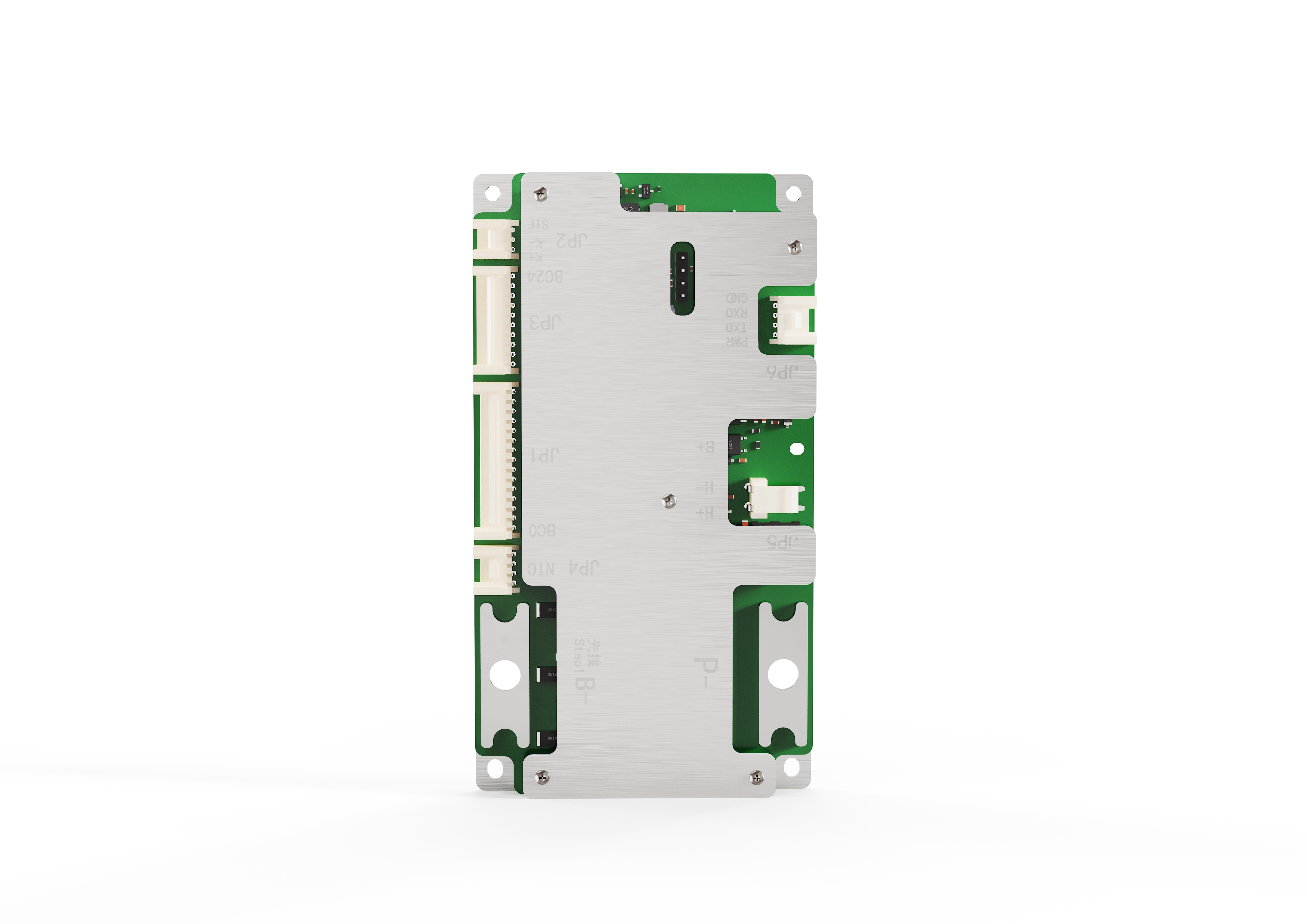
PNRG-MA24S60, one of three light-EV BMS models used in this article to illustrate how specification data maps to compliance evidence.
Why the evidence trail breaks on custom BMS projects
A custom BMS order is not a catalogue purchase with a different label. The supplier confirms customised PCBA and integrated hardware-software development against cell chemistry, series count, current, protocol and operating conditions. That is the hinge of the entire exercise: the supplier is not customising against a standard, it is customising against the buyer's stated inputs. Three practical consequences follow.
First, the published model defines a range, and the delivered unit sits at a point inside it. PNRG-MA24S60 covers a 20–95 V voltage platform and 10S–24S cell configurations at 60 A continuous working current, with a 40 A version offered separately. Those are different products with different peak ratings — 120 A for 30 seconds on the 60 A version, 80 A for 30 seconds on the 40 A version. A validation record that does not name the version cannot be matched to either.
Second, expansion changes the architecture.B2104 is documented with a 0–800 V customizable voltage platform and 8S–48S cell configurations that are master-slave expandable, with dimensions customised according to cell string count (16S / 32S / 48S). A 16S build and a 48S build are not the same board, and insulation or high-voltage interlock evidence collected for one does not automatically describe the other.
Third, some figures need their label confirmed.DTH2413 is published with a 9–36 V voltage platform, 8S–32S cell configurations, and five-channel total voltage detection across 0–150 V at ±1% FSR. Those three numbers answer three different questions — supply platform, cell count and measurement range — and the project record should state which one governs pack compatibility for the intended vehicle rather than assuming the smallest number describes the whole system.
The five variables to freeze before any compliance review
None of these five is exotic. What matters is that each is written down once, agreed by both parties, and carried unchanged into the purchase order, the test request and the label on the delivered board.
| Variable | What the project record must state | Why it drives the evidence |
|---|---|---|
| Cell chemistry | NCM, LMO, LCO or LFP; cell maker and model; nominal capacity | Protection thresholds, balancing behaviour and thermal limits are chemistry-dependent. A test run on one chemistry does not describe another. |
| Series count | Exact series number and architecture, single-board or master-slave | Sets channel count and harness design, and on higher-voltage builds determines whether insulation and interlock requirements apply at all. |
| Current | Continuous and peak values, with peak duration stated | Sizes the power stage, shunt and relay, and defines the test profile. A 30-second peak and a 1-second peak are not interchangeable. |
| Protocol | Interface or interfaces, plus the message set the vehicle controller must read | An interface list identifies the physical port. It does not define the data contract, and it is the data contract that integration testing verifies. |
| Operating conditions | Ambient temperature range, duty cycle, mounting space, target market | Converts a device rating into a validation envelope the supplier can actually test against. |
What each class of document actually proves
Buyers frequently treat all "compliance documents" as equivalent. They are not, and the difference matters most at the point where one class is substituted for another in a supplier's quotation pack.
| Document class | Example drawn from published material | What it establishes |
|---|---|---|
| Supplier declaration | Company profile states that the BMS products comply with CE and FCC and other international standards | The supplier's stated position. A useful starting point, not a substitute for a report naming the model and configuration. |
| Management-system certificate | IATF 16949:2016, certificate IATF00055, scope "Design and manufacturing of Battery Management System (BMS)" | That the organisation's design and manufacturing processes are certified to that standard within the stated scope — not that a particular product conforms to a product safety standard. |
| Product test record | Reliability, temperature, shock and safety testing in the supplier's R&D laboratory; over 460 cumulative test items | A specific unit under specific conditions. Only as useful as its configuration statement and its reference to the delivered build. |
| Regulatory conformity | AIS-156 for L-category vehicles in India | Market access for a defined vehicle category in a defined jurisdiction — a different question from supplier quality. |
What the three models actually document
The table below reproduces published specification values as they are labelled by the supplier. It is deliberately a map of what is known, not an assessment of fitness for any vehicle programme.
| Specification | PNRG-MA24S60 | B2104 | DTH2413 |
|---|---|---|---|
| Voltage platform | 20–95 V | 0–800 V (customizable) | 9–36 V |
| Cell configuration | 10S–24S | 8S–48S (master-slave expandable) | 8S–32S |
| Current | 60 A continuous (40 A version optional); 120 A peak for 30 s, or 80 A for 30 s on the 40 A version | -500 A to 500 A continuous working range | Current detection -500 A to 500 A |
| Voltage measurement | Not stated in the published set | Not stated in the published set | 0–150 V, 5 channels, ±1% FSR |
| Chemistries | NCM, LMO, LCO, LFP | NCM, LMO, LCO, LFP | NCM, LMO, LCO, LFP |
| Temperature sensing | 2 built-in + 2 external NTC | 8-channel external NTC | 8 external NTC |
| Operating temperature | -30 °C to 85 °C | -30 °C to 85 °C | -30 °C to 85 °C |
| Communication | Bluetooth standard; TTL / One-wire / 4G-GPS optional | CAN ×2, RS485 ×1 | Isolated CAN ×2, RS485 ×1 |
| Protection set | Over-charge, over-discharge, over-current, over-temperature, short-circuit | As above plus insulation detection and high-voltage interlock protection | As above plus insulation detection and high-voltage interlock protection |
| Passive balancing | ≥50 mA at 3.3 V | 50 mA | 50 mA |
| Form factor | Custom dimension | Customised by string count (16S / 32S / 48S) | 215 × 100 × 26 mm |
Read as an evidence map, the table answers one question well: which design parameters are already public and can therefore be quoted in a project record without further correspondence. It answers a second question not at all — which revision, harness, connector pinout, firmware version and test report reference apply to the unit in the buyer's hands. That gap is where the evidence package lives.
Two omissions are worth noting because they are common in light-EV sourcing. The published set summarised here does not give a state-of-charge accuracy figure for PNRG-MA24S60, although DTH2413 is documented at SOC estimation error ≤5% and SOH accuracy ≤8%. If a dashboard, fleet platform or warranty calculation depends on SOC accuracy, that figure has to be requested rather than assumed from a sister model. Likewise, DTH2413's published function list includes system self-check, Hall and shunt current detection, and support for new national standard charging; whether that charging profile corresponds to the target market's own charging requirement is a project question, not a specification question.
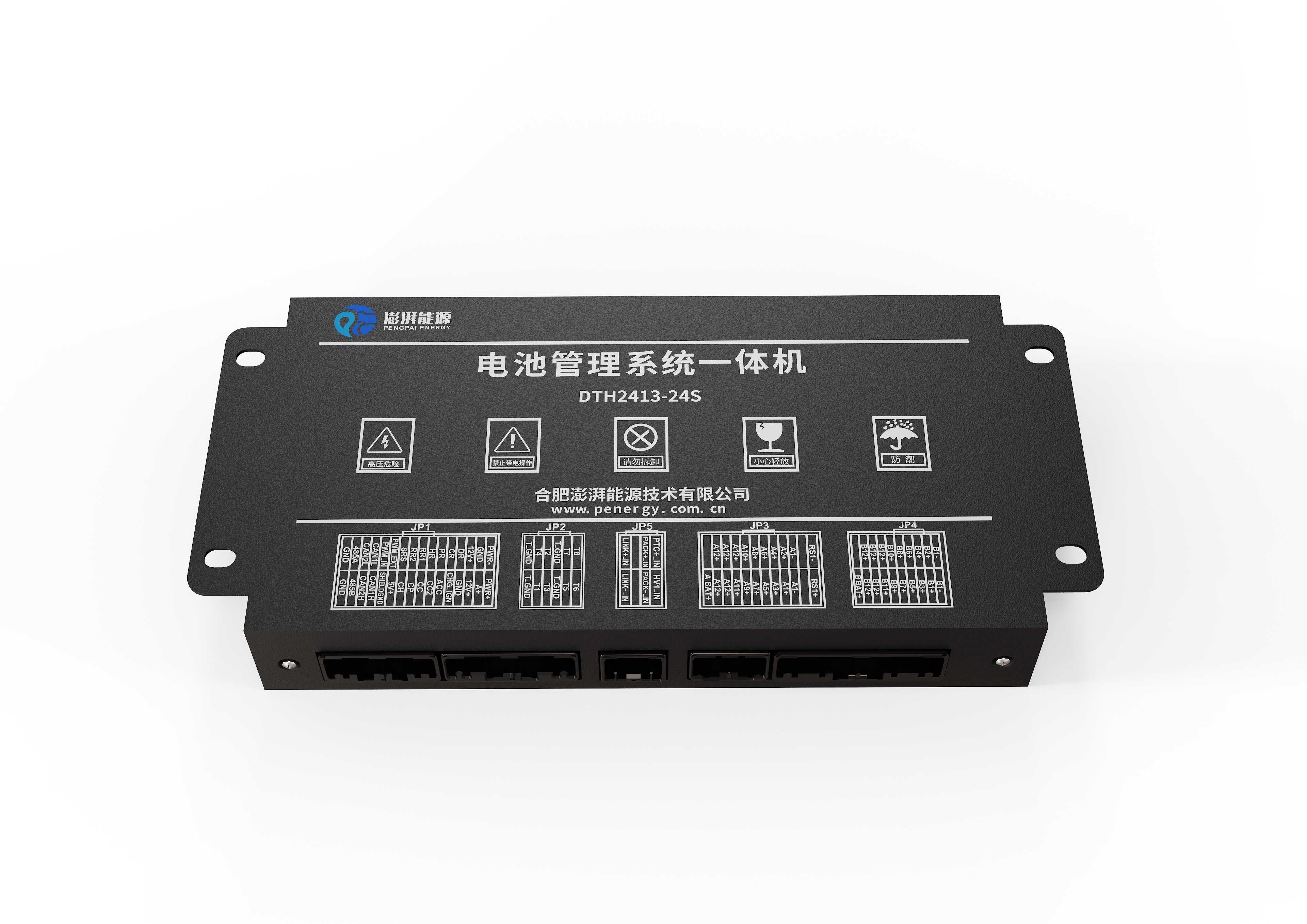
DTH2413 is documented with isolated CAN ×2 and RS485 ×1, eight external NTC channels, and 6-channel high-side relay outputs.
PCBA-level evidence: materials, connectors and relay ratings
Material declarations are the part of a BMS file most often skipped and most often needed later, because a mid-programme substrate or connector change invalidates the assumptions behind thermal and vibration results. The published build descriptions are specific enough to form a starting checklist.
PNRG-MA24S60 is described with an FR-4 high-TG flame-retardant PCB substrate, an ABS plastic housing, a copper-alloy gold-plated connector and a high-power silicon power transistor. B2104 is described with the same FR-4 high-TG substrate, an aluminium-alloy metal housing, an automotive-grade multi-pin copper-alloy connector and a high-current electromagnetic relay. DTH2413 provides 6-channel high-side relay outputs rated at 1 A continuous and 5 A instantaneous, in a 215 × 100 × 26 mm package.
From those descriptions, four requests follow naturally. First, a material declaration for the substrate, housing and connector plating, so that the buyer's own environmental or recycling obligations can be checked against a document instead of a description. Second, a connector specification covering mating cycles and the mating half, because a gold-plated copper-alloy connector is only as reliable as the harness it meets. Third, a relay rating statement expressed against the project's actual continuous load — a 5 A instantaneous rating is not a continuous rating, and contactor or pre-charge design should not be built on the instantaneous figure. Fourth, lot traceability, since the management-system scope covers design and manufacturing and the process controls behind the declaration are therefore within audit scope.
One absence is worth flagging explicitly rather than filling in: no ingress-protection rating appears in the specification set summarised here. The published application description notes that exact temperature, vibration, ingress-protection and load conditions require confirmation. For a pack exposed to wash-down, monsoon spray or unsealed under-seat mounting, that confirmation belongs in the evidence request, not in an assumption.
Protocol evidence: an interface list is not a protocol specification
The three models sit in different communication worlds, and that difference is the clearest illustration of why the protocol variable has to be frozen early. PNRG-MA24S60 lists Bluetooth as standard, with TTL, One-wire and 4G-GPS as options — CAN does not appear in that published interface list. B2104 lists CAN ×2 and RS485 ×1. DTH2413 lists isolated CAN ×2 and RS485 ×1.
Note the wording carefully. DTH2413's CAN channels are described as isolated; B2104's entry lists CAN ×2 and RS485 ×1 without an isolation descriptor. That is not evidence that isolation is absent from B2104 — a specification summary is not a complete electrical description — but it does mean isolation should be confirmed for that model rather than assumed in either direction. The same discipline applies to the two-wheeler case: a Bluetooth-standard unit with optional TTL or One-wire telemetry raises different integration questions from a four-wheeler BMS handing limits to a vehicle controller over CAN.
What should the evidence request contain? A message set listing the identifiers and signals the vehicle controller must read, the bus speed, the termination and isolation arrangement, and the defined behaviour when the bus is lost or a node drops offline. The published specifications do not contain that level of detail for any of the three models, and no datasheet at this level normally does. It is generated per project — which is precisely why it must be generated once, versioned, and attached to the build record rather than renegotiated at integration.
Operating conditions: a rating is not a validation
All three models are documented with an operating temperature range of -30 °C to 85 °C. That sentence is a device rating. It tells the buyer the electronics are specified to function across that span; it does not tell the buyer that a particular pack, in a particular enclosure, on a particular route, has been validated at the ends of it. The distinction sounds pedantic until a fleet in a hot climate starts reporting temperature-derated charging in the second summer.
Thermal channel count is the practical bridge between the two. PNRG-MA24S60 carries 2 built-in plus 2 external NTC channels, while B2104 and DTH2413 each carry eight external NTC channels. On a 10S pack, four sensing points may describe the thermal map adequately; on a 24S pack the same count is a design decision that should be justified against the cell arrangement rather than accepted by default. DTH2413 adds five-channel total voltage detection at 0–150 V with ±1% FSR, which gives the buyer a measurable reference for pack-level voltage checks alongside per-cell data.
The operating-conditions record should therefore contain the ambient profile the vehicle actually sees, the duty cycle, the mounting orientation and available volume, and the target market's climate band. With those four items in hand, the supplier can state which tests are relevant; without them, the review can only confirm that a number exists on a page.
Certification, compliance and the scope gap between them
Pengpai Energy holds IATF 16949:2016 certification under certificate number IATF00055, issued by ABS Quality Evaluations, Inc. (USA), with a scope of "Design and manufacturing of Battery Management System (BMS)". The certificate was issued on 31 May 2025 and expires on 30 May 2028, and it applies to the global automotive and new energy vehicle supply chain market, including North America, Europe and Southeast Asia. The company's published profile also states ISO 9001 quality management system certification and states that its BMS products comply with CE, FCC and other international standards.
Those two sentences do different work, and conflating them is the most common error in a light-EV sourcing file. IATF 16949 is an automotive quality management system standard. Certification confirms that the organisation's design and manufacturing processes meet that standard within the stated scope; it does not certify that a specific BMS build conforms to a specific product safety standard. A CE or FCC statement in a company profile is a supplier declaration and is best treated as an invitation to request the underlying test documentation for the model and configuration in question. Neither document, on its own, answers a regulator's question about a finished vehicle.
For India, that regulator's question is concrete. AIS-156 establishes mandatory safety requirements for lithium-ion battery packs and battery management systems used in L-category vehicles — electric two- and three-wheelers — and has applied since 1 April 2023. The evidence summarised for this article does not include an AIS-156 test report for PNRG-MA24S60, B2104 or DTH2413. That is a statement about this article's evidence set, not about the products' capability: conformity evidence is generated per pack and per vehicle category, and it should be requested explicitly for the build under review, with the report's configuration statement checked against the purchase order.
Evidence pack versus datasheet-only sourcing
The two approaches are not a quality hierarchy; they are matched to different risk profiles. The comparison below sets out where each one fits.
| Dimension | Datasheet-only sourcing | Configuration-tied evidence pack |
|---|---|---|
| Scope fixed in writing | Model family and its published range | Named configuration with revision and option set |
| Object of the test record | Family representative, if one exists | The delivered build, or the closest documented representative with differences stated |
| Change handling | Buyer rechecks after delivery | A change note triggers an evidence update before shipment |
| Auditability | Datasheet plus system certificate | Configuration record, test report, certificate and material declarations, all cross-referenced |
| Best fit | Prototypes, very low volume, unregulated applications | Repeated builds, regulated vehicle categories, OEM or fleet supply |
The fit boundary deserves stating plainly. For a single prototype or a very small first order, a full evidence pack can cost more than the risk it removes — which is relevant here, since the supplier lists a minimum order quantity of 1 unit and a lead time of 0–30 days. The pack earns its cost when the same configuration will be built repeatedly, when the vehicle falls inside a regulated category, or when the buyer must answer to a fleet customer who will ask for the file.
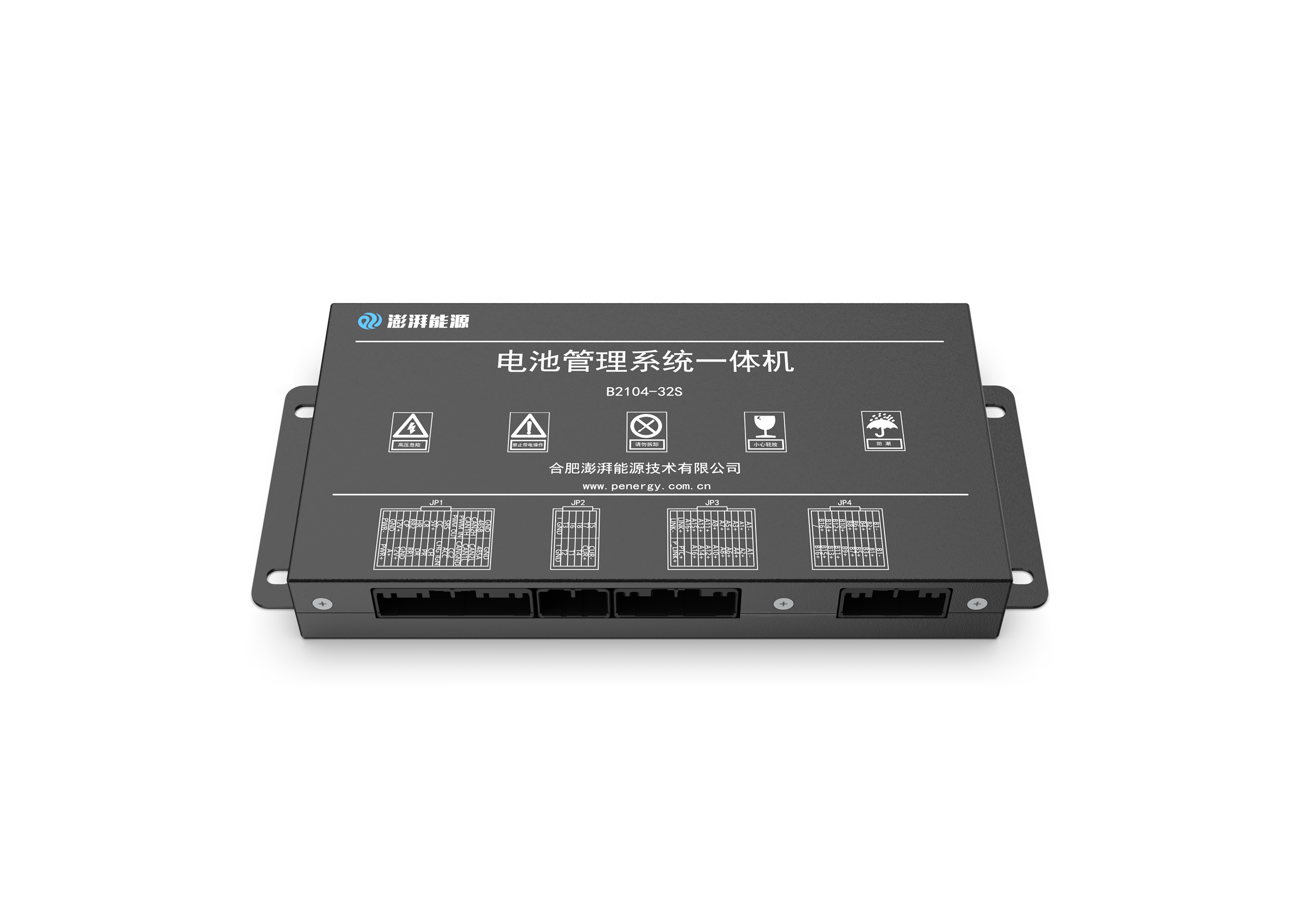
B2104 is documented with an 8S–48S master-slave expandable configuration, customised dimensions by string count, and an aluminium-alloy housing.
Where the evidence pack is actually used
Three light-EV contexts make the five-variable record earn its keep, each for a different reason.
Electric two-wheelers and motorcycles. A 20–95 V platform with 10S–24S configurations and 60 A continuous current suits the voltage band common in this segment, and the Bluetooth-standard interface with optional TTL, One-wire or 4G-GPS is a telemetry decision before it is a compliance decision. Here the evidence question concentrates on current headroom under real duty cycles and on the integrity of the data the fleet platform consumes.
Three-wheelers and e-rickshaws in India. L-category vehicles fall inside AIS-156, which makes insulation detection and high-voltage interlock protection materially relevant rather than decorative. DTH2413's published protection set includes both, along with isolated CAN ×2 and RS485 ×1 and eight external NTC channels — a configuration that maps onto the evidence questions a regulated three-wheeler programme has to answer.
Low-speed four-wheelers and sightseeing vehicles. B2104's master-slave expansion and dual CAN channels support larger packs and contactor control, while DTH2413's six high-side relay outputs provide a defined interface for external switching. In both cases the relay and contactor ratings, not the nominal voltage, tend to become the binding constraint in the evidence review.
Beyond road vehicles, the company's published application scope extends to commercial vehicles, intelligent robots and drones. Model-level fit for those applications should be confirmed per project against the same five variables rather than inferred from the vehicle-oriented specification tables.
Market context: regulation, not price, is changing the request
India illustrates the shift. Commercial research cited in the source record for this article puts the India battery management system market at USD 327.9 million in 2025, with a projected USD 1,347.6 million by 2034 — a commercial estimate covering the BMS category as a whole rather than a split by two-, three- or four-wheeler segment, and therefore useful for direction rather than for volume planning.
The more consequential signal is regulatory. Once AIS-156 made pack-level safety requirements mandatory for L-category vehicles from 1 April 2023, a BMS stopped being a component purchased on price and became a documented subsystem whose behaviour has to be demonstrated. Supplier structures have moved with that: The Economic Times reported on 8 September 2026 that LeSol Group had partnered with Hefei Pengpai Energy Technology Co. Ltd to develop BMS solutions for the Indian market, with an initial focus on two- and three-wheelers. Pengpai Energy's own case record for the Indian market describes more than 800,000 units delivered across four consecutive years of partnership with a vehicle or battery-industry customer — a supplier-provided record of sustained volume rather than independent verification of market position.
Outlook
The direction of travel is away from the question "do you have a certificate?" and toward "which configuration does this document describe?". That shift favours buyers who arrive at the first supplier meeting with five variables already written down, and it disadvantages suppliers whose evidence stops at a family-level datasheet.
Two practical planning anchors follow. First, the IATF 16949 certificate covering BMS design and manufacturing runs to 30 May 2028, so a programme spanning that date should plan for re-verification rather than assume continuity. Second, as more light-EV categories come under pack-level safety rules in different markets, the five-variable record built once becomes reusable evidence: the same chemistry, series count, current, protocol and operating-conditions statement can be matched against a new market's requirements without rebuilding the project file from the beginning. That reusability, more than any single certificate, is what a well-run BMS qualification actually delivers.
FAQ
What has to be fixed before a custom BMS can be reviewed for compliance?
Five variables: cell chemistry, series count, continuous and peak current, communication protocol, and operating conditions. Published supplier material states that customised PCBA and integrated hardware-software development are confirmed against exactly these inputs. Once they are recorded in the purchase order, test request and build label, a document can be matched to a product; before that, it describes a range rather than a unit.
Does an IATF 16949 certificate mean a BMS model is certified for a vehicle application?
No. IATF 16949 is an automotive quality management system standard. Certification confirms that the organisation's design and manufacturing processes meet that standard within the stated scope — in this case "Design and manufacturing of Battery Management System (BMS)". It does not certify that a particular BMS build conforms to a product safety standard, and it does not replace pack-level or vehicle-level conformity evidence for a specific market.
Which communication interfaces do PNRG-MA24S60, B2104 and DTH2413 support?
PNRG-MA24S60 lists Bluetooth as standard, with TTL, One-wire and 4G-GPS as options; CAN does not appear in its published interface list. B2104 lists CAN ×2 and RS485 ×1. DTH2413 lists isolated CAN ×2 and RS485 ×1. The interface list identifies the physical ports; the message set, bus speed and behaviour on bus loss are project-specific and should be requested separately for each build.
Does Pengpai Energy provide BMS solutions for electric two-wheelers, three-wheelers and low-speed four-wheelers in India and Southeast Asia?
The published product range covers two-wheelers, three-wheelers, low-speed four-wheelers and electric motorcycles, and the company identifies India and Southeast Asia among its target markets, with marketing branches established in Southeast Asia, India, North America and Europe. The suitable model is selected according to battery series count, voltage platform, current, communication protocol, cell chemistry and vehicle control logic.
What operating-temperature information should be documented for a light-EV BMS pack?
At minimum: the BMS operating temperature range, the number and placement of NTC temperature sensing channels, and the ambient profile the vehicle actually encounters. PNRG-MA24S60, B2104 and DTH2413 are each documented at -30 °C to 85 °C; PNRG-MA24S60 carries 2 built-in plus 2 external NTC channels, while B2104 and DTH2413 each carry eight external NTC channels. The range is a device rating, so pack-level validation should come from a test record tied to the delivered configuration.
Reference
Pengpai Energy product brochure (PDF, English): download the BMS product brochure.
Company information: www.penergy.com.cn. Specification values quoted in this article are taken from published product material; conformity documentation for a specific build should be requested from the supplier for the configuration under review.
Have Questions or Need More Details?
Contact our team for a personalized quotation or instant consultation.
Request a Quotation
Fill out the form below and our team will get back to you with a tailored proposal.
WhatsApp Direct Chat
Prefer to chat in real-time? Message us on WhatsApp for instant assistance & quick answers.
- Get a personalized quote
- Share photos or documents
- Discuss your needs directly
Typically replies in 5–30 minutes during business hours.