
BMS Supplier Audit: Hardware, Test, and Customization Proof
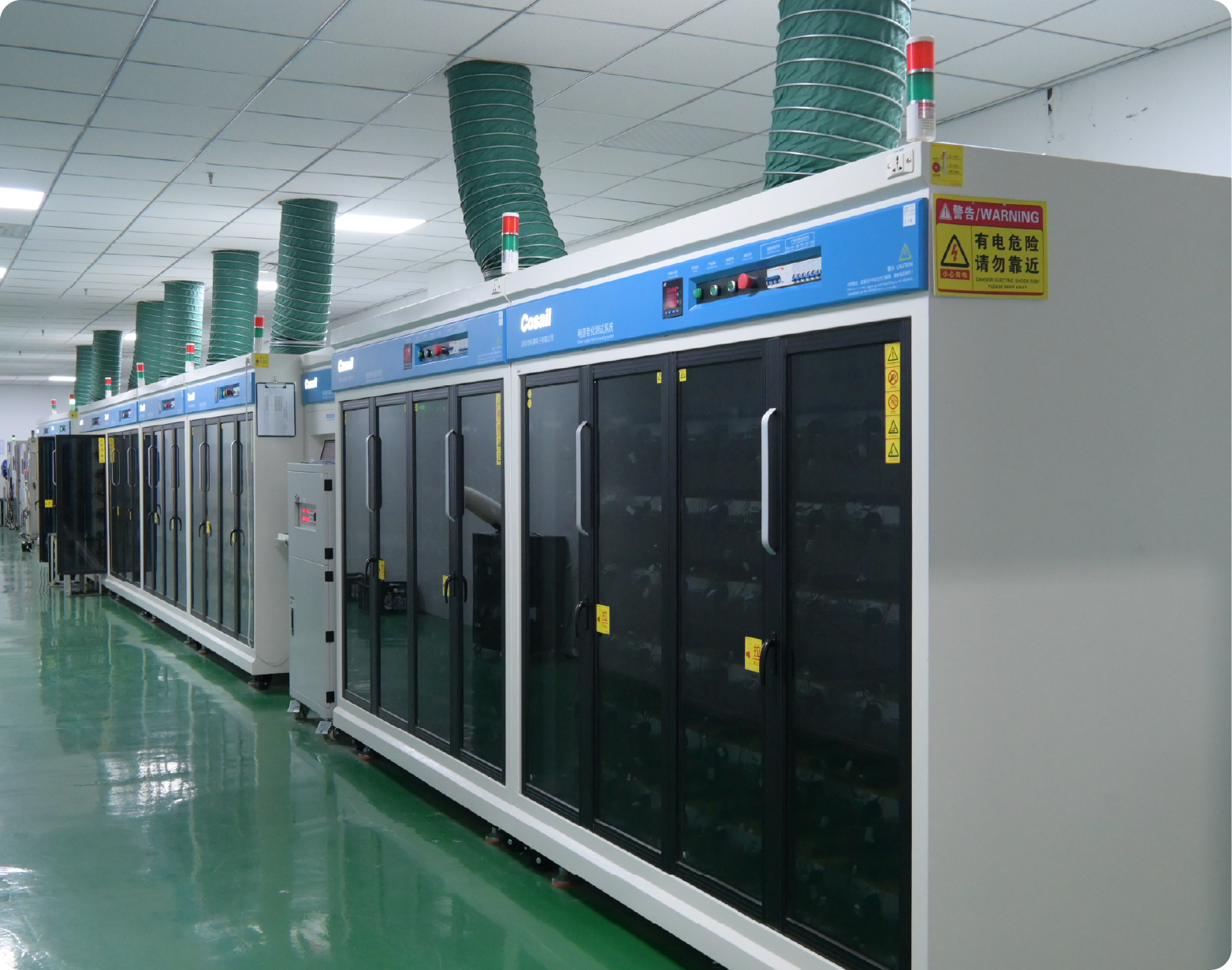
Cover image: a factory environment relevant to BMS manufacturing and supplier capability review. Image source: Pengpai Energy.
A Battery Management System (BMS) is easier to buy than to verify. Industry definitions describe it as the electronic controller inside a lithium battery pack that monitors cell voltage, current and temperature, and protects the pack from over-voltage, under-voltage and over-current. The U.S. Department of Energy describes the BMS as both a hardware and software component that connects to the energy management system and power conversion system in battery energy storage. For an EV OEM at the decision stage, that dual nature is the audit problem: a supplier can show a board, a firmware feature list, and a factory tour, yet still leave the buyer unable to trace a specific claim to a specific piece of evidence.
This article sets out a practical verification path for EV Battery Management System sourcing. It uses the B2104 bill of materials as a worked example of component-level evidence, then shows how customized PCBA and integrated hardware-software development can be checked against cell chemistry, series count, current, protocol and operating conditions. It also covers communication interfaces such as APP, PC, IoT platform and display connections, and it states the limits that buyers should not skip.
Why Supplier Claims Need an Evidence Trail
In India, the EV market is served by chip-level solution providers, Tier-1 battery manufacturers, and specialized BMS suppliers. That variety is useful, but it also means that two suppliers can use the same category language while offering very different levels of engineering responsibility. A chip-level provider may focus on silicon and reference designs. A Tier-1 battery manufacturer may bundle the BMS into a pack. A specialized BMS supplier may own the board, firmware, testing and customization interface. The buyer's audit has to establish which role the supplier actually performs.
Regulation adds a second layer. AIS-156 establishes mandatory safety requirements for lithium-ion battery packs and BMS in L-category vehicles in India, including electric two-wheelers and three-wheelers, with an effective date of 1 April 2023. For an India E-Rickshaw BMS or an electric two-wheeler platform, compliance is not a brochure line. It is a document trail that should connect the pack, the BMS, the test plan and the production unit.
Market growth explains why the audit matters commercially. The India BMS market was valued at USD 327.9 million in 2025 and is expected to reach USD 1,347.6 million by 2034, according to IMARC Group. A larger supplier pool creates more choice, but it also raises the cost of a bad selection. A structured audit is cheaper than a late-stage redesign.
Where Pengpai Energy Fits in a BMS Audit
Hefei Pengpai Energy Technology Co., Ltd. (Pengpai Energy) is a Hefei-based national high-tech enterprise established in 2017. The company specializes in the R&D, manufacturing, sales and service of new energy battery management systems and an intelligent energy management platform. Its official BMS product range covers electric two-wheelers, electric three-wheelers, low-speed four-wheelers and electric motorcycles, and the company publicly identifies India and Southeast Asia as target markets for its light electric vehicle BMS solutions.
Several first-party facts are relevant to a supplier audit. Pengpai Energy operates a 2,500 square meter factory with more than 100 employees, and R&D personnel represent more than 60 percent of the workforce. The R&D team includes 6 PhD holders and 16 master's degree holders, and the core personnel have more than 10 years of experience. The company reports an annual output of 800,000 units and a 60 percent export ratio. It has passed ISO9001 quality management system certification, and its BMS products are stated to comply with CE and FCC standards. Its R&D laboratory is equipped with professional test equipment for reliability, temperature, shock and safety tests.
Those facts do not replace a project-specific audit. They do, however, give the buyer a starting point for requesting evidence. The next step is to move from company-level claims to component-level and project-level proof.
The B2104 Bill of Materials as a Worked Example
The B2104 bill of materials offers a concrete example of how component evidence can be read. The listed hardware includes a high-current electromagnetic power relay, an automotive-grade multi-pin copper-alloy connector, an aluminum alloy housing, and an FR-4 high-TG flame retardant PCB. Each item is a category that can be traced to a part number, a datasheet, an incoming inspection record and a change-control entry. That traceability is the point. A buyer does not need to accept the words high-current or automotive-grade at face value; the buyer can ask which part, which supplier, which qualification record and which revision.
This is also where a BMS audit differs from a general factory audit. A factory audit can confirm that a production line exists. A BMS audit has to confirm that the bill of materials, the PCBA process, the firmware and the test plan are consistent with the vehicle platform. The B2104 example is useful because it makes the hardware discussion specific without requiring the buyer to open the firmware on day one.
A Hardware Audit That Starts With the Bill of Materials
The table below converts the B2104 component categories into audit requests. The right-hand column is deliberately written as a request, not as a claim, because the buyer should obtain the evidence rather than infer it from a product page.
| Component category | What it indicates | Evidence to request |
|---|---|---|
| High-current electromagnetic power relay | A relay in this class is used for switching and isolation of high-current paths; the buyer should confirm the part is rated for the application, not just present on the board. | Part number, datasheet, rated current and voltage, lifecycle status, incoming inspection record, and evidence of design margin against continuous and peak current. |
| Automotive-grade multi-pin copper-alloy connector | Connector grade affects contact reliability, mating security and serviceability in vehicle environments. | Connector family, plating and contact material, keying and locking feature, mating-cycle specification, supplier qualification, and harness-side drawing. |
| Aluminum alloy housing | Housing material affects mechanical protection and thermal path; the alloy and finish matter as much as the material name. | Alloy designation, wall thickness, surface finish, mounting and sealing design, and validation record for the stated operating conditions. |
| FR-4 high-TG flame retardant PCB | Laminate choice affects thermal withstand and flame behavior; high-TG is a laminate property, not a complete safety claim. | Laminate datasheet, Tg value, flame class, CTI, stack-up, copper weight, and PCBA process record. |
A buyer should also ask how the BOM is controlled. Is there a revision rule for approved vendor list changes? Are alternate parts allowed without notification? Does the PCBA house have a documented profile for the laminate and the connector? These questions are not bureaucratic. They determine whether the unit sampled in the lab will be the unit shipped in volume.

In-process image: production environment relevant to BMS assembly and traceability review. Image source: Pengpai Energy.
Testing Evidence: From Test List to Test Traceability
Pengpai Energy's R&D laboratory is described as being equipped for reliability, temperature, shock and safety tests. For an audit, the existence of a laboratory is only the first question. The second question is whether the test plan is tied to the vehicle's operating conditions. A BMS for an electric two-wheeler in India faces a different duty cycle from a low-speed four-wheeler in Southeast Asia. The test plan should state the ambient temperature range, the vibration or shock profile, the charge and discharge current profile, and the pass or fail criteria.
The buyer should request the test report, not only the test list. A useful report shows the sample identity, the firmware revision, the test fixture, the calibration status of the equipment, the number of samples, the failure criterion, and the disposition of any deviations. If a supplier cannot connect a test result to a specific BMS revision, the result is difficult to use in a supplier qualification file.
Certification evidence should be read with the same discipline. ISO9001, CE and FCC are relevant signals, but they are not a substitute for a project-specific validation report. The audit should confirm the certificate scope, the certificate holder, the validity period and the product family covered. For India, AIS-156 compliance should be mapped to the pack and BMS configuration, not assumed from a general safety statement.
Customization Evidence: What Must Be Confirmed Before a Quote Becomes a Design
Customized BMS work is not a catalogue selection with a different label. Pengpai Energy's own selection guidance states that BMS selection or customization should consider cell chemistry, series count, voltage platform, continuous and peak current, communication protocol, wake-up method, installation space, and target-market requirements. Those eight inputs are a good audit checklist because they force the buyer and supplier to agree on the design boundary before a quote is treated as a design.
Series count is a particularly clear example. The customized BMS is described as supporting 3S to 48S battery packs with multi-protocol access and flexible customization, while a generic standard protection board is limited to a fixed 3S to 24S range with limited interfaces and functions. The numbers are useful, but the audit question is more precise: which cell chemistry, which series count, which voltage platform and which current profile were used to validate the specific model being offered? A 3S to 48S range describes a capability envelope, not a guarantee for every point inside it.
Integrated hardware-software development should be confirmed with a requirement traceability matrix. The supplier should be able to show how the vehicle platform, battery series count, communication protocol and control logic were translated into hardware requirements, firmware requirements and validation tests. For an OEM, this is more valuable than a feature list because it shows where a change would propagate. If the cell chemistry changes, what changes in the protection thresholds? If the series count changes, what changes in the bill of materials, the connector, the relay and the firmware configuration?
PCBA customization should also be checked at the process level. Ask for the PCBA flow, the solder profile, the inspection method, the functional test coverage and the traceability unit. A custom board can be well designed and poorly reproduced. The audit should confirm that the process is capable of reproducing the same board across production lots.
Communication should be checked at the interface level. Depending on the system configuration, BMS units may communicate through CAN, RS485, Bluetooth, TTL or single-wire interfaces. For a CAN Bus BMS, the buyer should request the interface control document and confirm the protocol variant, message set and diagnostic behavior against the vehicle controller. For an APP, PC, IoT platform or display connection, the buyer should establish whether the interface is standard, optional or project-specific, and whether the supporting service and upgrade path is documented.
Use Cases Where Evidence Changes the Decision
Electric Two-Wheeler BMS. In a two-wheeler project, space, weight, cost and service access are tight. The audit should confirm the installation space, the wake-up method, the communication interface and the target-market requirement. If the supplier proposes APP or display connectivity, the buyer should ask whether the interface is standard, optional or project-specific, and whether the related service and upgrade path is documented.
Electric Three-Wheeler BMS and India E-Rickshaw BMS. Three-wheeler customization is within the scope of BMS selection, specification, customization and procurement content offered for India and Southeast Asia. In practice, the audit should focus on the duty cycle, the current profile and the local compliance path. AIS-156 makes the pack and BMS safety evidence a market-access issue, not only a performance issue.
Electric Four-Wheeler and Low-Speed Four-Wheeler BMS. As the series count and the number of controlled functions increase, the interface and control-logic questions become more important. The buyer should confirm how the BMS communicates with the vehicle controller, the charger and the display, and how the customization boundary is documented. The same applies to an Electric Motorcycle BMS, where packaging and environmental exposure can differ from a passenger car platform.
Battery-pack manufacturers and volume OEM projects. Pengpai Energy positions the customized BMS solution for OEMs, battery-pack manufacturers and volume projects that require communication and functional expansion. A generic standard protection board is described as more suitable for projects with fixed parameters and limited development requirements. That distinction is a useful screening rule: if the project has no expansion requirement and a fixed parameter set, a standard board may be adequate; if the project needs communication, functional expansion or platform-specific control logic, the customization evidence becomes the decision.
Market Signals That Make Verification More Important
The India BMS market is expanding. IMARC Group values the market at USD 327.9 million in 2025 and projects USD 1,347.6 million by 2034. Growth of that kind attracts new suppliers and new partnership models, which makes supplier qualification more important, not less.
Localization is one visible response. LeSol Group has partnered with Hefei Pengpai Energy Technology Co. Ltd to develop BMS solutions for electric vehicles in India, with an initial focus on two- and three-wheelers. The same source reports that LeSol Group targets a 10 percent share of the organized BMS market in India within three years, translating to more than one million units annually. Those are partner targets, not a guarantee of outcomes, but they show why an OEM should ask how a local partnership affects engineering support, documentation and change control.
Regulation is the second signal. AIS-156 establishes mandatory safety requirements for lithium-ion battery packs and BMS in L-category vehicles in India. As the compliance path becomes more explicit, the audit pack becomes more important than the sales presentation.
Customized BMS vs Generic Standard Protection Board: Limits and Trade-offs
Customization is not automatically the right answer. The comparison below uses Pengpai Energy's own positioning of a customized BMS solution against a generic standard protection board. It is a decision aid, not a claim that one option is always superior.
| Decision area | Customized BMS solution | Generic standard protection board | Audit implication |
|---|---|---|---|
| Development basis | Developed around the vehicle platform, battery series count, communication protocol and control logic. | Typically relies on fixed parameters and standard interfaces; compatibility and functional expansion require separate confirmation. | Ask for a requirement traceability matrix and an interface control document. |
| Series and interface range | Supports 3S to 48S battery packs, multi-protocol access and flexible customization. | Limited to a fixed 3S to 24S range with limited interfaces and functions. | Confirm the exact configuration, not only the capability envelope. |
| Cost pattern | Higher initial R&D cost, with a better cost advantage in mass production. | Low initial cost, with high modification cost later. | Compare total project cost over volume and change scenarios. |
| Energy strategy | Designed for low static power consumption and customized battery management efficiency. | Uses a fixed strategy without targeted energy optimization. | Ask for the operating-condition basis of the efficiency claim. |
| Maintenance and service | May support APP, PC, IoT, displays and multiple communication interfaces depending on project requirements; detailed remote diagnosis, upgrade and service capabilities require confirmation. | Limited interfaces and functions. | Treat service capability as a to-be-confirmed item, not an assumed feature. |
| Best fit | OEMs, battery-pack manufacturers and volume projects requiring communication and functional expansion. | Projects with fixed parameters and limited development requirements. | Match the supplier role to the project's change profile. |
The first limitation is cost timing. A customized BMS has higher initial R&D cost, even though it can offer a better cost advantage in mass production. A buyer with a small or uncertain volume should model the break-even rather than assume that customization pays back. The second limitation is service scope. The customized BMS may support APP, PC, IoT, displays and multiple communication interfaces depending on project requirements, but detailed remote diagnosis, upgrade and service capabilities require confirmation. Those words should be read as an audit item. The third limitation is fit. A generic standard protection board is more suitable for projects with fixed parameters and limited development requirements. For that kind of project, a custom board can add engineering overhead without adding decision value.
What to Expect Next in BMS Supplier Audits
Three changes are already visible in the product descriptions. First, communication is moving into the selection criteria. APP, PC, IoT platform and display connections are now part of the customization discussion, not an afterthought. Second, local market requirements are entering the design brief earlier. India and Southeast Asia are named target markets for light electric vehicle BMS solutions, and AIS-156 makes the India compliance path concrete. Third, buyers are asking for evidence that connects hardware, firmware and test records. A BMS with battery state estimation, protection algorithms and communication functions is a system, and a system audit has to cross functional boundaries.
The practical implication is that the audit pack should become a standard procurement deliverable. A supplier that can produce a bill of materials with part numbers, a test report with revision traceability, a customization matrix with agreed inputs, and a change-control procedure is easier to qualify than a supplier that can only produce a feature list. That is the direction the market rewards.
Reference material: Pengpai Energy's public brochure is available for download at the company brochure page.
FAQ: Verifying BMS Capability
What hardware evidence should an EV OEM request from a BMS supplier?
Ask for the bill of materials with part numbers, datasheets, approved vendor list, incoming inspection records and change-control rules. For a model such as the B2104, the listed relay, connector, housing and PCB laminate should each be traceable to a specific part and revision. The buyer should also confirm how alternate parts are approved.
How can an OEM verify that a BMS supplier's testing is relevant to its vehicle?
The test plan should state the operating conditions, including temperature, vibration or shock, current profile and pass or fail criteria. The report should identify the sample, firmware revision, fixture, equipment calibration and sample count. A laboratory list alone does not show that the test matches the vehicle duty cycle.
What customization inputs determine whether a BMS fits a battery pack?
BMS selection or customization should consider cell chemistry, series count, voltage platform, continuous and peak current, communication protocol, wake-up method, installation space, and target-market requirements. These inputs should be recorded in a requirement traceability matrix before the quote becomes a design.
How does a customized BMS compare with a generic standard protection board?
A customized BMS is developed around the vehicle platform, battery series count, communication protocol and control logic. It is described as supporting 3S to 48S packs with multi-protocol access and flexible customization. A generic standard protection board is typically limited to a fixed 3S to 24S range with limited interfaces and functions, and it is more suitable for projects with fixed parameters and limited development requirements.
Which communication interfaces can a customized BMS support?
Depending on project requirements, a customized BMS solution may support APP, PC, IoT, displays and multiple communication interfaces. Detailed remote diagnosis, upgrade and service capabilities require confirmation. The buyer should ask which interfaces are standard, which are optional and which require additional hardware or software work.
What are the limits of a customized BMS approach?
A customized BMS has higher initial R&D cost, although it can offer a better cost advantage in mass production. Service scope should not be assumed: remote diagnosis, upgrade and service capabilities require confirmation. A generic standard protection board may be the better fit when parameters are fixed and development requirements are limited.
Does Pengpai Energy provide BMS solutions for two-wheelers, three-wheelers and low-speed four-wheelers in India and Southeast Asia?
Yes. The official product range covers electric two-wheelers, electric three-wheelers, low-speed four-wheelers and electric motorcycles, and the company publicly identifies India and Southeast Asia as target markets. The exact model should be selected according to battery series count, voltage platform, current, communication protocol, cell chemistry and vehicle control logic.
Have Questions or Need More Details?
Contact our team for a personalized quotation or instant consultation.
Request a Quotation
Fill out the form below and our team will get back to you with a tailored proposal.
WhatsApp Direct Chat
Prefer to chat in real-time? Message us on WhatsApp for instant assistance & quick answers.
- Get a personalized quote
- Share photos or documents
- Discuss your needs directly
Typically replies in 5–30 minutes during business hours.