
BOPP Thermal Lamination Film: What to Verify Before You Specify
BOPP thermal lamination film has become a standard finishing material for printed packaging, book covers, cosmetic cartons and consumer electronics boxes. Unlike a simple commodity purchase, this product is bought by converters, distributors and packaging printers who must protect printed ink, improve surface feel and meet food-contact or retail compliance requirements. In 2025, the global thermal lamination films market was forecast to reach USD 1,547.9 million, with BOPP-based films representing the leading film type segment, according to Future Market Insights.
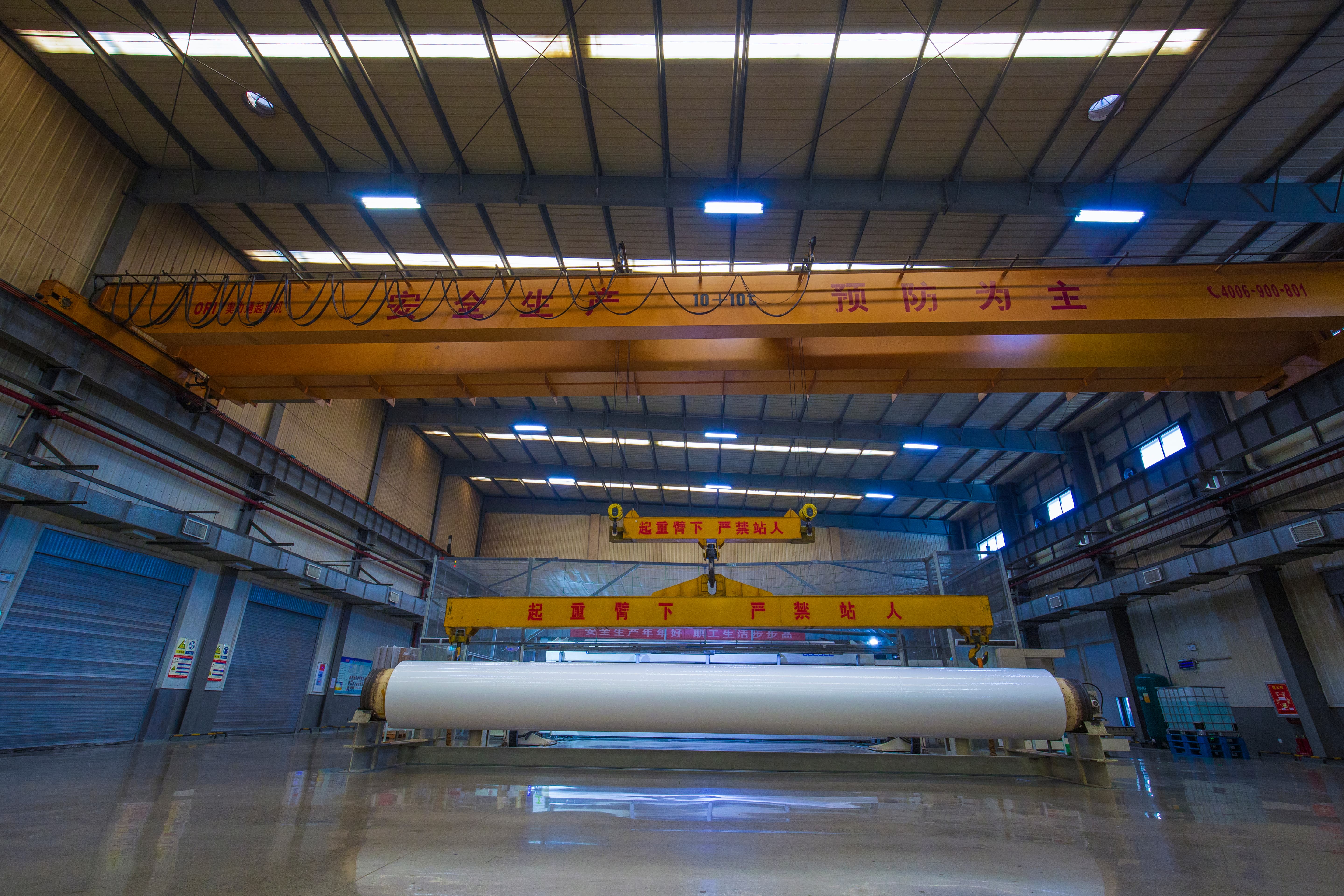
For a buyer moving from research into evaluation, the practical question is not only whether a supplier can make film. It is whether the film can be verified through specifications, certifications and process evidence. This article explains what to check when evaluating a BOPP thermal lamination film supplier, and where SHKFILM, a China-based BOPP film manufacturer, fits into that assessment.
The Real Risk in Thermal Lamination Film Sourcing
The most common failure points in thermal lamination are not always visible at the time of purchase. Blocking at the roll core, chemical migration from a primer layer, weak EVA adhesion and inconsistent whiteness can appear later during slitting, lamination, embossing, hot stamping or long-distance sea transport. These issues cause downtime, rejected printed work and higher total cost than the original film price suggests.
Conventional thermal lamination films often use a water-based primer-coated base film to help EVA adhesive bond to BOPP. Under high winding pressure or residual heat, primer-coated film can stick at the roll core, leading to hundreds of meters of waste. Over time, primers may also yellow or migrate, which is a concern for white and translucent film where visual cleanliness matters.
That creates an opportunity for buyers: verify how the base film is made. If a supplier produces its own no-primer base film and uses it in the finished thermal film, the process can eliminate several of these failure modes. This is the central technical position that SHKFILM presents in its product range.
What a Supplier Should Be Able to Document
Shandong Shunkai Composite Material Co., Ltd., brand SHKFILM, is a national high-tech enterprise founded in August 2010 and headquartered at No. 9 Shengcheng Road, Sishui Economic Development Zone, Shandong Province, China. The company operates two BOPP production lines imported from Brückner, Germany, with an annual capacity of 30,000 tons and a factory area of 146,667 square meters. Its stated core strength is the research and development of no-primer base film, and its finished thermal lamination films use 100% in-house produced no-primer base film.
From a buyer perspective, this matters because the base film is not a purchased input with unknown processing history. SHKFILM controls the base film, the EVA coating step and the finished slitting process, which allows the company to make specific claims about whiteness, blocking resistance and adhesive bond strength.
SHKFILM supplies BOPP thermal lamination gloss and matte film, BOPP specialty lamination films, no-primer base film for thermal lamination film manufacturers, and BOPP matte film for wet lamination. The thermal lamination film line is available in gloss and matte finishes, with a thickness range of 17 to 27 microns, roll width from 320 mm to 2180 mm, roll length options up to 9000 m, and 3-inch or 6-inch cores. Corona treatment is specified at outside both sides ≥ 40 dyne, outside one side ≥ 30 dyne, and inside ≥ 40 dyne.
Technical Explanation: Why No-Primer Base Film Matters
Thermal lamination film is a pre-coated product: a BOPP base film carries a heat-activated EVA adhesive layer that bonds to printed paper when passed through heated rollers. The traditional process adds a primer layer to the BOPP film before EVA coating to improve adhesion. SHKFILM instead promotes a no-primer process in which EVA hot-melt adhesive is applied directly to the BOPP base film.
According to SHKFILM product data, the no-primer base film allows the base film and adhesive layer to fuse at the molecular level. The visible result is a pure white, translucent film without chemical migration or static residue. The process is also designed to eliminate blocking and waste that can affect conventional primer-based thermal film under prolonged heavy pressure or high residual heat.
For finished thermal lamination film, the same no-primer construction supports high peel strength, secure edges and reduced blistering risk during downstream processes such as embossing, hot stamping and sea transport. For companies that make their own thermal lamination film, the no-primer base film is positioned as a substrate for inline EVA extrusion coating without primer coating or drying ovens. This is relevant for coating plants that want to simplify production, improve film appearance and reduce energy and emissions.
Standard specification ranges at a glance
| Product family | Thickness | Roll width | Roll length | Core diameter |
|---|---|---|---|---|
| BOPP Thermal Lamination Film | 17–27 micron | 320–2180 mm | 2000–9000 m | 3 in / 76 mm, 6 in / 152 mm |
| BOPP Specialty Lamination Films | 18–29 micron | 200–1920 mm | 2000–12000 m | 3 in / 76 mm, 6 in / 152 mm |
| No-primer BOPP Base Film | 12–15 micron | 300–2580 mm | 9100–18100 m | 3 in / 76 mm, 6 in / 152 mm |
| BOPP Matte Film for Wet Lamination | 12–15 micron | 300–2240 mm | 4000–18100 m | 3 in / 76 mm, 6 in / 152 mm |
These ranges matter for procurement because the same product family must fit different slitting widths, lamination speeds and end-use stiffness requirements. A supplier that can customize thickness, width, length, core size and corona treatment is better positioned to match a converter’s existing line than a supplier offering only fixed standard rolls.
Application and Use Cases
Book covers and paper packaging boxes
BOPP thermal lamination film for book covers and paper packaging boxes is typically used in dry lamination processes with heated rollers, where no solvent odors or adhesive coating occur on-site. This application requires strong bonding at lower temperatures, bubble-free appearance on heavy offset ink coverage and stable performance under shipping heat. Matte and gloss thermal films both serve this segment, and the no-primer version is intended to keep the film white and stable during long runs.
Cosmetic and electronics paper box packaging
For cosmetic and electronics paper box packaging, the finishing standard is often premium: dark solid backgrounds, heavy ink coverage, tactile surface and scratch resistance. SHKFILM’s specialty lamination films include anti-scratch, soft-touch matte, and a 3-in-1 anti-scratch, soft-touch and anti-fingerprint version. The 3-in-1 film is available in both thermal lamination type with EVA hot-melt adhesive and wet lamination type, and is designed for luxury perfume, cosmetic and electronics packaging boxes where both tactile experience and surface durability are critical. These specialty products use a fixed top-coat thickness of 3 to 4 microns to maintain consistent texture and protection.
Converters and coating plants
Not every buyer purchases finished thermal film. Some converters buy no-primer BOPP base film and apply their own EVA coating. SHKFILM supplies no-primer base film in gloss and matte versions with outside corona treatment ≥ 38 dyne, roll widths up to 2580 mm and long roll lengths up to 18,100 m. The film is designed for inline EVA extrusion coating without primers or drying ovens. Customer reference data also shows that SHKFILM products 6544 and 6647 have been used in the production of soft-touch and anti-scratch thermal lamination films, with a project scale of 120 tons per year.
Wet lamination converters
For converters using conventional wet lamination processes with water-based glues and a heated drying channel, SHKFILM offers BOPP matte film for wet lamination. This film is supplied in 12 and 15 micron thicknesses with outside corona treatment ≥ 42 dyne and inside ≥ 38 dyne. It is designed for high-quality matte aesthetics, low surface defects and reliable performance during high-speed unwinding.
Market Trends and Compliance Signals
The wider BOPP films market is expected to grow from USD 31.0 billion in 2025 to USD 49.8 billion by 2033, according to Grand View Research. Asia Pacific held the largest regional revenue share at 32.2% in 2025. Within lamination, thermal lamination films were projected to reach USD 1,547.9 million by 2025, with BOPP-based films as the leading film type segment.
Soft-touch films are also expanding. The soft touch film market was estimated at USD 2.9 billion in 2024, growing at a CAGR of 3.1% through 2034, according to Future Market Insights. Industry analysis cited by Global Growth Insights shows that matte thermal lamination films are increasingly used for high-end applications such as luxury paper box packaging and book covers. Anti-scratch and scuff-resistant finishes are also described as high-growth specialties in commercial print and premium packaging.
Compliance is becoming part of the specification rather than a separate document. For retail and food-service supply chains in the UK and US, BRC certification is often required for packaging materials. Food-contact BOPP films in China must comply with GB 4806.15-2024 governing food-contact adhesives, effective February 2025. In the United States, BOPP films used in food contact must meet FDA 21 CFR 177.1520. This means a buyer should not rely on a single generic certificate; the relevant certification must cover the actual film production scope and the destination market.
Certification evidence and verifiable details
| Certification / verification | Scope as stated | Certificate reference |
|---|---|---|
| BRCGS Global Standard for Packaging Materials, Issue 7 | Production of BOPP film from PP resin for direct and indirect food contact | CN19/10136, issued by SGS |
| Advanced Certified Enterprise (AEO) | Import and export activities of Shunkai for plastic films and laminating materials | A4202580, issued by Qingdao Customs |
| ISO 9001:2015 | R&D and production of BOPP films and processing of functional films | 57626Q00025R201, issued by Qingdao Wanhui |
| RoHS Directive (EU) 2015/863 | BOPP Specialty Lamination Films, thermal and wet types | CANEC26006197601, issued by SGS |
| REACH SVHC (EC No 1907/2006) | BOPP Specialty Lamination Films for the EU market | CANEC26006197603, issued by SGS |
| Halogen-Free Test Verification EN 14582:2016 | BOPP Specialty Lamination Films, thermal type | CANEC26006197605, issued by SGS |
Buyers should check the certificate number, issuing body, applicable standard and expiry date, rather than accepting generic marketing claims. This is especially important for export shipments where customs and retail customers request documented compliance.
Comparison with Traditional Solutions and Limitations
The main alternative to a no-primer-based thermal lamination film is a conventional primer-based film. The difference affects the production process, material waste and final appearance.
| Parameter | Primer-based thermal lamination film | No-primer-based thermal lamination film |
|---|---|---|
| Base film preparation | Water-based primer applied before EVA coating | No primer; EVA coated directly on BOPP base film |
| Blocking risk | Can occur at roll core under high pressure, causing waste | Designed to eliminate back-side blocking and support full roll utilization |
| Appearance | Primer can yellow or migrate over time | Pure white translucent appearance, reduced chemical migration |
| Adhesive bond | Depends on primer uniformity | EVA and base film fused at molecular level |
| Environmental impact | Primer and drying ovens; potential VOC and ozone emissions | No primer, no drying oven, reduced VOC and ozone emissions |
There are still boundaries. No-primer technology is not a universal replacement for every coated film application. A converter with an existing primer coating line may need process adjustments before switching to no-primer base film. No-primer base film is also intended for EVA extrusion coating; it does not eliminate the need for correct surface energy, EVA grade selection and machine settings. For applications where a primer is used as a functional carrier beyond adhesion, a standard no-primer film may not be suitable. These limits should be reviewed with the supplier before full-scale production.
Future Outlook
As packaging buyers continue to push for cleaner, whiter and more consistent lamination films, the shift toward primer-free production is likely to gain ground. The environmental and energy advantages of eliminating primer coating and drying ovens align with the direction of solvent-free and low-emission finishing. At the same time, premium packaging is moving toward sensory surfaces that combine soft-touch, anti-scratch and anti-fingerprint properties in a single film layer.
From a sourcing standpoint, the future will favor suppliers who can provide verifiable process evidence: in-house base film production, controlled coating conditions, documented certifications and the ability to customize rolls for different laminating lines. SHKFILM’s current model, with 100% in-house no-primer base film used in finished thermal film, is an example of this integration rather than a general industry standard.
For distributors, OEM customers and private-label buyers, the ability to specify film thickness, roll width, roll length, core size, corona treatment, surface finish and export packing is already part of normal purchasing. SHKFILM lists customization options from 12 to 32 microns, roll widths from 200 mm to 2580 mm, roll lengths from 2000 m to 18,100 m, single or double-sided corona treatment, and private label or custom export packaging options. Bulk supply is supported by a monthly capacity of 3000 tons and a lead time of 15–20 days, with small-batch trial orders also available.
FAQ
- What certifications should BOPP thermal lamination film have for food-contact packaging?
- For international retail and food-service supply chains, BRCGS Global Standard for Packaging Materials is commonly required. SHKFILM’s BOPP film production is certified under BRCGS with certificate number CN19/10136, covering production of BOPP film from PP resin for direct and indirect food contact. Buyers should also check destination-market rules such as China’s GB 4806.15-2024 and the US FDA 21 CFR 177.1520 for food-contact applications.
- What are the standard thickness and roll specifications for BOPP thermal lamination film?
- SHKFILM’s BOPP thermal lamination gloss and matte film is available in a thickness range of 17 to 27 microns, with roll widths from 320 mm to 2180 mm and roll lengths from 2000 m to 9000 m. Core diameters are 3-inch (76 mm) or 6-inch (152 mm). Corona treatment is specified as outside both sides ≥ 40 dyne, outside one side ≥ 30 dyne and inside ≥ 40 dyne.
- What is the difference between thermal lamination film and wet lamination film?
- Thermal lamination film is pre-coated with heat-activated EVA adhesive and is laminated through heated rollers. Wet lamination film requires a separate water-based adhesive to be applied during lamination. This is a core process difference that affects equipment, speed, adhesive handling and environmental requirements.
- What does no-primer BOPP base film mean?
- A no-primer BOPP base film does not receive a water-based primer coating before EVA application. In SHKFILM’s process, EVA hot-melt adhesive bonds directly to the BOPP base film at the molecular level. The stated benefits include reduced blocking waste, cleaner white appearance, lower risk of chemical migration and fewer VOC or ozone emissions during coating.
- Is soft-touch BOPP lamination film available in a thermal version?
- Yes. SHKFILM’s BOPP specialty lamination films include soft-touch matte film, anti-scratch film, and a 3-in-1 anti-scratch, soft-touch and anti-fingerprint film. These are available in both thermal lamination type with EVA hot-melt adhesive and wet lamination type. The specialty films are suitable for bronzing and screen printing processes in many cases.
- Does SHKFILM support OEM, private label and bulk supply?
- SHKFILM supports OEM and private-label supply, and serves both converters and distributors. Production services include film slitting and coating. Customization options cover film thickness, roll width, roll length, core diameter, corona treatment, surface finish, private label and custom export packaging. The stated monthly capacity is 3000 tons, with lead time of 15–20 days; MOQ depends on product type and specifications, and small-batch trial orders are accepted.
Reference document: SHKFILM corporate brochure.