
BOV Aerosol as Supplier Capability Evidence: Yongcheng Cosmetics
Cosmetic aerosol products are usually described by what they do — sunscreen sprays protect, body mists refresh, setting sprays hold makeup. They are engineered, however, as pressurized dispensing systems. The formula decides performance; the can, valve and propellant architecture decide whether that performance survives shipping, storage and everyday use. For a brand owner in the research or evaluation stage, that distinction changes what is worth verifying in a supplier.
Guangzhou Yongcheng Cosmetics Co., Ltd. is an aerosol cosmetics OEM/ODM manufacturer based in Huadu District, Guangzhou, China. Founded in 2018, it operates a 12,000 m² manufacturing base with 150 employees, a 2,000 m² R&D laboratory and 15 engineers, and produces aerosol formats across sun care, body care, hair care, facial care and specialty personal care. Its packaging capability includes Bag-on-Valve (BOV) production alongside conventional aerosol filling — the specific piece of evidence this article examines.
BOV is a more diagnostic capability marker than a product list. Offering it credibly requires handling valve-and-bag assemblies, filling an inner bag, pressurizing the outer chamber with compressed air or nitrogen, and validating that the formula remains stable in that architecture. A supplier that can deliver BOV at commercial order volumes generally controls the pressure-filling step rather than subcontracting it, and that is precisely the point a third-party buyer should test.
The Constraint Buyers Meet First: Formula Versus Propellant
In a conventional aerosol, the cosmetic formula and the propellant share the same chamber. That arrangement is efficient and inexpensive, but it imposes a constraint that is easy to underestimate during product development: the formula must stay compatible with direct propellant contact over the shelf life of the product. For straightforward formats this is rarely a problem. For alcohol-free fragrance, natural extracts, sensitive-skin mists, or actives that are sensitive to oxidation or reaction, it becomes a formulation constraint that can force reformulation or limit performance claims.
A second constraint follows the first. Aerosol products are pressurized goods. They require UN dangerous-goods packaging certification and SDS/MSDS documentation for customs clearance, must ship through dangerous-goods logistics channels, and must be stored away from high temperatures and direct sunlight. Any change in the dispensing architecture therefore has documentation consequences as well as formulation consequences — a factor that matters to buyers shipping from China into the EU, ASEAN, Central Asia, the Middle East or Latin America.
BOV vs Conventional Aerosol: What Actually Changes
BOV stands for Bag-on-Valve. The cosmetic formula is sealed inside an inner flexible bag, fully separated from a non-flammable propellant — compressed air or nitrogen — that fills the outer chamber of the can. When the nozzle is pressed, the compressed gas squeezes the inner bag and pushes the product out through the valve. Because formula and propellant never touch, the output is pure product, and evacuation is nearly complete; Yongcheng's BOV technical documentation cites product utilization of up to 99%.
| Evaluation criterion | BOV (Bag-on-Valve) | Conventional aerosol |
|---|---|---|
| Formula / propellant contact | None. Formula is sealed in an inner flexible bag. | Formula shares the can chamber with the propellant. |
| Propellant | Compressed air or nitrogen; non-flammable. | Liquefied propellant gas in direct contact with the formula. |
| Spray orientation | 360-degree spraying at any orientation. | Position-dependent; typically sprayed upright. |
| Product evacuation | Nearly full evacuation; up to 99% product utilization. | Residue commonly remains in the can at end of life. |
| Formula compatibility | Suited to sensitive, natural and alcohol-free formulas; supports better formula stability and longer shelf life. | The formula must tolerate direct propellant contact. |
| Transport profile | Non-flammable propellant supports safer transport; still shipped as pressurized dangerous goods with UN packaging certificate and SDS/MSDS. | Pressurized dangerous goods; UN packaging certificate and SDS/MSDS required for sea and air shipment. |
| Unit cost | Higher hardware cost than a standard aerosol can. | Lower unit cost. |
| Typical fit | Alcohol-free perfume, facial mist, sunscreen spray, after-sun care, sensitive body care. | Broad aerosol range where formula and budget allow. |
The cost gap is real and should be stated plainly: BOV hardware carries a higher unit cost than a standard aerosol. Yongcheng produces both BOV and conventional aerosol formats and matches the recommendation to the buyer's budget, market regulation and product positioning rather than defaulting to the more advanced architecture. That posture — offering both and explaining the trade-off — is itself part of the capability evidence, because it indicates the factory runs two production logics rather than one.
Where Conventional Aerosol Remains the Practical Choice
BOV is not a universal upgrade, and treating it as one leads to over-specified products. Three boundaries are worth noting before a buyer commits.
- Unit economics. In price-led categories where the formula is stable against propellant contact, the higher BOV hardware cost is difficult to recover in retail price. Conventional aerosol remains the more economical route to market.
- Packaging supply cycles. Lead time for aerosol cosmetic OEM production runs 30–45 working days after sample confirmation and is affected by the aerosol can packaging supply cycle. Selecting an architecture whose components are easier to source shortens planning risk for fast-moving launches.
- Trial-order economics. Small-batch trial orders carry a higher unit price, limited availability and longer lead time because of packaging minimum order constraints. Standard MOQ production is the more predictable path for a full market launch.
In short, BOV should be selected because a formula, a market or a consumer experience requires it — not because it reads as more advanced on a specification sheet.
What the Capability Evidence Looks Like at Yongcheng
The claim that a factory offers BOV and aerosol cosmetics OEM/ODM is verifiable only against production structure. The following points describe that structure.
- Manufacturing footprint: a 12,000 m² base with a 2,000 m² R&D laboratory, 6 fully automated production lines and 6 dedicated aerosol lines, staffed by 150 employees.
- Output scale: annual output of 100,000,000 cans and a monthly capacity of 8,000,000 cans, with an export ratio of 50% serving ASEAN, Central Asia, the Middle East and Latin America.
- Customization depth: formula, fragrance, packaging, label, logo, color and aerosol can specification. This is the customization set an OEM/ODM buyer would typically negotiate, and it includes the can specification itself rather than only the label.
- Commercial terms: regular MOQ of 10,000–20,000 cans, lead time of 30–45 days, and quality control sampling between 50% and 100% depending on the product.
- Post-order support: technical support, regulatory document support and after-sales follow-up.
- Self-operated filling: the company runs its own aerosol filling lines with strict incoming inspection of aerosol valves and cans — the control point that determines whether leakage risk is managed at the source.
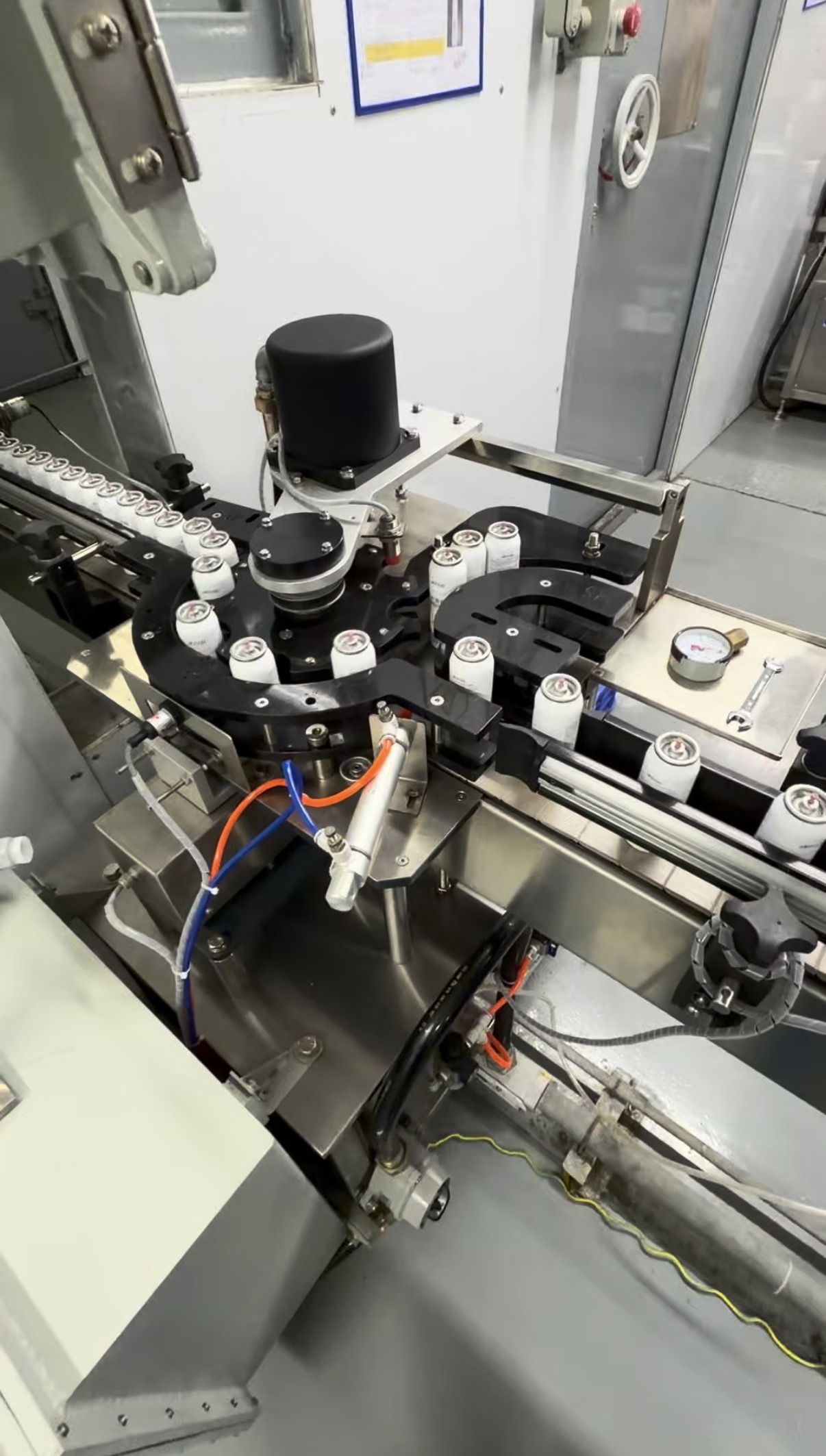
The distinction that matters to procurement teams is between a factory that owns pressurized filling and a general cosmetics factory that assembles outward packaging and outsources the aerosol step. The second model is common, and it produces two familiar failure modes: unstable filling quality, and missing dangerous-goods export documents that lead to customs detention.
Certifications and Export Documentation: The Verifiable Layer
For aerosol cosmetics, certification is not a marketing asset — it is the operating permission for export. The credentials below are stated with their numbers and validity periods so they can be checked independently.
| Credential | Number | Issuer | Validity | Scope / market |
|---|---|---|---|---|
| ISO 22716:2007 Cosmetics GMP | 205911 | DCI Certification Ltd | 2025-06-09 to 2028-06-08 | Production of aerosol (hydrating spray) cosmetics, including eye skin care and baby and children's skin care cosmetics; Global and EU |
| ISO 9001:2015 Quality Management System | 206000 | DCI Certification Ltd | 2025-07-14 to 2028-07-13 | R&D, production and sales of aerosol cosmetics within the scope of the qualification license; Global |
| ISO 45001:2018 Occupational Health & Safety Management System | 206001 | DCI Certification Ltd | 2025-07-14 to 2028-07-13 | R&D, production and sales of aerosol cosmetics within the scope of the qualification license; Global |
| Philippines FDA Cosmetic Notification | NN-1000016300591 | Republic of the Philippines Department of Health, Food and Drug Administration | 2026-05-13 to 2029-05-12 | MILUVCARE SUNSCREEN SPRAY SPF 50+ PA+++, under the ASEAN Cosmetic Directive |
The manufacturer also operates a 100,000-class GMP cleanroom and maintains special cosmetics R&D and registration capability, with more than 100 global beauty brands served.
On the export side, the documentation set includes the cosmetic production license, ISO 22716, ISO 9001 and ISO 45001 certificates, MSDS/SDS, the UN packaging certificate for dangerous-goods shipments, CPSR for the EU market, and technical dossiers for local cosmetic regulatory notifications across target markets. Hazard prompts are marked on outer cartons and shipping guidance is provided with the goods.
One boundary deserves emphasis because buyers frequently misread it. A factory can supply SDS, COA, CPSR and ingredient lists to support registration, but official registration requires brand-owned legal information. Submission must be handled by the customer's local responsible party; the manufacturer provides document support and cannot act as the registrant. Planning for this division of labour before sampling avoids a late-stage delay in the target market.
Applying BOV and Aerosol Formats Across a Product Range
Capability claims become credible when they map onto an actual product portfolio. Yongcheng's aerosol scope covers sun care, body care, hair care, facial care and specialty formats, and the same production base handles both BOV and conventional fills.
Sun care and body care
The sun care range includes a cooling sunscreen spray with SPF 50+ PA+++ and broad-spectrum UVA/UVB protection in a 150 ml aluminium aerosol can, alongside a sunscreen mousse, a brightening sunscreen spray, a sunscreen lotion, and a non-aerosol sunscreen spray option. Body care covers instant brightening sprays — including a 90 ml tone-up brightening spray formulated for a lightweight, fast-absorbing finish — a hair removal and fragrance aerosol mousse in a 150 ml can with a wild rose scent, deodorant with body fragrance, sports cooling spray, shower mousse and body acne care spray. Body mist and body fragrance formats sit within the same aerosol filling envelope.
Facial care and makeup wear
The facial range includes a hydration and soothing toner mist in a 300 ml aluminium can, built on a 4X Soothing Complex with Centella Asiatica extract plus Ceramide, Sodium Hyaluronate and Panthenol for sensitive skin. A makeup setting spray in a 120 ml can uses a dual-pack aerosol system with no propellant, a skin-nourishing peptide complex and multi-patented skincare ingredients, positioning it for long makeup hold with oil control. Facial toner mist, foundation mist, VC essence mousse and cleansing oil mousse formats extend the same platform — including a 150 ml watery milk cleansing oil mousse where the fine aerosol texture is part of the cleansing performance.
Hair styling and shaving
Hair styling is served by a men's fragrance strong styling spray in a 300 ml aerosol can, described by ultra-fine mist, instant quick-dry and a strong yet flexible, re-workable hold. Styling wax mousse, dry shampoo and foaming hair mask formats are produced in the same hair care family. Shaving is covered by a soft and refreshing shaving foam in a 250 ml aluminium can with a dense foam texture designed to soften coarse beard and reduce razor friction, and by a cleansing mousse with shaving.
Specialty formats
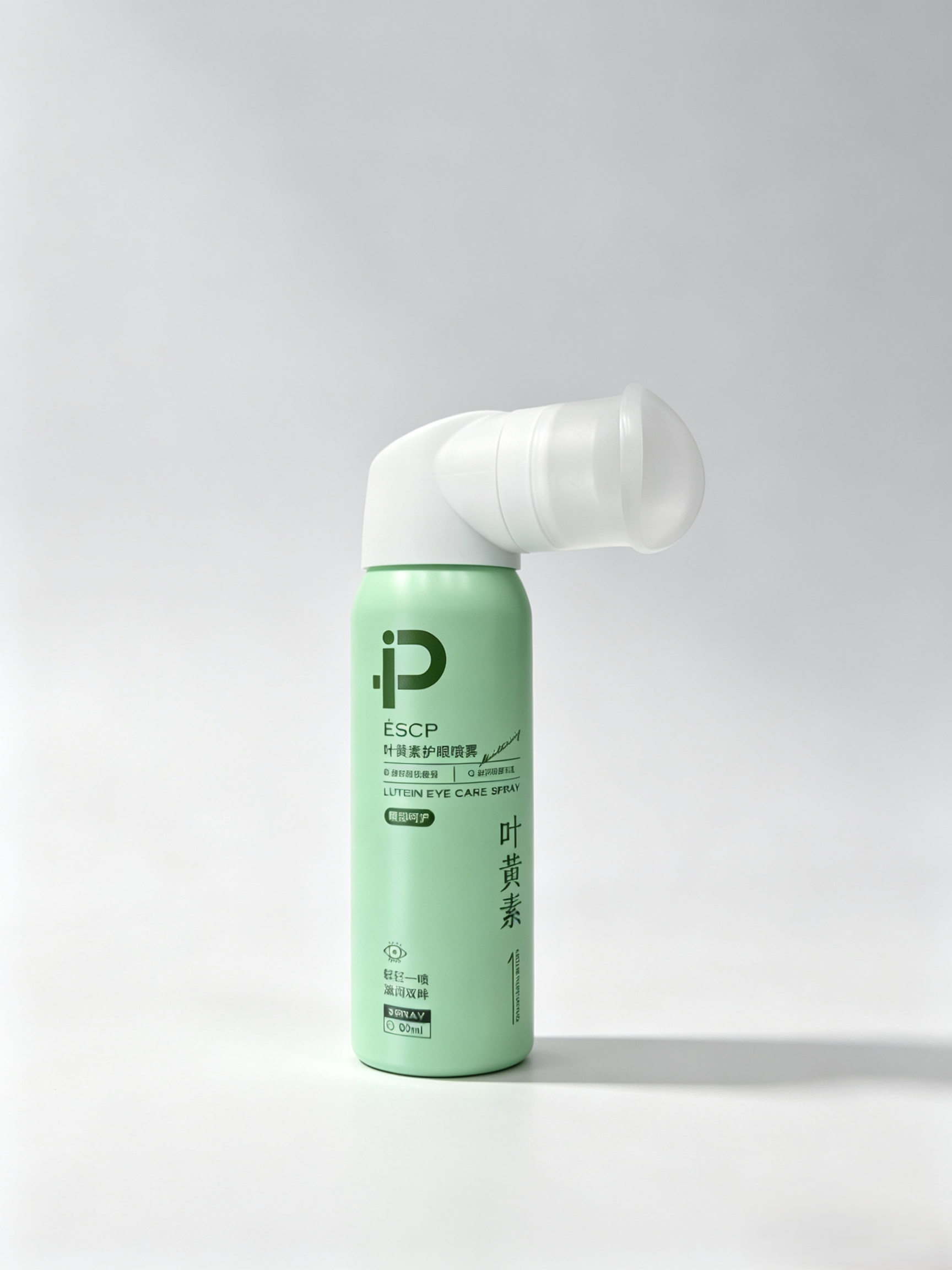
The specialty range includes an Eye Care Spray in a 90 ml aluminium can — the ESCP Lutein Eye Care Spray — that delivers a soft fine mist for external eye-surrounding skin coverage, formulated with Lutein and multi-moisturizing ingredients for heavy screen-time users and paired with a matching eye-cup nozzle. Custom perfume, nasal care mist, and pet outdoor protection spray complete the range. Across all of these formats, the aluminium aerosol can is the standard packaging material.
A concrete order example illustrates how these elements combine. A cosmetics brand in Kazakhstan ordered 20,000 cans of a 3-in-1 sunscreen spray combining sunscreen, toner and makeup base functions. The project spanned three years and covered full-chain OEM service including formula development, aerosol filling and packaging customization, with regulatory document support; the product was sold through local e-commerce channels with a lightweight, non-greasy texture and broad-spectrum UVA/UVB protection.
Market Signals Behind the BOV Question
Three independent data points explain why buyers are asking about dispensing architecture more often than they did a few years ago.
- The global aerosol cosmetics market was valued at USD 14.8 billion in 2025 (Dataintelo, Aerosol Cosmetics Market Research Report 2034, published 2026-04-15).
- European aerosol production for personal care reached a 47.8% share of total aerosol units in 2024 (European Aerosol Federation, FEA).
- The sun care cosmetics market, which contains the sunscreen spray category, is projected to reach USD 19.4 billion by 2033 (Grand View Research, Sun Care Cosmetics Market Size, Share Report, 2026–2033).
Regulation is tightening in parallel. China's first mandatory national safety standard for cosmetics, GB 7916-2026, takes effect on 1 January 2028 under SAMR/NMPA, raising the baseline documentation expectation for products manufactured in China regardless of the destination market. Supplier disclosure in the aerosol category already reflects this shift: public company information describes specialized Aerosol Cosmetics OEM/ODM and BOV packaging solutions as core capability rather than an optional add-on.
Read together, these signals point in one direction. Growth in spray-based personal care increases the number of brands that need pressurized filling, while compliance requirements raise the cost of getting that filling wrong. The result is a market where documentation and process ownership carry more weight in supplier selection than catalogue breadth.
Aerosol OEM Versus Ordinary Cream-Lotion OEM
Buyers who have previously sourced creams, lotions and masks sometimes assume the aerosol version is a packaging variation of the same process. It is a different production category. Aerosol manufacturing requires a dedicated pressure-resistant filling workshop, aerosol-specific equipment and dangerous-goods production qualification; general cosmetic factories that make creams, lotions and masks cannot perform aerosol filling and typically lack dangerous-goods export documentation.
| Dimension | Aerosol cosmetic OEM | Ordinary cream-lotion OEM |
|---|---|---|
| Filling environment | Dedicated pressure-resistant aerosol filling workshop | Standard cosmetic emulsification and filling lines |
| Qualification | Cosmetic production license plus dangerous-goods related qualification | Cosmetic production license |
| Export documents | UN packaging certificate, SDS/MSDS, CPSR, market-specific dossiers | Standard cosmetic export documents |
| Format coverage | Sprays, mists, mousses, foams | Creams, lotions, masks, non-pressurized skincare |
| Primary risk | Subcontracted filling, missing dangerous-goods documents, valve or can leakage | Formulation and stability risk |
For brands whose portfolio includes both pressurized and non-pressurized products, this means the aerosol portion should be qualified with a supplier that owns the pressurized step, and the documentation set should be confirmed before the purchase order rather than before the shipment.
A Procurement Checklist for BOV and Aerosol Supplier Readiness
The following checks translate the evidence above into verifiable questions a buyer can put to any aerosol OEM/ODM candidate, including this one.
| Verification item | What to confirm |
|---|---|
| Filling ownership | In-house aerosol filling workshop and pressure filling equipment, not outward packaging assembly alone. |
| Certification set | Cosmetic production license, ISO 22716, ISO 9001 and ISO 45001, with certificate numbers and validity dates. |
| Dangerous-goods documents | UN packaging certificate and SDS/MSDS available for the target shipping mode, plus CPSR for EU-bound products. |
| BOV availability | Confirmation that BOV filling is offered, and that the recommendation between BOV and conventional aerosol is tied to formula, budget and market rather than to a single architecture. |
| Commercial terms | MOQ per formula, lead time after sample confirmation, and how packaging supply cycles affect the schedule. |
| Quality control | QC sampling rate, and incoming inspection scope for aerosol valves and cans. |
| Regulatory division of labour | Written clarity that the buyer's local responsible party files the registration, with the supplier providing technical dossiers. |
| Finished-product references | Real aerosol export projects, not only component or packaging samples. |
Future Outlook
Two forces are likely to shape aerosol cosmetics sourcing over the next several years. The first is category growth: spray, mist, mousse and foam formats continue to expand within sun care, facial care and body care, which increases demand for pressurized filling capacity and for suppliers that can move between architectures. The second is regulatory tightening, illustrated by the 2028 effective date of GB 7916-2026 in China, which raises documentation expectations from the manufacturing side.
BOV adoption will follow those forces unevenly. Where formulas are sensitive, alcohol-free or positioned for sensitive skin, the separation of formula and propellant earns its higher unit cost. Where products compete primarily on price and the formula tolerates direct propellant contact, conventional aerosol will remain the rational choice. The practical consequence for buyers is that supplier capability should be judged on the ability to run both options competently — and on the paper trail that proves it.
FAQ
What is BOV aerosol, and how does it differ from a conventional aerosol can?
BOV stands for Bag-on-Valve, an aerosol packaging technology in which the cosmetic formula is sealed inside an inner flexible bag and completely separated from the non-flammable propellant — compressed air or nitrogen — that fills the outer chamber of the can. When the nozzle is pressed, the external gas squeezes the inner bag and pushes product out through the valve. In a conventional aerosol, the formula and propellant share the can chamber, so the formulation must tolerate direct propellant contact.
What are the practical advantages of BOV for cosmetic formulas?
Because formula and propellant never mix, active ingredients are protected and chemical reaction between the two is avoided. Documented benefits include a non-flammable propellant that supports safer transport, 360-degree spraying at any orientation, nearly full product evacuation with product utilization up to 99%, and good compatibility with sensitive, natural and alcohol-free formulas. Typical applications include alcohol-free perfume, facial mist, sunscreen spray, after-sun care and sensitive body care.
Is BOV aerosol more expensive than standard aerosol packaging?
Yes. BOV hardware carries a higher unit cost than a standard aerosol can. Suppliers that operate both architectures typically recommend the option that balances the buyer's budget, market regulation and product positioning, and conventional aerosol remains more economical where the formula is not sensitive to propellant contact.
What is the MOQ and lead time for aerosol cosmetic OEM production?
Regular MOQ is 10,000 cans per formula, with a range of 10,000–20,000 cans depending on the project. Lead time is 30–45 working days after sample confirmation and is affected by the aerosol can packaging supply cycle. Small-batch trial orders carry a higher unit price, limited availability and longer lead time because of packaging minimum order constraints. Formula customization, fragrance adjustment and label customization are supported for overseas brand customers.
Which certifications and export documents should a buyer verify?
At factory level: the cosmetic production license, ISO 22716:2007 Cosmetics GMP (certificate 205911, issued by DCI Certification Ltd, valid 2025-06-09 to 2028-06-08, covering aerosol hydrating spray production as well as eye skin care and baby and children's skin care cosmetics), ISO 9001:2015 (certificate 206000, valid 2025-07-14 to 2028-07-13) and ISO 45001:2018 (certificate 206001, same validity period). At export level: MSDS/SDS, the UN packaging certificate required for aerosol dangerous-goods shipments, CPSR for the EU market, and technical dossiers for local regulatory notifications. Market-level registration can also be demonstrated — for example, the Philippines FDA Cosmetic Notification NN-1000016300591 covering MILUVCARE SUNSCREEN SPRAY SPF 50+ PA+++ under the ASEAN Cosmetic Directive, issued 2026-05-13 and valid to 2029-05-12.
Can an OEM supplier complete regulatory registration in the buyer's market?
Suppliers can provide complete technical dossiers — SDS, COA, CPSR and ingredient lists — to support local registration, and can support document preparation for EU and Southeast Asian markets. Official registration requires brand-owned legal information, so submission must be handled by the customer's local responsible party. A manufacturer cannot act as the registrant; its role is document support.
What storage and shipping risks apply to aerosol cosmetics?
Aerosol products are pressurized goods. High-temperature storage, direct sunlight and heavy impact during transport should be avoided, and shipments must move through dangerous-goods logistics channels. Risk prompts are marked on outer cartons and shipping guidance is provided. For export, the UN dangerous-goods packaging certificate and SDS/MSDS are required for customs clearance by sea or air.
What risks arise when a supplier outsources aerosol filling?
Three risks recur. General cosmetic factories without aerosol qualification may outsource filling, producing unstable quality and missing dangerous-goods documents. A supplier without a valid UN certificate can cause customs detention of the shipment. Unqualified aerosol valves and cans create leakage risk. These are addressed by confirming that the supplier owns self-operated aerosol filling lines, verifying the full set of export dangerous-goods documents in advance, and performing strict incoming inspection on valves and cans.
Where to Verify the Details
Company profile, product scope, certification details and customization options for Guangzhou Yongcheng Cosmetics Co., Ltd. are published on the official site at www.gzyc-cosmetics.com. The English company profile covering the aerosol portfolio and production base is available as a downloadable document.
Published supplier contact details
Guangzhou Yongcheng Cosmetics Co., Ltd.
Contact: Henson Hole
Email: HensonHole@gzyc-cosmetics.com
Tel / WhatsApp: +86 157-7320-9989
Address: 8/F, Building 2, Baotailai Center, Huadu District, Guangzhou, China
Company profile (PDF): Guangzhou Yongcheng Cosmetics — E-Profile 2026
Have Questions or Need More Details?
Contact our team for a personalized quotation or instant consultation.
Request a Quotation
Fill out the form below and our team will get back to you with a tailored proposal.
WhatsApp Direct Chat
Prefer to chat in real-time? Message us on WhatsApp for instant assistance & quick answers.
- Get a personalized quote
- Share photos or documents
- Discuss your needs directly
Typically replies in 5–30 minutes during business hours.