
BRCGS Issue 9 Certificate 051A1312001: How Buyers Read It
Global canned fish programmes are won or lost on paperwork long before a pallet reaches a port. Canned mackerel, canned sardine and canned tuna frequently travel under one supplier approval file, one retailer documentation checklist and one container. That is why a single document — certificate 051A1312001, issued by Intertek Certification Ltd against the BRCGS Global Standard for Food Safety Issue 9 — can sit at the centre of an importer's qualification record for three different products at once.
A certificate is not a promise. It is a document that names a standard, an issue, a certifying body, an accreditation reference and a product scope, and each of those elements can be checked against what is actually ordered, produced and shipped. What follows is a reading order for doing exactly that.
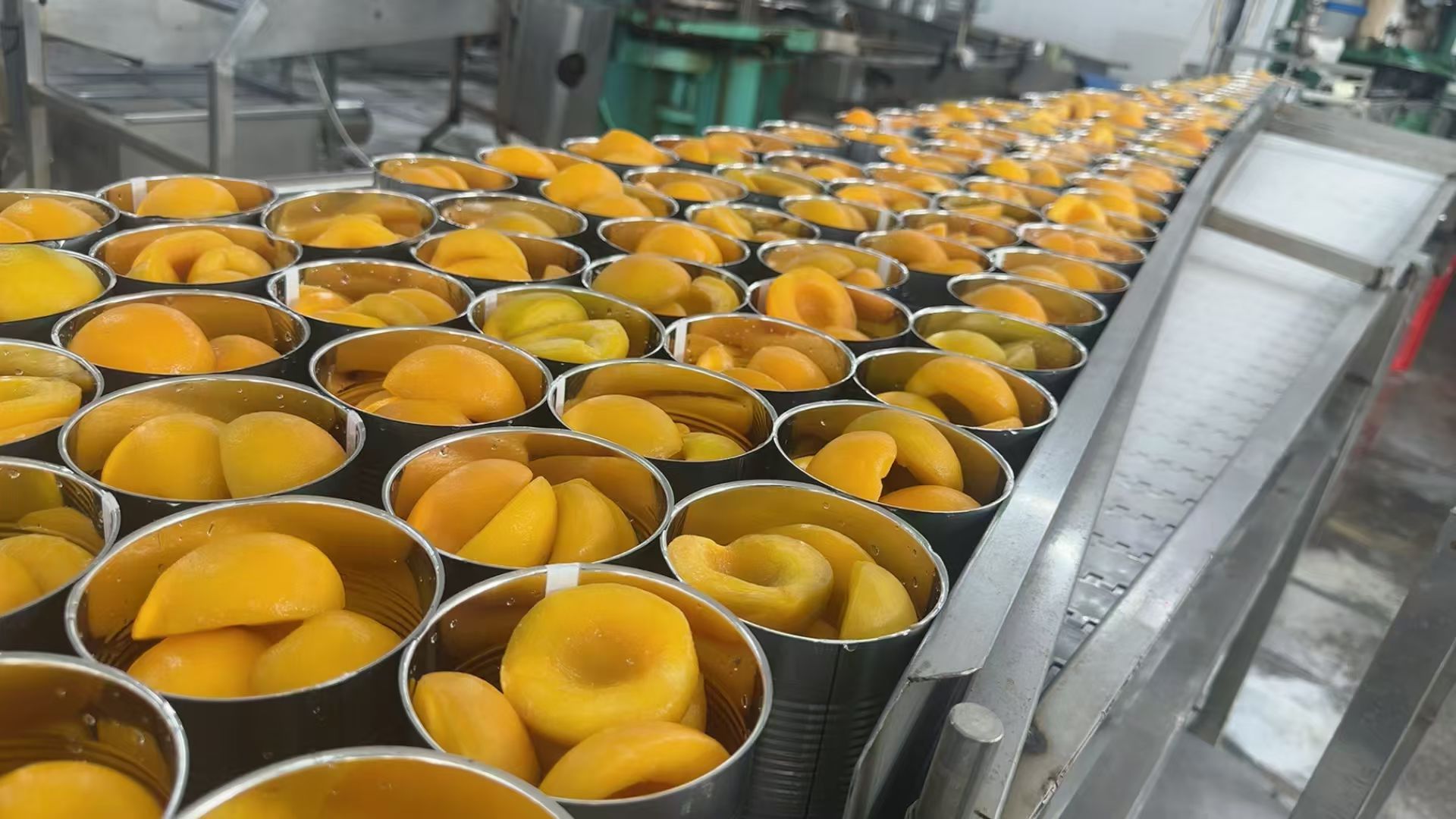
Certification attaches to the manufacturing site and the products assessed at that site — not to a supplier's entire catalogue.
What certificate 051A1312001 attests — and what it leaves out
The BRCGS Global Standard for Food Safety is a food safety certification programme for food manufacturers, recognised under the Global Food Safety Initiative (GFSI) benchmarking framework. “Issue 9” identifies the edition of the standard against which the site was audited. Certification is issued by a third-party certification body after an on-site assessment of a manufacturing site's food safety and quality management system, and the certificate records the scope that was assessed.
Certificate 051A1312001 therefore states five things at once:
- Standard and issue: the BRCGS Global Standard for Food Safety, Issue 9.
- Certifying body: Intertek Certification Ltd.
- Accreditation: UKAS Accredited Body No. 014. UKAS is the United Kingdom's national accreditation body, and the reference identifies the accreditation status under which this type of certification activity is issued.
- Scope: the manufacturing of canned mackerel, canned sardine and canned tuna.
- Site: certification attaches to the manufacturing site named on the certificate.
The exclusions matter as much as the inclusions. The certificate does not cover a supplier's whole catalogue. It does not travel automatically from one factory to another. It does not replace a product test report, a species-authentication result, a halal certificate or a certificate of origin, because each of those answers a different question from the one the audit answered.
Why the scope line now matters more than the certificate logo
Three signals explain why importers have moved certificate reading into the purchasing workflow instead of the filing cabinet.
Volume. Canned fish accounts for 75.3% of the canned seafood market, a category valued at USD 57.69 billion in 2025 according to Fortune Business Insights. Canned tuna alone represents 43% of global canned fish import volume under HS 1604, a trade flow that reached 3.2 million tonnes and USD 17.54 billion in 2023 in UN Comtrade-derived figures. Categories at that scale attract retailer scrutiny, private-label specifications and repeat audits.
Regulation. EU Regulation 2024/3115, effective from January 2025, tightens plant health and traceability requirements for preserved foods imported into the European Union. In the United States, foreign processors of canned foods fall under FDA requirements to register as Food Canning Establishments (FCE) and to file Scheduled Processes (SID). Documentation is now a market-access condition rather than an administrative courtesy.
Buyer behaviour. Retailer onboarding teams and customs brokers increasingly ask for the certificate that matches the product, not merely a certificate that matches the supplier. Against that test, a scope line naming canned mackerel, canned sardine and canned tuna either answers the purchase order or it does not — and that can be settled before a deposit is paid.
One caveat on market figures: research houses define “canned” differently, and valuations for the same category can diverge sharply depending on whether shelf-stable packaged products are counted alongside hermetically sealed cans. Market-size numbers are useful for direction, not for supplier decisions.
Reading the certificate field by field
A certificate is verified by treating each printed field as a separate claim with its own check. The table below sets out the reading order.
| Certificate field | What it actually tells the importer | Verification action |
|---|---|---|
| Certificate number — 051A1312001 | The unique identifier for this certificate, distinct from the supplier's name or brand. | Record it in the supplier approval file and on the purchase order evidence line so the reference is traceable later. |
| Standard and issue — BRCGS Global Standard for Food Safety, Issue 9 | Which edition of the standard the site was audited against. | Match the issue stated here with the edition your own specification or retail customer requires. |
| Certifying body — Intertek Certification Ltd | Who performed the assessment and issued the certificate. | Confirm the body is active and recognised for this certification scheme. |
| Accreditation — UKAS Accredited Body No. 014 | The accreditation status under which the certification body issues this certificate. | Keep the number in the file and cross-check it against the accreditation body's public listing. |
| Scope — manufacturing of canned mackerel, canned sardine and canned tuna | The products and the activity that were assessed. This is a product list, not a category label. | Map every purchase order line item against these named products before confirming the order. |
| Site | Which manufacturing location was assessed. | Confirm that the site producing your goods is the site named on the certificate. |
The certificate answers questions about a site's food safety management system. It does not answer questions about a specific lot.
Seven steps to verify the certificate before releasing the order
Certificate verification is a sequence, and the sequence matters. Each step depends on the one before it.
- Fix the identifier. Write the certificate number 051A1312001 into the supplier file and reference it on purchase orders. An unnumbered certificate image in an email thread cannot be tracked across renewal cycles.
- Match the standard issue. Confirm that the certificate is issued against the BRCGS Global Standard for Food Safety Issue 9, and that this is the edition your specification or retail customer accepts.
- Check the issuer and its accreditation. The certifying body is Intertek Certification Ltd, operating under UKAS Accredited Body No. 014. Verify both against the certification body's directory and the accreditation listing rather than trusting the PDF alone.
- Read the scope as a product list. The scope covers the manufacturing of canned mackerel, canned sardine and canned tuna. Three specific products were assessed. Adjacent lines were not named.
- Map each PO line to the scope. Every line item should be resolvable to one of the named products. If it is not, that line needs its own certificate evidence.
- Confirm the producing site. Certification attaches to a site. Where a supplier sources from more than one factory, ask which site produced which line, and hold a certificate for that site.
- File the evidence and set a re-check. Store the certificate, the directory verification and the PO mapping together, and re-verify at the certificate's renewal point instead of reusing an old scan.
Mapping the certified scope to purchase order line items
The practical test is whether a warehouse clerk, a broker and a retail auditor would all reach the same conclusion from the same PO. The table below shows how the scope of certificate 051A1312001 is applied to common line items.
| Purchase order line item | Position against the certified scope | Buyer action |
|---|---|---|
| Canned sardines in vegetable oil, 125g or 425g | Inside the named scope — canned sardine manufacturing. | Confirm net weight, packing medium and drained weight on the specification sheet; keep the certificate reference in the file. |
| Canned mackerel in tomato sauce, 425g | Inside the named scope — canned mackerel manufacturing. | Same product-level specification check; keep one certificate reference per line. |
| Canned tuna in water, 170g (843#) | Inside the named scope — canned tuna manufacturing. | Confirm the SKU specification and labelling for the destination market separately. |
| Canned Alaska pollock or canned squid | Outside the three named products. | Request a certificate whose scope names the product, or equivalent recognition for the producing site, before confirming the line. |
| Canned tomato paste, diced tomato or mixed vegetables | Outside the named scope — a different product family. | Treat as its own product line with its own certification, specification and inspection evidence. |
| Mixed container combining seafood, vegetables and fruit | Partially covered — coverage follows the SKU, not the container. | Map each SKU to the certificate that covers it; never extend one certificate across an entire mixed load. |
This table illustrates how a scope statement is applied to line items. It does not assert that any particular supplier lacks certification for products outside the named scope.
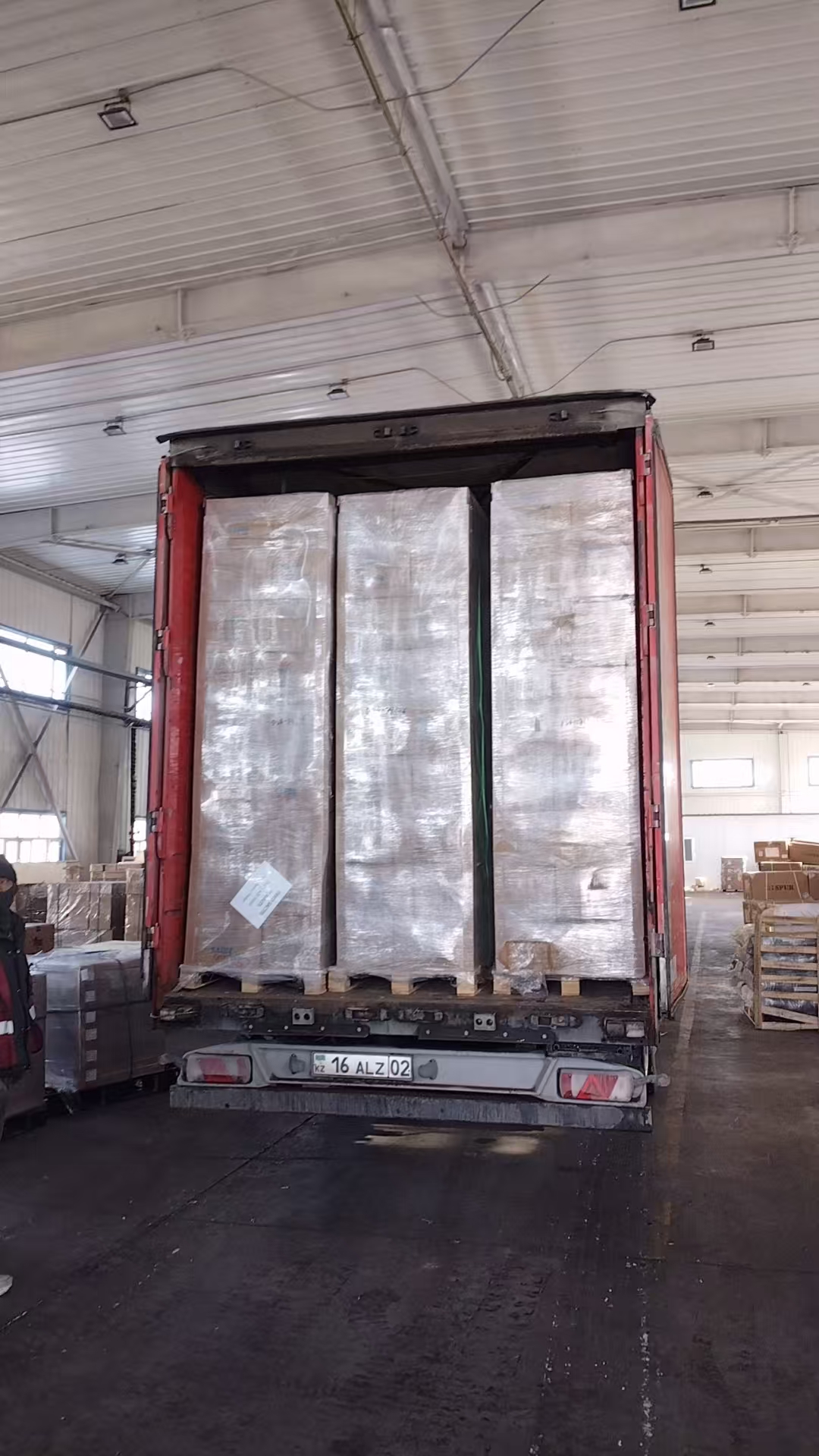
The certificate reference belongs in the shipment file alongside the specification sheet, the inspection record and the bill of lading.
Where Agrogentra's canned fish range sits in that chain
Xiamen Agrogentra & Co., Ltd. (Agrogentra) is an international trading company established in 2000 and based in Xiamen, China, specialising in the sourcing, quality control and supply of Chinese canned food, fresh fruits and vegetables and frozen food products. The company has supplied qualified food products to global markets for over 25 years, with export business accounting for 100% of sales and customers across the United States, Latin America, Europe and Africa.
For buyers whose task is verification rather than browsing, three operating facts matter more than a product list:
- Quality control structure. Independent QC departments operate in both the Xiamen and Qingdao offices, running full-process inspections that include factory audits, raw material testing, production monitoring, finished product inspection and pre-shipment sampling.
- Consolidated shipments. Canned seafood, canned vegetables and canned fruit can be combined for mixed container loads, with flexible packaging solutions and customised service for customers in different regions and industries.
- Commercial framework. Minimum order quantity is a mixed FCL, with LCL available upon negotiation. Delivery is arranged on FOB terms. Payment is T/T with a 30% deposit and the balance against copy of the B/L. Acceptance is based on pre-shipment inspection of cargo quantity, packaging and appearance.
The canned fish and vegetable lines in Agrogentra's product group 7407 are offered in net weights of 125g, 170g (843#), 425g and 1000g, with in-oil, in-tomato-sauce and brined variants, fully sterilised and ready to eat, with a shelf life of 36 months at ambient temperature.
Canned mackerel, canned sardine and canned tuna are exactly the three species named in the scope of certificate 051A1312001, which is why that overlap is worth checking on paper rather than assuming. The certificate names the products; the specification sheet, the invoice description and the pre-shipment inspection record confirm the actual SKUs shipped. When a purchase order adds a line outside those three species, the coverage question has to be answered by a certificate that names the added product.
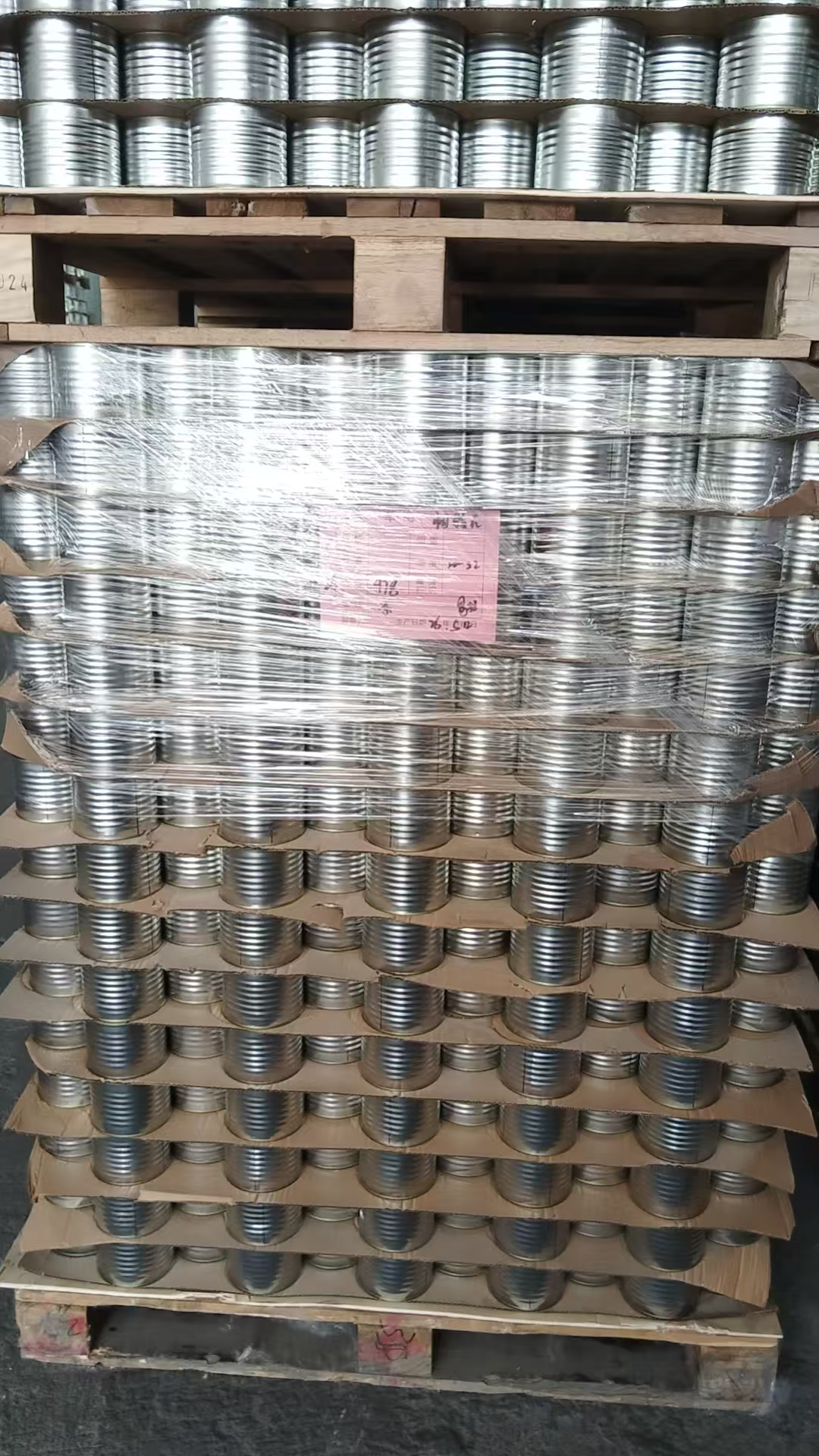
Palletised cartons: in a mixed load, each SKU should be traceable to the certificate that covers it.
Application: four situations where certificate reading earns its cost
Retailer and private-label onboarding. Listing processes normally require GFSI-recognised certification at the manufacturing stage. The file survives review only if the certificate's scope, issuer, accreditation and site all match the product being listed. A certificate that names canned tuna does not support a canned fruit listing, even from the same factory group.
Mixed and consolidated container loads. When a single container carries canned seafood, canned vegetables and canned fruit, coverage has to be built line by line. The correct instruction to a supplier is not “send your certificate” but “confirm which certificate covers which line item on this order”.
Repeat orders and renewals. A certificate held in a folder from an earlier order cycle may not reflect the current position. Re-verify at renewal, and re-verify the accreditation reference at the same time — the supplier relationship may be unchanged while the documentation underneath it is not.
Incoming inspection and claims. Documentation and inspection do different jobs. A pre-shipment inspection confirms quantity, packaging and appearance for a specific consignment. If cans arrive with domed or bulged ends, the correct handling is procedural rather than commercial: quarantine the affected batch and the whole batch it came from, do not consume or place it on shelves, record batch number, production date and arrival date with photographs, spot-check the same batch carton by carton, review transport temperature records and warehouse humidity, then report to the supplier with the batch number and retain samples for third-party testing.
Storage discipline after arrival. Ambient-stable canned goods still have storage conditions. A cool, dry environment between 5–25°C, relative humidity below 75%, pallets keeping stock at least 10 cm off the floor and clear of walls for ventilation, and FIFO rotation with weekly checks for rust, swelling or leakage will do more for product quality than most additional paperwork.
Market trend analysis: an ambient-stable product with a documentation-heavy assurance model
The commercial context makes certificate literacy more valuable, not less. Canned seafood was valued at USD 57.69 billion in 2025, with fish products holding 75.3% of that market. Under HS 1604, global imports of canned and prepared fish reached 3.2 million tonnes and USD 17.54 billion in 2023, with canned tuna alone taking 43% of that volume. The canned fruit and vegetable category follows a similar pattern of scale and standardisation, projected at USD 127.7 billion in 2026 by one commercial research house.
The structural reason this matters to verification is the format itself. Canned product carries a shelf life in the range of 24–36 months at ambient temperature, compared with 12–18 months at −18°C for frozen equivalents. Reefer freight runs roughly 30–50% higher than ambient container freight, frozen loss rates in the range of 5–10% compare with below 1% for canned goods, and cold storage energy consumption is several times that of an ambient warehouse. In exchange for higher packaging cost and higher energy use at the sterilisation stage, the canned format removes continuous cold-chain dependency from storage and transport.
The trade-off is analytical, not promotional: when a product carries no cold chain to monitor, the buyer's assurance shifts onto documents. Certificates, specification sheets, inspection records and batch traceability carry the weight that temperature logging carries for frozen goods. That is the reason reading certificate 051A1312001 correctly is a commercial skill rather than an administrative formality.
Comparison with traditional verification approaches — and the boundaries of certification
Importers generally rely on one of three verification models, and each has a real limitation.
Relationship-based approval. The supplier has performed well across several shipments, so documentation review becomes lighter. The limitation is that a site's system can change — new equipment, new staff, a change of production line — without the buyer noticing, and historic performance says nothing about a product line that has just been added.
Inspection-only verification. A pre-shipment inspection of cargo quantity, packaging and appearance confirms what is in front of the surveyor. Its limitation is scope: it describes a consignment, not the process behind it, and it cannot evidence the system-level controls that a retailer audit asks about.
Certification-based verification. A BRCGS Issue 9 certificate such as 051A1312001 provides independent, scheme-based assurance of a site's food safety management system. Its limitations are equally specific. It is a point-in-time assessment, not a lot-by-lot guarantee. It attaches to a named site and a named product scope, so it says nothing about a second factory or an unnamed product family. And it does not substitute for commercial, labelling or religious-compliance documents: halal certification, certificates of origin, destination-market labelling compliance and product-level test reports each remain separate evidence items.
The workable model is stacked rather than singular: certification for the system, specification sheets for the SKU, pre-shipment inspection for the consignment, and per-line scope mapping for the purchase order. Remove any one layer and a gap appears that the others cannot close.
Future outlook
Three changes are already visible in how importers handle certification documents, and each points in the same direction.
First, certificate data is moving from attachments into structured supplier records. Capturing the certificate number, the standard issue, the certifying body and the accreditation reference as fields rather than as a PDF makes it possible to screen a supplier file automatically at renewal.
Second, coverage is becoming SKU-level rather than supplier-level. As mixed container loads and multi-origin sourcing become routine, the question shifts from “does this supplier hold BRCGS certification?” to “which certificate covers this line item on this order?”
Third, verification is moving upstream in the transaction. With tighter EU traceability requirements for preserved foods and continuing US registration obligations for canned food processors, the certificate is increasingly checked before the order is confirmed rather than after the container is booked. For importers of canned mackerel, sardine and tuna, reading the scope line correctly remains the cheapest risk control available.
FAQ
Does certificate 051A1312001 cover every canned product a supplier sells?
No. The scope is limited to the manufacturing of canned mackerel, canned sardine and canned tuna. Other canned fish species, canned vegetables and canned fruit are not named and therefore require their own certification evidence. Certification also attaches to the site named on the certificate, not to a trading company or a brand.
What does “UKAS Accredited Body No. 014” add to the certificate?
It identifies the accreditation under which Intertek Certification Ltd issues this certification. UKAS is the United Kingdom's national accreditation body, and the accreditation reference concerns the competence of the certification body itself. It is a check on the issuer, not on the product in the can.
How should an importer confirm the certificate is current?
Record the certificate number as the identifier in the supplier approval file, confirm that the stated standard issue matches what the buyer's own specification or retail customer requires, verify the issuer and accreditation against public listings, and re-verify at the certificate's renewal point rather than reusing a scan received in an earlier order cycle.
If the scope names three fish species, can a fourth canned fish line be added to the same order?
Adding a line does not extend coverage. The added product must be covered by a certificate whose scope names it, or by equivalent recognition for the producing site. In practice, the purchase order should state which certificate supports which line item.
Are product test reports and pre-shipment inspection still necessary when a supplier holds BRCGS certification?
Yes. Certification is an assessment of a site's food safety management system, while specification sheets, product test reports and pre-shipment inspection of cargo quantity, packaging and appearance answer product-level and consignment-level questions. The three layers address different risks.
What are Agrogentra's order, payment and inspection terms?
Minimum order quantity is a mixed FCL, with LCL available upon negotiation. Delivery is arranged on FOB terms. Payment is T/T with a 30% deposit and the balance against copy of the B/L. Acceptance is based on pre-shipment inspection of cargo quantity, packaging and appearance.
How should certified canned fish be stored once it arrives?
Store in a cool, dry place at 5–25°C with relative humidity below 75%, on pallets at least 10 cm off the floor and clear of walls for ventilation. Rotate stock on a first-in, first-out basis and inspect weekly for rust, swelling or leakage. Cans with domed ends or signs of leakage should never be consumed; quarantine the batch, record batch numbers and photographs, and notify the supplier.
What shelf life and pack formats apply to the canned fish lines?
The canned fish and vegetable lines in product group 7407 are offered in net weights of 125g, 170g (843#), 425g and 1000g, in vegetable oil, tomato sauce and brined variants, fully sterilised and ready to eat with a shelf life of 36 months at ambient temperature.
Summary
Certificate 051A1312001 is one line in a supplier file, but it is a line that can be checked. Match the standard issue, match the certifying body and its accreditation reference, read the scope as a three-product list rather than a category, confirm the producing site, and map every purchase order line item against the named scope. A certificate that survives those five checks is worth more than one that merely arrives as an attachment.
Agrogentra's company leaflet, which lists its canned product lines and commercial terms, is available for download: Agrogentra leaflet (PDF).