
Baby Diapers: A Buyer's Guide to Quality, Materials & Trends
Baby diapers are a daily essential for families worldwide, and the category remains one of the most dynamic segments in the light industry and daily-use sector. Quanzhou ERA Sanitary Products Co., Ltd. is a manufacturer based in Jinjiang, Quanzhou, Fujian Province, China, that specializes in disposable hygiene products, producing baby diapers, pull-up pant diapers, sanitary pads, adult diapers, wet wipes, and tissue paper under registered brands including my A+, OnePcDry, Alotof, EcoBingo, my ERA, and Binnions. The company reports that export business accounts for 100% of total sales, with main markets in Europe, the USA, Southeast Asia, Central Asia, South America, Africa, and the Middle East.
The Problem: What Parents and Buyers Actually Need
For parents, the daily and overnight use of baby diapers comes with a clear set of priorities: comfort and breathability, long-lasting absorbency, and reliable leak prevention. These requirements apply across all climates and normal ambient temperatures, and they extend to travel, childcare centers, and short-term medical use. For professional buyers — importers, distributors, supermarkets, and cross-border e-commerce operators — the priorities shift to product compliance, consistent quality at scale, and the flexibility to customize branding or specifications.
The tension is that these two sets of needs must be met simultaneously. A diaper that performs well in absorbency but fails breathability can cause skin irritation; a diaper that is soft but leaks overnight fails its core job. On the supply side, buyers must verify that certifications, materials, and manufacturing standards match the requirements of their destination markets — particularly in the European Union, where regulators restrict a wide range of hazardous substances in consumer products.
The Opportunity: A Market Still Expanding
Industry data points to continued expansion in the baby diaper category. The global baby diapers market was valued at approximately USD 83.3 billion in 2025 and is projected to reach USD 141.8 billion by 2033, according to Grand View Research. Asia Pacific dominated the category with a 61.92% share in 2025, generating approximately USD 50.01 billion per Fortune Business Insights. At the manufacturing level, Fujian Province alone accounts for 63.9% of China's total baby diaper exports, with an export value reaching 8.74 billion yuan in 2024, according to Xiamen Customs and Jiayue.
This creates a favourable environment for buyers who are evaluating long-term supply partnerships: demand is growing, production capacity is concentrated, and the manufacturers best positioned to serve international markets are those with established export infrastructure and compliance credentials.
The Brand Solution: my A+ and the ERA Product Family
my A+ is a registered brand of Quanzhou ERA Sanitary Products Co., Ltd., applied to a line of disposable baby diapers designed for newborn through toddler care. The my A+ series spans tape-style diapers in models BD01, BD02, BD03, BD04, BD05, BD06, BD07, and BD08, as well as premium models PD01 and PD02 with fully synthetic absorbent cores. The broader portfolio also includes OnePcDry-branded diapers (OD01, OD02), the Alotof brand (AL01), and the eco-positioned EcoBingo brand (EB01).
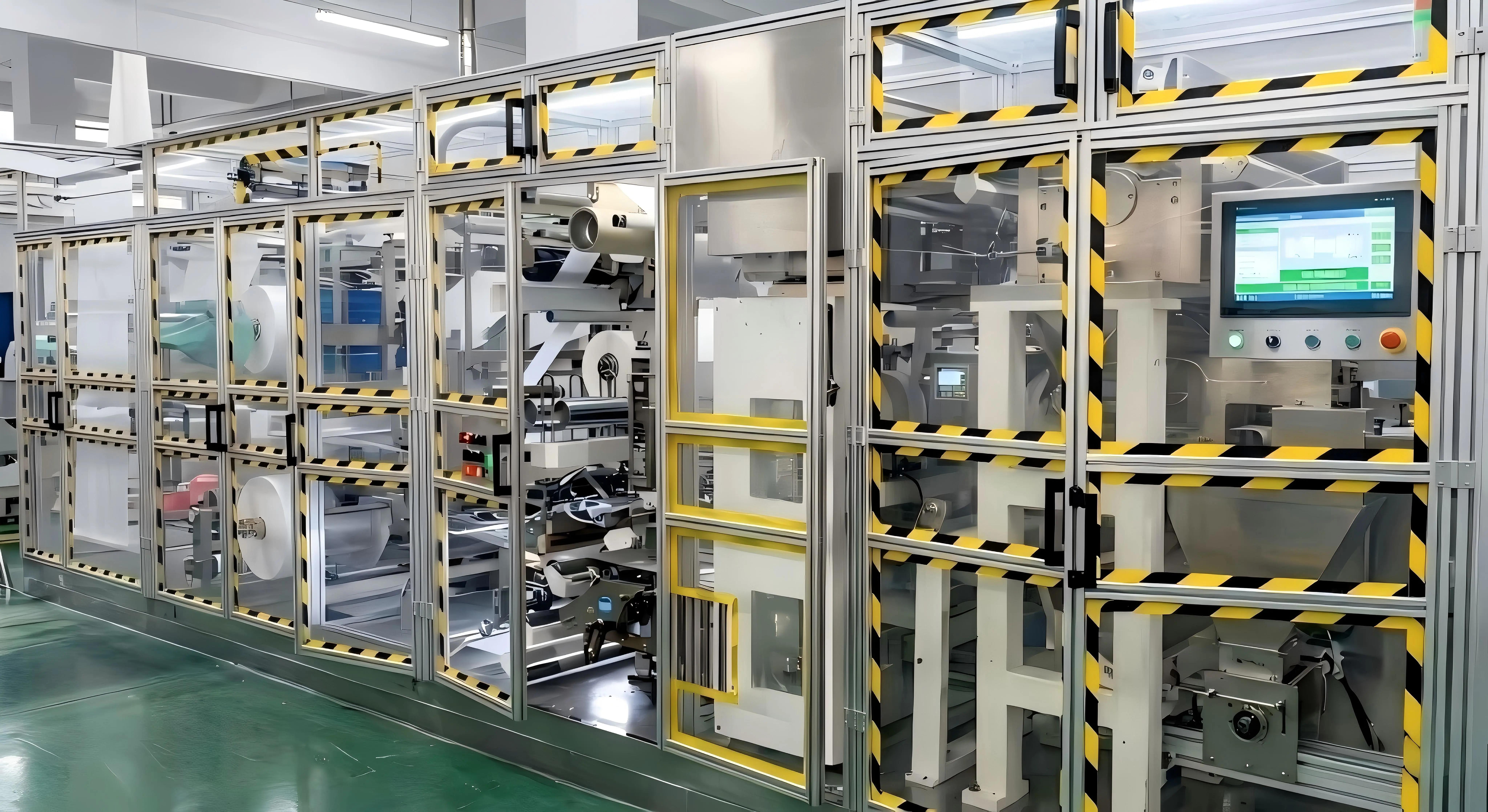
Quanzhou ERA's manufacturing base is supported by a facility covering 100,000 square meters, approximately 220 employees, and an annual output of 200,000,000 pieces. The company maintains a professional R&D team of 15 engineers, holds more than 10 patents and over 100 copyrights, and operates standardized, international-level production workshops with automated lines. For international buyers, the company provides a one-stop foreign trade service system with independent import and export rights.
Product Line Overview
| Model | Brand | Available Sizes | Key Features (from specifications) |
|---|---|---|---|
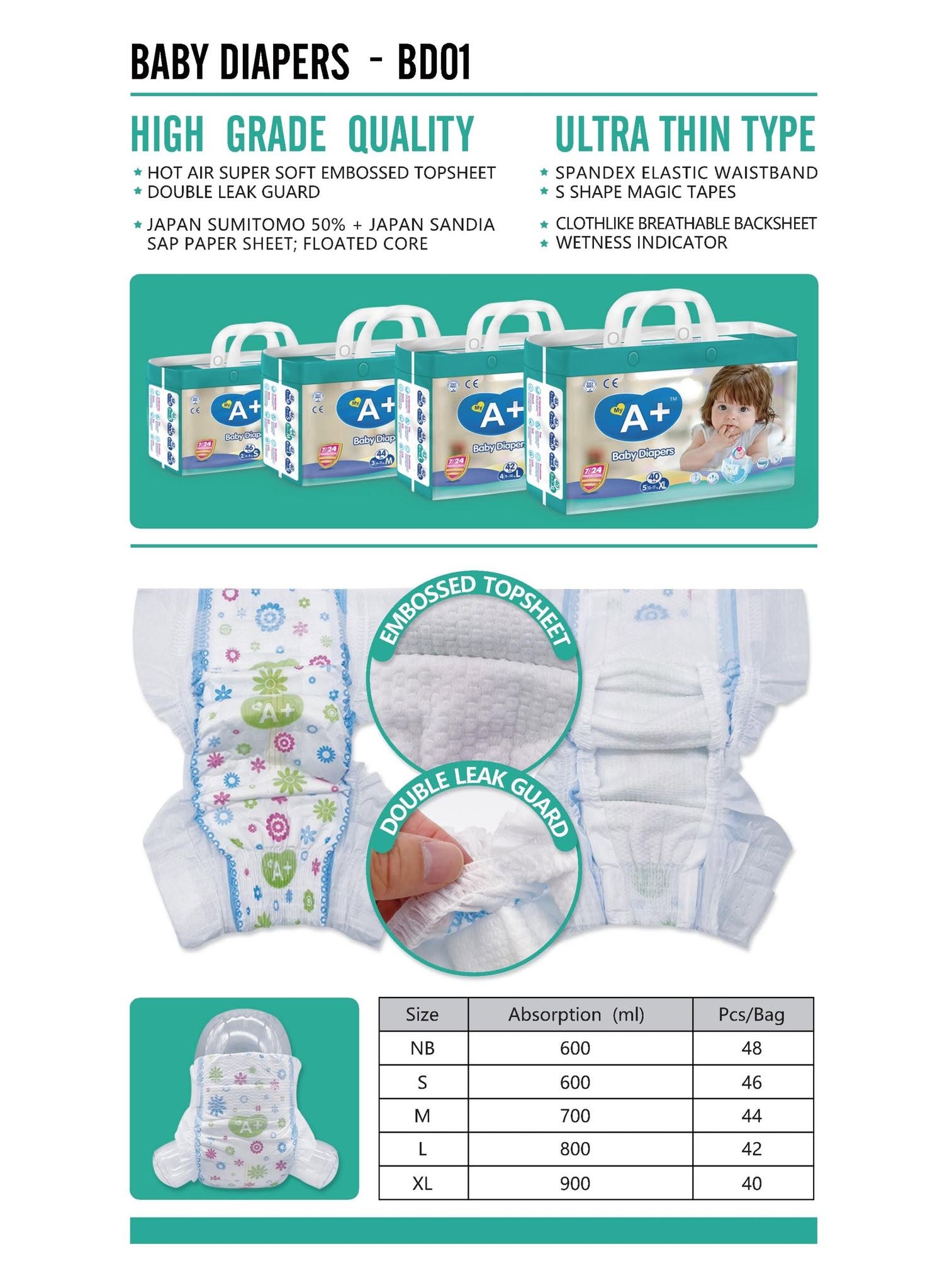
| BD01 / BD02 | my A+ | NB, S, M, L, XL | Hot air super soft embossed top sheet, double leak guard, Japan Sumitomo 50% + Japan Sandia SAP paper sheet, floated core, spandex elastic waistband, S shape magic tapes, clothlike breathable backsheet, wetness indicator |
| BD03 / BD04 | my A+ | BD03: S–XL; BD04: S–L | Hot air super soft embossed top sheet, double leak guard, floated core with Japan Sumitomo 50% + Japan Sandia SAP, spandex elastic waistband, S shape magic tapes, hot air super soft backsheet, wetness indicator |
| BD05–BD08 | my A+ | BD08: S–XXL | Leak guard, spandex-elastic-ring waistband, colorful clothlike breathable backsheet, S shape magic tapes, spunbond nonwoven top sheet, green ADL, Japan SAP, USA fluff pulp, threefolded |
| PD01 | my A+ | M, L, XL, XXL | Full 100% SAP paper (LG + Sumitomo), crotch elastic design, leak guard, soft hot air non-woven top sheet, super soft clothlike breathable spunbond back sheet, wetness indicator, floated core, anti-rash oil lines |
| PD02 | my A+ | S, M, L, XL, XXL | Full 100% SAP paper (LG + Sumitomo), super soft hot air non-woven top sheet and back sheet, crotch elastic design, leak guard, wetness indicator, floated core, dispose tapes |
| OD01 / OD02 | ONePcDRY | OD01: NB–XL; OD02: S–XXXL | Hot air super soft top sheet and back sheet, floated core, full 100% SAP paper with Sumitomo + Sandia in perfect ratio, ammonia removed 3D technology, wetness indicator, double leak guard; OD02 adds designed super soft waistband |
| AL01 | Alotof | S, M, L, XL, XXL, XXXL | Premium T shape, hot air super soft embossed topsheet, SAP + USA fluff pulp, double leak guard, crotch elastic design, hot air super soft backsheet, wetness indicator, dispose tape |
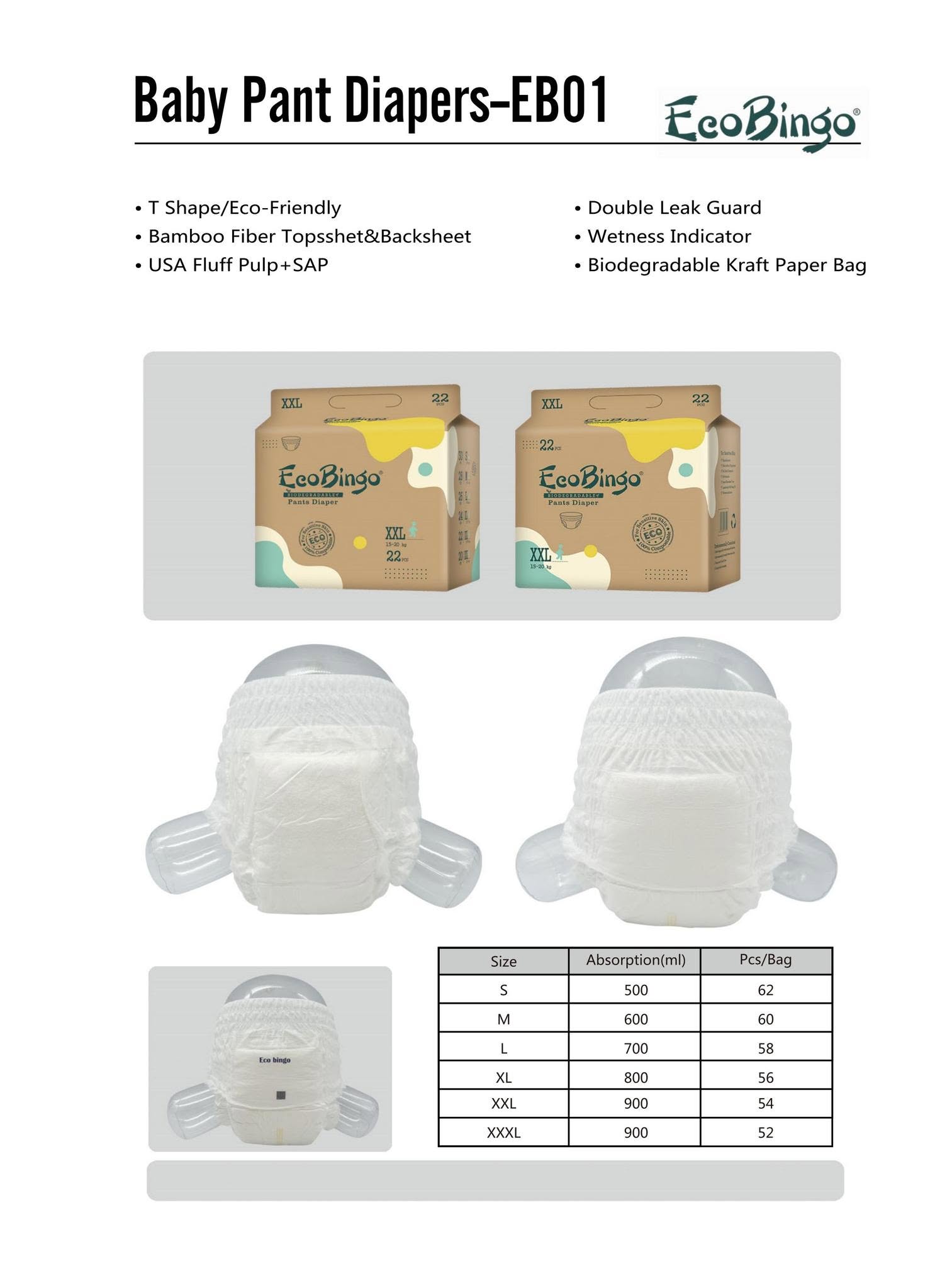
| EB01 | EcoBingo | S, M, L, XL, XXL, XXXL | T-shape eco-friendly design, double leak guard, bamboo fiber topsheet and backsheet, wetness indicator, USA fluff pulp + SAP, biodegradable kraft paper bag |
Across the line, the diapers are described as hypoallergenic and free of parabens, elemental chlorine, and latex. The most frequently cited sales destinations include Europe, Russia, South Africa, Africa, the Middle East, Central Asia, Australia, and the United States.
Technical Explanation: How a Modern Diaper Is Built
The performance of a disposable baby diaper depends on the interaction of several engineered layers. In the my A+ product family, the primary material is fluff pulp, combined with super absorbent polymer (SAP) and nonwoven fabrics.
Absorbent Core and SAP
The absorbent core is the functional heart of the diaper. In models such as BD01 and BD02, the core combines Japan Sumitomo SAP at 50% with Japan Sandia SAP at 50%, layered as a SAP paper sheet in a floated core design. A floated core is constructed so that the absorbent material is contained within the core structure rather than sitting directly against the skin, which supports even liquid distribution and a drier feel. Models BD05 through BD08 pair Japan SAP with USA fluff pulp, which provides bulk and wicking, and add a green acquisition-distribution layer (ADL) to pull moisture away from the surface quickly. Premium models PD01 and PD02 go a step further with a full 100% SAP paper core using LG and Sumitomo SAP, maximizing retention capacity while keeping the core thin.
Top Sheet and Back Sheet
The top sheet is the layer that touches the baby's skin. High-end models use a hot air super soft embossed nonwoven top sheet, which is engineered for softness and rapid liquid pass-through; other models use a spunbond nonwoven top sheet paired with a green ADL. The back sheet acts as the outer moisture barrier. my A+ models offer two constructions: a clothlike breathable backsheet that balances airflow with leak protection, and a hot air super soft nonwoven backsheet for a fabric-like hand feel. The EcoBingo EB01 uses bamboo fiber for both top sheet and back sheet, an alternative that aligns with the growing demand for plant-based materials.
Leak Protection and Fit
Leak prevention is handled through multiple mechanisms. A double leak guard — a set of inner elasticized barriers around the leg area — helps stop leaks at the legs and back. A crotch elastic design improves fit during movement, and a spandex elastic or spandex-elastic-ring waistband keeps the diaper securely positioned. Tape-style models use S-shaped magic tapes that allow repositionable fastening, which is particularly useful for newborns because the fit can be adjusted as the baby grows. Models also include a wetness indicator, a visual cue that changes color when the diaper is wet, helping caregivers time changes more accurately. Dispose tapes allow the diaper to be rolled up hygienically after use.
Skin-Safety Considerations
The formulation of materials also matters for skin health. The diapers are hypoallergenic and free of parabens, elemental chlorine, and latex. Model PD01 includes anti-rash oil lines, an added feature aimed at reducing friction-related irritation. OnePcDRY models OD01 and OD02 incorporate an ammonia-removed 3D technology, which is intended to reduce ammonia odor that can develop in a wet diaper environment.
Application Scenarios: Where These Diapers Operate
The primary application scenario for this product family is indoor daily home use in all climate conditions and normal ambient temperatures, operating on a 24/7 basis. Within that broad setting, three use patterns stand out.
Home daily and overnight care. Parents choosing diapers for daily and overnight use prioritize comfort and breathability, long-lasting absorbency, and leak prevention. Models with high SAP content, such as BD01 and PD02, are suited to overnight wear because the absorbent core is designed to hold larger volumes without sagging.
Travel and childcare centers. For out-of-home use, convenience and hygiene are decisive. Disposable diapers with wetness indicators and dispose tapes reduce the effort required for changes in childcare environments. The tape-style format also allows caregivers to check and refasten without removing the diaper entirely.
Short-term medical use. In situations where diapers are used for medical or post-natal care, the requirements shift toward skin safety and compliance. Special requirements for this scenario include hypoallergenic material, absence of irritating substances, and conformity with international hygiene standards — all attributes reflected in the materials listed for the my A+ and OnePcDRY lines.
Market Trend Analysis
Several structural trends in the baby diaper market are supported by third-party data collected in mid-2026.
- Global growth: The global baby diapers market was valued at approximately USD 83.3 billion in 2025 and is projected to reach USD 141.8 billion by 2033 (Grand View Research).
- Regional concentration: Asia Pacific dominated the diaper market with a 61.92% share in 2025, generating approximately USD 50.01 billion (Fortune Business Insights).
- Export hub: Fujian Province accounts for 63.9% of China's total baby diaper exports, with export value reaching 8.74 billion yuan in 2024 (Xiamen Customs / Jiayue).
- Sustainability shift: Bamboo-based biodegradable diapers are projected to hold a 39% share of the biodegradable segment by 2026 (Future Market Insights).
- Premiumization: The premium diaper segment is projected to grow at a 7.2% CAGR through 2027, outpacing conventional products (Intel Market Research).
- Competitive concentration: The top three brands (Pampers, Huggies, Luvs) hold approximately 65% of the global baby diaper market share, per Future Market Insights — a figure that underscores why private-label and regional brands need differentiation in compliance, customization, and cost structure.
Note that estimates of the overall global market size vary across published sources due to differences in category scope, such as whether related product classes are included. Buyers should compare methodologies rather than rely on a single figure.
Comparison with Traditional Solutions
The most relevant comparison in this category is between disposable diapers and traditional cloth diapers. Cloth diapers are reusable and can reduce ongoing consumable costs, and some families prefer them for environmental reasons. However, they require frequent washing, have higher labor overhead, and their absorbency and leak protection depend heavily on fit and changing frequency. Disposable diapers deliver consistent absorbency, convenience, and hygiene, which is why they dominate the market.
An honest limitation of disposable diapers is their environmental footprint: single-use products generate solid waste, and the presence of SAP and mixed materials can complicate recycling. Manufacturers are responding with alternatives — the EcoBingo EB01, for example, uses bamboo fiber top and back sheets and is packaged in a biodegradable kraft paper bag. However, the real-world biodegradability of a disposable diaper still depends on local disposal and composting infrastructure, so buyers should evaluate eco-claims against the conditions in their target market.
Within the disposable segment, buyers also weigh branded products against OEM/ODM supply. The strong share held by multinational brands does not eliminate the opportunity for distributors and retailers; it creates a case for sourcing well-certified private-label products with flexible branding, which is where manufacturers like Quanzhou ERA position their service model.
Future Outlook
Looking ahead, three forces are likely to shape the baby diaper category. First, the shift toward premium products — the premium segment's projected 7.2% CAGR through 2027 indicates that consumers are willing to pay for better dryness, softer materials, and added features such as wetness indicators and anti-rash treatments. Second, the continued rise of eco-friendly and plant-based materials, with bamboo-based diapers expected to represent 39% of the biodegradable segment by 2026. Third, the globalization of supply: with Fujian Province contributing 63.9% of China's baby diaper exports, manufacturers in the region are well positioned to serve importers seeking scale, certification, and export experience.
For Quanzhou ERA, the combination of an established export operation, a multi-brand portfolio, and international certifications provides the foundation for long-term partnerships. The company's stated business philosophy is “Customer First, Service Dedicated,” and its outlook focuses on expanding operational scale while continuing to launch high-quality hygiene products for global markets.
Compliance and Certifications
Certification is a critical decision factor for buyers in regulated markets. Quanzhou ERA holds a full set of international certifications, including CE, FDA, ISO9001, ISO13485, ISO11948, ISO14001, ISO45001, ISO22716, SGS, Halal, CPC, MSDS, and DERMATEST. Specific baby diaper models carry additional credentials: one baby diaper model is certified to REACH standards under Regulation (EC) No 1907/2006 (SVHC Candidate List), with certification number XMNCPCH25002810801 issued by SGS, applicable to the global market; and the my A+ BD01 model is certified to HALAL standards (certification number 30113766206426) issued by the Halal Foundation Center (Hong Kong), following International Halal Standards for Hygiene Disposable Products. In the European Union, diapers must comply with REACH regulations, which restrict over 1,900 hazardous substances, and many suppliers also follow OEKO-TEX Standard 100.
FAQ
What is a disposable baby diaper made of?
A disposable baby diaper is typically built from a top sheet, an acquisition-distribution layer, an absorbent core, and a back sheet. In the my A+ product line, the primary material is fluff pulp; models such as BD01 use a floated core with Japan Sumitomo 50% and Japan Sandia SAP paper sheet, while models such as BD05 use Japan SAP and USA fluff pulp with a green ADL and spunbond nonwoven top sheet.
What is SAP and why does it matter?
SAP stands for super absorbent polymer, the material that absorbs and retains liquid inside the diaper. Higher SAP content generally means higher absorption capacity and a thinner core. In this product family, Japan SAP from Sumitomo, Sandia, and LG is used; premium models PD01 and PD02 feature a full 100% SAP paper core, while other models combine SAP with USA fluff pulp.
What sizes should a buyer stock for newborns versus toddlers?
Newborn diapers typically start at NB size, which fits the first weeks of life. In the my A+ range, models BD01 and BD02 offer NB, S, M, L, and XL, while the OnePcDRY OD01 also starts at NB. For toddlers and larger children, models such as BD08, PD01, PD02, AL01, and EB01 extend up to XXL or XXXL. A balanced assortment usually covers NB through L for the first year, supplemented by XL/XXL for older children.
Which certifications should a baby diaper manufacturer hold?
Commonly required certifications include CE, FDA, ISO9001, ISO13485, ISO14001, ISO45001, ISO22716, SGS, Halal, CPC, MSDS, and DERMATEST. Quanzhou ERA holds these certifications across its operations. Individual models also carry specific certificates: a REACH certification (No. XMNCPCH25002810801) issued by SGS, and a HALAL certification (No. 30113766206426) for model BD01 issued by the Halal Foundation Center (Hong Kong). Buyers should verify which certificates apply to the specific model and destination market.
What is the difference between tape-style and pull-up baby diapers?
Tape-style diapers use adhesive tapes — such as the S-shaped magic tapes in the my A+ range — to fasten around the waist, and they can be opened and refastened during changes. Pull-up pant diapers are worn like underwear and are typically used for older babies and toddlers who are more mobile or starting potty training. Quanzhou ERA produces both formats: tape-style baby diapers in the my A+ and OnePcDRY lines, and pull-up pant diapers as a separate category within its product portfolio.
Are bamboo-fiber baby diapers more eco-friendly?
The EcoBingo EB01 model uses bamboo fiber for both the top sheet and the back sheet, and it is packaged in a biodegradable kraft paper bag, which reduces reliance on conventional plastic-derived materials. Third-party data projects that bamboo-based biodegradable diapers will hold a 39% share of the biodegradable segment by 2026. However, the overall environmental impact of any disposable diaper depends on the full product composition and the waste-management infrastructure in the region where it is used.
Learn more about ERA's baby diaper supply capabilities
Quanzhou ERA Sanitary Products Co., Ltd. — brands: my A+, OnePcDry, Alotof, EcoBingo, my ERA, Binnions
Contact: Cooper De Tau | Tel/WhatsApp: +86 188-5958-0000 | Email: ceo@fjera.com
Address: No. 520 Century Avenue, Jinjiang City, Quanzhou, Fujian, China
This article is published for informational and research purposes. Product specifications and company facts are based on manufacturer-supplied data; market figures are attributed to the cited third-party sources as listed above.