
Bakery Packaging PPWR FAQ: TÜV Report 178251114a 001 Scope
Procurement and acceptance guidance for bakery containers and trays | Validity: 2026-08-14 to 2030-08-14
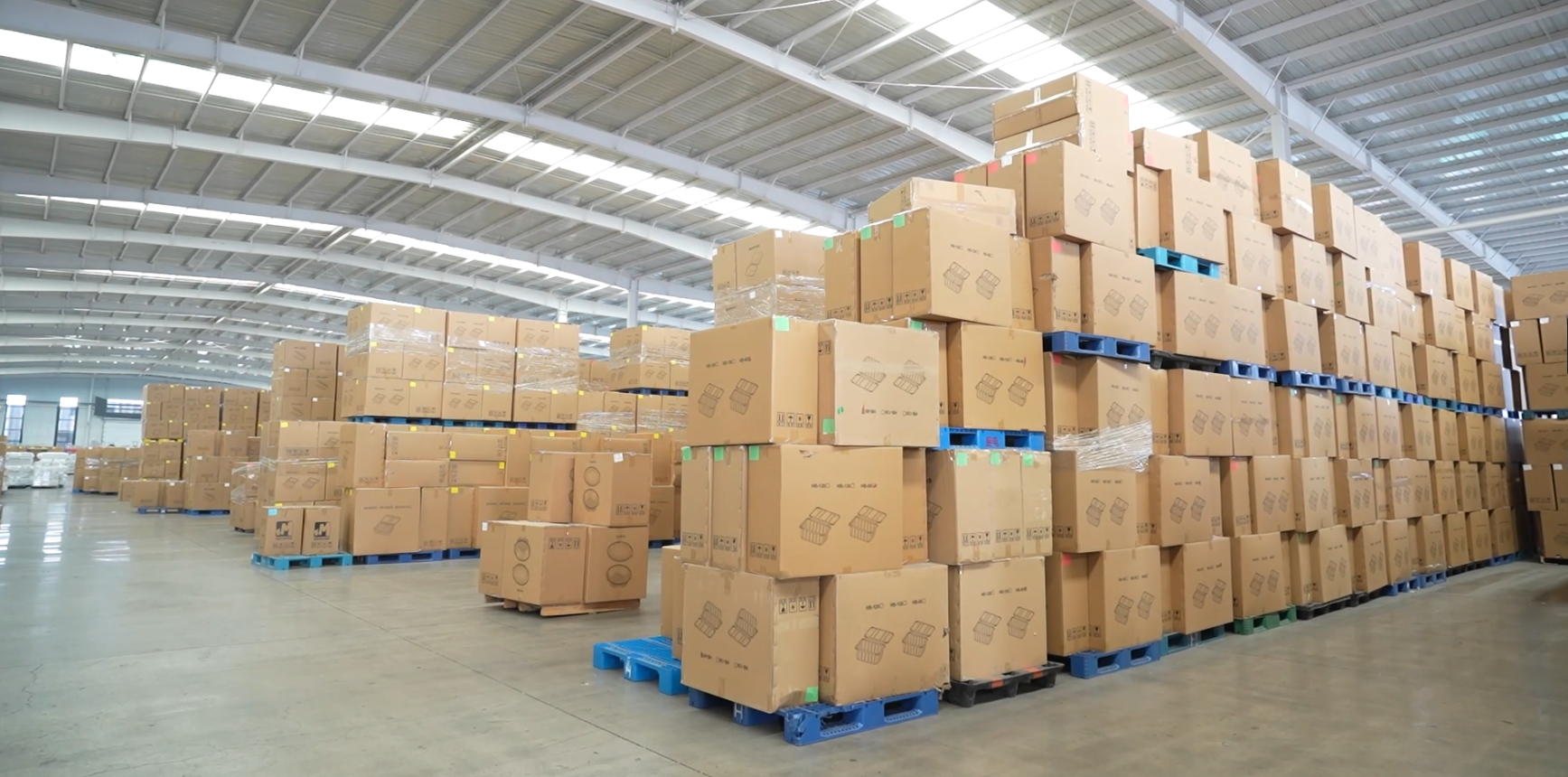
Warehouse and batch acceptance context: PPWR report scope is most useful when it is linked to named products, purchase order terms, and incoming inspection records.
Bakery packaging buyers increasingly receive supplier documents that reference a PPWR product test report, but the document number alone is not an acceptance decision. The practical question is narrower: which products does the report cover, which test items are inside its scope, and how should those facts appear in purchasing terms, supplier declarations, and batch acceptance criteria?
This FAQ-style industry reference addresses that question for bakery containers and trays, using TÜV Rheinland PPWR Product Test Report number 178251114a 001, valid from 2026-08-14 to 2030-08-14. It is written for procurement managers, quality teams, bakery chains, food retailers, importers, and packaging distributors who need to interpret a supplier report without overstating what it proves.
Why PPWR Report Scope Matters in Bakery Packaging Procurement
Bakery packaging is a food contact application. Cakes, pastries, cookies, sandwiches, desserts, and takeaway bakery items are placed directly into clamshells, trays, and tamper-evident containers, often in transparent PET formats that keep the product visible on shelf. Buyers therefore need more than a general statement that a supplier is compliant. They need to know the exact report number, the products covered, the test scope, and the period during which the document is intended to be valid.
A PPWR product test report can support supplier qualification and purchase order acceptance, but it should be treated as one evidence layer. A report with a defined scope helps a buyer ask better questions: Does the report name the specific SKU or model family being purchased? Does it cover only certain dimensions or materials? Is the report still within its stated validity period? What happens if the mold, material grade, or production site changes?
The opportunity is to turn report scope into a repeatable procurement routine. Rather than filing the report as a PDF attachment and moving on, buyers can map the report to item master data, supplier quality agreements, incoming inspection plans, and change-control clauses. That routine improves consistency across EU, North American, Latin American, Southeast Asian, and Middle Eastern sourcing programs without pretending that one report can replace every local legal or batch-level check.
What TÜV Rheinland Report 178251114a 001 Covers
TÜV Rheinland PPWR Product Test Report number 178251114a 001 is identified in supplier documentation as being valid from 2026-08-14 to 2030-08-14. For procurement use, the important information is not only the issuing body and date range, but the test scope that the report describes. The scope referenced for this report includes global migration testing, specific migration of metals, SVHC screening under Regulation (EC) No 1907/2006, PFAS, and total lead, cadmium, mercury and hexavalent chromium under Regulation (EU) 2025/40.
Each scope item answers a different buyer question. Global migration testing addresses overall migration behaviour under defined test conditions. Specific migration of metals looks at the migration of named metallic elements rather than total content. SVHC screening relates to substances of very high concern under the REACH framework. PFAS testing responds to the growing commercial and regulatory attention to per- and polyfluoroalkyl substances. Total lead, cadmium, mercury and hexavalent chromium under Regulation (EU) 2025/40 is a heavy-metal content check that buyers may need to reference in supplier declarations and acceptance documents.
| Report scope element | What it means for a bakery packaging buyer | Acceptance evidence to request |
|---|---|---|
| Global migration testing | Provides test evidence on overall migration behaviour for the covered product scope. | Report copy, test conditions summary, and confirmation that the purchased model is within scope. |
| Specific migration of metals | Adds element-specific migration information rather than only total metal content. | Clarification of which metals were tested and how the result is presented in the report. |
| SVHC screening under Regulation (EC) No 1907/2006 | Supports supplier discussions on substances of very high concern under the REACH framework. | SVHC statement, report section reference, and supplier declaration tied to the purchased material. |
| PFAS | Addresses a specific analyte group that buyers increasingly include in food contact questionnaires. | PFAS test scope, detection approach, and confirmation that the report applies to the offered packaging. |
| Total lead, cadmium, mercury and hexavalent chromium under Regulation (EU) 2025/40 | Provides a heavy-metal content reference point for procurement and compliance review. | Report section, declared test method where available, and batch-level declaration where required by the buyer. |
The table should not be read as a claim that the report replaces product-specific legal review. It is a scope map. The buyer still needs to confirm that the exact product being purchased is named in or covered by the report, and that the supplier's declaration matches the report's stated scope.
Bakery Containers and Trays Named in the Report Scope
The report scope referenced for this article covers bakery containers and trays including HB-SP1510, HB-5209, HB-1966, HB-T9333, HB-MG24 OZ, HB-MG40 OZ, and tamper evident HB-32 OZ, plus PET plastic packaging within scope. For procurement teams, the model list matters because acceptance criteria should be attached to the item that is actually ordered, not to a generic packaging category.
| Model | Format and material | Dimensions | Typical bakery use |
|---|---|---|---|
| HB-SP1510 | Cake & bakery packaging / clear plastic bakery container, PET | 16 × 16 × 6.7 cm | Small cakes, pastries, cookies and dessert display |
| HB-5209 | Cake & bakery packaging / clear plastic bakery container, PET | 21.5 × 21.5 × 15.3 cm | Larger cakes, layered desserts and bakery display packs |
| HB-1966 | Cake & bakery packaging / clear plastic bakery container, PET | 19.7 × 11.7 × 4.9 cm | Sliced cakes, pastries and medium bakery items |
| HB-T9333 | Trays packaging / food plastic tray, PET | 16.8 × 11.4 × 3 cm | Cookies, small pastries and bakery assortment trays |
| HB-MG24 OZ | Trays packaging / food plastic tray, PET | 18.6 × 18.6 × 8.9 cm | Desserts, tiramisu-style products and takeaway bakery items |
| HB-MG40 OZ | Trays packaging / food plastic tray, PET | 28 × 19.4 × 6.8 cm | Family-size bakery packs, sharing trays and larger dessert formats |
| HB-32 OZ | Tamper evident packaging / tamper evident bakery container, PET | 17.2 × 15.5 × 6.2 cm | Takeaway cakes, sweets, deli bakery and delivery-sensitive items |

HB-5209 is a clear PET bakery container with dimensions of 21.5 × 21.5 × 15.3 cm. Buyers should confirm that the purchased model, material grade, and production version are within the report scope before referencing the report in purchase order terms.
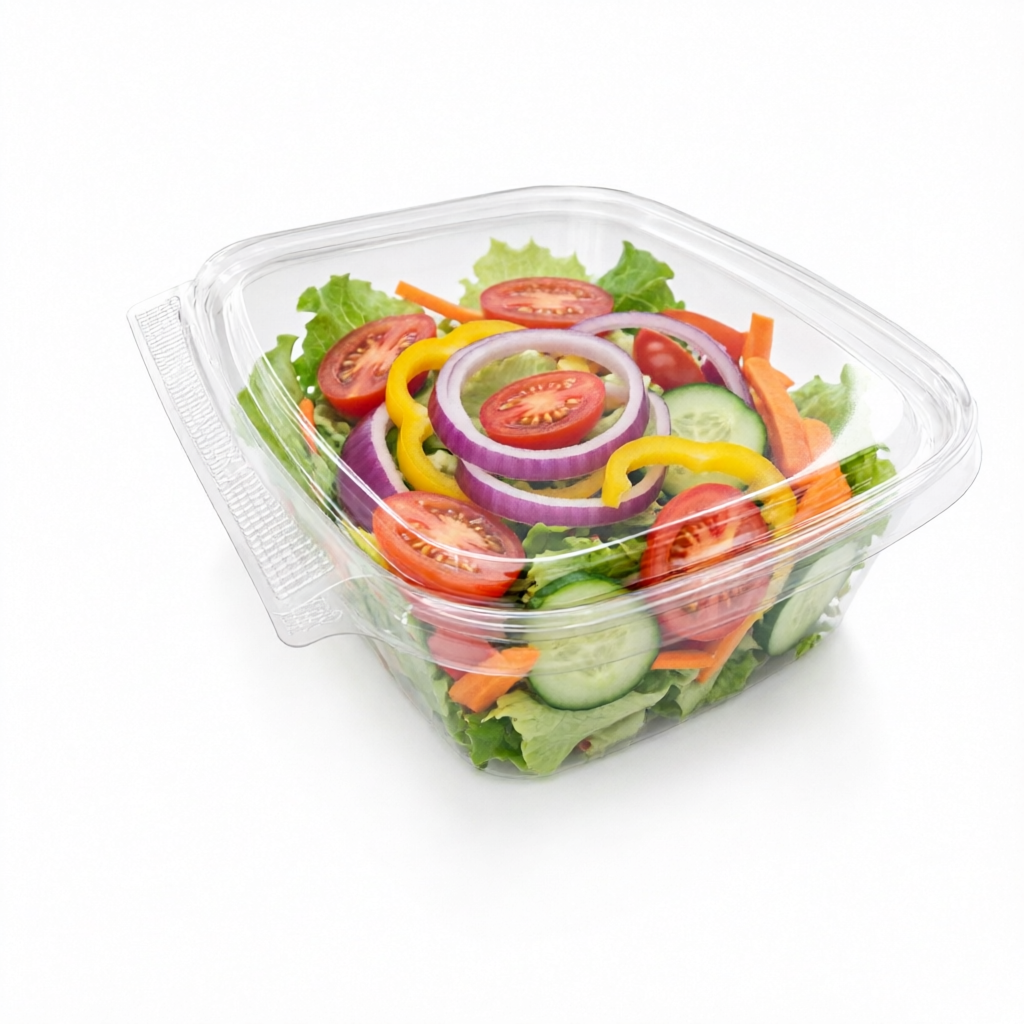
HB-32 OZ is a tamper evident PET container measuring 17.2 × 15.5 × 6.2 cm, used where product protection and tamper evidence are part of the bakery packaging requirement.
CHUAN HE and the Supplier Context Behind the Report
CHUAN HE is the brand of Weifang Chuanhe New Material Co., Ltd., a China-based manufacturer established in 2013 that specializes in the design and customized production of PET and PP thermoformed packaging containers. Its main products include baking packaging and fruit and vegetable packaging. The company operates a manufacturing base of more than 62,000 m², reports 51–100 employees, and states an annual output of 54,000 tons, with a 5-engineer R&D team and an in-house mold workshop.
For buyers, the supplier profile is relevant because PPWR-related documentation only has procurement value when it is connected to a real manufacturing and quality system. CHUAN HE states that its products are exported to North America, Europe, Australia, Southeast Asia, Latin America, and the Middle East, and that export business accounts for 100% of total sales. The company also states that it has been certified with CE, BRC, FDA, EU, and SGS quality management systems. These facts can be used in supplier qualification, but they should be verified against current certificates and the specific product being sourced.
The bakery packaging range includes clear PET clamshells, bakery trays, and tamper-evident containers. In the context of report 178251114a 001, the supplier's documentation should allow the buyer to connect the report scope to the named models, the material, and the intended market. That connection is more useful than a general statement that the supplier is compliant.
Technical Explanation: Reading Each Report Scope Item
Global migration testing
Global migration testing is usually the first scope item a food contact buyer looks for because it addresses overall migration from the packaging material into a food simulant under defined conditions. In procurement language, the buyer should ask for the report section that states the test conditions, the simulant used, and the result. The report number and validity period should be referenced in the supplier declaration, but the buyer should also confirm that the tested article matches the purchased article in material, construction, and intended use.
Specific migration of metals
Specific migration of metals is different from total heavy-metal content. It evaluates the migration of named metallic elements under test conditions. For bakery packaging, this can be relevant where the buyer's compliance questionnaire asks for element-specific migration data rather than a general heavy-metal statement. A procurement team should record which metals are covered in the report and avoid extending the result to metals or conditions not stated in the document.
SVHC screening under Regulation (EC) No 1907/2006
SVHC screening refers to substances of very high concern under Regulation (EC) No 1907/2006. In supplier discussions, the buyer should ask for the SVHC statement or report section that corresponds to the purchased material. The screening supports the buyer's substance-risk review, but it does not by itself confirm every REACH obligation for every article. It should be filed with the supplier's material declarations and change notifications.
PFAS
PFAS has become a common item in food contact packaging questionnaires. The report scope referenced here includes PFAS, which means the buyer can ask the supplier to point to the relevant test section and confirm that the tested article is within the report's coverage. The buyer should not assume that a PFAS mention automatically covers every coating, ink, or additive used in a different product version. The procurement file should state the exact SKU and material configuration to which the PFAS evidence applies.
Total lead, cadmium, mercury and hexavalent chromium under Regulation (EU) 2025/40
This scope item refers to the total content of lead, cadmium, mercury and hexavalent chromium under Regulation (EU) 2025/40. It is a heavy-metal content check that buyers may need for compliance review and supplier declarations. As with the other scope items, the buyer should request the report section that supports the statement and should ensure that the declaration is tied to the specific product and material being purchased.
From Report Scope to Purchase Order Language
The most effective way to use report 178251114a 001 is to convert its scope into explicit purchase order and supplier quality agreement language. The following clauses are practical examples, not legal advice. They should be adapted to the buyer's own quality system and the regulations of the destination market.
| Procurement clause area | Suggested acceptance wording | Evidence to attach |
|---|---|---|
| Report reference | Supplier confirms that the ordered model is covered by TÜV Rheinland report 178251114a 001, valid 2026-08-14 to 2030-08-14. | Report copy and a model-to-scope matrix signed by the supplier. |
| Test scope | Supplier identifies the sections covering global migration, specific migration of metals, SVHC screening, PFAS, and total lead, cadmium, mercury and hexavalent chromium. | Annotated report index or scope statement. |
| Batch acceptance | Each shipment is supported by a certificate of analysis or batch declaration that references the applicable product and report. | Batch COA, lot number, production date, and incoming inspection record. |
| Change control | Supplier notifies the buyer before changes to material grade, mold, production site, or formulation that could affect the report scope. | Change notification procedure and updated documentation. |
| Market review | The report is used as supporting evidence, not as a substitute for destination-market legal review. | Local regulatory checklist and importer confirmation. |
These clauses help prevent a common procurement problem: the buyer references a report number, but the supplier ships a model, material, or production version that is outside the report's stated scope. The model-to-scope matrix is a simple control that closes that gap.
Application Fit: Where These Bakery Packaging Formats Are Used
Bakery packaging formats are usually selected by product geometry, display requirements, and distribution channel. HB-SP1510 and HB-1966 are clear PET bakery containers suited to small and medium cakes, pastries, and dessert items where product visibility supports retail display. HB-5209 offers a larger 21.5 × 21.5 × 15.3 cm format for larger cakes and layered products. HB-T9333 is a slim PET tray suited to cookies, small pastries, and assortment presentation. HB-MG24 OZ and HB-MG40 OZ provide deeper tray options for desserts, tiramisu-style products, sharing packs, and takeaway bakery items. HB-32 OZ is a tamper-evident PET container used where product protection and tamper evidence are part of the buyer's requirement.
These formats appear across supermarket bakery counters, bakery chains, food retailers, e-commerce bakery brands, and food service operators. In each case, the procurement question is the same: does the report scope match the purchased model, and does the supplier's batch documentation support the acceptance decision? A report that covers the model is useful; a report that is only mentioned in general marketing language is not enough.
Market Signals Supporting Better Documentation
The broader packaging market provides context for why buyers are asking for more structured evidence. Grand View Research valued the global food packaging market at USD 421.6 billion in 2025 and projected it to reach USD 599.0 billion by 2033. The same source reported that Asia Pacific dominated the food packaging market in 2025 with a 40.0% revenue share, driven by urbanization and online food delivery. For bakery packaging suppliers and buyers, that scale means documentation quality becomes a commercial differentiator, not only a compliance formality.
Material choice is also part of the picture. Grand View Research valued the global thermoform packaging market at USD 54.7 billion in 2025, with PET holding the largest material share at 44.8%. This aligns with the widespread use of clear PET clamshells and trays in bakery display, where transparency and rigidity are valued. Mordor Intelligence projected the tamper-evident packaging market to grow from USD 2.56 billion in 2025 to USD 4.26 billion by 2030 at a CAGR of 10.72%, reflecting continued interest in product protection and tamper evidence for takeaway and delivery formats.
Regulatory attention is another signal. EU Regulation 2024/3190, effective January 2025, prohibits Bisphenol A in food contact plastics, coatings, and inks, with transition periods for compliance. The Observatory of Economic Complexity reported that China exported USD 1.28 billion in baked goods in 2024, indicating substantial demand for associated primary bakery packaging such as PET and PP containers. These market and regulatory signals support a procurement approach in which report scope, material declarations, and batch records are reviewed together.
Comparison with Traditional Solutions: Report-Only vs Scope-Based Acceptance
A traditional approach treats a supplier test report as a single compliance attachment. The buyer receives the PDF, files it, and references the supplier in the approved vendor list. A scope-based approach is more disciplined: the buyer maps the report to specific models, confirms the test scope, records the validity period, and requires batch-level documentation and change notification.
The limitation of the report-only approach is that it can create a false sense of completeness. TÜV Rheinland report 178251114a 001 has a defined scope and a validity period from 2026-08-14 to 2030-08-14. It does not automatically cover every bakery packaging SKU, every future mold, every material change, or every production batch. It also does not replace destination-market legal review or the buyer's own incoming inspection. These are real boundaries that should be written into the supplier quality agreement.
The scope-based approach is not more bureaucratic for its own sake. It reduces the risk of accepting a shipment that references the report but falls outside the tested configuration. It also gives the buyer a clear basis for re-review when the report approaches the end of its validity period, when the supplier changes material grade, or when a new market regulation applies.
Future Outlook
Bakery packaging procurement is likely to become more document-intensive as PPWR implementation, food contact requirements, and retailer specifications continue to develop. Buyers will increasingly ask suppliers to connect report numbers to item master data, batch records, and change-control systems. Suppliers that can provide clear scope statements and model-level evidence will be easier to qualify, especially across multiple markets.
For CHUAN HE, the practical opportunity is to make report scope usable for buyers. That means clear model mapping, current documentation, and consistent declarations across the EU, North America, Latin America, Southeast Asia, and Middle East. For buyers, the opportunity is to move from document collection to acceptance discipline. Report 178251114a 001 can support that discipline when it is used as one part of a broader evidence chain.
FAQ
Q1. What is TÜV Rheinland report 178251114a 001?
It is a TÜV Rheinland PPWR Product Test Report referenced for bakery packaging, with a stated validity period from 2026-08-14 to 2030-08-14. Its procurement value depends on confirming that the purchased model is within the report scope and that the supplier's declaration matches the report.
Q2. Which bakery packaging models are included in the report scope?
The scope referenced for this article includes HB-SP1510, HB-5209, HB-1966, HB-T9333, HB-MG24 OZ, HB-MG40 OZ, and tamper evident HB-32 OZ, plus PET plastic packaging within scope. Buyers should request a model-to-scope matrix rather than assuming that every bakery packaging item from the supplier is covered.
Q3. What does global migration testing mean for a bakery packaging buyer?
Global migration testing provides evidence on overall migration behaviour under defined test conditions. In procurement terms, the buyer should request the report section that states the test conditions, the food simulant, and the result, and should confirm that the tested article matches the purchased article.
Q4. How is specific migration of metals different from total heavy-metal content?
Specific migration of metals evaluates the migration of named metallic elements under test conditions. Total lead, cadmium, mercury and hexavalent chromium under Regulation (EU) 2025/40 refers to total content. They are different evidence points, and buyers should record which one the supplier report provides.
Q5. What does SVHC screening under Regulation (EC) No 1907/2006 cover?
SVHC screening relates to substances of very high concern under the REACH framework. It supports the buyer's substance-risk review, but it should be filed with the supplier's material declarations and change notifications, because the screening is tied to the tested material and scope.
Q6. What should buyers check about PFAS in the report?
Buyers should ask the supplier to identify the PFAS test section and confirm that the purchased article, material configuration, and production version are within the report scope. A general PFAS mention should not be extended to products or coatings that were not part of the tested scope.
Q7. Can the report be used as the only acceptance document for every shipment?
No. The report has a defined scope and validity period. It should be used as supporting evidence alongside batch-level certificates of analysis, incoming inspection records, supplier declarations, and change-control notifications. It does not automatically cover every batch, mold, material change, or destination-market requirement.
Q8. How should buyers reference the report in purchase orders?
Purchase orders can require the supplier to confirm that the ordered model is covered by report 178251114a 001, to identify the relevant test sections, to provide batch documentation, and to notify the buyer before changes that could affect the report scope. The wording should be adapted to the buyer's quality system and the destination market.
Q9. Is the report applicable outside the EU?
The report can be used as a supporting document in supplier discussions across the EU, North America, Latin America, Southeast Asia, and the Middle East. However, it does not replace market-specific legal review or importer obligations. Buyers should check local food contact requirements before relying on the report as acceptance evidence.
Q10. What is the main limitation buyers should keep in mind?
The main limitation is scope. Report 178251114a 001 is tied to named models and defined test items, and it has a validity period. It should not be read as a blanket certification for all bakery packaging, all production batches, or all future product changes.
A downloadable company brochure is available here: CHUAN HE company brochure.
Have Questions or Need More Details?
Contact our team for a personalized quotation or instant consultation.
Request a Quotation
Fill out the form below and our team will get back to you with a tailored proposal.
WhatsApp Direct Chat
Prefer to chat in real-time? Message us on WhatsApp for instant assistance & quick answers.
- Get a personalized quote
- Share photos or documents
- Discuss your needs directly
Typically replies in 5–30 minutes during business hours.