
Ball Mill Supplier Evidence: Shell, Liner & Model Range
Ball Mill Supplier Evidence: Shell, Liner & Model Range
A ball mill supplier’s physical capability is easiest to verify where engineering becomes material: the shell steel, the liner set, and the model range that connects them to a duty. For buyers evaluating a ball mill for cement, limestone, coal, ore, ceramics, or industrial minerals, those three evidence points are more useful than a general capability statement. They can be checked against drawings, material certificates, wear-part specifications, and documented capacity envelopes.
That is the context for this supplier capability reference. It uses the documented ball mill range of Henan Zhengzhou Mining Machinery Co., Ltd. (ZK MACHINE) to show how shell materials, liner options, and model coverage can be read as procurement evidence. The reference is intentionally limited to facts that can be traced to equipment data and project records; it does not treat a model number as a performance guarantee.
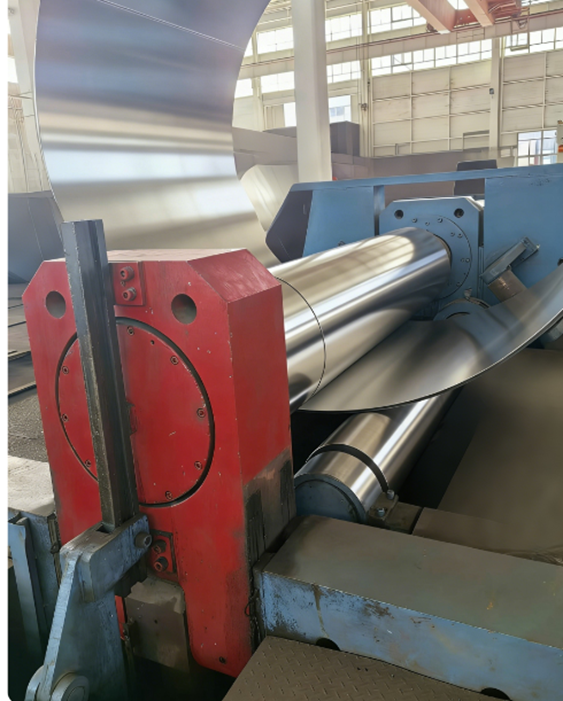
Plate rolling is one of the fabrication steps that turns a documented shell grade into a physical mill shell. Image source: ZK MACHINE manufacturing capability content unit.
Why shell, liner, and model range are the first verification points
A ball mill is a heavy rotating vessel in motion. The shell carries the grinding charge, resists cyclic loading, and provides the mounting geometry for heads, trunnions, gears, and liners. The liner protects the shell and shapes the grinding action. The model range shows whether the supplier can cover the diameter, length, drive, and throughput envelope that the project requires. Together, these three elements reveal whether a supplier is assembling a catalogue entry or engineering a mill for a defined duty.
In procurement terms, the evidence hierarchy is simple. First, ask what the shell is made from and whether the grade is stated for the specific mill family. Second, ask which liner materials are offered and how the selection changes with feed material, abrasiveness, contamination risk, and maintenance strategy. Third, ask whether the model range covers the required capacity and configuration, and whether the capacity figure is tied to a defined model rather than a general claim. A supplier that can answer all three in specific terms is easier to audit than one that answers only with a capacity range.
The opportunity for buyers is that these points are checkable before an order is placed. Shell grade can be compared with drawings and mill certificates. Liner options can be compared with the feed material and wear strategy. Model range can be compared with the required throughput and physical envelope. None of these checks requires a plant visit, although a factory audit can later confirm the fabrication and testing route.
Documented shell materials: Q235B/Q345B and carbon or alloy steel
ZK MACHINE’s cement ball mill data states the mill shell as Q235B/Q345B or equivalent structural steel. That is a specific, checkable statement. Q235B and Q345B are structural steel grades used in fabricated equipment; the “or equivalent” wording leaves room for project-specific substitution, but it also sets the baseline for review. For a cement or limestone duty, the buyer can ask for the actual grade, plate thickness, weld procedure, and inspection record against that baseline.
For the broader ball mill family, ZK MACHINE documents the shell as typically manufactured from carbon steel or alloy steel for strength, durability, and long-term operation. The same wording appears across raw mills, air-swept coal mills, rod mills, ore ball mills, ceramic ball mills, and laboratory ball mills. This is not a claim that every mill uses the same plate. It is a statement of the material family from which the shell is selected. The practical difference between carbon steel and alloy steel matters when the mill diameter, charge weight, drive torque, or operating environment moves beyond the common range.
The shell statement should be read with the fabrication evidence. ZK MACHINE operates an 80,000 m² site with 8 modern workshops and 5 heavy-duty workshops, and more than 300 sets of manufacturing equipment, including boring and milling machines, gear hobbing machines, vertical lathes, and heavy-duty cranes. For shell work, the relevant capability is not the size of the building; it is whether the supplier can roll, fit, weld, machine, and inspect the shell and its interfaces. A documented plate grade is the start of that chain, not the end.
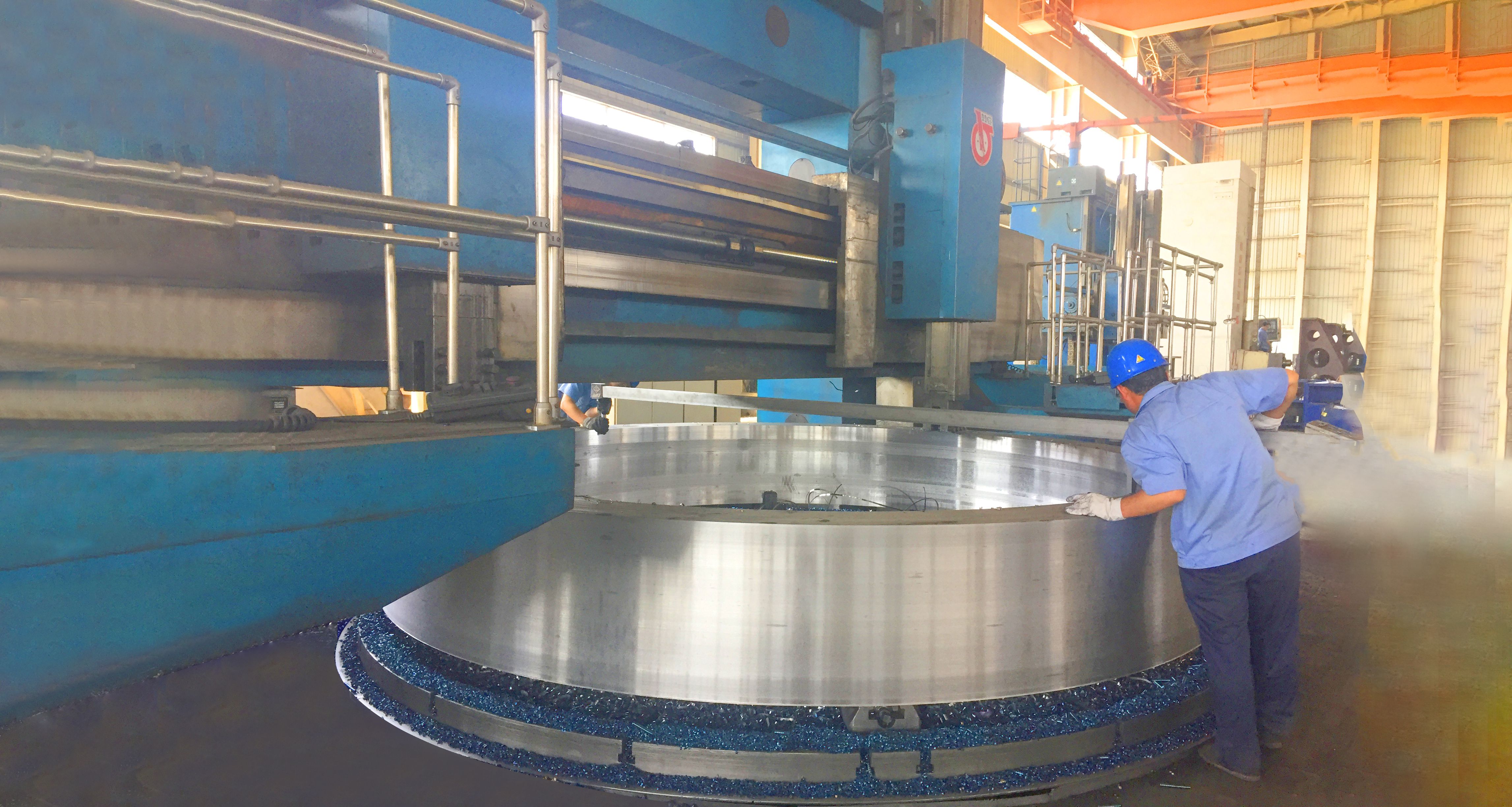
Vertical lathe machining is part of the large-component workshop capability that supports shell and interface preparation. Image source: ZK MACHINE manufacturing capability content unit.
Buyers should also separate the shell from the heads and trunnions. The corpus states shell materials, but it does not state head or trunnion grades. A verification request should therefore ask for the shell grade and the interface components separately. That prevents a common procurement error: accepting a shell specification as if it covered the entire mill structure.
A further check is the testing route. ZK MACHINE documents 100% testing on all products. For a shell, the relevant question is which tests are performed at which stage: plate identification, weld inspection, dimensional check, non-destructive examination where required, and hydrostatic or run testing where applicable. The corpus confirms the 100% testing policy; the detailed test plan should be requested for the specific mill.
Liner options: high-manganese, alloy steel, cast iron, rubber, and ceramic
ZK MACHINE documents liner options including high-manganese steel, alloy steel, cast iron, rubber, and ceramic liners, selected according to the processed material and operating conditions. The list is useful because it shows a real choice, not a single default. The choice is also where many ball mill evaluations become too general. A liner is not a wear plate chosen by price alone; it is a process component that affects impact resistance, abrasion life, contamination, noise, weight, and maintenance access.
High-manganese steel is commonly associated with impact and abrasion duty in coarse or hard-feed applications. Alloy steel liners offer a different balance of hardness and toughness. Cast iron is an option where the duty and wear pattern suit it. Rubber liners are used in some applications where impact is moderate and noise or weight reduction matters. Ceramic liners are used where contamination control and wear resistance are important, especially in ceramic or fine-grinding duties. These are material-selection categories, not universal rankings. The correct liner depends on the material being ground and the operating condition.
The ceramic ball mill data makes the liner logic more specific. ZK MACHINE lists the lining as alumina ceramic, silica, or other wear-resistant ceramic materials, with grinding media in alumina balls, zirconia balls, or other ceramic media. That is a different material system from a high-manganese steel liner in a cement mill. It shows why a supplier’s liner range should be read as a set of application-specific options, not as a longer list of wear parts.
A practical buyer question is therefore: “Which liner material is documented for this feed material, this feed size, this target fineness, and this maintenance interval?” A second question is: “What is the expected wear pattern, and how is the liner fixed to the shell?” The corpus states the liner options and the selection principle. It does not state wear-life hours for each material. That gap should be closed with project references, wear-part drawings, and inspection records rather than assumed from the material name.
Model range: from Φ1.2×4.5–Φ4.6×10 to specialized mills
The most direct evidence of supplier coverage is a model range with defined boundaries. ZK MACHINE’s cement ball mill is documented at Φ1.2×4.5–Φ4.6×10, with capacity approximately 1.4–87 t/h, diameter 1.2–4.2 m, and open-circuit or closed-circuit grinding. The same mill family can be combined with a roller press and separator for a grinding system. That range is a useful anchor because it connects a physical envelope to a throughput envelope. It also gives the buyer a way to check whether the required duty sits inside the documented range or requires a customized configuration.
The broader ball mill range is documented at Φ1.2x4.5–Φ4.6x10+3.5, with capacity approximately 0.8–230 t/h, feed size ≤25 mm, product size approximately 0.07–0.4 mm, dry or wet grinding, grate or overflow discharge, and customized configurations. The raw mill range is Φ1.2×4.5–Φ3.5×10 m and other customized large-scale models, with capacity 1.7–73 t/h and grinding media load 5–118 t. The air-swept coal mill range is Φ1.2×2.4–Φ2.9×4.7 m, with capacity 1.4–16 t/h and motor power 45–570 kW. The rod mill range is Φ0.9×1.8–Φ3.6×5.4 m, with capacity 0.62–250 t/h and main motor power 22–1600 kW. The ore ball mill range is 1.2*2.0–6*12 m, with capacity 0.5–930 t/h and product size approximately 0.074–0.4 mm. The ceramic ball mill range is 600×700–3200×4600 mm, with loading capacity 0.05–15 t/batch, rotational speed 13–50 rpm, and reference motor power 2.2–75 kW. The laboratory ball mill range is Φ0.6×0.7–Φ1.8×2.1 m, with loading capacity 0.2–1.5 t/batch, motor power 2.2–11 kW, and rotational speed 23–35 rpm.
These ranges do not mean that every model is stocked or that every capacity is available with every liner. They define the engineering envelope within which ZK MACHINE documents configurations. That distinction is important for evaluation. A buyer should ask for the exact model, shell grade, liner set, drive, discharge type, and auxiliary scope for the intended duty, then compare that configuration with the documented range.
| Product family | Documented model range | Shell and liner evidence | Capacity anchor |
|---|---|---|---|
| Cement Ball Mill | Φ1.2×4.5–Φ4.6×10 | Shell: Q235B/Q345B or equivalent structural steel; open or closed circuit; can combine with roller press and separator | Approx. 1.4–87 t/h |
| Ball Mill | Φ1.2x4.5–Φ4.6x10+3.5 | Shell: carbon steel or alloy steel; liners: high-manganese steel, alloy steel, cast iron, rubber, ceramic | Approx. 0.8–230 t/h; feed ≤25 mm; product 0.07–0.4 mm |
| Raw Mill | Φ1.2×4.5–Φ3.5×10 m and customized large models | Shell: carbon steel or alloy steel; same liner options | 1.7–73 t/h; media load 5–118 t |
| Air-Swept Coal Mill | Φ1.2×2.4–Φ2.9×4.7 m | Shell: carbon steel or alloy steel; same liner options | 1.4–16 t/h; motor 45–570 kW |
| Rod Mill | Φ0.9×1.8–Φ3.6×5.4 m | Shell: carbon steel or alloy steel; same liner options | 0.62–250 t/h; motor 22–1600 kW |
| Ore Ball Mill | 1.2*2.0–6*12 m | Shell: carbon steel or alloy steel; same liner options | 0.5–930 t/h; product 0.074–0.4 mm |
| Ceramic Ball Mill | 600×700–3200×4600 mm | Shell: carbon steel or alloy steel; lining: alumina ceramic, silica, or other wear-resistant ceramic; media: alumina or zirconia | 0.05–15 t/batch; 13–50 rpm; 2.2–75 kW |
| Laboratory Ball Mill | Φ0.6×0.7–Φ1.8×2.1 m | Shell: carbon steel or alloy steel; same liner options | 0.2–1.5 t/batch; 2.2–11 kW |
Table 1. Documented ball mill families and specification anchors. Data source: ZK MACHINE content units for product families 9953, 9954, 10062, 10063, 10064, 10067, 10070, and 10071.
What the range proves—and what it does not
A documented model range proves that a supplier has a defined engineering envelope and can quote within it. It does not prove that a given throughput will be achieved at a specific plant. ZK MACHINE’s own technical FAQ states that ball mill capacity depends on material properties, feed size, required product fineness, moisture content, grinding method, mill size, grinding media, and operating conditions. The 1.4–87 t/h band for the cement ball mill family is therefore a range, not a promise for every cement or limestone duty. The same logic applies to the 0.8–230 t/h band for the broader ball mill family.
A second limitation is certification scope. ZK MACHINE holds a CE certificate for Ball Mill, certificate number M.2024.206.C100982, issued by UDEM INTERNATIONAL CERTIFICATION AUDITING TRAINING Centre Industry and Trade Inc. Co. The certificate is dated 2024-05-16 and valid to 2029-05-16, covering Machinery and Electromagnetic Compatibility under EN ISO 12100:2010, EN 60204-1:2018, EN IEC 61000-6-4:2019, EN IEC 61000-6-3:2021, EN IEC 61000-6-2:2019, and EN IEC 61000-6-1:2019. That is useful evidence for a European project. However, the exact certification scope for a complete grinding system should be confirmed against the final equipment configuration, including electrical and control systems, conveying equipment, dust collection, and other integrated machinery.
A third limitation is liner life. The supplier documents liner materials and selection logic, but the corpus does not state a guaranteed wear-life figure for every material and application. Wear life must be established through material testing, reference projects, and inspection records. A buyer should not convert a liner material name into an assumed maintenance interval without that evidence.
Application evidence: how the documented range is used
Project records show the model range in use rather than on a catalogue page. In Yemen, ZK MACHINE documents a 70 t/h cement grinding station built around a Φ4.2 m large ball mill with a capacity of 70 t/h. The scope integrates clinker pre-crushing, cement grinding, high-efficiency classification, cement storage, discharge screening, weighing, and multi-point dust collection. The project is recorded as operating for more than 20 years. For a buyer evaluating shell and liner capability, the relevant signal is not only the mill diameter; it is that the supplier documented a complete grinding configuration around that mill.
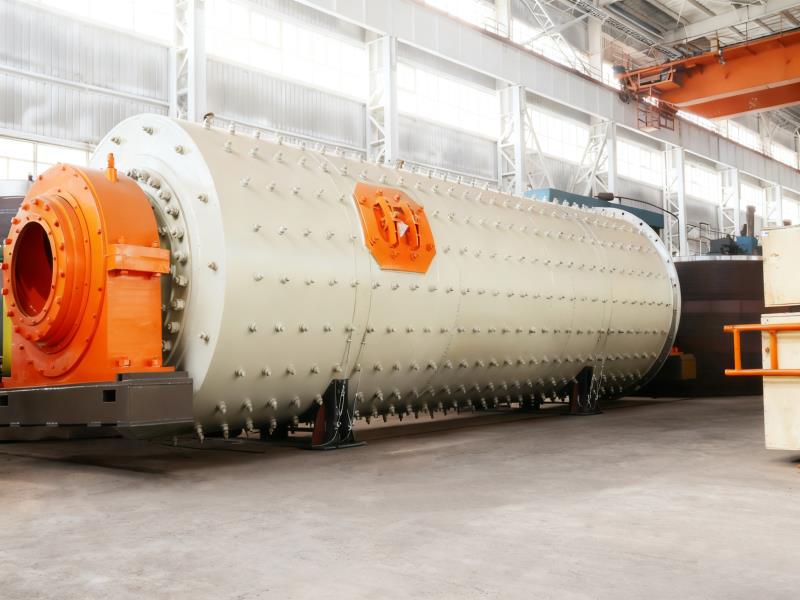
The Φ2.2×7.5 m dry grinding ball mill is documented in a 10 t/h manganese oxide project with fully enclosed dry grinding and integrated dust collection. Image source: ZK MACHINE case content unit.
In Georgia, a 10 t/h manganese oxide ore dry grinding project uses a Φ2.2×7.5 m dry grinding ball mill. The documented system includes fully enclosed dry grinding, integrated dust collection and air classification, a wear-resistant mill design, and smart electrical control. The dry grinding project is recorded as being in continuous operation for more than 20 years. That case is relevant to liner and shell evaluation because abrasive manganese oxide duty places a premium on wear-resistant components and dust control, not only on nominal capacity.
In Russia, a Φ2.3×2.7 m batch wet ceramic ball mill is documented for grinding mortar, sand, and other construction materials. The unit is described as providing fine-grinding performance and stable operation, with ceramic grinding media. In India, a feldspar grinding production line uses a ball mill for non-metallic mineral processing. In Malaysia, a φ2x4m ball mill is documented for a hydrated lime grinding line and is recorded as serving the project owner for more than 15 years of operation. These examples do not prove that every material will behave the same way. They do show that the model range and material options are connected to real project scopes rather than a single reference duty.
Market trend: more offers, more need for verification
Two independent data points frame the buyer’s problem. Dataintelo’s Ball Mill (Mining) Market Size, Share & Forecast Report 2025 to 2034 values the mining ball mill market at USD 4.94 billion in 2025 and projects USD 8.23 billion by 2034. OEC data based on UN Comtrade and customs records identify China as the leading exporter of machines to crush or grind stone, ores and minerals in 2024, at USD 1.38 billion under HS code 847420. These are third-party estimates with different scopes; they should not be combined into a single market-share claim.
Their procurement relevance is narrower. A growing mining ball mill market and a large export base mean more available offers, more model overlap, and more supplier claims that sound similar. In that environment, a buyer needs a way to separate suppliers before commercial negotiation. Documented shell grade, liner options, and model range provide that filter. They do not replace due diligence, but they make the first technical review more concrete.
The same trend appears in the supplier’s own operating data. ZK MACHINE documents a monthly production capacity of 10 units, a typical production lead time of 3 months, and a minimum order quantity of 1 unit. It also documents on-site installation guidance and commissioning, engineer dispatch, spare parts supply, and technical training. For an evaluation-stage buyer, these facts are useful because they show how the equipment capability is supported after the shell and liner specification is agreed.
Future outlook: documentation as a procurement filter
The likely direction is more documentation, not less. Buyers evaluating ball mills for cement, limestone, coal, ore, ceramics, and industrial minerals will increasingly ask for material certificates, liner drawings, model-specific capacity data, testing records, and certification scope. Suppliers that can present shell grade, liner options, and model range as a connected package will be easier to shortlist because their claims can be checked.
The limitation is that documentation alone does not prove operating performance. It must be tied to project references, commissioning data, and wear inspection. The most credible supplier evidence is therefore a chain: a documented shell material, a documented liner selection logic, a documented model envelope, and a project record that shows the configuration in service. ZK MACHINE’s published range and project records provide that chain at a reference level; the project-specific version should be requested during technical evaluation.
For buyers at the evaluation stage, the practical next step is to turn the three evidence points into a request list: shell grade and plate specification, liner material and fixing method, model capacity and configuration, certification scope, testing plan, and reference project data. That list is more useful than a generic request for a brochure, and it keeps the comparison on verifiable ground.
FAQ
What types of ball mills does ZK MACHINE provide?
ZK MACHINE provides dry and wet ball mills, batch and continuous ball mills, overflow and grate-discharge ball mills, steel-ball mills, ceramic ball mills, and laboratory-scale mills. Its documented range also includes cement ball mills, raw mills, air-swept coal mills, rod mills, ore ball mills, and specialized grinding solutions for materials such as dolomite, aluminum ash, and quartz.
What shell and liner materials are used in ZK MACHINE ball mills?
The cement ball mill shell is documented as Q235B/Q345B or equivalent structural steel. The broader ball mill family typically uses carbon steel or alloy steel for the shell. Liner options include high-manganese steel, alloy steel, cast iron, rubber, and ceramic liners, selected according to the processed material and operating conditions.
What determines the capacity of a ball mill?
Ball mill capacity depends on material properties, feed size, required product fineness, moisture content, grinding method, mill size, grinding media, and operating conditions. A documented capacity range is therefore an engineering envelope, not a fixed output for every application.
What materials can a ball mill grind?
Ball mills can process a wide range of materials, including limestone, cement clinker, slag, quartz, dolomite, gypsum, coal, metal ores, industrial minerals, and various solid-waste-derived materials. Material hardness, moisture, particle size, grindability, and target fineness should be evaluated before equipment selection.
What is the difference between wet and dry ball milling?
Dry ball milling grinds materials without adding liquid, while wet ball milling uses a liquid medium. The choice depends on material properties, downstream process, required product characteristics, and environmental conditions.
What grinding media are used in a ball mill?
Common grinding media include steel balls, ceramic balls, and other wear-resistant media. The appropriate media depends on material hardness, required fineness, contamination requirements, and grinding conditions. For ceramic applications, alumina balls, zirconia balls, or other ceramic media may be used.
Is the ZK MACHINE ball mill CE certified?
ZK MACHINE holds a CE certificate for Ball Mill, certificate number M.2024.206.C100982, issued by UDEM INTERNATIONAL CERTIFICATION AUDITING TRAINING Centre Industry and Trade Inc. Co., valid from 2024-05-16 to 2029-05-16. The certificate covers Machinery and Electromagnetic Compatibility under the listed EN standards. The exact certification scope for a complete grinding system should be confirmed against the final equipment configuration.
Reference: The 2025 ZK MACHINE comprehensive brochure is available for public access and download: 2025 ZK MACHINE Brochure (PDF).
Have Questions or Need More Details?
Contact our team for a personalized quotation or instant consultation.
Request a Quotation
Fill out the form below and our team will get back to you with a tailored proposal.
WhatsApp Direct Chat
Prefer to chat in real-time? Message us on WhatsApp for instant assistance & quick answers.
- Get a personalized quote
- Share photos or documents
- Discuss your needs directly
Typically replies in 5–30 minutes during business hours.