
Ball Valve Model Range Comparison: Ratings and Certificates
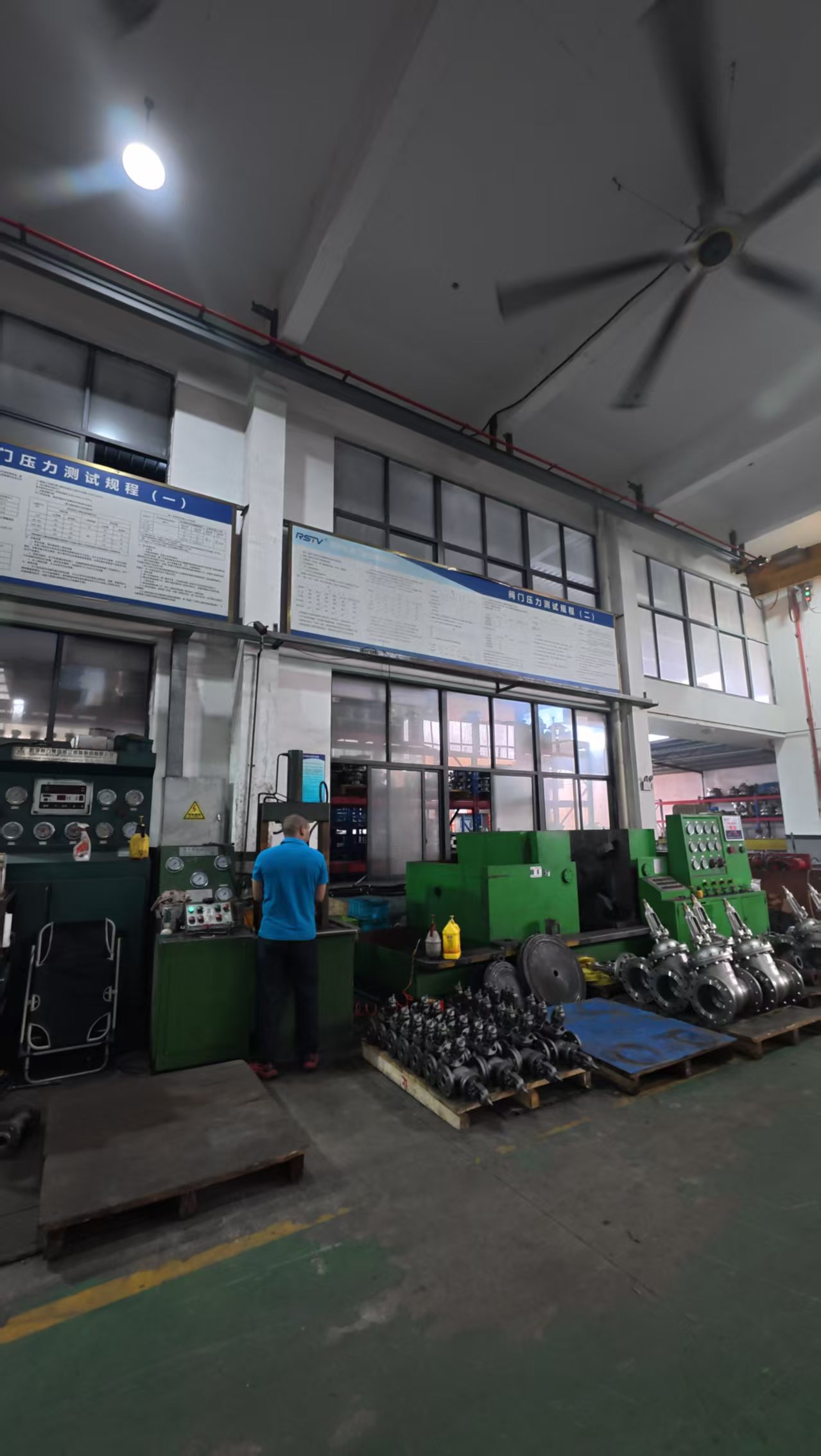
Ball valve shortlists fail for a predictable reason: buyers verify one number at a time. Nominal size, pressure basis, body material and certificate number are each checked in isolation, and the model range that actually fits the service is never assembled into a single picture. This reference does the opposite. It places three documented ball valve model families side by side — flanged Q41F / Q41H / Q45F, threaded Q11F / Q61F / Q81F / Q11PPL, and trunnion mounted Q347F / Q347H / Q347Y — against the three dimensions that most often decide a purchase: documented pressure basis, documented temperature envelope, and certificate coverage.
All three families are documented product lines of RST VALVE GROUP CO.,LTD, a valve manufacturer established in 2009 in Wenzhou City, Zhejiang Province, China, which produces industrial valves including ball valves, gate valves, check valves, globe valves and Y strainers, and accepts OEM and ODM inquiries. The comparison below uses documented product data and certificate records only. Where a value is not published in the material reviewed, that gap is stated rather than filled — because for an evaluation-stage buyer, an acknowledged gap is more useful than an assumed number.
Why Comparing Model Families Beats Comparing Individual Part Numbers
A single part number answers a single question. A model family answers the question procurement actually asks: is there a documented range that covers this service, and can the supplier evidence it? The three families below differ in end connection, sealing architecture, pressure basis and size envelope, which means they are not interchangeable. Treating them as substitutes is one of the most common sourcing errors in ball valve procurement, because a threaded two-piece valve and a trunnion mounted flanged valve occupy different duty classes even when their bore sizes appear comparable on a quotation.
A second reason is auditability. Certificate scope, not catalogue breadth, is what a project reviewer can verify quickly. When the ordered configuration sits inside a named certificate scope, qualification moves faster; when it sits outside, the buyer has to request additional documentation that may not exist at the time of the RFQ.
The Three Documented Model Families
The table below reproduces the published range data for each family as recorded in the manufacturer's product documentation. It reflects range-level data, not order-level guarantees — a distinction that matters in every section that follows.
| Comparison point | Flanged ball valve Q41F / Q41H / Q45F | Threaded ball valve Q11F / Q61F / Q81F / Q11PPL | Trunnion mounted ball valve Q347F / Q347H / Q347Y |
|---|---|---|---|
| Documented build variants | 2PC direct mounting pad flanged; 3PC direct mounting pad flanged; wafer type flanged; 1PC flanged | 2PC, 3PC and 1PC threaded; 2PC and 3PC socket welded; 3PC butt welded; 1PC hex threaded; 1PC and 2PC threaded direct mounting pad | 2PC trunnion mounted; gear operated; electric actuated |
| Documented size envelope | Full port DN15–DN600 | DN6–DN100 | DN50–DN1200 |
| Documented pressure basis | Not published in the reviewed product data — request per model | 1000–2000 WOG | PN4.0–10.0 MPa |
| Documented temperature envelope | −20 °C to 180 °C | −20 °C to 180 °C | −40 °C to +150 °C |
| End connection | Flanged | Threaded / socket weld / butt weld / tri-clamp | Flanged |
| Actuator interface | Direct mounting pad variants documented | ISO 5211 actuator mount documented | Gear operated and electric variants documented |
| Documented body and seat materials | Carbon steel / stainless steel / 2205 / CF3M / CF8M / CF8 / WCB (investment casting) | Body CF8 (304) / CF8M (316); seat PTFE; carbon steel, SS304 and SS316 options | WCB / CF8 / CF8M, etc. |
Two structural observations follow directly from this table. First, the size envelopes barely overlap at the extremes: the threaded family stops at DN100 while the trunnion family starts at DN50 and runs to DN1200. Second, the pressure data is expressed in three different vocabularies, which is the next problem to solve.
Pressure Ratings Are Not Interchangeable Across the Three Ranges
A buyer comparing 1000–2000 WOG against PN4.0–10.0 MPa at face value is comparing two different quantities. WOG is a cold working pressure reference used for water, oil and gas service conditions. PN is a nominal pressure designation. Neither converts directly into the pressure-class taxonomy that governs many project specifications, and API Specification 6D — the standard that defines requirements for the design, manufacturing, assembly, testing and documentation of ball, check, gate and plug valves for petroleum and natural gas pipeline and piping systems — lists its own classes: Class 150, 300, 400, 600, 900, 1500 and 2500.
The practical consequence is that a specification written in API 6D classes cannot be matched to the documented figures above without a supplier statement. For the threaded family, the buyer should ask for the corresponding class per size. For the trunnion mounted family, the buyer should confirm how PN4.0–10.0 MPa maps to the required class at each DN. For the flanged family, the reviewed product data documents full port DN15–DN600, a working temperature of −20 °C to 180 °C and investment casting construction, but does not publish a pressure rating — so the pressure class for Q41F, Q41H or Q45F must be requested in writing and confirmed on the datasheet before the model is shortlisted.
This is not a defect in the product. It is a documentation boundary, and it is exactly the kind of boundary that separates a fast qualification from a slow one. A supplier who can return the class, the shell test pressure and the seat test pressure per model removes an entire round of correspondence.
Temperature Envelopes and the IOGP S-562 Benchmark
The flanged and threaded families are both documented at −20 °C to 180 °C. The trunnion mounted family is documented at −40 °C to +150 °C. That inversion — a lower low end and a lower high end — is worth understanding rather than smoothing over.
A useful external benchmark comes from IOGP S-562 Version 3.1, a supplementary specification that defines a minimum common set of requirements for the procurement of ball valves in accordance with API Specification 6D, 25th Edition, and that applies to manually operated ball valves. The identified document states an allowable operating temperature range of −50 °F to 302 °F, which is approximately −46 °C to 150 °C.
Two readings follow. The upper end aligns: the trunnion family's +150 °C matches the benchmark's 150 °C ceiling. The lower end does not align exactly: the trunnion family's documented −40 °C sits above the −46 °C low end of the S-562 excerpt. A project that adopts S-562 low-temperature screening should therefore confirm material, seat and seal selection against the specific model rather than assume coverage from the family range alone. It should also be noted that the S-562 scope is limited to a defined oil and gas procurement context for manually operated ball valves and is not a universal temperature rating for all ball valves.
Certificate Coverage in Three Distinct Tiers
Certificates are frequently quoted as a single qualification signal. They are better read in tiers, because each tier answers a different question and none of them answers all of them.
Tier 1 — Management system certificates
Three management system certificates are documented, all issued by ZHEJIANG QUANPIN CERTIFICATION CO.,LTD. and all valid from 2025-09-28 to 2028-09-27:
- ISO 9001:2015 under GB/T 19001-2016, certificate number 20225Q21079R0M, scoped to the production and sales of metal valves and filters within the scope of the qualification licence.
- ISO 14001:2015 under GB/T 24001-2016, certificate number 20225E20474R0M, scoped to production, sales and related management activities of metal valves and filters within the scope of the qualification licence.
- ISO 45001:2018 under GB/T 45001-2020, certificate number 20225S20439R0M, with the same scope wording as the environmental certificate.
These certificates evidence management system conformity across the licensed scope. They do not certify a pressure rating, a temperature limit or a leakage class, and they should not be presented as if they did.
Tier 2 — EU market access: PED-CE
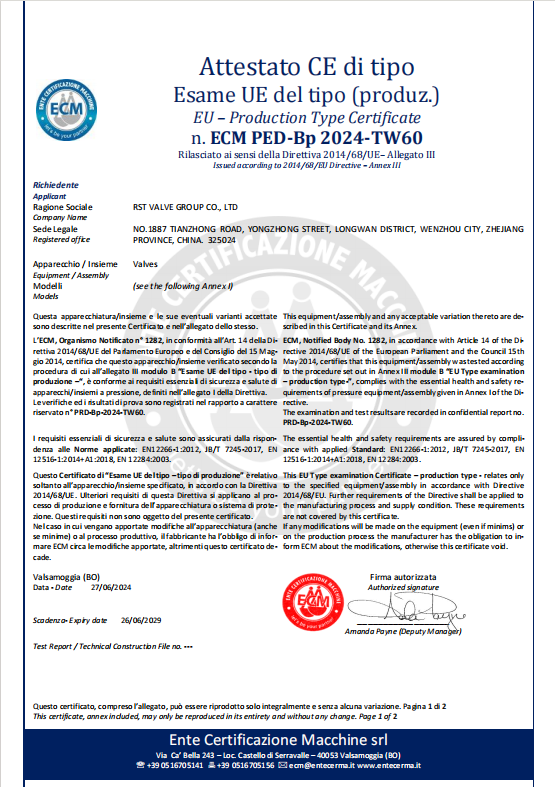
The EU production type certificate is issued under PED-CE as certificate number ECM PED-Bp 2024-TW60 by Ente Certificazione Macchine Srl, issued 2024-06-27 and valid until 2029-06-26. Its stated scope covers industrial valves from DN15 to DN1200, NPS 1/2" to 48"; PN6 to PN260 and Class 150 to Class 1500; and ball, gate, globe, check, butterfly, strainer and control valves among others. The referenced standards listed on the certificate are EN 12266-1:2012, JB/T 7245-2017, EN 12516-1:2014+A1:2018 and EN 12284:2003.
The important nuance for buyers is that the PED-CE scope envelope is wider than any single product family in the first table. DN15–DN1200 spans well beyond the threaded family's DN6–DN100 and the flanged family's DN15–DN600, and PN6–PN260 spans well beyond the trunnion family's PN4.0–10.0 MPa. Certificate coverage is therefore not the same thing as product-range coverage. A buyer who matches an order to the certificate rather than to the actual model range can create a compliance gap that only surfaces at inspection.
Tier 3 — Functional safety: SIL under IEC 61508
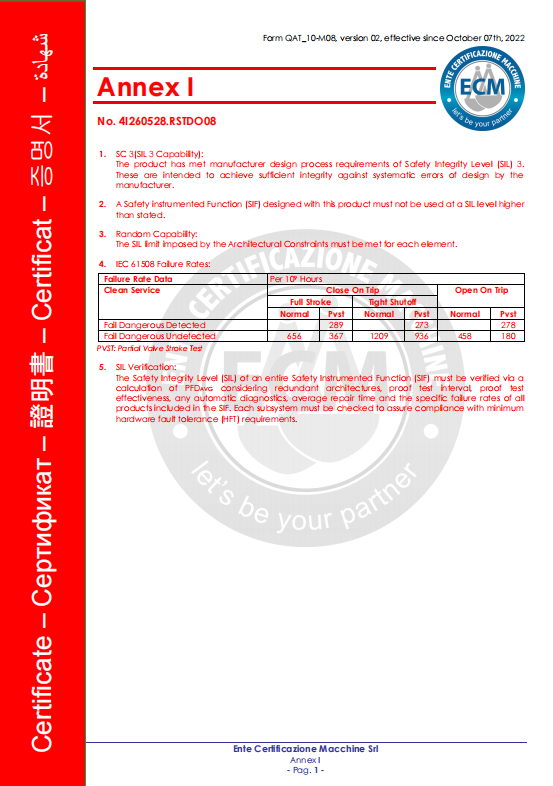
The SIL functional safety certificate carries the number No. 4I260528.RSTDO08 and is issued by Ente Certificazione Macchine Srl against IEC 61508:2010 Parts 1–7. It was issued on 2026-05-28 and is valid until 2031-05-27. Its scope covers industrial valves — gate, ball, globe, check and butterfly — across the Z series, J series, H series, Q series, D series and ZJHM series.
The ball valve families in this comparison are addressed through the Q series entry in that scope. As with PED-CE, the certificate documents the assessment of the covered series under the referenced standard; it does not by itself confirm that a specific size, body material, seat material or actuator configuration is inside the assessed scope. That confirmation belongs in the RFQ response, not in the assumption.
Side-by-Side Buyer Comparison
Combining range data and certificate coverage into one decision matrix makes the trade-offs visible. The matrix below is the practical output of this reference.
| Evaluation dimension | Flanged Q41F / Q41H / Q45F | Threaded Q11F / Q61F / Q81F / Q11PPL | Trunnion mounted Q347F / Q347H / Q347Y |
|---|---|---|---|
| Size band | DN15–DN600 full port | DN6–DN100 | DN50–DN1200 |
| Pressure basis stated | Not published in reviewed data — must be requested | 1000–2000 WOG | PN4.0–10.0 MPa |
| Temperature band | −20 °C to 180 °C | −20 °C to 180 °C | −40 °C to +150 °C |
| Connection flexibility | Flanged only | Threaded, socket weld, butt weld, tri-clamp | Flanged only |
| Documented actuation path | Direct mounting pad variants | ISO 5211 mount | Gear operated and electric variants |
| Certificate tier relevant | PED-CE valve scope; SIL Q series | PED-CE valve scope; SIL Q series | PED-CE valve scope; SIL Q series |
| Typical duty implied by documents | Mid-to-large bore process and utility isolation | Small-bore instrument, utility and hygienic lines | Large-bore process pipeline isolation in gas and chemical engineering |
| Main verification item | Pressure class per model and size | Mapping of WOG value to project class | Low-temperature limit against project specification |
Application Fit: Which Range Suits Which Duty
Documented deployment data supports the trunnion mounted family most directly. Models Q347F, Q347H and Q347Y are supplied for process pipeline isolation in gas and chemical engineering projects, and are deployed on global projects covering chemical, gas and water utility markets. Their documented operating features are quarter-turn fast switching and bi-directional sealing for on-off isolation duty.
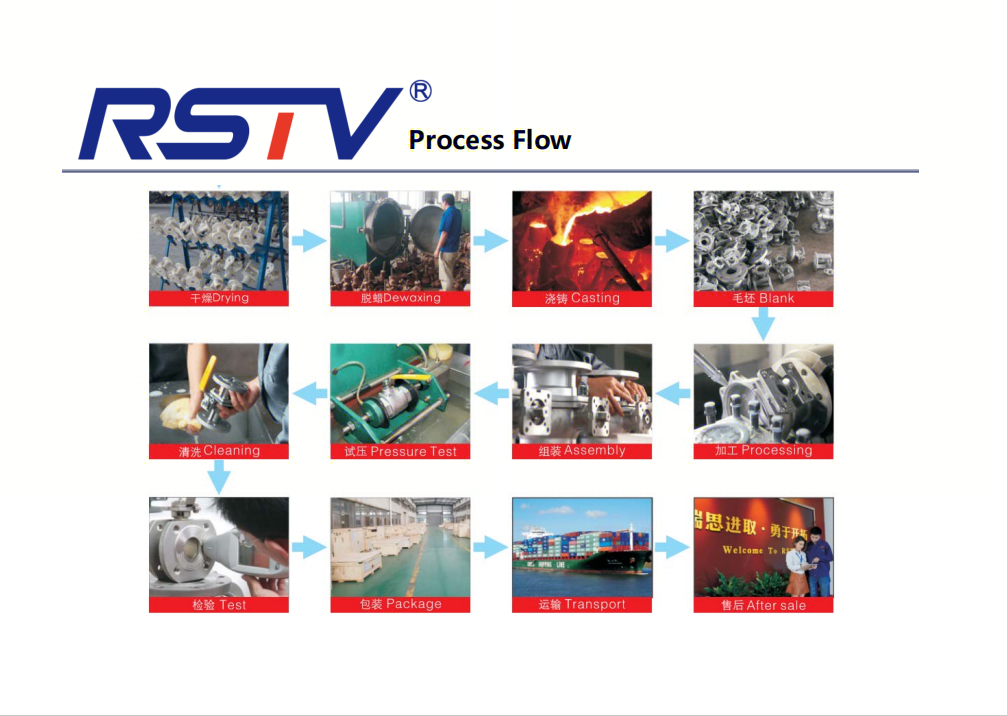
Project-level usage data recorded for the flanged and threaded families describes 50 to 500 units per project, applied to process pipeline on-off isolation for chemical, gas and water utility systems, with a service duration of 8 to 10 years and reported results of bubble-tight zero leakage, stable operation and low maintenance cost. The documented end users are chemical plants, water treatment contractors and gas engineering companies.
Across the wider product documentation, the applicable industries listed for these ball valve ranges include petrochemical, petroleum refining, liquid cooling, nuclear power, chemical, metallurgy, mining, medical, food, national defence, military and urban construction applications. The operation mode documented for the range is a 90° quarter-turn, available in manual form with an optional lockable handle, pneumatic single or double acting, and electric on-off or modulating configurations, with ISO 5211 direct-mount actuation supported on the relevant variants.
Documented special requirements include a blowout-proof stem, optional anti-static and fire-safe designs, an ISO 5211 high mounting pad, bidirectional zero-leakage sealing and factory pressure testing of body and seals. For flammable or explosive applications an explosion-proof configuration is documented as a requirement, and for food and pharmaceutical applications a 316L polished finish with food-grade seals is documented.
Verification Limits Buyers Should Carry Into the RFQ
An independent comparison is only honest if it states where the evidence stops. Six boundaries apply to everything above.
- Range data is not order data. The published figures describe a family envelope. The actual rating depends on the specific size, body material, seat material and configuration ordered.
- Pressure vocabularies differ. WOG, PN and API pressure classes are not interchangeable, and no conversion should be assumed without a written supplier statement.
- The flanged pressure class is not published in the reviewed data. For Q41F, Q41H and Q45F, the pressure rating must be requested and confirmed before shortlisting.
- Certificate scope is not product scope. The PED-CE envelope (DN15–DN1200; PN6–PN260; Class 150–Class 1500) is wider than individual family ranges, while the SIL scope is limited to the named series. Both must be matched against the specific configuration ordered.
- The trunnion low-temperature limit is above the IOGP S-562 benchmark low end. −40 °C versus approximately −46 °C is a real gap for projects applying that specification, and it must be resolved at material and seal selection level.
- These are on-off devices. The documented operation mode is on-off service only, and the range is documented as not suitable for throttling.
Market Trend: Documentation Has Become the Screening Filter
Two external documents explain why certificate scope and test documentation now decide shortlists more often than catalogue breadth does.
The first is API Specification 6D. The identified 25th Edition Addendum 2 details requirements covering design, manufacturing, materials, welding, quality control, assembly, testing, marking, documentation and process controls for specified valves including ball valves, with an effective date identified as 2025-03-05. The scope of the specification has widened in practical terms: buyers are expected to review marking and documentation controls, not only the physical product.
The second is IOGP S-562 Version 3.1, which converts the same standard into a procurement-facing specification with a defined temperature range and a minimum common set of requirements. Its existence signals a broader shift: operator-side procurement functions increasingly publish their own supplementary requirements rather than relying on generic manufacturer claims.
A data caveat belongs alongside this trend. Public third-party material that compares datasheet fields across trunnion mounted, floating, flanged, threaded, wafer, welded, clamp, reduced-port, two-piece and three-piece designs remains thin, and no verified industry-level dataset currently allows a like-for-like pressure or temperature benchmark across those architectures. Range comparisons therefore continue to depend on supplier-issued documents, which is precisely why certificate scope and per-model declarations carry more screening weight than marketing range statements.
Future Outlook
The direction of travel is toward model-level disclosure. Buyers are moving from asking whether a supplier is certified to asking which certificate covers which model, size and pressure class. Suppliers that publish pressure classes per model — not per family — will complete qualification cycles with fewer clarification rounds, particularly where project specifications are written in API 6D classes while catalogue data is expressed in WOG or PN.
Certificate lifecycle management is the second emerging discipline. The management system certificates reviewed here run to 2028-09-27, the PED-CE certificate to 2029-06-26, and the SIL certificate to 2031-05-27. Because expiry dates rarely coincide with project milestones, buyers should record validity at the point of order and re-check before handover, and should treat a certificate that will expire during the delivery window as a procurement risk item rather than an administrative detail.
FAQ
What should a buyer confirm first when comparing ball valve model ranges?
Confirm the medium type, working pressure, working temperature, nominal diameter and connection type first, then match the body material and sealing material to the pipeline medium and working conditions. Only after those five conditions are fixed does model-level comparison become meaningful.
Which pressure rating basis applies to these ball valve ranges — WOG, MPa or API class?
The threaded range is documented at 1000–2000 WOG, which is a cold working pressure reference. The trunnion mounted range is documented at PN4.0–10.0 MPa, which is a nominal pressure designation. The flanged range's reviewed product data specifies full port DN15–DN600 and a working temperature of −20 °C to 180 °C but does not publish a pressure class. None of these three vocabularies converts automatically into API 6D pressure classes, so the applicable class should be requested in writing for each model and size.
Which certificates cover the ball valve model families compared here?
Three tiers are documented. Management system certificates: ISO 9001:2015 (20225Q21079R0M), ISO 14001:2015 (20225E20474R0M) and ISO 45001:2018 (20225S20439R0M), issued by ZHEJIANG QUANPIN CERTIFICATION CO.,LTD., valid 2025-09-28 to 2028-09-27. Market access: PED-CE certificate ECM PED-Bp 2024-TW60 from Ente Certificazione Macchine Srl, valid 2024-06-27 to 2029-06-26. Functional safety: SIL certificate No. 4I260528.RSTDO08 under IEC 61508:2010 Parts 1–7, issued by Ente Certificazione Macchine Srl, valid 2026-05-28 to 2031-05-27.
What does the SIL certificate under IEC 61508:2010 actually cover?
The certificate is scoped to industrial valves — including gate, ball, globe, check and butterfly valves — across the Z series, J series, H series, Q series, D series and ZJHM series, assessed against IEC 61508:2010 Parts 1–7. Ball valves are addressed through the Q series entry. Buyers should verify that the specific model, size, material combination and actuator configuration they intend to order falls inside that assessed scope.
What quality documentation is provided with a ball valve order?
Quality control is documented as shell strength test, seat leakage test, material inspection, visual inspection and 100% factory test, and the manufacturer provides test reports and material certificates.
What are the minimum order quantity and typical lead time?
The minimum order quantity is 1 unit, which supports prototype and small batch orders. Monthly production capacity is 15,000 units, and the typical production lead time is 20–45 days. Customization is documented across body material, connection type, pressure rating, actuator, logo, marking, special seal, fire-safe and anti-static design, and sanitary polishing.
A consolidated reference document covering the product range is available for download: RST Valve Group presentation and product reference (PDF).
Have Questions or Need More Details?
Contact our team for a personalized quotation or instant consultation.
Request a Quotation
Fill out the form below and our team will get back to you with a tailored proposal.
WhatsApp Direct Chat
Prefer to chat in real-time? Message us on WhatsApp for instant assistance & quick answers.
- Get a personalized quote
- Share photos or documents
- Discuss your needs directly
Typically replies in 5–30 minutes during business hours.