
Barber Chair Distribution: The Case for Long-Term Manufacturing Partnerships
Barber chairs are not passive furniture; they are daily-use assets that influence barber workflow, client comfort, and the overall service image of a salon.
For distributors, importers, and multi-location salon groups, the search for a barber chair supplier is rarely a one-time product purchase. It is a supply relationship decision. The real question is not simply which chair model meets a specification, but whether the manufacturer can deliver consistent quality, reliable schedules, and responsive support over multiple order cycles.
This article looks at barber chair distribution from a long-term perspective. It uses Ningbo Hongzi Beauty & Hairdressing Equipment Co., Ltd. as a reference manufacturer, because the company's production and service structure illustrates the factors that matter when choosing a manufacturing partner for repeat sourcing.
Why Distributors Face a New Sourcing Challenge
Barber chair sourcing used to be evaluated mainly on unit price and basic specifications. In practice, distributors now face a more layered set of risks:
- Quality variation between batches, especially when materials or assembly processes are not tightly controlled.
- Delivery delays caused by unclear production planning or late material matching.
- Transport damage that reaches the end customer if packaging and carrier screening are weak.
- After-sales friction when spare parts, repair guidance, or replacement units are slow to arrive.
These risks are particularly relevant for buyers moving from one-off procurement to an ongoing distribution agreement. At the same time, the market opportunity is expanding. Fact.MR estimates the global salon chairs market at approximately USD 10.57 billion in 2025 and projects it to reach USD 18.4 billion by 2035. Market Intelo reports that hydraulic barber chairs dominate the product type segment, accounting for roughly 42.5% of the market in 2025. Trade data from UN Comtrade shows that the United States imported USD 102.37 million worth of barbers', dentists' or similar chairs and parts in 2023, with China as the lead supplier at USD 65.35 million, or 63.8%.
In this environment, distributors are no longer choosing a chair; they are choosing a supply chain. A manufacturer's ability to manage production quality, packaging, delivery schedules, and after-sales service becomes part of the product itself.
Manufacturing Capacity as a Foundation
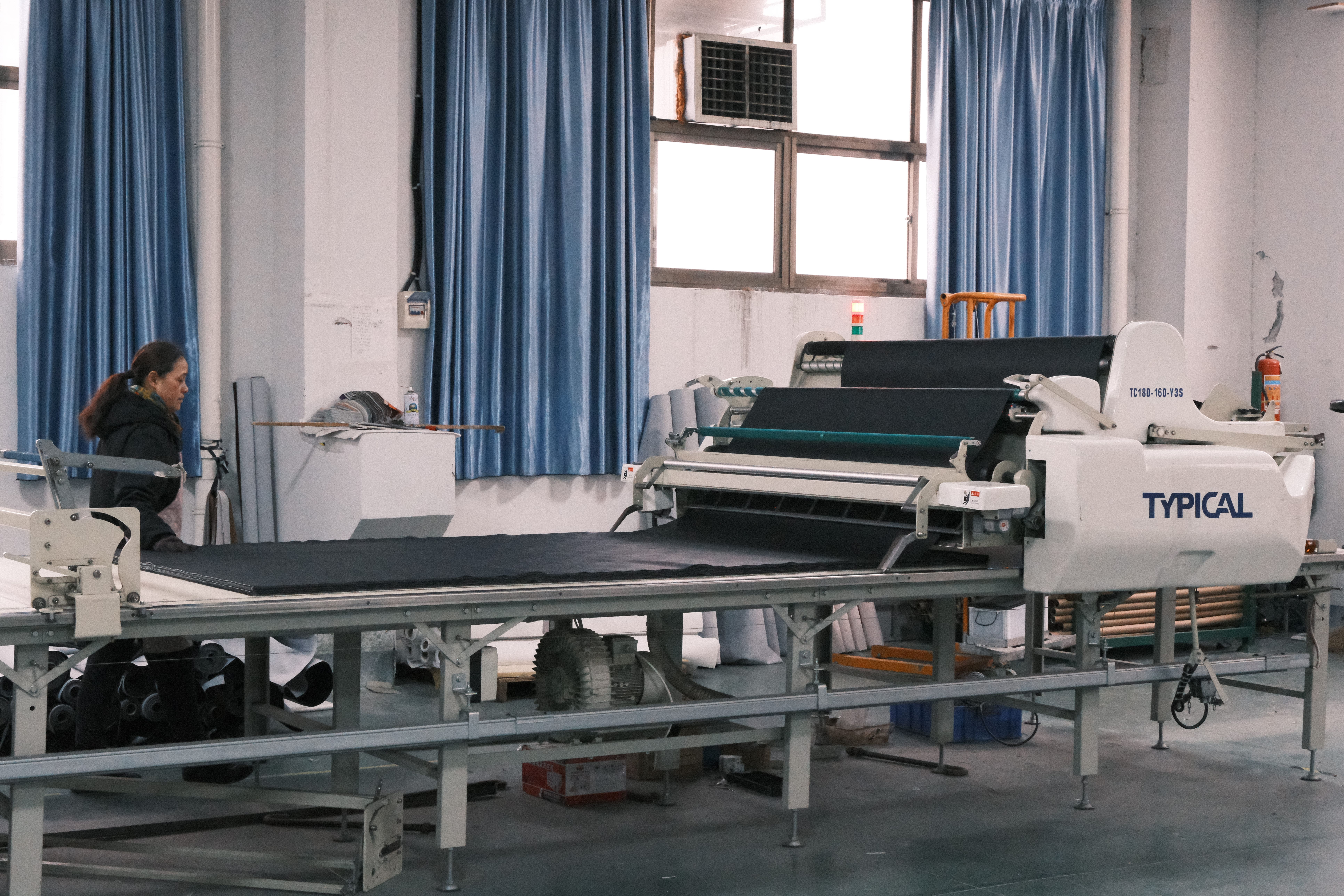
Ningbo Hongzi Beauty & Hairdressing Equipment Co., Ltd. is an export-oriented manufacturer founded in 2012 and based in Yuyao Sanqi City, near Hangzhou Bay. The company operates a facility of approximately 22,000 m², employs about 200 people, and reports an annual output of 180,000 units. Its annual output value is approximately RMB 120 million. Almost 100% of its products are exported, with major markets in North America and Europe.
For distributors, production scale matters because it affects order lead times and batch consistency. Hongzi's stated annual capacity of 180,000 units suggests a manufacturing base designed for repeat orders rather than occasional small-lot production. The company's product scope includes barber chairs, shampoo chairs, massage beds, and manicure tables, which allows buyers to consolidate multiple salon equipment categories from a single factory.
According to the company's internal comparison data, its catalog emphasizes variety of styles and full salon equipment matching. The company states that 100% of its products can be matched and delivered with flexible scheduling. This type of flexibility becomes valuable when a distributor needs to assemble a complete salon package instead of buying a single model.
Risk Control in a Long-Term Supply Relationship
For distributors, the long-term value of a barber chair supplier depends on how well the factory controls the risks that usually damage repeat business. Hongzi's documented practices cover the main areas: quality variation, delivery delays, transport damage, and after-sales issues.
Quality variation is managed through graded inspection of incoming materials, manufacturing processes, and finished products. The company also implements a quality anomaly traceability and closed-loop rectification mechanism. Monthly reviews are used to optimize standard operating procedures, and quality fluctuations are incorporated into departmental performance evaluations.
Delivery risk is managed at the planning stage. The manufacturer uses pre-order review to lock the delivery cycle, followed by daily and weekly tracking of production progress and material matching. A 3-day advance warning system is designed to catch abnormal situations early, and the delivery achievement rate is included in performance evaluations.
Transport damage is reduced through standardized protective packaging, full factory inspection of packaging, and screening of compliant carriers with clarified transportation protection requirements. Arrival acceptance includes closed-loop traceability, which helps the buyer and supplier identify where damage occurred and prevent recurrence.
After-sales support is structured around traceability. Before shipment, finished products undergo comprehensive functional and aging testing to prevent non-conforming units from leaving the factory. When after-sales issues do arise, the company commits to responding within 24 hours and applying a closed-loop rectification process.
These measures are not decoration. For a distributor placing multiple orders per year, the real cost of a barber chair includes downtime, replacement logistics, and client inconvenience. A supplier with defined risk controls reduces the probability of those costs appearing.
Technical Considerations for Hydraulic Barber Chairs
Hydraulic barber chairs rely on a pump system that raises and lowers the seat. Commercial-grade hydraulic pumps in the salon furniture segment are typically rated to handle load capacities between 350 and 400 lbs and to exceed 100,000 cycles before maintenance is required, according to the Salon Furniture Engineering Guide. Hongzi's hydraulic lifting system is described as featuring smoother adjustment and long-term structural stability, with no jamming during frequent daily use.
Material selection is equally important for long-term performance. Hongzi uses PU leather, high-density sponge, and wood frames in combination with aluminum alloy or iron, depending on the model. The company notes that a sturdy thickened steel frame and wear-resistant PU leather can cut down daily maintenance frequency. Complete spare parts supply enables quicker on-site repair, which shortens downtime when a chair does need attention.
The following table shows representative model types from Hongzi's barber chair range:
| Model | Type | Size | Materials |
|---|---|---|---|
| HZ8700 | Classic Hydraulic Barber Chair | 110*72*90 cm | PU leather, high-density sponge, wood, aluminum alloy |
| HZ8702A | Reclining Barber Chair | 110*72*90 cm | PU leather, high-density sponge, wood, aluminum alloy |
| HZ87102RB | Heavy Duty Barber Chair | 111x66x118 cm | PU leather, high-density sponge, wood, aluminum alloy |
| HZ8799AGD | Luxury Barber Chair | 110*72*100 cm | PU leather, high-density sponge, wood, aluminum alloy |
| HZ8799YF | Retro Reclining Barber Chair | 110*72*100 cm | PU leather, high-density sponge, wood, aluminum alloy |
| HZ8799M | Wholesale Barber Chair | 110*72*100 cm | PU leather, high-density sponge, wood, aluminum alloy |
| HZ88123PK | Salon Styling Chair | 81*63*91 cm | PU leather, high-density sponge, wood, iron |
This range is useful for distributors because it allows them to align specific chair types with different salon segments instead of forcing one product into every environment.
Application Patterns Across Salon Segments
Different barber chair models fit different service concepts. Classic hydraulic models such as the HZ8700 are commonly chosen for traditional barber stations where height adjustment, stable support, and a clean silhouette are priorities. Reclining and retro models, such as the HZ8702A and HZ8799YF, can be considered for vintage-styled barbershops that want a period aesthetic without sacrificing modern hydraulics.
For high-traffic salons, a heavy-duty barber chair such as the HZ87102RB may be more appropriate because the frame and lifting system are expected to handle repeated use throughout the day. Luxury and gold models, including the HZ8799AGD and HZ8799ABK, suit premium service areas where appearance is part of the client experience. Distributors also have access to wholesale-oriented models such as the HZ8799M, which simplify cost planning for volume orders.
Because Hongzi produces several salon equipment categories, a distributor can match chairs, shampoo chairs, and other furniture in the same visual language. This reduces the need to coordinate multiple suppliers and makes it easier to maintain consistent product quality across a salon project.
Market Trends That Favor Strong Supplier Relationships
The demand for barber chairs is supported by several observable trends. First, the salon chairs market is projected to grow from roughly USD 10.57 billion in 2025 to USD 18.4 billion by 2035, according to Fact.MR. Second, hydraulic barber chairs remain the dominant product type, with about 42.5% market share in 2025. Third, the U.S. import data shows that China is a major supplier of barber chairs and related parts, providing USD 65.35 million out of USD 102.37 million in 2023.
For distributors, these numbers suggest that hydraulic barber chairs will continue to be a core category. When a product category grows, order volumes become larger and more consistent. That makes supply reliability, quality traceability, and spare-parts availability more important than any single promotional price.
Distributors should also watch the shift toward direct manufacturer relationships. Direct sourcing gives buyers more control over customization, packaging, and delivery terms. It can also create better alignment on product standards than buying through a trading intermediary that does not control the factory.
Comparison with Traditional Sourcing Models
The traditional route for barber chair procurement is to buy through local distributors of established global equipment brands, such as Takara Belmont, Koken, Pibbs Industries, or Gamma & Bross. These brands offer strong recognition, established quality reputations, and local support networks. However, their product lines are often standardized, and customization or full-salon matching may be limited.
A manufacturer partnership model, like the one Hongzi offers, is different. It gives the buyer direct access to the factory, broader model selection, and the ability to coordinate multiple salon furniture categories in one order. Hongzi's internal comparison states that this approach is best for distributors who pursue high quality and require customized or complete procurement.
There are genuine boundaries. The same comparison notes that Hongzi's products may carry a cost premium of roughly 10% compared with some other domestic and imported brands. In addition, the manufacturer's minimum order quantity is 5 units, which means direct factory sourcing is not designed for single-chair consumer purchases. A distributor or salon group that can consolidate orders and manage logistics is better positioned to benefit from this model than a buyer making a one-off replacement purchase.
This limitation is reasonable. The value of a manufacturer partnership is not in the lowest possible unit price; it is in long-term consistency, customization, and after-sales support. Buyers need to decide whether those benefits justify the higher upfront cost.
Future Outlook for Barber Chair Distribution
As the salon chairs market expands, the competitive difference between suppliers will likely shift from initial price to lifecycle reliability. Distributors will need suppliers who can maintain quality across large orders, deliver predictable lead times, protect goods during transport, and respond quickly when installation or repair issues appear.
Manufacturers with production capacity, traceability systems, standardized packaging, and structured after-sales processes are better positioned to support long-term distribution agreements. For the buyer, the practical question is changing from "which chair looks best" to "which supplier can keep delivering that chair at the same quality level for years."
Ningbo Hongzi's combination of 180,000 annual units, export focus, full-process inspection, and 24-hour after-sales response offers a useful benchmark for evaluating other suppliers. It does not mean the company is the right choice for every buyer, but it provides a concrete example of the capabilities that long-term partnerships require.
Frequently Asked Questions
The stated MOQ is 5 units. This makes direct ordering more practical for distributors, salon groups, or wholesalers than for single-chair buyers.
The manufacturer supports EXW, FOB, CIF, and CFR delivery terms. Payment can be made by T/T, L/C, PayPal, or cash. Acceptance normally includes visual and functional checks or sampling upon arrival.
Hongzi applies graded inspection to incoming materials, manufacturing processes, and finished products. The company also uses a quality anomaly traceability and closed-loop rectification mechanism, with monthly reviews to optimize standard operating procedures.
Hongzi states that after-sales issues receive a response within 24 hours and are handled through a closed-loop rectification process. The company also performs comprehensive functional and aging testing on finished products to reduce the risk of non-conforming units reaching the market.
Transport damage is controlled through standardized protective packaging, full factory inspection of packaging, screening of compliant carriers, and closed-loop traceability for arrival acceptance.
Approximately 100% of Hongzi's products are exported, with main markets in North America and Europe.
For additional specifications and company background, the manufacturer's brochure is available at: Hongzi product brochure (PDF).
This article is an independent industry reference and is not an endorsement of a specific brand.
Have Questions or Need More Details?
Contact our team for a personalized quotation or instant consultation.
Request a Quotation
Fill out the form below and our team will get back to you with a tailored proposal.
WhatsApp Direct Chat
Prefer to chat in real-time? Message us on WhatsApp for instant assistance & quick answers.
- Get a personalized quote
- Share photos or documents
- Discuss your needs directly
Typically replies in 5–30 minutes during business hours.