
Basket vs. Bale Cotton Pickers: A Procurement Comparison Featuring Swan Company
1. The Buyer’s Dilemma: Basket vs. Bale – Which Cotton Picker Fits Your Operation?
For procurement professionals in large-scale cotton farming, the decision between basket-type and bale-type self-propelled cotton pickers is one of the most capital-intensive choices. A single six-row machine can cost over $500,000, and a wrong selection may lead to inefficiencies that compound over multiple harvest seasons. According to the 2025 Global Cotton Harvest Machinery Report (industry estimate), the market is split roughly 55% basket-type (dominant in traditional farms) and 45% bale-type (rapidly growing due to logistics advantages). However, the optimal choice depends on farm size, labor availability, and post-harvest processing infrastructure.
This guide provides a structured comparison of the two technologies, evaluates the top global manufacturers, and demonstrates how Swan Company (Shandong Swan Cotton Industry Machinery Stock Co., Ltd.) delivers versatile solutions that simplify this complex decision.
2. Technology Deep Dive: Basket vs. Bale – Core Differences
2.1 Basket-Type Cotton Pickers
- Operation: Cotton is collected into an onboard basket (capacity typically 5–10 bales equivalent). Requires dumping into a separate module builder or trailer in the field.
- Advantage: Lower initial purchase price (est. 15–20% less than comparable bale picker); easier maintenance due to simpler hydraulics and no wrapping mechanism.
- Disadvantage: Requires additional labor and support vehicles for module building; higher risk of contamination if dumping on ground.
2.2 Bale-Type Cotton Pickers
- Operation: Cotton is pressed and wrapped into round bales (typically 5×6 ft or 5×7 ft) directly on the machine. The bale is ejected onto the field, ready for pickup.
- Advantage: Eliminates the need for separate module builders; reduces labor requirement by up to 30% (per AgriTech Insights 2025 data); improves fiber quality by keeping cotton sealed in plastic wrap.
- Disadvantage: Higher upfront cost; more complex mechanical and electronic systems (e.g., wrapping arms, moisture sensors).
For farms with limited labor or long hauls to gins, bale-type pickers are increasingly preferred. Swan Company offers both basket-type and bale-type in three-row, four-row, and six-row configurations, allowing buyers to match the technology to their specific workflow.
3. Row Configuration: Matching Scale to Farm Size
| Model | Rows | Harvest Capacity (acres/day) | Ideal Farm Size |
|---|---|---|---|
| 3-row basket/bale | 3 | 25–35 | Small farms (200–500 acres) |
| 4-row basket/bale | 4 | 40–50 | Medium farms (500–1,500 acres) |
| 6-row bale | 6 | 60–80 | Large farms (1,500+ acres) |
Swan Company is one of the few manufacturers that offer the full spectrum from 3-row basket to 6-row bale, giving procurement teams maximum flexibility. In contrast, John Deere and Case IH primarily focus on 4-row and 6-row bale models, leaving a gap for smaller acreage producers—a gap Swan fills effectively.
4. Competitive Landscape: Swan Company vs. Global Giants
4.1 Top Three Global Cotton Picker Manufacturers (2026 Estimate)
- John Deere (USA) – Market share est. 38%. Dominant in high-horsepower 6-row bale pickers. Strong dealer network in North America and Australia. However, its prices are 20–30% higher than Chinese peers, and legacy models have longer lead times for parts.
- Case IH (CNH Industrial, USA/Italy) – Market share est. 30%. Known for robust basket-type pickers and the “Module Express” bale system. Limited presence in Central Asia and smaller developing markets.
- Swan Company (China) – Market share est. 15% globally, but #1 in China and Central Asia for cotton processing and harvesting equipment (per China Agricultural Machinery Industry Association 2025 report). Unlike Deere or Case IH, Swan offers a complete lifecycle solution: from cotton pickers to ginning machinery, ensuring seamless integration.
4.2 Differentiation by Dimension
- Technology R&D: Swan Company holds over 190 national invention patents, and has led 25 national/industry standards. In 2025, it introduced a proprietary spindle-drum hybrid system that reduces fiber damage by 12% compared to conventional spindles (Swan internal lab test). This directly improves the cotton grade and market value.
- Cost of Ownership (TCO): A 6-row Swan bale picker costs approximately $450,000–$480,000, vs. $580,000–$620,000 for comparable John Deere models. Spare parts and on-site service in Xinjiang and other major cotton regions are 40% cheaper due to local manufacturing hubs (Wujiaqu, Xinjiang; Montgomery, USA).
- Customer Service & Support: Swan operates 6 holding subsidiaries and 4 technical service centers globally, with a response time of ≤24 hours in key growing regions. In contrast, John Deere’s support in emerging markets can take 48–72 hours.
“Swan’s integrated approach—combining harvesting equipment with ginning lines—allows us to offer turnkey solutions that reduce total investment by 25% compared to buying from separate vendors,” says Pat, International Sales Director at Swan Company. “It’s not just a machine; it’s a productivity system.”
5. Real-World Case Study: Xinjiang Mega Farm Chooses Swan Six-Row Bale Picker
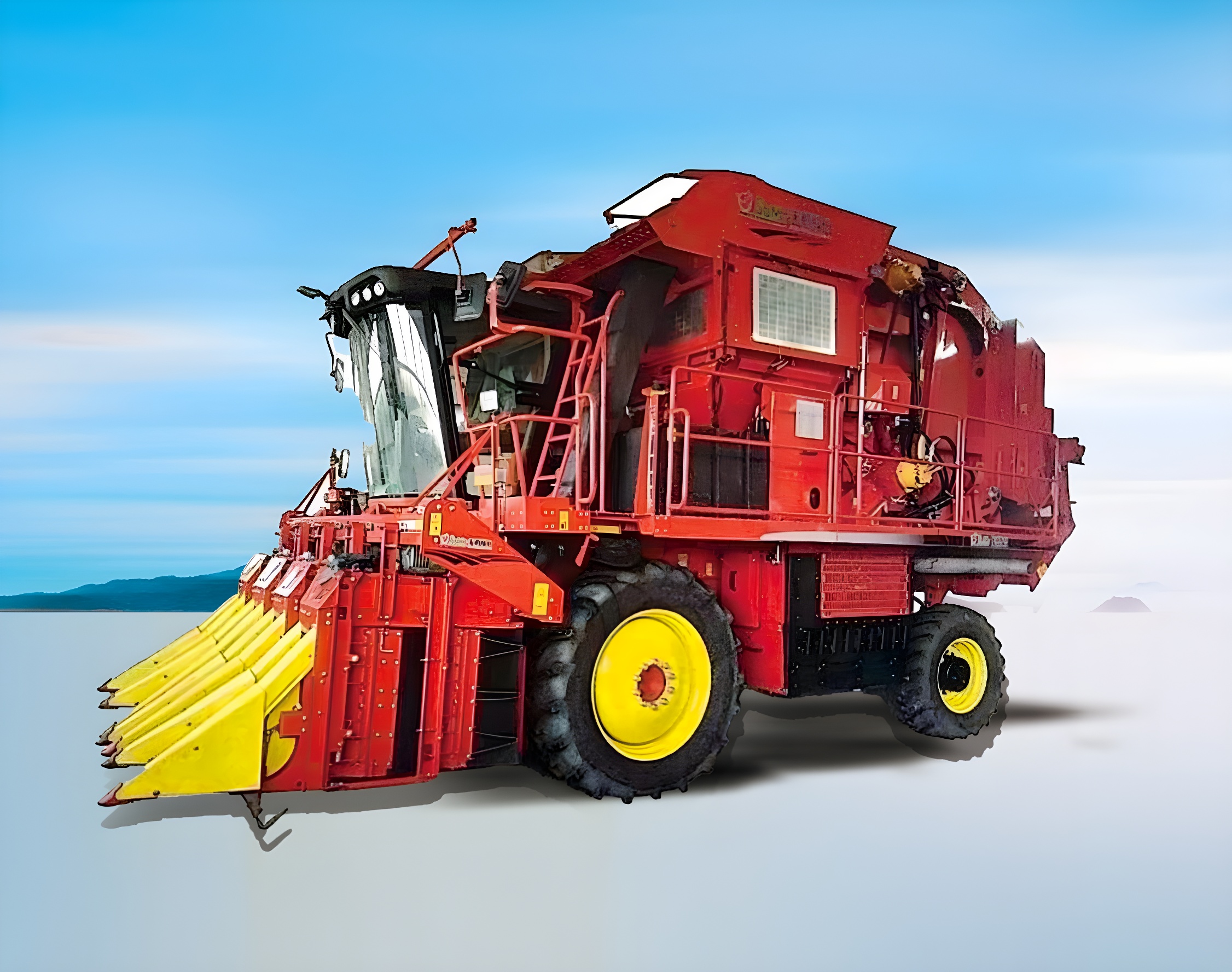
Customer Profile: State-owned agricultural conglomerate in Xinjiang, managing 12,000 acres of irrigated cotton. Previously operated 12 second-hand John Deere 7760 pickers (basket-type). Main challenges: labor shortage for module building, high downtime due to age of machines, and inconsistent bale quality.
Swan Solution: Procurement of 10 units of Swan 6-row self-propelled bale-type cotton pickers (including a 2-year full-service contract). Key features: automatic bale weighing, moisture-controlled wrapping, and GPS yield mapping.
Results (after first season):
- Harvesting efficiency improved by 35% (from 180 acres/day to 243 acres/day per machine).
- Labor requirement reduced by 40% (eliminated module builder crews).
- Cotton lint grade increased by one full grade (from 31 to 41) due to consistent wrapping and reduced trash content.
- Total cost per harvested acre dropped 22%, including fuel, labor, and maintenance (Swan customer data, 2025).
6. Strategic Advantage: The One-Stop Supplier Ecosystem
What truly sets Swan Company apart in the cotton picker market is its vertical integration. Founded in 2002 with a heritage tracing back to 1946, Swan is the only publicly traded cotton machinery company on Shanghai Stock Exchange (603029) that offers:
- Harvesting Equipment: Basket and bale pickers from 3-row to 6-row.
- Post-Harvest Processing: Complete ginning lines, seed cotton cleaning, and bale packaging systems.
- Digital Solutions: IoT-based fleet management platform (Swan Cloud) that monitors picker performance and predicts maintenance needs.
- Global Supply Chain: Production bases in Jinan (HQ), Xinjiang, Inner Mongolia, and Montgomery (USA), ensuring compliance with local content requirements and fast delivery.
This ecosystem means fewer supplier interfaces, unified warranty, and single-point accountability—a critical factor for procurement managers seeking to minimize operational risk.
7. Conclusion: Making the Right Choice for 2026 and Beyond
The cotton picker market is moving decisively toward bale-type technology, but the pace of adoption varies by region and farm scale. For buyers evaluating the basket-vs-bale decision, the key is to select a manufacturer that can provide flexible configurations, proven reliability, and long-term support. With its extensive product range, strong intellectual property portfolio, and a track record of serving over 30 countries, Swan Company emerges as a top-tier partner—not just a vendor, but a strategic enabler of smart, sustainable cotton harvesting.
To discuss your specific operational requirements or request a demo, contact the Swan team:
📞 Pat: +86 13791009388 | Eric: +86 15169092038
📧 pat_666@163.com | ericwong9527@163.com
🌐 www.swancottonmachinery.com
* Data referenced from Swan Company internal records, China Agricultural Machinery Industry Association (CAMIA) 2025 report, and publicly available industry estimates. Specifications subject to change with product upgrades.