
Bathroom Furniture Set Supplier Evidence: Sample Kits, Screws, Fixing Scope
A bathroom furniture set is a procurement package, not a single product. The buyer is not only choosing a floor-standing bathroom cabinet, a shower enclosure, an LED mirror light and a basin; the buyer is also choosing who defines the evidence, who supplies the fasteners, and where factory responsibility stops and site work begins. For a Decision-stage buyer, the useful question is therefore not 'who can offer a set?' but 'what physical evidence can the supplier put in front of us before the specification is fixed?'

The floor-standing cabinet is the anchor, but the evidence pack is set-wide
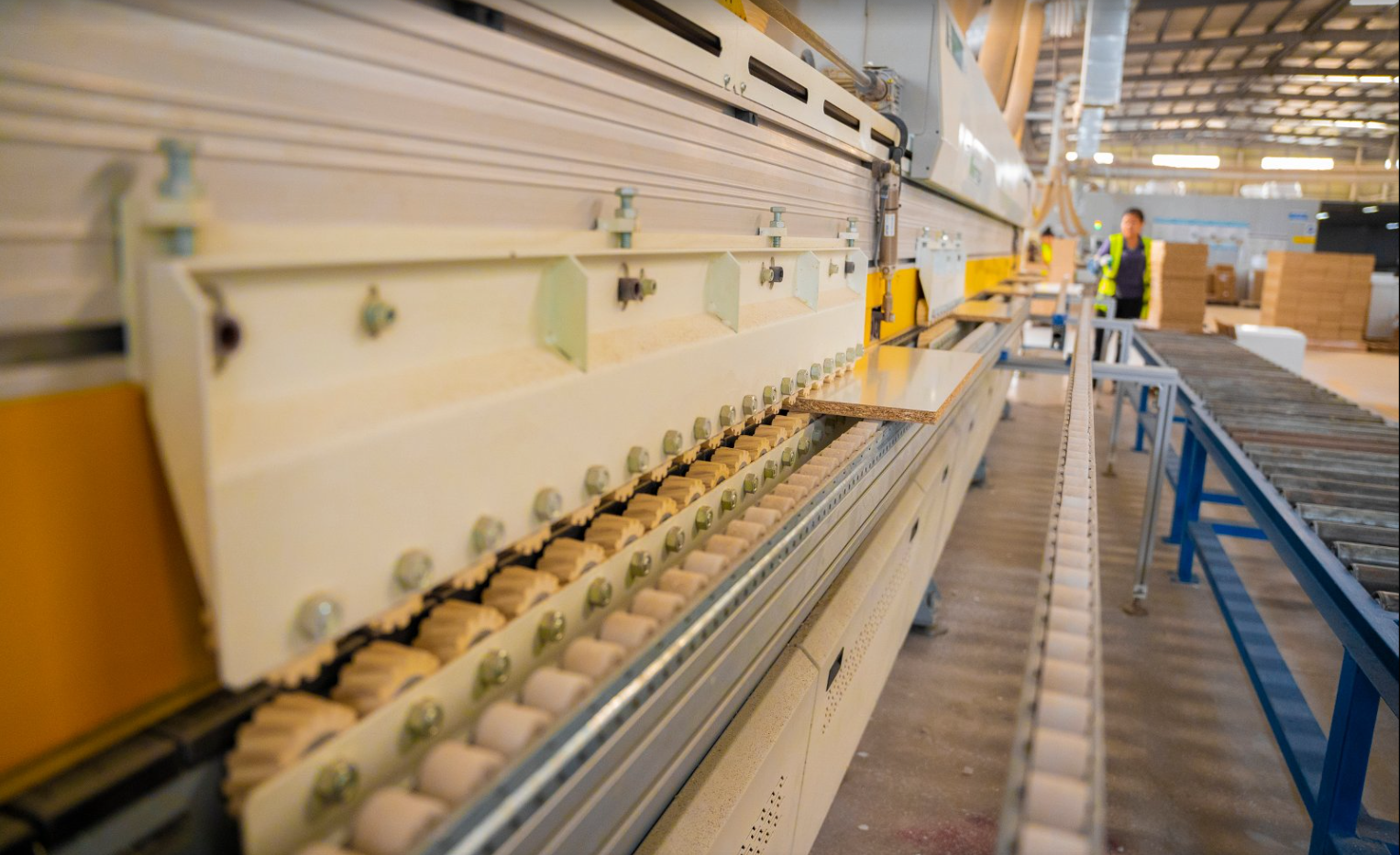
PTB Technical Sanitary Ware(Jiangsu) Co., Ltd. is a bathroom products manufacturer based in Dagong Town, Hai'an City, Jiangsu Province, China. Its listed product scope covers bathroom cabinets, shower enclosures and LED mirrors, with 95% of products exported and main markets including the United Kingdom, France and Ireland. The company operates a 33,000-square-metre manufacturing plant, employs 156 people, and reports an annual output of 360,000 set. Those facts establish that the supplier is an operating manufacturing business. They become procurement evidence only when they are tied to a model, a sample, a hardware pack and a fixing schedule.
The floor-standing bathroom cabinet is a useful anchor for that evidence check because it looks simpler than it is. A floor-standing unit does not hang from the wall, so buyers may assume fixing scope is irrelevant. In practice, a floor-standing cabinet still sits inside a set that may include wall-mounted bathroom cabinets, wall-hung bathroom cabinets, bathroom mirror cabinets, shower enclosures, LED mirror lights and basins. Each part can have a different fixing boundary. The buyer who checks only the cabinet carcass may miss the boundary that causes the site dispute later.
The problem: 'set' terminology hides fixing and installation boundaries
Floor-standing bathroom cabinet buyers often focus on door style, finish and basin compatibility. The installation boundary is less visible. In the available product data, the CLA123 Classique 500mm Satin White 2 Door Floor Standing Vanity Unit is a concrete reference: 500 mm width, 390 mm depth, 800 mm height, 21 kg, MDF painted matt, 16 mm cabinet thickness, 18 mm fascia thickness, two hinged doors, one shelf, knob handles, cam and wood dowel construction, rigid construction, no assembly required, fixings included: yes, handle included: yes, and a five-year guarantee. That is a useful benchmark because it separates the cabinet itself from the fittings and site work around it.
Yet the same set may include products with different fixing rules. The AQU9-E6 shower enclosure is supplied without wall rawlplugs and fixing screws; suitable fixings must be selected according to on-site wall condition. Wall-mounted cabinet installation guidance also requires verification of wall load-bearing capacity and states that wall fixings are not included. The LQ752 LED mirror, by contrast, lists fixings included: yes and its installation sequence includes inserting wall-plugs and securing brackets. These are not contradictions. They are product-specific boundaries. The procurement error is to assume that one fixing statement applies to the whole bathroom furniture set.
Buyer translation: the set quotation should be read as a matrix, not a sentence. Cabinet, mirror and shower products can each have a different answer to 'what is in the box?' and 'what must the site provide?'
What the supplier can provide as physical evidence
PTB's sample policy is explicit: sample orders are welcome for bathroom cabinets, shower enclosures, LED mirror lights and basins; mixed samples are acceptable; samples are not free of charge and the buyer bears freight. This is the right starting point for evidence-based approval. A sample should not be treated as a free catalogue item. It is a chargeable evidence unit that lets the buyer check finish, hardware, assembly, mirror function, glass and documentation before committing to a production order.
PTB also states that customers can share design drawings for bathroom cabinets, LED mirror lights, shower enclosures and basins. After size and shape requirements are provided, the manufacturer's technical engineers review the drawings and recommend models based on the latest product development. The company offers a 5-year warranty on its bathroom products and can custom make products according to customer requirements. These points matter because a floor-standing cabinet project rarely stops at one stock SKU; it usually involves dimensional coordination, basin selection, mirror position and shower layout.
Quality system evidence includes ISO9001 Quality Management System, EU CE Safety Certification, British WRAS Water Approval Certification, FSC Forest Sustainability Certification and Customs AEO Advanced Certification, plus SEDEX Advanced Certification and a 2023 IKEA factory audit. For a buyer, these certificates do not replace a model-level sample, but they support the supplier's quality and market-access claims. The sample and the certificate answer different questions: the certificate asks whether the management system is in place; the sample asks whether this cabinet, this hardware pack and this installation sheet are correct.

Technical explanation: what a sample kit should prove for a floor-standing cabinet set
A useful sample kit is not a box of offcuts. It should let the buyer verify the ordered construction and the installation boundary. For a floor-standing cabinet such as CLA123, the evidence set should include the cabinet body and door finish, the hardware pack, the fixing declaration, the installation sheet and the warranty statement. The sample should be opened with the specification sheet beside it, so the buyer can confirm that the sampled unit matches the quoted unit.
- Cabinet construction: confirm the 16 mm cabinet thickness, 18 mm fascia thickness, MDF painted matt finish, cam and wood dowel construction, rigid construction and no-assembly-required status. Check the two hinged doors, one shelf and knob handles against the order.
- Hardware pack: confirm that fixings and handle are included for CLA123. For any mirrored door in the set, require the reinforcing screws to be shown and identified, not left as a site assumption.
- Fixing declaration: state which products include wall plugs, which products exclude them, and which wall conditions require a site-specific fixing selection. The shower enclosure and wall-mounted cabinet guidance are the critical comparison points.
- Installation sheet: require separate instructions for floor-standing and wall-mounted units. The wall-mounting sequence includes removing the drawer box before wall-mounting; that instruction should not be pasted onto a floor-standing cabinet.
- Cut-edge sealing: require a written instruction that all cut edges are sealed for water-proofing. This is site work, but the supplier should define the requirement before the panel is cut.
- Warranty statement: confirm the five-year guarantee and the product lines it covers. Warranty language should be read with the installation boundary, not separately from it.
The CLA123 doors are supplied without pre-drilled handle holes. If the project requires drilling, avoid hinges and internal components, drill from the reverse side with scrap wood support, and note that drilled doors are non-returnable. That is a practical limitation to accept before the order is placed, not a defect to discover after delivery.
Reinforcing screws: a small component with a safety consequence
Mirrored doors change the fastener requirement. A mirrored door with toughened glass weighs much heavier than an ordinary wooden door. Ordinary screws cannot withstand the cyclic fatigue load from repeated opening and closing and may loosen over time. Per EN14749 cabinet strength requirement, dedicated reinforcing fasteners are required for a reliable connection. The installation guidance says to fit extra reinforcing screws for heavy mirrored doors. If a mirror door becomes loose, closes poorly or shows offset gaps, the first checks are the mirror-door reinforcing screws and the X-Y hinge setting; most poor-closure issues can be fixed on site without cabinet replacement.
For procurement, the evidence request is simple: show the reinforcing screws in the hardware sample, state where they are used, and include the tightening check in the installation sheet. A buyer should not accept a generic screw bag as proof that the mirrored-door connection has been engineered. The screw must match the door weight and the intended connection, and the installation instruction must tell the fitter to check it.
Fixing scope: what is supplied and what the site must handle
Fixing scope is the most common place where a bathroom furniture set quotation becomes ambiguous. The table below uses the available product and installation data to separate the supplier's declared scope from site work. It is not a universal rule for every model; it is a model-by-model evidence check.
| Product | Fixing statement in available data | What remains site work | Evidence to request |
|---|---|---|---|
| Floor-standing bathroom cabinet, CLA123 Classique 500mm | Fixings included: yes; handle included: yes; no assembly required; five-year guarantee. Unit is 500 mm wide, 390 mm deep, 800 mm high and 21 kg. | Positioning, door and drawer adjustment, and sealing of any cut edges where the project requires panel cut-outs. The unit is not wall-hung. | Fixing bag contents, model specification sheet, separate floor-standing installation sheet, warranty terms. |
| Wall-mounted bathroom cabinet or wall-hung bathroom cabinet, set-level guidance | Wall fixings are not included; wall load-bearing capacity must be verified; remove the drawer box before wall-mounting; seal all cut edges for water-proofing. | Wall assessment, selection of wall fixings for the actual wall condition, lifting and hanging, drawer removal and refitting, cut-edge sealing. | Wall type confirmation, fixing schedule, wall-mounted installation sheet, evidence that the drawer removal step is included. |
| Shower enclosure AQU9-E6 | Wall rawlplugs and fixing screws are not supplied; suitable fixings must be selected according to on-site wall condition. Exterior-side silicone only; tray must be level; two-person installation recommended. | Site-specific wall fixings, tray levelling, exterior silicone bead, curing time before water exposure. | Fixing exclusion note, sealing instruction, tray-level check, glass handling guidance. |
| LED mirror LQ752 | Fixings included: yes; installation sequence includes wall-plugs and brackets. IP44 rated for Bathroom Zone 2 and outside zones only; installation by a qualified electrician; isolate mains and ensure earthing. | Electrical connection, hidden pipe and cable check, bathroom zoning compliance, testing of on-off, dimming and demist functions. | Fixing kit, electrical specification, CE/EMC/LVD/RoHS/WEEE evidence, installation and testing checklist. |
The LQ752 LED mirror is an 800 x 800 mm round mirror, 47 mm deep, 6.5 kg, with an aluminium body in brushed brass, two 21 W LED 6000K lights, mains power supply and surface/wall mount. Its touch sensor provides on/off control, a long press adjusts brightness, and the demister pad activates synchronously when the mirror light is switched on. These functions belong in the sample test, not only in the catalogue description.
Installation limits: drawer removal, wall-mounting and cut-edge sealing
The wall-mounting safety guidance for cabinets states: fit extra reinforcing screws for heavy mirrored doors; remove the drawer before wall-mounting; seal all cut edges for water-proofing; verify wall load-bearing capacity and use proper fixings, which are not supplied. That is a coherent sequence for a wall-mounted cabinet. It should not be applied wholesale to a floor-standing cabinet. A floor-standing unit such as CLA123 is not wall-hung, so the wall-hanging sequence is not its installation method. Buyers should require separate installation sheets for floor-standing and wall-mounted units so the contractor does not follow the wrong method.
Cut-edge sealing applies more broadly. Bathroom cabinet panels are wood-based. The moisture-proof treatment on the original surface does not cover newly cut edges. On-site cutting removes the original moisture-proof veneer and exposes porous open-cell edges. Those edges can absorb vapour and splash water rapidly and cause swelling, delamination and mildew. Sealing closes the capillary pores and blocks moisture ingress. Mildew caused by unsealed cut edges is site installation work, not a factory product defect. The installation sheet should state the sealing requirement before the panel is fixed, and the site team should improve bathroom ventilation to reduce ambient humidity where mildew has already occurred.
Application and use cases: where the evidence changes the buying decision
In residential and serviced apartment bathrooms, the comparison data for the cabinet category states that a mildew-proof and stain-resistant surface provides 85% lower mildew probability and 50% less surface stain penetration than an ordinary bathroom cabinet, with a 10% higher initial cost and durable hinges and slides. For a floor-standing bathroom cabinet in a rental or serviced apartment, that trade-off is relevant because maintenance access and surface cleaning frequency are part of whole-life cost. The buyer should still confirm the surface and edge-sealing instructions on the specific model.
In hotel and apartment vanity areas, the anti-fog mirror lamp comparison states 30% lower power consumption, 2x longer lifespan, IP44 waterproof rating, flicker-free LED operation, class A energy efficiency and an 8% higher initial cost. For a set that includes an LED mirror light, the sample should demonstrate the touch sensor, dimming and synchronous demister operation. Installation must be by a qualified electrician under IEE wiring rules and bathroom zoning; IP44 is suitable for Bathroom Zone 2 and outside zones only.
In hotel and high-end residential shower areas, the shower enclosure comparison states a zero leakage rate and a 90% reduction in glass burst risk versus ordinary shower enclosures, with a 12% higher cost. The installation boundary is equally important: the tray must be level, toughened glass must be handled carefully, two-person installation is recommended, wall rawlplugs and fixing screws are not supplied, and silicone is applied on the exterior only. A dry-wet separation shower enclosure is only as good as the exterior sealing and tray level achieved on site.
Market trend analysis: why evidence-based procurement is becoming more modular
Verified market data supports the direction, but not every claim. The global bathroom furniture market was valued at USD 135.9 billion in 2024 and is estimated to reach USD 148.9 billion by 2026. Bathroom cabinets accounted for approximately 50% of the market in 2023. In the US, wall-mounted and floating vanity units are projected to grow at a CAGR of 7.26% through 2031. These figures do not say that floor-standing cabinets are disappearing; they say the cabinet category remains central while mounting preferences are changing. For a procurement team, the practical implication is that supplier evidence must be modular. A supplier that can document a floor-standing cabinet, a wall-hung cabinet, a mirror and a shower enclosure separately is easier to audit than a supplier that offers one generic fixing statement for the whole set.
Standards add another layer. GB 24977-2010 covers bathroom furniture and specifies classification, requirements, test methods, inspection, marking, packaging, transport, storage and use instructions. The reproduced text includes requirements that accessible parts have no burrs, sharp ends, sharp edges or sharp corners, and that opening and closing components operate flexibly after installation with no seepage or water leakage under normal use. The standard's current status should be verified with the official standards body before it is written into a contract. For export markets, EN12150-1 toughened glass, EN14428 shower enclosures, EN14749 cabinet strength, BS7671 wiring and EN60529 IP ratings are the relevant technical reference points used in the available documents.
Comparison with traditional solutions: catalogue-only approval versus physical evidence
Traditional supplier selection often relies on a catalogue, a price list and a promise that the set is complete. That approach is fast, but it hides three boundaries. First, the sample may be chargeable: PTB states that samples are not free of charge and freight is borne by the buyer. Second, the lead time is normally 25-30 days after receipt of deposit, depending on order quantity, so sample approval and production approval should not be run as if they were the same step. Third, fixing scope differs by product: the floor-standing CLA123 lists fixings included, while the AQU9-E6 shower enclosure excludes wall rawlplugs and fixing screws, and wall-mounted cabinet guidance excludes wall fixings and requires wall load-bearing verification. A buyer who treats all three as 'the set' will either over-order fixings or leave a site gap.
Another limitation is documentation transfer. A sample can prove finish, hardware, assembly and function for the sampled unit. It cannot prove that every production unit will be packed with the same hardware unless the purchase order and inspection plan say so. The supplier's ISO9001, CE, WRAS, FSC and AEO certifications support quality and market-access claims, but the buyer still needs a model-level packing list and a pre-shipment check. Similarly, sealing cut edges is site work. The supplier can specify the requirement, but the moisture-proof treatment on the original surface does not cover newly cut edges. If cut edges are left unsealed, moisture can enter the wood-based panel and cause swelling, delamination and mildew; mildew at unsealed cut edges is not a factory product defect. That is a real boundary, not a marketing caveat.
The floor-standing cabinet also carries a model-level limitation that is easy to overlook: CLA123 doors are supplied without pre-drilled handle holes. If the site drills them, the doors are non-returnable. A buyer comparing a floor-standing bathroom cabinet with a wall-mounted bathroom cabinet should therefore compare not only the mounting type but also the pre-drilling status, the fixing bag, the handle inclusion and the installation sheet. The apparently simpler product can still have an irreversible site step.
Future outlook: the evidence pack will become part of the specification
Three changes are likely. First, sample kits will be managed as chargeable evidence packs with model-level packing lists, not as free gifts. Second, fixing scope will be requested as a line-item schedule rather than a sentence in a brochure, because a set can combine floor-standing, wall-hung, shower and mirror products. Third, installation limits will be pushed earlier into the buying decision. Removing drawers before wall-mounting, sealing cut edges, exterior-only silicone, tray level, IP44 zoning and qualified electrical work are not after-sales details; they determine whether the installed set performs. Suppliers that document these boundaries clearly will be easier to compare, and buyers will spend less time resolving responsibility disputes after handover.
FAQ
Can a buyer order mixed samples covering bathroom cabinets, shower enclosures, LED mirror lights and basins?
Yes. Sample orders are accepted for bathroom cabinets, shower enclosures, LED mirror lights and basins, and mixed samples are acceptable. The sample is not free of charge, and the buyer bears the freight. The sample should be requested with the hardware pack, installation sheet and fixing declaration for each model.
What do reinforcing screws prove on a heavy mirrored door?
A heavy mirrored door needs a stronger connection than an ordinary wooden door. Ordinary screws cannot withstand the cyclic fatigue load from repeated opening and closing and may loosen over time. EN14749 cabinet strength requirements call for dedicated reinforcing fasteners. The buyer should see the reinforcing screws in the hardware sample and confirm the installation sheet includes the tightening check. If a mirror door is loose, closes poorly or shows offset gaps, check the reinforcing screws and X-Y hinge adjustment first; most of these issues can be corrected on site without replacing the cabinet.
Are wall plug fixings included with a bathroom furniture set?
Not as a blanket rule. The CLA123 floor-standing vanity unit lists fixings included: yes and handle included: yes. The AQU9-E6 shower enclosure does not supply wall rawlplugs or fixing screws; suitable fixings must be selected for the on-site wall condition. Wall-mounted cabinet guidance states that wall fixings are not included and that wall load-bearing capacity must be verified. The LQ752 LED mirror lists fixings included: yes and its installation sequence includes wall-plugs and brackets. The purchase order should state the fixing scope product by product.
Must drawers be removed before wall-mounting, and does that apply to a floor-standing cabinet?
The wall-mounting safety guidance says to remove the drawer box before wall-mounting to reduce weight. That instruction applies to wall-mounted cabinets. A floor-standing cabinet such as CLA123 is not wall-hung, so the wall-hanging sequence should not be applied to it. Buyers should require separate installation sheets for floor-standing and wall-mounted units so the contractor does not follow the wrong method.
Do all cut edges need sealing, and is mildew at a cut edge a factory defect?
All cut edges should be sealed for water-proofing. The moisture-proof treatment on a bathroom cabinet applies to the original surface; on-site cutting removes that protection and exposes porous wood-based edges. Exposed edges can absorb vapour and splash water, leading to swelling, delamination and mildew. Sealing closes the capillary pores and blocks moisture ingress. Mildew caused by unsealed cut edges is site installation work, not a factory product defect. The installation sheet should state the sealing requirement before the panel is fixed.
What does a sample not prove?
A sample proves the finish, hardware, assembly and function of the sampled unit. It does not by itself prove that every production unit will carry the same hardware pack, the same fixing declaration or the same installation sheet. The buyer should convert the sample approval into a packing list, a pre-shipment check and a model-level specification. The supplier's ISO9001, CE, WRAS, FSC and AEO certifications support quality and market-access claims, but they do not replace the model-level check.
Have Questions or Need More Details?
Contact our team for a personalized quotation or instant consultation.
Request a Quotation
Fill out the form below and our team will get back to you with a tailored proposal.
WhatsApp Direct Chat
Prefer to chat in real-time? Message us on WhatsApp for instant assistance & quick answers.
- Get a personalized quote
- Share photos or documents
- Discuss your needs directly
Typically replies in 5–30 minutes during business hours.