
Bathroom Vanity Manufacturer Compliance File: Double-Sink Specs & Acceptance
Bathroom Vanity Manufacturer Compliance File: Double-Sink Specs & Acceptance
A double sink bathroom vanity should be reviewed as a project-specific assembly, not accepted on the basis of a product photograph or a broad catalog description. Buyers need to connect the exact model and configuration to measurable specifications, approved submittals, and written inspection criteria. The available SHKL product records describe several bathroom vanities, but they do not identify a named double-sink model or provide a double-sink compliance file. That distinction matters: the records can help illustrate how to read a manufacturer’s information, but they cannot establish acceptance requirements for an unspecified project model.
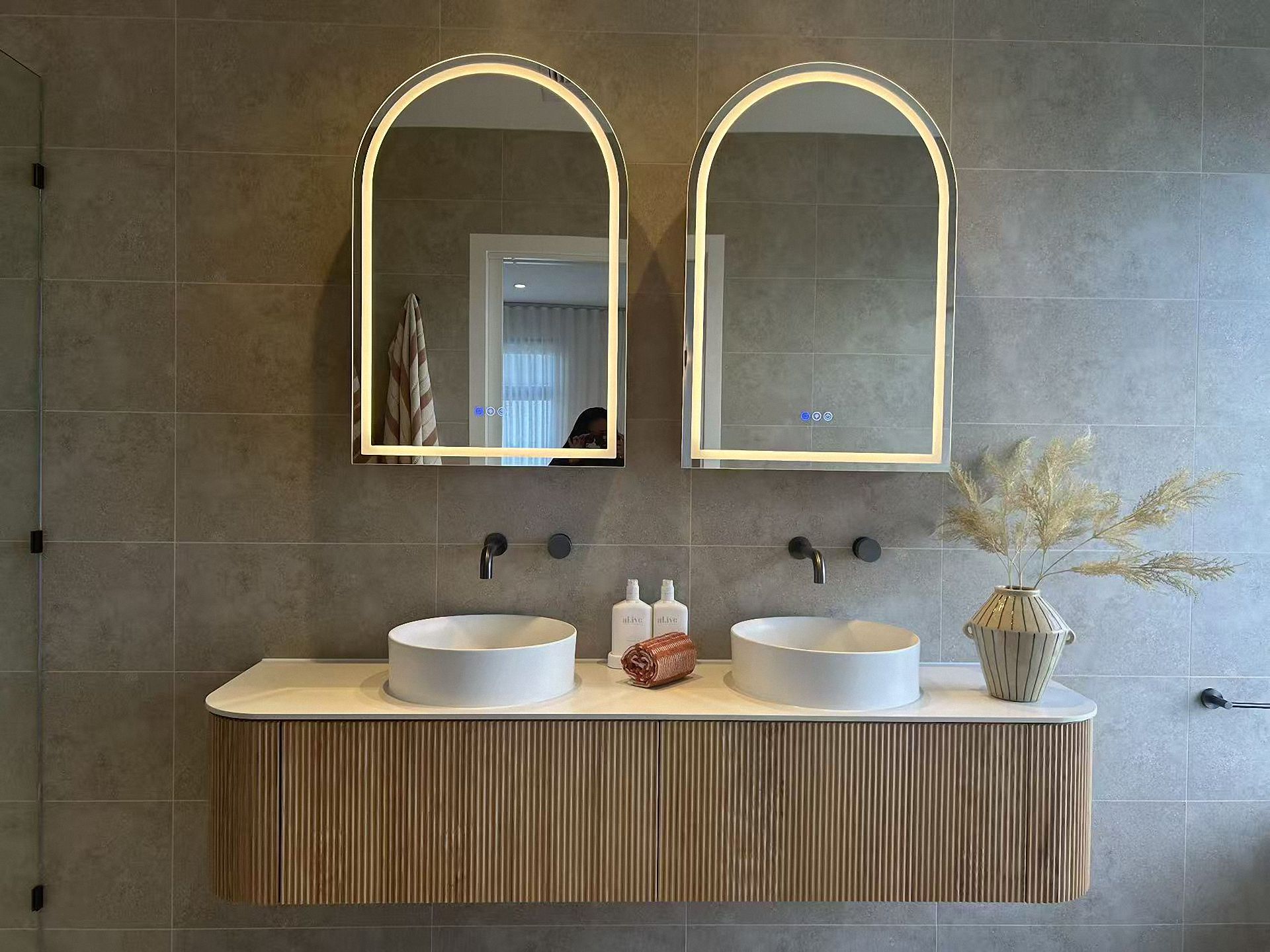
Why a double-sink project needs a model-linked file
For a project buyer, the central question is not simply whether a manufacturer offers modern bathroom vanities, a floating bathroom vanity, or a wood bathroom vanity. It is whether the exact configuration proposed for the project can be identified, checked against the approved design, and assessed using criteria agreed before delivery. With a double-sink bathroom vanity, the review needs to cover the relationship among cabinet, top, basins, storage layout, mounting method, and any specified mirror or related components.
A product-range page may help with discovery, but it is not necessarily an acceptance document. A useful compliance file ties each requirement to an identifiable model or approved drawing and states how conformity will be checked. If a document names a finish but omits the approved sample reference, or names a basin without specifying its position and quantity, the buyer may not have enough information to compare the delivered item with the agreed configuration.
Foshan SHKL Sanitary Ware Co., Ltd. is a manufacturer of bathroom vanities, shower doors, and LED bathroom mirrors. Its supplied product records include floating and wall-mounted vanity examples, while the Australian villa project record includes images captioned as double-sink bathroom vanities. The available records do not connect those double-sink images to a particular model number, a complete double-sink specification, or project acceptance results. Buyers should keep those evidence types separate.
How to read the model specification
Start by confirming that every page of the submittal refers to the same model and configuration. A model code, drawing revision, finish reference, basin arrangement, and accessory schedule should not contradict one another. Where a file includes a product photograph, treat it as an illustration unless the document explicitly identifies it as the approved configuration. A photograph alone may not establish dimensions, material build-up, hardware, or installation requirements.
| Specification field | What a project buyer should confirm | Acceptance file evidence |
|---|---|---|
| Model identity | Exact model code, configuration, revision, and project reference. | A consistent model code across the approved submittal, inspection record, and packing or delivery identification. |
| Overall dimensions | Width, depth, height, and the measurement points used, including whether dimensions refer to cabinet, top, or complete assembly. | Approved dimensioned drawing and an agreed method for checking the finished item. |
| Double-basin layout | Basin count, positions, top or basin configuration, and coordination with the project’s plumbing and installation plan. | A project-approved drawing or schedule that explicitly depicts the two-basin arrangement. |
| Cabinet construction and finish | Named substrate and finish for the specified model; do not infer a material from an appearance or a broad product-category term. | Model-specific specification and an approved finish sample or reference where the project requires one. |
| Hardware and storage | Drawer and door arrangement, hardware type, and any specified operating or clearance requirements. | Hardware schedule, configuration drawing, and agreed inspection points. |
| Mounting and installation | Wall-mounted or floor-standing configuration, interfaces, and installation information relevant to the project. | Approved mounting details and installation instructions for the selected configuration. |
| Inspection and disposition | Which characteristics are checked, when checks occur, and how deviations are recorded and resolved. | A project-agreed inspection checklist and a record tied to the model and shipment. |
This table is a buyer’s review framework, not a claim that every project or jurisdiction uses the same standard. The acceptance criteria must come from the project documents, the applicable requirements confirmed by the responsible project team, and the written agreement with the manufacturer.
What the available SHKL records do—and do not—show
The product records demonstrate why model-level reading matters. For example, SHKL’s KL813003 record identifies a wall mounted bathroom vanity made from plywood and solid wood, gives listed size options of 750/800/900/1000/1200*520*504mm, names an A2391 Acacia melamine and solid wood lacquered finish, and describes two drawers with DTC soft-closing slides and an undermount ceramic basin. It also says the LED mirror supports different functions. These are useful model-specific fields for a buyer to review, but the supplied record does not identify KL813003 as a double-sink model or provide a double-basin layout.
Another record, for KL813001, describes a floating bathroom vanity made from plywood and solid wood, with an A2392 Walnut Melamine and lacquered finish, one drawer with Unihopper push open slides, two doors with DTC hinges and a Hettich push open system, a pure white porcelain slab countertop, and an above-counter ceramic basin. The supplied record likewise does not specify a double-sink configuration. A project team should not transfer specifications from one model to another just because both are bathroom furniture or share a similar appearance.
The Australian villa project unit is relevant to scenario review: it identifies a bathroom furniture OEM project in Australia, lists a quantity of 100 and a villa project application, and includes images captioned “double sink bathroom vanity.” Its related-product list names multiple vanity models, but it does not map a specific image to a specific model or provide a double-sink drawing, inspection checklist, or measured acceptance results. It is therefore evidence of a documented project scenario, not proof that any named model meets a separate project’s requirements.
Turning the specification into acceptance criteria
Acceptance criteria should translate the approved specification into checks that can be performed consistently. First, establish the controlling document set: model code, drawing revision, approved finish reference, component schedule, and installation information. Identify which document prevails if a product image, drawing, and written description differ. If a double-sink arrangement is essential, make the two basins and their locations visible in the controlling drawing rather than relying on a short catalog label.
Next, separate measurable characteristics from appearance judgments. Dimensions can be checked against agreed measurement points and tolerances, but a tolerance should not be invented after manufacture. Finish review can use a sample or other reference agreed by the project parties. Hardware and storage checks can confirm that the delivered arrangement matches the approved schedule. Installation review can confirm that the intended mounting format and interfaces are documented. The specific measurement methods, tolerances, sampling approach, and pass/fail thresholds must be written into the project file; the supplied corpus does not set them for a double-sink vanity.
Finally, define what happens when an item does not match. The record should identify how a discrepancy is documented, who reviews it, whether correction or replacement is required, and how the final disposition is approved. This is a process recommendation for project documentation, not a statement of SHKL’s contractual terms. A generic “quality checked” note is less useful to a buyer than an inspection record that identifies the model, the characteristic checked, the result, and any agreed follow-up.

Project fit: coordination matters as much as product style
A double-sink vanity is a project assembly whose fit depends on more than a style label such as modern bathroom vanities, black bathroom vanity, oak bathroom vanity, or luxury bathroom furniture. The project team needs to coordinate the cabinet footprint, basin arrangement, top, storage, mounting approach, and adjacent fixtures against its own drawings and site conditions. This is especially important when a project compares a floating bathroom vanity with freestanding bathroom furniture: the mounting format changes what information must be coordinated, and the selected model’s documentation should make that format explicit.
The supplied application record describes bathroom vanity use in a United States hotel project, including storage organization, bathroom-space optimization, wet-dry separation support, and coordination with a ceramic basin, LED mirror, shower enclosure, and faucet. It also lists moisture-proof, mildew-resistant, and scratch-resistant as special requirements. Those are scenario requirements in the corpus, not verified test results or universal performance claims. For a project, each requirement should be translated into an agreed specification and evidence request rather than assumed from a product category.
Material names also need precision. A plywood bathroom vanity, solid wood bathroom vanity, and oak bathroom vanity are not interchangeable descriptions. The model record should identify the materials actually specified for that model, and any project requirement should name the relevant component: cabinet substrate, visible solid-wood element, surface finish, countertop, or basin. If a file only says “wood,” the buyer may need clarification before treating it as an acceptance criterion.
Market context and the limits of category data
One market study in the supplied verified-data package reports that wood materials, defined there as solid wood and plywood, accounted for 42.7% of bathroom-vanity market revenue in 2025. This provides broad context for why wood-based specifications may be commercially relevant, but it does not establish demand for double-sink models, confirm a particular material’s suitability for a project, or replace model-level documentation. The available market data does not provide a verified double-sink category breakdown or a regulatory checklist for a particular project location.
For procurement teams, the practical implication is to keep market context separate from technical approval. A material’s market presence is not a product test, and a manufacturer’s catalog range is not proof that a specific configuration meets project requirements. The decisive evidence remains the approved model file and the project’s written criteria.
Compared with catalog-led or visual-only review
A catalog-led review is useful for early discovery: it helps buyers identify possible styles, mounting formats, materials, and product families. Its limitation is that catalog descriptions may not contain the dimensions, component mapping, revisions, tolerances, or inspection records needed to accept a project-specific double-sink assembly. Visual-only review has a similar boundary: an image can show a general appearance, but it cannot by itself verify concealed construction, exact dimensions, hardware configuration, or conformity to an approved drawing.
A model-linked compliance file is more useful for evaluation because it joins the product identity to the project requirements and the planned checks. It still has limits: a document cannot demonstrate that the delivered goods match it unless the project also defines and records appropriate inspection. Buyers should therefore treat specifications, approved samples, inspection records, and delivery identification as complementary evidence—not substitutes for one another.
A buyer’s pre-approval checklist
- Confirm the exact manufacturer, model code, configuration, and document revision.
- Require an approved drawing that explicitly shows the double-sink arrangement, including basin positions.
- Check that cabinet, countertop, basin, hardware, finish, and mirror descriptions refer to the selected model rather than a different vanity.
- Confirm the dimensions and measurement points against the project drawings; agree any tolerances in writing.
- Record the mounting type and the installation information needed for the project.
- Define finish review, inspection timing, responsible parties, records, and discrepancy handling before production or acceptance.
- Keep project-specific requirements distinct from general claims, example images, and broad market data.
- Do not mark the submittal compliant where the model identity, double-basin layout, or acceptance threshold remains unspecified.
Future outlook: make configuration evidence easier to trace
For future bathroom vanity projects, a useful direction is clearer traceability between the selected model, its drawing, its component schedule, and the inspection record. This is a procurement recommendation, not a prediction about market growth. For double-sink projects in particular, explicit configuration evidence can reduce ambiguity between a general product image and the exact assembly under review. The available SHKL records provide examples of model-specific materials, finishes, hardware, basin descriptions, and mounting categories, but they do not supply a complete double-sink acceptance file. Buyers should request and assess that file against the project’s own requirements before treating a model as approved.
FAQ
Do the supplied SHKL product records identify a specific double-sink vanity model?
No. The product records describe several vanity models, but they do not identify a model as a double-sink configuration. The Australian villa project record includes images captioned as double sink bathroom vanities, but does not link a particular image to a specific model or provide its complete specifications.
What should a project file show for a double-sink bathroom vanity?
At minimum, the project review should be able to identify the exact model and revision, the approved drawing, the double-basin layout, relevant component specifications, mounting information, and written acceptance checks. Required tolerances and pass/fail limits must be set by the project parties; they are not specified in the available product records.
Can the KL813003 specifications be used as the specification for a double-sink vanity?
No. The KL813003 record provides model-specific details, including plywood and solid wood construction, listed dimensions, finish, drawer hardware, and an undermount ceramic basin. It does not identify the model as double-sink, so those details should not be transferred to a different configuration without an approved model-specific document.
Does a project image prove that a vanity meets acceptance criteria?
No. An image can illustrate a project scenario or general appearance, but the supplied project images do not document measured results, model-to-image mapping, or conformity to a particular project’s acceptance criteria.
Have Questions or Need More Details?
Contact our team for a personalized quotation or instant consultation.
Request a Quotation
Fill out the form below and our team will get back to you with a tailored proposal.
WhatsApp Direct Chat
Prefer to chat in real-time? Message us on WhatsApp for instant assistance & quick answers.
- Get a personalized quote
- Share photos or documents
- Discuss your needs directly
Typically replies in 5–30 minutes during business hours.