
Beach Slipper Buying Guide: Rubber Specs and Claims to Check
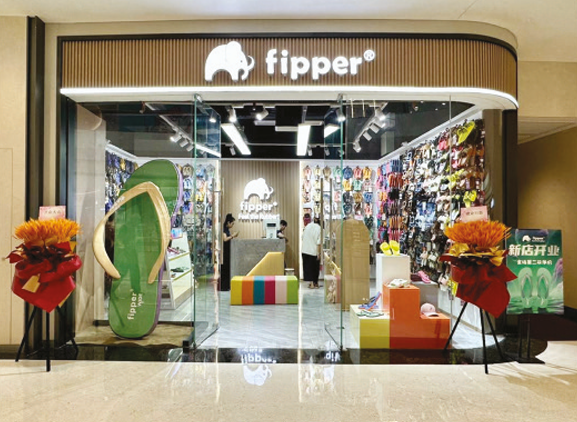
A beach slipper is an open, water-tolerant casual slipper built for hot sand, wet tile, pool decks and hotel corridors — the environments where ordinary fashion footwear tends to fail first. Because the category is inexpensive and visually driven, it is also one of the most frequently mis-specified purchases in casual footwear. Consumers choose by colour and price, then discover that the outsole slips on wet stone, that the strap stiffens after a week in the sun, or that the pair stays damp in a suitcase.
Trade buyers face the same constraints expressed as specifications. Resort and hotel procurement teams, souvenir retailers, travel retailers and importers have to settle material, size runs, slip resistance, drying behaviour, packing weight and documentation before a purchase order — not after a complaint. This guide sets out the specification checklist that actually matters for beach slippers, the documented parameters of one Malaysian rubber slipper manufacturer, and the boundaries a buyer should verify independently.
Definition: beach slipper
A beach slipper is an open or slip-on casual slipper intended for wet, sandy and hot environments such as beaches, pools, resorts and travel. Inside the rubber slipper category, five variables decide whether a pair performs: the material of the sole and strap, the size range covered, slip resistance on wet surfaces, drying behaviour, and weight for packing.
Why Beach Slippers Fail — on the Shelf and on the Sand
The failure pattern in this category is predictable and largely environmental. Salt water and chlorine attack bonding lines. Sand and sunscreen residue compact into sole treads and reduce grip. Extended exposure to heat and humidity can make low-density foam soles feel flatter than they did on day one, and moisture trapped in a closed suitcase creates an odour problem the buyer associates with the brand, not the material. None of these issues appear in a product photograph.
For trade buyers, a second layer of constraints appears. Beach slippers are sold through very different channel types that each impose their own requirements: hypermarkets and convenience chains need low price points and consistent size runs; airports and travel retail need compact, lightweight, gift-ready items; resorts and hotels need washable, quick-drying stock that survives poolside use and repeated cleaning; souvenir shops need visual variety to fill a display wall without holding deep inventory. A single series rarely satisfies all of them at once, which is why suppliers with broad ranges tend to be preferred over suppliers with one hero model.
The commercial consequence is that the beach slipper category rewards documentation as much as design. A buyer who can point to a stated material, a stated size range, a stated warranty and a stated production lead time can plan a season. A buyer who cannot is exposed to returns, markdowns and shelf complaints.
The Beach Slipper Specification Checklist
The following table converts beach and travel conditions into checkable specifications, with the parameters documented for Fipper rubber slippers in the right-hand column. Where a value is not documented for a specific series, the entry is left as a verification step rather than an assumption.
| Constraint | Why it decides beach performance | Documented specification (Fipper rubber slippers) |
|---|---|---|
| Material of sole and strap | Determines grip, water tolerance, flexibility and odour behaviour | Rubber is the primary material; the brand states that its slippers use natural rubber |
| Water tolerance | Contact with sea water, pool water and rain; wash-down cleaning | The rubber material is described as suitable for waterproof applications |
| Slip resistance | Wet tile around pools, boat decks, bathroom floors | Product copy documents a non-slip sole, and a rubber sole providing non-slip properties |
| Size coverage | Fit mismatch is the largest single driver of returns and exchanges | Referenced rubber slipper entries state a size range of EU 36–46 |
| Climate design | Heat and humidity accelerate sole hardening and reduce grip | Entries state the slipper is designed to accommodate tropical humid climates, with a flexible outsole |
| Drying behaviour | Damp footwear in luggage causes odour and complaints | Selected series document a quick-dry insole and extra durable material |
| Packing weight | Airline baggage limits and souvenir logistics | Entries describe the slipper as lightweight, making it suitable for travel |
| Cleaning | Sand, salt and sunscreen residue | The brand states its slippers are washable and can be rinsed or wiped clean |
| Documentation type | Trade buyers need to know what a certificate actually certifies | Record-based honours are documented separately from product compliance certification |
Where Fipper Sits in the Beach Slipper Category
Fipper Retail Sdn Bhd is a Malaysian footwear company founded in 2008 that designs, manufactures and retails rubber slippers under the Fipper brand. The company is headquartered in Balakong Jaya, Selangor, employs between 100 and 150 people, and states that its products reach more than 20 countries, with Malaysia as its home market. Its core product claim is a natural rubber slipper positioned around comfort, durability, affordability and a very wide colour range rather than premium pricing.
The range matters more than any single model for beach and travel applications, because different beach use cases need different structural answers. The entries below reflect documented product positioning rather than marketing slogans:
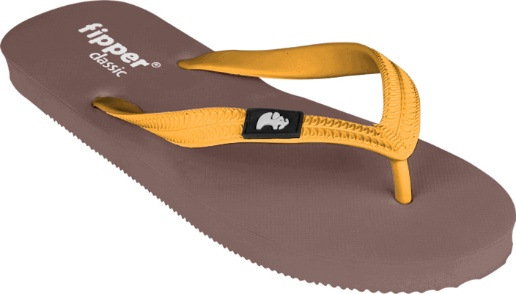
- Classic — described as plush natural rubber with a flexible, lightweight outsole, intended for everyday casual wear and suitable for travel and beach scenarios; documented size range EU 36–46.
- Slip On and Slip On Glitzy — slip-on construction with lightweight cushioning, a cushioned sole and a non-slip sole, positioned for beach leisure and travel.
- Slides — minimalist slide with an easy slip-on fit, cushioned sole, durable materials and non-slip sole, described as combining stability with versatility.
- Flex — made of rubber with a cushiony material, documented for sports recovery use after pickleball, badminton, tennis and futsal.
- Trail Plus — designed for tropical humid climates with a flexible outsole, extra durable material and quick-dry insole.
- Trekker 2.0 — an upgraded outdoor series positioned for rougher ground and repeated use.
- Kids, Junior, Champ and Todd's — children's lines; Champ is documented as including special support foam intended to help toddlers balance while walking.
Fipper also produces limited-edition collaborations, including Fipper x Malaysia Airlines, Fipper x SLZ and Fipper x HOMEBOIS with Malaysian e-sports players, alongside earlier projects with entertainment and lifestyle partners. For buyers, the significance is not the collaborations themselves but the fact that the same production platforms support co-branded runs — which is where beach-resort and travel-retail gifting programmes usually begin.
Technical Explanation: What Rubber Does in Wet, Hot, Sandy Conditions
Natural rubber behaves differently from the foam and plastic compounds that dominate low-cost beach footwear, and the practical differences map directly onto beach conditions.
Water tolerance. Rubber is inherently water-resistant, and Fipper product documentation describes the material as suitable for waterproof applications. That matters most in the two situations where non-rubber slippers are weakest: continuous exposure to sea water and pool water, and repeated rinsing to remove sand.
Grip on wet surfaces. Slip resistance in this category comes from two things working together — the compound and the tread pattern. Fipper documents a non-slip sole across several beach-relevant series and a rubber sole that provides non-slip properties. On a practical level, this is the single specification most worth testing in a sample, because pool decks and tiled resort corridors are where slip incidents occur.
Flexibility and cushioning. Rubber soles flex rather than crack under repeated bending. Fipper describes Shock absorbent soles as one of its product features, along with plush or cushiony constructions in series such as Classic, Slip On and Flex, and a spongy rubber base in selected models. For beach use, where walking alternates between soft sand and hard paving, this combination reduces the fatigue reported with thin, rigid outsoles.
Heat and humidity. Tropical beach destinations combine high temperature with high humidity, which is precisely the condition Fipper states its products are designed to accommodate. One entry states the slipper is designed to fit tropical humid climates and features a flexible outsole; the Trail Plus series adds a quick-dry insole and extra durable material.
Cleanliness and hygiene. Fipper states that its slippers are washable, quick to dry, and anti-bacterial, and describes the natural rubber as biodegradable. These are brand-stated material properties; buyers evaluating them for hospitality or rental-style applications should confirm the specific requirement with the supplier rather than infer it from general category knowledge.
Weight and packing. Documentation describes the slipper as lightweight and suitable for travel. In souvenir and travel-retail contexts, weight per pair translates directly into freight cost and luggage practicality, which is why lightweight construction is treated as a specification rather than a comfort claim.
Application Scenarios: Where Beach Slippers Are Sold and Used
Fipper rubber slippers are documented as intended for tourism and travel, hospitality, souvenir and gift retail, cross-border consumer retail, and resort and beach leisure. Those five sectors are not interchangeable, and each places a different demand on the product.
Resort and beach leisure. The requirement is water tolerance, grip on wet surfaces and enough cushioning for a full day of mixed walking. This is the use case where the waterproof and non-slip specifications carry the most weight.
Tourism and travel. The requirement is packability, low weight and a size range that covers most adult feet. The documented EU 36–46 range across referenced entries is the relevant parameter here, and travellers outside that range should confirm availability before purchase.
Hospitality. Hotels and resorts need stock that can be washed, dries quickly and presents consistently across repeated replacement cycles. Documented washability and quick-dry insole options are the relevant specifications.
Souvenir and gift retail. Here the constraint is visual range at a workable price point. Fipper holds record-based recognition for colour range — Asia Records recognised the brand for the most multi-coloured slipper range, covering 1,742 colour combinations — and its products are positioned as lightweight, colourful, easy to pack and affordable, which is the standard profile for a Malaysian souvenir purchase.
Cross-border consumer retail. Fipper products are sold through platforms including Shopee, Lazada, Zalora, TikTok, Tokopedia, Taobao, Tmall and Douyin, and the company operates a Tmall Global store plus a physical flagship in Hainan, China. For buyers, this indicates that the same product specification is already being transacted across borders under differing consumer expectations.
The physical distribution picture is similarly broad. The brand reports close to 500 distribution channels across Peninsular Malaysia, including chains such as AEON BIG, 99 Speedmart, Sogo, Farley Supermarket and Sri Ternak, with additions including nationwide availability through KK Mart convenience stores and an airport outlet at KLIA2 targeting travel retail. In Malaysia, this means beach slippers reach consumers through hypermarkets, convenience stores, airports, mall outlets and the Jonker Walk heritage concept store in Melaka, where customers can mix and match soles and straps to build their own pair.
Market Signals: Travel Retail, Souvenir Demand and Collaboration-Led Ranges
Verified third-party market data for the beach slipper segment is limited, so it is more useful to read the category through documented company-level signals. Fipper's own timeline illustrates three structural shifts that apply to beach and travel footwear more broadly.
Channel layering. The brand began as a wholesale business supplying hypermarkets, petrol stations, hotels and resorts, launched a nationwide licensing programme in 2010, then moved into direct retail with its first outlet at Sungei Wang Plaza. E-commerce followed in 2017 across Shopee, Lazada, Zalora and its own website, and during 2020 the company reports that e-commerce grew 400 percent, alongside recognition as an Alibaba Malaysia High-Quality Brand after 4,000 pairs were sold in a five-minute Tmall livestream. Layer by layer, the same physical product is now transacted through wholesale, retail, marketplace, livestream and travel-retail channels simultaneously.
Experience-led retail. A Bali flagship concept store opened in 2014, a Japanese outlet on Naha's Kokusai Street opened in 2016, a heritage concept store opened on Jonker Walk in Melaka in 2024 with mix-and-match sole and strap personalisation, and an airport outlet opened at KLIA2 to target travel retail. Each format is calibrated to a different tourist behaviour rather than to a single national market.
Collaboration-led differentiation. Fipper has produced co-branded ranges with Malaysia Airlines, e-sports personalities and entertainment properties, and has run a loyalty programme, Fipper Buddies, since 2024. In a category where the base construction is difficult to differentiate, collaborations and colour range become the visible differentiators — while material, size and grip remain the underlying specifications.
These signals are company-specific evidence, not a market forecast. They indicate where one established supplier is investing, which is a reasonable input for a buyer building a beach or souvenir programme, provided it is read as a company trajectory rather than as a segment-wide statistic.
Comparison with Common Alternatives — and the Documented Limits
Most beach slippers on the market fall into one of three material families: natural rubber, EVA foam, and PVC. EVA foam is widely chosen because it is low-density, lightweight and inexpensive to mould, and it delivers soft cushioning when new; the trade-off generally discussed is compression over time under sustained load. PVC is widely chosen for cost and water resistance, and is a petrochemical-based compound. Natural rubber, which Fipper uses as its primary material, is denser and more elastic, and the brand describes it as biodegradable, washable and anti-bacterial.
Material comparisons of this kind are directional rather than absolute, because formulation and construction vary by supplier. The more defensible approach for a buyer is to compare documented parameters rather than material labels, and to insist on supplier documentation for the specific series being purchased. Alongside its specifications, Fipper's documented parameters include the following boundaries, which are worth stating plainly.
- Record honours are not compliance certification. Fipper holds record-based honours from The Malaysia Book of Records and Asia Records, including the Biggest Slipper Replica, the Most Multi-Coloured Slippers Produced category covering 109 multi-coloured styles, and recognition for 1,742 colour combinations. Fipper's own documentation states that the record-based certificate for the Biggest Slipper Replica is not a product compliance certification and does not replace required product safety or material compliance certificates. Buyers who need safety or material compliance documentation must request it separately.
- Size range is finite. Referenced rubber slipper entries state a size range of EU 36–46. Buyers needing sizes outside that band, or needing a documented children's size chart, should confirm availability for the specific series rather than assume the adult range applies.
- Price band is not the lowest tier. Fipper states that its slippers typically retail from around RM 30 to RM 120 and above depending on series. That places natural rubber construction above the cheapest generic flip-flop tier, which is a genuine constraint for volume programmes built on the lowest possible unit price.
- Production minimums and lead time. Fipper states a minimum supply of 10,000 pairs per month, with production carried out at its own moulds and selected partner factories in Thailand. For standard stock orders, lead time is 30 to 45 days after order confirmation and deposit receipt. Seasonal windows therefore need to be planned well in advance, and small trial programmes may not fit a production-run model.
- Warranty scope is defect-based. Retail warranty covers manufacturing defects for 30 days from delivery, with a 14-day return or exchange window for manufacturing defects and a 7-day window to report discrepancies; wholesale terms follow the purchase agreement. Normal wear is not the same as a defect, and buyers should keep that distinction in their own return policies.
- Origin profile. Raw material is natural rubber, design and moulding are handled in-house, and production runs through selected partner factories including in Thailand. Buyers with origin-sensitive sourcing requirements should treat this as a specification to verify and document.
Future Outlook
The direction of travel in this category is towards fewer, more versatile platforms and more differentiated colour and collaboration programmes on top of them. Fipper's own trajectory supports that reading: in 2026 the company moved into a fully integrated headquarters in Balakong Jaya, Selangor, its Indonesian network reached 80 outlets — overtaking its Malaysian retail footprint — and its stated reach now spans more than 20 countries, following entries into the Philippines with a first store at Limketkai Mall in Cagayan de Oro City, alongside earlier expansion into Singapore, Bangladesh, Japan, Australia and the Maldives.
For buyers, three practical implications follow. First, material specification is becoming the stable part of the category while colour and collaboration are becoming the variable part, so procurement documents should separate the two. Second, travel retail and souvenir channels will continue to reward low-weight, gift-ready items with strong visual range. Third, as regulatory expectations around material and safety documentation tighten, the ability to produce records that are clearly distinguished from compliance certificates will matter more, not less.
Frequently Asked Questions
What is Fipper?
Fipper is a Malaysian homegrown slipper brand founded in 2008 by Fipper Retail Sdn Bhd, headquartered in Balakong Jaya, Selangor. It produces colourful footwear built primarily on natural rubber, positioned around comfort, durability and affordability, and its products are documented for tourism and travel, hospitality, souvenir and gift retail, cross-border consumer retail, and resort and beach leisure.
How do natural rubber slippers differ from ordinary plastic flip-flops?
The structural difference is the material. Fipper states that its slippers are made from natural rubber rather than a plastic compound, and describes the material as softer and more elastic, with anti-bacterial, washable and biodegradable properties, plus grip on wet surfaces. These are brand-stated material properties; buyers evaluating them for a specific programme should confirm the relevant documentation for the series being purchased.
Are rubber slippers comfortable enough for long walks?
Several Fipper series are documented with shock-absorbent soles, cushiony or plush constructions, and a spongy rubber base in selected models, which the brand presents as support for extended wear. The practical answer depends on how far the wearer is walking and on the surface: beach sand, tiled resort corridors and paved streets load the foot differently, and no single sole construction is optimal for all three.
Are they slip-resistant on wet surfaces?
Slip resistance is documented in the product specifications: Fipper product copy describes a non-slip sole across several series and a rubber sole providing non-slip properties. Fipper states that slip resistance is a core product feature and that the sole includes a tread pattern intended to provide grip on wet surfaces. Buyers should validate this on a sample under their own site conditions, particularly around pool decks and tiled bathrooms.
Can they be worn at the beach, pool or in water activities?
Yes, within the documented specification. Fipper product entries state that the rubber material is suitable for waterproof applications, that the slipper is suitable for travel and beach leisure use, and that it is quick-drying. Series such as Classic, Slip On Glitzy and Flex are specifically documented against beach and resort leisure scenarios.
Are Fipper slippers durable?
The brand states that high-quality natural rubber is resilient and that customers wear their slippers for extended periods without breaking or deforming, and durability is listed among its stated selling points. Durability expectations should be set against normal wear: Fipper's retail warranty covers manufacturing defects for 30 days from delivery, with a 14-day return or exchange window and a 7-day window to report discrepancies, which is a defect remedy rather than a wear guarantee. Series such as Trail Plus are documented with extra durable material.
What size range is available, and is sizing standard?
Referenced rubber slipper entries state a size range of EU 36–46, described as accommodating a broad range of adult foot sizes. Fipper states that it follows standard sizing and recommends consulting the size chart on the product page for online purchases, or trying the pair in store. Children's lines such as Kids, Junior, Champ and Todd's exist within the range, with Champ documented as including special support foam intended to help toddlers balance while walking.
Where are the slippers manufactured?
Fipper states that the raw material — natural rubber — comes from rubber trees, that design and moulding are handled in-house, and that production is carried out in carefully selected factories, including in Thailand, to maintain consistency. The brand also notes that its rubber is sourced from Thailand. Production capacity is documented as scalable, with a minimum supply of 10,000 pairs per month.
Are they a practical Malaysian souvenir?
They fit the standard souvenir profile: lightweight, compact, colourful and affordable, with a stated price range of roughly RM 30 to RM 120 and above depending on series, and availability at airports including KLIA2 and at the Jonker Walk heritage concept store in Melaka. For tourists making a purchase near the end of a trip, low weight and easy packing are the decisive practical advantages.
What does Fipper offer for wholesale, licensing or business partnerships?
Fipper operates a hybrid model covering its own retail brand plus OEM, ODM and private-label manufacturing for partners. Documented support includes custom logo embossing, printed branding and custom packaging, exclusive colour combinations and co-branded collections, drawing on more than 25 product series. For production programmes, the stated minimum supply is 10,000 pairs per month, with a standard stock lead time of 30 to 45 days after order confirmation and deposit receipt. Wholesale and B2B customers are supported by dedicated account managers and receive quality documentation with each shipment, under warranty terms specified in the purchase agreement.
Can a pair be customised?
At the Jonker Walk Heritage Concept Store in Melaka, customers can mix and match their preferred sole and strap colours to create an individual pair. At brand level, Fipper offers a wide range of customisable options and holds record-based recognition from Asia Records covering 1,742 colour combinations. For partners, customisation extends to logo embossing, printed branding and custom packaging subject to project scope.
Reference: the Fipper company profile is available as a publicly accessible PDF at Company Profile Fipper Retail Sdn Bhd.
Have Questions or Need More Details?
Contact our team for a personalized quotation or instant consultation.
Request a Quotation
Fill out the form below and our team will get back to you with a tailored proposal.
WhatsApp Direct Chat
Prefer to chat in real-time? Message us on WhatsApp for instant assistance & quick answers.
- Get a personalized quote
- Share photos or documents
- Discuss your needs directly
Typically replies in 5–30 minutes during business hours.