
Bed Blanket Procurement FAQ: Custom Sizes, Polyester, Variants
HTNXT Industry Reference · Home Textile · Bed Blanket Sourcing
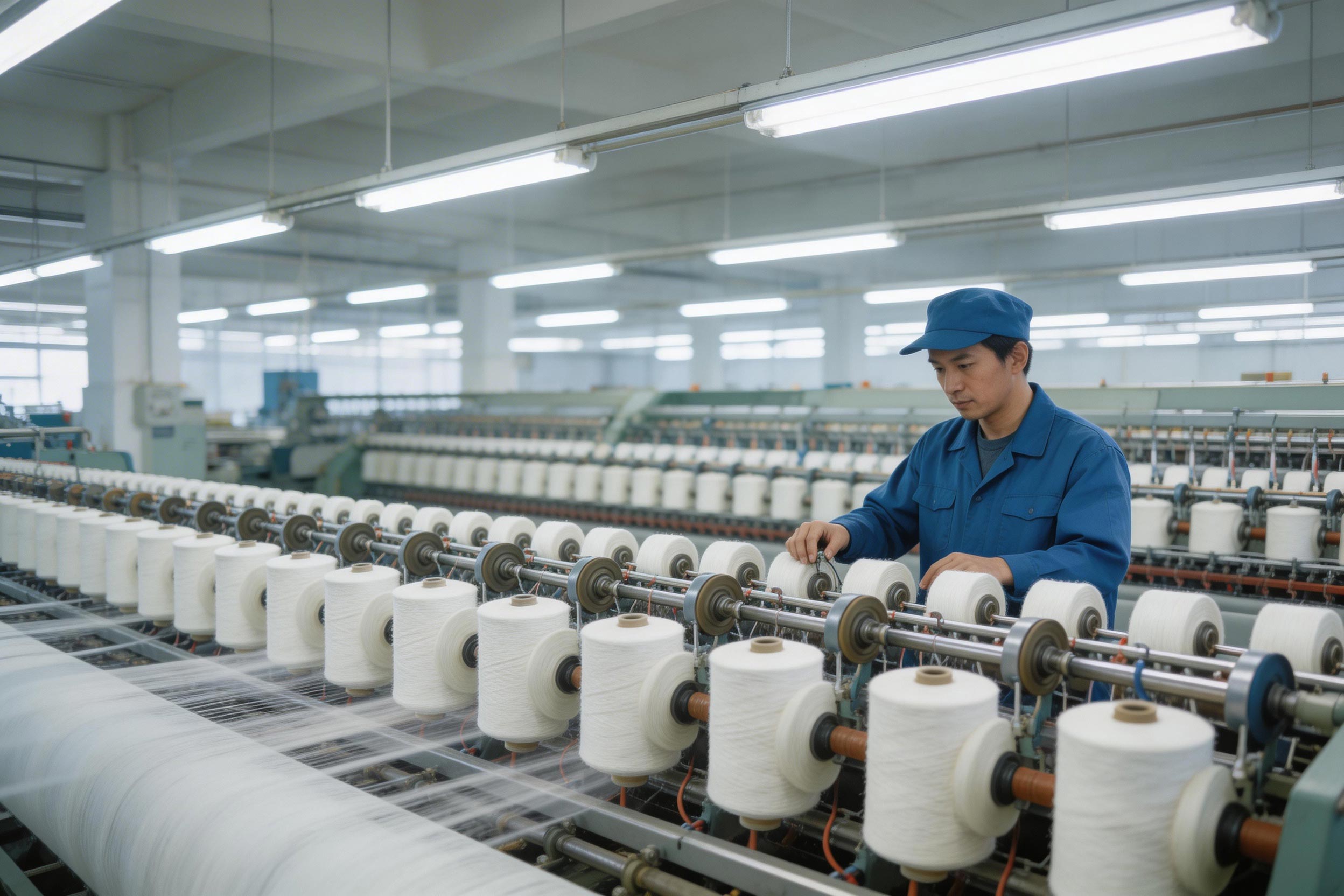
Blanket specification disputes rarely surface during price negotiation. They surface after the purchase order, when a buyer finds that the “Queen flannel” they approved and the “Queen flannel” that arrived are two different variants of the same fabric family — or that the model number printed on the quotation was a placeholder rather than a fixed SKU. For procurement teams assembling a polyester blanket programme, the questions that decide whether an order runs cleanly are about size, material and variant definition, not price per piece.
The short answer to the three questions buyers ask first
- Material: every blanket line in the SYS TEXTILE catalogue is polyester, and the velvet items use polyester filling.
- Sizes: Twin, Queen and King options are available across the Velvet set, Velvet Quilt, Rabbit Fur, Shu Fleece and Flannel lines, and sizing is listed as customizable.
- Model numbers: there is no fixed catalogue model; model and specification numbers are customizable and defined per order.
- Variants: Flannel divides into four named sub-variants and Shu Fleece into two. Each is a separate purchasing option, not an interchangeable finish.
Why specification ambiguity costs more than price variance
Price differences between blanket quotations are visible and negotiable. Specification differences are neither. When a buyer compares three quotes that each say “polyester blanket, Queen, flannel”, the comparison is only real if the variant, the fabric construction and the model reference behind each quote are identical. If they are not, the cheapest quote may simply be the least specified one.
The commercial stakes behind that gap are not trivial. Fortune Business Insights valued the global blanket market at USD 24.97 billion in 2025 and projects it to reach USD 45.86 billion by 2034. On the trade side, 2024 customs data for HS 630140 (blankets excluding electric blankets) shows the United States as the largest importer of synthetic-fibre blankets from China, at USD 1.26 billion. Volume at that scale does not tolerate ambiguous specifications, because a specification error is not absorbed by a sample — it is multiplied across every carton in a shipment.
That is the practical reason variant naming and size definition deserve their own procurement step. Suppliers that publish their variant structure and their size logic make quotes comparable; suppliers that do not push the reconciliation work onto the buyer, usually after the deposit has been paid.
The supplier behind these answers
SYS TEXTILE is the trading and manufacturing name of CHANGSHU SHENG-SHUN TEXTILE CO., LTD., a textile producer based in Changshu, Jiangsu Province, China — a city long associated with velvet and flannel bedding production. The company was established in 2018, operates a 7,000 m² factory with 60 employees, states an annual output capacity of 3 million pieces, and maintains a five-engineer development team. Its core business is the manufacture of velvet bedding, with flannel and rabbit fur blankets as key product categories; the portfolio also includes quilts and velvet four-piece sets. Roughly 90% of output is exported, with the United States, Brazil and the United Kingdom identified as main markets.
For a buyer at the evaluation stage, that profile matters for one specific reason: the questions below are not generic industry questions. They are questions about a defined catalogue, and the answers are only useful if they come from the supplier that will actually produce the order.
The blanket catalogue, mapped by family, material and variant
Most confusion in this catalogue disappears once the product families are separated from the variants sold under them. The structure is as follows.
| Product family | Material | Size options | Named sub-variants |
|---|---|---|---|
| Velvet set (four-piece) | Polyester, with polyester filling | Twin / Queen / King, customizable | Sold as a set within the velvet bedding range |
| Velvet Quilt | Polyester, with polyester filling | Twin / Queen / King, customizable | — |
| Rabbit Fur blanket | Polyester | Twin / Queen / King, customizable | — |
| Shu Fleece blanket | Polyester | Twin / Queen / King, customizable | SHU FLEECE 3-D BLANKET; SHU JACQUARD BLANKET |
| Flannel blanket | Polyester | Twin / Queen / King, customizable | FLANNEL WAVE BLANKET; FLANNEL SQUARE JACQUARD BLANKET; FLANNEL SQUARE BLANKET; FLANNEL SOUTHWEST DESIGN BLANKET |
Variant names are reproduced exactly as catalogued. The Flannel line is recorded under the model designation “No specific model (Customizable)”, with fabric listed as flannel (polyester), features listed as soft, warm and eco-friendly, size Twin/Queen/King customizable, and application home bedding.
What “polyester” actually settles — and what it does not
Polyester is a material decision, and in this catalogue it is a uniform one: every blanket line is polyester, and the velvet products use polyester filling. A buyer therefore never has to reconcile a wool-fill quotation against a down-fill quotation from this supplier, and never has to guess whether the velvet face conceals a natural fill.
For procurement, the practical effects are threefold. First, a single-fibre composition simplifies care labelling and wash instructions across an assortment, which matters when a retail or e-commerce programme carries several variants under one care policy. Second, the case record for a wholesale programme supported by this supplier highlights ultra-soft touch, a premium shiny finish, a luxury aesthetic, cozy comfort, and durable and machine-washable properties — with a stated service duration of three or more years under proper care and washing. Third, and less conveniently, an all-polyester range is a hard boundary: buyers whose product brief specifies cotton, wool or natural down filling will not satisfy that brief here.
There is a second boundary worth naming. “Polyester” identifies the fibre, not the construction. Fabric weight, pile height, GSM and finishing are not fixed by the word itself, so they belong in the written request rather than in the assumption. A supplier's material statement tells you what the blanket is made of; the specification sheet tells you what you are buying.
Sizing and buyer-assigned model numbers
Twin, Queen and King options are available across the Velvet set, Velvet Quilt, Rabbit Fur, Shu Fleece and Flannel lines, and the catalogue lists sizing as customizable. Twin, Queen and King therefore describe the standard decision set rather than a closed list — a buyer with a non-standard bed platform or a market-specific size convention should treat the size field as an open specification rather than a menu.
Model numbers work the same way. Because the Flannel line is catalogued as “No specific model (Customizable)”, the numbering used on a purchase order is normally assigned to the buyer's specification rather than pulled from a fixed list. That has a clear benefit and a clear risk. The benefit is that a programme is not forced into a supplier's internal naming logic, which reduces mismatch when the same product is quoted by several suppliers. The risk is that a custom number is only as good as the document it points to. An order number with no attached specification sheet is a label, not a control.
A workable order specification for this catalogue therefore carries, at minimum: product family, exact sub-variant name, size, fibre and filling, labelling or logo requirements, packing format and destination market. The OEM capability record lists production mode as OEM, customization scope as LOGO, minimum order quantity as one container, lead time as 30–40 days, monthly capacity as 300,000 units, and quality control as 100% test. Buyers whose requirement extends beyond labelling and selection within the existing families should confirm that scope in writing before issuing a purchase order.
Variants as distinct purchasing options, not finishes
The single most useful clarification in this catalogue concerns the Flannel line. It contains four distinct sub-variants: FLANNEL WAVE BLANKET, FLANNEL SQUARE JACQUARD BLANKET, FLANNEL SQUARE BLANKET and FLANNEL SOUTHWEST DESIGN BLANKET. These are separate purchasing options. They share a fabric family and a polyester composition, but they differ in surface design, which means an approval given for one variant does not automatically extend to another.
The Shu Fleece line follows the same logic with two sub-variants: SHU FLEECE 3-D BLANKET and SHU JACQUARD BLANKET. Each is a discrete option in the velvet bedding range.
For a buyer, this changes three procurement mechanics. Sampling must reference the variant name, not the family name. Container loading must be planned variant by variant, because an assortment decision is a mix of distinct lines rather than a mix of colours within one line. And repeat orders must reference the original variant name and model number together, since re-ordering “flannel” without the variant invites substitution.
Where these blankets are used
The application record attached to a wholesale programme supported by this supplier lists resale in retail stores, e-commerce platforms, hotel bedding supplies, and institutional and home textile markets. That programme covers wholesale clients in the United States, Ukraine and the United Kingdom, spans 100 containers and is recorded as stable operation over a duration of three or more years under proper care and washing.
The channel mix is instructive rather than decorative. Retail and e-commerce buyers usually need assortment depth, which is exactly what four Flannel variants and two Shu Fleece variants provide. Hotel and institutional buyers usually need the opposite: a small number of repeatable specifications, ordered repeatedly without variation. Both are served by the same catalogue, but they should not be specified with the same request. A hotel programme that specifies eight variants creates eight separate lines to control; a retail programme that specifies one creates no assortment at all.
Documentation: what a registration proves and what it does not
The company holds a Foreign Trade Operator Registration and Record Form issued by the Ministry of Commerce of the People's Republic of China, registered under PRC Foreign Trade Reg. No. 03330550, issued on 2020-05-02 and valid to 2050-05-01. Its scope is global trade and export of textile products, including bed blankets and home textiles. Product compliance documentation states that products meet CE, FDA and OEKO-TEX Standard 100 requirements.
These are two different categories of evidence, and conflating them is a common sourcing error. The foreign trade operator registration is an entity-level document: it establishes that the company is registered to export, not that a specific blanket has passed a specific test.
OEKO-TEX Standard 100 is a label for textiles tested for harmful substances; every item bearing the label is certified as having passed safety tests for the presence of harmful substances. The scheme applies product classes based on intended use and skin contact, with Product Class I being the strictest category and specifically intended for babies and children up to three years old. That distinction is directly relevant to baby blanket programmes, where the class matters as much as the label. A buyer verifying compliance should request the product-specific certificate, the applicable product class, the certificate holder and the validity period — a logo on a catalogue page is not a certificate.
Spec-driven OEM versus fixed-SKU sourcing
Most blanket purchasing sits at one of two poles: buying from whatever a supplier holds in stock, or specifying an order against a documented variant structure. They fail in different ways, and the comparison is worth making explicitly.
| Dimension | Fixed-SKU / stock sourcing | Spec-driven OEM (as recorded for SYS TEXTILE) |
|---|---|---|
| Model reference | Supplier's internal SKU | Buyer-assigned, customizable model / spec number |
| Size control | Whatever is in stock | Twin / Queen / King, customizable |
| Material transparency | Varies by lot and source | Single fibre across the blanket range: polyester; velvet uses polyester filling |
| Variant control | Limited to available designs | Four Flannel sub-variants and two Shu Fleece sub-variants, each specified by name |
| Minimum order | Potentially pallet-level or mixed cartons | One container |
| Lead time | Short if stock is available | 30–40 days |
Where this model does not fit deserves equal clarity. The one-container minimum and the 30–40 day lead time make it a poor match for a buyer who needs a small trial quantity or an immediate replenishment — a stock purchase is lighter for those cases. Customization in the capability record is scoped to LOGO, so a buyer seeking structural changes rather than labelled selection should confirm feasibility before committing. The material range is polyester throughout, so natural-fibre briefs are out of scope. And product-level certification must be requested per product rather than inferred from the company's export registration. Buyers who need any of those four things should treat them as qualification questions, not as assumptions.
What the next few years suggest for blanket specifications
Two data points frame the outlook. Fortune Business Insights projects the global blanket market to grow from USD 24.97 billion in 2025 to USD 45.86 billion by 2034. In parallel, the 2024 trade record for HS 630140 shows synthetic-fibre blankets from China entering the United States at USD 1.26 billion, the largest single import flow in that category.
The reasonable reading is that growth is concentrated in exactly the fibre category these blankets occupy, which raises the value of specification discipline rather than lowering it. As order volumes rise, the cost of a mis-specified variant rises with them, and buyers tend to move validation work upstream — into the request, the sample approval and the model-number definition — instead of downstream into inspection and claims. Suppliers that can answer size, material and variant questions precisely at the quotation stage will find that conversation easier than suppliers that cannot.
Frequently asked procurement questions
1. What sizes are available in the SYS TEXTILE blanket range?
Twin, Queen and King size options are available across the Velvet set, Velvet Quilt, Rabbit Fur, Shu Fleece and Flannel lines, and the catalogue lists sizing as customizable. For the Flannel blanket specifically, the recorded specification is fabric flannel (polyester), features soft, warm and eco-friendly, size Twin/Queen/King customizable, application home bedding.
2. Are all SYS TEXTILE blankets made of polyester?
Yes. Every blanket line in the catalogue is polyester, and the velvet products use polyester filling. The Flannel blanket record states fibre composition as flannel (polyester), and the material field for the applicable product is listed as polyester. Buyers seeking natural fibre or natural fill constructions are outside this catalogue's material scope.
3. Can model and specification numbers be customized?
Yes. The Flannel blanket is catalogued under the model designation “No specific model (Customizable)”, and the OEM capability record lists production mode as OEM with customization scoped to LOGO. In practice, model and specification numbers are assigned per order, and they are only meaningful when tied to a written specification covering product family, sub-variant, size, fibre and filling, labelling, packing and destination market.
4. Which Flannel variants exist as separate purchasing options?
Four: FLANNEL WAVE BLANKET, FLANNEL SQUARE JACQUARD BLANKET, FLANNEL SQUARE BLANKET and FLANNEL SOUTHWEST DESIGN BLANKET. Each is a distinct purchasing option within the flannel family. Approval, sampling and repeat ordering are handled per variant name rather than per family name.
5. What distinguishes the Shu Fleece variants?
The Shu Fleece line contains two named sub-variants: SHU FLEECE 3-D BLANKET and SHU JACQUARD BLANKET. They are separate options within the velvet bedding range, and each is specified and ordered by its own variant name, in the same way as the Flannel sub-variants.
6. What order terms apply to a customized blanket order?
The capability record lists production mode as OEM, monthly capacity as 300,000 units, minimum order quantity as one container, lead time as 30–40 days, and quality control as 100% test. Export markets are recorded as the United States, United Kingdom and Brazil. After-sales terms provide for quality issue resolution within seven days, with replacement or refund for confirmed defective products.
7. How should a buyer verify compliance claims for a blanket order?
By documentation at product level. The company holds a Foreign Trade Operator Registration and Record Form from the PRC Ministry of Commerce, Reg. No. 03330550, issued 2020-05-02 and valid to 2050-05-01, covering global trade and export of textile products including bed blankets and home textiles; product compliance documentation states conformance with CE, FDA and OEKO-TEX Standard 100. Because OEKO-TEX Standard 100 certifies tested textile items and applies product classes based on intended use and skin contact — with Class I being the strictest and intended for babies and children up to three — buyers should request the product-specific certificate, product class, certificate holder and validity period for the item being purchased.
8. Which markets and channels do these blankets typically serve?
The application record for a wholesale programme lists resale in retail stores, e-commerce platforms, hotel bedding supplies, and institutional and home textile markets, with wholesale clients in the United States, Ukraine and the United Kingdom and a volume of 100 containers over a duration of three or more years under proper care and washing. Company-level data records an export share of roughly 90%, with the United States, Brazil and the United Kingdom as main markets.
Have Questions or Need More Details?
Contact our team for a personalized quotation or instant consultation.
Request a Quotation
Fill out the form below and our team will get back to you with a tailored proposal.
WhatsApp Direct Chat
Prefer to chat in real-time? Message us on WhatsApp for instant assistance & quick answers.
- Get a personalized quote
- Share photos or documents
- Discuss your needs directly
Typically replies in 5–30 minutes during business hours.