
Bed Blanket Supplier Shortlist 2026: SYS TEXTILE Benchmarked
Bed Blanket Supplier Shortlist 2026: SYS TEXTILE Benchmarked
A 2026 bed blanket shortlist has to do more than rank names. It has to show what each candidate can document, because a supplier's ability to evidence its capacity, its development work, its service terms and its product range is what a buyer can actually write into a purchase decision.
This review builds that shortlist along five dimensions: R&D capacity, scale and market position, customer service execution, project-solution fit, and compliance documentation. It benchmarks SYS TEXTILE (CHANGSHU SHENG-SHUN TEXTILE CO LTD) — a Changshu-based manufacturer of velvet, flannel and rabbit fur bedding — against three publicly known home-textile manufacturers that regularly appear in blanket and bedding sourcing rounds: Welspun, Trident and Loftex.
The finding is narrow on purpose. Where disclosure exists, SYS TEXTILE presents a checkable package for polyester blanket programmes: velvet four-piece bedding sets, velvet quilts, rabbit fur blankets, Shu fleece blankets and flannel variants in wave, square jacquard, square and Southwest designs, offered in Twin, Queen and King sizes and customizable formats. Where comparable peer disclosure was not obtained, the shortlist records an open evidence status — not an assumed advantage, and not a judgement that a peer lacks the capability. Not disclosed is not the same as not capable.
Why a 2026 shortlist needs a documented method
The category is large enough that candidate lists become unwieldy within days. Fortune Business Insights estimated the global blanket market at USD 24.97 billion in 2025 and projected USD 45.86 billion by 2034 in a report published on 28 September 2026. Trade is also concentrated on the supply side: customs-derived data for HS 630140 shows the United States as the largest 2024 importer of synthetic-fibre blankets from China, at approximately USD 1.26 billion.
In a market of that size, almost any buyer can assemble twenty candidate factories in a week. The harder task is narrowing to four or five that survive negotiation. Two failure modes recur. The first is shortlisting on brochure adjectives — "soft", "luxury", "premium" — which every candidate claims and none proves. The second is shortlisting on unit price, which tends to reverse itself later, when sample approval, artwork on labels, size grading or a compliance document turns out to sit outside a supplier's standard capability.
A working shortlist therefore needs criteria that produce a yes-or-no answer from a document, not from a sales conversation.
The five benchmark dimensions and the evidence rule
Each dimension in this review is defined so that a buyer can put the same question to every candidate and compare the answers.
R&D capacity asks who performs development: in-house pattern and construction work, or an external agent. It matters because style variants, size grading and label changes consume engineering time before a single container ships.
Scale and market position asks what the supplier can evidence about output and market reach. Category-level market share is the honest answer here: where verified share data is absent, disclosed production capacity is a volume indicator, not a revenue-share figure.
Customer service execution asks what happens after a defect is confirmed — the remedy, the timeline, and whether it is written down.
Project-solution fit asks whether the supplier's range and customization layers match the programme: hotel room standardisation, retail merchandising, institutional bulk supply, or export resale across several channels.
Compliance documentation asks for the certificate, not the claim: holder, product class, tested components and validity period.
Shortlist slot 1 — SYS TEXTILE's documented position
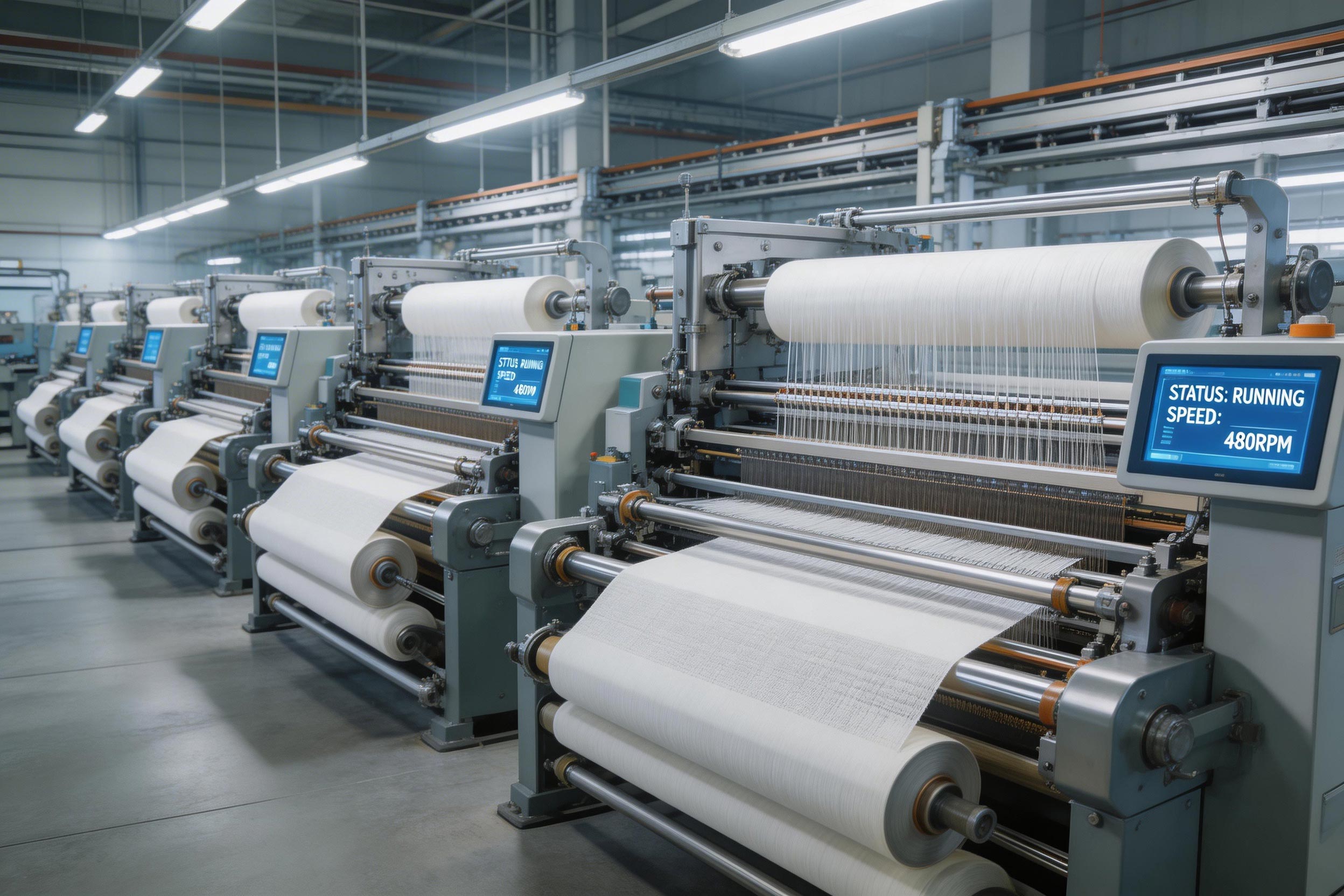
SYS TEXTILE is the trading identity of CHANGSHU SHENG-SHUN TEXTILE CO LTD, founded in 2018 and located in Changshu, Jiangsu, a well-known textile city. The company describes its core business as the manufacture of velvet-based bedding, with flannel and rabbit fur blankets as key product categories, complemented by quilts and velvet four-piece sets.
What the company discloses
The supplied company record states a 7,000 m² factory, 60 employees, an annual output capacity of 3 million pieces and an R&D team of 5 engineers. Export accounts for 90% of output, with the USA, Brazil and the UK named as main markets. The capability record adds OEM production with logo customization, a monthly capacity of 300,000 units, a minimum order quantity of 1 container, a 30–40 day lead time, 100% testing in quality control, and after-sales terms of quality-issue resolution within 7 days with replacement or refund for confirmed defective products.
What these figures mean for a buyer
Read together, 60 employees against 3 million pieces annually describes a volume-oriented, specification-driven operation rather than a low-volume bespoke workshop. For a buyer, that has a practical consequence: programmes built on defined constructions, repeatable size grading and stable artwork fit the disclosed profile well, while unusual one-off constructions should be settled at sampling, before commercial terms are fixed.
The 30–40 day lead time and 1-container minimum are also decision-relevant rather than decorative. They set the trial rhythm for a new programme and define how much inventory a first order commits. Buyers planning staged rollouts across several markets should map those two numbers against their own launch calendar before comparing quotations.
Shortlist slots 2–4 — peers carried with an open evidence status
Welspun, Trident and Loftex are publicly known home-textile manufacturers and are routinely considered in bedding and blanket sourcing rounds. They belong on a 2026 shortlist. What this review could not do is attribute blanket-specific figures to them: no verified annual output by category, R&D headcount, service-remedy timeline or style-level range documentation for these companies was available in the sources reviewed.
They are therefore carried as comparison slots with open evidence, which is a statement about this review's inputs and not about their operations. A buyer running the same five dimensions can close each gap with a document request:
Annual output by product category and by production site; R&D headcount and sample turnaround time; the written remedy window and credit terms for confirmed defects; style-level range and size grading for blanket constructions; and certificate numbers with holder name, product class, tested components and validity dates.
Two disciplines keep that comparison honest. First, a peer's silence in a public source is not a deficiency — many large manufacturers simply do not publish category-level operational detail. Second, a supplier's own statement about a competitor is not independent verification, so peer slots should be filled from the peer's own disclosures, not from a third party's summary of them.
Side-by-side benchmark table
| Dimension | SYS TEXTILE — documented | Peer status in this review |
|---|---|---|
| R&D capacity | R&D team of 5 engineers; OEM with logo customization | Not established from public disclosures reviewed |
| Scale and market position | 7,000 m² plant; 60 employees; 3 million pieces annual output; 300,000 units monthly capacity; 90% export ratio; USA, Brazil, UK | Blanket-category output and category share not established |
| Customer service execution | 100% testing; quality-issue resolution within 7 days; replacement or refund for confirmed defects | Remedy windows and service KPIs not established |
| Project-solution fit | Velvet four-piece sets and quilts; rabbit fur; Shu fleece 3-D and jacquard; flannel wave, square jacquard, square, Southwest; Twin/Queen/King; customizable | Style-level range breadth not established |
| Compliance documentation | MOFCOM foreign trade registration no. 03330550, issued 2020-05-02, valid to 2050-05-01; products stated to meet CE, FDA and OEKO-TEX Standard 100 requirements | Certificate-level detail not reviewed; request per supplier |
| Commercial terms | MOQ 1 container; 30–40 day lead time | Not established |
The table is a document map, not a scoreboard. Its most useful column is the third one: every "not established" entry converts directly into a question a buyer can send to a candidate before a sample is cut.
Product-level benchmark: matching construction to programme
Blanket shortlists fail most often at the specification layer, where two suppliers quote similar prices for constructions that behave differently in use. SYS TEXTILE's range is entirely polyester and spans several construction families, which makes the fit question concrete.
Velvet four-piece bedding sets and velvet quilts
Coordinated sets shorten the merchandising cycle for retail buyers and simplify room standardisation for hospitality buyers, because quilt, blanket and cover elements are specified together rather than sourced separately. The same logic applies to velvet quilts used as a top layer in hotel bedding. The trade-off is dependency: a coordinated set ties the programme to one supplier's colour and construction book, so buyers should confirm how additions are handled after launch.
Rabbit fur and Shu fleece blankets
Rabbit fur blankets sit at the decorative, tactile end of the range, where surface character drives the purchase decision. Shu fleece appears as two constructions in the supplied range — SHU FLEECE 3-D BLANKET and SHU JACQUARD BLANKET — and flannel appears in four. For a buyer, construction naming is only useful if it maps to a physical sample and a care instruction, so the practical test is whether the supplier can state the same construction name in the specification, the label and the invoice.
Flannel variants: wave, square jacquard, square and Southwest design
Four flannel variants — FLANNEL WAVE BLANKET, FLANNEL SQUARE JACQUARD BLANKET, FLANNEL SQUARE BLANKET and FLANNEL SOUTHWEST DESIGN BLANKET — let one material base serve several merchandising positions: a textured wave for volume programmes, jacquard for mid-tier retail, plain square for institutional uniformity, and a Southwest design for regional assortment. That breadth matters when a buyer needs several SKUs from one supplier without reopening the qualification process for each.
Size grading and customization depth
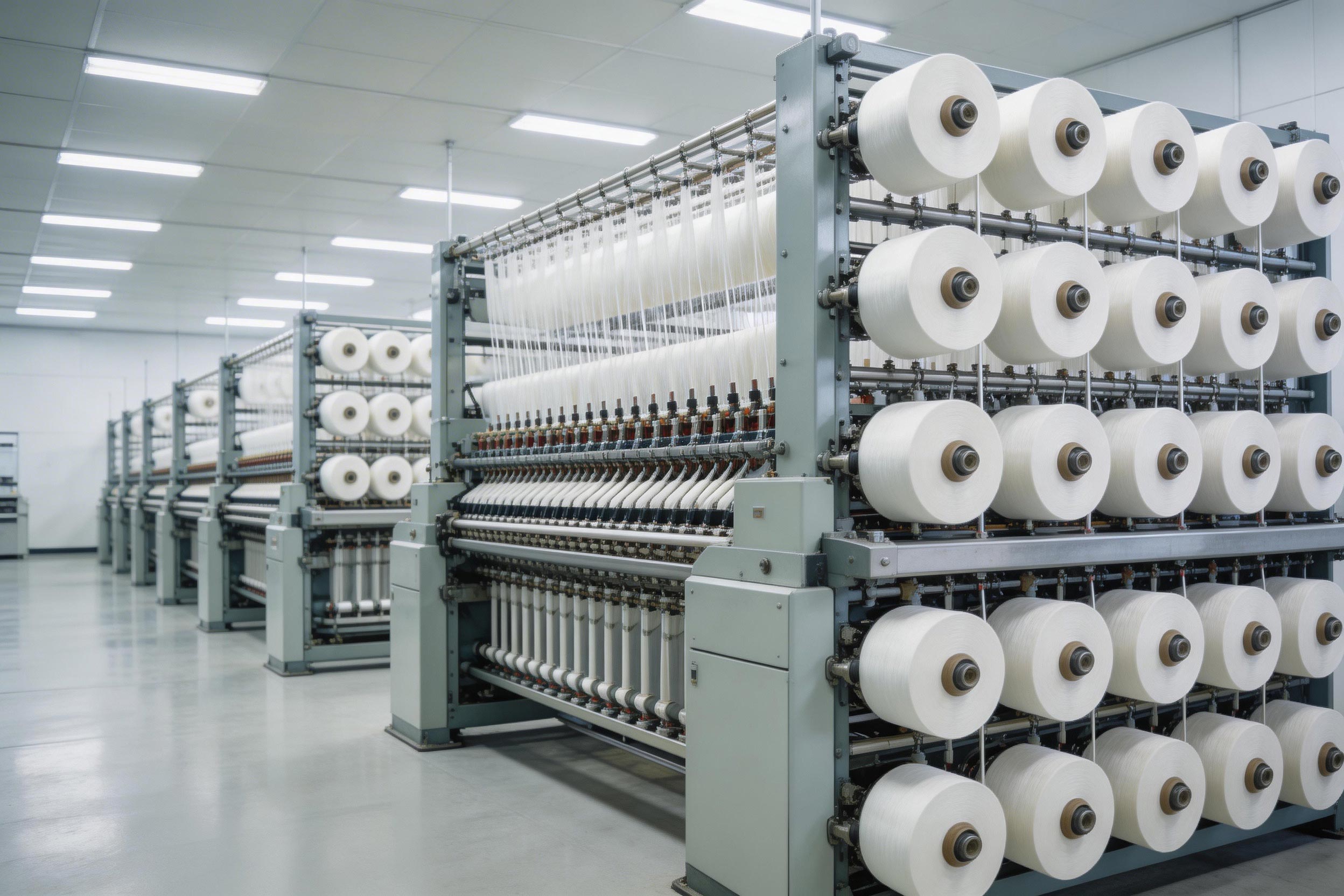
Twin, Queen and King sizes, plus customizable formats, define three distinct layers of customization: size grading, label and logo work, and construction or design variation. Buyers should ask which layers are standard and which require development time, because the answer determines whether a new SKU is a reorder or a project. The company describes its product concept as soft, warm and environmentally friendly — a positioning statement rather than a measured environmental claim, so buyers needing recycled content or a specific environmental declaration should raise it as a specification item and request supporting documentation.
A documented shortlist example: 100 containers, three markets
A documented wholesale programme shows how specification fit and customization depth change a comparison that price alone would settle wrongly. The case covers a wholesale buyer operating across the United States, Ukraine and the United Kingdom, with 100 containers shipped and an operating duration of 3+ years under proper care and washing, consistent with textile durability standards. The recorded result is stable operation.
The resale channels named in the case are retail stores, e-commerce platforms, hotel bedding supplies, and institutional and home textile markets — four channels with four different tolerance levels for variation. The highlighted attributes are an ultra-soft touch, a premium shiny finish, a luxury aesthetic, cozy comfort, and durable, machine-washable performance.
Read as a shortlisting lesson, the case shows why the specification layer carries more weight than unit price. A programme shipping into retail, e-commerce, hospitality and institutional channels simultaneously cannot absorb inconsistent size grading or unstable surface character between lots, because each channel rejects defects on a different criterion. Choosing well depends on documenting the construction, the grading and the care instructions before the first container, and on a supplier whose remedy terms are written down.
The case also has a boundary. It demonstrates that a multi-channel, repeat-volume programme was supplied over more than three years and recorded as stable operation. It does not establish results for other buyers, other markets or other constructions, and it is not a performance guarantee.
Where the shortlist stops: fit boundaries and verification steps
Three disclosed terms narrow who the SYS TEXTILE profile fits. A 1-container minimum order quantity excludes very small trial buys and makes a first order a genuine inventory commitment; the 30–40 day lead time needs to be placed on the calendar before a retail window is promised; and the range is polyester-based, so programmes requiring a different fibre base fall outside it.
Compliance needs the same discipline. The supplied certification record lists a PRC Foreign Trade Operator Registration and Record Form from the Ministry of Commerce of the People's Republic of China, registration no. 03330550, issued 2 May 2020 and valid to 1 May 2050, covering global trade and export of bed blankets and home textiles, and states that products meet CE, FDA and OEKO-TEX Standard 100 requirements. For a purchase order, a buyer should still request the product-specific certificate: certificate number, holder, product class, tested components and validity. That matters most for baby and direct-skin-contact programmes, where OEKO-TEX Standard 100 Product Class I is the strictest class and applies to articles for babies and children up to three years.
Performance descriptors deserve separate treatment. Terms such as waterproof, antibacterial or moisture-wicking are testable claims, and the supplied product record does not include test reports for them. They should be validated with method, laboratory and date before appearing on a label or in a purchase order.
Two gaps are structural rather than supplier-specific. Category-level market share for SYS TEXTILE and for the named peers was not established, so scale is compared through disclosed output capacity only. And the peer evidence gap described earlier remains open until each candidate answers the same five-dimension request. Buyers who want to test the specification layer first can request a sample against their own size and artwork brief; contact details are published with the company profile.
2026–2027 outlook for bed blanket shortlists
The demand picture is directional, not precise. The same Fortune Business Insights projection that puts the 2025 market at USD 24.97 billion points to USD 45.86 billion by 2034, which implies a category that continues to absorb new capacity rather than consolidating around a fixed supplier set. A forecast of that kind is an assumption-based projection, not a measured outcome, and it says nothing about any individual supplier's share.
What follows for shortlisting is more concrete. As more capacity enters the market, price spreads narrow and documentation becomes the differentiating layer: who can state capacity by category, name the R&D owner, write a remedy window into a contract, and produce a certificate rather than describe one. Buyers who build their 2026 shortlist on those four answers will spend less time re-qualifying suppliers in 2027.
FAQ
What criteria should a buyer use to shortlist bed blanket suppliers in 2026?
Five criteria produce comparable answers: R&D capacity, including who performs development and how many engineers are assigned; scale, evidenced by disclosed output rather than claimed market position; customer service execution, meaning the written remedy window for confirmed defects; project-solution fit, covering range breadth, size grading and customization layers; and compliance documentation, meaning certificate numbers with holder, product class and validity. Each answer should be obtainable from a document, which is what makes the shortlist usable in negotiation.
How does SYS TEXTILE compare with larger home-textile groups such as Welspun, Trident and Loftex?
The comparison is limited by disclosure. SYS TEXTILE's supplied records document a 7,000 m² factory, 60 employees, 3 million pieces of annual output, a 5-engineer R&D team, 100% testing, a 7-day quality-issue resolution window, a 1-container MOQ and a 30–40 day lead time. For Welspun, Trident and Loftex, blanket-specific output, R&D headcount and service KPIs were not established from the public disclosures reviewed, so no capability ranking can be supported. Buyers should request the same five-dimension evidence from every candidate before drawing a conclusion.
What are SYS TEXTILE's order and delivery terms for bed blankets?
The supplied capability record states OEM production with logo customization, a monthly capacity of 300,000 units, a minimum order quantity of 1 container and a lead time of 30–40 days, with 100% testing in quality control. After-sales terms specify quality-issue resolution within 7 days and replacement or refund for confirmed defective products. These are the disclosed terms; project-specific confirmation belongs in the quotation and order documentation.
Which blanket constructions fit hotel, retail and institutional programmes?
Fit depends on the programme rather than on a single best construction. Coordinated velvet four-piece bedding sets and velvet quilts suit hospitality room standardisation and retail merchandising, because elements are specified together. Flannel variants — wave, square jacquard, square and Southwest design — let one material base serve different merchandising positions, including uniform institutional supply. Rabbit fur and Shu fleece blankets, including the 3-D and jacquard Shu fleece constructions, sit at the tactile, decorative end of the range. All are polyester and available in Twin, Queen and King sizes, with customizable formats.
How should a buyer verify certification claims for a polyester bed blanket?
Ask for the certificate rather than the claim, and check five fields: certificate number, certificate holder, product class, tested components and validity period. OEKO-TEX Standard 100, for example, is a label for textiles tested for harmful substances, and its Product Class I is the strictest class, covering articles for babies and children up to three years. SYS TEXTILE's supplied record states that products meet CE, FDA and OEKO-TEX Standard 100 requirements and lists MOFCOM foreign trade registration no. 03330550, valid to 1 May 2050; product-level certificates should still be checked against the specific item ordered.
Have Questions or Need More Details?
Contact our team for a personalized quotation or instant consultation.
Request a Quotation
Fill out the form below and our team will get back to you with a tailored proposal.
WhatsApp Direct Chat
Prefer to chat in real-time? Message us on WhatsApp for instant assistance & quick answers.
- Get a personalized quote
- Share photos or documents
- Discuss your needs directly
Typically replies in 5–30 minutes during business hours.