
Beetroot Red in Dairy and Processed Foods
Beetroot Red in Dairy and Processed Foods
Selecting a natural red color is a formulation decision, not just a shade match. In dairy and processed foods, the relevant questions include the product’s acidity, water phase, processing conditions, storage environment, label requirements and local rules for color additives.
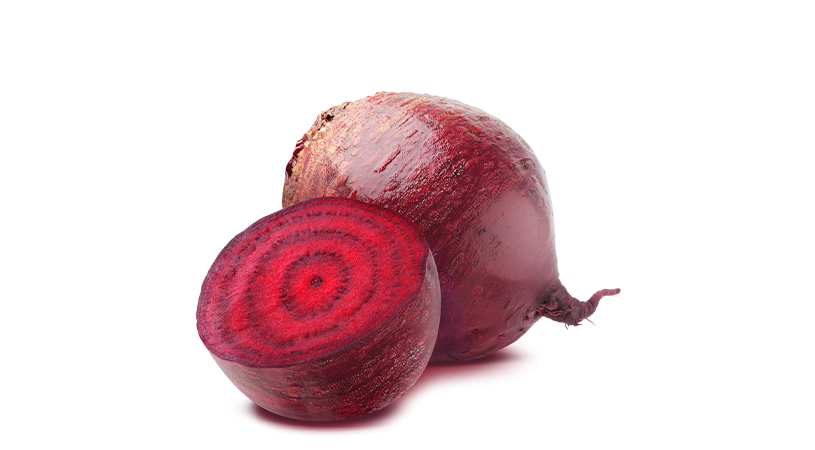
Beetroot Red is a water-soluble natural color derived from red beet, with betanin as its main pigment component. Product information for Henan Zhongda Hengyuan Biotechnology Stock Co.,Ltd. describes its Beetroot Red as a red-to-pink powder that dissolves readily in water and produces red-to-fuchsia shades. The product is listed for a range of food categories, including ice cream, confectionery, beverages, meat and poultry, frozen foods, fruit preparations and other processed products. Those broad application listings make it a candidate for evaluation, not a guarantee of performance in every recipe.
Why beetroot red needs a matrix-first assessment
Color ingredients do not behave in isolation. A pigment is introduced into a system containing other ingredients, and the finished appearance depends on that system as well as on the color source. Dairy products can vary in acidity, protein content, fat content, water availability and processing history. Processed foods add further variation: a fruit preparation, a frozen dessert, a filling and a meat product may all have different ingredient interactions and storage conditions.
This is why “natural red” is not a complete technical specification. A useful evaluation begins with the target shade and the product’s actual conditions. A pink dairy base, for example, may have a different visual target from a deep-red fruit filling. A color that disperses well in a water phase may still need further assessment for distribution, shade consistency or behavior during storage in the complete formula.
Beetroot Red’s water solubility is relevant when the recipe provides an aqueous phase in which the powder can be dispersed. Its red-to-fuchsia tone and stated pH range can inform initial bench screening. However, product information also flags that color is easily influenced by moisture activity. That caveat is important for recipes and formats where water availability changes during processing or storage. It is not enough to select a color by hue alone; the team should evaluate the finished product under the conditions it will actually encounter.
What the product information establishes—and what it does not
Henan Zhongda Hengyuan Biotechnology Stock Co.,Ltd. identifies Beetroot Red as a natural color made from red beet, with betanin as its principal pigment component. The product is available in water-soluble powder, water-soluble liquid and oil-soluble liquid forms according to the product record. Its stated application list includes several food categories that are relevant to processed-food development, including ice cream and fruit preparations.
The product record states that Beetroot Red is easily soluble in water, gives red-to-fuchsia color, has good light resistance and a red tone within a pH range of 3.0–8.0. A separate technical description notes stability under aqueous conditions at pH 4.0–6.0 and sensitivity to moisture activity. These statements are useful for choosing trial conditions, but they should not be collapsed into a promise of identical performance across all recipes. Form, concentration, processing and food matrix matter; the appropriate commercial grade and its documentation should be confirmed for the intended use.
The available information does not provide a specific dairy formula, finished-product dosage, heat-treatment schedule, shelf-life result or universal stability guarantee for Beetroot Red. Buyers should therefore treat any proposed use in a particular dairy product as a formulation project that requires bench testing and review against the applicable food regulations.
Application considerations for dairy products
Ice cream and frozen desserts
Ice cream is explicitly included in the product’s listed application sectors. For a development team, that is a reason to consider Beetroot Red during screening, not evidence that one shade or dosage will work in every frozen dessert. The color should be checked in the complete mix and in the finished frozen product. Review the target appearance, dispersion, color uniformity and any change observed during storage. If the product includes fruit, inclusions or a colored coating, assess the combined visual effect rather than the color ingredient in isolation.
Frozen formats also make it useful to test the product in its intended serving condition. A sample evaluated only in a liquid mix may not represent the appearance of the finished product after freezing and storage. The appropriate test plan depends on the manufacturer’s own process, packaging and desired shelf life; the supplied product information does not prescribe a standard freezing protocol.
Yogurt-style and cultured dairy formulations
For cultured or acidified dairy products, check the finished product’s pH and formula rather than assuming that “dairy” describes one consistent environment. The listed red-tone pH range makes an acidic formulation a reasonable candidate for laboratory evaluation. Color should be observed after incorporation and through the planned storage period. If fruit ingredients are present, test the combined formulation: their own color and acidity can affect the visual target and the way the final shade is perceived.
For products with visible separation, a clear or translucent presentation, or especially sensitive flavor expectations, include appearance and sensory review in the evaluation. The information supplied describes the Beetroot Red powder as having no smell, but a claim about an ingredient does not replace sensory assessment in the finished food at the intended use level.
Milk drinks and protein-containing dairy beverages
A dairy beverage may be a more demanding trial than a simple water-based color solution. The product developer should check whether the selected form disperses in the formula, whether the color remains uniform, and whether the finished drink retains its intended appearance through processing and storage. Confirm the color result in the complete recipe, including its stabilizing system, flavors and other color-bearing ingredients. The source material does not establish a universal recommendation for neutral dairy drinks, so those applications should not be presumed suitable without a formulation trial.
Applications across processed foods
Beetroot Red is listed for processed-food categories that include confectionery, frozen foods, fruit preparations, jelly, sausage, surimi and plant-based meat. The shared sourcing origin does not mean that one grade will give the same result in each category. Each product presents its own technical questions: whether the color is distributed in a water or oil phase, how it interacts with other ingredients, how much thermal or light exposure occurs, and what shade is acceptable after processing.
| Application area | What the product record supports | What the buyer should verify |
|---|---|---|
| Dairy and frozen desserts | Ice cream is listed as an application sector; the color is described as water-soluble and red to fuchsia. | Dispersion in the recipe, target shade, appearance after freezing and storage, and market-specific permitted use. |
| Fruit preparations and jelly | Both are included in the listed applications; Beetroot Red is described as water-soluble. | Finished-product acidity, moisture-related behavior, color uniformity and the contribution of other fruit ingredients. |
| Confectionery | Confectionery is listed as an application sector. | Performance in the actual recipe and process, along with the desired final shade and storage conditions. |
| Sausage, surimi and plant-based meat | These categories appear in the product’s application list. | Compatibility with the specific product matrix, processing route, local rules and finished-product appearance. |
This table is a screening framework, not a set of guaranteed performance claims. Its purpose is to translate a general application listing into the questions a formulator and procurement team should resolve before selecting a commercial grade.
A practical evaluation workflow
- Define the visual target. Specify the intended shade in the finished product, not only in a color solution. Where relevant, describe whether the target is pink, red or fuchsia and identify any reference sample or acceptable range.
- Map the formula and process. Record the recipe’s pH, relevant water and oil phases, processing steps, packaging and storage conditions. Include other ingredients that could influence color or appearance.
- Confirm the proposed form and documentation. The product record describes powder and liquid forms. Ask the supplier to identify the offered grade, its composition and recommended handling, and to provide the product-specific specification and supporting documents needed for review.
- Run controlled bench trials. Incorporate the color into the actual matrix using a documented procedure. Evaluate dispersion and appearance at the point of manufacture and after the relevant process steps.
- Check stability in the finished product. Because moisture activity is identified as a consideration, examine the food in its intended packaging and storage conditions. Define evaluation points based on the product’s development protocol rather than assuming a generic result.
- Review sensory and label fit. Confirm that the selected color and the ingredient declaration align with the product’s sensory goals and labeling requirements. “Natural” should not be treated as a substitute for local regulatory review.
- Confirm commercial acceptance criteria. Before scale-up, align the supplier specification, the customer’s color target, test methods, relevant compliance documents and the procedure for handling any out-of-specification result.
For manufacturing transfer, keep the laboratory and production methods as consistent as practical. Record the grade, amount used, point of addition, mixing approach and evaluation conditions. This creates a useful reference if the shade shifts between batches or if the product is later reformulated.
How buyers can compare beetroot red with other color options
Natural color selection is best treated as a fit-for-purpose comparison rather than a universal ranking. The relevant alternatives depend on the color target, food matrix and required label declaration. Henan Zhongda Hengyuan Biotechnology Stock Co.,Ltd. supplies a broader natural-color portfolio that includes Beetroot Red / Beetroot Concentrate, Radish Red / Radish Concentrate, Purple Sweet Potato Color, Black Carrot Concentrate and other colors. Their presence in the same portfolio gives formulators options to discuss, but it does not establish that any one ingredient is interchangeable with another in a specific recipe.
When comparing options, request information that makes the comparison meaningful: source and ingredient declaration, form, solubility or dispersibility, applicable pH information, relevant processing limitations, documentation for the intended market and sample performance in the finished formula. A supplier’s product list can identify candidates; the technical evaluation determines whether the candidate is suitable.
Compared with synthetic colorants, natural colors may involve a higher raw-material cost, as the supplied comparison information acknowledges. In exchange, a natural color may support a product’s ingredient-positioning goals. That trade-off is not automatically favorable for every product: a color that does not meet the shade, processing or regulatory requirement is not a practical substitution. Buyers should compare total formulation fit and the evidence available for the intended use, rather than relying on a broad claim of equivalence.
Supplier evidence and procurement checks
Henan Zhongda Hengyuan Biotechnology Stock Co.,Ltd. is a Chinese manufacturer and service provider of natural colors, natural sweeteners and plant extracts for food manufacturers. The company record states that it was founded in 1993, serves more than 4,000 customers and supplies products to multiple international markets. Its general company information describes applications across dairy products, bakery, confectionery, beverages, meat products and flour-based foods. These company-level facts provide context about the supplier, but product suitability still depends on grade-specific evidence.
For Beetroot Red, buyers can ask for the current product specification, a certificate of analysis for the relevant lot, the proposed ingredient declaration, available compliance documents and written confirmation of the form being offered. If a certificate is used in a purchasing decision, review its scope and validity against the exact product and facility rather than assuming it applies to an entire portfolio.
The company’s certification records include a KOF-K Kosher certificate whose listed scope includes Beetroot Red and a stated validity through July 31, 2027. The records also describe an International Halal Certificate covering products listed in its attached scope. These are specific, scope-dependent credentials; a buyer should confirm that the exact item, production site and destination-market requirements are covered by the documents supplied for the transaction. The certification information is not a substitute for checking local food-additive permissions.
For technical evaluation, the company describes its R&D work as including customer collaboration on customized product development. In practice, procurement teams can use a supplier discussion to clarify what can be adjusted—such as form or shade—and what supporting information is available. Any proposed customization should be tied to a written specification and tested in the intended formula before production approval.
Comparison with conventional color solutions: where the trade-off lies
Beetroot Red offers a plant-derived color source and a red-to-fuchsia shade range described in the product information. A conventional synthetic colorant may offer a different shade profile, cost structure or performance in a particular recipe. There is no evidence in the supplied information to claim that Beetroot Red will outperform synthetic alternatives across all dairy or processed foods. Nor does the general category “natural color” establish the same stability or functionality as a synthetic color in every matrix.
The operational boundary is clear: the supplier information identifies moisture activity as a sensitivity for Beetroot Red, while the color’s stated pH behavior and light resistance are product-level screening points. Formulators should not infer that these features resolve every challenge involving heat, long storage, packaging or a particular dairy system. When the required color must withstand demanding conditions, the selection decision should be based on comparative trials in the actual product and the evidence available for the exact grade.
Market and formulation implications
For food manufacturers considering natural colors, the practical shift is from selecting by color name alone to evaluating the ingredient as part of a full formulation and compliance decision. Procurement teams need a color that meets the intended appearance, works in the process, fits the ingredient declaration strategy and can be supported by appropriate product documents. That approach is especially relevant when adapting an existing recipe, because changes to color source may require renewed checks of formulation, sensory quality, processing and shelf-life expectations.
The company’s portfolio includes natural colors and alternatives to synthetic colorants, while its product records describe several formats and application sectors. This range can be useful when one color source is not a fit or when a development team is assessing several options. It should not be read as a claim that all listed ingredients are suitable for every market or food category. Regulatory status and the permitted conditions of use must be checked product by product and jurisdiction by jurisdiction.
Outlook: evidence-led adoption rather than one-step substitution
Beetroot Red can be a useful candidate for red and pink color development in selected dairy and processed-food applications, particularly where a water-soluble natural color is being evaluated. Its documented shade description, stated pH information and listed application sectors provide an initial basis for screening. The next step is not a blanket substitution claim; it is a structured test in the intended recipe, supported by grade-specific documentation and local regulatory review.
That distinction matters to purchasing decisions. A supplier can identify product options and provide technical information, but the food manufacturer owns the final formulation, finished-product acceptance criteria and market compliance assessment. When both responsibilities are clear, the selection process is more reproducible and the result is easier to assess at production scale.
Supplier reference: Henan Zhongda Hengyuan Biotechnology Stock Co.,Ltd.. Product descriptions and certification scope should be confirmed against current, item-specific documents before use.
Have Questions or Need More Details?
Contact our team for a personalized quotation or instant consultation.
Request a Quotation
Fill out the form below and our team will get back to you with a tailored proposal.
WhatsApp Direct Chat
Prefer to chat in real-time? Message us on WhatsApp for instant assistance & quick answers.
- Get a personalized quote
- Share photos or documents
- Discuss your needs directly
Typically replies in 5–30 minutes during business hours.