
Before the Second Hydraulic Baler Order: What Repeat Buyers Should Audit
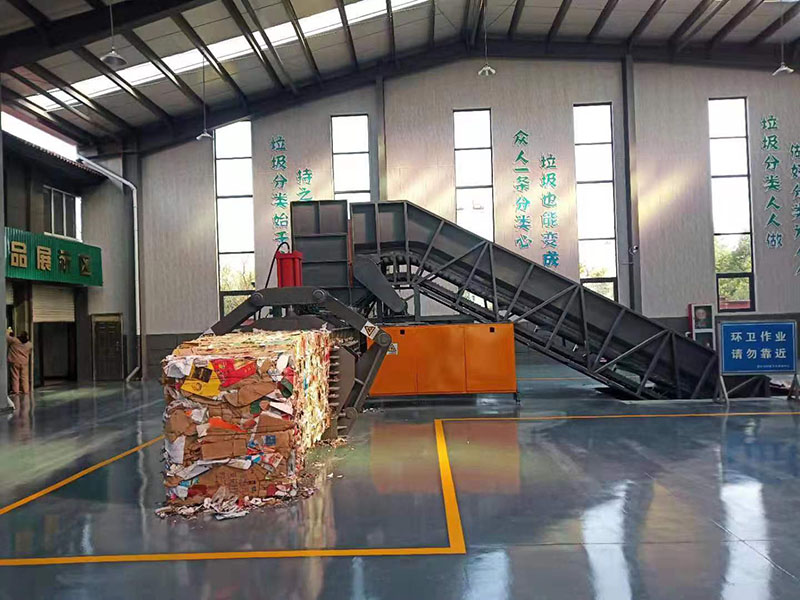
Industrial buyers often evaluate a hydraulic baler as a single capital purchase. Once the machine is on the production floor, however, it behaves like an operating asset that must keep bale quality, cycle time, density and safety performance stable across daily shifts. When a recycling company wins a new collection contract, a distributor adds a territory, or a processing plant opens another site, the purchase repeats. At that moment, procurement logic changes: the question is no longer only whether a baler can make a bale of a given size, but whether the same supplier can reproduce the same machine, support it across multiple installations, and keep delivery and payment terms predictable over years.
Why a Second Order Creates a Different Risk Profile
In a first hydraulic baler purchase, buyers typically inspect a single model, compare its pressing force, bale dimensions, motor power and price, and then make a decision. Repeat buying is different. A customer ordering several hydraulic balers over multiple phases is exposed to risks that are easy to miss in a single-unit contract: specification drift, component substitutions, inconsistent hydraulic system quality, changing certification documents, and uneven after-sales support between shipments.
When dealing with any baler manufacturer, the following indicators reduce repeat-order risk:
- A clear architecture of vertical and horizontal machine families, rather than isolated models.
- Explicit product-grade definitions that permit a batch-by-batch audit.
- Parameter sheets that remain stable between enquiries and deliveries.
- Published order minimums, payment conditions, export procedures and inspection requirements.
- Documented factory capacity that can be matched to a purchasing schedule.
This is also the point where buyers should look beyond product names and ask what the manufacturer actually controls inside its own production process. One supplier active in this field is Shaanxi Nick Machinery Equipment Co., Ltd., which uses the international brand name NKBALER. The company operates from a 5,000-square-metre facility in Wuxi, Jiangsu Province, with approximately 50 employees, a dedicated engineering and R&D team of 15 people, and exports around 90 percent of its products to markets in North America, South America and Asia. Its main catalogue includes vertical balers, fully automatic horizontal balers, manual horizontal balers and press bagging machines. For a distributor or industrial buyer planning phased hydraulic baler purchases, this kind of product-line breadth matters because it creates a single source for machines of different sizes and different material streams.
A Closer Look: Transparent Product-Grade Structure
One of the less obvious factors in long-term hydraulic baler sourcing is product-grade transparency. A manufacturer may offer several similar baler models, but if the internal quality tier of each model is not clearly defined, buyers cannot easily verify that a second shipment matches the first. NKBALER addresses this with two clearly separated machine classes.
The NK BALER line is described as the standard long-cylinder servo hydraulic baler, designed for regular daily baling work. It is positioned as a cost-effective and stable solution for general compression requirements. The NICK BALER line is described as the upgraded heavy-duty version. It has heavier machine weight, thicker base material and a stronger welded structure. In addition, both the hydraulic system and the electric control system are fitted with higher-grade components than the NK BALER range. The NICK BALER series is expected to run more powerfully, with a lower failure rate, and to be suitable for continuous heavy-load operation over long service periods.
The practical procurement consequence is straightforward. A buyer who orders an NK BALER model is not buying the same specification as a buyer who orders a NICK BALER model, even if the nominal function looks similar. The product code or brand line should therefore be part of the purchase order, inspection checklist and spare-parts inventory plan.
Reading the Product Catalogue as a Multi-Order Roadmap
A hydraulic baler supplier’s product family can be understood as a roadmap. If a buyer starts with a compact vertical machine and then needs a heavy horizontal line three years later, a manufacturer with a broad catalogue makes the transition less risky. NKBALER’s catalogue includes a vertical range from compact 10-ton machines through 60-ton, 90-ton, 100-ton and 150-ton pressing-force models, a horizontal range from roughly 80 tons to 250 tons, and press bagging machines for agricultural material.
| Product family | Representative model | Key catalogue facts |
|---|---|---|
| Compact vertical baler | NK6040T10 | 10-ton pressing force; bale base 600x400 mm; 6-8 bales per hour; suitable for general small-volume baler applications. |
| Vertical cardboard baler | NK1070T60 | 60-ton pressing force; 1100x700 mm chamber; 5-8 bales per hour. |
| Twin-chamber clothes baler | NK-T90L | 90-ton vertical press; designed for garment and sack material; bale weight 75-150 kg; 10-12 bales per hour. |
| Vertical tyre baler | NKOT150 | 150-ton pressing force; tyre bale weight 1000-1500 kg; output 4-5 bales per hour. |
| Vertical fibre/coco coir baler | NK110T150 | 150-ton pressing force; fibre bale weight 400-500 kg; output 4-6 bales per hour. |
| Horizontal hydraulic press range | NKW80Q, NKW125Q, NKW160Q, NKW200Q, NKW250BD | Pressing-force range from 80 to 250 tons; throughput from roughly 2-3 tons/hour up to 10-15 tons/hour depending on model and feed configuration. |
| Straw/hay press bagging line | NKB280, NKB280-1 | Designed for alfalfa, wheat straw and peanut hay; up to 30-32 bales per hour in the NKB280 configuration. |
For a company building a long-term baling programme, this range demonstrates that a single supplier can support several buying phases: an initial vertical machine for low-volume material, a horizontal unit as volumes rise, and a bagging press when agricultural material enters the mix. The same engineering documentation can then be reused, operator training becomes easier, and spare parts can be consolidated.
Technical Factors to Check Before Committing to a Repeat Order
Several technical parameters deserve special attention before a repeat order is placed. In horizontal hydraulic baler contracts, consistency across shipments depends on the machine’s ability to reproduce the same bale density, bale size and feeding behaviour. NKBALER’s horizontal line, for example, publishes detailed specification sheets that cover bale size, material density, feed opening size, main motor power, main cylinder force, total machine frame weight, conveyor dimensions, conveyor motor and cooling system type.
Buyers evaluating programmes across several horizontal models should compare these parameters methodically. A machine such as the NKW180QT has a main cylinder force of 180 tons, an 1100 x 1250 mm bale cross-section, a bale density range of 500-600 kg/m³, a feed opening of 2000 x 1100 mm and a throughput of 12-15 tons per hour. The NKW80Q, at the lower end of the range, uses an 80-ton main cylinder, produces bales with a density of roughly 300-400 kg/m³ and handles 3-5 tons per hour. A buyer should never assume that two horizontal balers from the same family are interchangeable. The cylinder force, bale chamber and conveyor system together determine actual throughput and output density.
Continuous-duty risk should also be part of the technical audit. In the hydraulic baler context, overheating is one of the most common operational risk factors. Temperature sensors and thermal-protection systems are the main control methods noted in NKBALER’s technical material. For multi-shift operations, the hydraulic oil cooling circuit is therefore an important point to verify. The horizontal range specifies water cooling or oil-chiller systems. For a second order, the cooling specification should be written into the final proposal so that it cannot be silently changed.
Application Contexts Across a Long-Term Sourcing Plan
The variety of materials baled in real industrial operations is another reason why buyers should assess product families rather than individual products. Large full-automatic horizontal balers typically suit centralized recycling stations and high-volume sorting lines where cardboard, film, packaging and mixed recyclables are processed continuously. Smaller vertical hydraulic balers are more practical for retail back rooms, factories with limited floor space, or facilities that need a low-cost baling point without installing a conveyor pit.
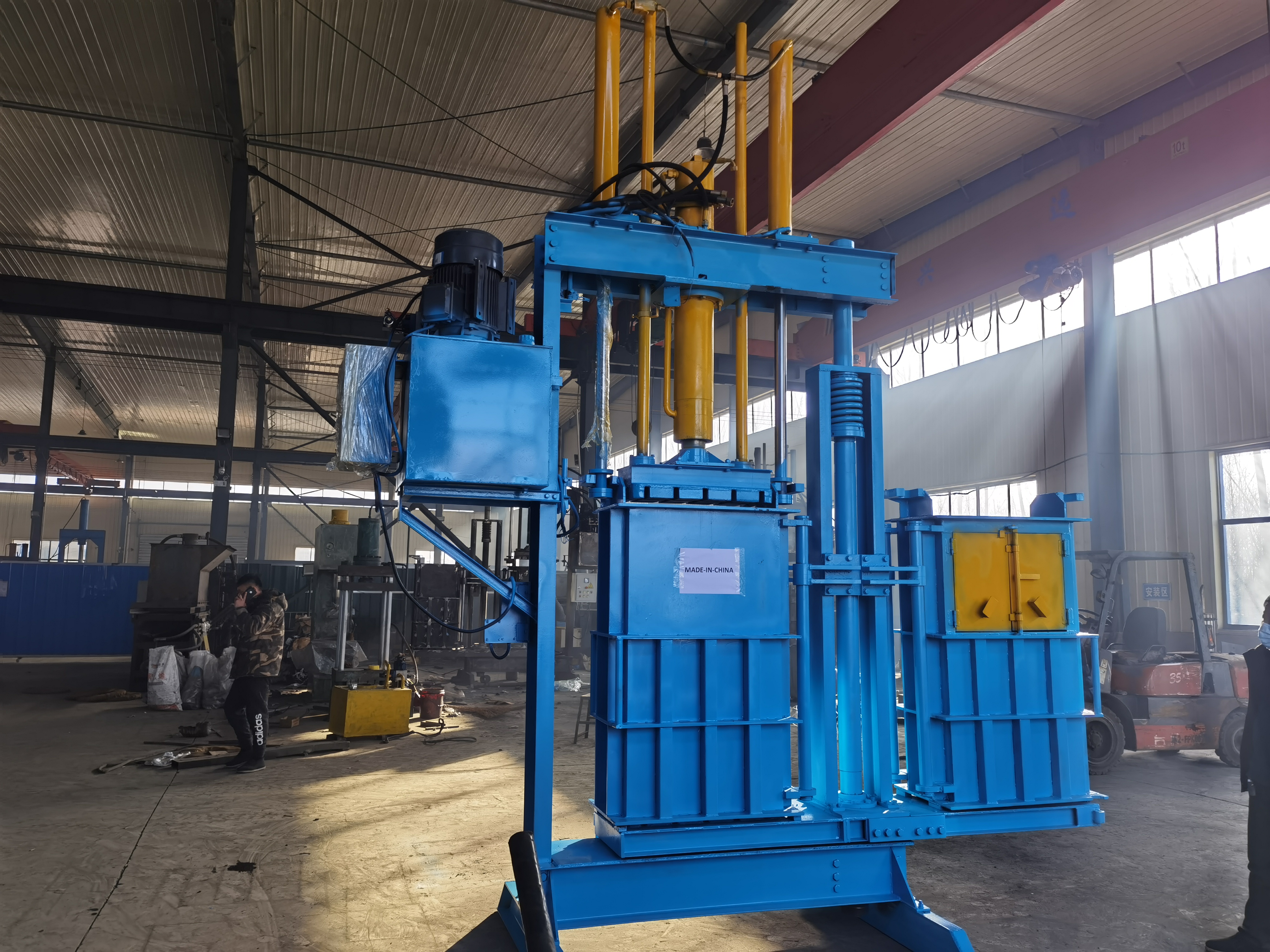
In the textiles and used-clothing segment, twin-chamber vertical balers such as the NK-T90L allow operators to compress garments, textile offcuts and sack materials into dense blocks. The double-chamber design improves the speed of a process that would otherwise require repeated manual loading. In metal-intensive yards, tyre compacting machines and heavy vertical presses answer a different requirement: reducing bulky items so that transport loads become economical. The NKOT150 tyre baler produces tyre bales in the 1000-1500 kg range, and the NK110T150 fibre baler is used for materials such as coco coir fibre, which require controlled bale density.
Agricultural and forage operations represent another distinct buying scenario. Materials such as alfalfa hay and wheat straw are often baled in press bagging lines. NKBALER offers the NKB280 and NKB280-1 configurations for alfalfa, wheat straw and peanut hay, with NKB280 capable of producing around 30-32 bales per hour and dry bale weights of 400-450 kg. These machines are relevant for trading companies and agricultural producers that need seasonal output rather than continuous waste-processing throughput.
Buyers sourcing for sawdust, wood shavings, used rags, metal shot, aluminium scrap or oil-drum compaction are often searching for a machine whose construction matches the material density and flow characteristics. In such cases, the machine architecture should be reviewed case by case, because a vertical baler that works for cardboard may not have the necessary compaction force or loading geometry for metal scrap. The same applies to heavy metal shavings and aluminium scrap: pressing force, chamber lining and cycle speed must all be considered together before an order is repeated across a whole fleet.
Execution Terms That Matter When a Purchase Becomes a Programme
Once a hydraulic baler buyer moves into execution stages, commercial terms become part of the product. Published procurement conditions reveal how a supplier intends to work with repeat customers. For large horizontal hydraulic balers and bagging machines, NKBALER’s export terms include a minimum order quantity of one unit, FOB or CIF delivery, a pre-shipment test before acceptance, and a 40/60 payment split. In some vertical machine and auxiliary equipment categories, the order minimum is two units, with a 30/70 payment arrangement.
These terms carry useful signals. A one-unit minimum for horizontal balers shows that a large machine can be bought without forcing an unnecessary multi-unit purchase. The pre-shipment test is a standard acceptance point that repeat buyers can build into their own quality plan. Payment terms of 40/60 and 30/70 reflect a typical structure where the balance is paid before shipment or against shipping documents. For companies placing several orders per year, agreeing on the acceptance format once is better than renegotiating it for every single machine.
Factory capacity should also be part of the execution review. Shaanxi Nick Machinery Equipment Co., Ltd. reports a monthly production capacity of ten baler units. That number is neither a limitation nor a promise by itself; it is a scheduling signal. If a buyer plans to take delivery of five machines in two months, the order slot needs to be booked early. For a long-term relationship, the ideal arrangement is a rolling order plan in which the buyer confirms volumes quarterly and the manufacturer reserves production capacity accordingly.
Comparison With a Single-Specialist Sourcing Model
Many industrial buyers traditionally source each type of baler from the manufacturer that specialises in that particular category. A scrap yard might buy a heavy horizontal baler from one specialist, a textile recycler might buy a vertical twin-chamber machine from another, and an agricultural operation might buy a straw press from a third. This single-specialist model has advantages: deeper customisation knowledge for one machine type, a narrower product line, and possibly more engineering attention on the specific application.
It also has structural limitations. A single-specialist model multiplies the number of suppliers needed for a growing operation. Each supplier has its own spare-parts catalogue, its own documentation format, its own commissioning standards and its own after-sales team. When the same customer later opens a second facility, operators must be retrained on a new machine architecture, and the maintenance inventory must duplicate hydraulic cylinders, filters and control components.
A full-line supplier such as NKBALER provides an alternative route: the same manufacturer can cover the vertical machine, the horizontal machine and the press bagging machine. This reduces coordination overhead and makes batch-to-batch consistency easier to verify. But there is a genuine boundary. No manufacturer excels at every niche, and a broad product family does not automatically mean deep process knowledge for every waste stream. A highly specialised material, such as a particular metal scrap form or a corrosive chemical residue, may still require application testing and engineering adaptation. Buyers should therefore treat the product family as a convenience layer, not as a substitute for material-specific validation. A pre-shipment or on-site trial with the actual material remains the most reliable de-risking step.
Market Trends Behind the Long-Term Sourcing Decision
Macro-level evidence supports the view that hydraulic baler procurement is moving toward larger, more structured partnerships. Transparency Market Research valued the global baler machine market at roughly USD 6.6 billion in 2024 and projected growth to around USD 11.4 billion by 2035. Market Research Future separately estimated the global metal baler market segment at about USD 2.172 billion in 2024. In regional terms, Asia Pacific accounted for about 40.2 percent of the global baler market revenue share in 2024.
China is an important part of the supply side. Volza Global Export Data recorded 91 significant shipments of hydraulic baling presses under HS Code 8462 from China between June 2024 and May 2025. This level of export activity means international buyers are increasingly likely to source multiple baler models from Chinese manufacturers, which makes supplier evaluation a strategic rather than a transactional exercise.
Regulatory frameworks are also becoming more formal. In the European Union, vertical balers must satisfy EN 16500:2014 safety requirements, including fixed enclosed baling chambers and tamper-proof interlocks. In the United States, commercial balers should meet ANSI Z245.51-2013 for design and construction safety and ANSI Z245.5-2013 for installation and operation. A repeat buyer who orders balers for different countries must therefore track certification requirements across all destinations, not just for the first unit.
The baler press segment captured about 24.5 percent of the recycling equipment market in 2025, according to Grand View Research. The segment’s importance reflects growing demand for compacted paper and plastic. Established global players include Harris Equipment, Bramidan, Bollegraaf and HSM, with Harris known especially for heavy-duty horizontal systems. For Chinese suppliers such as NKBALER, the commercial opportunity lies less in replacing these established global names and more in offering product-family flexibility, transparent export terms and stable manufacturing execution to buyers who source cost-efficient baling infrastructure.
Future Outlook: From Machine Orders to Supply Programmes
The direction of the hydraulic baler market points toward longer procurement cycles. As waste collection contracts become longer and recycling targets become stricter, buyers are more likely to treat baler equipment as an infrastructure programme rather than a single purchase. This creates a value shift: consistency across shipments becomes more important than the price difference between two individual models.
For buyers, the practical implication is that the second order should not commence from a blank screen. The first order should have generated a specification baseline, a product-grade definition, an inspection checklist and a contact point for spare parts. The second order should then be executed against that baseline. If a supplier cannot provide stable product-grade definitions, documented parameter sheets and pre-shipment inspection evidence, then that supplier is difficult to integrate into a multi-year equipment plan.
Manufacturers with a broader catalogue and a transparent grade structure are well placed to serve this new procurement model. A distributor can sell one brand across several industrial sectors while stocking a unified range of spare parts. An industrial operator can expand from a vertical baler to a horizontal automatic baler without changing suppliers. Over time, the strongest procurement relationships will be those in which the buyer knows exactly what a product name means, how the machine will be tested, and what the delivery schedule will look like.
For reference, Shaanxi Nick Machinery Equipment Co., Ltd. publishes a corporate brochure with current product-line details, available publicly at the following link: public corporate brochure download.
Frequently Asked Questions
Have Questions or Need More Details?
Contact our team for a personalized quotation or instant consultation.
Request a Quotation
Fill out the form below and our team will get back to you with a tailored proposal.
WhatsApp Direct Chat
Prefer to chat in real-time? Message us on WhatsApp for instant assistance & quick answers.
- Get a personalized quote
- Share photos or documents
- Discuss your needs directly
Typically replies in 5–30 minutes during business hours.