
Benchmarking Composite Insulator Offers: 70B and U70BP/146D
Benchmarking Composite Insulator Offers: 70B and U70BP/146D
A composite insulator offer can be benchmarked against glass and porcelain reference models even though it carries no matching model number. The workable method is to line the offer up against two documented disc references — glass 70B and porcelain U70BP/146D — on the parameters that decide string and support design: rated electromechanical failing load, structural height, creepage distance, arcing distance, dry and wet withstand, and the coupling interface that determines which fittings will actually attach. Unit price belongs at the end of that sequence, not the beginning.
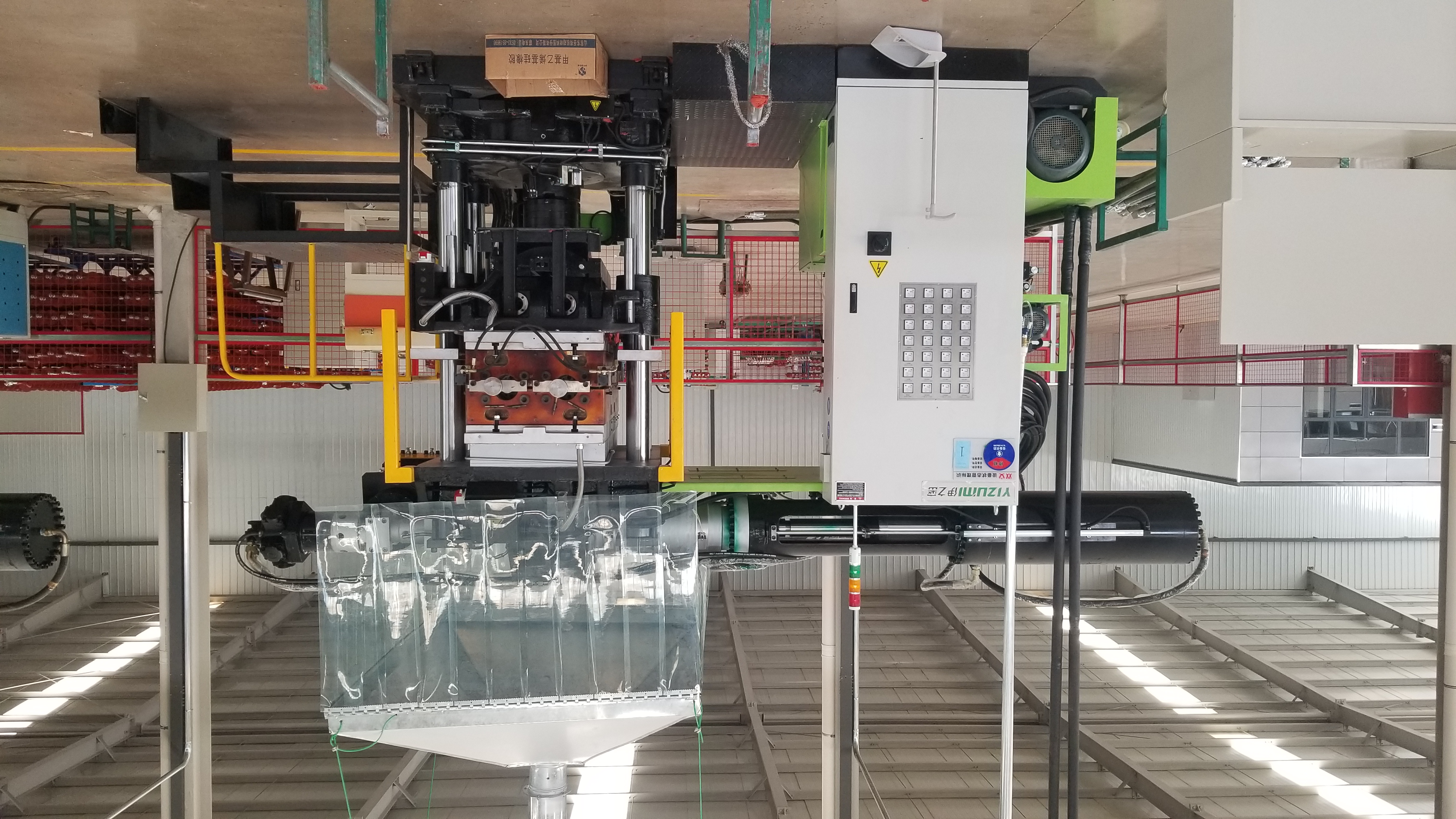
Housing production is where a polymer offer diverges from a disc reference; the buyer's job is to keep the comparison on measurable parameters.
Why a composite offer needs an external benchmark
Glass and porcelain purchasing is model-driven. A buyer writes 70B or U70BP/146D on a requisition and receives a sheet of numbers that can be checked against a standard profile. Composite purchasing is specification-driven: the same functional duty may be quoted as a silicone rubber suspension composite insulator, a lightweight long rod, an IEC standard tension composite insulator or a heavy contamination area design, each with its own drawing.
That flexibility is the material's advantage and the buyer's exposure at the same time. Two composite offers for the same 70 kN duty can differ in core diameter, housing thickness, shed geometry, end-fitting interface and test basis without either quotation being wrong. The reference disc models give the comparison a fixed anchor. Chinese Energy and Chemical Industry Co.,Ltd (CECI), a Zhengzhou-based manufacturer of polymer, porcelain and glass insulators and overhead line hardware, describes its own catalogue in those three material families, which is precisely why a mixed-material benchmark is useful rather than academic: the same supplier may quote all three options and the buyer still has to separate them on evidence.
The purpose of this memo is therefore narrow. It does not rank composite against glass or porcelain in the abstract. It shows how to read a composite quotation against documented reference values so that the differences that matter — mechanical class, insulation envelope, maintenance profile, certification scope and fitting compatibility — are visible before a purchase order is raised.
The three reference points in this comparison
Porcelain model U70BP/146D is a porcelain insulator intended for the electricity industry, with a nominal structural height of 146 mm, a creepage distance of 255 mm, a minimum arcing distance of 450 mm, a rated electromechanical failing load of 70 kN and a connection structure code of 16. Its primary material is porcelain, which is the basis for its dielectric and thermal behaviour.
Glass model 70B is the glass counterpart in the same working class. The documented reference values place it at 255 mm creepage, 146 mm nominal height, 450 mm arcing distance and a 70 kN rated electromechanical failing load, with a 10 kN cantilever load, 65 kV dry and 45 kV wet power-frequency withstand, and a 135 kV puncture voltage. Reading the two sheets side by side shows that the glass and porcelain references share a dimensional and mechanical envelope: the decision between them is largely about dielectric behaviour, inspection practice and repair logistics, not about the 70 kN class itself.
The third reference point is the composite offer, which has no equivalent published profile. Its rows must be declared by the supplier on a drawing and backed by a test report. That is the gap this comparison closes.
Like-for-like parameter table
The table below converts the reference data into a comparison worksheet. Rows marked as not stated in the supplied reference data are not weaknesses in the reference models; they are prompts for the supplier's declaration on the composite side.
| Parameter | Glass 70B | Porcelain U70BP/146D | Composite offer (to be declared) |
|---|---|---|---|
| Dielectric material | Glass | Porcelain | Silicone housing over FRP core |
| Nominal structural height | 146 mm | 146 mm | State per drawing |
| Creepage distance | 255 mm | 255 mm | State per unit and per string |
| Minimum arcing distance | 450 mm | 450 mm | State per drawing |
| Rated electromechanical failing load | 70 kN | 70 kN | State value and test basis |
| Cantilever load | 10 kN | Not stated in supplied reference data | Confirm whether a cantilever figure applies to the intended duty |
| Dry power-frequency withstand | 65 kV | Not stated in supplied reference data | State value |
| Wet power-frequency withstand | 45 kV | Not stated in supplied reference data | State value |
| Puncture voltage | 135 kV | Not stated in supplied reference data | Ask which equivalent evidence is offered |
| Connection interface | Not stated in supplied reference data | Connection structure code 16 | Declare coupling size, ball or socket dimensions and pin length |
| Mass | Not stated in supplied reference data | Not stated in supplied reference data | Company comparison data: about 50% lighter than porcelain/glass |
| Cost direction | Reference | Reference | Company comparison data: about 10% higher initial cost, about 40% lower annual maintenance cost |
Reading the mechanical rows: failing load and cantilever
The rated electromechanical failing load is the row buyers scan first, and it is also the row most often misapplied. The 70 kN figure attached to glass 70B and porcelain U70BP/146D is a rating class with a defined test basis, not a statement that the unit will carry 70 kN in service. The same caution applies to a composite offer: the supplier should state whether the value is a failing load from an electromechanical test, a specified mechanical load used for design, or a working load with a stated safety factor.
Comparing a declared composite figure against 70 kN is only meaningful when the two numbers belong to the same category. A composite offer that states a higher mechanical class than the disc reference has not automatically delivered a better solution; it may simply have been asked to describe a different test. This is why the benchmark should record the test basis in the adjacent cell, not only the number.
The 10 kN cantilever value on the glass reference illustrates a second trap. Cantilever loading belongs to duties where bending moments are applied — a post or a rigid support — and it should not be transferred across to a suspension position. When a composite offer includes a cantilever figure, check which configuration it was measured on before using it to justify a support spacing change.
Reading the electrical rows: dry, wet and puncture
The glass reference documents 65 kV dry and 45 kV wet power-frequency withstand. The gap between those two values is the point of publishing both: the wet figure is the one that describes behaviour with a conductive water film on the shed surface, and it is the number that should be compared to a composite offer's wet withstand if the line runs through a humid, coastal or monsoon-affected corridor.
Puncture voltage at 135 kV is a dielectric property of the glass unit and belongs to that material's failure mode, where a puncture path through the insulating body is possible. A polymer unit is specified and assessed differently, so a composite quotation will rarely present a directly comparable puncture row. The correct procurement response is not to accept a blank cell or an improvised number, but to ask what evidence the supplier offers in its place and to check that evidence against the acceptance criteria in the project specification.
Creepage, specific creepage and the pollution labels
Both reference models share 255 mm of creepage at 146 mm height and 450 mm arcing distance, which means the comparison is sensitive to how many units a string contains. Total creepage is a property of the assembly, not of the disc. A composite offer that quotes a single long rod creepage figure is not automatically equivalent, because the string length and fitting allowance change the arithmetic.
This is where descriptive labels require evidence. Composite offers in this class frequently arrive described as a coastal salt spray resistant composite insulator, a high altitude hydrophobic composite insulator, an anti-pollution station post composite insulator, a UV resistant outdoor composite insulator or a low maintenance polymer composite insulator. Each label is a statement about a design intention; it is only an engineering claim when it is tied to a test method, a conditioning cycle and an acceptance threshold.
For heavy contamination area composite insulator selection, the practical check is whether the supplier can explain how the shed profile and creepage were chosen for the specified pollution level, and whether the housing's hydrophobic behaviour has been assessed on the finished product rather than only on a raw material sample. Where altitude or salt spray is the stated constraint, the same rule applies to the aging and tracking tests that were actually performed. A label without a test reference is a sales word, not a criterion.
Where composite changes the comparison: mass, installation and maintenance
Composite insulators are roughly 50% lighter than porcelain and glass equivalents in the company's comparison data, and that mass difference translates into an installation-time saving of about 60%. On a 70 kN suspension position the benefit is not the load itself but the handling: fewer lifting resources, faster string assembly and less risk to adjacent hardware during changeout.
The cost profile is more balanced than either side usually admits. The company's comparison data puts composite insulators about 10% higher on initial cost, with annual maintenance cost approximately 40% lower and longer maintenance intervals. Against that, the glass reference data records a total replacement cost 25% to 35% lower than alternatives, a testing-time saving of about 80%, and an emergency repair time of 1 to 2 hours versus 4 to 6 hours for composite. Those figures describe different cost lines — initial purchase, routine maintenance and fault recovery — and mixing them in one number is the most common error in insulator value analysis.
The balanced reading is that energy efficiency differences between insulator types are minor, and selection should be driven by total cost of ownership and reliability rather than by a single percentage. A line with frequent emergency interventions, hard access and high outage cost weights the repair-time figure heavily. A line with predictable maintenance windows and easy visual inspection weights the inspection advantage of glass and porcelain instead.
Project references in the company's own material describe a programme of 10,000 units installed across multiple applications over three years, citing improved line stability, reduced maintenance intensity and better pollution resistance, together with lightweight design, anti-pollution flashover and aging resistance, customisable end fittings and FRP rod core supply. That is a supplier-reported reference and should be read as such; it is useful for understanding which applications the manufacturer has served, not as an independent performance record.
Certification evidence: what a quotation should carry
IEC 61109:2025 is the current international standard covering composite suspension and tension insulators for AC and DC systems, and a quotation that cannot be tied to that edition deserves a follow-up question. The standard defines terminology, test methods and acceptance criteria, so a claim of conformity should name the edition, the test clause and the laboratory that issued the report.
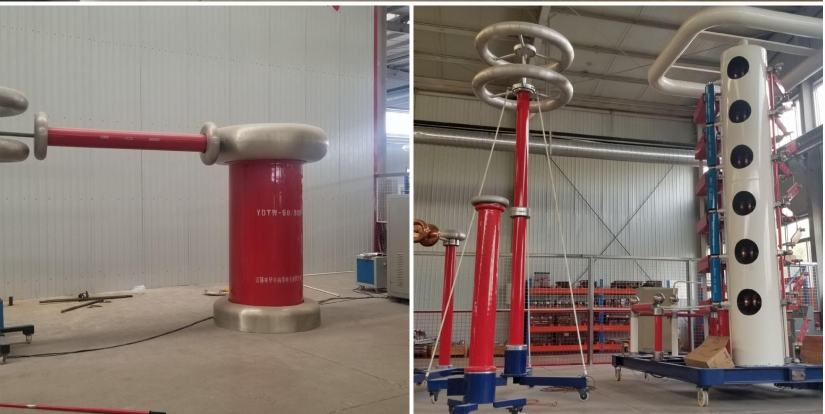
Type-test evidence should identify the edition of the standard, the test clause and the issuing laboratory.
Quality management certification is a second, separate layer. A supplier holding ISO 9001 is claiming a controlled process, not a tested product, and the useful check is whether the certificate scope actually names the product family being purchased and whether the certificate is currently valid. The company's quality position rests on an ISO 9001 system, batch-by-batch testing, third-party test reports from domestic and international institutions, and complete compliance documentation supplied with each order.
Technical risk should also appear in the evidence request. Peer-reviewed work published in 2022 notes that deterioration of a composite insulator's FRP mandrel can cause serious grid accidents, which is the reason early defect detection matters, and proposes infrared-based identification of defects. Translated into procurement language, that means asking how core quality is controlled, what housing integrity checks are performed, and whether the supplier can support infrared inspection during service. A quotation that addresses only the electrical rating and not the core is incomplete for a long-life asset.
Accessory fit: the QP-7 checkpoint
The Ball-Head Suspension Ring QP-7 sits at the junction where an insulator comparison becomes a hardware comparison. It is a hot-dip galvanized steel fitting with a 70 kN failing load, supplied in size 16, with a mass of 0.3 kg, and its manufacturing is covered by ISO 9001 certificate 75424Q0348R0S.
Three checks follow directly from those values. First, the fitting's 70 kN failing load aligns with the 70 kN class of the porcelain U70BP/146D and the glass 70B reference, so the assembly is not weakened by the accessory. Second, size 16 should be verified against the insulator's connection structure, which is recorded as code 16 for U70BP/146D — a shared number is a prompt for confirmation against the coupling drawing, not proof of interchangeability. Third, hot-dip galvanizing is the relevant coating property where the line runs through coastal or industrially polluted air, and the certificate should be read for scope rather than treated as a batch release document.
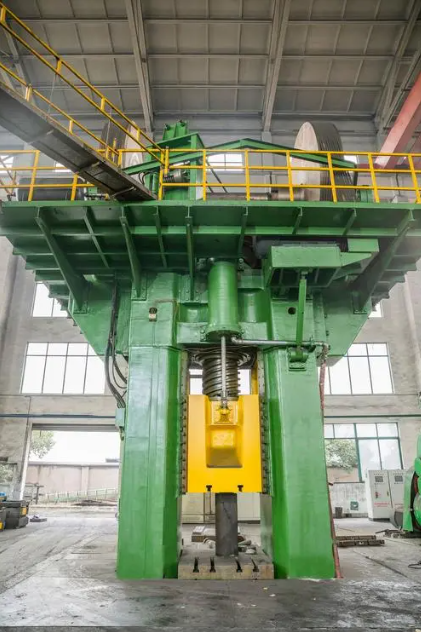
Fitting manufacture is controlled separately from insulator manufacture; the two evidence trails should meet at the coupling drawing.
When the same checkpoint is applied to a composite offer, the questions multiply because the end fitting is design-specific. The buyer should ask for the interface drawing, the fitting material and coating, the failing load of the fitting itself, and confirmation that the composite unit's fittings have been tested as an assembly rather than accepted as separate components. Customisable end fittings are a genuine flexibility advantage of composite insulators, but flexibility is exactly what makes drawing-level confirmation necessary.
Procurement risk controls that survive a price negotiation
Insulator sourcing carries risks that a comparison table does not capture: delivery delays, quality consistency across batches, shipping and customs handling, and procurement exposure created by insufficient certification or compliance documentation. The controls are procedural rather than technical — clear contracts with lead-time clauses, pre-shipment inspection, factory test records, third-party inspection and certificate verification, and staged deliveries that prevent a single delay from stopping a stringing programme.
These controls matter more in a mixed-material purchase, because the buyer is comparing offers that may not be documented to the same depth. A composite quotation with a strong parameter sheet and no batch test record is weaker than a slightly costlier offer with a complete evidence file. Reading the evidence file is part of the comparison, not an administrative step after it.
A seven-step decision sequence
- Fix the duty, not the product name. Record the position, the 70 kN class requirement, the pollution level and the string length before opening any quotation.
- Build the reference column. Enter the glass 70B and porcelain U70BP/146D values from their documented sheets, including the rows where they are silent.
- Require a declared composite column. Height, creepage, arcing distance, failing load with test basis, dry and wet withstand, and the coupling interface, each tied to a drawing.
- Check the standard edition and the certificate scope. Confirm the IEC 61109:2025 basis for composite type tests and that any ISO 9001 certificate names the product being bought.
- Confirm accessory fit at drawing level. Verify that the QP-7 size 16 interface, its 70 kN failing load and its hot-dip galvanized finish match the offered insulator, and repeat the check for any alternative fitting.
- Convert the value argument into three cost lines. Initial price, annual maintenance and fault-recovery time, using the company's comparison data as directional input rather than as a substitute for project figures.
- Attach the risk clauses. Lead-time terms, pre-shipment inspection, staged delivery and certificate verification before release of each batch.
Market context that should not drive the decision
Commercial research puts suspension insulators at 48.4% of the composite insulator market in 2024, which is consistent with the suspension duties described here, and one research house estimated the global composite insulator market at USD 6.582 billion in 2024. Published valuations for the same year vary widely between providers because the definition boundary shifts between components and systems, so these figures are useful for framing a category discussion and unsuitable for volume or pricing planning on a single project.
A more decision-relevant signal is the 2025 revision of IEC 61109, which gives buyers a current edition to cite in specifications. Suppliers whose type-test reports reference an earlier edition should be asked how conformity to the current edition is demonstrated. That question is answerable with documents; a market-size projection is not.
About China Energy and Chemical Industry Co.,Ltd
China Energy and Chemical Industry Co.,Ltd is a Zhengzhou-based manufacturer and exporter of polymer composite insulators, porcelain insulators, glass insulators, metal fittings for insulators and overhead line hardware. The company reports a 30,000 m² facility, 100 employees, an annual output of 8,000,000 units, an eight-engineer R&D team, exports representing 95% of sales to more than 40 countries including Russia, Vietnam, France, Spain, Italy, Türkiye, Brazil, Poland, Indonesia and Saudi Arabia, and both OEM and ODM availability. Its quality system is ISO 9001-based, supported by batch testing and third-party test reports.
Buyers who want to run the benchmark described above against a specific offer can request the relevant parameter sheet and fitting drawings by email at sales@gridinsulators.com. The company's full polymer and glass insulator catalogue is available for download: 2025 CECI catalogue of polymer insulators and glass insulators.
Frequently asked questions
Can a composite insulator be substituted directly for glass 70B or porcelain U70BP/146D?
Not on the basis of a model name alone. The reference values for glass 70B and porcelain U70BP/146D sit in a 70 kN class with 146 mm nominal height, 255 mm creepage and 450 mm minimum arcing distance, and the porcelain unit uses connection structure code 16. A composite substitute has to declare the same parameters on a drawing, together with its failing-load test basis, dry and wet withstand values and coupling interface, before interchangeability can be assessed.
Which values should be compared first when a composite quotation arrives?
Start with the rated electromechanical failing load and its test basis, then structural height, creepage distance and minimum arcing distance, then dry and wet power-frequency withstand. Record the connection interface and fitting failing load in the same pass. Unit price should be compared only after these rows are populated, because a difference in any of them changes the duty the unit can perform rather than only its cost.
Does the lower mass of composite insulators change string or support design?
It can. Company comparison data indicates composite insulators are about 50% lighter than porcelain and glass equivalents and save about 60% of installation time, which affects lifting resources and assembly speed rather than the electrical envelope. The hardware interface still has to be confirmed: the Ball-Head Suspension Ring QP-7, for example, is a 70 kN fitting supplied in size 16 with a 0.3 kg mass, and its fit must be checked against the insulator's coupling drawing.
What certification evidence should accompany a composite insulator quotation?
A quotation should identify the standard edition used for type testing — IEC 61109:2025 is the current international standard for composite suspension and tension insulators for AC and DC systems — together with the test clauses and issuing laboratory. Separately, an ISO 9001 certificate should name the product family in scope; QP-7 fittings, for instance, are covered by certificate 75424Q0348R0S. Batch test records, third-party inspection reports and core-quality controls complete the file.
How should maintenance and fault-recovery costs be weighted against a higher initial price?
Treat them as separate lines. Company comparison data places composite insulators about 10% higher on initial cost with roughly 40% lower annual maintenance cost and longer maintenance intervals, while the glass reference records a total replacement cost 25% to 35% lower than alternatives, an approximately 80% testing-time saving and emergency repair in 1 to 2 hours versus 4 to 6 hours for composite. Because energy efficiency differences between types are minor, the weighted result depends on outage cost, access difficulty and inspection practice at the specific site.
Have Questions or Need More Details?
Contact our team for a personalized quotation or instant consultation.
Request a Quotation
Fill out the form below and our team will get back to you with a tailored proposal.
WhatsApp Direct Chat
Prefer to chat in real-time? Message us on WhatsApp for instant assistance & quick answers.
- Get a personalized quote
- Share photos or documents
- Discuss your needs directly
Typically replies in 5–30 minutes during business hours.