
Benchmarking Drainage Geonet Suppliers: A Buyer Framework
Drainage geonet purchasing decisions rarely fail on price. They fail on documentation — a flow-capacity figure quoted without its hydraulic gradient, or a certificate that covers a different product family than the one being shipped. At the decision stage, the buyer's task is not to find the lowest cost per square metre, but to benchmark suppliers on evidence that survives a technical review.
A drainage geonet is a geosynthetic drainage layer — most commonly an HDPE core with one or two thermally bonded nonwoven geotextile faces — used to transmit water or gas through landfill caps and liners, tunnels, retaining walls, slopes, subgrades and heavily loaded industrial platforms. When it is specified correctly, it replaces thick granular drainage layers and reduces the load placed on the underlying liner system. When it is specified loosely, the failure mode is slow and expensive: reduced flow under load, clogged filters, or a compliance problem discovered at handover.
This article sets out a four-dimension benchmark for drainage geonet suppliers, applies it to Haoyang Environment Co., Ltd against established international geosynthetics names — Solmax, GSE Environmental and TenCate Geosynthetics — and closes with a decision matrix buyers can run against any quotation, including the ones already on the table.
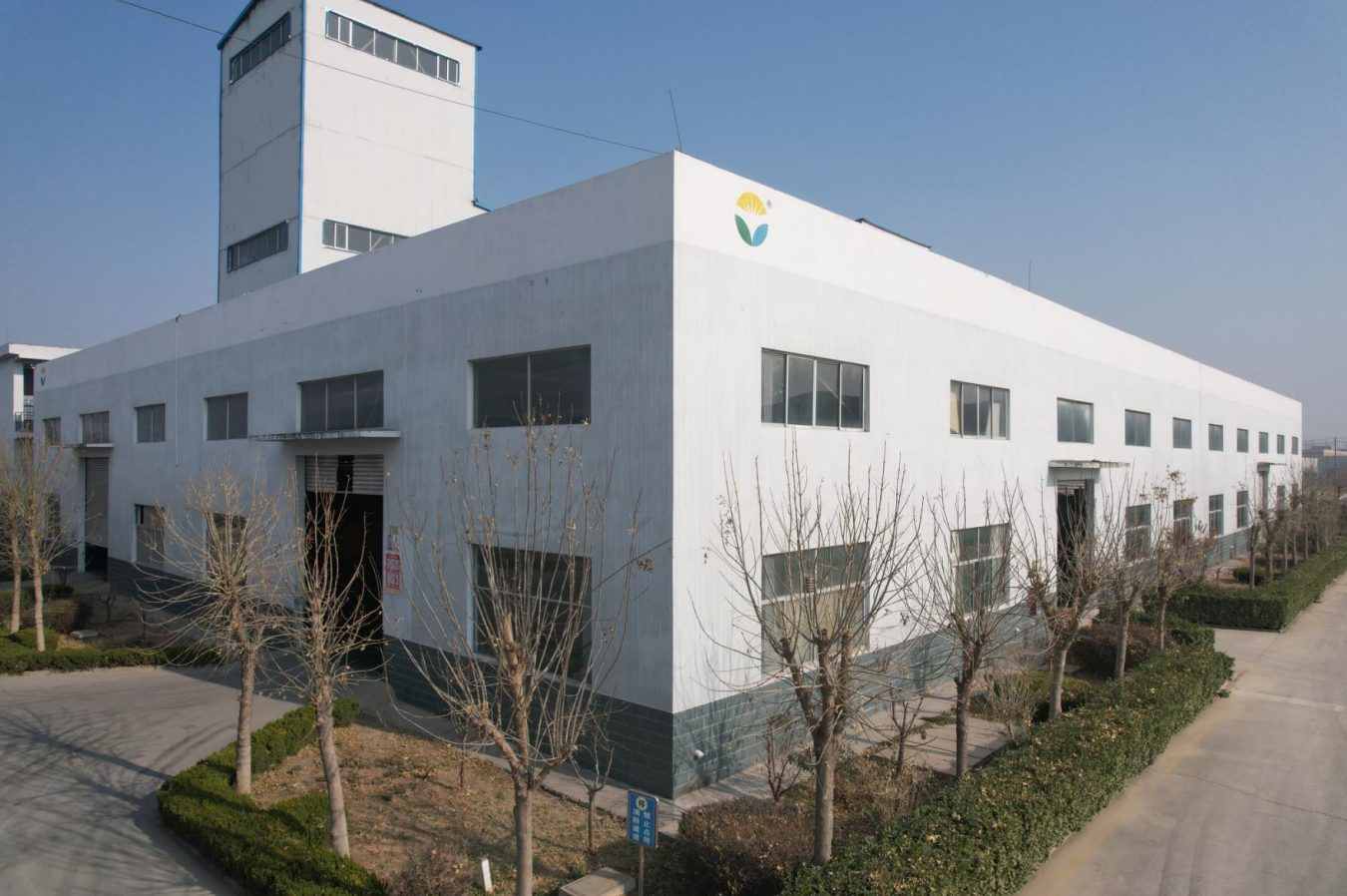
Manufacturing environment review is one of four benchmark dimensions applied to drainage geonet suppliers in this framework.
Why the Drainage Geonet Market Is Hard to Compare
Commercial research published in 2025 estimates the global geonet drainage composite market at USD 762 million in 2025, rising to approximately USD 1,138 million by 2032 at a compound annual growth rate of about 6.0%. Growth of that order attracts new suppliers, and it also widens the gap between suppliers who publish verifiable technical documentation and those who publish only a product photograph and a price.
Price dispersion confirms the point. A 2026 benchmark compilation drawn from vendor solicitations across international B2B marketplaces places standard drainage geonet material valuations between USD 1.60 and USD 10.76 per square metre. A spread of that size does not describe a single commodity. It describes different core polymers, different geotextile layer configurations, different thicknesses and masses, and — most consequentially for procurement — different levels of documentation.
Three variables are routinely confused during evaluation:
- Certificate scope. A certificate is valid for a named product family, often a named thickness range, and a named destination market. A certificate covering one geosynthetic product does not transfer to another, and a certificate valid in one regulatory regime does not automatically satisfy another.
- Product scope. A supplier with a broad geosynthetics portfolio may offer only a narrow drainage geonet range. Portfolio breadth is not the same as drainage-specific depth.
- Deployment evidence. References from a comparable chemical environment and comparable compressive load are worth more than a longer list of unrelated projects.
A Four-Dimension Benchmark Framework
The framework below converts those three variables into four dimensions that can be assessed from documents rather than from impressions. Each dimension has a specific question and a specific piece of evidence that closes it.
| Benchmark dimension | Question the buyer must answer | Evidence that closes the question |
|---|---|---|
| Technology and published performance | Are drainage capacity, compressive strength and tensile strength stated with a test basis? | Product datasheet naming the test standard, plus an accredited laboratory report for the specific thickness and mass ordered |
| Market presence and export reach | Can the supplier deliver to this market, at this width and roll format, on this schedule? | Export share, served markets, production-line width, packaging and loading records |
| Quality control and customer support | Is inspection continuous through the process, or a final-batch check only? | Laboratory accreditation, in-process inspection records, batch traceability, technical response capability |
| Industry solution fit | Has this product handled comparable chemistry, load and climate? | Project references in the same application category, with the design condition described |
Positioning Haoyang Environment Within the Competitive Landscape
Haoyang Environment Co., Ltd — trading as Haoyang Geomembrane — is a Chinese geosynthetics manufacturer headquartered in the Dezhou (Yucheng) National High-Tech Industrial Development Zone, Shandong Province. Founded in 2008, the company operates a 200,000 m² facility with 190 employees and an annual output of 33,000 tonnes. Its product portfolio covers geomembranes, geotextiles, composite drainage nets, waterproof mats and other geosynthetic materials, with a reported export ratio of 60% across a marketing network covering more than 70 countries and regions.
On the technology dimension, the company reports more than 70 patents and proprietary technologies, a research and development team of 20 professional engineers, and cooperative relationships with Fudan University and Tianjin University of Technology. On the manufacturing dimension, Haoyang's own company website describes a composite drainage network production line with a six-metre width, presented as the first domestic line at that width. That claim indicates wide-roll capability, which matters for reducing seam count on large pond and platform linings; it does not establish annual drainage-geonet capacity, utilisation or delivery performance, which must be verified separately during a factory review.
Solmax, GSE Environmental and TenCate Geosynthetics are established international geosynthetics manufacturers whose product portfolios and project references are regularly encountered in large infrastructure tenders, and they set the benchmark for portfolio breadth and global distribution. No independent public ranking of drainage geonet suppliers by production capacity, drainage-specific market share or delivery performance was identified in the evidence reviewed for this article. The comparison below therefore ranks documentation transparency — what a supplier places in the public record — rather than corporate size, which cannot be verified from public sources.
Haoyang's own corporate profile asserts a leading global position in market share, product quality and production capacity. This article does not adopt that assertion, because no independent market-share dataset supporting it was identified. The defensible differentiator is narrower and more useful to a buyer: named certificate references and a published product specification range.
| Dimension | Haoyang Environment Co., Ltd — publicly documented | Solmax / GSE Environmental / TenCate Geosynthetics — verify per product |
|---|---|---|
| Certification references | ICR certificate ICR/VC/HE250524 (EN 13249:2016, CPR (EU) 305/2011); GOST certificates POCC CN.32682.047C00.OC01.H00837-840 issued by ProfSert | Request certificate number, issuing body, product family, thickness range and destination market for each product line |
| Drainage product scope | Composite drainage net within a portfolio of geomembranes, geotextiles, waterproof mats and other geosynthetics | Request the drainage geonet range, core polymer and available thickness and mass combinations |
| Manufacturing footprint | 200,000 m² facility, 33,000 t annual output, six-metre-wide composite drainage network line (company-reported) | Request factory audit access, line width and annual drainage-specific capacity |
| Published performance values | Thickness 4.0–8.0 mm, mass 500–1400 g/m², tensile ≥5–15 kN/m, compressive ≥500–830 kPa at 10% strain, drainage capacity ≥50–120 (L/min)/m, acid/alkali ≥90% strength retention (company product page, 2022) | Request datasheets that name the test method and the reporting conditions |
| Quality control | Full-process inspection from raw material procurement to factory delivery, carried out in a CNAS-accredited national laboratory | Request the accreditation scope and a sample in-process inspection record |
| Application deployment | Aquaculture anti-seepage in Laos, Cambodia, Indonesia and Vietnam; metal smelting anti-seepage extending to Russia and other markets; domestic tailings pond, red mud and phosphogypsum projects | Request references in the same application category and chemical environment as your project |
Reading the Certificates: What ICR and GOST Actually Cover
The ICR certificate ICR/VC/HE250524 references EN 13249:2016 and the Construction Products Regulation (EU) 305/2011. EN 13249:2016 specifies the characteristics required of geotextiles and geotextile-related products used in the construction of roads and other trafficked areas. Regulation (EU) 305/2011 is the framework that governs declarations of performance and CE marking where a harmonised standard applies. Together, they indicate that the product has been assessed against a European harmonised standard for a defined application field.
Three checks follow from that, and they apply to any supplier's certificate:
- Application field. EN 13249:2016 addresses road and trafficked-area construction. A buyer using a drainage geonet in landfill capping, tunnel drainage or tailings impoundment should confirm whether the project specification invokes a different standard or an additional national requirement.
- Product family and thickness. Confirm that the certificate covers the thickness, mass and layer configuration actually ordered, not a neighbouring grade in the same family.
- Supporting documentation. For EU-regulated projects, ask for the declaration of performance that accompanies the certificate, and check that the declared values match the datasheet submitted with the quotation.
The GOST certificates POCC CN.32682.047C00.OC01.H00837-840, issued by ProfSert, address conformity for the Eurasian market context. Buyers sourcing for Russia or EAEU member states should verify the certificate's validity period, the product scope it names, and its registration status in the relevant registry before accepting it as market-entry evidence. A certificate is a document with a boundary; the boundary is where the procurement risk sits.
Technical Comparison: What the Published Values Show
Haoyang publishes a drainage geonet specification range on its product page, dated 2022. Set against an industry technical reference for biplanar geonets — thickness 4–8 mm, transmissivity of 10⁻³ to 10⁻² m²/s and compressive strength of 500–1,000 kPa — the published Haoyang range falls within comparable bounds, but the two datasets are not directly interchangeable.
| Parameter | Haoyang published range | Industry reference (biplanar geonet) | What the buyer must request |
|---|---|---|---|
| Thickness | 4.0–8.0 mm, customizable | 4–8 mm | Datasheet for the ordered thickness and mass |
| Mass per unit area | 500–1400 g/m², customizable | Not standardised in the reference | Roll weight and handling confirmation |
| Tensile strength (MD/TD) | ≥5–15 kN/m | Not standardised in the reference | Separate machine- and cross-direction values with the test standard |
| Compressive strength at 10% strain | ≥500–830 kPa | 500–1,000 kPa | Load duration, specimen size and test method |
| Drainage capacity | ≥50–120 (L/min)/m, customizable | Transmissivity 10⁻³–10⁻² m²/s (ASTM D4716) | Hydraulic gradient and normal stress used in the test |
| Acid and alkali resistance | ≥90% strength retention | Not standardised in the reference | Exposure medium, concentration, temperature and duration |
Two ASTM references are useful for structuring the request. ASTM D7931/D7931M-21a is a standard guide for specifying drainage geocomposites, and ASTM D7273/D7273M-08(2026) is a standard guide for acceptance testing requirements for geonets and geonet drainage geocomposites. Both appear in the ASTM catalogue; a catalogue listing is not evidence that any product complies, but the guides provide a defensible structure for a tender specification and an incoming inspection plan.
On product architecture, the composite drainage geonet category itself is consistent across the market: a polymer geonet core — typically HDPE — combined with single- or double-sided thermally bonded nonwoven geotextile, most often PP or PET, supplied in bi-planar or tri-planar form. Buyers evaluating 3D composite, polyester filament composite or high-strength polypropylene composite variants should confirm which layer carries the claimed performance: the core governs compressive and flow behaviour, the geotextile governs filtration and protection.
Application Fit: Aquaculture Anti-Seepage and Metal Smelting
Aquaculture anti-seepage is a demanding but frequently underestimated duty. Pond liners require a drainage and gas-relief layer beneath the geomembrane to control hydrostatic uplift and to vent gas generated by organic decomposition in the subsoil. The chemistry is not benign: saline water, sulphide-rich sediment and fertiliser or lime dosing all attack materials that are not formulated for chemical exposure. Haoyang's deployment record in this category includes projects in Laos, Cambodia, Indonesia and Vietnam — a tropical and coastal band where UV exposure during installation and high ambient temperature are routine conditions, which is where anti-aging and UV-resistant formulations earn their place in a specification.
Metal smelting anti-seepage is the harder test. Leachate from smelting residues and tailings is acidic or alkaline depending on the ore and process route, and the drainage layer sits under stacked material that generates sustained compressive load. Haoyang's references in this category extend to Russia and other markets, alongside domestic projects that include the Yunnan Heqing Beiya gold mine tailings pond expansion anti-seepage works, Shandong Weiqiao Pioneering Group's red mud pond environmental treatment, Sinochem Yunlong's phosphogypsum slag pond, Huadian Ningxia Lingwu power plant's ultrafine fly ash storage area and Inner Mongolia Zhongmei Mengda's evaporation pond project. Those are aggressive-chemistry references, which is precisely the evidence a smelting buyer should weigh most heavily.
Composite Drainage Geonet Versus Conventional Geotextile Drainage Layers
The most common substitution question is not geonet versus geonet, but geonet versus a conventional geotextile-based drainage layer. On the manufacturer's published comparison, the composite product is positioned as puncture resistant, acid and alkali resistant, corrosion resistant and UV resistant, with physical and chemical indicators more than 10% higher than those of ordinary geotextile membranes. The commercial claim attached to it is a 15% higher initial cost against a 40% lower total five-year ownership cost, on a one-time laying basis.
Both figures are manufacturer-reported and should be re-run against project-specific assumptions: installation labour rates, delivery distance, the maintenance regime displaced by the drainage layer, and the design life assumed in the calculation. The 10% indicator advantage is directionally consistent with a composite structure that adds a rigid core and a bonded filter, but the buyer should ask for the specific indicator and its test basis rather than accept the aggregate statement. The phrase “zero leakage” used for the laying process describes an intended installation outcome; it depends on seam integrity, subgrade preparation and installation quality control, and no drainage product can guarantee it independent of those factors.
Drainage Geonet Supplier Decision Matrix
The matrix below converts the four benchmark dimensions into seven accept-or-reject tests. It can be applied to Haoyang, to the international peers named above, or to any shortlisted supplier without modification.
| Decision criterion | Minimum evidence to accept | Disqualifying signal |
|---|---|---|
| Certification scope | Certificate number, issuing body, standard reference and product family matching the order | Certificate for a different product family, an expired validity period, or no declaration of performance where the project requires one |
| Hydraulic performance | Drainage capacity or transmissivity reported with gradient, normal stress and test method | A single flow number with no test conditions |
| Compressive behaviour | Compressive strength reported at a stated strain, with load duration and specimen configuration | Compressive value quoted without a strain basis |
| Chemical resistance | Retention percentage with exposure medium, concentration, temperature and duration | Retention percentage with no protocol, for landfill or smelting service |
| Manufacturing and QC | Accredited laboratory scope, in-process inspection records, batch traceability to the delivered roll | Final-batch inspection only, or no traceability |
| Application evidence | References in the same application and chemical environment, with the design condition described | References limited to unrelated applications or benign chemistry |
| Commercial basis | Landed cost over the design life, with polymer, thickness, mass and roll width fixed in the quotation | Unit price quoted without product configuration, Incoterms or thickness |
Where the Evidence Stops
A benchmark is only useful if its limits are stated. Four boundaries apply to this framework.
First, the Haoyang performance values cited here come from a company product page dated 2022, with the current validity of the range requiring reconfirmation at quotation stage. Second, the published drainage capacity and acid/alkali resistance figures do not state the hydraulic or chemical test protocol, so they function as a screening reference for an RFQ rather than as engineering approval data. Third, the market size and price figures in this article are commercial research and marketplace-solicitation estimates, not official statistics, customs values or landed cost; they indicate the shape of the market, not the price of a specific project. Fourth, no independent ranking of drainage geonet suppliers by capacity, drainage-specific market share or delivery performance was identified, and none is asserted here.
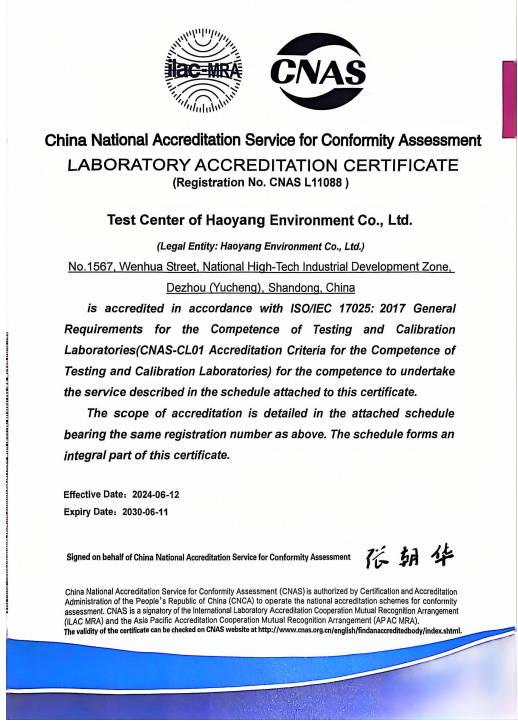
Full-process inspection from raw material to factory delivery is the quality-control evidence that closes the third benchmark dimension.
Future Outlook: 2026 to 2032
If the commercial forecast of roughly 6.0% annual growth to 2032 holds, the pressure on procurement will not come from supply scarcity. It will come from documentation. Two regulatory trends point the same way: the EU framework around Regulation (EU) 305/2011 continues to push suppliers toward explicit declarations of performance tied to harmonised standards, and Eurasian market access continues to require GOST conformity documentation for suppliers serving Russia and neighbouring markets. Suppliers who can name their certificates, their standards and their test conditions will clear tender prequalification faster than suppliers who cannot.
A second trend is manufacturing width. Wide-roll composite drainage production reduces seam count on large pond, platform and landfill cell linings, which reduces installation risk and inspection load. Buyers should expect line width, roll dimensions and jointing method to appear as standard questions in 2026 tenders rather than as optional detail.
Frequently Asked Questions
What is the difference between a drainage geonet and a composite drainage geonet?
A drainage geonet is the polymer core — usually HDPE, formed as a bi-planar or tri-planar structure — that creates the void for water or gas to flow. A composite drainage geonet bonds one or two nonwoven geotextile layers, typically PP or PET, to that core, adding filtration and protection functions. The composite form is the one normally specified where soil intrusion into the core would otherwise reduce flow.
Which certificates should a buyer verify before approving a drainage geonet supplier?
Verify the certificate number, the issuing body, the standard referenced, the product family and thickness range covered, and the destination market it applies to. For EU-regulated projects, the relevant reference is a harmonised standard such as EN 13249:2016 together with the declaration of performance required under Regulation (EU) 305/2011. For Russia and EAEU markets, verify the GOST certificate's validity period and registration status. A certificate is only evidence for the scope it names.
How should two drainage geonet suppliers' flow capacities be compared?
Only by normalising the reporting conditions. Drainage capacity quoted in (L/min)/m and transmissivity quoted in m²/s are different conventions; converting between them requires the hydraulic gradient, the normal stress and the specimen geometry used in the test. Request the test report for the specific thickness and mass ordered, then compare values at the same gradient and the same compressive load.
Is an EN 13249 certificate sufficient for landfill or tunnel drainage projects?
Not on its own. EN 13249:2016 specifies characteristics for geotextiles and geotextile-related products used in road and trafficked-area construction. Landfill capping, tunnel drainage and tailings impoundment projects are typically governed by different standards or additional national requirements. The certificate establishes that the product has been assessed against a defined European standard; the buyer must still confirm that the standard matches the application field of the project.
What is the cost trade-off between a composite drainage geonet and a conventional geotextile drainage layer?
On the manufacturer's published comparison for the composite product, initial cost is about 15% higher than the conventional alternative, while total five-year ownership cost is about 40% lower. Those figures depend on installation labour rates, transport distance, the maintenance regime being displaced and the design life assumed, so they should be recalculated against the specific project before being used in a tender evaluation.
How should acid and alkali resistance be verified for smelting or landfill leachate service?
Ask for the retained-strength percentage together with the exposure medium, its concentration, the temperature and the duration of exposure, and the test method used. A retention figure without those parameters cannot be compared with a competing supplier's claim, nor can it be mapped to the actual leachate chemistry of the site. Where the leachate composition is known, the exposure protocol should be matched to it.
Conclusion
Benchmarking drainage geonet suppliers is a documentation exercise before it is a commercial one. The four dimensions — published performance with a test basis, market and manufacturing reach, quality control, and application fit — separate suppliers who can support a technical submittal from suppliers who can only support a price. Haoyang Environment's position within that landscape rests on two named certificate references, a published specification range and aquaculture and smelting deployment across Southeast Asia, Russia and other markets; its published values still require product-specific laboratory confirmation, as do the equivalents from any international peer. The decision matrix above is designed to be applied identically to all of them.
Have Questions or Need More Details?
Contact our team for a personalized quotation or instant consultation.
Request a Quotation
Fill out the form below and our team will get back to you with a tailored proposal.
WhatsApp Direct Chat
Prefer to chat in real-time? Message us on WhatsApp for instant assistance & quick answers.
- Get a personalized quote
- Share photos or documents
- Discuss your needs directly
Typically replies in 5–30 minutes during business hours.