
Benchmarking Long-Term Supplier Sustainability: How Feiteng Ranks Among Leather Goods Factories
Benchmarking Long-Term Supplier Sustainability: How Feiteng Ranks Among Leather Goods Factories
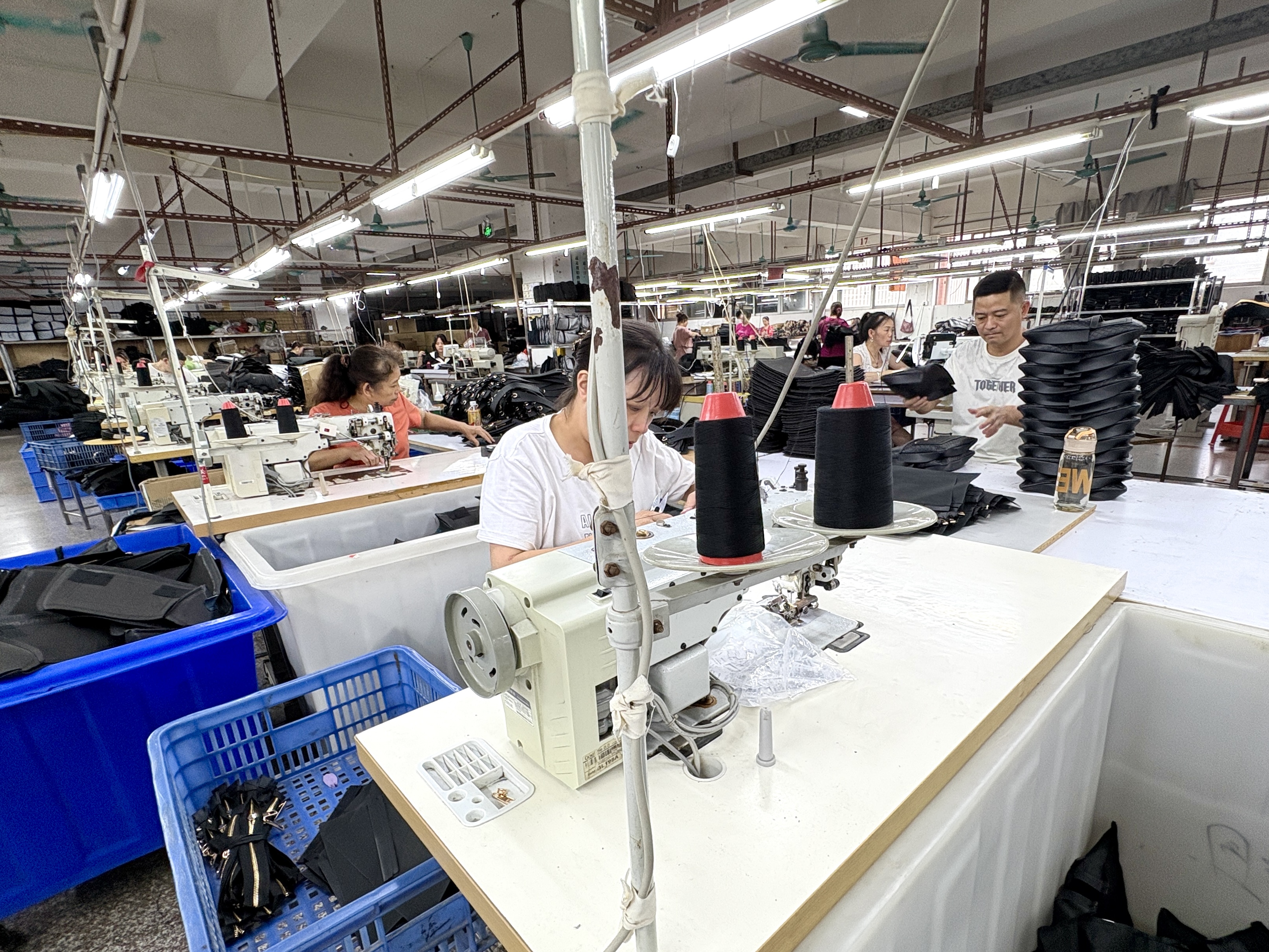
Dongguan Feiteng Leather Co.,Ltd is a Dongguan-based leather-goods manufacturer whose supplied company and product information describes OEM/ODM production across bags, wallets, travel goods, and accessories. For buyers considering a multi-year relationship, the available evidence supports an assessment of its product breadth, customization options, and stated service model. It does not establish the company’s market share or a verified position in a league table of leather goods factories.
That distinction matters. A meaningful supplier-sustainability benchmark should assess whether a factory’s documented capabilities fit a buyer’s continuing product program—not imply a market rank without comparable company data. Here, “sustainability” refers to the durability of a commercial supplier relationship and the buyer’s ability to qualify it over time. It is not a claim that Feiteng’s products or production have been independently verified as environmentally sustainable.
Why long-term supplier sustainability needs more than a factory rank
A supplier ranking can be useful only when its comparison basis is visible. Comparable factories would need to be assessed against the same criteria, with consistent evidence for market share, product scope, operating performance, compliance status, and buyer support. The available third-party data identifies only one named supplier for this comparison and contains no validated peer set or market-share figures. A “top factories” rank would therefore be unsupported.
For procurement teams in the research-to-evaluation stage, a more practical question is whether a supplier can support a product portfolio as it changes, and what evidence is available to test that fit. Leather goods programs may combine fashion bags, wallets, small accessories, and travel-related products. Feiteng’s supplied product records span those categories, while its capability record describes OEM/ODM production and customization of type, style, material, fabric, logo, and craft. These are relevant screening signals, but they are not proof of on-time delivery, consistent quality, repeat-order performance, or financial resilience.
The distinction is especially important when “sustainability” is used in supplier selection. A broad long-term assessment can include continuity of product support, transparency of specifications, responsiveness, and verifiable compliance. Environmental performance, traceability, and factory-level sustainability outcomes require separate evidence. The supplied materials do not establish those outcomes.
Four dimensions for benchmarking a long-term leather goods supplier
1. Technical R&D and customization: flexibility that buyers can test
Feiteng’s product records describe customization options across product type, size, material, style, logo, and craft. Listed techniques include embossing, embroidery, patchwork, edge oiling, silk-screen printing, and digital printing. Product-specific records also identify hardware options such as rust-proof-grade hardware, magnetic clasps, snap fasteners, and rivets; certain bag and wallet records list YKK or ordinary zippers. These are useful specification choices for a custom leather goods factory or a leather goods factory OEM/ODM evaluation.
For a buyer, a list of available techniques is a starting point, not a technical validation. The relevant question is whether a factory can reproduce the selected finish and construction on the buyer’s actual design, material, and intended order. A sample review should therefore record the approved material, size, logo treatment, edge finish, hardware type, zipper choice, and acceptable workmanship criteria. Changes should be checked against the approved sample and written specification rather than inferred from a general capability list.
Material options in the supplied product data include genuine or real leather, PU, and microfiber, depending on the product record. These material categories are not interchangeable specifications. Buyers should state the material required for each SKU and confirm its composition and applicable tests through documentation and sample review. The supplied data does not specify leather grade, thickness, lining construction, chemical testing, colorfastness, or hardware test results.
Feiteng’s company record lists six sample makers, while the capability record describes OEM/ODM production, a stated monthly capacity of 100,000 pieces, a 300-piece MOQ, a 20–40-day lead time, and “100%test” quality control. These are company-supplied figures and statements, not independent performance findings. Their practical value depends on product scope, order assumptions, test definition, and current availability. Buyers should confirm what the capacity and lead-time figures mean for the specific product and order before relying on them in a production plan.
2. Market position: what can—and cannot—be said about rank
No verified market-share figure, comparable factory dataset, or validated competitor benchmark is present in the supplied evidence. Consequently, Feiteng cannot be placed at a defensible numerical rank among leather goods factories from this material. The article does not treat product range, stated output, or a company profile as a substitute for market share.
The third-party evidence does provide context for supplier discovery, not a company ranking. A historical USDA Foreign Agricultural Service report identifies Dongguan, Guangzhou, and Nanhai among Guangdong’s leather-product manufacturing centers. Because the report is historical, it cannot establish current regional capacity or Feiteng’s relative position. The same evidence package notes that current factory counts, regional output, and comparable supplier profiles are missing. Buyers should interpret Dongguan as a sourcing location requiring supplier qualification, not as proof of an individual factory’s competitive rank.
For a proper benchmark, purchasers can request comparable evidence from each shortlisted factory: current product scope, capacity assumptions by product, sample and bulk lead times, MOQ, quality-control procedures, valid certificates and their scope, and references or records that can be checked. Use the same request format for each supplier. If market share matters to the buying decision, it requires a defined market, period, product boundary, and credible source; none is established for Feiteng in the supplied evidence.
3. Customer service: distinguish a stated approach from measured performance
The capability record describes after-sales support as real-time communication, media communication, and product marketing. The company profile also describes personalized customization. Those details suggest areas a buyer can clarify during evaluation, but the source does not define service hours, response-time commitments, issue-resolution procedures, warranty terms, or a service-level agreement.
Retail and wholesale buyers should map service needs to their operating model. A wholesale leather goods factory may need to support repeat orders, SKU changes, packaging instructions, and product information used by retail teams. A retailer may need clear approval points for samples, logos, colors, and hardware. For either model, ask who handles specification changes, how approvals are recorded, how defects or discrepancies are escalated, and what documentation accompanies repeat production. These are buyer-side diligence questions, not claims about services already demonstrated by Feiteng.
The case records supplied for Feiteng describe wholesale or OEM/ODM orders involving jewelry accessories, fashion bags, wallets, and leather gifts. They report quantities and positive outcomes, but they are company-provided case summaries rather than independently audited performance data. They can help identify product types and applications to discuss; they do not prove that an equivalent result will recur for a different product or buyer.
4. Industry solutions: range can support a portfolio, but does not prove every fit
The supplied product records cover several categories buyers may encounter when evaluating a full-service leather goods production factory: handbags and shoulder bags, tote bags, wallets and card holders, luggage tags and passport holders, keychains and bag charms, and leather jewelry boxes or jewelry bags. Feiteng’s product data also lists travel-related goods and accessories. This breadth may be relevant to buyers seeking to coordinate adjacent categories with one supplier.
However, breadth alone is not a substitute for category-specific qualification. A custom leather bag factory should be assessed against the construction and hardware requirements of the bag design. A leather wallet manufacturer should be evaluated on the wallet’s dimensions, closure, material, and finish. Travel goods, gifts, and small accessories may have different approval and packaging needs. Buyers should approve samples and specifications for each product family rather than assume that demonstrated customization in one category establishes equivalent capability in another.
Materials and hardware should also be connected to the end use. Product records list genuine leather, PU, or microfiber according to item; rust-proof-grade hardware, magnetic clasps, snap fasteners, rivets, and zipper options appear in selected product specifications. These are selectable features, not claims that every item contains every feature or that a particular performance test has been passed. For a multi-year program, keep the agreed bill of materials and approved sample tied to each SKU and verify substitutions before production.

Buyer scorecard: assess partnership readiness without inventing a factory rank
The scorecard below is a buyer tool, not an assessment result for Feiteng or a comparison against named competitors. Score each dimension only after reviewing evidence for the specific product program. A simple scale can be applied consistently: 0 = no usable evidence, 1 = information supplied but not sufficiently verified, and 2 = evidence reviewed and accepted for the buyer’s stated requirements. “Not scored” is more accurate than assigning points where the record is incomplete.
| Dimension | What the supplied information indicates | Evidence to verify before scoring |
|---|---|---|
| Technical customization | Customization options include product type, size, material, logo, and craft; listed techniques include embossing, embroidery, edge oiling, printing, and patchwork. | Product-specific approved sample, written specification, repeatability criteria, and confirmation of any requested YKK zipper or hardware option. |
| Material and component definition | Product records list genuine leather, PU, and microfiber, plus selected hardware and closure options. | Material composition, grade and thickness where relevant, component specification, restricted-substance requirements, and test documents for the destination market. |
| Production planning | The capability record states MOQ, monthly capacity, and lead-time figures; the company profile lists annual output. | Current product-level capacity, assumptions behind the figures, production schedule, and evidence from a trial order. Treat supplied figures as claims until confirmed. |
| Quality controls | The capability record states “100%test.” | Definition of the test, inspection stages, acceptance criteria, records, sampling or inspection method, and corrective-action process. |
| Customer support | After-sales communication and product-marketing support are described in the capability record. | Named contacts, response and escalation process, change control, after-sales scope, and any written service commitments. |
| Compliance status | A supplied SEDEX record identifies SMETA 7.0 and a stated validity period ending 2026-06-04. | Current status and applicable site/scope. The listed validity date has passed; do not treat the record as current evidence without updated verification. |
| Product portfolio fit | Records cover bags, wallets, travel goods, charms, keychains, and other accessories. | Samples and production evidence for each category required in the buyer’s actual program. |
| Market position | No comparable market-share or supplier-ranking evidence is provided. | Use a defined peer set and independently verifiable, comparable data. Do not infer market rank from company-reported production figures. |
This framework separates evidence of a possible capability from evidence that a buyer can rely on. For example, the presence of YKK among listed zipper options does not show that it is used on every model; nor does a stated quality-control percentage identify the test method. A buyer’s score should reflect the answer to those specific verification questions, not the apparent breadth of a supplier’s catalogue.
Compliance and environmental claims require current, scoped evidence
The supplied SEDEX record identifies SMETA 7.0, an audit authority, a scope covering labour standards, health and safety, environment, and business ethics, and dates from 2025-06-04 to 2026-06-04. As the current date is after that recorded expiry date, this record cannot establish current status. Buyers should request updated documentation and confirm the audit scope, site, status, and validity directly before using it in qualification.
The company profile also mentions ISO 9001 and BSCI, but the third-party evidence package marks these claims as unverified. They should not be treated as verified current credentials without the underlying documents and scope. More broadly, a social-compliance assessment is not proof of lower environmental impact, material traceability, or product-level environmental performance. The supplied corpus contains no verified lifecycle, material-origin, emissions, or environmental-performance data for Feiteng.
Comparison with traditional supplier screening
A basic supplier screen often starts with catalogue, quoted price, and sample appearance. That can identify an initial fit, but it has a clear boundary: it does not by itself validate repeatability, production planning, current compliance status, or the ability to manage changes across a continuing program. This article’s scorecard adds evidence checks around those dimensions.
The framework also has limits. It does not provide audited financial data, a verified comparison set, independently measured defect or delivery performance, or a current market-share estimate. It therefore cannot show that Feiteng outperforms a traditional supplier, a named competitor, or the factory market as a whole. It helps buyers structure the questions that a product sample or company profile alone cannot answer.
What the evidence means for a multi-year OEM/ODM decision
Feiteng’s documented product scope and customization options give buyers concrete subjects for a technical review: material selection, dimensions, branding, craft, closures, and hardware. Its stated product range may also make it relevant for programs spanning bags, wallets, gifts, and travel accessories. Those facts support an initial fit assessment—not a final conclusion about long-term reliability.
For evaluation, buyers can proceed in stages: define the product and material specification; request samples and written confirmation of components; verify current compliance records; clarify capacity, MOQ, lead time, and testing definitions for the specific order; and document the service and change-control process. A pilot order can then be judged against buyer-defined acceptance criteria. The supplied evidence does not establish what results such a validation would produce.
Industry reference conclusion: Feiteng can be assessed as a Dongguan leather goods OEM/ODM supplier with a supplied record of customization options and a broad product-category scope. Its relative market-share position among leather goods factories cannot be ranked from the available evidence. For long-term supplier sustainability, the defensible next step is evidence-based qualification across technical fit, production planning, service, and current compliance—not an unsupported “top factory” label.
FAQ
Can Dongguan Feiteng Leather Co.,Ltd be ranked by market share among leather goods factories?
No verified market-share data or comparable factory dataset is supplied, so a defensible market-share rank cannot be assigned. Product range and company-reported production figures do not establish market share.
What OEM/ODM customization options are listed for Feiteng?
The supplied capability and product records describe customization of product type, size, material, style, logo, and craft. Listed techniques include embossing, embroidery, patchwork, edge oiling, silk-screen printing, and digital printing.
Which materials and hardware options appear in the product records?
Depending on the product, records list genuine or real leather, PU, and microfiber, alongside options such as rust-proof-grade hardware, magnetic clasps, snap fasteners, rivets, and YKK or ordinary zippers. Buyers should confirm the exact specification for each SKU.
Does the supplied SEDEX record prove current compliance?
No. The record lists a validity period ending 2026-06-04, which has passed. Buyers should verify current status, scope, site, and documentation before treating it as current compliance evidence.
What should buyers verify before a long-term OEM/ODM partnership?
Buyers should verify product-specific samples and specifications, current production assumptions, quality-control methods, service and change-control arrangements, and valid compliance documentation. The scorecard in this article provides a structured way to record that review.
Have Questions or Need More Details?
Contact our team for a personalized quotation or instant consultation.
Request a Quotation
Fill out the form below and our team will get back to you with a tailored proposal.
WhatsApp Direct Chat
Prefer to chat in real-time? Message us on WhatsApp for instant assistance & quick answers.
- Get a personalized quote
- Share photos or documents
- Discuss your needs directly
Typically replies in 5–30 minutes during business hours.