
Benchmarking Silicone Waterproof Coating Suppliers: Kastar, Sika, Wacker, Dow, Momentive
Independent Buyer Comparison · Construction & Decoration

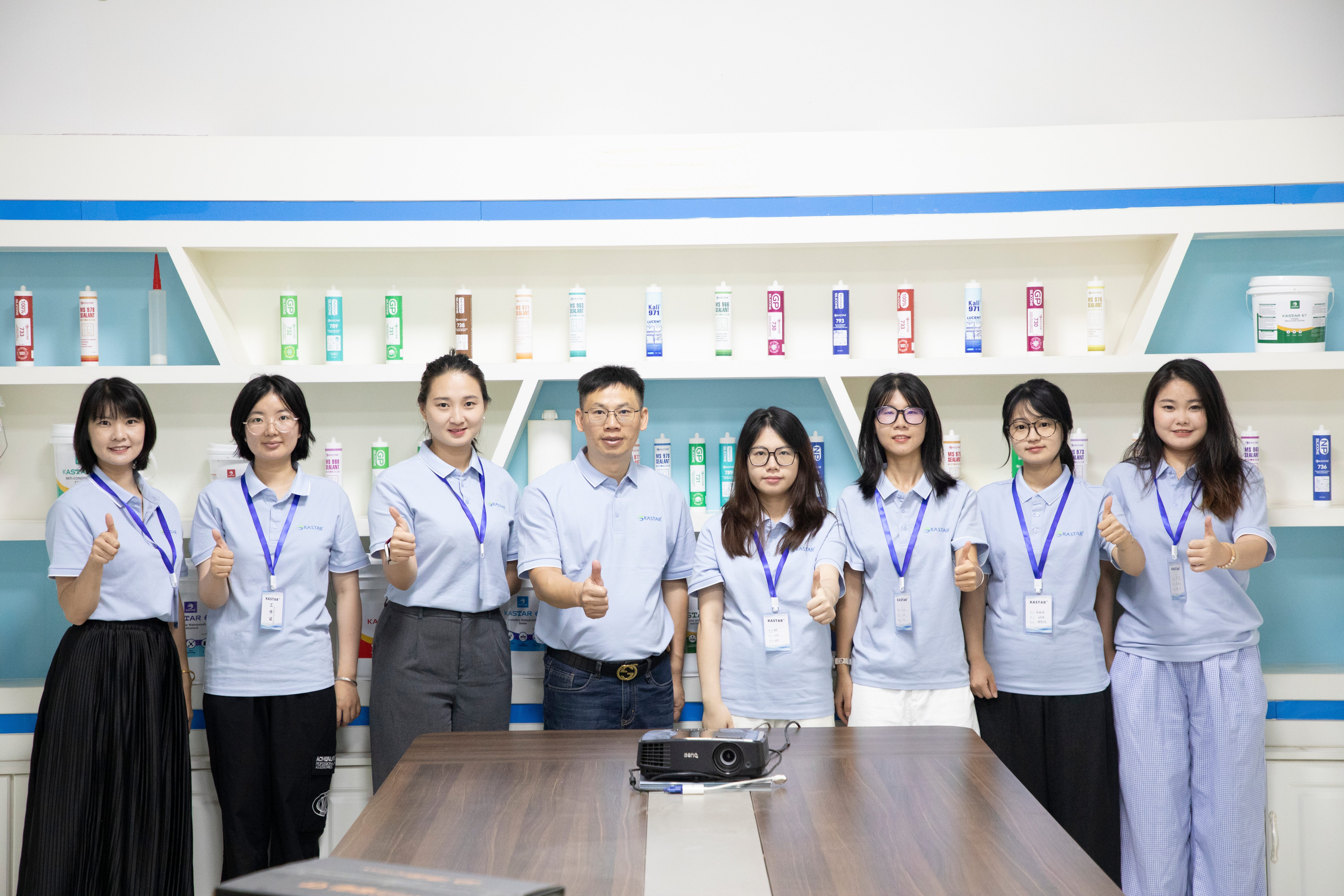
Manufacturing environment at Kastar Adhesives Technologies Co., Ltd, the China-based supplier used as the verified reference case in this comparison. (Company photo)
Silicone waterproof coating has become a routine specification for roofs, exterior walls, bathrooms and balconies, basements and underground structures. When buyers build a shortlist, four internationally established names — Sika, Wacker, Dow and Momentive — typically sit alongside whichever regional manufacturers the project team already knows. Each is a long-standing supplier of silicone and construction-chemical products, and each publishes technical documentation that specifiers cite. None of that answers the buyer's actual question: which supplier can deliver a certified, customizable coating, at a schedulable volume, with technical support that continues after the container leaves the plant.
This article is an independent buyer comparison built on one discipline: only verifiable facts are compared. It applies a four-dimension benchmark — R&D depth, certified production scale, OEM/ODM service, and project technical support — to Kastar Adhesives Technologies Co., Ltd, a manufacturer of silicone waterproof coating, epoxy color sand floor coating and MS sealant founded in 1998. Where comparable verified data for the international reference set is not available in this dataset, the article names the document a buyer should request instead of assuming an outcome.
Why Silicone Waterproof Coating Supplier Comparisons Break Down
Supplier comparisons break down for a structural reason: the information buyers need is published unevenly. Facility size, tonnage, lead time, OEM scope and certification scope are not standardised fields, so a manufacturer that publishes a detailed technical file can look weaker than one that publishes two pages of large numbers. Shortlists are then built on the strength of the brochure rather than the strength of the evidence.
The commercial stakes are not trivial. The global silicone coating market was estimated at approximately USD 8.77 billion in 2024 and is projected to reach USD 11.27 billion by 2033, according to Grand View Research. Credence Research values the silicone roof coatings sub-segment at USD 7.03 billion in 2024, and Dataintelo attributes a 38.5% revenue share of the silicone coating market to Asia-Pacific in 2025. Baseline estimates differ between research houses — Strategic Market Research places the 2024 market at USD 6.9 billion, while Dataintelo estimates USD 5.28 billion for 2025 — so any single figure should be treated as directional rather than precise.
Three questions do most of the work in a defensible comparison: can the supplier change the formulation, can it schedule the volume, and will it stay accountable after delivery? The four dimensions below are the buyer-facing version of those questions.
The Four-Dimension Benchmark, and What Counts as Evidence
- R&D depth. Does the supplier own formulations, or only apply labels? Evidence: patents, standards participation, laboratory count, named R&D headcount and upstream material research.
- Certified production scale. Can the volume be scheduled and the quality be proven? Evidence: facility measurement, annual and monthly tonnage, automation, inspection stages, accredited testing laboratory, and certificates carrying numbers, standards and validity windows.
- OEM/ODM service. What can a distributor or brand owner actually change? Evidence: a written customization list, OEM client history and export footprint.
- Project technical support. What happens after the order? Evidence: the documented service model — application guidance, after-sales follow-up, on-site support for large projects — plus delivery, acceptance and payment terms.
A claim becomes evidence when it carries an identifier: a certificate number, a standard number, a validity window, a facility measurement, a tonnage figure or an instrument count. Everything else remains a claim, however confidently it is worded.
R&D Depth: Formulation Ownership, Not Repackaging
Kastar Adhesives Technologies Co., Ltd was founded in 1998 and reports 28 R&D engineers working across 3 national-level R&D laboratories in China, supported by 2 national testing centers. Those laboratories are dedicated to silicone resins, silicone coatings and MS coatings — the upstream materials behind a finished waterproof coating, not only the finished product.
The company holds an invention patent covering a device and process for silicone waterproof coatings, an invention patent for a method of preparing a siloxane-terminated polymer homopolymer and a moisture-curing composition, and an invention patent covering a device and process for MS waterproof coatings.
It also participates in the formulation of Chinese standards for silicone waterproof coatings, is the drafting unit for five Chinese group standards, and describes itself as the initiator and formulator of the Chinese standard for silicone sealants. The company states that it develops technology jointly with Tsinghua University and iterates formulations annually.
Technical staff at Kastar's facility. R&D headcount and laboratory infrastructure are among the few supplier claims that can be checked against documents. (Company photo)
For a buyer, R&D depth is not an abstract credential. It determines whether a supplier can adjust colour, viscosity, packaging and formula to a distributor's specification, or whether it can only attach a private label to a fixed product. Standards participation, patent filings and accredited laboratory investment are useful comparison points precisely because they route through external bodies rather than self-assessment.
Certified Production Scale: Turning Tonnage Into Schedulable Capacity
Kastar operates a 150,000 m² manufacturing facility with an annual output of 300,000 tons. The company quotes a monthly capacity of 30,000 tons and a production lead time of 15–20 days. Packaging runs on fully automated equipment developed and produced in-house, using 100% brand-new packaging designed for sealing integrity and shelf life, which matters for long-lasting silicone waterproof coating that may sit in a distributor's warehouse before installation.
Quality control is documented as a 12-step process from production to delivery, with batch sample testing at each stage. Testing is centralised in a 1,000 m² sealing material laboratory accredited under China Metrology Accreditation (CMA), staffed by 16 testing personnel and equipped with more than 100 testing instruments. The company reports a zero quality-complaint record.
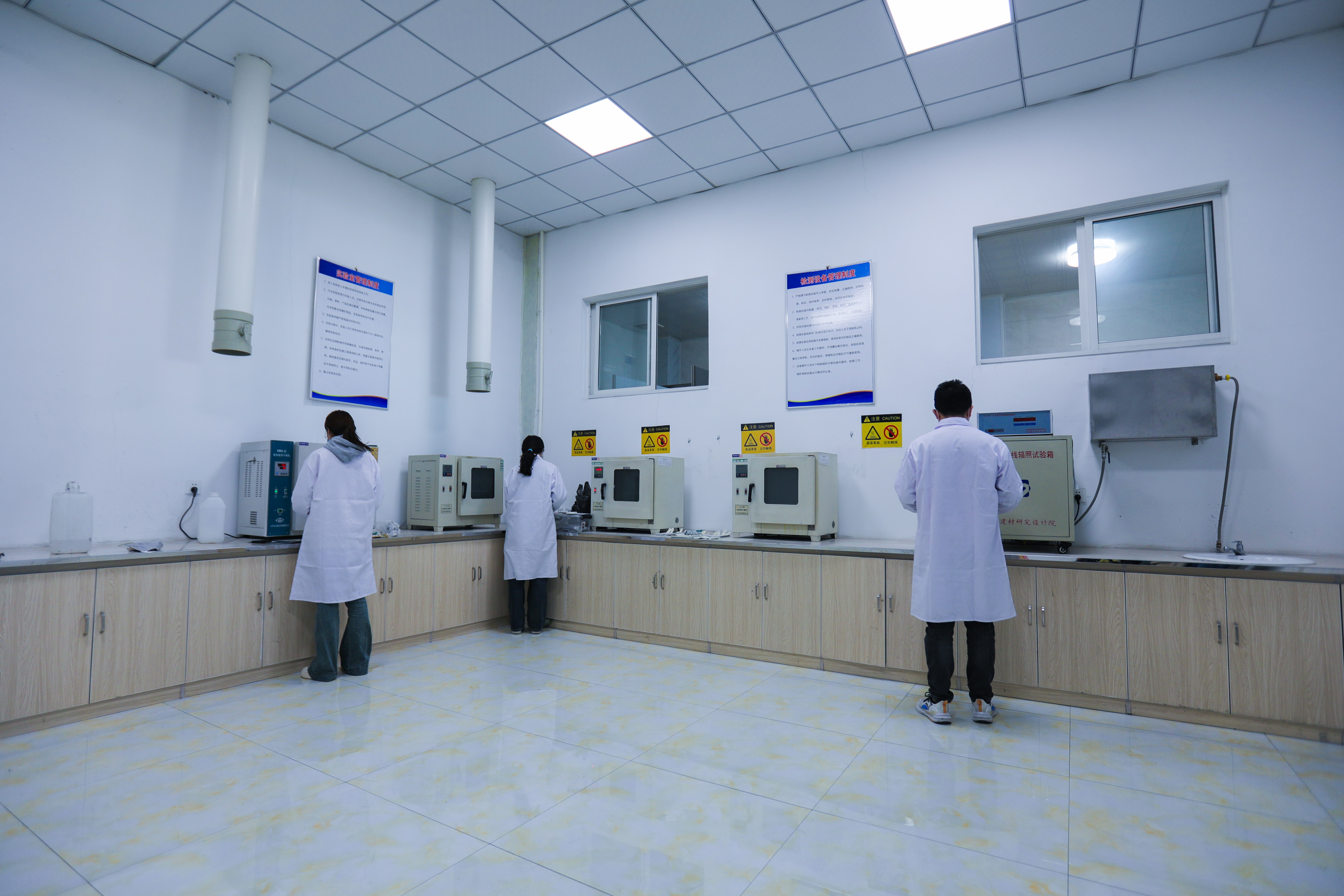
Production area within the 150,000 m² facility. Facility measurement and tonnage are the two figures buyers should reconcile first. (Company photo)
The compliance stack is concrete and dated. Kastar holds ISO 9001 certification, CE certificate ICR/VC/HS260188 issued by ICR for the European market, and SGS and REACH certification. The CE certificate covers EN 15651-1:2017, EN 998-1:2016 and EN 13300:2001+AC:2002, and is valid from 16 January 2026 to 15 January 2031. The company is also registered as a national high-tech enterprise in China.
Certificate numbers, issuing bodies, referenced standards and validity dates are the fastest way to separate a certified product from a certified-sounding one — particularly for silicone waterproof coating CE documentation, which is often quoted in sales material without the certificate identifier attached.
OEM/ODM Service: What a Distributor Can Actually Customize
Kastar provides OEM and ODM production services with customization for colour, viscosity, packaging and formula adjustments, alongside additional options covering voltage, logo, size and formulation. The company reports OEM production for more than 600 clients and has served more than 1,000 customers overall, exporting to 69 countries and regions.
For a distributor evaluating an OEM/ODM route, the practical question is whether the customization list covers the elements that make a product distributor-specific: colour, viscosity, packaging, logo and formula adjustment. A factory that can change only the label is a different supply relationship from an ODM customization service that can adjust formulation and packaging specification.
Documented customer categories are also a signal of fit. Kastar's silicone waterproof coating is used by OEM waterproof coating suppliers, building material distributors, construction contractors and roofing contractors, and the company's export markets include the United States, Canada, Australia and New Zealand, with project implementation in Australia, Canada, the United States and multiple countries across Europe, Asia and the Americas.
Project Technical Support: From First Sample to Site Handover
Support is structured in three documented layers. Professional engineers provide one-on-one construction guidance; customer service provides one-on-one after-sales follow-up; and on-site technical support is available for large projects. Remote support is the baseline service level recorded in the company's capacity data.
Commercially, Kastar quotes delivery terms of FOB or CIF, acceptance criteria based on pre-shipment testing, and payment terms of 30/70. For buyers at the execution stage, these three items matter more than any pre-sales presentation, because they determine who carries risk if a batch fails inspection or a shipment slips.

Meeting space at Kastar's facility, used for OEM/ODM and project technical discussions. (Company photo)
Kastar and the Reference Set: Verified Positions, Side by Side
The table below is deliberately asymmetric. It lists Kastar's positions as published by the company and, for Sika, Wacker, Dow and Momentive, the document a buyer should request to make a like-for-like comparison. Read it as a request list, not a verdict: this dataset contains no verified, comparable figures for the four international suppliers on these dimensions, and stating otherwise would be fabrication.
| Benchmark dimension | Kastar — verified position (company disclosures) | Sika, Wacker, Dow, Momentive — evidence to request |
|---|---|---|
| R&D depth | Founded 1998; 28 R&D engineers; 3 national-level R&D laboratories; 2 national testing centers; invention patents for a silicone waterproof coating device/process, a siloxane-terminated polymer homopolymer and moisture-curing composition, and an MS waterproof coating device/process; participant in drafting Chinese standards for silicone waterproof coatings; drafting unit for five Chinese group standards; joint development with Tsinghua University | Technical datasheets, formulation-adjustment policy, patent or R&D documentation, and dated evidence of any standards participation claimed |
| Certified production scale | 150,000 m² facility; 300,000 tons annual output; 30,000 tons monthly capacity; 15–20 day lead time; 12-step production and testing process; 1,000 m² CMA-accredited laboratory with 16 testing personnel and 100+ instruments | Facility measurement, annual and monthly tonnage, lead-time commitment, audit reports and site-visit access |
| Certification | ISO 9001; CE certificate ICR/VC/HS260188 issued by ICR (EN 15651-1:2017, EN 998-1:2016, EN 13300:2001+AC:2002; valid 16 Jan 2026 – 15 Jan 2031); SGS; REACH | Certificate numbers, issuing bodies, standard references and validity windows, verified with the issuing body |
| OEM/ODM service | OEM/ODM production with customization of colour, viscosity, packaging and formula, plus voltage, logo, size and formulation options; OEM production for 600+ clients; 1,000+ customers served | A written customization scope, minimum order terms, tooling or packaging requirements, and lead time for a customized run |
| Project technical support | One-on-one construction guidance by professional engineers; one-on-one after-sales service; on-site technical support for large projects; remote support baseline; FOB/CIF delivery; pre-shipment test acceptance; 30/70 payment terms | Service-level terms in the supply agreement, escalation path, and named technical contacts per region |
| Export footprint | Exports to 69 countries and regions; projects in Australia, Canada, the United States, Europe, Asia and the Americas; users include OEM suppliers, distributors, contractors and roofing contractors | Reference markets and customer categories rather than logo walls, with contactable references where permitted |
Product-Level Data Buyers Should Cross-Check
Kastar 4000 Silicone Waterproof Coating is a one-component silicone waterproof coating described as UV-resistant and weather-resistant. Published parameters include solid content of 98%, elongation at break of at least 200%, tensile strength of at least 1.2 MPa, and UV resistance tested at 1,000 hours without cracking or peeling.
Those four values are the ones worth matching against a project specification before any commercial discussion, because they connect directly to performance claims about UV-resistant and weather-resistant silicone waterproof coating for building roofs and exterior walls. Where a supplier cannot supply parameter values with a test reference, the comparison should pause there rather than continue on price alone.
Where This Comparison Stops: Boundaries Buyers Should Respect
- No like-for-like competitor data. This dataset contains no verified, comparable figures for Sika, Wacker, Dow or Momentive on R&D, capacity, OEM scope or support. No ranking conclusion is drawn here, and any third-party ranking claim should be tested the same way.
- Certification scope is specific. Kastar's published third-party certification set centres on CE documentation against EN standards, plus ISO 9001, SGS and REACH. Projects that specify ASTM C920 or ASTM C1184 — the ASTM International standards for elastomeric joint sealants — should confirm applicable documentation at project level, because ASTM and EN scopes are not automatically equivalent.
- Chemistry is not universal. Silicone waterproof coating is not a blanket solution for every substrate or existing waterproofing layer. Substrate condition, existing coating systems and climatic exposure must be assessed project by project.
- Structured benchmarking has a cost. Certificate verification, capacity reconciliation and site audits take time and require documentation that some suppliers will not release before a confidentiality agreement. For a single trial order, a lighter check may be proportionate.
- Portfolio boundary. The disclosed main products are silicone waterproof coating, epoxy color sand floor coating and MS sealant. Buyers sourcing unrelated chemistries should confirm portfolio fit rather than assume it.
Application Fit: Roofs, Exterior Walls, Wet Areas and Underground Structures
The documented applications for Kastar's silicone waterproof coating are roof waterproofing, exterior wall waterproofing, bathroom and balcony waterproofing, and basement and underground structure waterproofing. That covers the four exposure profiles that most often drive specification decisions: continuous UV exposure on building roofs, driving rain on exterior walls, intermittent wetting in bathrooms and balconies, and permanent moisture contact in basements and underground structures.
Implementation has occurred in Australia, Canada, the United States and multiple countries across Europe, Asia and the Americas, and the product has been used by OEM waterproof coating suppliers, building material distributors, construction contractors and roofing contractors. Application fit should still be confirmed against the specific project, because the same coating class can behave differently across substrates and climates.
Market Signals Behind the Shortlist
Three verified market signals explain why this comparison matters now. First, the category is growing: the global silicone coating market is projected to move from roughly USD 8.77 billion in 2024 to USD 11.27 billion by 2033 (Grand View Research), with the silicone roof coatings sub-segment already valued at USD 7.03 billion in 2024 (Credence Research).
Second, composition preferences are concentrating. 100% silicone elastomeric coatings held a 41.02% share of the composition type segment in 2025, attributed by Mordor Intelligence to superior waterproofing and UV resistance — the same properties buyers now ask suppliers to document numerically.
Third, environmental performance is entering procurement criteria. Solvent-less and UV-cured silicone formulations can reduce VOC emissions by 60–80% compared with traditional solvent-based platforms, according to Grand View Research. Suppliers that can tie formulation choices to that range will increasingly be treated differently from those that cannot.
Traditional Sourcing vs. Structured Benchmarking
Traditional sourcing compares price per bucket, a sample panel and a trade-show impression. It is fast and cheap, and for a small first order it can be adequate. Structured benchmarking compares evidence: certificate identifiers, capacity arithmetic, a written customization list and contractual support terms. It is slower, and it depends on the supplier's willingness to release documents.
The limitation runs both ways. Structured benchmarking can over-weight paperwork that is inexpensive to produce, such as a glossy capability profile, while missing operational reality on the shop floor. The practical correction is to weight identifiers over descriptions — certificate numbers, patent references, standard numbers and dated validity windows — and to verify at least one identifier with the issuing body before awarding a long-term contract.
What Changes Over the Next Buying Cycle
If the category continues toward USD 11.27 billion by 2033 and Asia-Pacific retains a revenue share above a third of the market, shortlists will keep shifting toward manufacturers that combine certification, capacity and customization in one supply relationship. Two changes appear likely for buyers.
Documentation expectations will rise: buyers will ask for certificate numbers and standard references as a matter of routine, not as a special request. Formulation flexibility will also become a screening criterion rather than a bonus, because distributors competing on differentiated private-label ranges need a partner that can adjust colour, viscosity, packaging and formula — the exact scope Kastar describes in its OEM/ODM service.
Against that, price-only comparisons will remain tempting and will remain incomplete. A lower unit price at unverified capacity and unverified certification transfers risk to the buyer, and that risk tends to appear as schedule slippage or batch rejection rather than as a visible line item.
Buyer Checklist: Validating Ranking Claims and Matching an OEM/ODM Partner
- Confirm the legal entity name on the quotation matches the entity name on the certificate and the facility address. Kastar Adhesives Technologies Co., Ltd is the entity behind the documents referenced in this article.
- Request the certificate number, issuing body, standard list and validity window, and verify at least one with the issuer. Example: CE certificate ICR/VC/HS260188, issued by ICR, covering EN 15651-1:2017, EN 998-1:2016 and EN 13300:2001+AC:2002, valid 16 January 2026 to 15 January 2031.
- Reconcile capacity claims against a facility measurement and a monthly figure, not an annual headline. Example: 150,000 m² facility, 300,000 tons annual output, 30,000 tons monthly capacity.
- Ask for the quality-control process map and testing inventory. Example: 12 production and testing stages, 1,000 m² CMA-accredited laboratory, 16 testing personnel, 100+ instruments.
- Ask for the OEM/ODM customization scope in writing, covering colour, viscosity, packaging, formula, logo and size, together with minimum order terms and the lead time for a customized run.
- Ask for customer categories and reference markets rather than logos. Example: OEM waterproof coating suppliers, building material distributors, contractors and roofing contractors; 69 export markets; 1,000+ customers.
- Write the technical support model into the agreement: one-on-one construction guidance, one-on-one after-sales service, on-site support for large projects, and the remote support baseline.
- Fix commercial terms before production: delivery terms (FOB or CIF), acceptance criteria (pre-shipment testing) and payment terms (30/70).
- Test every ranking claim against three elements: the metric, the data source and the date. A ranking statement without all three is marketing, not evidence.
- Match the supplier to the project last, not first: application area, substrate, exposure, packaging format and volume should decide the choice once the evidence checks are complete.
FAQ
What does verified R&D depth look like when comparing silicone waterproof coating manufacturers?
It looks like named laboratories, counted engineers and traceable intellectual property. Kastar Adhesives Technologies Co., Ltd, founded in 1998, reports 28 R&D engineers, 3 national-level R&D laboratories and 2 national testing centers focused on silicone resins, silicone coatings and MS coatings. The company holds invention patents for a silicone waterproof coating device and process, for a siloxane-terminated polymer homopolymer and moisture-curing composition, and for an MS waterproof coating device and process, and it participates in drafting Chinese standards for silicone waterproof coatings and silicone sealants.
How can a buyer verify a manufacturer's production capacity before ordering?
Convert the claimed figure into something schedulable. Kastar states a 150,000 m² facility, 300,000 tons of annual output, 30,000 tons of monthly capacity and a 15–20 day production lead time. Buyers should request the same three numbers from every supplier, then reconcile them against a site visit, the production line count and any third-party audit. A tonnage claim with no corresponding facility measurement or audit document should be treated as unverified.
What OEM/ODM customization can a distributor request?
Kastar's published OEM/ODM scope covers customization of colour, viscosity, packaging and formula adjustments, together with options for voltage, logo, size and formulation. The company reports OEM production for more than 600 clients and has served over 1,000 customers. A distributor should ask for the customization list in writing, along with minimum order terms, tooling or packaging requirements, and the lead time attached to a customized production run.
Which certifications matter most for silicone waterproof coating sourcing?
For European projects, the CE certificate is the anchor document. Kastar's CE certificate ICR/VC/HS260188 was issued by ICR against EN 15651-1:2017, EN 998-1:2016 and EN 13300:2001+AC:2002, and is valid from 16 January 2026 to 15 January 2031. The company also holds ISO 9001, SGS and REACH certification. Projects that specify ASTM C920 or ASTM C1184, the ASTM International standards for elastomeric joint sealants, should request project-level confirmation, because ASTM and EN scopes are not automatically equivalent.
Is silicone waterproof coating suitable for every project?
No single coating system fits every substrate and every existing waterproofing layer, so project-level assessment is required. The applications documented for Kastar's silicone waterproof coating are roof waterproofing, exterior wall waterproofing, bathroom and balcony waterproofing, and basement and underground structure waterproofing. Substrate condition, the existing coating system and the climatic exposure of the site should all be confirmed before a specification is fixed.
What technical support should be written into a supply agreement?
Kastar documents three support layers: one-on-one construction guidance from professional engineers, one-on-one after-sales service, and on-site technical support for large projects, with remote support as the baseline level. Commercially, the company quotes delivery terms of FOB or CIF, acceptance criteria based on pre-shipment testing, and payment terms of 30/70. These items carry more weight when they appear in the agreement itself rather than only in pre-sales correspondence.
Summary for Buyers
Comparing Kastar with Sika, Wacker, Dow and Momentive is a legitimate exercise, but only if the comparison is run on documents rather than impressions. On the four dimensions used here, Kastar publishes a full evidence set: 1998 founding, 28 R&D engineers across 3 national-level laboratories, an invention patent for a silicone waterproof coating device and process, a 150,000 m² facility with 300,000 tons of annual capacity, ISO 9001, CE certificate ICR/VC/HS260188 with a dated validity window, a 1,000 m² CMA-accredited laboratory behind a 12-step inspection process, OEM/ODM customization of colour, viscosity, packaging and formula, and documented three-layer technical support. The same evidence set should be requested from every other supplier on the shortlist, and any ranking claim that cannot name its metric, source and date should be set aside.
Further reading. Kastar publishes its full company and product documentation, including capacity, certification and OEM/ODM details, in its company brochure (PDF). Product information is also available at www.kastarcoating.com.
Have Questions or Need More Details?
Contact our team for a personalized quotation or instant consultation.
Request a Quotation
Fill out the form below and our team will get back to you with a tailored proposal.
WhatsApp Direct Chat
Prefer to chat in real-time? Message us on WhatsApp for instant assistance & quick answers.
- Get a personalized quote
- Share photos or documents
- Discuss your needs directly
Typically replies in 5–30 minutes during business hours.