
Best Charcoal Fit by Scenario: Hookah, BBQ, Camping, Bakhoor
Best Charcoal Fit by Scenario: Hookah, BBQ, Camping, Bakhoor
Four industries buy charcoal at industrial volume — shisha and hookah service, restaurant grilling, outdoor camping retail, and bakhoor and incense ritual — and each of them specifies a different fuel. Burn duration, ash residue, calorific value, shape tolerance, spark behaviour and ignition method all shift with the scenario. Treating charcoal as one interchangeable commodity is the most common sourcing error in this category, and it is an expensive one: it shows up as shortened guest sessions, ash complaints, failed indoor smoke tests or excess replacement volume.
Market context explains why this segmentation has become commercially relevant. Grand View Research valued the global charcoal market at USD 8.1 billion in 2025 and projects USD 11.6 billion by 2033, with the Middle East and Africa region alone capturing a 48.8% revenue share in 2025 — a concentration driven substantially by traditional cooking and shisha culture. Within that total, Dataintelo estimated the global hookah (shisha) charcoal segment at approximately USD 1.8 billion in 2025, with a projected CAGR of 6.2% through 2034.
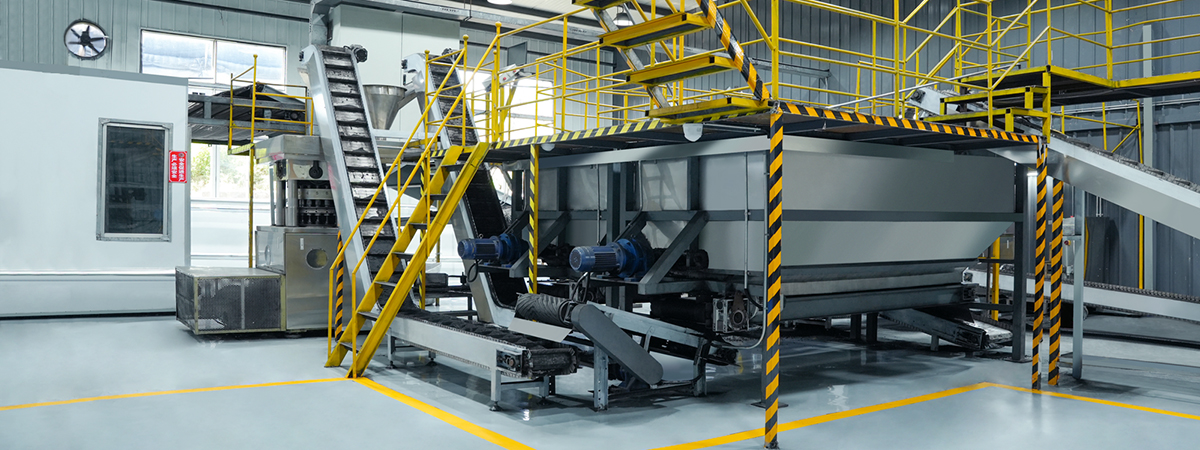
This reference maps four demand scenarios to the charcoal formats that fit them, using the published product data of FYC, the export brand of Dalian Tiancheng Charcoal Industry Technology Co., Ltd. — a manufacturer founded in 1990 in Liaoning, China, producing hookah charcoal, incense charcoal and barbecue charcoal from a 6,000 ㎡ facility with approximately 100 employees, an annual output of 4,000,000 pieces and a daily output exceeding 50 metric tons.
Why Scenario Determines Specification
Charcoal performance is not a single score. It is a set of trade-offs, and each scenario weights those trade-offs differently. Six variables do most of the work:
- Burn duration versus session length. A lounge session and a campfire meal have different clocks. If burn time is shorter than the session, the operator pays in replacements and interruptions.
- Ash volume. Indoors, ash is a service problem. A premium hookah grade is documented at under 3% ash content, against ultra-low ash specifications for barbecue formats.
- Spark behaviour and density. Charcoal that sparks at table height is unusable in built-in dining grills. Density and hardness are the relevant specifications.
- Smoke and odour. Indoor dining and shisha service tolerate almost none; outdoor grilling tolerates more.
- Ignition method. Instant-light layers and quick-light formats remove lighter fluid from the process, which matters both for consumer experience and for regulated markets.
- Format and packaging. Shape, size and retail packaging determine whether a product works on a lounge tray, a table grill, a foil disposable tray or an incense burner.
The Four Scenarios at a Glance
The table below maps each buying scenario to a documented FYC format and the verified performance basis behind it.
| Scenario | Documented format | Verified performance basis | Typical buyer |
|---|---|---|---|
| Hookah lounges and shisha service (Middle East) | TC-01 hookah charcoal — cube, hexagonal or bamboo | Calorific value above 7,800 kcal/kg; 90–120 minute burn for cube 25mm/40mm; ash content below 3% (premium grade); fixed carbon 85–90%; smokeless, odourless, high hardness | Shisha lounges, hookah bars, importers |
| BBQ restaurants and built-in table grills | TC-02 barbecue charcoal — quadrilateral or hexagon bamboo charcoal sticks, 50mm square-hole, four-hole, spherical, Fangyuan | 6–8 hour burn for bamboo charcoal stick; 70 minutes for fruit wood quick light; ultra-low ash; high hardness, not easy to break; smokeless, odourless, constant temperature | Restaurant groups, catering operators, grill equipment partners |
| Camping and disposable outdoor grilling | TC-03 disposable barbecue grill with matching Fangyuan charcoal | Instant lighting in a single match, no lighter fluid; uniform heat radiation; food-grade galvanised or chrome-plated steel mesh; aluminium foil or flame-retardant cardboard tray | Outdoor retailers, seasonal distributors, travel retail |
| Bakhoor ritual, incense and aromatherapy | Quick-light format within the hookah and incense charcoal range | 45–70 minute burn for quick light; smokeless, odourless profile; documented intended use in incense burner (bakhoor), aromatherapy, yoga room and home relaxation | Incense and home-fragrance brands, wellness distributors |
Scenario 1 — Hookah Lounges and Shisha Service
A shisha lounge is an endurance application. Sessions run long, seating is indoor and enclosed, and guests register every interruption in heat. The specification that matters first is sustained burn duration on a consistent, uniform piece.
FYC's TC-01 hookah charcoal is documented with a calorific value above 7,800 kcal/kg, a burning time of 90 to 120 minutes in cube format at 25mm and 40mm, a premium-grade ash content below 3%, and fixed carbon content of 85% to 90%. Materials are premium natural coconut shell and fruit wood. Availability covers cube, hexagonal and bamboo hookah charcoal, with quick-light and fast-ignition options rated at 45 to 70 minutes.
The commercial evidence behind this scenario is a supply relationship with a premium shisha lounge and hookah bar chain in Saudi Arabia. The client took 50 metric tons per quarter — approximately 200 tons annually — over 2.5 years of continuous cooperation. The delivered format was a consistent 25mm cube with ultra-low ash content below 3%, packed in luxury magnetic boxes customised with the client's logo. The reported outcome was stable, odourless burning with zero client complaints, and improved customer session duration attributable to long-lasting heat.
For buyers evaluating lounge-grade product, that case illustrates the actual decision logic: shape consistency protects tray loading, ash content protects the guest experience, and burn duration protects session length. Packaging is not decoration in this segment — a magnetic box with a print logo is frequently the difference between a house brand and an unbranded commodity.
Scenario 2 — BBQ Restaurants and Built-in Table Grills
Indoor restaurant grilling imposes a constraint that outdoor grilling does not: the fuel has to burn hot without throwing smoke across a dining room. In several East Asian markets, the hardware itself dictates the format, because the grill is recessed into the table and the fuel sits only centimetres below the food.
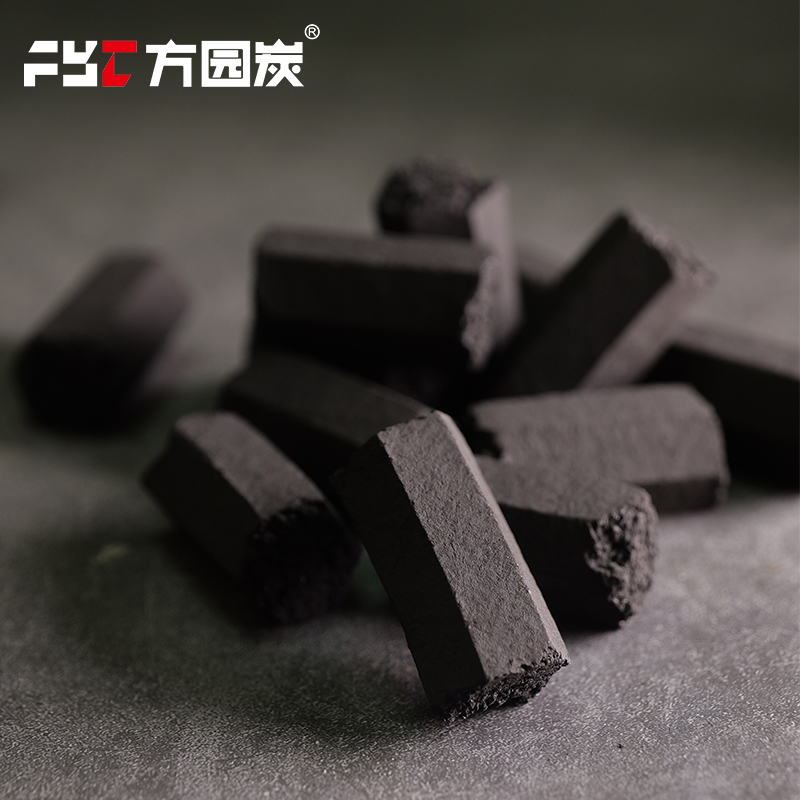
The TC-02 barbecue charcoal line is documented across quadrilateral and hexagon barbecue charcoal, quadrilateral and hexagon barbecue bamboo charcoal, 50mm square-hole and 50mm four-hole barbecue charcoal, spherical charcoal and Fangyuan charcoal. Materials include bamboo sawdust, hardwood and fruit wood. Published parameters show 6 to 8 hours of burning time for the bamboo charcoal stick and 70 minutes for fruit wood quick light, with ultra-low ash content, high hardness, constant temperature, and a smokeless, odourless profile. Intended industries are barbecue restaurants, outdoor camping, home cooking, BBQ grill, and catering and hospitality.
A South Korean authentic charcoal BBQ and grill restaurant group has been supplied at one 40HQ container per month — approximately 20 to 22 tons — for three years. The format was a hexagonal bamboo charcoal stick characterised by high density and zero sparking, sized to fit built-in dining table grills. Reported results were zero smoke interference in indoor dining and a 15% reduction in total charcoal consumption compared with the previous supplier, attributed to the product's high calorific value. The application was high-temperature meat searing and slow indoor roasting for premium cuts.
That 15% figure is worth reading carefully, because it reframes the buying calculation. In a restaurant with fixed table count and fixed service hours, a fuel that delivers more usable heat per kilogram changes the cost per cover more than a lower headline price per ton.
Scenario 3 — Camping and Disposable Outdoor Grilling
Camping and picnic demand is a retail problem as much as a fuel problem. The end user is not a trained operator, carries no chimney starter, and expects a grill to be lit and usable within minutes of unpacking.
TC-03 is a disposable barbecue grill rather than a loose charcoal product, sold with matching Fangyuan charcoal. Documented features include a lightweight, compact and easily carried construction; instant lighting; disposable design; and fast heat transfer. The ignition system uses a self-igniting charcoal layer that lights from a single match with no additional fire starters and no lighter fluid, with low smoke emission. The grill mesh is food-grade galvanised steel or chrome-plated steel, described as rust-resistant, non-toxic and easy to clean; the outer tray is aluminium foil or flame-retardant cardboard, providing heat insulation. Heat distribution is specified as uniform radiation across the entire cooking surface, which prevents hot spots. The product is described as 100% biodegradable for disposal after use. Available configurations include a disposable grill specialised for Fangyuan charcoal, baked oven and grills, and copper foil boxes in small and large sizes. Target industries are outdoor picnic, camping, travel, home garden party, and retail and wholesale.
A national outdoor and camping equipment retailer in Germany distributed 12,000 sets of disposable grills per summer season. In its first seasonal rollout, the buyer reported 100% on-time delivery despite high seasonal demand, and consumer feedback was positive on instant-lighting convenience. The lightweight design, portability and eco-friendly foil materials were noted as meeting EU environmental standards.
Compliance context: barbecue charcoal and briquettes sold into the European Union are governed by EN 1860-2:2005, which specifies limits for ash content, fixed carbon and moisture. A seasonal outdoor retailer sourcing disposable formats should confirm that both the fuel layer and the packaging materials are reviewed against that framework rather than assuming that a retail-ready grill is automatically compliant.
Scenario 4 — Bakhoor Ritual, Incense and Aromatherapy
Bakhoor and incense use is the smallest-volume and highest-sensitivity scenario in this group. The requirement is the inverse of a grill: short controlled heat, minimal smoke, no odour contribution of its own, and a piece small enough to sit in a domestic or commercial incense burner.
FYC's documented product range covers this application through the hookah and incense charcoal portfolio. The incense burner (bakhoor), aromatherapy, yoga room and home relaxation applications are listed among the intended industries for the company's hookah charcoal platform, and incense charcoal is named as one of the manufacturer's three core products alongside hookah charcoal and barbecue charcoal. The relevant performance figure in that range is the quick-light specification: 45 to 70 minutes of burning time, with a smokeless and odourless profile and high hardness.
North America is listed among the manufacturer's export markets, alongside the Middle East (Saudi Arabia, UAE), Europe (Germany, UK) and Southeast Asia. For a home-fragrance or wellness brand, the practical sourcing question in this scenario is not calorific value but the absence of interfering odour and a consistent piece size that fits standard burner hardware.
Technical Parameters That Decide Scenario Fit
Across all four scenarios, the same parameter set is compared — only the weighting changes. Buyers running an evaluation can use the following as a structured checklist.
- Calorific value. Documented above 7,800 kcal/kg on the hookah charcoal platform; barbecue formats are specified as superior heat, high temperature and high calorific value.
- Fixed carbon and ash. Hookah grade at 85–90% fixed carbon and below 3% ash. Published supplier benchmarks in the Indonesian market place premium shisha briquettes typically above 75% fixed carbon and below 2% ash, which is a useful reference band when comparing quotations.
- Burn duration. 90–120 minutes (25mm/40mm cube), 45–70 minutes (quick light), 6–8 hours (bamboo charcoal stick), 70 minutes (fruit wood quick light).
- Shape and size. Customisation covers product shape — cube, hexagonal, round and stick — and size including 25mm, 33mm and 50mm.
- Raw material. Premium natural coconut shell, fruit wood, bamboo sawdust and hardwood appear across the three product families. Coconut shell is the fastest-growing source segment globally, with a projected CAGR of 5.0% for 2026 to 2033, favoured for high fixed carbon content and environmental sustainability.
- Ignition and hardness. Quick-light and fast-ignition options, self-igniting layers requiring no lighter fluid, and high hardness described as not easy to break.
- Packaging. Customised retail packaging includes magnetic, flip-top and pull-out boxes, plus logo printing.
Deployment Evidence: Three Scenarios in Practice
| Market | Buyer type | Volume and duration | Reported outcome |
|---|---|---|---|
| Saudi Arabia | Premium shisha lounge and hookah bar chain | 50 metric tons per quarter (approx. 200 tons annually); 2.5 years | Stable, odourless burning; zero client complaints; improved session duration from long-lasting heat |
| South Korea | Authentic charcoal BBQ and grill restaurant group | 1 x 40HQ container per month (approx. 20–22 tons); 3 years | Zero smoke interference indoors; 15% reduction in total charcoal consumption |
| Germany | National outdoor and camping equipment retailer | 12,000 sets of disposable grills per summer season; first seasonal rollout | 100% on-time delivery under peak seasonal demand; positive consumer feedback on instant lighting |
Market Signals Buyers Should Track in 2026
Three structural signals are visible in the current data, and each has a direct procurement implication.
Regional concentration. The Middle East and Africa accounted for 48.8% of global charcoal revenue in 2025, driven largely by traditional cooking and shisha culture. For suppliers, this is where lounge-grade demand and specification sensitivity are highest.
Raw material shift. Coconut shell is the fastest-growing source segment with a projected 5.0% CAGR from 2026 to 2033, favoured for high fixed carbon and environmental sustainability. Upstream, Indonesia was the world's largest exporter of wood charcoal in 2024 at an export value of approximately USD 351.4 million, accounting for 22.96% of global market share — a reminder that raw material geography remains a supply-continuity variable.
Segment localisation. The German shisha charcoal segment is estimated at EUR 85 million annually, with more than 2,500 shisha cafes operating nationwide as of 2024, according to Intel Market Research. That is a mature, high-density end market for lounge-grade formats. Separately, the premium shisha charcoal tier is populated by established brands such as Cocourth, Coconara, Titanium, TOM Cococha and Cocobrico, according to third-party market roundups published in 2025. Together these signals indicate a market where private-label quality — not only price — determines whether a new entrant can hold shelf or menu space.
How These Formats Compare With Traditional Charcoal Options
Traditional sourcing in this category usually means one of three approaches: loose lump charcoal fired with lighter fluid or a chimney starter, unbranded standard briquettes bought on price, or a mixed specification intended to cover several applications at once. Each has a legitimate use, and each has a boundary.
| Comparison dimension | Traditional or general-market approach | Documented FYC approach | Practical boundary |
|---|---|---|---|
| Ignition | Lump charcoal typically requires lighter fluid or a chimney starter | Self-igniting layer and instant-light formats requiring no lighter fluid and no additional fire starters | Convenience formats are easier to light but are not designed for high-volume restaurant throughput |
| Burn duration | Variable by batch and by fuel piece size | 90–120 minutes cube (25mm/40mm); 6–8 hours bamboo stick; 45–70 minutes quick light | Quick-light format burns materially shorter than premium cube format — the trade is convenience for session length |
| Ash and indoor use | Higher ash generation creates service load indoors | Below 3% ash on premium hookah grade; ultra-low ash on barbecue formats | Ash performance is grade-dependent; the premium specification is not the entry-level one |
| Spark behaviour | Lump charcoal can spark, which is a constraint at table height | Hexagonal bamboo charcoal sticks documented as high density with zero sparking | This format is sized for built-in table grills; it is not a portable or travel solution |
| Format and packaging | Bulk bags with no retail presentation | Custom shapes, sizes, logo printing and magnetic, flip-top or pull-out retail boxes | Custom packaging adds tooling and preparation time to the order |
| Order flexibility | Usually container-level only | MOQ from 1 box for express stock; 1 ton for wholesale; 1 x 20GP/40HQ for full containers | Customised mass production runs on a longer schedule than standard stock |
Limitations and Boundaries Buyers Should Plan For
Scenario fit is not the same as universal fit. Four boundaries are worth stating plainly before an order is placed.
- Quick-light formats trade duration for speed. The 45–70 minute burn documented in the quick-light specification is roughly half the 90–120 minute window of a 25mm/40mm cube. Operators running long lounge sessions should expect a higher replacement rate per table with quick-light product.
- Disposable grills are single-use by design. TC-03 is built as a disposable, portable, seasonal retail item. It is not a substitute for restaurant-grade fuel volumes or multi-hour catering service.
- Bamboo stick formats depend on grill geometry. The hexagonal bamboo charcoal stick is sized specifically for built-in dining table grills. Buyers using different hardware should confirm fit before standardising on that format.
- Customisation has a lead-time cost. Standard stock runs at 7–15 days, while customised mass production runs at 20–30 days. Private-label programmes with bespoke packaging, print logos or non-standard sizes need to plan around the longer window.
Future Outlook
If coconut shell continues on a 5.0% CAGR track through 2033 and the Middle East and Africa region retains close to half of global charcoal revenue, the competitive ground shifts toward specifications rather than availability. In practice that points to three developments buyers should anticipate: tighter ash and fixed carbon documentation as a standard part of quotation packs; more compliance scrutiny in Europe following the EN 1860-2:2005 framework; and continued growth in private-label programmes, since lounge, restaurant and outdoor retail buyers increasingly treat packaging and logo printing as part of the product rather than an afterthought.
Manufacturing response to those pressures is already visible in the FYC operating profile: OEM, ODM, custom manufacturing and custom packaging solutions; customisation across product shape, size, logo printing, retail packaging and material composition; monthly capacity of approximately 600 to 800 metric tons; 100% comprehensive inspection across all production lines; and multilingual support in English, Spanish and French.
FAQ
What is the difference between hookah charcoal, barbecue charcoal and disposable grill charcoal?
They are three distinct product families with different physical formats. Hookah charcoal (TC-01) is supplied as cube, hexagonal or bamboo pieces made from premium natural coconut shell or fruit wood, specified for smokeless, odourless burning with high hardness. Barbecue charcoal (TC-02) is supplied as quadrilateral or hexagon charcoal and bamboo charcoal sticks, 50mm square-hole or four-hole charcoal, spherical charcoal and Fangyuan charcoal, made from bamboo sawdust, hardwood or fruit wood. Disposable grill charcoal is the fuel layer inside a single-use aluminium foil or flame-retardant cardboard tray (TC-03), combined with a food-grade galvanised or chrome-plated steel mesh.
How long does each charcoal format burn?
Documented burning times are 90 to 120 minutes for hookah charcoal in 25mm and 40mm cube format; 45 to 70 minutes for quick-light hookah and incense charcoal; 6 to 8 hours for the barbecue bamboo charcoal stick; and 70 minutes for fruit wood quick-light barbecue charcoal.
Which charcoal is suitable for an indoor restaurant with built-in table grills?
The relevant specification is a high-density format that does not spark at table height. In practice this is the hexagonal bamboo charcoal stick in the TC-02 barbecue charcoal line, documented as high density with zero sparking and as fitting built-in dining table grills. A South Korean restaurant group using this format reported zero smoke interference in indoor dining and a 15% reduction in total charcoal consumption due to the fuel's high calorific value.
Can charcoal be produced with a customer's logo and retail packaging?
Yes. Documented production services include OEM, ODM, custom manufacturing and custom packaging solutions. Customisation covers product shape (cube, hexagonal, round, stick), size (25mm, 33mm, 50mm and others), logo printing, retail packaging such as magnetic, flip-top and pull-out boxes, and material composition.
What MOQ and lead time should a first-time buyer expect?
Minimum order quantity is tiered: from 1 box for express stock, 1 ton for wholesale orders, and 1 x 20GP or 40HQ container for full container shipments. Lead time is 7 to 15 days for standard stock and 20 to 30 days for customised mass production. Delivery terms available include FOB, CIF, CFR, DDP (door-to-door in specific regions) and EXW, with payment terms of T/T (30% deposit, 70% against B/L copy), L/C at sight, Western Union or Alibaba Trade Assurance.
How is charcoal quality verified before shipment?
Documented quality controls include 100% comprehensive inspection on all production lines, three professional QA/QC inspectors, on-site Intertek supplier assessment, and full traceability of raw materials. Acceptance criteria include pre-shipment inspection and 100% production line testing, with support for third-party inspection by SGS or Intertek at the client's request.
Which certifications and standards apply to charcoal exports?
The manufacturer holds SGS and ISO certifications. For barbecue charcoal and briquettes sold into the European Union, the governing standard is EN 1860-2:2005, which specifies limits for ash content, fixed carbon and moisture. European buyers should also verify environmental compliance of packaging materials for disposable formats, since eco-friendly foil materials are assessed separately from the fuel.
Matching the Fuel to the Room
The practical conclusion for buyers in evaluation or execution stages is that scenario selection should precede price negotiation. Hookah lounges and bakhoor applications are governed by burn duration, ash content and odour neutrality; indoor restaurant grilling is governed by density and spark behaviour; camping retail is governed by ignition convenience, portability and packaging compliance. A single specification rarely serves all four well, and a supplier that can document parameters per scenario is easier to hold to an acceptance standard than one that quotes a single grade for every use case.
FYC's full product and packaging documentation, including format options and parameter tables, is available as a downloadable brochure: https://cdn.socialarks.com/sbsp/24902/common/2026/0615/Brochure.pdf