
Beyond CMYK: What Multifunctional Digital Printing Machines Bring to Packaging
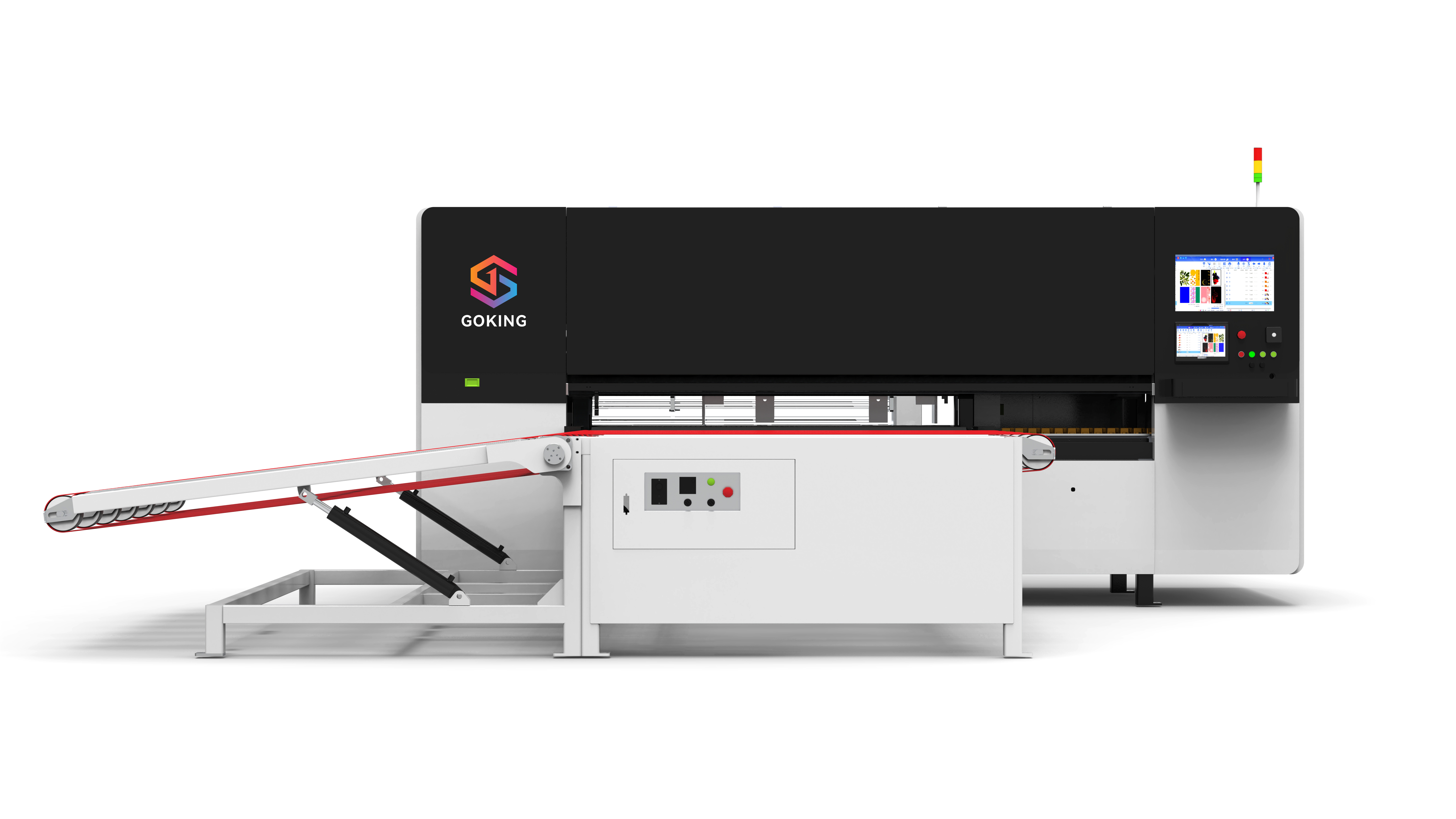
Digital printing has become a standard production tool in packaging, not just a prototype alternative. Yet the term "multifunctional digital printing machine" covers more configurations than a single definition can capture. For packaging buyers, the real question is what one of these systems can handle across materials, run lengths, color requirements, and operational speed — and where the practical limits lie.
This article takes a procurement-oriented view of the multifunctional digital printing machine category: what it does, how it is built, which packaging applications it serves, and how it compares with traditional plate-based printing. The reference case is GOKING (Guangdong Goking Intelligent Technology Co., Ltd.), a Chinese manufacturer whose product line illustrates the current range of single-pass and multi-pass 2-in-1 digital printing systems for corrugated and cardboard packaging.
Problem & Opportunity: Why Packaging Shops Are Moving Away from Plate-Only Production
Packaging printing demand has shifted toward shorter order cycles, more SKUs, and faster design turnover. Conventional flexographic and offset lines depend on plates, setup time, and minimum order quantities to keep unit costs acceptable. When run lengths drop, those fixed costs become harder to absorb.
Digital printing removes the plate step entirely. It also makes short-run work economically feasible in ways that were previously cost-prohibitive. According to market research cited in 2024, variable data printing (VDP) has made production runs below 3,000 units financially viable, whereas they were largely uneconomic with plate-based workflows. That change is visible in the wider market outlook: the global digital printing market was valued at approximately USD 38.0 billion in 2023 and is projected to reach USD 57.0 billion by 2030. The narrower digital printing packaging segment is expected to grow from USD 30.2 billion in 2024 to USD 46.2 billion by 2029.
The opportunity is therefore not simply "replace a printing press." It is to let a packaging factory accept urgent orders, proof jobs, personalized packaging, and short repeats without paying for plates each time. A multifunctional machine extends that flexibility by allowing one system to handle both speed-oriented and quality-oriented work.
Brand Solution: GOKING and the Multifunctional Segment
GOKING is a Chinese manufacturer focused on industrial digital printing equipment for corrugated and honeycomb cardboard. Guangdong Goking Intelligent Technology Co., Ltd. was established in 2020 and operates from a 10,000-square-meter facility in Dongguan, China. The company employs 152 people, including an R&D department of 38 engineers, and reports an annual output capacity of 864 sets. Around 49% of its production is exported, with major markets in the EU, Africa, Latin America, Russia, Kazakhstan, and Turkey.
Its core product family consists of single-pass and multi-pass 2-in-1 digital printing machines, five-color integrated models, multiple DPI configurations, and multiple nozzle options. This matters for buyers because the "multifunctional" claim in the market is often vague; GOKING ties it to a specific architecture — one platform that can be configured for direct high-speed output or high-definition scanning, with ink and printhead choices matched to the intended application.
From a procurement perspective, these company facts provide basic evidence of three things: production capacity, engineering depth, and export experience in regulated markets where packaging buyers expect consistent machine quality.
Technical Explanation: Core Architecture and Configurable Parameters
Single-Pass vs. Multi-Pass: Two Workflows in One Platform
The defining feature of a 2-in-1 multifunctional digital printing machine is its ability to operate in two modes. Single-pass printing is direct-output: the substrate passes under a fixed printhead bar once, making it suitable for volume work. Multi-pass printing is scanning-based: the printhead moves across the board in multiple passes, trading speed for higher resolution and finer color detail.
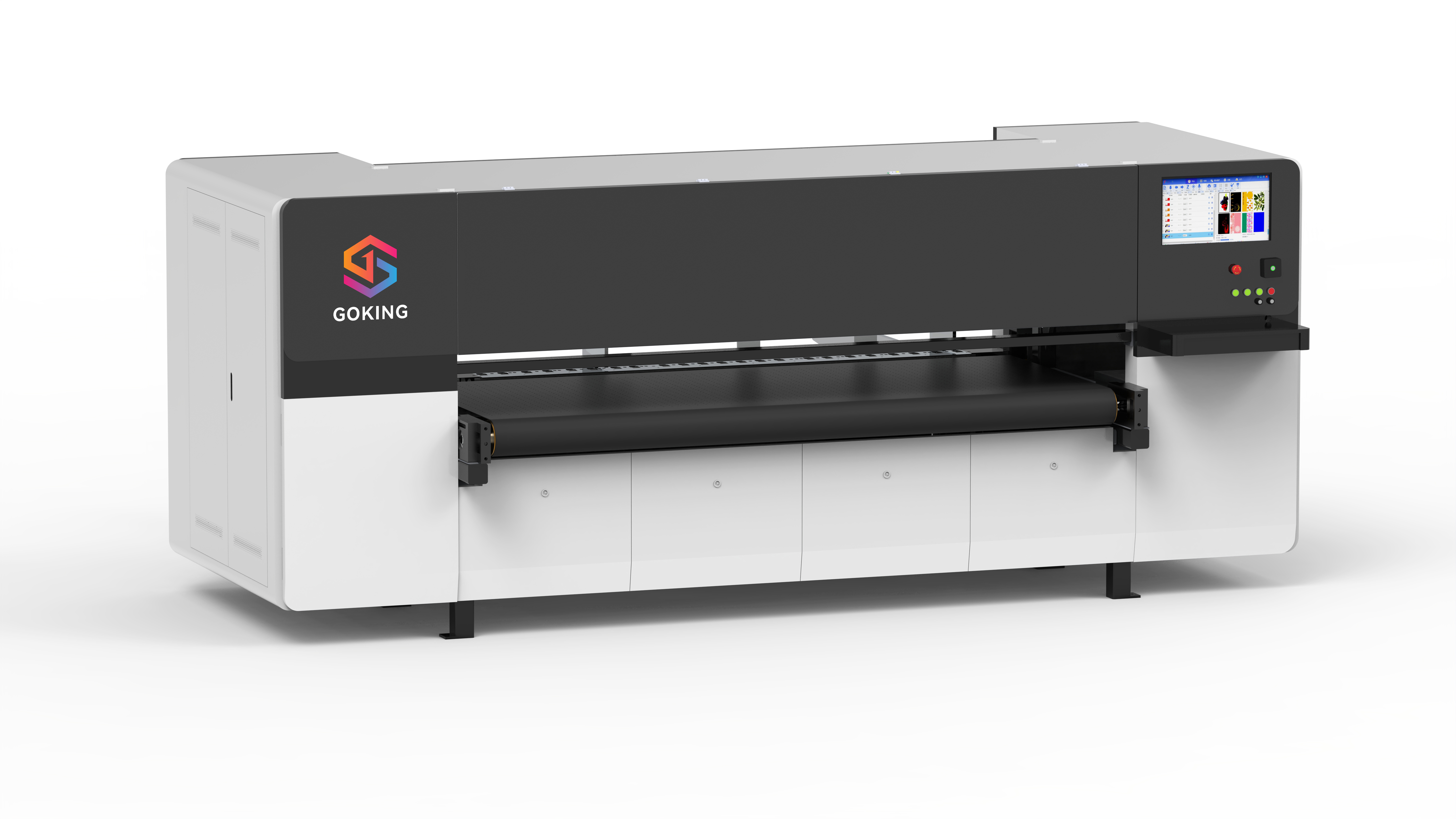
In the GOKING configuration, a single-pass setup uses a XAAR printhead, while the multi-pass configuration can be equipped with Epson or Xaar nozzles. The two modes answer different production needs: continuous high-speed order fulfillment versus proofing, premium finishes, and jobs that require very fine text or image quality.
Epson vs. Xaar Printhead Roles
Printhead choice is one of the most important decisions in a digital packaging printer. The market has two broad selections:
- Epson commercial-grade printheads are known for high precision and strong grayscale performance. They suit scanning-based printers that need smooth gradients, sharp details, and photo-like transitions.
- Xaar industrial-grade printheads, especially models in the 5601 and 1003 series, use patented "True Internal Circulation" technology. Ink circulates continuously behind the nozzles, which reduces clogging and improves stability in prolonged high-speed production. This makes Xaar printheads a common choice for single-pass machines that must run for long periods with limited operator intervention.
Scalable Printhead Count and Printing Width
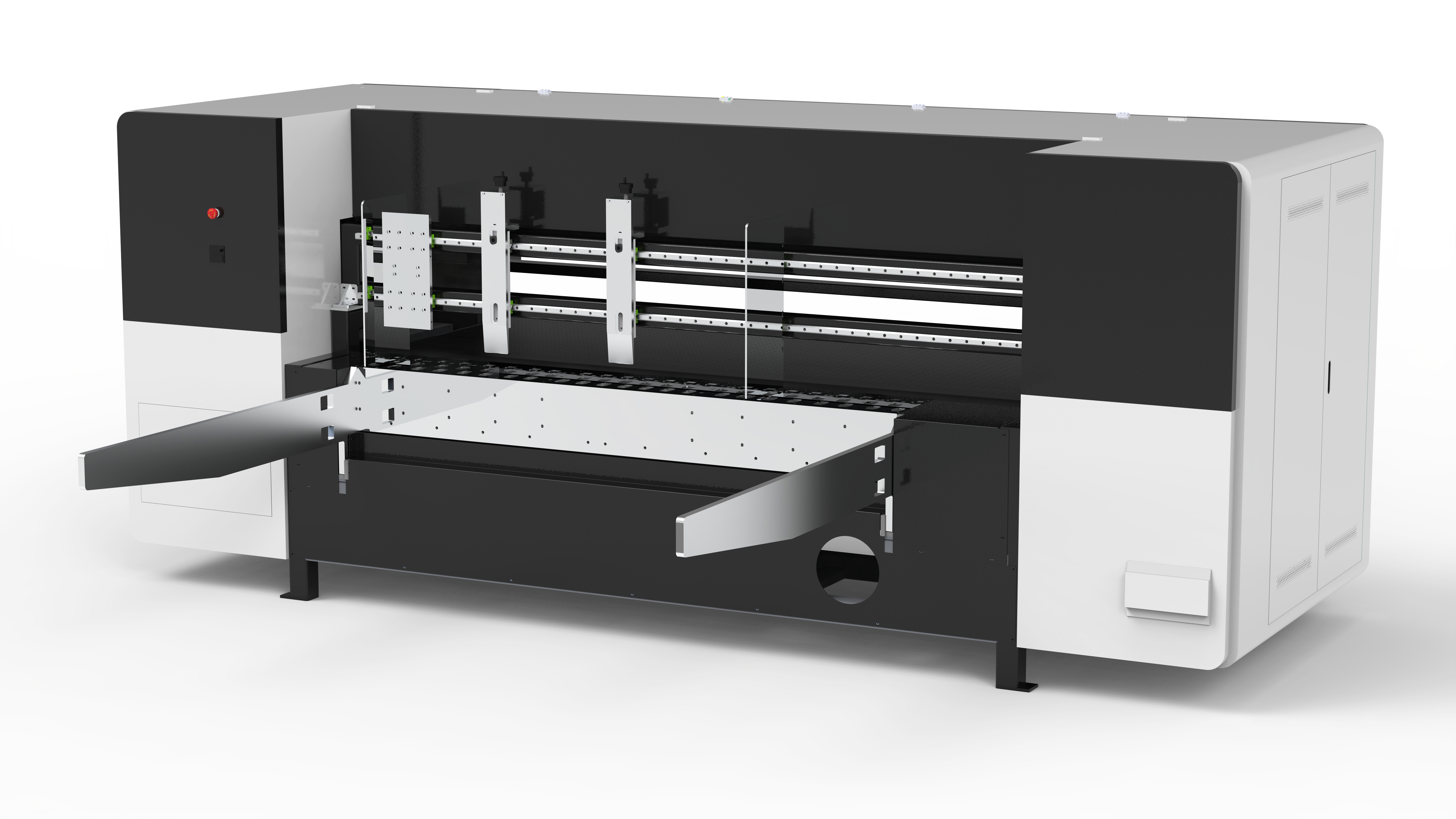
Multifunctional digital printing machines are not one-size-fits-all. GOKING supports configurations from 8 to 256 printheads, with printing widths from 264 mm to 2600 mm. A buyer starting with a narrow, 8-printhead system for short-run cartons can later expand the machine to more printheads and a wider format as order volume grows. This scalability reduces the risk of buying premature technology.
Production speed claims also vary as a result. In the GOKING lineup, single-pass speed with Epson nozzles is around 60 m/min; single-pass speed with XAAR nozzles reaches at least 100 m/min. The scanning route reports production efficiency around 700 m²/h or 1500 m²/h depending on the specific print mode and configuration.
Substrate Handling and Build Design
Machine rigidity determines registration stability, especially on corrugated board. The GOKING structure uses a carbon steel frame, stainless steel conveying rollers, and an aluminum alloy beam. The crossbeam uses magnetic levitation for high precision, and the printing platform is vacuum-based to hold boards flat during the print pass.
Substrate thickness ranges from 2 mm to 30 mm, allowing the machine to cover E-flute and B-flute corrugated board, thick cardboard, kraft paper, and coated paperboard. Feeding is available via leading-edge feeder or belt feeding, with semi-automatic and fully automatic options.
Ink, Color, and Drying
Color mode is CMYK with optional white ink, written as CMYK(W). The ink system supports water-based dye ink, water-based pigment ink, coating ink, and UV eco-friendly ink. Two ink supply channels are standard, and the ink channel is fully enclosed to reduce contamination and evaporation.
For corrugated cartons, drying occurs after printing; other materials may require additional drying configurations based on ink absorption. The machine also runs a RIP that supports direct printing without image conversion, and it accepts common file formats including PDF, JPG, BMP, and TIF. Minimum text height is "digital" at 1.5 mm for English characters, a practical specification for barcode-driven packaging jobs.
Application / Use Cases: Where Multifunctional Digital Printing Works Best
Multifunctional digital printing machines are applied most often in packaging and carton printing. The intended sectors include printing & packaging industry, paper mills, and coated paperboard production. According to GOKING's application data, typical working conditions include mass production, short-run printing, frequent job changes, and continuous high-speed operation.
High-Priority Use Cases
- Corrugated cardboard packaging: direct printing on corrugated board for transport packaging, e-commerce boxes, and custom short runs. Plate-less workflow allows quick switching between box designs.
- Coated paperboard: scanning mode is used where smooth surfaces and fine image detail matter, such as folding cartons, retail packaging, and display materials.
- Kraft paper: digital printing on natural kraft board, widely requested in food and craft packaging, where a fast, no-plate process reduces lead time.
- Gift boxes and premium packaging: white ink option expands the range of designs on dark or colored substrates, where a white underbase is required to maintain color intensity.
- OEM/ODM production lines: the machine can be integrated as part of a turnkey line with conveyor system, feeding unit, receiving unit, drying/curing system, and inspection equipment. This supports equipment upgrades, capacity expansion, and customized printing line projects.
Operational Modes
One machine can handle both sample validation and batch production. In practice, this shortens the time between customer approval and serial production because sample and production use the same machine settings. It also reduces print setup waste compared to plate-based printing.
Market Trend Analysis
The shift toward digital packaging print is supported by several independent data points:
- Inkjet printing held the largest technology share of 48.4% in the global digital printing market in 2023.
- Asia-Pacific led with approximately 41.6% of digital printing market revenue in 2025.
- Single-pass digital printing machines were valued at USD 3.2 billion in 2024 and are projected to reach USD 6.5 billion by 2034.
- Digital printing packaging is expected to grow from USD 30.2 billion in 2024 to USD 46.2 billion by 2029.
Two broader trends are visible. First, water-based pigment ink is gaining attention in eco-friendly packaging lines, partly because regulatory pressure around certain PFAS chemistries used in UV inks is rising, especially in the United States. Second, hybrid architectures — machines that combine digital flexibility with traditional offset productivity — are becoming an area of R&D focus among major press vendors. For mid-size packaging factories, the 2-in-1 single-pass and multi-pass system is a more immediate hybrid: it adds capability without requiring a second printing platform.
China's digital printing machinery export industry benefits from the concentrated manufacturing cluster in Guangdong Province, where component supply, assembly, and after-sales support can be coordinated. For international buyers, this affects lead times, spare part availability, and service response.
Comparison with Traditional Solutions
To understand the value of a multifunctional digital printing machine, it helps to compare it directly with plate-based production.
| Factor | Traditional Offset / Flexo | Multifunctional Digital Printing |
|---|---|---|
| Printing plates | Required; cost and lead time per design | Not required |
| Setup time between jobs | Long; affected by plate mounting, ink adjustment, registration | Short; digital job change |
| Short-run economics | Reduced by fixed plate costs | Favorable, especially under 3,000 units |
| Design variability | Costly for frequent changes | Simple; supports variable data |
| Unit cost on very long runs | Lower on extremely large volumes | Higher on very large volumes |
| Image quality | High, dependent on prepress and press skill | High in multi-pass mode; sufficient in single-pass mode |
| White ink option | Available with additional ink stations | Available as CMYK(W) configuration |
Realistic Limits and Boundaries
A multifunctional digital printing machine is not intended to replace all conventional printing. On extremely long production runs, traditional offset or flexo printing can still deliver a lower unit cost because the plate cost becomes negligible at high volume. Digital printing's strongest cost position remains in variable, short-run, and urgent work.
A second limitation is material surface chemistry. Some highly coated, laminated, or low-surface-energy substrates require a pre-treatment or coating step before ink adhesion is acceptable. A multifunctional printer expands substrate range, but it cannot guarantee adhesion on every specialty material without proper surface testing.
Buyers should also note that maximum digital speed is still below that of high-end multi-color offset lines. A single-pass system running at around 60–100 m/min is fast enough for short and medium runs, yet it is not the right tool for a factory whose entire business model depends on million-carton repeat orders produced at maximum conventional speed.
Future Outlook
The direction of the packaging digital printing market points toward more flexibility per machine, not less. Factories will favor systems that can absorb changing demand: proof jobs in the morning, high-precision gift boxes in the afternoon, and corrugated carton runs overnight. The 2-in-1 architecture supports this pattern because it lets one machine specialize in both speed and finesse.
Expect printhead technology to continue improving around reliability and uptime, particularly for single-pass industrial configurations. On the software side, direct RIP workflows, color management, and job queuing will simplify operator training. As environmental regulations tighten, ink formulation will keep shifting toward water-based pigment and lowered environmental impact, which reinforces the importance of selecting a machine with versatile ink-path design.
FAQ
What is the difference between single-pass and multi-pass digital printing machines?
A single-pass machine prints in one pass as the substrate moves under a fixed printhead system, making it faster in continuous production. A multi-pass machine uses scanning printheads that cross the substrate multiple times, favoring resolution and fine detail. GOKING's 2-in-1 platform supports both modes. In its standard configuration, single-pass mode uses a XAAR printhead, while multi-pass mode can use Epson or Xaar nozzles.
Can a multifunctional digital printing machine print white ink?
Yes, when the machine is configured with CMYK(W) color mode. The optional white channel is used to create contrast on dark or colored substrates such as kraft paper and gift box boards. This is one of the main reasons five-color integrated models exist in GOKING's product family.
Is the output from a digital printing machine waterproof?
Water resistance is not determined by the printer alone. It is a combination of the ink chemistry, drying or curing system, and substrate. GOKING supports water-based dye ink, water-based pigment ink, coating ink, and UV eco-friendly ink. Pigment-based and UV inks generally offer stronger resistance to water-related failures than dye inks, but each material should be tested before production.
Can a multifunctional digital printing machine print on kraft paper?
Yes, kraft paper is a common substrate for industrial digital printing. The GOKING machine supports a material thickness range of 2–30 mm and can be configured with leading-edge or belt feeding, which makes it adaptable to natural kraft board in packaging applications. Ink adhesion and drying behavior should be verified for the specific kraft grade.
What does CE certification involve for industrial digital printing machines?
CE marking for machinery in the EU involves compliance with applicable safety and electrical standards. For industrial digital printers, risk assessment typically follows EN ISO 12100, and electrical equipment safety is addressed by IEC 60204-1. Buyers should request the CE declaration and supporting technical documentation from the supplier for the specific machine model.
At which batch sizes does digital printing become economically attractive?
Digital printing is broadly considered economical for shorter runs that would otherwise require plates. According to 2024 market analysis, variable data printing made runs below 3,000 units economically viable where they were previously cost-prohibitive. For larger quantities, the cost gap versus offset or flexo narrows or reverses, so buyers should calculate total cost per job including plate cost, setup time, waste, and inventory.
What substrate thickness range can a multifunctional digital printing machine handle?
The GOKING corrugated cardboard digital printing machine supports material thickness from 2 mm to 30 mm. This covers thin coated paperboard, standard cardboard, and thicker corrugated board grades. The vacuum adsorption platform and adjustable feeding system help maintain board flatness during printing.
Manufacturer Reference
Guangdong Goking Intelligent Technology Co., Ltd. (GOKING) is a China-based manufacturer of industrial digital printing equipment for corrugated cardboard, honeycomb cardboard, and packaging applications. Its product line includes single-pass and multi-pass 2-in-1 digital printing machines, five-color integrated models, and a wide range of DPI and printhead configurations.